

How Educators Become Targets After Filing Internal Complaints
Speaking Up Should Not Cost You Your Career
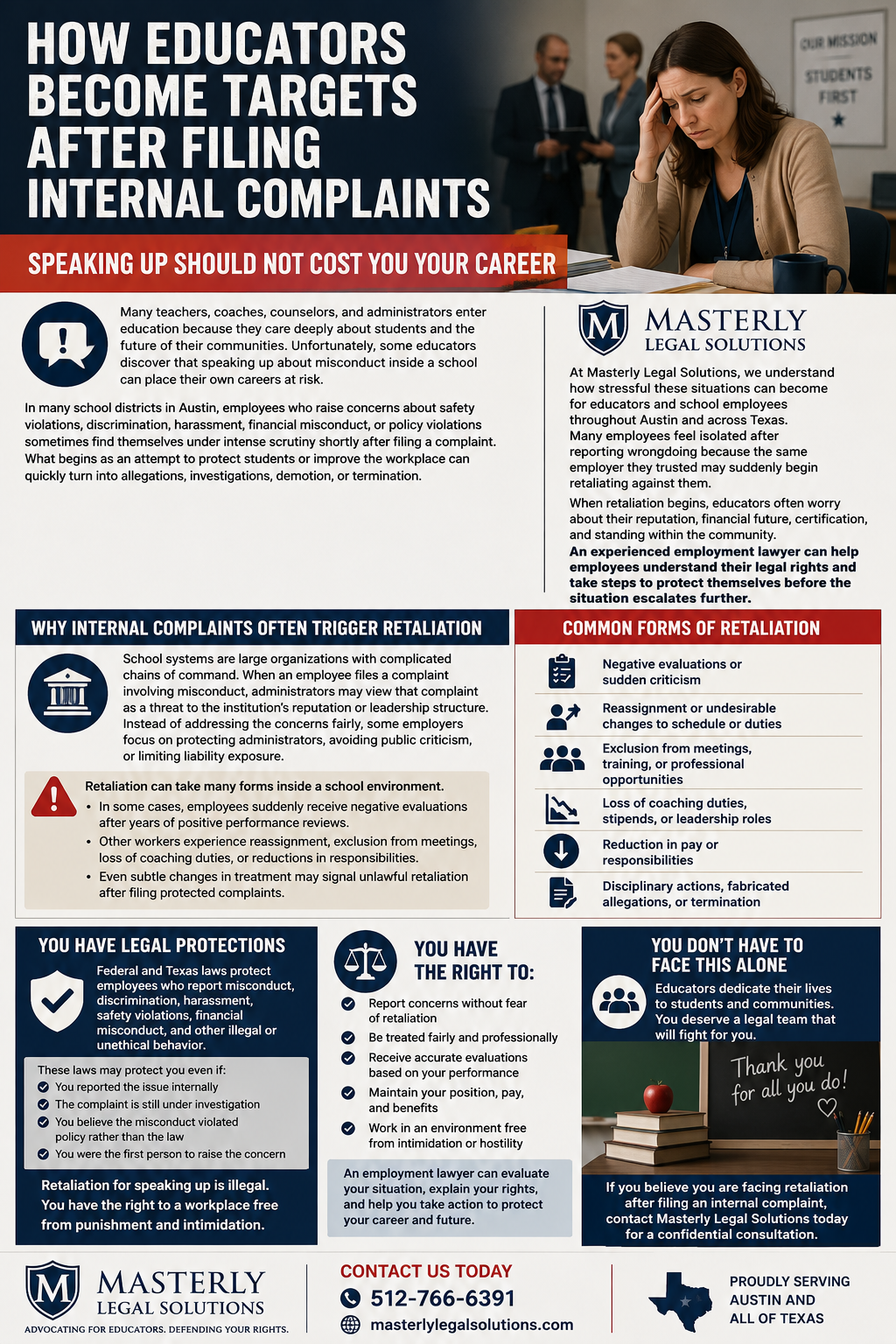
Many teachers, coaches, counselors, and administrators enter education because they care deeply about students and the future of their communities. Unfortunately, some educators discover that speaking up about misconduct inside a school can place their own careers at risk. In many school districts in Austin, employees who raise concerns about safety violations, discrimination, harassment, financial misconduct, or policy violations sometimes find themselves under intense scrutiny shortly after filing a complaint. What begins as an attempt to protect students or improve the workplace can quickly turn into allegations, investigations, demotion, or termination.
At Masterly Legal Solutions, we understand how stressful these situations can become for educators and school employees throughout Austin and across Texas. Many employees feel isolated after reporting wrongdoing because the same employer they trusted may suddenly begin retaliating against them. When retaliation begins, educators often worry about their reputation, financial future, certification, and standing within the community. An experienced employment lawyer can help employees understand their legal rights and take steps to protect themselves before the situation escalates further.
Why Internal Complaints Often Trigger Retaliation
School systems are large organizations with complicated chains of command. When an employee files a complaint involving misconduct, administrators may view that complaint as a threat to the institution’s reputation or leadership structure. Instead of addressing the concerns fairly, some employers focus on protecting administrators, avoiding public criticism, or limiting liability exposure.
Retaliation can take many forms inside a school environment. In some cases, employees suddenly receive negative evaluations after years of positive performance reviews. Other workers experience reassignment, exclusion from meetings, loss of coaching duties, or reductions in responsibilities. Even subtle changes in treatment may signal unlawful retaliation after filing protected complaints.
An employment lawyer can help determine whether the employer’s actions violate state and federal laws designed to protect workers who report misconduct. Many educators do not realize that retaliation protections may apply even when the original complaint is still under investigation.
Common Complaints That Lead to Retaliation
Educators may file complaints for many different reasons. Some complaints involve workplace discrimination, while others involve financial concerns, ethical violations, or student safety issues. Regardless of the subject matter, retaliation becomes illegal when an employer punishes employees for engaging in protected activity.
Some of the most common complaints filed in Austin employment disputes include:
- Sexual harassment involving administrators or staff
- Discrimination based on race, gender, age, or disability
- Violations of the disabilities act
- Safety concerns involving students or employees
- Reporting unpaid wages or improper compensation practices
- Violations of district policy or state regulations
- Harassment and bullying by supervisors
- Requests for reasonable accommodation
- Reporting unethical conduct to government agencies
When educators speak up about these concerns, they often expect the employer to investigate fairly. Instead, some employees discover the workplace becomes increasingly hostile after filing reports.
The Early Warning Signs of Workplace Retaliation
Retaliation rarely begins with immediate termination. In many cases, the employer slowly changes the employee’s working conditions over time. These adverse actions may appear minor individually, but together they can create a hostile work environment designed to pressure employees into resigning.
Educators should pay attention to sudden changes that occur after filing a complaint. These actions may include exclusion from leadership opportunities, increased scrutiny, reassignment to less desirable duties, or unexplained disciplinary write-ups. Sometimes administrators begin documenting minor issues that were previously ignored.
Workplace retaliation may also involve attempts to isolate employees socially or professionally. Supervisors may discourage coworkers from communicating with the employee or create an atmosphere where the employee feels unwelcome. Retaliating against workers in this manner can severely impact emotional distress and professional confidence.
How Employers Attempt to Justify Retaliation
Many employers understand that direct retaliation violates employment law. Because of this, retaliation is often disguised as performance concerns, restructuring decisions, or policy enforcement. An employer may suddenly claim that the employee is not a “team player” or accuse the worker of professionalism issues shortly after the complaint is filed.
This is why evidence becomes extremely important in retaliation claims. Timing alone may not always prove unlawful retaliation, but circumstantial evidence can help establish a connection between the complaint and the employer’s conduct. Emails, evaluations, witness statements, and internal communications may help determine whether retaliation occurred.
Austin employment lawyers frequently review patterns of conduct that reveal hidden retaliation motives. A strong attorney can identify inconsistencies in the employer’s explanation and help employees gather evidence before important records disappear.
Retaliation Against Teachers in Austin School Districts
Teachers in school districts in Austin often face unique pressure after reporting internal concerns. Unlike many private sector workers, educators operate in environments where reputations spread quickly throughout campuses and professional circles. Once retaliation begins, teachers may fear damage to future job opportunities across the Austin education community.
Some employees report being transferred to difficult assignments after filing complaints. Others experience negative classroom observations, disciplinary meetings, or accusations designed to undermine credibility. In severe cases, educators become targets of investigations intended to justify termination.
An education law attorney for teachers and administrators can help teachers understand whether the district’s conduct violates federal law or Texas employment protections. Legal guidance early in the process may help educators avoid mistakes that could damage future claims.
Coaches and Athletic Staff Often Face Additional Risks
Athletic departments can become especially vulnerable to retaliation issues because sports programs often involve powerful administrators, funding concerns, and public attention. Coaches who report misconduct sometimes encounter swift backlash from supervisors who fear negative publicity.
Retaliation against coaches may involve removal from leadership positions, reduced budgets, suspension from athletic activities, or even termination. Some employees are accused of unrelated misconduct shortly after filing internal complaints. Even termination may occur under the appearance of “program restructuring” or “leadership changes.”
At Masterly Legal Solutions, our lawyers understand the pressure coaches face when balancing career protection with ethical responsibilities. We work hard to help clients protect their careers and professional reputations while pursuing
legal protection for teachers and other educators under employment law.
The Role of Protected Activity in Retaliation Cases
Not every workplace dispute qualifies as protected activity under employment law. However, many forms of internal reporting receive protection under state and federal laws. Employees who report discrimination, harassment, unlawful conduct, wage violations, or safety issues may qualify for legal protection against retaliation.
Protected activity can include:
- Filing internal complaints
- Reporting misconduct to supervisors
- Participating in investigations
- Requesting reasonable accommodation
- Opposing unlawful practices
- Cooperating with government agencies
An experienced retaliation lawyer focused on workplace law can determine whether an employee’s actions qualify for protection under federal law or Texas law. This analysis often becomes critical when building retaliation claims.
When Retaliation Creates a Hostile Work Environment
A hostile work environment may develop when retaliation becomes persistent and severe. Employees subjected to repeated criticism, humiliation, exclusion, or intimidation often experience emotional distress that affects both personal and professional life.
In education settings, hostile work environment issues may involve public criticism during meetings, unfair evaluations, false accusations, or ongoing efforts to isolate employees. Such actions can damage mental health, professional confidence, and future employment opportunities.
A retaliation lawyer handling workplace retaliation claims may review communications, witness testimony, and workplace behavior patterns to determine whether unlawful conduct occurred. Employees should document incidents carefully because evidence becomes essential in employment law cases.
Why Documentation Matters After Filing a Complaint
One of the most important steps employees can take after filing complaints is preserving evidence. Employers often maintain extensive records, and employees should do the same. Accurate documentation may strengthen retaliation claims and help lawyers establish timelines.
Employees should consider saving:
- Emails and text messages
- Performance reviews
- Meeting notes
- Witness names
- Copies of complaints
- Disciplinary notices
- Schedule changes
- Written response communications
The ability to gather evidence early can significantly impact the outcome of legal action. Waiting too long may allow important records to disappear.
Demotion as a Form of Retaliation
Demotion frequently appears in retaliation cases involving school employees. An employer may reduce responsibilities, leadership roles, or prestige while avoiding outright termination. Some educators lose department chair positions, coaching assignments, or committee roles shortly after filing complaints.
These adverse actions can negatively affect compensation, career advancement, and professional standing. Demotion also sends a message to other employees who may be considering reporting misconduct.
An attorney may review whether the demotion occurred because of protected activity or legitimate business reasons. Austin employment lawyers often examine timing and internal communications to determine whether retaliating behavior occurred.
How Wrongful Termination Happens in Education
Some educators are wrongfully terminated after raising concerns about misconduct. Employers may attempt to justify termination through allegations involving policy violations, insubordination, or poor performance. However, termination motivated by retaliation may violate employment law.
Wrongfully terminated employees may face immediate financial hardship, lost wages, and difficulty securing new employment. Teachers and administrators may also worry about certification concerns involving the Texas Board of Educator Certification.
An employment lawyer can evaluate whether termination violated legal protections and advise employees about potential claims. Legal representation may become especially important when districts aggressively defend their actions.
Sexual Harassment Complaints Often Trigger Retaliation
Employees who report sexual harassment frequently experience retaliation after coming forward. Some educators face exclusion, hostility, or retaliation from supervisors who support the accused individual. Others experience professional isolation after participating in investigations.
Retaliation following sexual harassment complaints may include reduced opportunities, disciplinary actions, or even termination. These situations often become emotionally exhausting for employees who initially reported misconduct to protect themselves or others.
A law firm experienced in employment law can help represent employees facing retaliation after harassment complaints. Employees should not feel forced to choose between personal dignity and career security.
Disability Accommodation Requests Can Lead to Conflict
Requests for reasonable accommodation sometimes create conflict between employees and employers. Educators dealing with medical conditions may request modified duties, schedule adjustments, or workplace accommodations under the disabilities act.
Unfortunately, some employers respond negatively when employees begin asserting their rights. Retaliation may follow accommodation requests, particularly when administrators view the request as inconvenient or costly.
An attorney can determine whether the employer failed to provide reasonable accommodation or engaged in unlawful retaliation. These cases often involve careful review of communications, medical documentation, and workplace decisions.
The Financial Impact of Retaliation
Retaliation affects more than just workplace relationships. Employees may suffer significant financial losses after adverse actions occur. Demotion, suspension, lost coaching stipends, and termination can create immediate economic hardship for families.
Some employees also experience lost wages after being forced to resign from hostile work environments. Others struggle to secure replacement employment because retaliation damaged their professional reputation.
Compensation in employment law cases may include recovery for financial harm, emotional distress, and other damages depending on the facts of the case. Austin workers facing retaliation should seek legal advice before agreeing to severance offers or resigning.
Retaliation Can Damage Mental Health
Educators facing retaliation often experience anxiety, depression, sleep problems, and severe emotional distress. The stress becomes even greater when employees feel trapped between protecting students and protecting their own careers.
Retaliating conduct can make workers feel isolated from colleagues and unsupported by leadership. Over time, the pressure may affect classroom performance, family relationships, and overall well-being.
An employment lawyer may help clients understand their legal options while reducing the pressure of navigating these situations alone. At Masterly Legal Solutions, we remain committed to helping clients feel supported throughout the legal process.
The Importance of Acting Quickly
Timing matters in retaliation and employment law claims. Employees who wait too long to seek legal guidance may lose access to important evidence or miss critical deadlines. State and federal laws impose strict filing requirements for certain claims.
An attorney can help determine which deadlines apply based on the nature of the complaint and the employer involved. Some claims require filing with government agencies before a lawsuit can proceed.
Seeking advice early also helps employees avoid mistakes during internal investigations or disciplinary meetings. Employers often begin building their defense immediately after complaints arise.
Government Agencies and Employment Complaints
Certain retaliation and discrimination claims may involve government agencies responsible for enforcing workplace protections. Employees may need to file retaliation and labor complaints with the Department of Labor before pursuing legal action in court.
These agencies investigate allegations involving workplace discrimination, harassment, retaliation, and other unlawful employment practices. However, the process can become confusing without experienced legal guidance.
Austin employment lawyers frequently assist clients with preparing filings, gathering evidence, and responding to employer defenses during investigations. A strong legal strategy early in the process may improve the chances of success.
The Difference Between Discipline and Retaliation
Not every disciplinary action qualifies as retaliation. Employers retain the ability to enforce legitimate workplace policies and expectations. However, the timing and circumstances surrounding discipline often help determine whether unlawful retaliation occurred.
An employment lawyer may analyze whether the employer treated similarly situated employees differently or suddenly changed expectations after the complaint was filed. Patterns of inconsistent enforcement can become powerful evidence in employment law cases.
Employees should not assume they have no case simply because the employer claims discipline was justified. Retaliation often hides behind seemingly neutral explanations.
Why Internal Investigations Sometimes Fail Employees
Internal investigations are supposed to protect fairness and accountability. Unfortunately, some investigations focus more on protecting the employer than uncovering the truth. Employees may feel pressured to stay silent or accept unfair treatment during the process.
Some employers conduct investigations using administrators who already have relationships with the accused parties. Others fail to interview key witnesses or ignore evidence supporting the employee’s complaint.
An attorney can provide guidance during investigations and help employees avoid statements that may later be used against them. Legal representation from a firm experienced in protecting Texas teachers from being forced to resign may also encourage employers to handle complaints more carefully.
The Challenges of Proving Retaliation
Retaliation claims often involve indirect proof rather than direct admissions. Employers rarely admit they punished employees for filing complaints. Because of this, lawyers frequently rely on circumstantial evidence to establish unlawful motives.
Examples of evidence may include suspicious timing, inconsistent explanations, sudden policy enforcement, or dramatic changes in treatment after complaints were filed. Witness testimony may also reveal retaliating conduct behind the scenes.
A law firm experienced in employment law cases understands how to organize evidence and build persuasive claims. Strong preparation often becomes essential when employers deny wrongdoing.
Austin Educators Face Unique Professional Pressures
Austin educators often work in highly connected professional communities where reputational damage spreads quickly. Teachers and administrators may fear blacklisting or reduced opportunities after disputes with employers.
This fear prevents many workers from reporting misconduct even when serious concerns exist. Employees may worry that asserting their legal rights will permanently harm future employment prospects.
At Masterly Legal Solutions, our lawyers understand the realities facing Austin workers and educators. We work closely with clients to develop legal strategies designed to protect both careers and professional reputations.
Retaliation Can Affect Future Employment
Retaliation sometimes extends beyond the current workplace. Employees may receive negative references, experience difficulty securing interviews, or face rumors that follow them into future employment opportunities.
Such actions can create long-term financial and emotional consequences. Workers who dedicated years to education careers may suddenly feel uncertain about their future.
An attorney can help determine whether employer retaliation continues beyond termination or resignation. Employees should document suspicious communications or employment obstacles that arise after disputes.
What Employees Should Avoid After Filing Complaints
Employees dealing with retaliation should remain cautious about workplace communications and social media activity. Emotional responses, public confrontations, or policy violations may complicate legal claims.
Workers should avoid:
- Deleting evidence
- Discussing claims publicly online
- Ignoring workplace policies
- Missing deadlines
- Resigning without legal advice
- Recording conversations illegally
An employment lawyer can provide guidance about how to protect claims while maintaining professionalism throughout the process.
Why Legal Representation Matters Early
Many employees wait until termination before contacting an attorney. Unfortunately, by that point employers may already have extensive documentation supporting their defense. Early legal intervention may help prevent further damage.
An attorney can assist with preserving evidence, preparing written responses, and advising clients during meetings with administrators. Legal representation may also discourage employers from escalating retaliating behavior.
At Masterly Legal Solutions, our firm understands how intimidating employment disputes can feel for educators and school employees throughout Texas. We fight to protect clients facing retaliation, discrimination, and unlawful employment practices.
How Retaliation Impacts School Culture
Retaliation harms more than individual employees. When educators see coworkers punished for reporting concerns, fear spreads throughout the workplace. Employees may stop reporting safety issues, harassment, or misconduct because they believe speaking up will destroy their careers.
This silence can create dangerous conditions for students, staff, and the broader educational environment. Schools function best when employees feel safe reporting legitimate concerns without fear of punishment.
Employment law protections exist because lawmakers recognize the importance of encouraging honest reporting. Employers who engage in retaliation undermine workplace trust and accountability.
Understanding Legal Remedies for Retaliation
Employees facing retaliation may have access to several legal remedies depending on the circumstances of the case. Potential outcomes can include financial compensation, reinstatement, policy changes, or negotiated settlements.
Claims may involve:
- Lost wages
- Emotional distress damages
- Back pay
- Front pay
- Attorney fees
- Injunctive relief
Every case differs, and an attorney can determine which remedies may apply. The appropriate legal strategy depends heavily on the facts, evidence, and goals of the client.
Why Some Employees Stay Silent
Many workers never report retaliation because they fear conflict, financial instability, or damage to their careers. Employees with families, mortgages, or limited job opportunities may feel trapped in difficult workplace environments.
Employers sometimes rely on this fear to discourage complaints. However, silence often allows unlawful behavior to continue affecting additional employees.
Workers deserve fair treatment when exercising protected rights under employment law. Seeking legal guidance does not mean creating conflict unnecessarily. Instead, it helps employees understand available options and protections.
Retaliation in Higher Education Settings
College professors, adjunct faculty, and university staff may also face retaliation after filing internal complaints. Higher education environments often involve complex politics, tenure concerns, and funding pressures.
Employees may experience exclusion from committees, research opportunities, or leadership roles after reporting misconduct. In some situations, contracts may not be renewed following protected complaints.
Austin employment lawyers handling higher education disputes understand the unique structure of universities and academic institutions. Working with an experienced education law attorney for teachers and administrators may help faculty members protect their careers and reputations.
The Importance of Choosing the Right Law Firm
Not every law firm understands the unique challenges educators face in retaliation disputes. School environments involve specialized regulations, certification concerns, and institutional politics that require focused legal knowledge.
Employees should seek lawyers who understand employment law, retaliation claims, discrimination issues, and workplace investigations involving schools and universities. Experience matters when dealing with aggressive employers and complicated internal procedures.
At Masterly Legal Solutions, our attorneys remain committed to helping educators, coaches, administrators, and school employees throughout Austin and Texas navigate difficult workplace disputes with confidence, while our HR consulting and training services help institutions proactively address employment law risks.
How Our Lawyers Help Clients Build Strong Cases
Strong employment law cases require organization, preparation, and strategic planning. Our lawyers help clients identify important documents, preserve communications, and understand legal timelines before critical evidence disappears.
We represent employees dealing with retaliation, workplace discrimination, harassment, demotion, and wrongful termination. Our firm works closely with clients to determine the best approach for protecting careers and pursuing justice.
Every client’s situation deserves careful attention. We understand that employment disputes affect finances, reputations, emotional health, and long-term career opportunities.
Protecting Yourself Before Problems Escalate
Employees who suspect retaliation should begin documenting concerns immediately. Waiting until the situation becomes severe may make it harder to establish clear timelines and preserve evidence.
Educators should remain professional, follow workplace policies, and seek legal advice before responding emotionally to retaliation. Resources explaining steps Texas teachers should take when placed on administrative leave can also be valuable. Careful planning often strengthens legal claims and protects future opportunities.
An experienced attorney can help determine whether the employer’s conduct violates employment law and explain the available legal options moving forward.
Educators Deserve Protection When Speaking Up
Teachers, coaches, counselors, and school staff should not fear punishment for reporting legitimate concerns. Whether the issue involves harassment, discrimination, safety problems, or unethical conduct, employees deserve protection under the law.
Retaliation can damage careers, finances, and emotional health. However, employees do not have to face these situations alone. Legal representation may provide the support and strategy needed to challenge unlawful employer conduct effectively.
At Masterly Legal Solutions, we remain committed to helping Austin workers and educators protect their legal rights while pursuing fair treatment in the workplace.
Speak With Masterly Legal Solutions About Your Situation
If you are dealing with retaliation after filing an internal complaint in one of the school districts in Austin, the attorneys at Masterly Legal Solutions are here to help. Our team understands how stressful these situations become for educators, administrators, coaches, and school employees across Texas. Whether you are facing demotion, harassment, termination, or other adverse actions, we can help determine your legal options and explain the next steps available to you.
Our firm is committed to helping clients seek justice when employers engage in unlawful retaliation or workplace misconduct. We know how important your career, reputation, and future opportunities are, and we work hard to protect them throughout the legal process. Contact Masterly Legal Solutions today at (972) 236-5051 for a free consultation and let our experienced employment lawyers answer your questions about your situation.
Disclaimer: This article is provided for educational and informational purposes only and does not constitute legal advice. Reading this article does not create an attorney-client relationship with Masterly Legal Solutions. Every employment situation is different, and individuals should consult directly with a qualified attorney regarding their specific legal concerns and potential claims under Texas or federal law.




Teacher Rights When Assaulted by a Special Needs Student: Safety, Reporting and Investigation Issues



Looking for Legal & Business Solutions? Contact Us Now
Fill in the form or call us to set up a meeting





