

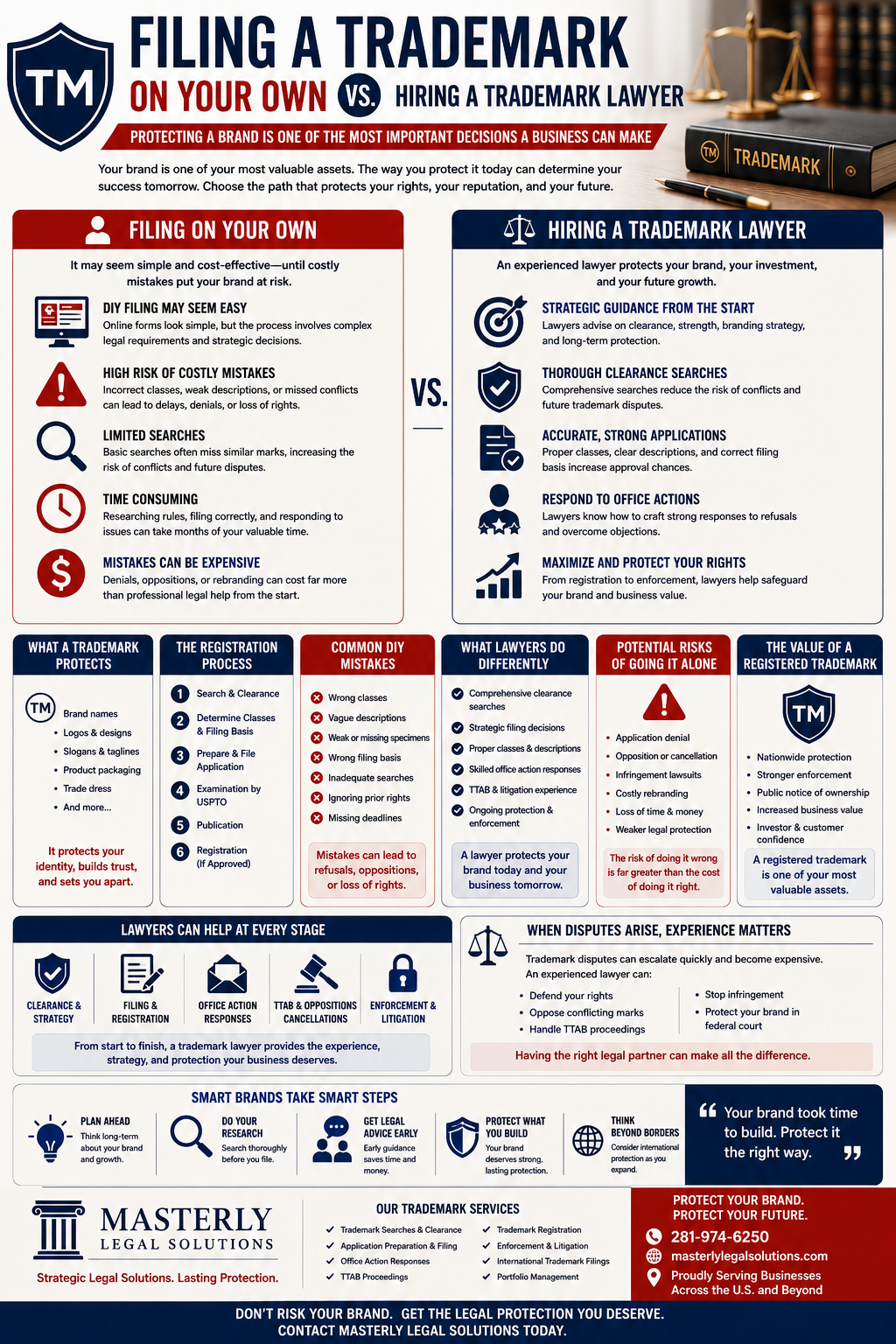
Filing a Trademark on Your Own vs. Hiring a Trademark Lawyer
Protecting a Brand Is One of the Most Important Decisions a Business Can Make
Starting a business often involves excitement, creativity, and years of hard work. Entrepreneurs spend countless hours developing products, creating marketing strategies, and building strong relationships with customers. One of the most valuable assets a company can own is its brand identity. A business name, logo, slogan, or design can become the foundation of long-term success, making trademark protection extremely important for companies of all sizes.
Many business owners eventually realize they need trademark registration to protect their brand from unauthorized use or unfair competition. At that point, they often face a difficult question: should they handle the trademark filing process themselves or hire a trademark lawyer to guide them through it?
At Masterly Legal Solutions, we understand why this decision feels overwhelming for many entrepreneurs. Filing a trademark may appear simple at first because the United States Patent and Trademark Office provides online filing systems that seem easy to use. However, the trademark registration process involves much more than simply completing forms online. Mistakes during filing can create expensive legal problems that affect a company’s future, intellectual property rights, and overall brand protection strategy.
Understanding What a Trademark Actually Protects
A trademark is a word, phrase, symbol, logo, or design used to identify the source of goods or services. It helps consumers recognize that products or services come from the same source and allows businesses to build trust and reputation over time.
Trademark rights are valuable because they help businesses distinguish themselves in competitive markets. Without trademark protection, another company may attempt to copy a brand name or use confusingly similar marks that create confusion among consumers.
Trademark law exists to protect both businesses and customers. Consumers rely on trademarks to identify products they trust, while businesses depend on trademarks to preserve their reputation and market identity.
Why Trademark Registration Matters for Growing Businesses
Some business owners mistakenly believe they automatically own complete rights to a name simply because they started using it first. While limited common law rights may exist in certain circumstances, federal trademark registration provides significantly stronger legal protection.
Trademark registration through the patent and trademark office can provide:
- Exclusive rights to use the mark nationwide
- Stronger enforcement options
- Public notice of ownership
- Increased business value
- Better protection against infringement
- Greater credibility with investors and customers
A successfully registered trademark can become one of the most valuable assets a company owns over time.
Why Many Business Owners Attempt DIY Trademark Filing
Many entrepreneurs choose to file a trademark on their own because they want to save money. Online advertisements often make the trademark filing process appear quick and simple. Some filing websites suggest that anyone can complete trademark applications without legal assistance.
For small businesses operating on tight budgets, handling registration without attorneys may seem appealing. Business owners often believe they understand their own brand better than anyone else and assume the process is mostly administrative.
While self-filing is legally allowed, many applicants underestimate how technical trademark law can become once the registration process begins.
The Trademark Registration Process Is More Complex Than It Appears
At first glance, the trademark registration process may seem straightforward. A trademark applicant creates an account, completes forms, submits a filing fee, and waits for approval. In reality, the process involves many complicated legal considerations that affect the strength and validity of the trademark.
Applicants must carefully evaluate:
- Trademark classification issues
- Filing basis requirements
- Likelihood of confusion risks
- Trademark clearance concerns
- Proper goods and services descriptions
- Existing trademark rights
- Potential infringement problems
Mistakes during the trademark submission stage can lead to delays, denials, or future trademark disputes.
The Importance of a Proper Trademark Search
One of the most important steps before filing involves conducting a detailed trademark search. Many businesses skip this stage or rely only on quick online searches, which can create serious problems later.
A professional trademark search examines whether similar marks already exist within related industries or classifications. Trademark attorneys often conduct trademark clearance searches that review federal registrations, state registrations, business directories, domain names, and common law uses.
Failing to conduct trademark clearance searches properly may result in filing for a mark that conflicts with an existing business. This can lead to office action refusals, opposition proceedings, or even expensive trademark litigation later.
Why Trademark Clearance Matters Before Filing
Trademark clearance involves much more than simply checking whether an exact business name already exists. The patent and trademark office evaluates whether consumers may become confused by similarities between marks.
For example, marks do not need to be identical to create legal problems. Similar pronunciation, spelling, appearance, or commercial impression may still lead to rejection or infringement claims.
Trademark attorneys understand how to conduct trademark clearance searches thoroughly and identify potential conflicts before filing occurs. This due diligence often saves businesses significant money and stress later.
Common Mistakes Made During DIY Trademark Filing
Business owners filing without legal help frequently make avoidable errors during the registration process. These mistakes may delay approval or permanently damage the application.
Common problems include:
- Choosing incorrect trademark classes
- Providing vague descriptions
- Filing under the wrong filing basis
- Failing to conduct trademark clearance properly
- Submitting weak specimens
- Selecting descriptive brand names
- Ignoring existing trademark rights
Even minor filing errors can create complications requiring legal assistance later.
Why Trademark Attorneys Provide More Than Form Preparation
Many people assume trademark attorneys simply complete paperwork for clients. In reality, experienced trademark attorney services involve strategic legal analysis designed to strengthen long-term brand protection.
Trademark attorneys help clients evaluate risks before filing occurs. They assess potential conflicts, advise on naming strategies, and structure applications to maximize legal protection.
An attorney for trademark matters also helps businesses align intellectual property strategies with long-term business goals. Trademark registration should support future expansion, marketing plans, licensing opportunities, and overall brand development.
Understanding the Role of the Trademark Office
The trademark office reviews applications to determine whether marks qualify for federal registration. Examining attorneys evaluate applications for conflicts, descriptiveness, procedural errors, and compliance with trademark law requirements.
The patent and trademark office does not act as a personal advisor for applicants. Its role is to evaluate legal eligibility, not help applicants fix strategic mistakes or protect their interests.
This distinction is important because many business owners mistakenly believe the office will guide them through problems during the registration process.
What Happens When an Office Action Is Issued
One of the most common surprises during trademark filing is receiving an office action from the trademark office. An office action is an official refusal or request for clarification issued by the examining attorney.
Office action responses often require legal arguments involving trademark law, consumer confusion standards, descriptiveness analysis, or evidentiary support. Many self-filed applications receive office action refusals because the original filing lacked proper preparation.
Responding improperly to an office action can permanently damage an application or result in abandonment of the trademark registration attempt.
How Trademark Attorneys Handle Office Actions
Experienced trademark attorneys regularly respond to office action refusals and understand how to present persuasive legal arguments to the patent and trademark office.
An attorney may analyze:
- Likelihood of confusion issues
- Trademark descriptiveness concerns
- Specimen problems
- Classification disputes
- Technical filing defects
Strong responses often require detailed legal reasoning supported by trademark law precedent and prior decisions from the trademark trial and appeal board.
The Trademark Trial and Appeal Board Explained
Some trademark disputes eventually reach the trademark trial and appeal board. The trademark trial and appeal board handles administrative disputes involving opposition proceedings, cancellations, and appeals from examining attorney refusals.
TTAB proceedings can become highly technical and litigation-like. These matters frequently involve legal briefs, evidentiary submissions, discovery disputes, and formal procedural requirements.
Businesses attempting to handle complex trademark trial matters without experienced legal representation may struggle significantly against opposing attorneys.
Understanding TTAB Proceedings and Opposition Cases
TTAB proceedings occur when another party formally challenges a trademark application or registration. Existing trademark owners may oppose applications they believe create confusion or threaten their intellectual property rights.
Opposition disputes often involve arguments regarding:
- Likelihood of confusion
- Priority of use
- Trademark dilution
- Fraud allegations
- Descriptiveness issues
- Trade dress conflicts
Trademark disputes before the trial and appeal board can become extremely expensive without careful legal planning.
Cancellation Proceedings Can Threaten Existing Registrations
Even businesses that successfully complete registration may later face a cancellation proceeding. Competitors or opposing trademark owners may petition the trademark trial and appeal board to cancel an existing registration under certain circumstances.
Trademark attorneys help clients defend registrations and preserve trademark rights during these disputes. Strong early filing strategies often reduce the likelihood of future cancellation problems.
Businesses investing heavily in branding should understand that trademark protection requires ongoing legal attention beyond initial registration.
Trademark Litigation Can Become Extremely Expensive
Trademark litigation often occurs when businesses accuse each other of trademark infringement, unfair competition, or unauthorized use of protected intellectual property.
These disputes may proceed in federal court and involve substantial legal costs. Litigation may require expert witnesses, discovery procedures, depositions, and extensive legal briefing.
Businesses that fail to conduct proper trademark clearance before filing sometimes discover conflicts only after investing heavily in marketing and brand development.
The Cost of Rebranding After Trademark Problems
Many business owners focus only on the initial cost of hiring trademark attorneys without considering the financial consequences of trademark disputes later.
If a business receives a cease-and-desist letter after investing in signage, packaging, websites, advertising, and customer recognition, rebranding costs can become enormous.
A forced rebrand may require:
- New logos
- New websites
- Updated packaging
- Revised marketing campaigns
- New business filings
- Customer reeducation
Proper trademark protection early often prevents these expensive problems later.
Why Trademark Lawyers Focus on Long-Term Brand Protection
Trademark lawyers do more than secure registrations. They help businesses build sustainable trademark registration and brand protection strategies designed to protect long-term growth and expansion.
A trademark portfolio may eventually include:
- Multiple trademarks
- Trade dress protection
- International registrations
- Licensing agreements
- Enforcement strategies
- Monitoring programs
Managing intellectual property effectively requires planning far beyond a single filing.
International Trademark Protection Considerations
Businesses operating online often attract customers across state and international borders. As companies grow, integrating legal and business consulting services alongside international trademark association issues may become relevant for global expansion.
Trademark attorneys help businesses evaluate whether foreign registration or international filings may become necessary. International intellectual property protection often involves separate treaties, filing systems, and legal requirements.
DIY applicants rarely consider international trademark complications during early brand development stages.
Why Intellectual Property Matters to Modern Businesses
Modern businesses depend heavily on intellectual property to maintain competitive advantages. Brand identity, consumer trust, and market recognition all connect closely to trademark rights and overall intellectual property protection.
Strong intellectual property and legal business consulting strategies help businesses:
- Protect market reputation
- Increase company value
- Prevent unauthorized use
- Support expansion opportunities
- Strengthen investor confidence
Companies ignoring intellectual property concerns may face serious challenges later.
The Difference Between Trademark Attorneys and Patent Attorneys
Some people confuse trademark attorneys with patent attorney services, but these practice areas involve different legal specialties. Patent portfolios focus on inventions and technical innovations, while trademarks protect brand identity and consumer recognition.
Certain attorneys handle both patent and trademark matters, while others focus specifically on trademark law and brand protection.
Businesses should choose attorneys with experience directly relevant to their specific intellectual property needs, including firms that offer a wide range of tailored legal services.
Why Experienced Trademark Attorneys Matter
Experienced trademark attorneys understand how small filing decisions may affect future enforcement rights, litigation risks, and registration success.
An experienced trademark attorney often provides:
- Strategic filing advice
- Risk evaluation
- Trademark clearance analysis
- Office action defense
- TTAB representation
- Trademark litigation support
This expertise often becomes critical when disputes arise involving infringement or conflicting registrations.
How Trademark Lawyers Represent Clients During Disputes
Trademark disputes sometimes escalate into formal litigation or administrative proceedings. Attorneys represent clients during negotiations, cease-and-desist disputes, TTAB proceedings, and federal court litigation.
Lawyers handling intellectual property litigation must understand procedural rules, trademark law precedent, evidentiary standards, and strategic negotiation techniques.
Businesses facing infringement allegations should seek legal counsel immediately to avoid escalating liability.
Why Trade Dress Protection Matters
Trade dress protection involves the visual appearance or packaging associated with a brand. Trade dress may include product packaging, restaurant layouts, store designs, or distinctive visual elements connected to consumer recognition.
Trade dress disputes can become highly complex because businesses must prove consumers associate the appearance with the same source of goods or services.
Trademark attorneys often help businesses evaluate whether trade dress protection should become part of a broader trademark portfolio strategy.
The Importance of Filing Basis Selection
Trademark applications require applicants to identify an appropriate filing basis. The filing basis determines whether the applicant already uses the mark commercially or intends to use it later.
Selecting the wrong filing basis can create procedural complications or legal vulnerabilities. Many self-filed applications encounter problems because applicants misunderstand these technical requirements.
Trademark attorneys help clients select the appropriate filing basis while ensuring compliance with trademark law standards.
Trademark Infringement Risks for Businesses
Trademark infringement occurs when another party uses a confusingly similar mark in commerce without authorization. Infringement disputes can harm businesses financially and damage brand reputation.
Trademark owners often must actively enforce their rights to preserve legal protection. Failure to respond to unauthorized use may weaken enforcement claims later.
Strong registration and monitoring strategies help businesses respond quickly when infringement issues arise.
Why Businesses Need Great Communication With Their Attorneys
Choosing the best attorney involves more than technical legal knowledge alone. Great communication matters significantly during the trademark registration process and any future disputes.
Clients benefit when attorneys explain:
- Filing strategies
- Legal risks
- Timeline expectations
- Office action responses
- Litigation possibilities
Strong communication helps business owners make informed decisions regarding intellectual property protection.
The Value of Working With a Dedicated Law Firm
A dedicated law firm focused on trademark services often provides broader strategic guidance than online filing companies or automated platforms, including ongoing general counsel services for businesses.
Law firms may help clients with:
- Brand development
- Intellectual property litigation
- Trademark disputes
- Portfolio management
- Registration strategy
- Enforcement planning
A firm experienced in trademark work often becomes a long-term legal partner for growing businesses.
The Role of Federal Court in Trademark Disputes
Some trademark disputes eventually move into federal court when businesses pursue infringement claims or defend against accusations involving unauthorized use.
Federal court litigation may involve:
- Injunction requests
- Financial damages
- Consumer confusion analysis
- Trademark validity challenges
- Unfair competition claims
Businesses attempting to handle serious trademark disputes without experienced attorneys often face significant disadvantages, especially when they lack support from a comprehensive, client-centered law firm.
Why Trademark Registration Is an Investment, Not Just a Filing Fee
Some business owners focus only on the immediate filing costs associated with trademark registration. However, trademarks should be viewed as long-term business investments rather than simple administrative expenses.
A properly protected brand may eventually increase company value, attract investors, support licensing opportunities, and strengthen consumer trust.
Businesses investing heavily in marketing, including social media and influencer campaigns, deserve strong legal protection against related marketing risks for the intellectual property they create.
What Many DIY Applicants Overlook
Many self-filed trademark applications fail because applicants underestimate the complexity of trademark law. Online systems make filing appear easy, but successful registration requires careful legal analysis and strategic planning.
DIY applicants often overlook:
- Existing conflicting marks
- Classification errors
- Enforcement risks
- Long-term business goals
- International concerns
- Future litigation exposure
A mistake made during filing may create years of complications later.
Why Best Lawyers Focus on Prevention
Many of the best lawyers handling trademark matters focus heavily on prevention rather than reacting to disputes after they arise. Proper due diligence, trademark clearance, and strategic filing often prevent expensive litigation later.
Prevention-focused trademark services help businesses avoid:
- Costly rebranding
- Registration denials
- Trademark disputes
- Infringement lawsuits
- TTAB proceedings
Preventive legal strategies usually cost far less than resolving litigation later.
How Trademark Law Continues to Evolve
Trademark law evolves constantly through appellate courts, federal court decisions, TTAB rulings, and changing commercial practices. Attorneys practicing in this area must stay informed about developments affecting intellectual property rights and enforcement standards.
Organizations such as the American Bar Association and International Trademark Association often provide continuing education and industry updates for attorneys practicing trademark law.
Businesses relying solely on online filing systems may miss important legal developments affecting their rights.
Why World Trademark Review Recognition Matters
Many businesses researching trademark attorneys encounter publications such as World Trademark Review or world report rankings discussing intellectual property professionals and leading firms.
While awards alone do not guarantee success, recognition from respected organizations may indicate extensive experience handling trademark disputes, litigation, and registration matters.
Businesses should evaluate whether attorneys have experience relevant to their industry, business goals, and intellectual property needs.
Trademark Trial Experience Can Matter Significantly
Not every trademark attorney handles trademark trial matters or litigation disputes. Businesses facing oppositions, cancellations, or infringement claims often benefit from attorneys experienced with trademark trial and appeal proceedings.
USPTO's trademark trial systems involve unique procedural rules that differ from standard civil litigation. Attorneys handling inter partes proceedings and TTAB proceedings must understand these specialized requirements carefully.
Trial experience may become extremely important if disputes escalate unexpectedly.
How Masterly Legal Solutions Helps Businesses Protect Their Brand
At Masterly Legal Solutions, we understand how much work goes into building a successful brand. Businesses invest enormous time, creativity, and financial resources developing products and earning customer trust. Our firm works with clients seeking strong trademark protection and comprehensive business consulting strategies tailored to their unique business goals.
Our attorneys assist clients with trademark search analysis, trademark filing, trademark registration, office action responses, brand protection planning, intellectual property disputes, and related business consulting services. Whether you are filing your first trademark application or managing a growing trademark portfolio, our legal team works to help protect your intellectual property rights effectively.
We understand that every trademark matter involves unique business concerns requiring personalized legal guidance and strategic planning.
Speak With Masterly Legal Solutions About Your Trademark Filing
If you are considering filing a trademark for your business, do not assume the process is as simple as filling out online forms. Trademark registration decisions can affect your brand, business growth, intellectual property rights, and future legal risks for years to come.
At Masterly Legal Solutions, our attorneys help clients evaluate trademark clearance issues, prepare applications, respond to office action refusals, and defend valuable intellectual property rights. Whether you need assistance with trademark filing, trademark disputes, trademark litigation, or long-term brand protection strategies, our firm is ready to help.
Contact us at (972) 236-5051 for a free consultation. We can answer your questions, discuss your business goals, and help you determine whether handling your trademark filing independently or working with an experienced trademark lawyer is the best decision for your situation.
Disclaimer: This article is provided for informational and educational purposes only and does not constitute legal advice. Reading this article does not create an attorney-client relationship with Masterly Legal Solutions. Trademark law, intellectual property disputes, and registration matters vary depending on the facts and circumstances involved. Individuals and businesses facing trademark concerns should consult directly qualified attorney regarding their specific legal situation.

Teacher Rights When Assaulted by a Special Needs Student: Safety, Reporting and Investigation Issues







Looking for Legal & Business Solutions? Contact Us Now
Fill in the form or call us to set up a meeting