

CPS Called Me: What Parents in Texas Should Never Do During an Investigation
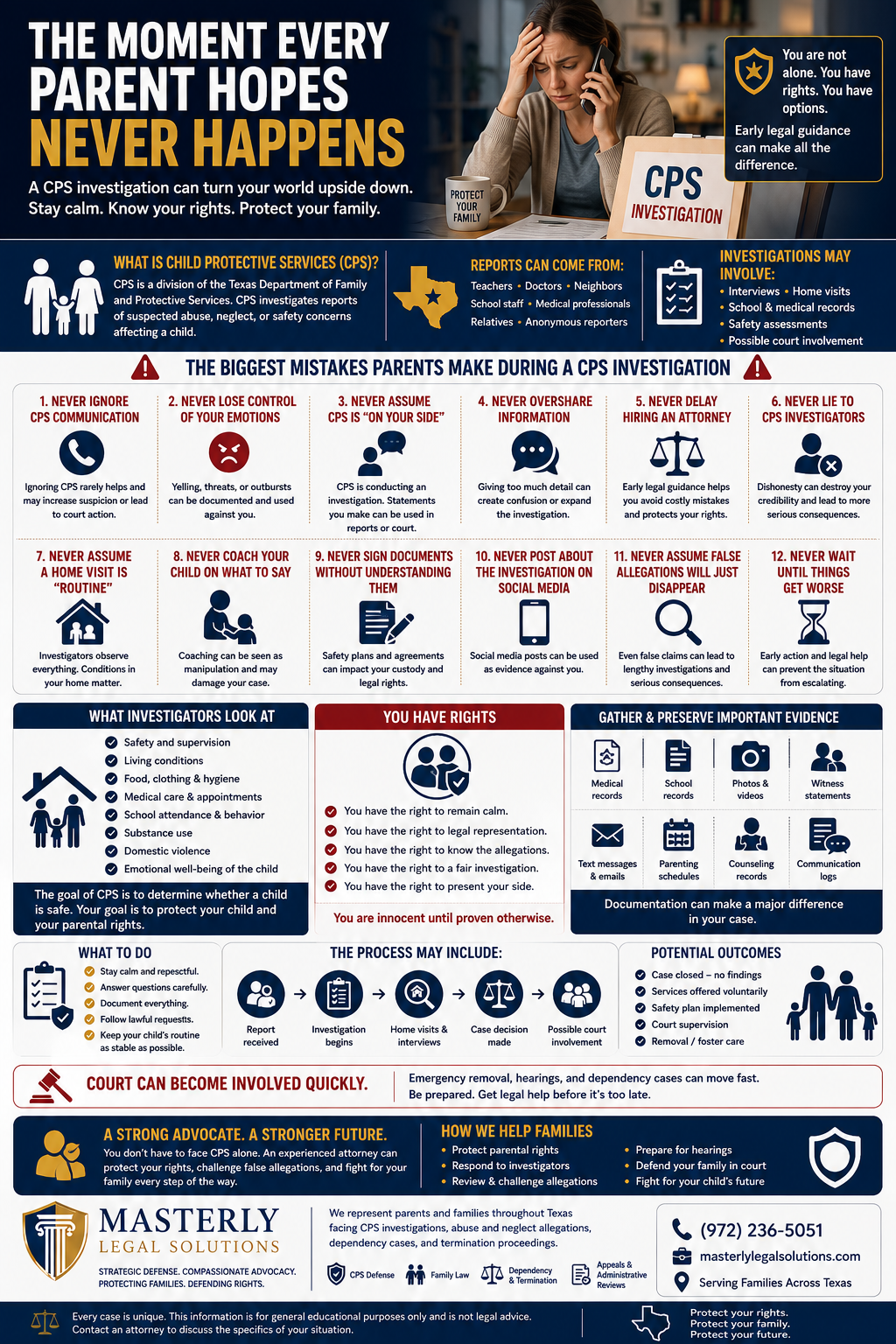
The Moment Every Parent Hopes Never Happens
Few situations create panic faster than receiving a call from Child Protective Services. Many parents immediately feel fear, confusion, anger, or disbelief when they learn that cps is investigating their family. Some assume there must be a misunderstanding that will clear itself up quickly. Others panic and begin making emotional decisions that unintentionally make the situation worse.
A CPS investigation can affect nearly every part of a family’s life. The process may involve interviews, home visits, school communication, medical reviews, safety assessments, and possible court involvement. Even when allegations are false or exaggerated, the investigation itself can become overwhelming for parents trying to protect their child and preserve family stability.
Many families make serious mistakes during the early stages of a cps investigation simply because they do not understand how the system works. Emotional reactions, oversharing information, arguing with investigators, or failing to seek legal guidance can significantly affect the outcome of the case.
At Masterly Legal Solutions, our law firm focuses on representing parents and defending families during texas child protective services investigations. As a Texas-based firm offering a broad range of legal and business services, our client-centered legal team helps clients navigate difficult circumstances with preparation, legal strategy, and professional guidance designed to protect parental rights and reduce unnecessary risk during the investigative process.
Understanding What Child Protective Services Does in Texas
Child Protective Services is a division of the Texas Department of Family and Protective Services responsible for investigating reports involving suspected child abuse, neglect, or safety concerns affecting a child. The agency reviews allegations involving physical abuse, emotional abuse, sexual abuse, unsafe living conditions, medical neglect, domestic violence, and other concerns involving the well being of children.
Many reports come from teachers, doctors, school employees, neighbors, medical professionals, or anonymous individuals. When educators are involved, having support from a Texas education law attorney for teachers and staff can be critical. In some cases, misunderstandings or false claims trigger investigations that quickly escalate before parents fully understand what is happening.
Child protective services cps investigators are trained to evaluate safety concerns and determine whether a child may be at risk. Their role is not limited to criminal abuse allegations. CPS may also investigate concerns related to supervision, housing conditions, substance use, medical care, or family conflict.
Because the process can move quickly, parents should take every CPS contact seriously from the very beginning.
Why Parents Often Panic During a CPS Investigation
For many parents, the idea of being investigated by cps feels deeply personal and frightening. People naturally fear losing custody of their child or damaging their family’s reputation. These emotions often lead to rushed decisions and harmful mistakes.
Some parents become defensive and angry during the first meeting with investigators. Others begin talking excessively because they believe cooperating fully will make the case disappear faster. Unfortunately, emotional responses can complicate the investigation and create additional concerns for protective services investigators.
Fear can also cause families to delay seeking legal representation. Many parents assume hiring an attorney will make them appear guilty when, in reality, early legal guidance often helps families avoid damaging mistakes during the investigation process.
Never Ignore CPS Communication
One of the worst mistakes parents can make is ignoring communication from child protective services. Some people panic and hope the situation will disappear if they avoid returning calls or refusing to answer the door.
Ignoring cps rarely helps. In many situations, it creates additional concern for investigators and may increase suspicion regarding the family’s willingness to cooperate. Child protective services cps investigators may continue attempting contact through school visits, medical providers, relatives, or additional home visits.
Avoiding communication may also accelerate requests for court involvement or emergency intervention. Parents should remain calm and respond carefully rather than disappearing or refusing all communication.
Never Lose Control of Your Emotions
Receiving allegations involving abuse or neglect can feel insulting and deeply upsetting. However, yelling at investigators, making threats, or behaving aggressively can seriously damage a case.
Investigators observe not only what parents say but also how they behave during interviews and home visits. Angry outbursts may be documented and later presented as evidence regarding the emotional environment inside the home.
Parents should remain respectful and controlled even when they strongly disagree with the allegations. Emotional control demonstrates stability and judgment during stressful circumstances.
Never Assume CPS Is “On Your Side”
Many parents mistakenly believe cps investigators are there solely to help the family. While some investigators approach cases fairly and professionally, parents must remember that child protective services is conducting an official investigation.
Statements made during interviews may later appear in reports, court hearings, or administrative reviews. Casual comments can be misunderstood or taken out of context.
This does not mean parents should be hostile or uncooperative. Instead, families should approach the process carefully and understand the importance of obtaining proper legal counsel early.
Never Overshare Information During Interviews
Parents often believe they must answer every question in great detail to appear cooperative. In reality, oversharing can unintentionally create confusion or raise unrelated concerns.
Some parents begin discussing marital problems, financial struggles, past mistakes, medical history, or unrelated incidents that have nothing to do with the original report. Investigators may then expand the scope of the investigation beyond the initial allegations.
Families should answer questions thoughtfully and avoid volunteering unnecessary information. A cps attorney can help parents understand how to communicate effectively while protecting their legal interests.
Never Allow Fear to Prevent You From Hiring an Attorney
Some parents hesitate to hire a lawyer because they worry it will make them appear guilty. This is one of the most dangerous misconceptions families face during cps investigations.
An attorney exists to protect parental rights, explain the process, and help families avoid costly mistakes. Early legal guidance often reduces confusion and helps parents understand their options before the situation escalates.
A lawyer for cps cases can evaluate allegations, review documentation, prepare families for interviews, and develop a legal strategy focused on protecting the child and family throughout the investigation.
Never Lie to CPS Investigators
Honesty matters during any child protective services investigation. Providing false information, hiding evidence, or intentionally misleading investigators can create serious problems later in the case.
Investigators often collect records from schools, medical providers, social services agencies, and other sources. Inconsistencies between statements and documentation may damage credibility significantly.
If parents are uncertain how to answer questions, they should speak with an attorney rather than guessing or making inaccurate statements.
Never Assume a Home Visit Is “Routine”
Home visits are a critical part of many cps investigations. Investigators evaluate living conditions, sleeping arrangements, food availability, supervision concerns, and overall safety inside the home.
Parents sometimes make the mistake of treating home visits casually because they believe the allegations are minor. However, investigators are trained to observe details carefully during these visits.
Potential concerns may include:
- Unsafe living conditions
- Lack of food
- Drug paraphernalia
- Dangerous objects accessible to a child
- Signs of neglect
- Hygiene concerns
- Sleeping arrangements
- Medication storage
Families should take home visits seriously and remain calm and cooperative throughout the process.
Never Coach Your Child on What to Say
Parents naturally want to protect their child during stressful situations. However, attempting to coach kids on what to say during interviews can create major problems if investigators suspect manipulation.
Child protective services investigators are trained to evaluate statements from children carefully. Coaching allegations can undermine credibility and create additional concerns regarding the family environment.
Parents should avoid pressuring children or rehearsing answers before interviews. Instead, families should focus on remaining calm and seeking proper legal guidance.
Never Sign Documents Without Understanding Them
During a cps investigation, parents may be asked to sign safety plans, releases, service agreements, or consent forms. Some families sign documents immediately without fully understanding the consequences.
Certain agreements may affect custody arrangements, visitation rights, living conditions, or parental responsibilities. Even temporary agreements can significantly impact the direction of a case.
Parents should review documents carefully before signing anything. An attorney can explain whether proposed agreements may create legal risks later.
Never Refuse to Seek Legal Representation
Parents facing serious allegations involving abuse or neglect should strongly consider seeking legal representation early in the process. Some families wait until court hearings begin before contacting an attorney, which may limit available options.
A cps attorney helps clients understand their rights, prepare documentation, respond strategically to investigators, and protect the family throughout the investigation.
Early legal involvement may also help parents avoid misunderstandings that later become damaging evidence.
Never Minimize Medical Concerns
Medical issues often play a major role in cps investigations. Allegations involving injuries, missed appointments, medication concerns, or treatment disagreements may trigger agency involvement.
Parents should never dismiss medical allegations casually, especially when investigators request records or physician information. CPS may review hospital reports, pediatric records, therapy notes, or mental health evaluations as part of the investigation.
Medical documentation frequently becomes important evidence during dependency proceedings or administrative reviews.
Never Post About the Investigation on Social Media
Social media activity can significantly affect cps cases. Parents sometimes post emotional reactions online because they feel frustrated, embarrassed, or angry about the investigation.
Unfortunately, social media posts may later become evidence used by investigators, attorneys, or the court. Even jokes, indirect comments, or emotional posts can create negative impressions regarding judgment or parenting behavior.
Families should avoid discussing the investigation publicly online.
Never Assume False Allegations Will Automatically Disappear
Many parents believe false claims will quickly resolve once investigators hear their side of the story. Unfortunately, even unsupported allegations can lead to lengthy investigations and ongoing scrutiny.
Child protective services investigators often continue reviewing allegations until they feel sufficient evidence exists to close the case safely. During this time, families may experience repeated interviews, home visits, and requests for documentation.
Parents should take all allegations seriously regardless of whether they believe the claims are false.
Never Forget That Schools May Be Involved
Schools frequently become involved in cps investigations because teachers and school employees are mandatory reporters under texas law. Investigators may interview a child at school without notifying parents beforehand depending on the circumstances.
School records, attendance concerns, behavioral reports, and communication with staff may become part of the investigation process. Parents should avoid confronting school employees aggressively about reports or interviews.
Instead, families should focus on understanding the allegations and obtaining proper legal guidance.
Never Delay Gathering Important Evidence
Evidence becomes extremely important during child protective services cps investigations. Families should preserve documents, messages, records, photographs, and communication relevant to the allegations.
Helpful evidence may include:
- Medical records
- School records
- Photographs
- Witness statements
- Text messages
- Counseling records
- Parenting schedules
- Communication logs
An attorney can help determine which evidence may support the family’s position during the investigation.
Never Ignore the Possibility of Court Involvement
Some parents assume cps investigations remain entirely administrative. However, certain cases escalate into formal court proceedings involving custody, dependency, or removal concerns.
Court hearings may occur quickly in emergency situations involving allegations of abuse or neglect. Parents who are unprepared for these hearings may struggle to respond effectively under pressure.
Early preparation and legal guidance can help families understand possible outcomes before emergency action occurs.
Never Assume Cooperation Means Giving Up Your Rights
Parents often worry that requesting an attorney or asking questions will appear uncooperative. In reality, families can cooperate respectfully while still protecting their parental rights.
An attorney helps clients understand which requests require consent and which actions may have legal consequences. Professional legal guidance often improves communication between families and investigators by reducing confusion and emotional conflict.
Never Allow Fear to Isolate Your Family
Many families become isolated during cps investigations because they feel embarrassed or afraid of judgment from relatives, friends, or the community. The emotional pressure can become overwhelming quickly.
Support systems matter during these situations. Trusted family members, counselors, and legal professionals can help parents remain focused and emotionally stable throughout the process.
Parents should remember they are not alone, even when the investigation feels frightening or humiliating.
Never Ignore Substance Abuse Concerns
Allegations involving substance abuse often receive heightened attention from protective services investigators. Drug or alcohol concerns may affect decisions involving supervision, safety, and custody arrangements.
Parents should take these allegations seriously even if they believe the claims are exaggerated or outdated. Voluntary evaluations, counseling, or treatment participation may become relevant during the investigation process.
An attorney can help families navigate these sensitive situations carefully.
Never Assume CPS Investigators Have All the Facts
Investigators often begin cases with limited information from a report or third-party source. Initial allegations may contain inaccuracies, misunderstandings, or incomplete details.
Families should not assume investigators fully understand the situation during early interactions. Calm communication, proper documentation, and organized responses often help clarify important facts during the investigation.
Never Miss Scheduled Meetings or Hearings
Missed hearings, appointments, or meetings can create additional concerns during cps investigations. Investigators and the court may interpret missed appearances as noncompliance or lack of concern.
Parents should carefully track deadlines, meeting times, service requirements, and court dates throughout the process. Organization becomes extremely important during dependency proceedings.
Never Speak Carelessly About the Other Parent
Family conflict frequently overlaps with child protective services investigations. Parents involved in custody disputes sometimes attempt to use cps claims strategically against one another.
Making exaggerated accusations or emotional attacks against the other parent can complicate the investigation significantly. Investigators often recognize high-conflict situations and may scrutinize statements carefully.
Families should remain factual and avoid emotional attacks during interviews or hearings.
Never Ignore Mental Health Concerns
Mental health issues do not automatically make someone an unfit parent. However, untreated mental health concerns may become part of the investigation if they affect parenting, supervision, or the well being of the child.
Parents should avoid hiding mental health treatment history or medication concerns. Proper documentation and ongoing treatment may actually support the family’s position during the process.
Never Assume CPS Will “Just Close the Case”
Some families believe cooperating fully guarantees the case will close quickly. However, investigations often continue longer than parents expect, especially when allegations involve medical concerns, dependency issues, or repeated reports.
Parents should remain careful throughout the entire process and avoid becoming overly relaxed simply because initial meetings appeared positive.
Never Consent to Everything Without Legal Advice
During investigations, parents may feel pressured to agree to counseling, classes, evaluations, or temporary placements without understanding the long-term implications.
Some agreements may later affect custody decisions or create additional legal complications. Families should carefully evaluate recommendations before providing consent.
A cps attorney helps clients understand which requests may benefit the case and which may create unnecessary risk.
Never Underestimate the Emotional Impact on Your Child
Children often feel confused, scared, or anxious during cps investigations. Interviews, home visits, and family tension can affect a child emotionally even when the allegations are unsubstantiated.
Parents should focus on maintaining calm routines and emotional stability whenever possible. Protecting the child emotionally is just as important as responding legally during the investigation.
Never Wait Until Things Get Worse
One of the biggest mistakes families make is waiting too long before seeking legal help. Many parents hope the situation will resolve on its own until the investigation suddenly escalates.
By the time removal threats, dependency proceedings, or court hearings occur, important opportunities may already have been missed. Early legal intervention often helps families respond more effectively from the start.
How a CPS Attorney Can Help Protect Families
A cps attorney plays a critical role during investigations involving child protective services. Attorneys provide guidance, prepare families for interviews, evaluate allegations, and help develop a legal strategy focused on protecting the family’s rights.
At Masterly Legal Solutions, our team has extensive experience defending families during cps cases throughout Texas. We understand how overwhelming these situations become for parents facing allegations involving abuse or neglect.
Our firm focuses on proactive representation designed to help clients navigate the system carefully and strategically.
Why Legal Strategy Matters During CPS Investigations
Every decision made during a cps investigation can affect the outcome of the case. Families who react emotionally or without proper guidance sometimes create additional concerns unintentionally.
A thoughtful legal strategy may help:
- Protect parental rights
- Clarify allegations
- Organize evidence
- Prepare for hearings
- Address agency concerns
- Reduce unnecessary conflict
- Protect custody interests
Legal guidance allows families to approach the process with preparation rather than panic.
Defending Families During Difficult Circumstances
At Masterly Legal Solutions, we understand that most parents involved in cps investigations care deeply about their child and want to protect their family. Many families facing investigations are overwhelmed, frightened, and unsure where to turn for reliable guidance.
Our law firm focuses on defending families through strategic legal representation, careful preparation, and professional advocacy throughout the investigation process. We work closely with clients to help them understand the system, respond appropriately, and protect their legal rights.
When You Should Contact a Lawyer for CPS Cases
Families should strongly consider contacting a lawyer for cps cases as early as possible after receiving notice of an investigation. Early legal guidance may help parents avoid mistakes that later affect custody, hearings, or agency decisions.
Whether the allegations involve abuse, neglect, medical concerns, school reports, or dependency issues, obtaining professional legal counsel quickly can make a major difference in how the case develops.
How Child Neglect Allegations Can Escalate Quickly
Allegations involving child neglect are among the most common reasons Child Protective Services becomes involved with a family in Texas. These claims may involve concerns about supervision, medical care, school attendance, hygiene, housing conditions, or access to basic necessities. Even when parents believe the situation has been misunderstood, CPS investigators may still open a formal investigation and begin gathering information from multiple sources. Families should take neglect allegations seriously because these cases can escalate quickly if concerns are not addressed properly. Early legal guidance may help parents respond strategically while protecting their parental rights and family stability.
Why Family Law Experience Matters in CPS Cases
CPS investigations often overlap with important family law issues involving custody, visitation, parental rights, and household decision-making. Families already dealing with divorce disputes, co-parenting conflicts, or prior court orders may face additional complications once CPS becomes involved. An attorney familiar with both CPS defense and family law can help parents understand how the investigation may affect existing legal arrangements. These situations often require careful planning because statements made during a CPS investigation may later impact custody disputes or future court proceedings. Families benefit from working with legal professionals who understand the connection between CPS investigations and broader family legal matters.
How Attorneys Help Defend Parents During CPS Investigations
One of the primary goals of a CPS defense attorney is to defend parents against allegations that may threaten custody, reputation, or family stability. Parents often feel overwhelmed during investigations because they fear losing access to their child or facing long-term consequences based on misunderstandings or incomplete information. Attorneys help families organize documentation, respond appropriately to investigators, and avoid mistakes that could negatively affect the case. Legal representation may also help parents communicate more effectively with CPS while protecting important legal rights throughout the investigation process. Strong preparation and strategic guidance can make a significant difference during these emotionally difficult situations.
Understanding the Risk of Foster Care Placement
When CPS believes a child may be in immediate danger, investigators may pursue emergency placement options that could involve foster care. This possibility creates enormous fear for parents who worry about separation from their children during the investigation process. In many situations, families do not realize how quickly cases can escalate once removal discussions begin. Parents should never assume CPS will avoid removal simply because they believe the allegations are false or exaggerated. Early legal intervention may help families address agency concerns before more aggressive actions are taken.
Why Parents Should Understand CPS Requirements
Many families unknowingly create problems during investigations because they do not fully understand CPS requirements or expectations. Investigators may request interviews, home visits, evaluations, safety plans, or documentation within short timeframes. Failing to respond appropriately can increase agency concerns and potentially affect how the case moves forward. Parents should carefully review requests and seek legal guidance before agreeing to conditions they do not understand completely. Understanding the process early often helps families avoid unnecessary complications later.
The Role Social Workers Play in CPS Investigations
Social workers are often heavily involved in CPS investigations and may conduct interviews, home visits, and assessments throughout the case. These professionals evaluate family dynamics, living conditions, parenting concerns, and child safety issues while preparing reports for the agency or court. Parents should remember that social workers document observations carefully during every interaction. Even informal conversations may later appear in written reports or hearing testimony. Remaining calm, respectful, and organized during these interactions is extremely important.
How CPS Claims to Evaluate the Best Interests of a Child
CPS investigators frequently state that their decisions are based on the best interests of the child during an investigation. This standard may involve evaluating safety concerns, emotional stability, supervision, school attendance, medical care, and overall household conditions. However, parents sometimes feel frustrated because they believe investigators reached conclusions before hearing the full story. Legal representation may help families present important information, supporting evidence, and context that investigators may have overlooked initially. Protecting a child’s well-being also includes preserving healthy family relationships whenever possible.
Why CPS Cases Involve Some of the Most Important Decisions Parents Will Ever Face
Few situations create more pressure than a CPS investigation because parents are often forced to make some of the most important decisions of their lives under extreme emotional stress. Choices involving interviews, consent forms, safety plans, and legal representation can affect the future of the entire family. Many parents feel overwhelmed and uncertain about whom to trust once CPS becomes involved. This is why early legal guidance and careful preparation are so critical during the process. Making informed decisions early may help families avoid long-term consequences later.
Important Decisions Should Never Be Made in Panic
Parents facing CPS allegations often feel pressured to make important decisions immediately without fully understanding the consequences. Fear, anger, embarrassment, and confusion can lead families to agree to conditions or provide information without careful thought. However, rushed decisions during a CPS investigation may later affect custody rights, court proceedings, or agency findings. Families should remain calm and seek professional guidance before responding emotionally to investigator requests or allegations. Careful planning is often far more effective than reacting out of fear.
Why Professional Assistance Matters During CPS Investigations
Professional legal assistance can help families better understand the investigation process, prepare for interviews, and protect their legal rights during stressful situations. Many parents underestimate how serious CPS involvement can become until court hearings or removal discussions begin. Attorneys help families navigate complicated procedures while reducing confusion and unnecessary mistakes. Having guidance from a legal professional may also help parents communicate more effectively with investigators and agency representatives. Early assistance often provides families with greater confidence during an otherwise overwhelming experience.
The Importance of Experience and Expertise in CPS Defense
CPS investigations involve unique procedures, deadlines, agency practices, and legal standards that require focused expertise and extensive experience. Attorneys who regularly handle CPS matters understand how investigators evaluate cases and what evidence may influence agency decisions. Families benefit from working with legal professionals who understand the emotional and legal challenges these cases create. Strategic preparation, detailed documentation, and careful communication often play major roles in successful CPS defense efforts. Strong legal advocacy can help families feel more prepared and protected throughout the process.
Why Legal Knowledge Can Protect Families During Investigations
Many parents enter CPS investigations with very little knowledge about their legal rights, agency procedures, or possible outcomes. Unfortunately, this lack of understanding sometimes leads families to make decisions that unintentionally harm their case. Learning how the CPS system operates can help parents respond more effectively while avoiding unnecessary risks. Attorneys help clients understand what investigators can request, how hearings work, and which actions may create additional concerns. Knowledge and preparation often reduce fear while helping families stay focused during difficult circumstances.
Understanding CPS Appeals and Administrative Reviews
Not every CPS finding is final, and some families may have options involving administrative appeals or review procedures. Appeals may become necessary when parents believe investigators relied on incomplete information, misunderstandings, or unsupported allegations. These proceedings often require organized evidence, detailed preparation, and careful legal analysis. Families should not assume they must simply accept unfavorable findings without exploring possible options. Legal guidance can help determine whether appeals or additional review procedures may be appropriate.
Preparing for a Possible Trial in Serious CPS Cases
Although many CPS investigations resolve without formal litigation, some cases eventually proceed toward a court trial involving custody, parental rights, or dependency issues. Preparing for trial requires careful organization of documents, witness preparation, and strong legal strategy. Families facing serious allegations should understand that courtroom proceedings may involve testimony from investigators, medical providers, social workers, and other professionals. Strong legal representation becomes especially important when cases escalate to formal hearings or trial proceedings. Preparation and evidence often play critical roles in these situations.
Why Parents Fear Termination of Parental Rights
One of the greatest fears families face during CPS investigations is the possible termination of parental rights. Losing legal rights involving a child is one of the most serious actions a court can take against a parent. Although not every investigation involves termination proceedings, families should never assume the situation cannot escalate if allegations remain unresolved. Parents facing severe abuse or neglect claims should seek immediate legal guidance to better understand their options and protect their rights. Early intervention may help reduce the risk of more aggressive legal action later.
Why Every Family Needs a Strong Advocate During CPS Proceedings
Families involved in CPS investigations often feel isolated, overwhelmed, and uncertain about how to protect themselves during the process. Having a strong advocate can help parents feel more prepared while ensuring their concerns and evidence are presented clearly. Attorneys act as advocates by helping families navigate investigations, communicate strategically, and respond appropriately to agency actions. Legal representation may also help reduce misunderstandings and provide families with a clearer understanding of what to expect moving forward. During emotionally difficult situations, strong advocacy can make a meaningful difference for both parents and children.
How Child Neglect Allegations Can Escalate Quickly
Allegations involving child neglect are among the most common reasons Child Protective Services becomes involved with a family in Texas. These claims may involve concerns about supervision, medical care, school attendance, hygiene, housing conditions, or access to basic necessities. Even when parents believe the situation has been misunderstood, CPS investigators may still open a formal investigation and begin gathering information from multiple sources. Families should take neglect allegations seriously because these cases can escalate quickly if concerns are not addressed properly. Early legal guidance may help parents respond strategically while protecting their parental rights and family stability.
Why Family Law Experience Matters in CPS Cases
CPS investigations often overlap with important family law issues involving custody, visitation, parental rights, and household decision-making. Families already dealing with divorce disputes, co-parenting conflicts, or prior court orders may face additional complications once CPS becomes involved. An attorney familiar with both CPS defense and family law can help parents understand how the investigation may affect existing legal arrangements. These situations often require careful planning because statements made during a CPS investigation may later impact custody disputes or future court proceedings. Families benefit from working with legal professionals who understand the connection between CPS investigations and broader family legal matters.
How Attorneys Help Defend Parents During CPS Investigations
One of the primary goals of a CPS defense attorney is to defend parents against allegations that may threaten custody, reputation, or family stability. Parents often feel overwhelmed during investigations because they fear losing access to their child or facing long-term consequences based on misunderstandings or incomplete information. Attorneys help families organize documentation, respond appropriately to investigators, and avoid mistakes that could negatively affect the case. Legal representation may also help parents communicate more effectively with CPS while protecting important legal rights throughout the investigation process. Strong preparation and strategic guidance can make a significant difference during these emotionally difficult situations.
Understanding the Risk of Foster Care Placement
When CPS believes a child may be in immediate danger, investigators may pursue emergency placement options that could involve foster care. This possibility creates enormous fear for parents who worry about separation from their children during the investigation process. In many situations, families do not realize how quickly cases can escalate once removal discussions begin. Parents should never assume CPS will avoid removal simply because they believe the allegations are false or exaggerated. Early legal intervention may help families address agency concerns before more aggressive actions are taken.
Why Parents Should Understand CPS Requirements
Many families unknowingly create problems during investigations because they do not fully understand CPS requirements or expectations. Investigators may request interviews, home visits, evaluations, safety plans, or documentation within short timeframes. Failing to respond appropriately can increase agency concerns and potentially affect how the case moves forward. Parents should carefully review requests and seek legal guidance before agreeing to conditions they do not understand completely. Understanding the process early often helps families avoid unnecessary complications later.
The Role Social Workers Play in CPS Investigations
Social workers are often heavily involved in CPS investigations and may conduct interviews, home visits, and assessments throughout the case. These professionals evaluate family dynamics, living conditions, parenting concerns, and child safety issues while preparing reports for the agency or court. Parents should remember that social workers document observations carefully during every interaction. Even informal conversations may later appear in written reports or hearing testimony. Remaining calm, respectful, and organized during these interactions is extremely important.
How CPS Claims to Evaluate the Best Interests of a Child
CPS investigators frequently state that their decisions are based on the best interests of the child during an investigation. This standard may involve evaluating safety concerns, emotional stability, supervision, school attendance, medical care, and overall household conditions. However, parents sometimes feel frustrated because they believe investigators reached conclusions before hearing the full story. Legal representation may help families present important information, supporting evidence, and context that investigators may have overlooked initially. Protecting a child’s well-being also includes preserving healthy family relationships whenever possible.
Why CPS Cases Involve Some of the Most Important Decisions Parents Will Ever Face
Few situations create more pressure than a CPS investigation because parents are often forced to make some of the most important decisions of their lives under extreme emotional stress. Choices involving interviews, consent forms, safety plans, and legal representation can affect the future of the entire family. Many parents feel overwhelmed and uncertain about whom to trust once CPS becomes involved. This is why early legal guidance and careful preparation are so critical during the process. Making informed decisions early may help families avoid long-term consequences later.
Important Decisions Should Never Be Made in Panic
Parents facing CPS allegations often feel pressured to make important decisions immediately without fully understanding the consequences. Fear, anger, embarrassment, and confusion can lead families to agree to conditions or provide information without careful thought. However, rushed decisions during a CPS investigation may later affect custody rights, court proceedings, or agency findings. Families should remain calm and seek professional guidance before responding emotionally to investigator requests or allegations. Careful planning is often far more effective than reacting out of fear.
Why Professional Assistance Matters During CPS Investigations
Professional legal assistance can help families better understand the investigation process, prepare for interviews, and protect their legal rights during stressful situations. Many parents underestimate how serious CPS involvement can become until court hearings or removal discussions begin. Attorneys help families navigate complicated procedures while reducing confusion and unnecessary mistakes. Having guidance from a legal professional may also help parents communicate more effectively with investigators and agency representatives. Early assistance often provides families with greater confidence during an otherwise overwhelming experience.
The Importance of Experience and Expertise in CPS Defense
CPS investigations involve unique procedures, deadlines, agency practices, and legal standards that require focused expertise and extensive experience. Attorneys who regularly handle CPS matters understand how investigators evaluate cases and what evidence may influence agency decisions. Families benefit from working with legal professionals who understand the emotional and legal challenges these cases create. Strategic preparation, detailed documentation, and careful communication often play major roles in successful CPS defense efforts. Strong legal advocacy can help families feel more prepared and protected throughout the process.
Why Legal Knowledge Can Protect Families During Investigations
Many parents enter CPS investigations with very little knowledge about their legal rights, agency procedures, or possible outcomes. Unfortunately, this lack of understanding sometimes leads families to make decisions that unintentionally harm their case. Learning how the CPS system operates can help parents respond more effectively while avoiding unnecessary risks. Attorneys help clients understand what investigators can request, how hearings work, and which actions may create additional concerns. Knowledge and preparation often reduce fear while helping families stay focused during difficult circumstances.
Understanding CPS Appeals and Administrative Reviews
Not every CPS finding is final, and some families may have options involving administrative appeals or review procedures. Appeals may become necessary when parents believe investigators relied on incomplete information, misunderstandings, or unsupported allegations. These proceedings often require organized evidence, detailed preparation, and careful legal analysis. Families should not assume they must simply accept unfavorable findings without exploring possible options. Legal guidance can help determine whether appeals or additional review procedures may be appropriate.
Preparing for a Possible Trial in Serious CPS Cases
Although many CPS investigations resolve without formal litigation, some cases eventually proceed toward a court trial involving custody, parental rights, or dependency issues. Preparing for trial requires careful organization of documents, witness preparation, and strong legal strategy. Families facing serious allegations should understand that courtroom proceedings may involve testimony from investigators, medical providers, social workers, and other professionals. Strong legal representation becomes especially important when cases escalate to formal hearings or trial proceedings. Preparation and evidence often play critical roles in these situations.
Why Parents Fear Termination of Parental Rights
One of the greatest fears families face during CPS investigations is the possible termination of parental rights. Losing legal rights involving a child is one of the most serious actions a court can take against a parent. Although not every investigation involves termination proceedings, families should never assume the situation cannot escalate if allegations remain unresolved. Parents facing severe abuse or neglect claims should seek immediate legal guidance to better understand their options and protect their rights. Early intervention may help reduce the risk of more aggressive legal action later.
Why Every Family Needs a Strong Advocate During CPS Proceedings
Families involved in CPS investigations often feel isolated, overwhelmed, and uncertain about how to protect themselves during the process. Having a strong advocate can help parents feel more prepared while ensuring their concerns and evidence are presented clearly. Attorneys act as advocates by helping families navigate investigations, communicate strategically, and respond appropriately to agency actions. Legal representation may also help reduce misunderstandings and provide families with a clearer understanding of what to expect moving forward. During emotionally difficult situations, strong advocacy can make a meaningful difference for both parents and children.
How the Right Law Firm Can Help During a CPS Investigation
Choosing the right law firm during a CPS investigation can make a significant difference in how a family navigates the process. Parents facing allegations of abuse or neglect are often overwhelmed, emotional, and unsure how to respond when Child Protective Services becomes involved. An experienced legal team can help families understand their rights, organize important evidence, prepare for interviews, and respond strategically to investigator concerns. Instead of reacting out of fear or confusion, families can move forward with clearer guidance and stronger legal protection. Working with a law firm that focuses on CPS defense allows parents to approach the situation with greater preparation, confidence, and support during an extremely stressful time.
How Child Neglect Allegations Can Escalate Quickly
Allegations involving child neglect are among the most common reasons Child Protective Services becomes involved with a family in Texas. These claims may involve concerns about supervision, medical care, school attendance, hygiene, housing conditions, or access to basic necessities. Even when parents believe the situation has been misunderstood, CPS investigators may still open a formal investigation and begin gathering information from multiple sources. Families should take neglect allegations seriously because these cases can escalate quickly if concerns are not addressed properly. Early legal guidance may help parents respond strategically while protecting their parental rights and family stability.
Why Family Law Experience Matters in CPS Cases
CPS investigations often overlap with important family law issues involving custody, visitation, parental rights, and household decision-making. Families already dealing with divorce disputes, co-parenting conflicts, or prior court orders may face additional complications once CPS becomes involved. An attorney familiar with both CPS defense and family law can help parents understand how the investigation may affect existing legal arrangements. These situations often require careful planning because statements made during a CPS investigation may later impact custody disputes or future court proceedings. Families benefit from working with legal professionals who understand the connection between CPS investigations and broader family legal matters.
How Attorneys Help Defend Parents During CPS Investigations
One of the primary goals of a CPS defense attorney is to defend parents against allegations that may threaten custody, reputation, or family stability. Parents often feel overwhelmed during investigations because they fear losing access to their child or facing long-term consequences based on misunderstandings or incomplete information. Attorneys help families organize documentation, respond appropriately to investigators, and avoid mistakes that could negatively affect the case. Legal representation may also help parents communicate more effectively with CPS while protecting important legal rights throughout the investigation process. Strong preparation and strategic guidance can make a significant difference during these emotionally difficult situations.
Understanding the Risk of Foster Care Placement
When CPS believes a child may be in immediate danger, investigators may pursue emergency placement options that could involve foster care. This possibility creates enormous fear for parents who worry about separation from their children during the investigation process. In many situations, families do not realize how quickly cases can escalate once removal discussions begin. Parents should never assume CPS will avoid removal simply because they believe the allegations are false or exaggerated. Early legal intervention may help families address agency concerns before more aggressive actions are taken.
Why Parents Should Understand CPS Requirements
Many families unknowingly create problems during investigations because they do not fully understand CPS requirements or expectations. Investigators may request interviews, home visits, evaluations, safety plans, or documentation within short timeframes. Failing to respond appropriately can increase agency concerns and potentially affect how the case moves forward. Parents should carefully review requests and seek legal guidance before agreeing to conditions they do not understand completely. Understanding the process early often helps families avoid unnecessary complications later.
The Role Social Workers Play in CPS Investigations
Social workers are often heavily involved in CPS investigations and may conduct interviews, home visits, and assessments throughout the case. These professionals evaluate family dynamics, living conditions, parenting concerns, and child safety issues while preparing reports for the agency or court. Parents should remember that social workers document observations carefully during every interaction. Even informal conversations may later appear in written reports or hearing testimony. Remaining calm, respectful, and organized during these interactions is extremely important.
How CPS Claims to Evaluate the Best Interests of a Child
CPS investigators frequently state that their decisions are based on the best interests of the child during an investigation. This standard may involve evaluating safety concerns, emotional stability, supervision, school attendance, medical care, and overall household conditions. However, parents sometimes feel frustrated because they believe investigators reached conclusions before hearing the full story. Legal representation may help families present important information, supporting evidence, and context that investigators may have overlooked initially. Protecting a child’s well-being also includes preserving healthy family relationships whenever possible.
Why CPS Cases Involve Some of the Most Important Decisions Parents Will Ever Face
Few situations create more pressure than a CPS investigation because parents are often forced to make some of the most important decisions of their lives under extreme emotional stress. Choices involving interviews, consent forms, safety plans, and legal representation can affect the future of the entire family. Many parents feel overwhelmed and uncertain about whom to trust once CPS becomes involved. This is why early legal guidance and careful preparation are so critical during the process. Making informed decisions early may help families avoid long-term consequences later.
Important Decisions Should Never Be Made in Panic
Parents facing CPS allegations often feel pressured to make important decisions immediately without fully understanding the consequences. Fear, anger, embarrassment, and confusion can lead families to agree to conditions or provide information without careful thought. However, rushed decisions during a CPS investigation may later affect custody rights, court proceedings, or agency findings. Families should remain calm and seek professional guidance before responding emotionally to investigator requests or allegations. Careful planning is often far more effective than reacting out of fear.
Why Professional Assistance Matters During CPS Investigations
Professional legal assistance can help families better understand the investigation process, prepare for interviews, and protect their legal rights during stressful situations. Many parents underestimate how serious CPS involvement can become until court hearings or removal discussions begin. Attorneys help families navigate complicated procedures while reducing confusion and unnecessary mistakes. Having guidance from a legal professional may also help parents communicate more effectively with investigators and agency representatives. Early assistance often provides families with greater confidence during an otherwise overwhelming experience.
The Importance of Experience and Expertise in CPS Defense
CPS investigations involve unique procedures, deadlines, agency practices, and legal standards that require focused expertise and extensive experience. Attorneys who regularly handle CPS matters understand how investigators evaluate cases and what evidence may influence agency decisions. Families benefit from working with legal professionals who understand the emotional and legal challenges these cases create. Strategic preparation, detailed documentation, and careful communication often play major roles in successful CPS defense efforts. Strong legal advocacy can help families feel more prepared and protected throughout the process.
Why Legal Knowledge Can Protect Families During Investigations
Many parents enter CPS investigations with very little knowledge about their legal rights, agency procedures, or possible outcomes. Unfortunately, this lack of understanding sometimes leads families to make decisions that unintentionally harm their case. Learning how the CPS system operates can help parents respond more effectively while avoiding unnecessary risks. Attorneys help clients understand what investigators can request, how hearings work, and which actions may create additional concerns. Knowledge and preparation often reduce fear while helping families stay focused during difficult circumstances.
Understanding CPS Appeals and Administrative Reviews
Not every CPS finding is final, and some families may have options involving administrative appeals or review procedures. Appeals may become necessary when parents believe investigators relied on incomplete information, misunderstandings, or unsupported allegations. These proceedings often require organized evidence, detailed preparation, and careful legal analysis. Families should not assume they must simply accept unfavorable findings without exploring possible options. Legal guidance can help determine whether appeals or additional review procedures may be appropriate.
Preparing for a Possible Trial in Serious CPS Cases
Although many CPS investigations resolve without formal litigation, some cases eventually proceed toward a court trial involving custody, parental rights, or dependency issues. Preparing for trial requires careful organization of documents, witness preparation, and strong legal strategy. Families facing serious allegations should understand that courtroom proceedings may involve testimony from investigators, medical providers, social workers, and other professionals. Strong legal representation becomes especially important when cases escalate to formal hearings or trial proceedings. Preparation and evidence often play critical roles in these situations.
Why Parents Fear Termination of Parental Rights
One of the greatest fears families face during CPS investigations is the possible termination of parental rights. Losing legal rights involving a child is one of the most serious actions a court can take against a parent. Although not every investigation involves termination proceedings, families should never assume the situation cannot escalate if allegations remain unresolved. Parents facing severe abuse or neglect claims should seek immediate legal guidance to better understand their options and protect their rights. Early intervention may help reduce the risk of more aggressive legal action later.
Why Every Family Needs a Strong Advocate During CPS Proceedings
Families involved in CPS investigations often feel isolated, overwhelmed, and uncertain about how to protect themselves during the process. Having a strong advocate can help parents feel more prepared while ensuring their concerns and evidence are presented clearly. Attorneys act as advocates by helping families navigate investigations, communicate strategically, and respond appropriately to agency actions. Legal representation may also help reduce misunderstandings and provide families with a clearer understanding of what to expect moving forward. During emotionally difficult situations, strong advocacy can make a meaningful difference for both parents and children.
Speak With Masterly Legal Solutions About Your CPS Case
If Child Protective Services has contacted your family, do not wait until the situation escalates before seeking legal guidance. Investigations involving child protective services cps can move quickly, and the decisions made early in the process may affect your family, custody rights, and future for years to come.
At Masterly Legal Solutions, our dedicated team provides strategic representation for parents facing cps investigations throughout Texas. We assist clients with understanding allegations, responding appropriately to investigators, preparing for hearings, protecting parental rights, and addressing concerns involving abuse or neglect claims.
Our firm understands how stressful and emotional these situations become for families. We are committed to helping clients navigate the process with professionalism, preparation, and strong legal advocacy focused on protecting the well being of both parents and children.
Contact Masterly Legal Solutions at (972) 236-5051 for a consultation to discuss your situation and learn how our attorneys can help defend your family during a CPS investigation.
Disclaimer: This article is intended for educational and informational purposes only and does not constitute legal advice. Reading this article does not create an attorney-client relationship with Masterly Legal Solutions. Every CPS investigation involves unique facts and circumstances, and individuals should consult directly with a qualified attorney regarding their specific legal concerns or allegations involving Child Protective Services.





Looking for Legal & Business Solutions? Contact Us Now
Fill in the form or call us to set up a meeting