

Administrative Leave After a Parent Complaint: What Teachers Should Expect
When a Parent Complaint Suddenly Changes Everything
Most teachers walk into the classroom every day focused on helping students succeed. They spend countless hours planning lessons, managing classroom behavior, communicating with families, and balancing the growing demands placed on educators. For many teachers, the idea of being placed on administrative leave after a parent complaint feels unimaginable until it suddenly happens to them.
One difficult conversation, misunderstanding, accusation, or allegation can quickly lead to a teacher being removed from campus while a school district begins an investigation. In some cases, the complaint may involve classroom discipline, communication issues, grading disputes, social media concerns, or allegations of inappropriate conduct. Regardless of the circumstances, administrative leave often creates fear, confusion, and emotional stress for educators who have spent years building their careers.
Many teachers immediately worry about their reputation, finances, teaching certificates, and future employment opportunities. Some fear that coworkers, parents, or students will assume guilt before the investigation is complete. Others feel isolated and unsupported by administrators they once trusted.
At Masterly Legal Solutions, we understand how overwhelming these situations can become. Teachers and school employees throughout Texas deserve to understand their legal rights, professional protections, and the steps they should take when facing investigations, disciplinary actions, or possible workplace retaliation after a parent complaint.
Why Schools Place Teachers on Administrative Leave
Administrative leave is commonly used by school districts when allegations are made against an educator. In many situations, districts claim the leave is necessary while they review facts, interview witnesses, and evaluate whether school policies were violated.
Being placed on leave does not automatically mean the teacher did something wrong. In fact, many investigations ultimately end without formal discipline. However, the process itself can still create long-lasting professional and emotional consequences.
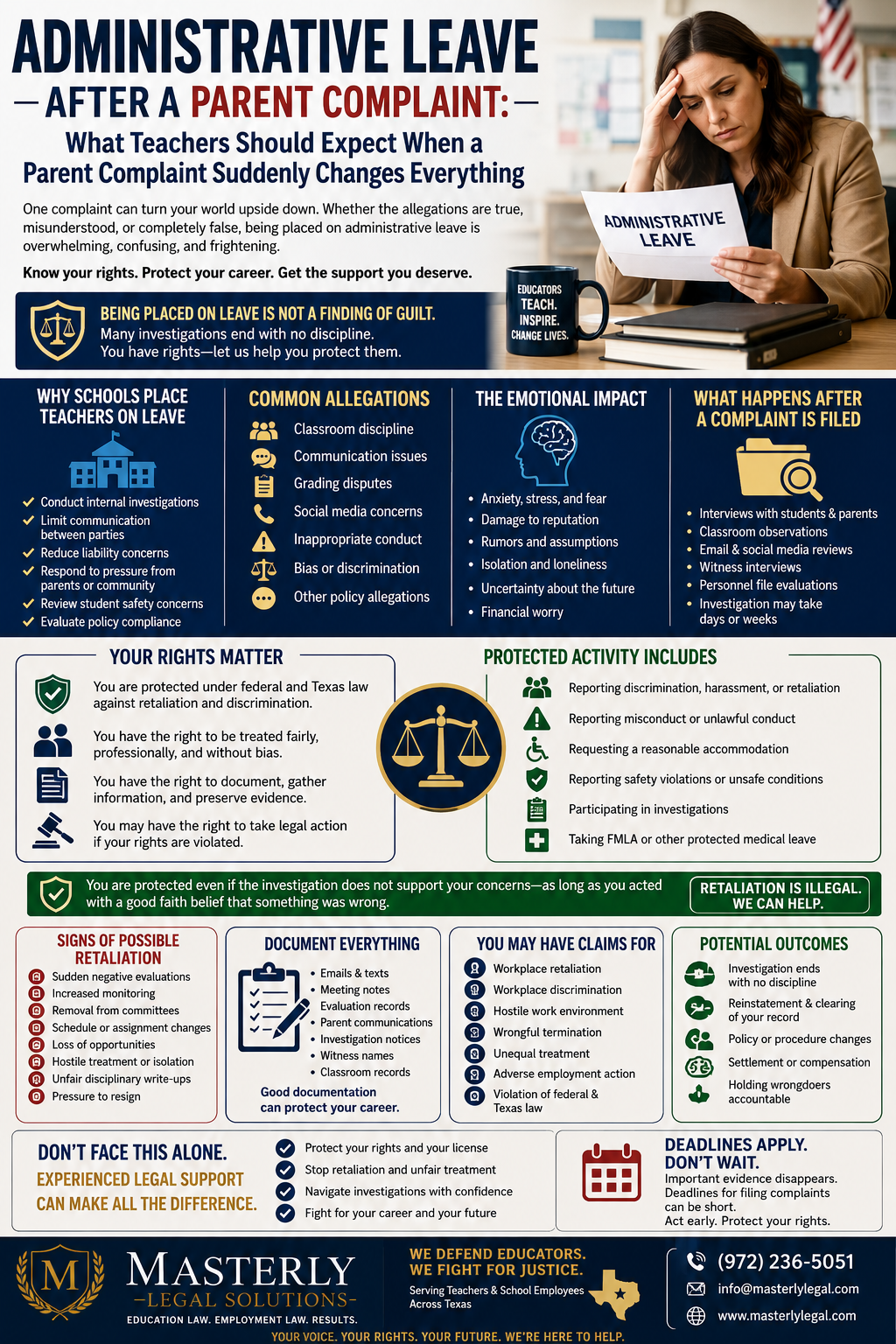
School districts often place employees on leave to:
- Conduct internal investigations
- Limit communication between involved parties
- Reduce liability concerns
- Respond to pressure from parents or the community
- Review student safety concerns
- Evaluate policy compliance
Even when leave is paid, the experience can feel humiliating and stressful for educators who suddenly lose access to their classrooms, students, and coworkers.
The Emotional Impact of Administrative Leave
Teachers are deeply connected to their profession. Many educators see teaching as more than a job because it involves mentorship, trust, and community involvement. When a teacher is removed from campus, the emotional impact can be immediate and severe.
Some educators experience anxiety, sleeplessness, embarrassment, or depression while waiting for answers. Others worry constantly about rumors spreading among parents, staff, and students. The uncertainty surrounding investigations often becomes one of the hardest parts of the process.
A teacher on leave may also fear retaliation from administrators or concern about future employment opportunities. These legitimate fears become even more serious when the employee previously reported concerns involving workplace discrimination, unsafe working conditions, or reporting misconduct within the school system, making experienced education law support for teachers and schools especially important.
What Happens After a Parent Complaint Is Filed
Once a parent complaint is submitted, the school district usually begins reviewing the allegations quickly. Depending on the nature of the complaint, administrators may involve human resources, district investigators, outside consultants, or legal counsel.
Teachers are sometimes called into unexpected meetings with administrators and informed they are being placed on leave immediately. In many cases, they are escorted from campus or instructed not to contact coworkers, parents, or students during the investigation.
The investigation process may include:
- Interviews with students
- Parent statements
- Classroom observations
- Email reviews
- Social media reviews
- Witness interviews
- Personnel file evaluations
The process can move quickly or continue for weeks depending on the complexity of the allegations.
Understanding the Difference Between Investigations and Discipline
One of the biggest misconceptions teachers face is believing administrative leave automatically means termination is coming. While some investigations do lead to disciplinary action, many do not.
Administrative leave is often presented as a neutral step during fact gathering. However, the way school districts handle the process can sometimes create reputational damage even before findings are reached.
Teachers should remain cautious because investigations may still expose them to possible workplace retaliation or adverse employment action depending on the circumstances. This becomes especially concerning when the educator recently engaged in protected activity under employment law.
What Counts as Protected Activity Under Employment Law
Protected activity refers to actions employees take that are legally safeguarded under federal and texas law. Teachers who engage in protected activity are often protected from retaliation when reporting concerns or exercising workplace rights.
Examples of protected activity may include:
- Reporting discrimination
- Reporting harassment
- Reporting retaliation
- Reporting misconduct
- Opposing unlawful conduct
- Participating in investigations
- Requesting a reasonable accommodation
- Reporting safety violations
- Cooperating with federal agencies
- Taking protected medical leave
Teachers who act with a good faith belief that misconduct occurred may still receive legal protections even if investigations later determine no policy violation happened.
How Workplace Retaliation Can Develop After a Complaint
Unfortunately, workplace retaliation sometimes develops during or after investigations involving parent complaints. A teacher who previously reported concerns or challenged school policies may suddenly face increased scrutiny from administrators once allegations surface.
Workplace retaliation can happen subtly or aggressively. Some teachers experience exclusion from meetings, sudden criticism, unfair evaluations, or loss of leadership opportunities. Others may face retaliatory acts that damage professional reputations.
In certain workplace retaliation cases, an employer retaliated against an educator for engaging in protected activity long before the parent complaint occurred. The complaint simply becomes an opportunity for management to impose discipline or remove the employee.
Signs of Employer Retaliation Teachers Should Watch For
Teachers facing investigations should pay close attention to changes in treatment during the process. Signs of employer retaliation may include:
- Sudden negative evaluations
- Increased monitoring
- Removal from committees
- Loss of classroom opportunities
- Schedule changes
- Reduction in job duties
- Hostile treatment from administrators
- Isolation from coworkers
- Unfair disciplinary write-ups
- Pressure to resign
When these actions occur shortly after protected activity, employees may have grounds for a retaliation claim depending on the evidence and timing involved.
The Role of Human Resources During School Investigations
Human resources departments are heavily involved in most school investigations. The human resources department often coordinates interviews, gathers records, and communicates district expectations to employees.
While many educators believe HR exists primarily to support employees, the department’s main responsibility is usually protecting the school district. This can create tension when a teacher feels the investigation is unfair or biased.
Teachers should remain professional during all interactions with human resources. At the same time, they should carefully document conversations, requests, and instructions throughout the process.
Can Administrative Leave Become an Adverse Employment Action?
Administrative leave itself is not always considered an adverse employment action under employment law. However, the circumstances surrounding the leave may still create legal concerns.
For example, if a teacher is publicly humiliated, denied opportunities, stripped of responsibilities, or treated differently after engaging in protected activity, the leave may contribute to a broader retaliation claim.
Courts often evaluate whether the employer’s conduct would discourage a reasonable employee from exercising workplace rights. Context matters greatly in these situations.
How Workplace Discrimination May Affect Investigations
In some cases, parent complaints may intersect with workplace discrimination concerns. Teachers may believe they were targeted because of race, gender, age, religion, disability, sexual orientation, or other protected characteristics.
Discrimination claims sometimes arise when school districts treat educators differently than similarly situated employees. For example, one teacher may receive administrative leave for conduct that resulted only in verbal counseling for another employee.
Federal law and anti discrimination laws prohibit unequal treatment based on protected characteristics. Teachers facing suspected retaliation and discrimination should pay careful attention to patterns within the district and consider how retaliation and labor complaints can be pursued through formal channels.
Reporting Discrimination Before Administrative Leave
Some teachers are placed on leave shortly after reporting discrimination or reporting harassment involving administrators or coworkers. In these situations, timing becomes extremely important.
If an educator previously complained about workplace discrimination, sexual harassment, or employer's discrimination practices, later disciplinary actions may raise questions about unlawful retaliation.
A retaliation lawyer may review whether the employer retaliated against the teacher after protected activity occurred. Documentation, emails, timelines, and witness testimony often become critical evidence.
Sexual Harassment Complaints in School Settings
Sexual harassment allegations can involve both complaints against educators and complaints made by educators themselves. These situations often become highly sensitive and emotionally charged for everyone involved.
Teachers who report sexual harassment are protected under federal law and state law from retaliatory actions by employers. However, some employees still experience hostility, isolation, or discipline after coming forward.
Retaliation connected to sexual harassment complaints may involve adverse action such as demotion, exclusion, or wrongful termination. Educators facing these issues should seek education law attorney guidance on investigations and discipline quickly.
Age Discrimination and Administrative Leave
Age discrimination concerns sometimes arise when older teachers face disciplinary scrutiny that younger employees do not experience. Veteran educators may feel targeted during investigations or pressured to leave the profession altogether.
When a district disproportionately disciplines older employees or removes experienced teachers while ignoring similar conduct by younger staff, discrimination based concerns may emerge.
Teachers should understand that most anti discrimination laws prohibit unequal treatment connected to age and other protected categories, and an education law attorney for teachers and administrators can help evaluate potential claims.
Hostile Work Environment After Returning to Campus
Returning to work after administrative leave is not always easy. Some teachers discover that relationships with coworkers and administrators have changed dramatically after the investigation.
A hostile work environment may develop if educators face ongoing hostility, exclusion, gossip, or retaliatory actions following their return. Even when allegations are unsubstantiated, reputational damage can linger within the school community.
Teachers may also fear additional complaints or increased scrutiny from management. This stress can make returning to the classroom emotionally exhausting.
Why Documentation Matters During Investigations
Documentation can become one of the most important tools teachers have during investigations and possible workplace retaliation disputes. Employees should preserve all relevant records as early as possible.
Helpful documentation may include:
- Emails
- Text messages
- Evaluation records
- Parent communications
- Meeting notes
- Witness names
- Investigation notices
- Classroom records
Strong documentation can help an experienced attorney evaluate whether retaliation, discrimination, or other legal violations may have occurred.
Understanding Retaliation Claims in Texas
A retaliation claim generally involves allegations that an employer punished an employee for engaging in protected activity. Teachers may pursue claims under federal and texas law depending on the circumstances involved.
Retaliation claims often focus on whether:
- The employee engaged in protected activity
- The employer knew about the activity
- Adverse action occurred
- The actions were connected
Timing frequently becomes important evidence in workplace retaliation cases.
How the Equal Employment Opportunity Commission May Become Involved
The equal employment opportunity commission investigates workplace complaints involving discrimination and retaliation under federal law. Teachers facing retaliation connected to protected activity may file charges with the EEOC in certain situations.
The agency reviews evidence involving workplace discrimination, retaliation, hostile work environment allegations, and adverse action claims. Some employees may also pursue complaints through the texas workforce commission.
Deadlines for filing complaints can apply quickly, so teachers should avoid waiting too long before speaking with an employment lawyer.
Medical Leave and Teacher Protections
Some educators experience severe emotional stress during investigations and require medical leave to protect their mental health. Teachers dealing with anxiety, depression, or emotional distress may qualify for protections under the medical leave act or fmla leave provisions.
The disabilities act may also apply if the employee experiences qualifying medical conditions requiring accommodation. Schools must sometimes evaluate requests for reasonable accommodation connected to mental or physical health conditions.
Teachers should carefully document medical concerns and communicate appropriately with their healthcare providers and administrators.
Unsafe Working Conditions and School Liability
Administrative leave investigations sometimes involve allegations connected to unsafe working conditions or safety concerns within schools. Teachers who report dangerous conduct, policy violations, or student safety concerns may later experience retaliation.
Federal and state law provide legal protections for workers who report illegal acts or safety violations in good faith. Retaliatory actions against employees for raising legitimate safety concerns can expose school districts to serious liability, and experienced education law legal services may be necessary to enforce those protections.
The Importance of a Good Faith Belief
Teachers do not always need to prove misconduct actually occurred to receive protection under employment law. In many situations, employees are protected when acting with a good faith belief that unlawful conduct or policy violations occurred.
For example, an educator reporting suspected discrimination or harassment may still have legal protections even if investigators later determine insufficient evidence exists to support discipline.
This principle is important because employees should not fear punishment simply for raising honest concerns.
How Employer Participating in Investigations Can Create Problems
Sometimes retaliation concerns arise because management personnel handling the investigation are personally involved in prior disputes with the employee. An employer participating in both the complaint process and disciplinary decisions may create questions regarding impartiality.
Teachers should pay attention to whether investigators appear neutral or whether administrators seem focused on justifying predetermined outcomes. Bias during investigations can significantly affect fairness.
Wrongful Termination Following Administrative Leave
Some teachers eventually face wrongful termination after investigations conclude. Districts may claim the termination resulted from policy violations, insubordination, or professionalism concerns.
However, when termination follows closely after protected activity, retaliation concerns may emerge. A retaliation lawyer or workplace retaliation attorney may evaluate whether the district used the complaint as justification for removing the employee unlawfully.
Wrongful termination cases often require careful analysis of evidence, timelines, and district practices.
Why Teachers Should Avoid Speaking Recklessly During Investigations
Educators facing investigations should remain calm and avoid emotional reactions during meetings or interviews. Statements made during stressful moments can later be used out of context by administrators or investigators.
Teachers should avoid discussing allegations widely on social media or with parents. Instead, they should focus on gathering information, preserving records, and speaking carefully during the process.
An experienced attorney can often help teachers better understand communication risks during active investigations.
How Dallas Employment Laws Affect Educators
Teachers and school employees in Texas operate under a combination of district policies, contracts, federal law, and texas law. Dallas employment disputes involving retaliation or discrimination can become legally complex very quickly, especially when TEA investigations threaten an educator’s license and career.
Educators working within school districts dallas should understand that different legal standards may apply depending on whether they work for public schools, charter schools, or private institutions.
A dallas workplace retaliation lawyer may help evaluate whether teachers have a viable retaliation claim under applicable laws.
Retaliatory Actions Can Extend Beyond Termination
Many educators assume retaliation only matters if they lose their jobs. However, retaliatory actions can involve many other harmful forms of conduct.
Examples may include:
- Removal from leadership roles
- Increased scrutiny
- Denial of advancement opportunities
- Negative evaluations
- Assignment changes
- Professional isolation
- Loss of supplemental duties
These actions can affect long-term career growth, employee morale, and future employment opportunities.
The Financial Impact of Administrative Leave Cases
Investigations and retaliation disputes can create major financial strain for educators. Some teachers lose supplemental income, coaching opportunities, or advancement possibilities during investigations.
In serious cases involving wrongful termination or retaliation, employees may seek compensation for lost wages, attorney's fees, and emotional distress through legal action.
The financial uncertainty surrounding these situations often creates additional stress for educators and their families.
Why Employees Should Not Wait Too Long
One major mistake many educators make is waiting too long before speaking with an employment lawyer. Sometimes an employee waits until discipline has already escalated significantly before seeking legal advice.
Important evidence can disappear quickly. Witness memories fade, documents become harder to obtain, and legal deadlines may expire. Early guidance may help teachers better protect themselves during investigations.
Legal Strategy Matters in Workplace Retaliation Cases
Every workplace retaliation matter involves different facts, policies, and legal issues. A strong legal strategy often depends on careful documentation, communication records, witness testimony, and timing.
A workplace retaliation lawyer may review:
- Investigation procedures
- School policies
- Personnel records
- Complaint timelines
- Witness accounts
- Evaluation history
- Communication patterns
Understanding the full context can help determine whether legal action may be appropriate.
Federal Agencies and Employment Protections
Several federal agencies oversee employment rights involving discrimination, retaliation, and workplace conduct. These agencies help enforce anti discrimination laws and other employee protections.
The civil rights act, employment act provisions, and federal and state law protections may apply in various teacher retaliation situations. Employees may also interact with a government agency during investigations involving complaints or legal filings.
Holding Employers Accountable for Retaliation
Schools and employers should not punish educators for engaging in protected activity or exercising legal rights. Teachers who report concerns deserve fair treatment and impartial investigations.
When districts fail to follow legal protections or engage in employer retaliation, affected employees may have the right to pursue a legal claim. Employment law exists to help hold employers accountable when retaliation or unlawful conduct occurs.
What Teachers Should Do Immediately After Being Placed on Leave
Teachers placed on leave should focus on protecting themselves professionally and legally. Immediate steps may include:
- Preserving records
- Avoiding emotional confrontations
- Following district instructions
- Documenting interactions
- Consulting an employment lawyer
- Reviewing district policies
- Gathering evidence carefully
Educators should remain professional even when the situation feels deeply unfair.
Why Legal Guidance Can Make a Difference
Investigations involving parent complaints can quickly become overwhelming without proper support. A workplace retaliation attorney or retaliation lawyer may help teachers understand their rights, evaluate possible claims, and respond strategically during investigations.
An experienced attorney can also identify whether retaliation, discrimination, or adverse employment action may have occurred under applicable laws.
Early legal guidance often helps educators avoid mistakes that could negatively affect their careers later.
Support for Dallas Workers Facing Retaliation
Teachers and dallas workers facing retaliation or administrative leave often feel isolated during investigations. Many educators fear that speaking up will only worsen the situation.
At Masterly Legal Solutions, our legal team understands the challenges teachers face when allegations, investigations, and retaliation threaten their professional futures. Our Texas-based firm focuses on protecting educators’ careers, licenses, and professional integrity. Our law firm works with educators dealing with workplace retaliation, discrimination claims, disciplinary investigations, and hostile work environment concerns throughout Texas.
Speak With Masterly Legal Solutions About Your Situation
If you were placed on administrative leave after a parent complaint or believe you are experiencing workplace retaliation, you do not have to face the process alone. Masterly Legal Solutions helps educators, school employees, and professionals understand their legal rights and options during difficult employment disputes.
Our law firm can evaluate the facts of your situation, discuss possible legal protections, and help you determine whether additional legal action may be appropriate. Whether you are concerned about retaliation, wrongful termination, discrimination claims, or hostile treatment within your district, we are here to help.
Contact Masterly Legal Solutions at (972) 236-5051 for an initial consultation. We understand how stressful these situations can become and are committed to helping educators protect their careers, reputations, and futures.
Disclaimer: This article is intended for informational and educational purposes only and does not constitute legal advice. Reading this article does not create an attorney-client relationship with Masterly Legal Solutions. Every employment situation is unique, and individuals should consult directly with a qualified employment lawyer regarding their specific circumstances and legal concerns.

Teacher Rights When Assaulted by a Special Needs Student: Safety, Reporting and Investigation Issues







Looking for Legal & Business Solutions? Contact Us Now
Fill in the form or call us to set up a meeting