

How a Single Complaint Can Trigger a Chain Reaction Against a Teacher
One Complaint Can Change an Educator’s Entire Career
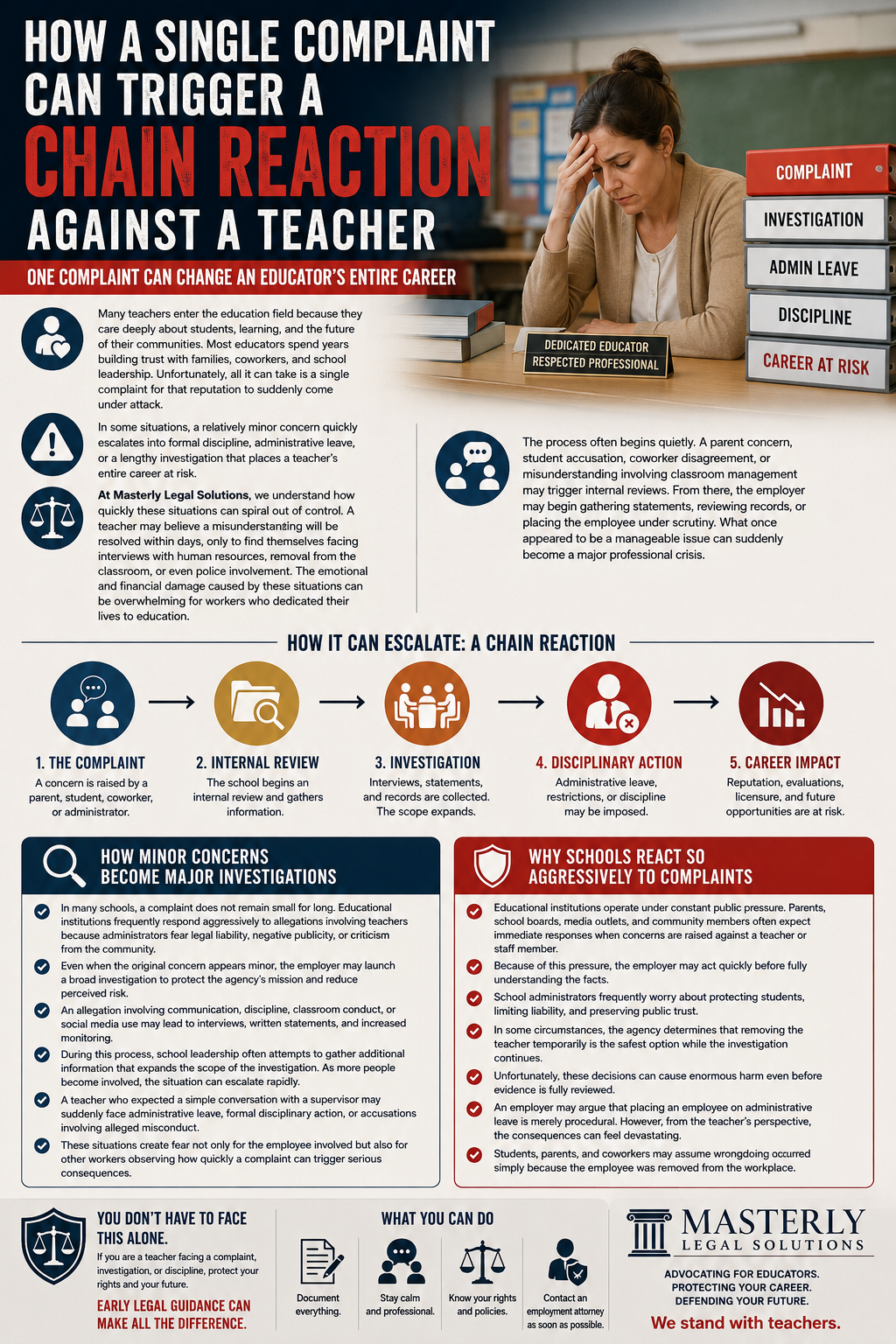
Many teachers enter the education field because they care deeply about students, learning, and the future of their communities. Most educators spend years building trust with families, coworkers, and school leadership. Unfortunately, all it can take is a single complaint for that reputation to suddenly come under attack. In some situations, a relatively minor concern quickly escalates into formal discipline, administrative leave, or a lengthy investigation that places a teacher’s entire career at risk.
At Masterly Legal Solutions, we understand how quickly these situations can spiral out of control. A teacher may believe a misunderstanding will be resolved within days, only to find themselves facing interviews with human resources, removal from the classroom, or even police involvement. The emotional and financial damage caused by these situations can be overwhelming for workers who dedicated their lives to education.
The process often begins quietly. A parent concern, student accusation, coworker disagreement, or misunderstanding involving classroom management may trigger internal reviews. From there, the employer may begin gathering statements, reviewing records, or placing the employee under scrutiny. What once appeared to be a manageable issue can suddenly become a major professional crisis.
How Minor Concerns Become Major Investigations
In many schools, a complaint does not remain small for long. Educational institutions frequently respond aggressively to allegations involving teachers because administrators fear legal liability, negative publicity, or criticism from the community. Even when the original concern appears minor, the employer may launch a broad investigation to protect the agency's mission and reduce perceived risk.
An allegation involving communication, discipline, classroom conduct, or social media use may lead to interviews, written statements, and increased monitoring. During this process, school leadership often attempts to gather additional information that expands the scope of the investigation. As more people become involved, the situation can escalate rapidly.
A teacher who expected a simple conversation with a supervisor may suddenly face administrative leave, formal disciplinary action, or accusations involving alleged misconduct. These situations create fear not only for the employee involved but also for other workers observing how quickly a complaint can trigger serious consequences.
Why Schools React So Aggressively to Complaints
Educational institutions operate under constant public pressure. Parents, school boards, media outlets, and community members often expect immediate responses when concerns are raised against a teacher or staff member. Because of this pressure, the employer may act quickly before fully understanding the facts.
School administrators frequently worry about protecting students, limiting liability, and preserving public trust. In some circumstances, the agency determines that removing the teacher temporarily is the safest option while the investigation continues. Unfortunately, these decisions can cause enormous harm even before evidence is fully reviewed.
An employer may argue that placing an employee on administrative leave is merely procedural. However, from the teacher’s perspective, the consequences can feel devastating. Students, parents, and coworkers may assume wrongdoing occurred simply because the employee was removed from the workplace.
Administrative Leave Often Becomes the First Major Step
One of the most common responses to complaints against teachers is administrative leave. A school district may place the employee on administrative leave while administrators conduct interviews and review evidence. Even if the leave is temporary, the professional damage can begin immediately.
Many educators are shocked when they are suddenly escorted from campus or instructed not to contact coworkers during the investigation. In some cases, the employer may place the employee on paid administrative leave while emphasizing that no final findings have been made. Despite receiving pay, the emotional impact can still be severe.
Administrative leave frequently creates confusion and embarrassment. Students notice when a teacher disappears unexpectedly. Parents begin asking questions. Coworkers speculate about the reason for the removal. The teacher may feel isolated, humiliated, and fearful about their future.
The Difference Between Administrative Leave and Discipline
Some schools claim administrative leave is not a punishment because the employee continues receiving pay and benefits. Technically, the employer may classify the leave as a neutral employment action pending investigation. However, the reality often feels very different for the teacher involved.
Administrative leave can damage a professional reputation long before any conclusions are reached. A reasonable employee placed on leave may worry about termination, certification consequences, or permanent career harm. Even when the employee eventually returns to work, the stigma associated with administrative leave may remain.
In some situations, investigative leave eventually leads to additional adverse action such as reassignment, suspension, or termination. What started as a single complaint may grow into a much larger dispute affecting the teacher’s career for years.
How Investigations Expand Beyond the Original Complaint
One reason these cases escalate so quickly is because school investigations rarely stay focused on the original issue alone. Once the employer begins reviewing records and interviewing witnesses, administrators often search for additional concerns involving the employee.
For example, a complaint regarding classroom communication could eventually expand into accusations involving professionalism, classroom management, or policy compliance. During internal reviews, investigators may examine emails, lesson plans, disciplinary records, and interactions with students or parents.
This broad review process can create the impression that administrators are searching for reasons to justify disciplinary action. In some situations, allegations unrelated to the original complaint suddenly become central issues in the investigation.
Human Resources Often Plays a Larger Role Than Teachers Expect
Many educators assume human resources exists to ensure fairness during workplace disputes. Unfortunately, teachers sometimes discover that human resources primarily works to protect the employer and reduce institutional liability.
When a complaint is filed, human resources representatives may coordinate interviews, collect statements, and advise school leadership regarding disciplinary procedures. Although the process may appear neutral, teachers often feel pressured or unsupported during these interactions.
Human resources personnel may also advise administrators regarding administrative leave, investigative leave, or other adverse action measures. Once the process begins, the employee may feel overwhelmed by the number of people involved in evaluating the complaint.
The Emotional Toll of Being Removed From the Classroom
For educators, teaching is often more than just a job. Many teachers build strong emotional connections with students, parents, and school communities. Being removed from the classroom through administrative leave can feel deeply personal and emotionally painful.
Teachers placed on administrative leave frequently describe feelings of anxiety, embarrassment, and helplessness. Some worry constantly about what students, coworkers, and community members are saying about them. Others struggle with uncertainty regarding pay, benefits, and future employment, and may need guidance on steps to take while on administrative leave in Texas.
The emotional burden can intensify when the employee believes the complaint was exaggerated, false, or misunderstood. A teacher who spent years serving students may suddenly feel treated like a danger to the workplace despite no finding of wrongdoing.
Why Complaints Sometimes Trigger Retaliation
Not every complaint results in retaliation, but retaliation occurs more often than many educators realize. In some situations, a teacher may have previously engaged in protected activity before the complaint surfaced. This protected activity could involve reporting misconduct, raising safety concerns, opposing harassment, or participating in an investigation.
If the employer reacts negatively to that protected activity, later disciplinary measures may become legally significant. Retaliation can occur through excessive scrutiny, unfair evaluations, removal from opportunities, or placement on administrative leave.
An employee who recently reported concerns may reasonably question whether the complaint is being used as a justification for retaliatory conduct. Timing often becomes very important when evaluating whether retaliation played a role in disciplinary decisions.
Protected Activity and Teacher Rights
Teachers do not lose their legal rights simply because a complaint was filed against them. Certain actions qualify as protected activity under employment law. Employees who report discrimination, harassment, safety concerns, or other possible violation issues may receive legal protection from retaliation, and many benefit from education law legal protection for teachers when disputes escalate.
Other related protected activity can include assisting another employee during an investigation or participating in workplace complaints involving misconduct. An employer generally cannot punish a worker for engaging in protected activity.
However, retaliation can still occur in subtle ways. Administrators may deny leadership opportunities, increase scrutiny, or assign the teacher to a less desirable position after concerns are reported. In other cases, retaliation becomes more direct through formal discipline or prolonged investigative leave.
How Managers Influence Escalation
The response of a manager or supervisor can significantly affect how far a complaint escalates. Some school leaders approach concerns calmly and professionally, focusing on resolving misunderstandings fairly. Others react aggressively out of fear, frustration, or pressure from parents and district officials.
A manager who immediately assumes wrongdoing may create an environment where the employee feels presumed guilty before the investigation begins. Negative assumptions can influence interviews, witness evaluations, and disciplinary recommendations throughout the process.
In certain situations, a supervisor may also become defensive if the complaint involves criticism of school procedures or leadership decisions. This can create additional tension between the employer and the employee during the investigation.
Police Involvement Can Intensify the Situation
Some school complaints eventually involve police or school resource officers, particularly when allegations concern student safety, inappropriate conduct, or possible criminal behavior. Even when no charges are filed, the involvement of police can significantly damage a teacher’s reputation.
An educator may suddenly find themselves questioned by officers or asked to provide statements regarding allegations they barely understand. The presence of police often increases fear and emotional stress for the employee involved.
Parents and community members may assume criminal wrongdoing occurred simply because law enforcement became involved. Unfortunately, these assumptions can continue long after an investigation ends.
Administrative Leave Can Damage Future Employment
One major concern for educators placed on administrative leave is how the situation may affect future job opportunities. School districts frequently contact previous employers during hiring processes. Even if no misconduct is proven, questions regarding investigations or leave status may still arise.
Teachers who spent years building strong reputations may suddenly struggle to explain employment gaps or prior investigations. This uncertainty can create enormous stress, especially for employees supporting families or relying heavily on benefits and stable pay.
Some educators leave the profession entirely after experiencing aggressive investigations or administrative leave. The emotional and professional damage may simply feel too overwhelming to overcome.
Paid Administrative Leave Still Carries Serious Consequences
Schools often emphasize that teachers placed on paid administrative leave continue receiving pay and benefits. While continued compensation may reduce immediate financial strain, it does not eliminate the emotional and reputational harm caused by removal from the workplace.
Paid administrative leave can still isolate the employee from students, coworkers, and daily professional responsibilities. Teachers may lose opportunities for advancement, leadership roles, or positive evaluations during extended absences.
In some cases, paid leave continues for brief or short periods while the employer gathers additional information. Other investigations last for months, leaving the employee uncertain about their future and professional standing.
Internal Reviews Often Expand the Scope of Allegations
Once an investigation begins, schools frequently conduct internal reviews involving records, emails, witness interviews, and classroom documentation. These reviews may expand well beyond the original complaint.
An allegation involving classroom discipline may eventually lead investigators to review grading practices, communication records, or interactions with parents. The employee may feel like every aspect of their career is suddenly under examination.
Internal reviews can become especially stressful when the employer fails to explain the process clearly or refuses to provide details regarding the allegations being investigated.
How Agency Policies Affect Investigations
Most educational institutions maintain agency policies regarding complaints, discipline, and administrative leave. These internal policies often outline procedures involving investigations, employee interviews, and workplace conduct.
However, policy language alone does not always guarantee fairness. Some employers apply agency policies inconsistently depending on the employee involved or the pressure surrounding the complaint.
A school district may claim its actions were specifically authorized under internal policies consistent with district regulations. Even so, the employer must still comply with employment law and avoid unlawful retaliation or unfair treatment.
Investigative Leave Versus Safety Leave
Schools sometimes classify leave differently depending on the nature of the allegations. Investigative leave generally occurs while administrators review accusations involving an employee. Safety leave may be used when the employer claims temporary removal is necessary to maintain workplace safety.
Although these terms sound procedural, they can have serious consequences for the employee involved. An educator placed on investigative leave may feel publicly labeled as dangerous or untrustworthy even before the investigation concludes.
The employer may also rely on agency judgments regarding risk management or public perception when deciding whether to grant administrative leave.
Adverse Action Can Take Many Forms
Not every adverse action involves termination. Schools sometimes retaliate or discipline employees through reassignment, demotion, exclusion, or increased scrutiny instead.
Examples of adverse action may include:
- Placement on administrative leave
- Transfer to a less desirable position
- Reduction in responsibilities
- Removal from committees
- Denial of promotions
- Negative evaluations
- Increased monitoring
- Formal disciplinary action
Even subtle changes can create a negative impact on a teacher’s professional future. Courts often consider whether the employer’s actions would discourage a reasonable employee from engaging in protected activity.
How Retaliation Develops During Investigations
Retaliation may develop gradually during the investigative process. An employee who previously received strong evaluations may suddenly face criticism or excessive scrutiny after a complaint arises, which is when support from a Texas law firm for educators and TEA defense can be critical.
In some situations, retaliation occurs because the employee challenged school leadership, reported concerns, or participated in other related protected activity. Administrators may deny opportunities, increase monitoring, or isolate the teacher from coworkers.
The law may protect employees from retaliation involving workplace complaints, investigations, or protected activity. However, proving retaliation often requires careful documentation and legal analysis.
The Importance of Documentation
Teachers facing investigations should preserve records whenever possible. Documentation can become extremely important if the dispute later involves disciplinary hearings or legal claims.
Helpful records may include:
- Emails and written communications
- Performance evaluations
- Investigation notices
- Meeting summaries
- Witness information
- Timeline documentation
- Complaint details
Strong documentation can help employees identify inconsistencies in the employer’s explanations and better understand how the situation escalated, and it also gives an education law attorney guiding teachers through investigations the information needed to evaluate next steps.
Why Timing Matters in Discipline Cases
Timing often plays a major role when evaluating disciplinary actions involving teachers. If negative treatment begins immediately after a complaint, report, or protected activity, questions may arise regarding the employer’s motives.
For example, an employee who previously had no disciplinary history may suddenly face allegations of alleged misconduct shortly after reporting concerns involving harassment or workplace violations, making experienced education lawyers for teachers and schools especially important.
Retaliation lawyers frequently examine timelines carefully when determining whether an employer’s actions were directly related to protected activity or prior workplace disputes.
How Workplace Rumors Increase the Damage
Rumors spread quickly inside educational environments. Once a teacher is placed on administrative leave, speculation often begins immediately among students, parents, and coworkers.
Even when school officials refuse to discuss details, community members may assume serious misconduct occurred. The employee may feel powerless to defend themselves publicly while the investigation remains ongoing.
These rumors can damage relationships, emotional health, and professional standing long before any findings are made.
Teachers Often Feel Pressured to Resign
Some educators facing prolonged investigations eventually feel pressured to resign. Extended administrative leave, public scrutiny, and uncertainty about future employment can become emotionally exhausting.
An employer may subtly encourage resignation by increasing pressure through disciplinary meetings, reassignment discussions, or ongoing investigations. Teachers sometimes believe resigning quietly is the only way to preserve remaining career opportunities.
However, resignation decisions can carry long-term legal and professional consequences. Employees should carefully evaluate their options before making major employment decisions during an investigation.
How Agency Officials Influence Outcomes
Agency officials, district leaders, and administrators often play significant roles in determining how complaints are handled. The agency head may influence decisions involving administrative leave, investigative leave, or disciplinary recommendations.
In some cases, agency officials prioritize protecting the institution’s public image over fully evaluating the employee’s perspective. This can create frustration for workers who feel the process is unfair or one-sided.
Other authorized agency officials may also participate in reviewing evidence, interviewing witnesses, or determining whether further discipline is appropriate.
Federal Guidelines and Leave Policies
Certain employment rules involving administrative leave appear in federal guidance and portions of the united states code. Federal agencies sometimes follow opm regulations and opm guidance regarding investigative leave, notice leave, and safety leave, and similar concepts often appear in education law and teacher license defense services that help educators navigate complex procedures.
These rules may discuss situations involving paid leave, excused absence, blood donations, officially sponsored activities, and other employment matters. Some provisions allow leave on a time limited basis during investigations.
Although public schools may not operate under the same standards as federal agencies, administrators sometimes reference similar personnel management principles when handling investigations.
How Employee Morale Suffers After Aggressive Discipline
Aggressive investigations can damage overall employee morale throughout a school district. Workers who observe colleagues placed on administrative leave may become fearful about speaking openly or reporting concerns.
Employees may worry that even minor mistakes could trigger major disciplinary action. This fear can reduce collaboration, trust, and communication within the workplace.
Low overall employee morale may ultimately harm the agency's mission by discouraging transparency and creating a culture of fear among workers.
Administrative Leave and Financial Stress
Even when employees continue receiving pay during administrative leave, financial concerns often remain. Teachers may lose coaching stipends, overtime hours, extracurricular income, or other benefits tied to daily responsibilities.
Some educators worry constantly about whether their pay or benefits will eventually stop if the investigation expands. The uncertainty surrounding future employment can place enormous stress on families.
Extended leave periods may also interfere with retirement planning, career advancement, and long-term financial stability.
The Role of Human Resources During Escalation
Human resources departments often become heavily involved once a complaint escalates. Representatives may coordinate interviews, review policies, and advise school leadership regarding disciplinary procedures.
Employees sometimes feel intimidated during meetings involving human resources, supervisors, and agency officials. The process can feel highly formal even when the original concern seemed relatively minor.
Human resources personnel may also communicate with other authorized agency officials regarding investigation findings or disciplinary recommendations.
Why Teachers Need Legal Guidance Early
Many educators wait too long before seeking legal guidance because they believe the situation will resolve itself. Unfortunately, early mistakes during investigations can significantly affect future outcomes.
An employee may unknowingly provide incomplete statements, misunderstand policy rights, or fail to preserve important evidence. Legal representation can help workers better understand their options and protect their professional interests throughout the process.
Teachers facing administrative leave, disciplinary action, or retaliation should not assume the employer is acting solely in their best interest, and many choose to work with an expert education lawyer providing legal support for schools and teachers.
Escalation Often Happens Faster Than Expected
One of the most frightening aspects of these situations is how quickly escalation occurs. A teacher may begin the week believing they are addressing a simple parent concern and end the week on administrative leave facing a formal investigation.
The rapid pace of disciplinary escalation leaves many workers emotionally overwhelmed and uncertain about what steps to take next. Educators often describe feeling shocked by how aggressively the employer responded to allegations before gathering all facts.
These experiences can permanently change how teachers view their profession, coworkers, and workplace environment.
Why Teachers Deserve Fair Treatment During Investigations
Every employee deserves fair treatment during workplace investigations. Teachers should not be presumed guilty simply because a complaint was made. Investigations should remain objective, thorough, and respectful of employee rights throughout the process.
An employer has a responsibility to protect students and maintain safe schools, but those responsibilities must be balanced against fairness and due process for workers. Overly aggressive disciplinary measures can cause serious harm to innocent employees.
Educational institutions function best when investigations are handled professionally rather than emotionally or politically.
How Masterly Legal Solutions Helps Educators
At Masterly Legal Solutions, we understand how stressful and overwhelming workplace investigations can become for teachers and education professionals. Our team works with educators facing administrative leave, retaliation, disciplinary action, and escalating investigations that threaten their careers.
We understand the tactics employers sometimes use during workplace disputes and the pressure employees face when their professional reputation is suddenly questioned. Whether the situation involves alleged misconduct, retaliation, harassment, police involvement, or administrative leave, experienced legal guidance can help educators better protect themselves.
Our goal is to help workers understand their rights, preserve evidence, and respond strategically during difficult employment disputes by providing education law attorneys for teachers and administrators who focus on protecting careers.
Why Schools Sometimes Remove Teachers From the Employee's Current Position
In some investigations, school administrators decide to temporarily remove a teacher from the employee's current position while reviewing allegations or gathering statements. The employer may argue that this action helps reduce tension in the workplace or protects the integrity of the investigation. However, sudden removal from a classroom or leadership role can seriously damage a teacher’s reputation and emotional well-being. Many educators feel embarrassed and isolated when they are reassigned or prevented from returning to their normal duties. Even temporary removal can create lasting professional consequences if parents, students, and coworkers begin assuming misconduct occurred before all facts are reviewed.
How District Leaders Issue Internal Policies Consistent With School Procedures
School districts often attempt to issue internal policies consistent with state guidelines, employment procedures, and workplace expectations when handling complaints against teachers. These policies are usually designed to help administrators respond quickly to allegations while protecting the district from liability concerns. Unfortunately, some educators feel these policies are enforced unevenly depending on the circumstances or the employee involved. A teacher facing investigation may discover that leadership interprets procedures differently when public pressure increases. Consistent application of workplace rules remains important for maintaining fairness and protecting employee rights during disciplinary matters.
Why Investigations Sometimes Last Beyond Brief Periods
Many teachers initially believe workplace investigations will be resolved quickly, especially when the original complaint appears minor. Unfortunately, some investigations extend far beyond brief periods and become lengthy processes involving interviews, documentation reviews, and administrative meetings. Delays often create additional stress for the employee because uncertainty surrounding future employment can feel emotionally exhausting. Teachers placed on administrative leave during extended investigations may struggle with anxiety, damaged reputations, and financial concerns tied to lost opportunities. The longer these situations continue, the more difficult it may become for educators to rebuild trust within the workplace.
How Fear Spreads Among Other Employees After a Complaint Escalates
When school districts aggressively investigate or discipline one educator, other employees often begin worrying about their own job security. Teachers and staff members may become fearful that even small misunderstandings could trigger administrative leave or disciplinary action against them as well. This atmosphere of fear can reduce communication, collaboration, and trust throughout the workplace. Other employees may stop reporting concerns or avoid participating in discussions involving school leadership because they fear retaliation or professional consequences. Over time, this kind of environment can negatively affect morale across the entire district.
The Influence of a Presidential Directive on Workplace Policies
Certain employment practices involving investigations, leave procedures, and personnel management may be influenced by broader government standards or administrative guidance connected to a presidential directive. While public school systems operate differently from federal agencies, some districts still model portions of their procedures after government employment frameworks. These approaches may affect how schools respond to complaints, conduct investigations, or place employees on administrative leave. Teachers facing workplace investigations often feel overwhelmed when policies appear highly formal or legally complex. Understanding how these systems operate can help educators better protect themselves during disciplinary matters.
How a Presidential Memorandum Can Shape Employment Practices
In some government-related employment systems, workplace policies may also be influenced by a presidential memorandum involving employee discipline, investigations, or leave procedures. Although many educators do not work directly within federal systems, similar administrative concepts sometimes influence local agency procedures and district operations. School leaders may reference structured investigation processes or formal leave classifications modeled after broader employment practices. Teachers caught in these systems often feel like relatively small concerns suddenly became major institutional matters. This formal approach can increase stress and confusion for employees already dealing with intense public scrutiny.
Why Some School Decisions Feel Ad Hoc to Educators
Teachers involved in disciplinary matters sometimes feel school leadership is making ad hoc decisions rather than following clear and consistent procedures. One employee may face immediate administrative leave while another receives only a verbal warning for similar conduct. These inconsistencies can create frustration and distrust among workers who expect fair treatment under district policies. In some situations, administrators appear to change procedures depending on media attention, parent complaints, or pressure from school officials. When disciplinary responses seem unpredictable, employees may lose confidence in the fairness of the investigative process.
Understanding the Importance of an Other Provision in Employment Policies
School districts often rely on policy manuals and employment contracts containing broad language that references an other provision related to discipline or workplace conduct. Administrators may use these sections to justify actions taken during investigations or complaints involving teachers. However, vague policy language does not automatically make disciplinary action fair or appropriate under the law. Employees facing investigations should understand that districts sometimes interpret policy provisions very broadly when attempting to defend administrative decisions. Careful legal review may help educators determine whether the employer acted within acceptable boundaries.
How an Executive Order May Influence Workplace Procedures
Certain workplace procedures involving investigations, leave classifications, and personnel management practices may be shaped by standards connected to an executive order or broader government employment guidance. Public institutions sometimes adopt structured investigation methods based on practices used within federal agencies or government departments. These systems are often intended to create consistency and accountability during disciplinary matters. However, educators placed under investigation may feel overwhelmed by the formal nature of the process and the speed at which allegations escalate. Strong legal guidance can help employees better understand how these procedures affect their rights, especially for educators seeking North Carolina educator misconduct defense to protect their licenses.
Why the Effects of a Complaint Can Last Beyond a Calendar Year
For some educators, the consequences of a workplace complaint continue long after the investigation ends. Professional damage, emotional stress, and lost career opportunities may follow a teacher for more than a single calendar year. Even when allegations are never substantiated, rumors and reputational harm can make it difficult for an employee to fully recover within the workplace. Some teachers continue facing isolation, stalled advancement, or strained professional relationships months or years later. The long-term impact of administrative leave and investigations often reaches far beyond the original complaint itself, particularly when the matter triggers Texas Education Agency investigations that threaten a teaching license.
How Teachers Become the Subject of Widespread Scrutiny
Once a complaint becomes public within a school district, the educator involved may quickly become the subject of rumors, speculation, and increased scrutiny. Students, parents, coworkers, and community members may begin discussing the situation long before the investigation is complete. This attention can place enormous emotional pressure on the employee and their family. Teachers often feel powerless to defend themselves publicly while administrators continue reviewing allegations behind closed doors. The stress caused by becoming the focus of widespread attention can affect both personal well-being and professional confidence.
How Complaints Can Expand Into Other Types of Allegations
One of the most frustrating parts of workplace investigations is how quickly schools may begin exploring other types of allegations unrelated to the original concern. A complaint involving classroom management, for example, may suddenly expand into reviews of communication practices, grading decisions, or interactions with coworkers. Teachers often feel blindsided when investigators begin questioning issues that were never part of the original accusation. This expanding process can create the impression that administrators are searching for additional reasons to justify disciplinary action. As investigations grow larger, employees may struggle to keep up with the increasing pressure and complexity.
Why Returning to the Office After Leave Can Feel Difficult
Returning to the office or school environment after administrative leave can feel extremely uncomfortable for many educators. Even when the investigation ends without major discipline, the employee may still face awkward interactions, workplace rumors, or damaged professional relationships. Coworkers may not know what happened but still treat the teacher differently because of the investigation. Some educators report feeling isolated or emotionally exhausted after returning to work following months of scrutiny and uncertainty. Rebuilding trust and confidence inside the workplace often takes significant time and emotional energy.
Speak With Masterly Legal Solutions About Administrative Leave and Workplace Investigations
If you are a teacher or school employee facing administrative leave, disciplinary action, or a workplace investigation, you do not have to navigate the situation alone. A single complaint should not destroy years of hard work, dedication, and professional service without a fair process.
At Masterly Legal Solutions, we help educators facing aggressive investigations, retaliation, and employment disputes involving administrative leave. Whether your employer placed you on paid administrative leave, initiated internal reviews, or escalated allegations far beyond the original concern, our legal team can help you better understand your options.
Contact us at (972) 236-5051 for a free consultation. We can answer your questions, discuss your circumstances, and help you evaluate possible next steps to protect your career, reputation, pay, and future employment opportunities.
Disclaimer: This article is for informational and educational purposes only and does not constitute legal advice. Reading this article does not create an attorney-client relationship with Masterly Legal Solutions. Employment laws, agency policies, and regulations may vary depending on the circumstances and jurisdiction involved. Individuals facing workplace investigations, administrative leave, retaliation, or disciplinary action should consult directly with a qualified attorney regarding their specific situation.

Teacher Rights When Assaulted by a Special Needs Student: Safety, Reporting and Investigation Issues







Looking for Legal & Business Solutions? Contact Us Now
Fill in the form or call us to set up a meeting





