

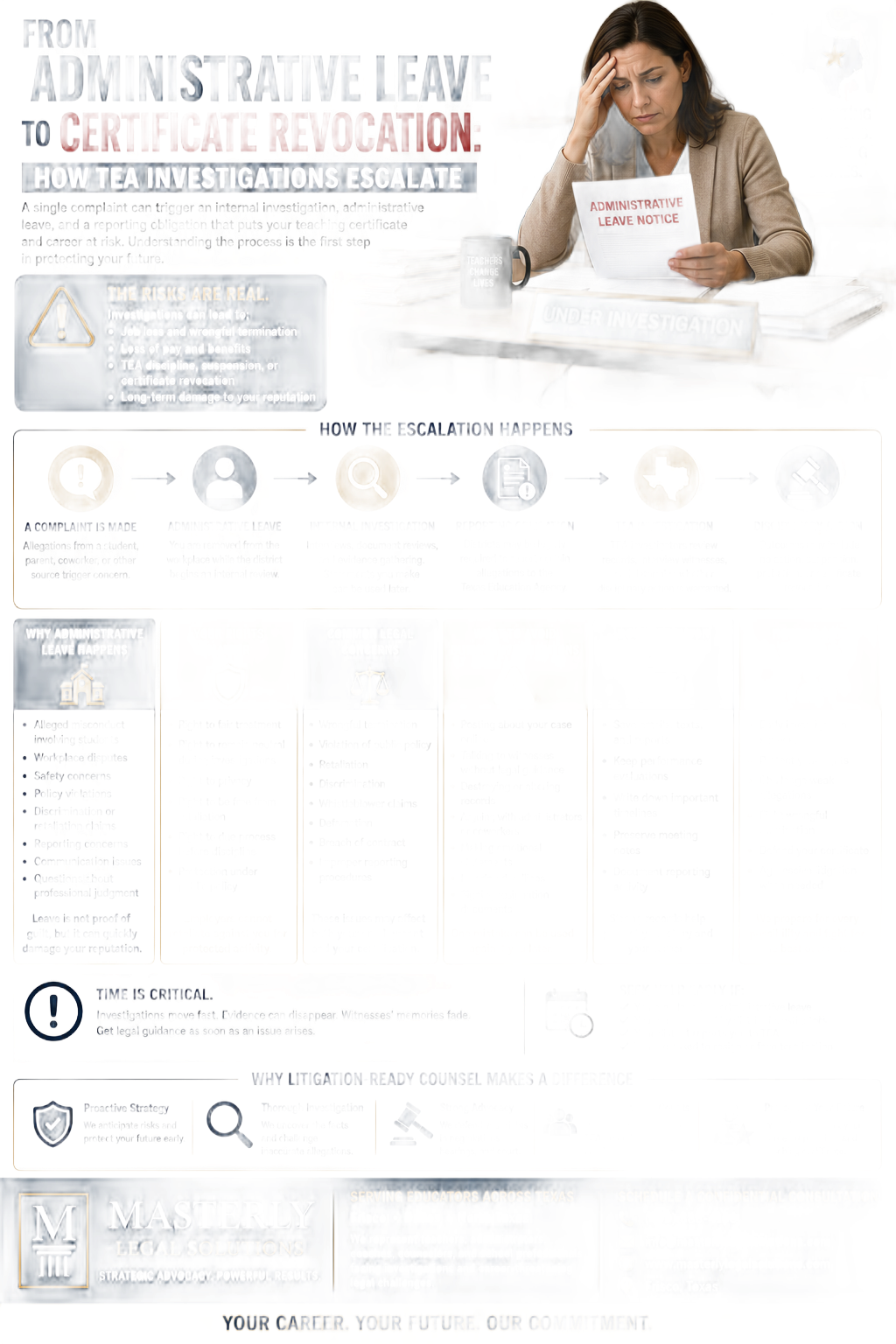
From Administrative Leave to Certificate Revocation: How TEA Investigations Escalate
When a School Complaint Suddenly Changes an Educator’s Career
Most educators never expect a routine school day to turn into a legal and professional crisis. A misunderstanding with a student, a complaint from a parent, concerns raised by a co worker, or allegations involving workplace conduct can quickly place an employee under scrutiny. In many cases, teachers and administrators are shocked when a conversation with a supervisor suddenly leads to administrative leave and a formal investigation. What initially feels temporary can rapidly escalate into a threat against an educator’s teaching certificate and long-term employment future.
At Masterly Legal Solutions, we understand how emotionally overwhelming these situations become for teachers, coaches, counselors, and administrators throughout texas. Many educators have dedicated years to serving students, building careers, and supporting their communities. When allegations surface, the stress of uncertainty, public perception, and possible disciplinary action can affect every part of a person’s life. Our education-focused law firm in Texas works with educators facing investigations, administrative leave, wrongful discharge concerns, and certification threats connected to TEA proceedings.
Understanding how these cases progress is critical because the escalation often happens faster than educators expect. What starts as a workplace complaint may eventually involve human resources, internal reviews, state reporting obligations, TEA investigators, and legal proceedings connected to public policy and employment law. Educators who wait too long to seek legal guidance may unintentionally place their careers at even greater risk.
How Administrative Leave Usually Begins
In many school districts, administrative leave begins after an allegation is made against an employee. The complaint may involve alleged misconduct, reporting concerns, communication issues, policy violations, or accusations tied to workplace interactions. School administrators often respond quickly because districts want to limit liability and address concerns before problems escalate further.
An employer may place an employee on paid administrative leave while conducting internal reviews or gathering information. In some situations, the leave lasts only for brief or short periods while administrators determine whether additional investigation is necessary. In other cases, the employee remains away from the workplace for an extended period while district officials review evidence and interview witnesses.
Many educators mistakenly believe administrative leave automatically means guilt has already been determined. That is not always true. Sometimes districts grant administrative leave simply to separate the employee from the school environment while reviewing the facts. However, even paid leave can quickly damage a professional reputation if the situation is not handled carefully.
The Emotional Weight of Being Removed From the Workplace
Being placed on administrative leave can feel humiliating for an educator who has spent years building trust within a school community. Many employees experience embarrassment, anxiety, and emotional distress almost immediately after being removed from campus duties. Teachers often worry about what students, parents, and other employees may be saying behind closed doors.
For many educators, the most difficult part is uncertainty. The employer may provide very little information during the early stages of the investigation. Some employees are instructed not to contact coworkers or return to school property while internal reviews continue. This sudden separation from the workplace creates emotional pressure that can affect judgment and decision-making.
At Masterly Legal Solutions, our attorneys understand how devastating administrative leave can become for educators and their families. We work with clients to help them remain calm, organized, and legally prepared while investigations unfold. Early legal guidance may help protect both employment rights and long-term certification status.
Why School Districts Use Administrative Leave
School districts generally use administrative leave to limit potential disruption while investigating allegations. In some circumstances, administrators believe separating the employee from the workplace temporarily protects students, staff members, and the integrity of the investigation process.
District officials may place an employee on investigative leave for allegations involving:
- Alleged misconduct involving students
- Reporting violations
- Workplace disputes
- Safety concerns
- Discrimination allegations
- Retaliation complaints
- Policy violations
- Improper communication
- Questions regarding professional judgment
Sometimes agency officials or other authorized agency officials determine that the employee should remain away from campus until the investigation is completed. These decisions are often based on agency policies, district procedures, or legal concerns regarding liability and workplace safety.
What Happens During Internal Reviews
Once administrative leave begins, districts often launch internal reviews involving human resources personnel, administrators, investigators, and legal representatives. Employees may be interviewed regarding allegations, communications, or workplace interactions. School officials may also review emails, reports, social media activity, witness statements, and electronic records.
Internal reviews sometimes feel informal, but educators should take them very seriously. Statements made during interviews may later appear in TEA investigations or legal proceedings. In many cases, employees unintentionally damage their defense by responding emotionally or providing incomplete information under stress.
Agency judgments made during these investigations can significantly affect the direction of the case. If administrators believe policy violations occurred, the district may move toward disciplinary action, termination recommendations, or mandatory reporting obligations connected to state law.
Our education law attorneys regularly advise educators during investigations to help them avoid mistakes that may later impact employment or certification proceedings.
When Reporting Requirements Trigger TEA Investigations
Not every school complaint becomes a TEA matter, but many districts have legal obligations regarding reporting certain allegations. Depending on the nature of the accusation, districts may be required to report educators to the Texas Education Agency for further review.
Reporting obligations may arise when allegations involve:
- Student safety concerns
- Alleged misconduct
- Criminal accusations
- Ethics concerns
- Improper educator conduct
- Serious policy violations
- Illegal activity
- Employment disputes connected to public policy
Once reporting occurs, the situation often escalates rapidly. Educators may suddenly face contact from TEA investigators, requests for records, or formal notices regarding disciplinary proceedings.
Many employees are surprised to discover that even unproven allegations can trigger state-level investigations. Unfortunately, a complaint alone may create long-term professional consequences if not addressed strategically.
Understanding the Difference Between Administrative Leave and Termination
Administrative leave does not automatically mean the employee has been terminated. In some cases, educators remain employed while investigations continue. However, districts may eventually move toward resignation requests, contract nonrenewal, suspension, or wrongful termination disputes depending on the investigation findings.
Some educators feel pressured into submitting an employee's resignation before understanding the long-term impact of that decision. Others are told resignation may “look better” than termination. Unfortunately, these decisions can affect future employment opportunities and TEA proceedings.
Educators should never assume they must agree to immediate resignation demands without legal advice, including understanding when an employer can pressure you to resign. A wrongful termination claim may arise if an employer fired an employee for illegal reasons or in violation of public policy protections.
At Masterly Legal Solutions, our attorneys help educators evaluate employment decisions carefully before taking action that could permanently affect their career.
How Wrongful Termination Concerns Develop
Wrongful termination concerns often arise when an employer fired an employee after protected activity, whistleblower reporting, discrimination complaints, or refusal to participate in illegal activity. While texas generally recognizes at will employment, employers still cannot terminate employees for unlawful reasons.
For example, an employee may have grounds for a wrongful termination claim if disciplinary action was connected to:
- Reporting safety concerns
- Opposing discrimination
- Reporting illegal activity
- Participating in protected investigations
- Refusing unlawful directives
- Reporting workplace misconduct
Wrongful discharge allegations sometimes overlap with TEA investigations because the same allegations affecting employment may also affect certification status.
Educators facing these circumstances should speak with an education law attorney for teachers and administrators immediately. Timing matters because evidence, communications, and reporting timelines may become critical later.
Why Public Policy Protections Matter
Public policy protections exist to prevent employers from punishing employees for certain lawful actions. In some situations, educators who report misconduct or refuse unlawful directives may later face retaliation, wrongful discharge, or hostile workplace treatment.
Violation of public policy claims may arise when an employer takes negative action against an employee for actions connected to legal obligations, protected reporting, or ethical responsibilities. These cases can become especially important within educational settings where employees are responsible for student safety and compliance requirements.
Violation of public policy concerns may involve:
- Reporting suspected abuse
- Reporting safety violations
- Cooperating with investigations
- Opposing discrimination
- Refusing unlawful conduct
- Reporting violations of law
A violation of public policy claim may significantly affect both employment disputes and TEA proceedings. Educators should understand that retaliation for protected reporting may create legal exposure for the employer.
How TEA Investigations Escalate
Once TEA license investigations become involved, the process often becomes much more formal. Educators may receive requests for written responses, evidence submissions, or interviews connected to alleged misconduct or policy violations.
The investigation process may involve:
- Review of district records
- Witness interviews
- Employment history analysis
- Review of reporting obligations
- Examination of communications
- Analysis of disciplinary records
- Evaluation of agency judgments
TEA investigators may work alongside agency officials or other authorized agency officials when reviewing allegations tied to educator conduct. The agency determines whether sufficient evidence exists to pursue disciplinary measures involving certification status.
These investigations can last months depending on the complexity of the allegations and the amount of evidence involved.
Why Administrative Leave Often Leads to Career Uncertainty
Educators on administrative leave frequently struggle with uncertainty regarding pay, benefits, employment status, and future opportunities. Some districts continue paid leave while investigations remain active. Others may eventually reduce responsibilities or pursue termination proceedings.
Paid administrative leave may sound temporary, but prolonged investigations can create serious financial and emotional strain. Employees may worry about mortgage payments, medical care costs, and family responsibilities while waiting for answers.
Some investigations involve brief periods away from work, while others continue for months. In more serious cases, agency policies may allow investigative leave on a time limited basis while formal proceedings continue.
The emotional burden often becomes overwhelming, especially when educators feel isolated from coworkers and professional support systems.
How Human Resources Departments Influence the Process
Human resources departments play a major role during administrative leave investigations. HR representatives often coordinate interviews, documentation review, reporting procedures, and communication between administrators and employees.
While some educators assume human resources is primarily there to help them, HR departments generally focus on protecting the employer and ensuring compliance with district procedures and employment law requirements.
HR personnel may also help issue notice leave documents, disciplinary notices, or reporting communications tied to TEA obligations. Employees should approach all communications carefully because statements made during HR meetings may later become evidence during hearings or lawsuits.
Our attorneys regularly help educators prepare for meetings with human resources representatives to reduce the risk of damaging misunderstandings.
How Retaliation Can Become a Hidden Factor
In some situations, administrative leave begins shortly after an employee engages in protected activity. Educators who report safety concerns, discrimination, policy violations, or misconduct may later face investigations or disciplinary scrutiny.
Retaliation claims may arise if negative employment action occurs because of protected reporting or workplace complaints. A violation of public policy may exist if the employee was punished for lawful reporting responsibilities connected to education regulations or student protection obligations.
For example, an educator who reports illegal activity or refuses improper directives may later face accusations that appear unrelated but are actually connected to retaliation efforts.
These situations are often legally complex because districts rarely admit retaliatory motives openly. Careful investigation and legal strategy may be necessary to identify inconsistencies and procedural concerns.
How Employment Discrimination Allegations Affect Investigations
Employment discrimination allegations may complicate TEA investigations significantly. Claims involving race, gender, disability, religion, or age discrimination may overlap with administrative proceedings and employment disputes.
Educators facing discrimination sometimes discover that reporting concerns leads to additional scrutiny from supervisors or administrators. In some situations, employees believe administrative leave was used improperly after discrimination complaints were raised.
Violation of public policy concerns may exist when districts retaliate against employees for reporting discrimination or participating in investigations involving protected workplace rights.
Our law firm helps educators understand how discrimination claims may affect both employment disputes and certification proceedings.
What Educators Should Avoid During an Investigation
One of the most important parts of protecting a career during administrative leave is avoiding preventable mistakes. Employees often react emotionally because they feel betrayed, embarrassed, or fearful about the future.
Educators should avoid:
- Posting about the case online
- Contacting witnesses improperly
- Destroying records
- Arguing publicly with administrators
- Making emotional statements during interviews
- Ignoring deadlines
- Agreeing to resignation demands without legal review
Even well-intentioned actions may create problems during investigations. Statements made casually to coworkers or supervisors may later appear in official reports or hearing proceedings.
The Role of Agency Policies and Internal Policies
School districts often rely heavily on agency policies and internal policies when making employment decisions. Agency determines whether employee conduct violated district standards, reporting obligations, or ethical requirements.
District officials may issue internal policies consistent with state regulations, federal requirements, and administrative guidance. In some cases, those policies are influenced by executive order directives, opm guidance, or other provision requirements tied to workplace compliance.
Educators should understand that policy violations do not always justify termination or certificate discipline automatically. Agency judgments may still be challenged if procedures were flawed, evidence was weak, or retaliation concerns exist.
Strong legal representation often focuses on identifying weaknesses in how policies were applied during the investigation.
Why Reporting Obligations Create Serious Risks
Mandatory reporting obligations create enormous pressure within school systems. Administrators may feel obligated to report allegations even before all facts are known.
Reporting requirements connected to alleged misconduct, workplace safety, or student concerns may escalate situations rapidly. Once TEA becomes involved, educators often face far greater risks to their career and certification.
Violation of public policy claims sometimes arise when districts misuse reporting procedures to target employees involved in protected activity or workplace disputes.
Our attorneys help clients evaluate whether reporting decisions were handled properly and whether the district followed lawful procedures throughout the process.
Understanding Wrongful Discharge Claims
Wrongful discharge claims often develop when employees believe they were terminated for reasons connected to protected reporting, discrimination complaints, or refusal to participate in unlawful conduct.
Although at will employment provides employers with broad authority, employers still cannot terminate employees for illegal reasons or actions connected to protected workplace rights.
Wrongful discharge cases may involve:
- Retaliation claims
- Reporting illegal activity
- Refusal to violate law
- Discrimination complaints
- Safety reporting
- Protected whistleblower activity
Violation of public policy arguments frequently become central in wrongful discharge litigation because the employee must show termination violated important legal protections.
How Administrative Leave Can Affect Future Employment
Even if an educator avoids certificate revocation, administrative leave alone may affect future job opportunities. School districts often review employment history, disciplinary records, and investigation outcomes when evaluating applicants.
A former employer may provide limited information about the employee’s separation from the district, but investigation records may still create challenges during hiring reviews.
Educators who experience wrongful termination or extended investigative leave may struggle to find employment without strong legal advocacy protecting their professional reputation.
Our education lawyers in Texas work closely with clients to minimize long-term career damage whenever possible.
Why Timing Matters During TEA Investigations
Waiting too long to seek legal advice can create serious risks. Important records may disappear, witness memories may fade, and procedural deadlines may pass quickly.
Educators should seek guidance as soon as:
- Administrative leave begins
- Internal reviews start
- Reporting occurs
- Investigators request interviews
- Resignation discussions begin
- Termination threats arise
Early legal intervention from Texas education law attorneys may help preserve evidence, protect rights, and improve the overall defense strategy.
At Masterly Legal Solutions, our attorneys work proactively because every day matters once an investigation begins.
The Impact of Alleged Misconduct Allegations
Alleged misconduct allegations often create immediate reputational harm even before investigations are completed. Parents, coworkers, and administrators may begin making assumptions before all facts are known.
Some allegations involve misunderstandings, exaggerated claims, or incomplete reporting. Unfortunately, the existence of a complaint alone may still affect employment status and certification reviews.
Agency determines how aggressively to pursue discipline based on the evidence collected during investigations. In some cases, agency judgments are heavily influenced by early witness statements and internal reports.
This is why educators should never assume they can simply “wait things out” without legal support.
How Investigative Leave Becomes a Long-Term Problem
Investigative leave may begin as a temporary measure, but it can quickly evolve into months of uncertainty. Some employees remain on leave while districts coordinate with agency officials and TEA investigators regarding reporting obligations.
Although districts may grant administrative leave for short periods initially, delays frequently occur when investigations expand or involve multiple witnesses.
Employees often struggle emotionally during extended leave because they feel disconnected from their profession and uncertain about their future. Financial concerns regarding pay and benefits may also become severe over time.
Legal guidance during these periods may help employees remain organized and strategically prepared for future proceedings.
Why Employers Focus on Liability Protection
School districts and employers often make decisions based on liability concerns rather than fairness to the employee involved. Administrators may worry about lawsuits, media attention, parent complaints, or agency scrutiny.
In some cases, districts act aggressively because they want to demonstrate compliance with reporting obligations and public policy concerns tied to student protection.
Unfortunately, these efforts sometimes lead to rushed decisions, unfair assumptions, or procedural mistakes that damage innocent educators.
Our attorneys understand how employers approach these situations and how to challenge weak evidence or flawed investigative procedures.
How Public Policy Shapes Education Employment Disputes
Public policy concerns strongly influence employment law within educational settings. Schools have legal obligations connected to student safety, discrimination prevention, reporting requirements, and workplace protections.
Violation of public policy allegations may arise when districts retaliate against employees who fulfill lawful obligations or report improper conduct.
For example, educators who oppose discrimination, report illegal activity, or cooperate with investigations may later face retaliation disguised as disciplinary action.
Understanding how public policy protections apply is essential when evaluating wrongful discharge or retaliation claims connected to administrative leave investigations.
Why Some Cases Escalate to Certificate Revocation
The most serious TEA investigations may lead to certificate suspension or revocation proceedings. These cases often involve allegations tied to ethics violations, criminal accusations, reporting failures, or severe professional misconduct.
Certificate revocation can permanently affect an educator’s ability to work in texas schools. Even allegations that never result in criminal charges may still create professional discipline risks.
Educators facing potential revocation proceedings need Texas education lawyers providing litigation-focused representation capable of challenging evidence, protecting rights, and preparing for formal hearings.
Our attorneys help clients understand the seriousness of these proceedings while developing strategic defenses designed to protect their future.
The Importance of Documentation During Administrative Leave
Documentation often becomes one of the strongest tools available during investigations. Employees should preserve emails, evaluations, meeting notes, contracts, communications, and reporting records whenever concerns arise.
Careful documentation may help demonstrate:
- Retaliation patterns
- Reporting activity
- Procedural inconsistencies
- Discrimination concerns
- Timeline problems
- Policy violations
- Witness credibility issues
Strong records may significantly improve the ability to challenge wrongful termination claims or disciplinary findings later.
Why Educators Need Litigation-Ready Counsel
Administrative leave investigations can evolve quickly from internal complaints into career-threatening legal disputes. Educators need education law attorneys providing expert legal guidance prepared to handle every stage of the escalation process.
At Masterly Legal Solutions, our law firm approaches these matters strategically by preparing for investigations, hearings, wrongful discharge disputes, and employment litigation from the very beginning.
We understand how deeply these cases affect employees, families, and long-term career opportunities. Our attorneys work closely with clients to develop organized legal strategies focused on protecting certifications, employment rights, and professional reputations.
Educators deserve lawyers who understand the pressure, uncertainty, and emotional toll created by these investigations.
Supporting Educators Through Difficult Circumstances
Every educator’s situation is unique. Some employees face misunderstandings that spiral into major investigations. Others encounter retaliation after reporting concerns tied to workplace safety, discrimination, or illegal activity.
At Masterly Legal Solutions, we understand that many employees feel isolated and overwhelmed after being placed on administrative leave. Our attorneys provide guidance designed to help clients remain informed, prepared, and protected throughout the legal process, including outlining steps Texas teachers should take on administrative leave.
Whether the issue involves wrongful termination, violation of public policy, retaliation claims, or TEA reporting concerns, our law firm is committed to helping educators defend their career and reputation.
How Administrative Leave Can Affect an Employee’s Current Position
One of the biggest concerns educators face during administrative leave is whether they will be able to return to the employee's current position after the investigation ends. In some circumstances, school districts temporarily reassign duties while internal reviews continue, but in other cases the employer may begin discussing termination or contract changes before the investigation is completed. Human resources departments and personnel management teams often review whether the allegations are directly related to workplace responsibilities, student interactions, or district policies. Even when the employee has not been formally disciplined, uncertainty surrounding the position can create enormous emotional and financial pressure. At Masterly Legal Solutions, we help educators understand their rights and evaluate whether administrative decisions are being handled fairly under texas employment law.
Federal Regulations and Administrative Leave Policies in Education
Some school districts model portions of their leave procedures after federal guidance, opm regulations, or standards discussed in the united states code regarding workplace investigations and employee conduct. In certain cases, an agency head or other authorized officials may review whether investigative procedures are consistent with the agency's mission and broader public policy goals tied to education and workplace safety. Although educators are not federal employees, districts sometimes reference procedures influenced by presidential directive guidance, presidential memorandum standards, or formally adopted administrative policies. These investigations are often handled on an ad hoc basis depending on the seriousness of the allegations and the level of risk administrators believe exists. Educators facing administrative leave should understand that districts may move quickly to protect institutional interests, even before all facts are fully reviewed.
Why Serious Allegations May Lead to Legal Action
Certain allegations can expose both employees and school districts to significant legal action if administrators believe violations of law or policy occurred. For example, accusations involving employing undocumented workers, knowingly assisting undocumented workers, or participating in illegal hiring practices may trigger state and federal reporting obligations. In these situations, the agency head and district administrators may argue that immediate leave or termination is necessary to protect the agency's mission and maintain public trust. If a jury believes the employer acted recklessly, retaliated unlawfully, or violated protected employment rights, courts may award punitive damages in addition to lost wages and emotional harm. These cases are highly sensitive because allegations involving undocumented workers often create reputational concerns that extend far beyond the school district itself.
Special Leave Policies and Unusual Administrative Situations
School districts occasionally provide temporary leave benefits that are specifically authorized under district procedures, state regulations, or officially sponsored employee programs. For example, some educators may receive an excused absence for blood donations, emergency response participation, or community events connected to officially sponsored school activities. Certain districts also offer safety leave or temporary accommodations during workplace investigations when administrators believe the employee may face threats, harassment, or retaliation from others involved in the dispute. These situations are often reviewed on an ad hoc basis depending on the facts, district procedures, and the overall circumstances surrounding the complaint. In some cases, leave policies operate on a calendar year structure that determines available benefits, paid leave eligibility, or reporting deadlines.
How Investigations Can Expand Beyond Local School Districts
Administrative leave investigations sometimes extend beyond local school systems when allegations involve broader employment or regulatory concerns. For example, districts may communicate with outside agencies or review guidance connected to federal workplace standards if the allegations involve hiring practices, discrimination complaints, or reporting obligations. In larger metropolitan areas such as san francisco and other major cities, similar employment investigations have shown how quickly workplace allegations can escalate into public disputes involving multiple agencies and legal claims. Educators should understand that even allegations that seem minor at first may eventually affect certification reviews, future employment opportunities, and professional reputation if not addressed strategically from the beginning.
Contact Masterly Legal Solutions for Guidance During Administrative Leave
If you are an educator facing administrative leave, investigative leave, wrongful discharge concerns, or a TEA investigation, Masterly Legal Solutions is ready to help. Our attorneys understand how quickly these situations can escalate from a workplace complaint into a serious threat against your employment and teaching certificate.
We work with teachers, administrators, counselors, coaches, and school employees throughout texas who need experienced legal guidance during investigations, reporting disputes, and disciplinary proceedings. Our law firm focuses on protecting employees facing retaliation, violation of public policy concerns, discrimination allegations, and career-threatening administrative actions.
Every situation deserves careful legal evaluation and personalized strategy. Whether you are worried about wrongful termination claim issues, reporting obligations, or potential certificate discipline, our attorneys are prepared to discuss your circumstances and explain your legal options.
Contact Masterly Legal Solutions at (972) 236-5051 for a free consultation and learn how our team can help protect your career, reputation, and future.
Disclaimer: This article is for educational and informational purposes only. It should not be interpreted as legal advice or legal guidance. You do not establish an attorney-client relationship with Masterly Legal Solutions by reading this material. Individuals facing legal concerns should speak directly with qualified legal counsel regarding their specific circumstances.








Looking for Legal & Business Solutions? Contact Us Now
Fill in the form or call us to set up a meeting





