
How Administrators Use Investigations to Retaliate Against Teachers and How to Fight Back
Understanding the Reality Behind Workplace Retaliation in Schools
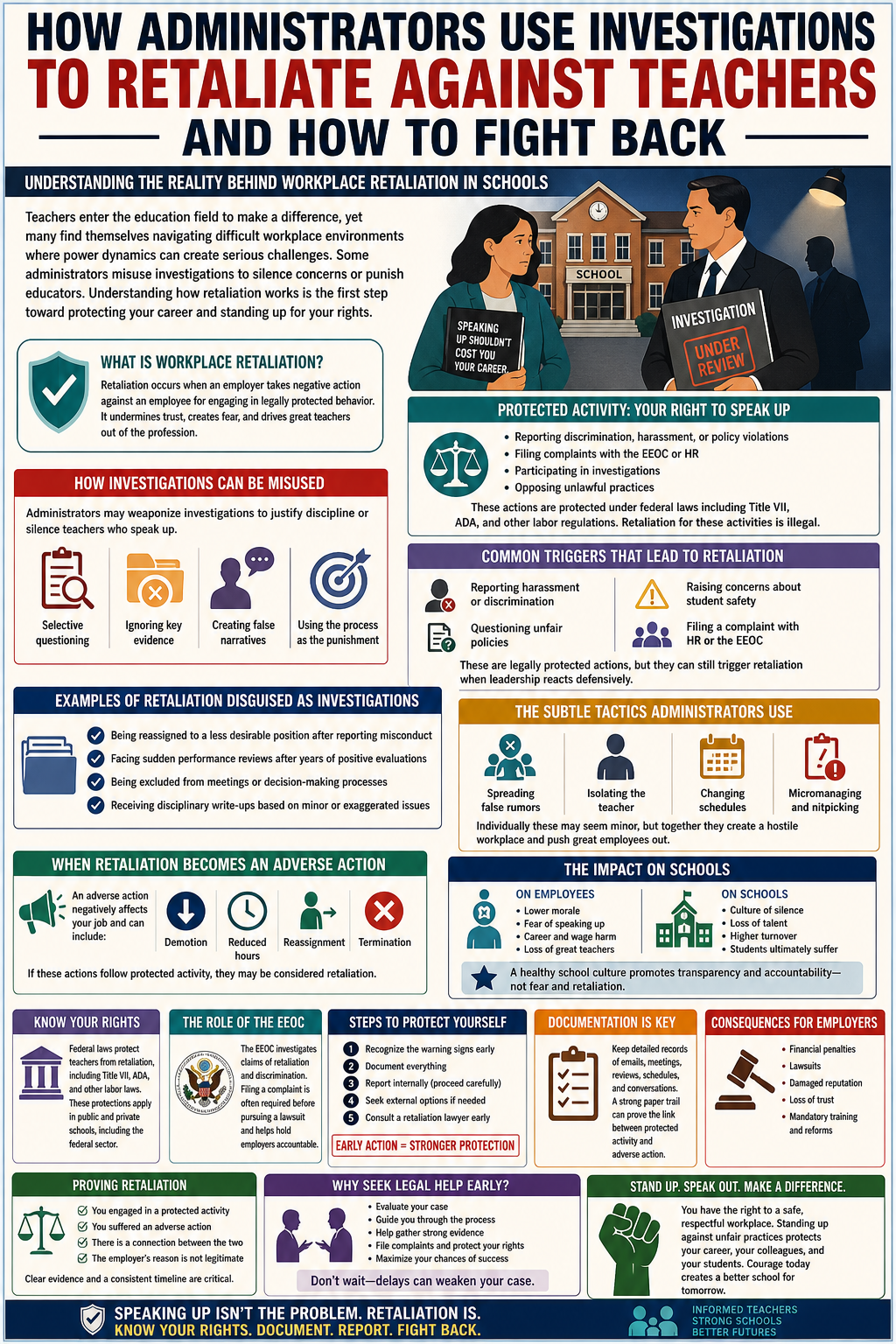
Teachers enter the education field to make a difference, yet many find themselves navigating difficult workplace environments where power dynamics can create serious challenges. One of the most troubling issues is workplace retaliation, especially when it is disguised as a formal process like an investigation. While investigations are meant to ensure fairness, some administrators misuse them to silence concerns or punish educators. This creates a harmful culture where teachers feel afraid to speak up. Understanding how retaliation works is the first step toward protecting your career.
What Workplace Retaliation Looks Like in Education
Workplace retaliation occurs when an employer takes negative action against an employee for engaging in legally protected behavior. In schools, this can take subtle or obvious forms that are often hard to detect at first. Teachers may notice changes in treatment after raising a concern or filing a complaint. These actions can escalate quickly if not addressed. Recognizing the warning signs is critical to protect your rights.
The Role of Protected Activity in Teacher Rights
A protected activity includes actions like reporting discrimination, harassment, or violations of school policies. It also covers filing complaints with the equal employment opportunity commission or participating in investigations. Teachers who oppose discrimination or report wrongdoing are protected under federal laws. These protections apply across both private institutions and the federal sector. Engaging in these actions should never lead to punishment, yet retaliation still happens.
How Investigations Can Be Misused by Administrators
School administrators sometimes use investigations as a tool to retaliate against teachers who raise concerns. Instead of being neutral, the investigation may be structured to justify discipline. This can involve selective questioning, ignoring key evidence, or creating false narratives. In some cases, the process itself becomes the punishment. This misuse undermines trust and damages overall employee morale.
Common Triggers That Lead to Retaliation
Retaliation often begins after a teacher engages in protected activity. Common triggers include reporting harassment, questioning unfair policies, or raising concerns about student safety. Filing a complaint with HR or the EEOC can also trigger a response from a defensive employer. These actions are legally protected, but they can still lead to retaliation when leadership acts improperly. Knowing these triggers can help you prepare.
Examples of Retaliation Disguised as Investigations
There are many forms retaliation can take in a school setting. Below are examples teachers frequently report:
- Being reassigned to a less desirable position after reporting misconduct
- Facing sudden performance reviews after years of positive evaluations
- Being excluded from meetings or decision-making processes
- Receiving disciplinary write-ups based on minor or exaggerated issues
Each example reflects how retaliation occurs under the appearance of standard procedures.
The Subtle Tactics Administrators Use
Not all retaliation is obvious. Some administrators use subtle tactics that can still have a negative impact on a teacher’s career. This includes spreading false rumors, isolating the teacher, or changing schedules to create hardship. These actions may not seem severe individually, but together they create a hostile workplace. Over time, this behavior can push great employees out of the profession.
When Retaliation Becomes an Adverse Action
An adverse action is any step taken by an employer that negatively affects an employee’s job. This can include demotion, reduced hours, termination, or reassignment. When these actions follow protected activity, they may be considered retaliation. Teachers must understand how these actions connect to their prior reporting or complaint. Establishing this link is key to building a strong case.
The Impact on Employee Morale and School Culture
Retaliation does not just affect one teacher. It impacts employee morale across the entire school. When teachers see a colleague punished for speaking up, they become less likely to report issues. This leads to a culture of silence and fear. A healthy school environment should foster transparency and accountability, not suppress it.
How Retaliation Harms Great Employees
Schools rely on great employees to deliver quality education. When retaliation drives these teachers away, the entire system suffers. Students lose experienced educators, and the school loses valuable talent. Retaining great employees requires a fair and supportive environment. Retaliation does the exact opposite.
Understanding Federal Laws That Protect Teachers
Federal laws are designed to protect workers from retaliation. These include Title VII, ADA protections related to disability, and other labor regulations. These laws apply to both public and private institutions, including those in the federal sector. They ensure that teachers can report concerns without fear of punishment. Knowing these laws empowers educators to stand up for their rights.
The Role of the EEOC in Retaliation Cases
The EEOC plays a critical role in handling employee claims related to retaliation and discrimination. Teachers can file a complaint with the EEOC if they believe their rights have been violated, or pursue other options such as filing retaliation and labor complaints with the Department of Labor. The agency investigates claims and may take action against the employer. Filing with the EEOC is often a necessary step before pursuing a lawsuit. This process helps ensure accountability.
How to Recognize a Possible Violation
Not every negative experience is retaliation, but certain patterns can signal a violation. If adverse actions follow closely after reporting concerns, this may indicate retaliation. A reasonable employee would view these actions as punishment for speaking up. Identifying these patterns early can help you respond effectively. Awareness is your first line of defense.
Steps Teachers Should Take to Protect Themselves
Taking proactive steps can make a significant difference in protecting your career. Teachers should act quickly when they notice signs of retaliation. Delays can make it harder to gather evidence and prove your case. Being organized and informed strengthens your position. Early action is always an effective way to respond.
The Importance of Documentation
Documentation is one of the most powerful tools a teacher has. Keeping detailed records can help establish a timeline of events. This includes emails, meeting notes, and performance reviews. A well-organized document trail can reveal inconsistencies in the employer’s actions. This evidence is crucial in proving retaliation.
How to Collect Documents and Evidence
Teachers should collect documents that support their claims. This includes communication with supervisors, HR, and administrators. It may also include witness statements from coworkers. Organizing these materials helps create a clear picture of what occurred. Strong evidence is essential when filing a complaint or pursuing legal help.
Filing a Complaint Internally
Before going external, many teachers choose to file a complaint within their school or district. This allows the employer to address the issue directly. However, internal reporting can sometimes lead to further retaliation. Teachers should proceed carefully and document all interactions. This step can still be important in building your case.
External Reporting Options for Teachers
If internal reporting does not resolve the issue, teachers can seek external options. This includes filing with the EEOC or contacting a legal professional. External reporting provides an additional layer of protection. It also increases accountability for the employer. These steps can lead to formal investigations and corrective action.
The Consequences of Retaliation for Employers
Employers who engage in retaliation face serious consequences. These can include financial penalties, lawsuits, and damage to reputation. Retaliation is illegal under federal laws and can result in significant liability. Schools must take these risks seriously. Preventing retaliation is not just ethical—it is necessary.
How Retaliation Affects Careers and Wages
Retaliation can have lasting consequences on a teacher’s career. It may lead to reduced wages, fewer opportunities, or even termination. These outcomes can create financial and emotional harm. Teachers must act quickly to minimize these effects. Protecting your career requires awareness and action.
Proving Retaliation in a Legal Case
To prove retaliation, a teacher must show a connection between protected activity and adverse action. This requires clear evidence and a consistent timeline. Courts will evaluate whether the employer’s actions were justified or retaliatory. Legal guidance can help strengthen your case. Proper preparation is key to success.
The Role of Managers and Supervisors
Managers and supervisors play a critical role in preventing retaliation. Their behavior sets the tone for the workplace. When leadership acts fairly, it helps protect employees and maintain trust. However, when they misuse authority, it can lead to serious harm. Accountability at this level is essential.
Building a Workplace Culture That Prevents Retaliation
A positive workplace culture can help prevent retaliation before it starts. Schools should foster open communication and respect for all employees. Training programs and clear policies can reinforce expectations. When employees feel safe, they are more likely to report issues. This creates a healthier environment for everyone.
Why Teachers Should Seek Legal Help Early
Seeking legal help early can make a significant difference in retaliation cases. An experienced retaliation lawyer focused on workplace retaliation and employment law can evaluate your situation and guide your next steps. They can help you gather evidence, file complaints, and protect your rights. Waiting too long can weaken your case. Early action provides the strongest position.
Protecting Yourself After Filing a Complaint
After filing a complaint, teachers should remain vigilant. Continue documenting interactions and monitor changes in behavior. Avoid confrontations that could be used against you. Staying professional strengthens your credibility. These actions help protect your case moving forward.
Recognizing When Retaliation Escalates
Retaliation can escalate over time if not addressed. What begins as subtle behavior can turn into more serious actions like termination. Recognizing this progression is important. Early intervention can prevent further harm. Teachers should not ignore warning signs.
The Long-Term Impact of Retaliation on Education
Retaliation affects more than individual teachers. It impacts the entire education system. Schools lose experienced educators and struggle to maintain stability. Students ultimately suffer from these disruptions. Addressing retaliation is essential for long-term success.
Standing Up Against Unfair Practices
Teachers have the right to stand up against unfair practices. Engaging in protected activity is not only legal but necessary for accountability. Schools must be held to high standards. Speaking out helps improve conditions for everyone. Courage and knowledge go hand in hand.
How Schools Can Prevent Workplace Retaliation Before It Starts
Schools and districts must take intentional steps to prevent workplace retaliation by creating clear policies and enforcing them consistently. Administrators should be trained to recognize what retaliation looks like and understand the legal risks involved, and higher education institutions in particular benefit from dedicated higher education attorneys to guide compliance and dispute resolution. An employer that prioritizes transparency and accountability is more likely to protect both teachers and the integrity of the institution. When leadership takes complaints seriously and responds fairly, it reduces the likelihood of retaliation. This approach also strengthens trust across the workplace.
The Role of Workplace Investigations in Protecting Teachers
When handled properly, workplace investigations can serve as a tool to protect teachers rather than harm them. A fair investigation should be neutral, thorough, and based on facts rather than assumptions. The employer must ensure that all parties are heard and that evidence is reviewed objectively. When investigations are conducted correctly, they help maintain a safe and professional workplace. However, when misused, they can become a vehicle for retaliation.
Why Immigration Status Should Never Be Used as Leverage
A teacher’s immigration status should never be used as a threat or form of retaliation. Federal laws protect workers regardless of their background, and using immigration status to intimidate an employee is a serious violation. In some cases, employers may attempt to exploit fear to silence complaints. This type of behavior is not only unethical but also illegal. Teachers should know they have rights and protections regardless of their status.
Understanding Other Related Protected Activity
Other related protected activity includes actions beyond formal complaints, such as assisting a coworker with reporting misconduct or participating in an internal review. Teachers who support others in reporting harassment or discrimination are also protected under federal laws. These actions demonstrate a commitment to accountability and fairness in the workplace. An employer cannot lawfully retaliate against someone for being involved in these efforts. Recognizing these protections is essential for safeguarding your rights.
Recognizing Related Protected Activity in Everyday Situations
Related protected activity can occur in everyday situations that may not seem significant at first. For example, speaking up during a meeting about unfair treatment or raising concerns about policy violations can qualify as protected actions. A reasonable employee would understand that these efforts aim to improve the workplace. Even informal reporting can trigger legal protections. Teachers should not hesitate to voice concerns when they see wrongdoing.
The Role of the HR Department in Addressing Complaints
The human resources department plays a key role in handling complaints and ensuring fairness. This department is responsible for reviewing concerns, conducting investigations, and enforcing policies, and many schools rely on outside HR consulting, training, and internal investigation services to strengthen these processes. When HR operates independently and objectively, it helps protect employees from retaliation. However, if the department aligns too closely with management, it may fail to address issues properly. Teachers should document all interactions with HR to ensure accountability.
How Retaliation Impacts the Business of Education
Education is not only about teaching—it is also a business that depends on strong leadership and ethical practices. Retaliation can disrupt operations, damage reputations, and lead to costly legal disputes. A school that tolerates retaliation risks losing trust from staff, students, and the community. Protecting employees is essential for maintaining a stable and effective organization. Ethical practices ultimately support long-term success.
Why Every Company Must Take Retaliation Seriously
Every company, including schools and educational institutions, must address retaliation with urgency. When a company ignores these issues, it creates a toxic environment that drives employees away. A strong commitment to fairness helps attract and retain talent. Leadership should actively monitor workplace behavior and respond to concerns promptly. This approach benefits both employees and the organization as a whole.
When Teachers Are Unfairly Fired After Speaking Up
Some teachers are wrongfully fired after engaging in protected activity, which is a clear form of retaliation. Being fired under these circumstances can feel overwhelming and unjust. However, termination does not mean the end of your options. Legal protections exist to challenge these actions and seek accountability, and working with a retaliation lawyer for workplace law and employment issues can help you navigate this process. Teachers should act quickly to preserve their rights and gather evidence.
How Employers Use Pressure to Force Resignations
In some cases, employers may not directly fire a teacher but instead create conditions to force a resignation. This can include excessive scrutiny, unreasonable demands, or isolation from colleagues. These tactics are designed to push the employee out without formal termination, raising questions such as whether an employer can force you to resign or quit your job. This strategy is often used to avoid legal consequences. Recognizing these patterns is essential for protecting your career.
The Loss of Benefits After Retaliation Occurs
Retaliation can lead to the loss of important benefits, including health coverage, retirement contributions, and paid leave. These losses can create significant financial stress for teachers and their families, underscoring the value of having essential legal documents for families before age 40 to protect long‑term financial security. An employer must not use benefits as a tool for punishment. When benefits are reduced after a complaint, it may signal retaliation. Teachers should document these changes carefully.
Using Available Resources to Protect Your Rights
Teachers should take advantage of available resources when facing retaliation. This includes education lawyers who provide expert legal support for teachers and schools, advocacy groups, and government agencies like the EEOC. These resources provide guidance, support, and protection throughout the process. Accessing the right support early can strengthen your case. No teacher should have to navigate retaliation alone.
Understanding Your Options Based on Your Circumstances
Every retaliation case is different, and outcomes depend on specific circumstances. Factors such as timing, documentation, and employer actions all play a role, especially in complex matters like navigating the Title IX investigation process as a respondent. Teachers should evaluate their situation carefully and seek professional advice. Understanding your options allows you to make informed decisions. A strategic approach can lead to better results.
Recognizing Other Type of Retaliation Tactics
Retaliation can take many forms, and there is always another type of tactic employers may use. This can include reducing responsibilities, altering schedules, or limiting opportunities for advancement, which can be especially damaging in complex environments like colleges that require dedicated higher education attorneys to address systemic issues. These actions may seem minor individually but can have a lasting impact. Teachers should remain aware of these patterns and document any changes. Recognizing these tactics early is key to building a strong case.
Contact Masterly Legal Solutions for Support
If you believe you are experiencing workplace retaliation, you do not have to face it alone. At Masterly Legal Solutions, we understand how stressful these situations can be and how much is at stake for your career. Our team is here to help you understand your rights, evaluate your situation, and take the right steps to protect your future.
We offer a free consultation where we can answer your questions, review your case, and help you determine the best course of action. Whether you are dealing with retaliation, discrimination, or a wrongful investigation, having experienced legal support can make all the difference.
Call us today at (972) 236-5051 to speak with our team. Let us help you protect your career, your reputation, and your future.
Disclaimer: This article is for educational purposes only and does not constitute legal advice. For guidance specific to your situation, please contact Masterly Legal Solutions directly.





Looking for Legal & Business Solutions? Contact Us Now
Fill in the form or call us to set up a meeting