

Retaliation Lawyer Dallas for Teachers: When Your District Punishes You for Speaking Up
When Speaking Up Becomes a Risk for Teachers
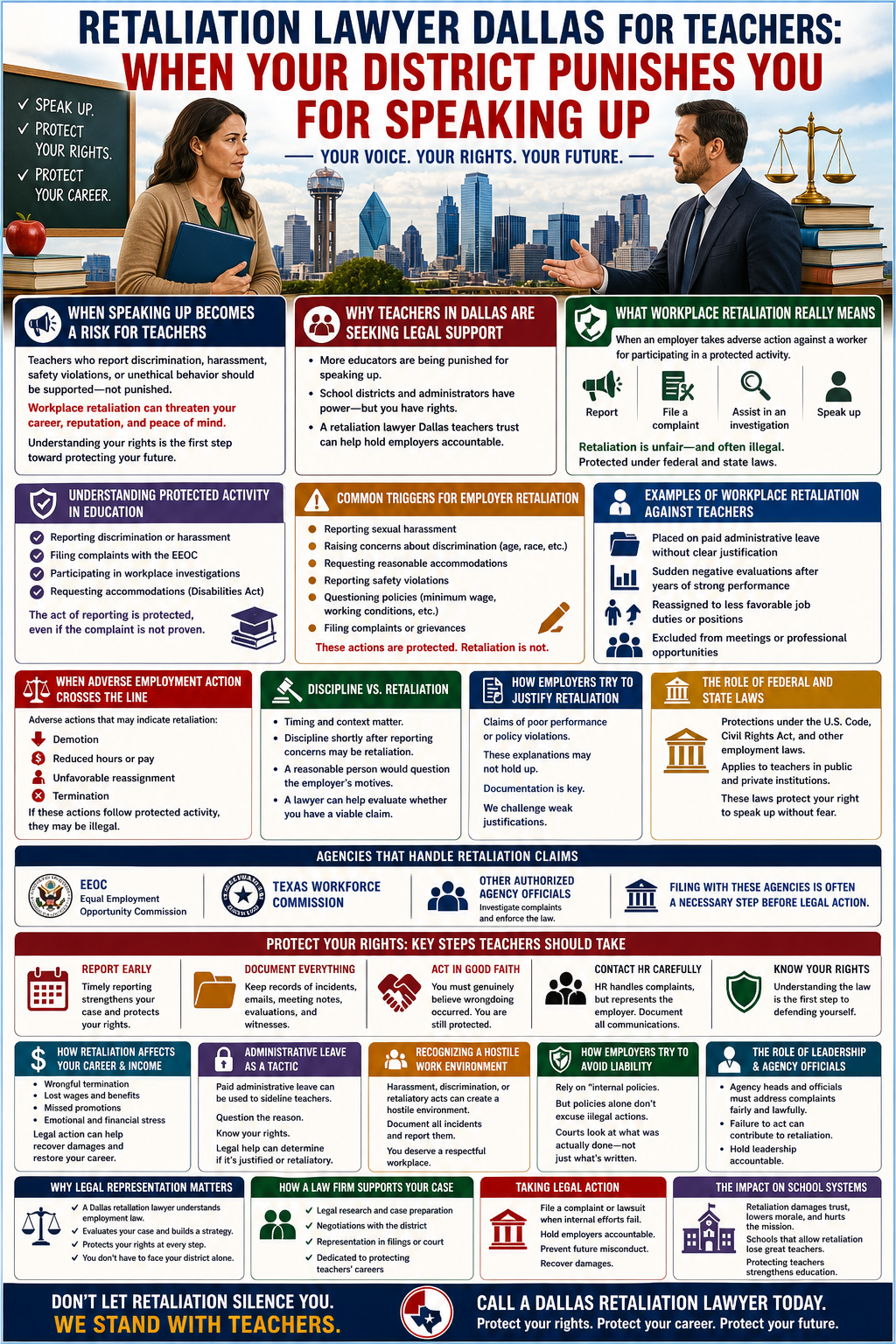
Teaching is more than a profession—it is a commitment to students, integrity, and community. Yet many educators find themselves facing consequences after doing the right thing, whether that means reporting discrimination, raising concerns about safety violations, or standing against unethical behavior. Instead of being supported, some teachers encounter workplace retaliation that threatens their careers and reputations. These situations can feel isolating, confusing, and overwhelming. Understanding your rights is the first step toward protecting your future.
Why Teachers in Dallas Are Seeking Legal Support
Across Dallas, more educators are reaching out to a retaliation lawyer Dallas professionals trust because they are being punished for speaking up. School districts are large organizations, and decisions made by administrators or agency officials can have lasting effects on a teacher’s career. When an employer retaliated against a teacher, it often signals deeper systemic issues. Teachers should never feel powerless in these situations. With the right legal guidance, you can push back and hold employers accountable.
What Workplace Retaliation Really Means
When an employer takes adverse action against a worker for participating in a protected activity, it is known as workplace retaliation. This can include reporting harassment, filing a complaint, or assisting in an investigation. Retaliation can take many forms, from subtle changes in job duties to more serious actions like termination. These actions are prohibited under federal and state laws. Teachers must recognize that retaliation in schools and workplaces is not just unfair—it is often illegal.
Understanding Protected Activity in Education
A protected activity includes actions such as reporting discrimination, filing complaints with the equal employment opportunity commission, or participating in workplace investigations. Teachers who report workplace discrimination or engage in reporting harassment are legally protected. These protections exist under federal law, including the Civil Rights Act and other education employment protections for teachers and anti discrimination laws. Even if the complaint does not result in a finding of wrongdoing, the act of reporting is still protected. This is critical for maintaining accountability in education systems.
Common Triggers for Employer Retaliation
Retaliation often begins after a teacher takes a stand. Common triggers include reporting sexual harassment, raising concerns about age discrimination, or requesting a reasonable accommodation under the disabilities act. Teachers who report safety violations or question policies related to minimum wage or working conditions may also face labor-related retaliation and complaints. These actions are not only protected but necessary to maintain a safe and fair workplace. Unfortunately, some employers respond negatively instead of responsibly.
Examples of Workplace Retaliation Against Teachers
Workplace retaliation can appear in many ways, and not all of them are obvious, and a retaliation lawyer focused on workplace law can help identify patterns you might miss. Below are examples commonly reported by Dallas workers:
- Being placed on paid administrative leave without clear justification
- Receiving sudden negative evaluations after years of strong performance
- Being reassigned to less favorable job duties or positions
- Being excluded from meetings or professional opportunities
Each example shows how retaliatory acts can disrupt a teacher’s career.
When Adverse Employment Action Crosses the Line
An adverse employment action is any action that negatively impacts an employee’s job or career. This can include demotion, reduced hours, or termination. When these actions follow protected activity, they may indicate unlawful retaliation. Teachers must evaluate whether these actions are tied to their prior reporting. Identifying this connection is essential for building a retaliation claim.
The Difference Between Discipline and Retaliation
Not every disciplinary action is retaliation, but the timing and context matter. If discipline follows closely after reporting discrimination or harassment, it may raise red flags. A reasonable person would question whether the employer’s actions were justified or retaliatory. This distinction is often central in workplace retaliation cases. An experienced attorney can help determine whether you have a viable retaliation claim.
How Employers Try to Justify Retaliation
Employers often attempt to justify their actions by claiming poor performance or policy violations. However, these explanations may not hold up under scrutiny. In many workplace retaliation cases, the employer’s reasoning is inconsistent or unsupported by evidence. This is why documentation is so important. A workplace retaliation lawyer can analyze these claims and challenge them effectively.
The Role of Federal and State Laws in Protecting Teachers
Federal and Texas law, supported by experienced education lawyers in Texas, provide strong protections against retaliation. These include provisions under the United States Code, the Civil Rights Act, and other employment law statutes. These laws apply to a wide range of employees covered, including teachers in both public and private institutions. They are designed to ensure that workers can report concerns without fear of punishment. Understanding these legal protections is key to defending your rights.
Agencies That Handle Retaliation Claims
Several federal agencies and state organizations handle retaliation claims. These include the EEOC and the Texas Workforce Commission, as well as guidance from Texas education law attorneys when school-related issues arise. Teachers may also interact with other authorized agency officials or a government agency responsible for enforcement. These agencies investigate complaints and determine whether violations have occurred. Filing with these entities is often a necessary step before pursuing legal action.
The Importance of Reporting Discrimination Early
Reporting discrimination early can strengthen your case and protect your rights. Whether you are dealing with workplace discrimination, sexual orientation bias, or a hostile work environment, timely reporting matters. Delays can make it harder to gather evidence and prove your claim. Teachers should act quickly, seek education law guidance to protect their rights, and document all incidents. This proactive approach can make a significant difference.
The Role of Human Resources in Retaliation Cases
Human resources departments are responsible for handling complaints and enforcing policies. In some cases, HR may help resolve issues fairly. However, HR also represents the employer, which can create conflicts of interest. Teachers should approach HR interactions carefully and document all communications. This ensures transparency and accountability.
How Retaliation Affects Your Career and Income
Retaliation can lead to serious consequences, including wrongful termination and lost wages. Teachers may also lose opportunities for advancement or professional growth. These impacts can extend beyond the workplace and affect personal well-being. Taking legal action can help recover damages and restore your career. Protecting your future should always be a priority.
Understanding Workplace Retaliation Cases
Workplace retaliation cases often involve complex legal issues and require strong evidence. These cases may include claims of employer retaliation, discrimination claims, or violations of federal law. Each case is unique and depends on specific facts and circumstances. Working with an experienced attorney ensures that your case is handled effectively. Preparation and strategy are critical to success.
How to Prove a Retaliation Claim
To prove a retaliation claim, you must show that you engaged in protected activity and that your employer retaliated against you as a result. This requires clear documentation and a timeline of events. Evidence may include emails, performance reviews, and witness statements. A workplace retaliation attorney can help organize and present this information. Building a strong case increases your chances of success.
The Importance of Acting in Good Faith
Teachers who report concerns must do so with a good faith belief that wrongdoing occurred. This means you genuinely believe that discrimination, harassment, or illegal acts took place. Even if the claim is not proven, you are still protected. Acting in good faith is a key element of legal protections. It ensures that employees can speak up without fear.
Legal Protections for Teachers in Dallas
Teachers in Dallas benefit from a range of legal protections under federal and Texas law, and many rely on legal protection for teachers and their rights. These include safeguards against retaliation, discrimination, and unfair treatment. Laws such as the Medical Leave Act and other employment act provisions provide additional support. These protections are designed to create a fair and safe workplace. Knowing your rights is essential to enforcing them.
When Employers Use Administrative Leave as a Tactic
Some employers place teachers on paid administrative leave as a response to complaints, which can trigger education law investigations and defense needs for teachers. While this may be appropriate in certain circumstances, it can also be used as a retaliatory measure. Being removed from your employee's current position can disrupt your career and reputation. Teachers should question the reasoning behind such actions. Legal guidance can help determine whether the leave is justified.
Recognizing a Hostile Work Environment
A hostile work environment occurs when ongoing behavior creates an intimidating or offensive workplace. This may include harassment, discrimination, or retaliatory acts. Teachers facing this situation should document all incidents and report them promptly. Addressing these issues early can prevent further harm. No teacher should have to endure such conditions.
How Employers Attempt to Avoid Liability
Employers often rely on internal policies to defend against claims. They may argue that they issue internal policies consistent with legal requirements. However, policies alone do not excuse unlawful behavior. Courts will examine whether those policies were actually followed. A retaliation lawyer can identify gaps and inconsistencies in the employer’s defense.
The Role of Agency Officials and Leadership
Agency officials, including the agency head and other authorized agency officials, play a critical role in addressing complaints. Their decisions can impact the outcome of investigations and agency judgments. When leadership fails to act appropriately, it can contribute to retaliation. Accountability at this level is essential. Teachers should not hesitate to challenge unfair decisions.
Why Legal Representation Matters
Having an experienced attorney on your side can make all the difference. A dallas workplace retaliation lawyer understands the complexities of employment law and how to navigate these cases. They can evaluate your situation, gather evidence, and develop a strategy tailored to your needs. Legal representation ensures that your rights are protected at every step. You do not have to face this alone.
How a Law Firm Supports Your Case
A law firm provides the resources and expertise needed to handle retaliation cases effectively. This includes legal research, case preparation, and representation in negotiations or court. Working with a workplace retaliation lawyer and an education law attorney focused on protecting teachers’ careers gives you access to a team dedicated to your success. They can help you pursue a legal claim and seek justice. Strong legal support is essential in these situations.
Taking Legal Action Against Retaliation
When internal efforts fail, taking legal action may be necessary. This can involve filing a complaint with a government agency or pursuing a lawsuit. Legal action helps hold employers accountable and prevent future misconduct. It also provides an opportunity to recover damages. Teachers should consider this option carefully with guidance from an employment lawyer.
The Impact of Retaliation on School Systems
Retaliation affects more than individual teachers—it impacts the entire school system. It damages trust, lowers morale, and disrupts the agency's mission. Schools that tolerate retaliation struggle to retain great educators. Addressing these issues is essential for long-term success. Protecting teachers benefits everyone involved.
Addressing Legitimate Fears Teachers Face
Teachers often have legitimate fears about reporting misconduct. They may worry about losing their job, facing isolation, or damaging their reputation. These fears are valid, especially when retaliation occurs. However, legal protections exist to address these concerns. Seeking guidance can help you move forward with confidence.
When Retaliation Leads to Termination
Being fired after reporting misconduct is one of the most severe forms of retaliation. This type of adverse employment action can have lasting consequences. Teachers should act quickly to challenge wrongful termination. Legal support can help you recover lost wages and protect your rights. You deserve fair treatment under the law.
The Importance of an Initial Consultation
An initial consultation with a retaliation lawyer allows you to understand your options. During this meeting, an attorney will evaluate your case and provide guidance. This step is critical for building a strong legal strategy. It also gives you clarity during a stressful time. Taking this step can set the foundation for your case.
Protecting Your Career Moving Forward
After experiencing retaliation, it is important to focus on protecting your future. This includes documenting all interactions, maintaining professionalism, and seeking support. Teachers should also explore options for resolving the situation legally. Taking these steps helps safeguard your career and reputation. You deserve to work in a fair and respectful environment.
Contact Masterly Legal Solutions for a Free Consultation
If you believe your employer retaliated against you for speaking up, you do not have to handle it alone. At Masterly Legal Solutions, we understand the challenges teachers face when dealing with workplace retaliation. Our team is committed to helping you understand your rights and take the necessary steps to protect your career.
We offer an initial consultation where we can review your situation, answer your questions, and help you determine whether you have a viable retaliation claim. Whether you are dealing with wrongful termination, discrimination, or a hostile work environment, our experienced team is here to support you.
Call us today at (972) 236-5051 to speak with a dedicated retaliation lawyer who can guide you through your options. Let us help you hold employers accountable and move forward with confidence.
Disclaimer: This article is for educational purposes only and does not constitute legal advice. For guidance specific to your situation, please contact Masterly Legal Solutions directly.






Looking for Legal & Business Solutions? Contact Us Now
Fill in the form or call us to set up a meeting





