

The Hidden Risk Behind “Cooperating” Without Legal Protection
Why Cooperation Can Feel Like the Right Choice
When Child Protective Services shows up at your door, your first instinct is often to cooperate fully. Most parents want to show they have nothing to hide and that their child is safe. It is natural to believe that being open and helpful will make the situation go away faster. However, the reality is that cooperation without understanding your rights can create serious legal risks. What feels like the right thing in the moment can later be used against you.
Understanding the Texas CPS Investigation Process
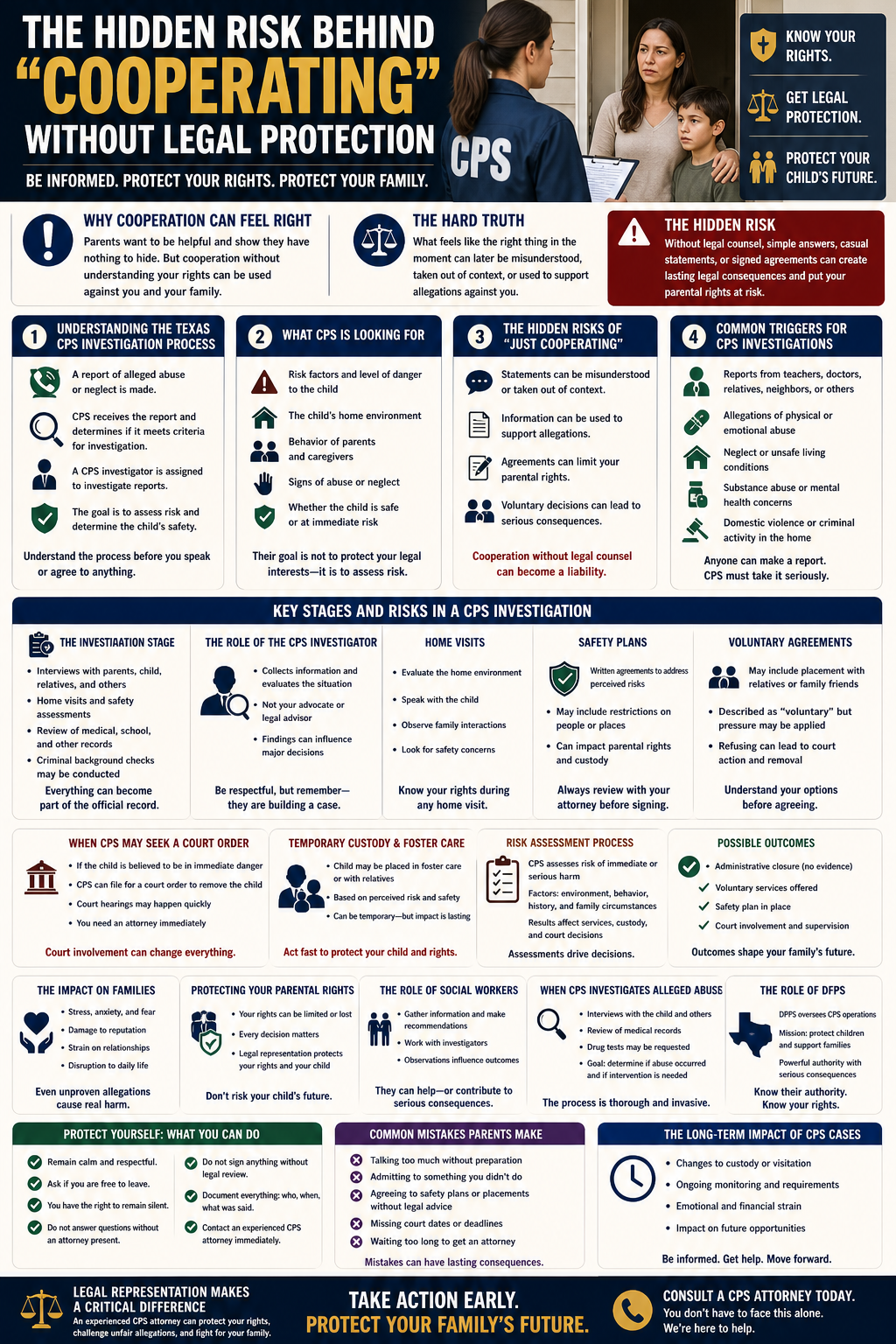
The texas cps investigation process is designed to assess allegations of child abuse or neglect and determine whether a child’s safety is at risk. This process begins when a report is made to the Texas Department of Family and Protective Services. From there, CPS workers are assigned to investigate reports and evaluate the situation. While the process is meant to protect children, it can quickly become overwhelming for families. Knowing how the system works is critical before you say or agree to anything, and a Texas-based law firm offering a broad range of legal and business services can help you navigate these complex decisions.
The Role of Child Protective Services
Child protective services is responsible for protecting children from harm, but their role also includes investigating families. These investigations can involve interviews, home visits, and reviewing records. CPS investigators are trained to gather information, but not necessarily to protect your legal interests. This means that even routine questions can carry legal consequences. Understanding this dynamic is essential for parents navigating a CPS investigation.
How a CPS Investigation Begins
A cps investigation typically starts with a report of alleged abuse or neglect. This report may come from a teacher, doctor, neighbor, or another concerned individual. Once the report is received, CPS must determine whether the allegations meet the criteria for investigation. If they do, a cps investigator will begin the investigation stage. From that moment, everything you say or do can become part of the official record.
What CPS Is Looking For During an Investigation
During a cps investigation process, CPS is focused on identifying risk factors and determining the level of danger to the child. They evaluate the child’s home environment, the behavior of the child’s parents, and any signs of abuse or neglect. This includes assessing whether neglect occurred or if there is evidence of child abuse. Their goal is to determine whether the child is safe or at immediate risk. This assessment can influence major decisions about your family.
The Hidden Risks of “Just Cooperating”
Many families believe that cooperating without question will lead to a quick resolution. However, cooperation without legal counsel can expose you to unintended consequences. Statements made casually can be misunderstood or taken out of context. Agreeing to certain requests can create a written agreement that limits your parental rights. Without guidance, you may unknowingly strengthen the case against you.
When Cooperation Turns Into Self-Incrimination
Parents often provide information freely, thinking it will help resolve the situation, just as educators sometimes speak openly in Texas Education Agency and other education law investigations without first securing counsel. Unfortunately, this information can sometimes be used to support allegations of abuse or neglect. Even minor inconsistencies in your statements can raise concerns for CPS workers. These details may be included in the investigation results and used in court. This is why having legal representation early is so important.
The Importance of Legal Counsel Early in the Process
Having legal counsel during a cps investigation can protect your rights from the start, much like an education lawyer providing support for teachers and schools protects careers during school-related investigations. An experienced attorney understands how CPS operates and can guide you through each step. They can help you respond appropriately to requests and avoid unnecessary risks. Legal representation ensures that your cooperation does not become a liability. Early intervention can make a significant difference in the outcome of your case.
Understanding the Investigation Stage
The investigation stage is one of the most critical parts of the cps case. During this time, CPS will conduct interviews, gather evidence, and assess the child’s safety. This may include speaking with family members, reviewing medical records, and performing a criminal background check. The goal is to complete investigations and determine whether intervention is necessary. Parents should approach this stage with caution and awareness.
The Role of the CPS Investigator
A cps investigator is responsible for collecting information and evaluating the situation. While they may appear supportive, their primary duty is to investigate allegations. They are not your advocate and do not provide legal advice. Their findings can influence whether your child remains in your care or is removed. Understanding their role can help you navigate interactions more effectively.
What Happens During a Home Visit
A home visit is often one of the first steps in a cps investigation. During this visit, CPS will evaluate the child’s home environment and look for safety issues. They may inspect living conditions, speak with the child, and observe interactions within the family. While cooperation is important, you should be aware of your rights during this process. A home visit can significantly impact the investigation results.
Safety Plans and Their Legal Impact
CPS may ask you to agree to a safety plan if they believe there are concerns. A safety plan is a written agreement that outlines steps to address perceived risks. While it may seem voluntary, it can carry legal weight and affect your parental rights. These plans can include restrictions on who can be around your child or where the child can stay. Always review any safety plan with legal counsel before agreeing.
Voluntary Agreements Are Not Always Truly Voluntary
Parents are often presented with a voluntary agreement or voluntary placement agreement during a cps investigation. These agreements may involve placing the child with a relative or family friend. While they are described as voluntary, there may be pressure to comply. Refusing may lead to further action, such as seeking a court order. Understanding your options is essential before making decisions.
When CPS May Seek a Court Order
If CPS believes the child is in immediate danger, they may seek a court order to remove the child from the home. This can lead to temporary custody arrangements and involvement in juvenile dependency court. A court hearing may be scheduled quickly, leaving little time to prepare. Having an experienced attorney can help you respond effectively. Legal representation is critical in these situations.
Understanding Temporary Custody and Foster Care
In some cases, CPS may place a child in foster care or with a relative or family friend. This decision is based on the perceived risk level and safety concerns. Temporary custody arrangements can be emotionally challenging for families. These decisions are often made quickly and can have long-term consequences. Parents should act quickly to protect their rights, including through essential legal documents for families before age 40 that safeguard children and future decision-making.
The Role of Family and Protective Services
The Texas Department of Family and Protective Services oversees CPS investigations. Their mission is to protect children while supporting families. However, their actions can have significant legal and personal consequences. Understanding their authority and limitations is important. Parents should be informed and prepared when dealing with this agency.
How CPS Evaluates Risk and Safety
CPS uses a risk assessment to determine whether a child is in immediate risk or facing serious harm. This assessment considers factors such as the child’s environment, parental behavior, and any history of abuse. The outcome of this assessment can influence whether the child remains at home. It can also impact the services offered to the family. Understanding this process can help you respond effectively.
The Impact of Allegations on Families
Allegations of child abuse or neglect can have a profound impact on a family. Even if the allegations are unproven, they can affect your reputation and relationships. The stress of an investigation can disrupt daily life and create uncertainty. Families may feel isolated and overwhelmed during this time. Seeking support and legal guidance is essential.
When CPS Investigates Alleged Abuse
When CPS is investigating allegations of abuse, they will examine all available evidence, and it is wise to consider why a power of attorney for your children matters so you retain control over key decisions during stressful periods. This may include interviews with the alleged victim, family members, and other individuals. They may also review medical records and conduct a drug test if necessary. The goal is to determine whether abuse occurred and whether intervention is needed. This process can be thorough and invasive, similar to the internal investigations that a multifaceted law firm providing tailored legal services and training conducts for organizations facing serious allegations.
The Role of Social Workers in CPS Cases
Social workers play a key role in CPS cases by gathering information and providing recommendations, often in parallel with law firms that conduct internal investigations and provide organizational training. They may work closely with CPS investigators to evaluate the situation. Their observations can influence the outcome of the case. While they aim to support families, their findings can also lead to serious consequences. Understanding their role is important for parents.
Possible Outcomes of a CPS Investigation
The investigation results can vary depending on the findings. CPS may close the case through administrative closure if no evidence is found. In other cases, they may offer voluntary services or take further action. These outcomes can affect your family’s future. Being prepared and informed can help you navigate these possibilities.
Protecting Your Parental Rights
Your parental rights are one of the most important aspects of a CPS case. These rights can be affected by decisions made during the investigation process. Parents should take steps to protect these rights at every stage. This includes seeking legal representation and understanding your options. Protecting your rights is essential for your child’s well being.
The Importance of Legal Representation
Legal representation provides guidance and protection during a CPS investigation. An experienced attorney can help you understand the process and avoid common pitfalls. They can also advocate on your behalf in court and negotiations. Having legal support ensures that your voice is heard. This can make a significant difference in the outcome.
Why Early Action Matters
Taking action early in a CPS case can help prevent escalation. Addressing concerns quickly and appropriately can reduce the risk of further intervention. Waiting too long can limit your options and weaken your position. Early involvement of legal counsel can provide clarity and direction. This proactive approach is often the most effective.
Common Mistakes Parents Make During Investigations
Parents often make mistakes during a CPS investigation without realizing it. These can include speaking without preparation, agreeing to terms without understanding them, or failing to seek legal advice. These actions can have lasting consequences. Awareness and preparation can help you avoid these pitfalls.
How to Navigate CPS Interactions Safely
Navigating interactions with CPS requires careful consideration. Parents should remain calm, respectful, and informed. It is important to understand your rights and seek guidance when needed. Taking a thoughtful approach can help protect your interests. This can also improve communication and outcomes.
The Long-Term Impact of CPS Cases
CPS cases can have long-term effects on families, even after they are resolved. These impacts can include changes to custody arrangements, ongoing monitoring, and emotional stress. Understanding these potential outcomes is important for planning your next steps. Families should seek support to move forward.
How Child Protective Investigations Are Conducted
Child protective investigations are designed to evaluate allegations and determine whether a child is at risk. During this process, CPS gathers information through interviews, observations, and documentation. The goal is to assess safety concerns and decide whether further action is needed. While these investigations are meant to protect children, they can feel overwhelming for families. Understanding how they work helps parents respond more confidently.
The Role of Child and Family Services in CPS Cases
Child and family services play an important role in supporting families during an investigation, and partnering with a Texas-based firm that offers comprehensive legal and business services can ensure those supports align with your legal rights. These services may include counseling, parenting support, or access to additional assistance programs. Their goal is to help stabilize the situation while ensuring the child’s safety. However, participation in these services can sometimes feel mandatory. Parents should understand their options before agreeing to any plan.
Accessing Family and Community Resources During an Investigation
Families involved in CPS cases are often encouraged to use family and community resources. These resources can include local programs, support groups, and counseling services. They are intended to help address concerns raised during the investigation. While these services can be helpful, they should be approached carefully. Legal guidance can help ensure that participation does not negatively impact your case.
Addressing Allegations of Sexual Abuse
Allegations of sexual abuse are taken very seriously and often lead to an intensified investigation process, much like the Title IX investigation process where respondents must know their rights in educational settings. CPS may work closely with law enforcement to gather evidence and interview those involved. These cases require sensitivity and careful handling due to their complexity. Even unproven allegations can have significant consequences. Families should seek legal protection immediately in these situations.
Understanding the Role of the Alleged Perpetrator
The alleged perpetrator is the individual accused of abuse or neglect in a CPS case. This person may be questioned extensively and may face restrictions during the investigation. Their statements and actions can heavily influence the outcome of the case. It is important for anyone in this position to understand their rights. Legal counsel can help protect against misinterpretation or unfair treatment.
How CPS Evaluates the Child’s Family Environment
CPS closely examines the child’s family to determine whether the home is safe. This includes interactions between family members, living conditions, and overall stability. Investigators may speak with multiple individuals to gather a complete picture. Their findings can impact decisions about custody and services. Families should be aware that every interaction matters during this process.
The Importance of Reviewing Criminal History
A criminal history check is often part of a CPS investigation. This may include reviewing past arrests, charges, or convictions related to abuse or neglect. CPS uses this information to assess potential risks to the child. Even unrelated offenses may be considered during the evaluation. Parents should be prepared to address any concerns that arise from this review.
Why CPS Conducts a Thorough Investigation
A thorough investigation is intended to ensure that all relevant facts are considered before making a decision. This includes interviews, document reviews, and home assessments. While this approach aims to protect children, it can feel invasive for families. The outcome of the investigation can have lasting effects. Being prepared and informed can help you navigate this process more effectively.
The Role of Other Family Members in CPS Cases
Other family members may be involved in a CPS investigation, especially if they have knowledge of the situation, and it can be helpful to plan ahead with estate and family documents designed for families before age 40 that clarify roles and responsibilities. They may be interviewed or asked to provide support for the child. In some cases, they may be considered for temporary placement. Their involvement can influence the direction of the case. Families should communicate carefully during this time.
Understanding Family Services Offered by CPS
Family services are often recommended to address concerns identified during an investigation, and they should be evaluated alongside essential legal documents for families before age 40 so short-term services do not undermine long-term protections. These services may include parenting classes, therapy, or substance abuse programs. While they can be beneficial, they may also come with expectations or requirements. Participation can affect how CPS views the case. Parents should understand the terms before agreeing.
How Family Law Intersects With CPS Cases
Family law plays a significant role in CPS cases, especially when custody or parental rights are involved, and working with a Texas law firm that handles family, education, and estate matters can help you see how these areas connect. Court decisions may determine where the child lives and who has decision-making authority. These legal issues can become complex quickly. Having legal representation is essential when navigating these matters. Understanding your rights under family law is critical.
Investigating Allegations of Sexual Exploitation
Sexual exploitation cases are among the most serious CPS investigations, and colleges and universities facing similar concerns benefit from dedicated higher education attorneys focused on complex compliance issues. These cases often involve coordination with law enforcement and specialized investigators. The stakes are extremely high, and the consequences can be severe. Families facing these allegations should act quickly to protect their rights. Legal support is essential in these situations.
The Value of Community Resources in Supporting Families
Community resources can provide valuable support during a CPS case. These may include counseling services, educational programs, and financial assistance. Accessing these resources can help address concerns raised by CPS. However, participation should be approached strategically. Legal guidance can help ensure these resources are used effectively.
Ensuring the Child Remains Safe During the Process
CPS’s primary goal is to ensure the child remains safe throughout the investigation. This may involve temporary changes to living arrangements or supervision requirements. These measures are intended to reduce risk while the case is ongoing. Families should understand the purpose of these actions. Taking proactive steps can help demonstrate a commitment to safety.
Understanding the Role of Child Protective Services CPS
Child protective services CPS is responsible for investigating reports and ensuring child safety. Their authority includes conducting interviews, making recommendations, and seeking court intervention if necessary. While their mission is to protect children, their actions can significantly impact families. Understanding their role helps parents navigate the process more effectively.
Evaluating the Child’s Care Environment
CPS evaluates the child’s care to determine whether their needs are being met. This includes assessing physical, emotional, and educational well-being. Any concerns in these areas may influence the outcome of the case. Parents should be prepared to demonstrate their ability to provide proper care. Documentation and communication are key.
When CPS May Use a Search Warrant
In certain situations, CPS may obtain a search warrant to enter a home or access records. This typically occurs when there are serious concerns or lack of cooperation. A search warrant gives CPS legal authority to gather evidence. Parents should understand their rights in these situations. Legal counsel can help ensure proper procedures are followed.
The Importance of Reasonable Accommodations
Parents with disabilities may be entitled to reasonable accommodations during a CPS investigation. This ensures they have equal access to services and fair treatment. CPS must consider these needs when evaluating the case. Failure to provide accommodations can raise legal issues. Understanding these rights is essential for protecting your interests.
Why CPS Practices May Differ Across Regions Like Southern California
While this article focuses on Texas, CPS practices can vary in places like Southern California, and guidance from a law firm experienced in multi-jurisdictional legal services can clarify how different systems operate. Differences in policies and procedures can affect how cases are handled. Understanding these variations is important for families who may relocate or have connections in multiple states. Regardless of location, legal protections remain critical. Being informed helps you adapt to different systems.
When a CPS Case Overlaps With a Criminal Case
Some CPS investigations may lead to a criminal case if serious allegations are involved, increasing the need for a Texas-based law firm that offers broad legal representation to coordinate your defense. This can include charges related to abuse, neglect, or other offenses. When this happens, the stakes become even higher. Statements made during the CPS investigation can be used in criminal proceedings. Legal representation is essential to protect your rights in both areas.
Contact Masterly Legal Solutions for Guidance
If you are facing a CPS investigation or have concerns about the texas cps investigation process, you do not have to navigate it alone. At Masterly Legal Solutions, we understand how overwhelming these situations can feel, especially when your family and your child’s future are at stake. Our team is here to provide clarity, answer your questions, and help you make informed decisions at every stage of the process.
We offer a free consultation where we take the time to understand your situation, explain your rights, and outline the best path forward. Whether CPS has already contacted you or you are anticipating an investigation, having the right legal support can make a meaningful difference in protecting your parental rights and your child’s well being.
Call us today at (972) 236-5051 to speak with a team that is ready to stand by your side and help you navigate this process with confidence.
Disclaimer: This article is for educational purposes only and does not constitute legal advice. For advice specific to your situation, please contact Masterly Legal Solutions directly.







Looking for Legal & Business Solutions? Contact Us Now
Fill in the form or call us to set up a meeting





