
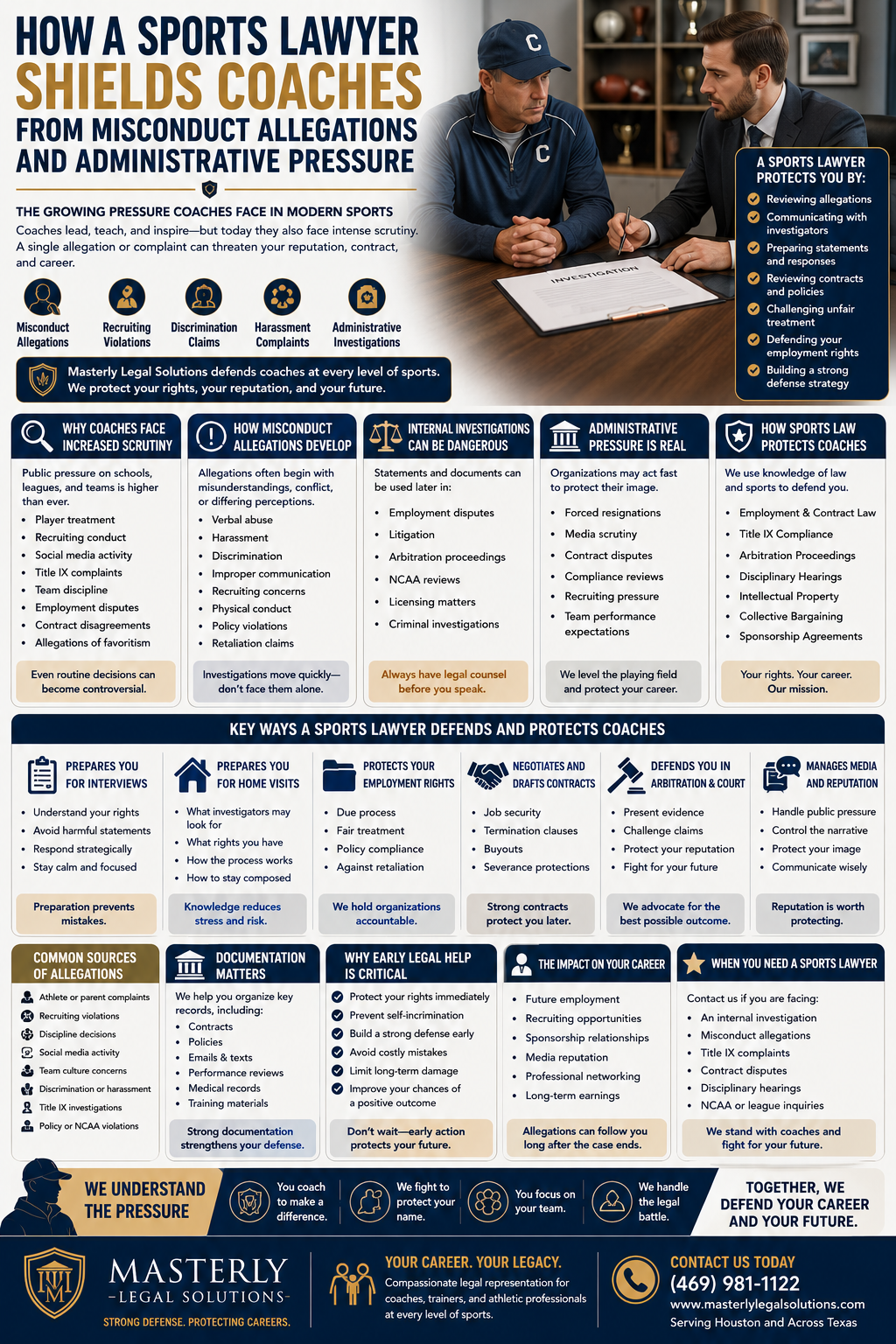
How a Sports Lawyer Shields Coaches From Misconduct Allegations and Administrative Pressure

May 19, 2026


The Growing Pressure Coaches Face in Modern Sports

Coaching has become far more complicated than simply teaching athletes how to compete. Today’s coaches operate in a highly scrutinized environment where a single allegation, misunderstanding, or administrative complaint can threaten years of hard work and dedication. In the modern sports industry, coaches are expected to lead athletes, manage public expectations, comply with league policies, communicate with administrators, and protect the reputation of their programs at all times. Unfortunately, even respected professionals can suddenly find themselves facing accusations involving misconduct, recruiting violations, discrimination, harassment, or inappropriate conduct.


Many coaches enter the profession because they love sports and want to mentor athletes, not because they expect to navigate legal disputes or internal investigations. However, colleges, universities, professional organizations, private schools, and sports teams increasingly respond aggressively to complaints in order to limit liability and protect public image. This often leaves coaches feeling isolated and vulnerable when allegations arise.


At Masterly Legal Solutions, we understand how devastating misconduct allegations and administrative pressure can become for coaches at every level of sports. Accusations alone can damage reputations, affect contracts, threaten employment, and permanently alter a coach’s career path. An experienced sports lawyer helps coaches understand their rights, respond strategically to allegations, and defend themselves against unfair treatment before the situation escalates further.

Understanding how sports law and the role of law in today’s school of sport protects coaches is critical in today’s competitive and heavily regulated sports world.


Why Coaches Face Increased Scrutiny in the Sports Industry

The sports industry has changed dramatically over the last decade. Schools, universities, sports organizations, and professional leagues now face enormous public pressure to respond quickly to complaints involving athletes, coaches, and staff members.


Coaches may face scrutiny involving:

  • Player treatment
  • Recruiting conduct
  • Social media activity
  • Team discipline
  • Title IX complaints
  • Employment disputes
  • Contract disagreements
  • Allegations of favoritism


Even routine coaching decisions can become controversial when athletes, parents, media companies, or administrators disagree with outcomes.

This heightened pressure has made U.S. sports law and athletics-focused legal guidance more important than ever for coaches navigating complicated professional environments.


How Misconduct Allegations Develop in Sports

Many misconduct allegations begin with misunderstandings, emotional conflicts, or disagreements within athletic programs. A coach may believe they are enforcing discipline or maintaining standards, while an athlete or parent interprets the situation differently.


Allegations may involve:

  • Verbal abuse
  • Harassment
  • Discrimination
  • Improper communication
  • Recruiting concerns
  • Physical conduct
  • Retaliation claims
  • Policy violations


Once allegations surface, schools and sports organizations often launch immediate investigations to determine whether disciplinary action is necessary, sometimes relying on outside counsel with internal investigations and higher education law experience.


Unfortunately, coaches are sometimes presumed guilty before the full facts are reviewed.


The Role of a Sports Lawyer During Investigations

A sports lawyer helps coaches navigate allegations, investigations, disciplinary hearings, and administrative proceedings while protecting their professional reputation and legal rights.


Legal counsel may assist with:

  • Reviewing allegations
  • Communicating with investigators
  • Preparing statements
  • Reviewing contracts
  • Challenging procedural violations
  • Defending employment rights
  • Preparing defense strategies


Without experienced legal representation, coaches may unintentionally damage their own defense during interviews or internal proceedings.

Early legal guidance is often critical in protecting long-term career opportunities.


Why Internal Investigations Can Become Dangerous

Internal investigations within schools, universities, and sports organizations often move quickly once complaints are filed. Administrators, compliance officers, and athletic directors may attempt to gather statements immediately while also protecting the organization’s public image.


Many coaches assume internal investigations are informal and cooperative. However, statements made during these interviews may later become evidence in:

  • Employment disputes
  • Litigation
  • Arbitration proceedings
  • NCAA reviews
  • Licensing matters
  • Criminal investigations


A sports lawyer helps coaches prepare carefully before speaking with investigators or signing documents, especially when potential NCAA investigations, Title IX compliance, and athletic program risks are involved.


Administrative Pressure in College and Professional Sports

Administrative pressure has become one of the biggest challenges coaches face in modern sports. Athletic departments, governing bodies, and management personnel often prioritize institutional reputation over individual fairness.


Coaches may experience pressure involving:

  • Forced resignations
  • Public relations concerns
  • Media scrutiny
  • Contract disputes
  • Recruiting pressure
  • Compliance reviews
  • Team performance expectations


Athletic directors and general managers may act quickly when controversies arise in order to avoid criticism from media outlets, boosters, or investors.

This environment makes strong legal counsel essential for coaches facing accusations or disciplinary pressure.


How Sports Law Protects Coaches

Sports law covers a wide range of legal issues affecting athletes, coaches, teams, leagues, and organizations. A sports lawyer uses legal knowledge involving employment law, contract law, labor and employment disputes, arbitration procedures, and administrative regulations to protect clients.


Sports law may involve, and often requires dedicated sports law and consulting services for teams, athletes, and businesses:

  • Employment agreements
  • Collective bargaining agreements
  • Title IX compliance
  • Contract disputes
  • Intellectual property concerns
  • Sponsorship agreements
  • Arbitration proceedings
  • Disciplinary hearings


Coaches facing allegations often need attorneys with a deep understanding of both sports culture and legal strategy.


The Importance of Employment Law in Coaching Disputes

Employment law plays a major role in many coaching disputes involving discipline, termination, harassment claims, or retaliation allegations.

A sports lawyer may evaluate whether:

  • Due process rights were violated
  • Contract obligations were ignored
  • Equal treatment standards were followed
  • Policies were applied fairly
  • Discrimination occurred
  • Retaliation influenced decisions


Coaches often feel pressured to accept disciplinary actions quickly without understanding their legal protections.

Strong legal guidance helps ensure organizations follow proper procedures.


Contract Law and Coaching Agreements

Contracts are the foundation of most coaching relationships in professional sports, college athletics, and school programs. These agreements outline compensation, performance expectations, termination rights, bonuses, and disciplinary procedures.


Unfortunately, disputes involving contracts are extremely common in the sports industry.


A sports lawyer helps coaches understand:

  • Termination clauses
  • Buyout provisions
  • Morality clauses
  • Non-compete terms
  • Disciplinary procedures
  • Executive compensation structures


Contract law becomes especially important when allegations threaten a coach’s employment status.


Why Coaches Need Help Negotiating Contracts

Negotiating contracts requires far more than discussing salary. Coaches must consider long-term protections involving discipline, termination rights, public allegations, and administrative investigations.


An attorney with sports law experience helps coaches negotiate agreements that address:

  • Job security
  • Performance standards
  • Investigation procedures
  • Media obligations
  • Confidentiality concerns
  • Severance protections


Proper drafting contracts at the beginning of employment may help protect coaches later if disputes arise.


How Allegations Affect Career Opportunities

Even unproven allegations can permanently affect a coach’s reputation in the sports world. Athletic departments, sports agencies, and leagues often conduct extensive background reviews before hiring coaches for leadership positions.


A single controversy may affect:

  • Future employment
  • Recruiting opportunities
  • Sponsorship relationships
  • Media reputation
  • Professional networking
  • Long-term earning potential


This is why coaches should never assume allegations will simply disappear without legal assistance.


The Connection Between Title IX and Coaching Allegations

Title IX investigations have become increasingly common in college and school athletics. These cases may involve allegations of harassment, discrimination, retaliation, or unequal treatment within sports programs.


Coaches may become involved in Title IX matters involving:

  • Athlete complaints
  • Team culture concerns
  • Gender discrimination claims
  • Reporting obligations
  • Administrative investigations


Schools often respond aggressively to Title IX complaints because of federal compliance concerns and public pressure.

An experienced sports lawyer helps coaches navigate these sensitive investigations carefully.


How Coaches Become Targets During Team Conflicts

In many situations, coaches become the focal point of broader conflicts involving athletes, parents, administrators, or boosters.

For example:

  • A losing season may increase complaints
  • Team discipline may trigger backlash
  • Recruiting decisions may upset families
  • Playing time disputes may create accusations


Although not every complaint has merit, organizations sometimes react quickly to avoid controversy or protect the institution’s image.

A sports lawyer helps separate emotional accusations from actual evidence.


The Role of Arbitration in Sports Disputes

Arbitration is common in professional sports and employment disputes involving coaches, athletes, leagues, and organizations.

Arbitration may resolve disputes involving:

  • Contracts
  • Discipline
  • Employment termination
  • League penalties
  • Financial disagreements


Unlike traditional litigation, arbitration proceedings are often private and governed by specific agreements.

A sports lawyer with arbitration experience helps coaches prepare evidence, present arguments, and defend their interests effectively.


How Labor and Employment Issues Affect Coaches

Labor and employment concerns are central to many sports disputes involving coaches and staff members.

Issues may include:

  • Wrongful termination
  • Retaliation
  • Wage disputes
  • Contract enforcement
  • Harassment allegations
  • Employment discrimination


Coaches working within professional leagues may also face legal issues connected to collective bargaining agreements negotiated by organizations such as the national basketball players association and other unions, where a top sports law firm with NCAA and employment expertise can provide critical support.

Understanding these protections requires a good understanding of both labor law and sports regulations.


Why Compliance Officers Play a Major Role in Modern Athletics

Compliance officers have become increasingly important within the sports sector because schools and leagues face strict regulations involving recruiting, athlete benefits, eligibility, and conduct standards.


Investigations may involve allegations related to:

  • Recruiting violations
  • Financial improprieties
  • Athlete treatment
  • Improper benefits
  • NCAA compliance


Coaches must navigate complicated policies while balancing competitive pressure and athlete development.

A sports lawyer helps coaches respond appropriately during compliance reviews and investigations.


How Sports Organizations Protect Their Own Interests

Many sports organizations prioritize protecting institutional reputation and financial stability during controversies.

Organizations may act aggressively to:

  • Limit negative publicity
  • Avoid lawsuits
  • Protect sponsorship agreements
  • Reduce financial exposure
  • Control media narratives


Unfortunately, coaches sometimes become scapegoats when organizations attempt to manage public relations crises quickly.

This makes independent legal counsel extremely important.


Intellectual Property Issues in Sports

Intellectual property concerns are becoming more significant throughout the sports industry. Coaches, teams, leagues, and athletes increasingly deal with branding, media rights, trademarks, and digital content disputes.


Intellectual property law may involve:

  • Team branding
  • Training programs
  • Media appearances
  • Licensing agreements
  • Promotional content
  • Social media rights


A sports lawyer with intellectual property experience helps clients protect valuable assets tied to their professional identity and reputation and can also advise on sports attorney support for NCAA compliance and sponsorship negotiations.


The Growing Business Side of Sports

Modern sports involves far more than competition on the playing field. The industry now includes massive business operations involving media companies, sponsorships, merchandising, marketing, and investor group partnerships.


Coaches often interact with:

  • Sponsors
  • Athletic departments
  • Sports agencies
  • Marketing representatives
  • League executives
  • Outside general counsel


As sports becomes increasingly commercialized, coaches face more complex legal matters involving business relationships and public image management.


How Sports Lawyers Defend Coaches Against False Allegations

False or exaggerated allegations can emerge for many reasons within competitive sports environments.

Some situations involve:

  • Personal conflicts
  • Recruiting disputes
  • Team discipline disagreements
  • Political pressure
  • Administrative agendas


A sports lawyer helps coaches defend themselves by:

  • Reviewing evidence
  • Challenging inconsistencies
  • Identifying procedural errors
  • Protecting constitutional rights
  • Presenting favorable evidence


Strong defense strategies often make the difference between career recovery and permanent professional damage.


Why Coaches Should Avoid Speaking Without Counsel

Many coaches believe cooperating fully and immediately will resolve allegations quickly. Unfortunately, statements made without preparation can create serious problems later.


Investigators may use interviews to:

  • Test for inconsistencies
  • Build disciplinary cases
  • Support employment decisions
  • Strengthen litigation claims


A sports lawyer helps coaches prepare carefully before responding to allegations or participating in interviews.


How Litigation Can Affect Coaching Careers

Litigation involving sports disputes can become financially and emotionally exhausting for coaches and organizations alike.

Litigation may involve:

  • Employment disputes
  • Defamation claims
  • Contract breaches
  • Harassment allegations
  • Retaliation claims


Even when lawsuits are eventually resolved, public controversy may continue affecting professional reputation and career opportunities.

Strong legal representation helps coaches manage these risks strategically.


The Importance of Building Relationships in Sports

Success in sports often depends on building relationships with athletes, administrators, boosters, media representatives, and organizations.

Unfortunately, allegations and investigations may damage these professional relationships quickly.


A sports lawyer not only defends against legal claims but also helps coaches protect their professional standing within the industry, much like a sports attorney managing every aspect of an athletic career.


Maintaining reputation can be just as important as winning legal disputes.


How Sports Agents and Lawyers Work Together

Sports agents and lawyers often work closely together when representing coaches, athletes, and sports clients.

While sports agents may focus on career opportunities, endorsements, and negotiating contracts, lawyers address legal risks involving:

  • Employment matters
  • Litigation
  • Contract law
  • Arbitration
  • Compliance concerns


Together, these professionals help protect clients both professionally and legally, especially when defending coaches against NCAA violations and complex sports law disputes.


The Importance of Deep Knowledge in Sports Law

Sports law requires a thorough understanding of multiple legal areas combined with deep knowledge of athletic culture and organizational structures.

A successful sports lawyer often understands:

  • Employment law
  • Contract law
  • Antitrust law
  • Corporate governance
  • Arbitration procedures
  • NCAA regulations
  • League policies


This broad legal expertise allows attorneys to defend coaches effectively during complicated disputes

.

Why Coaches Need Experienced Legal Counsel Early

One of the biggest mistakes coaches make is waiting too long before seeking legal help. By the time many coaches contact lawyers, investigations may already be advanced or damaging statements may already exist.


Early intervention allows attorneys to:

  • Review evidence
  • Communicate with organizations
  • Develop defense strategies
  • Protect contracts
  • Prepare clients for interviews


The earlier legal counsel becomes involved, the greater the opportunity to protect long-term career interests.


How Sports Lawyers Protect Coaches During Media Pressure

Public attention can intensify rapidly when allegations surface involving coaches or athletes. Social media, news outlets, and online commentary often create pressure before investigations are complete.


A sports lawyer helps coaches navigate:

  • Public statements
  • Media inquiries
  • Reputation management
  • Confidentiality concerns


Careful communication strategies help reduce unnecessary damage during high-profile disputes.


The Role of General Counsel in Sports Organizations

Many large sports organizations and leagues rely on general counsel to oversee legal compliance, contracts, investigations, and risk management.

General counsel often coordinates with:

  • Compliance officers
  • Athletic directors
  • Outside law firms
  • Human resources departments


When allegations arise against coaches, these legal teams often prioritize protecting the organization itself.

Independent representation remains critical for coaches defending their own interests.


Why Coaches Feel Isolated During Investigations

Coaches often spend years building successful programs and mentoring athletes. When allegations arise, many feel abandoned by the same organizations they helped support.


Some coaches experience:

  • Public criticism
  • Administrative distancing
  • Loss of support
  • Emotional stress
  • Fear about future employment


These situations can feel deeply personal and professionally devastating.

A sports lawyer helps coaches regain structure, clarity, and strategic direction during difficult circumstances.


How the Sports World Continues to Evolve Legally

The sports world continues evolving rapidly as legal concerns involving athlete rights, media contracts, NIL agreements, and workplace conduct become more complex.

Sports lawyers now handle issues involving:

  • Sponsorship agreements
  • Joint ventures
  • Intellectual property
  • Employment disputes
  • Executive compensation
  • Corporate governance


As the industry changes, coaches increasingly need attorneys with modern legal skills and deep understanding of sports-related legal matters, such as those offered by a comprehensive Texas law firm providing sports, corporate, and employment law services.
Why Masterly Legal Solutions Protects Coaches and Sports Professionals

At Masterly Legal Solutions, we understand how quickly allegations and administrative pressure can threaten a coach’s reputation, livelihood, and future. Our lawyers represent coaches, athletes, sports organizations, and professionals facing difficult legal issues within the highly competitive sports industry.


Our firm understands the emotional and financial pressure that accompanies internal investigations, employment disputes, contract disagreements, and public accusations. We work closely with clients to develop strong defense strategies, protect contractual rights, and respond effectively to investigations involving schools, universities, leagues, and athletic organizations.


Whether you are dealing with disciplinary allegations, employment disputes, arbitration proceedings, or litigation involving sports law, our team is prepared to defend your interests aggressively and professionally.


Speak With Masterly Legal Solutions About Sports Law Matters

If you are a coach, athlete, athletic director, or sports professional facing allegations, administrative investigations, employment disputes, or contract concerns, Masterly Legal Solutions is here to help. Our lawyers understand the unique pressures that exist throughout the sports industry and how quickly careers can be affected by public accusations or organizational pressure.


We proudly assist clients involved in professional sports, college athletics, sports agencies, and athletic organizations who need experienced legal guidance involving contracts, litigation, arbitration, compliance reviews, and employment matters. Whether you need help responding to investigations, negotiating agreements, defending against allegations, or protecting your career, our attorneys are prepared to stand beside you every step of the way.


The legal challenges within modern sports continue to grow more complicated, but you do not have to face them alone. Contact Masterly Legal Solutions today to discuss your situation with an experienced sports lawyer who understands the complexities of sports law and the high-pressure environment coaches face every day.


Contact us at (972) 236-5051 for a free consultation.


Disclaimer:This article is provided for informational and educational purposes only and does not constitute legal advice or legal guidance. Reading this article does not create an attorney-client relationship with Masterly Legal Solutions. Every sports law matter involves unique facts and circumstances, and outcomes vary depending on the specific situation involved. Individuals facing legal concerns related to sports, employment disputes, contracts, investigations, or litigation should consult with a qualified attorney regarding their individual case.
(972) 236-5051
Attorney for CPS speaking with family about child protection case.
May 19, 2026
Experienced CPS attorney and CPS lawyer helping families protect parental rights during child protective services and CPS investigation cases across Texas.
Atlanta estate planning attorney reviewing wills and estate documents with family
May 19, 2026
Atlanta estate planning attorney helping families protect assets and create an estate plan with trusted guidance from an experienced estate planning lawyer.
Arlington law attorney consultation services in Northern Virginia..
May 19, 2026
Arlington law attorney providing family law, estate planning, criminal defense & business law consultation in Northern Virginia. Trusted legal counsel for clients.
May 19, 2026
Understanding the Stress Behind a TEA Investigation Few situations are more overwhelming for an educator than learning they are under a TEA investigation. Many teachers, administrators, coaches, and school employees spend years building a career only to suddenly face allegations that threaten their reputation, teaching certificate, and future employment opportunities. In many cases, the process begins quietly with a complaint, an unexpected meeting with a supervisor, or being placed on administrative leave without fully understanding what happens next. For many workers in education, the emotional toll can be severe. An employee may feel isolated from co workers, worried about their family responsibilities, and uncertain about whether the employer intends to protect their rights or pressure them into resignation. These investigations often create fear, anxiety, and confusion, especially when the allegations involve workplace discrimination, harassment, retaliation, or accusations of inappropriate conduct. At Masterly Legal Solutions, we understand how quickly a TEA investigation can impact every part of a person’s professional life. Taking immediate steps after receiving a TEA investigation notice can help protect an educator’s license, career, and future opportunities. Even before the Texas Education Agency makes findings, school districts may begin internal disciplinary procedures, place an employee on paid administrative leave, or restrict access to the campus. The way an educator responds during the early stages of an investigation can significantly affect the outcome of the case. What Administrative Leave Means During a TEA Investigation Administrative leave is a temporary removal from regular duties while an employer reviews allegations or gathers facts related to an investigation. In the education setting, a school district may place teachers or administrators on administrative leave after receiving a complaint from a student, parent, co worker, or another staff member. Understanding the specific steps Texas teachers should take while on administrative leave can be critical to protecting both employment and certification. In some circumstances, the leave may be temporary and routine. In other cases, the leave can become prolonged and damaging to the employee’s professional reputation. Many educators assume that being placed on leave automatically means they have done something wrong, but that is not always true. Employers sometimes use administrative leave while determining whether allegations are supported by evidence. A school district may also use administration leave as a method of limiting access to students or staff during the review process. While districts often claim this step is precautionary, the consequences for the employee can still be serious. The employee may lose access to school systems, face public scrutiny, or experience emotional distress while waiting for the investigation to move forward. The Difference Between Paid and Unpaid Leave Not all leave policies are the same. Some educators are placed on paid administrative leave, while others may experience unpaid suspensions depending on the allegations and district policies. Understanding the difference is important because it can affect wages, benefits, retirement contributions, and future employment opportunities. Paid leave generally allows the employee to continue receiving pay and benefits while the employer conducts the investigation. However, even paid leave can create long-term damage when rumors spread throughout the workplace or the community. Unpaid leave can place extreme financial strain on workers and their family member obligations. In some cases, school districts attempt to pressure employees into resigning rather than allowing the investigation process to continue. Before agreeing to resign, sign documents, or provide detailed written statements, educators should seek legal guidance from an attorney experienced with TEA matters. Common Reasons Educators Are Placed on Administrative Leave School districts may place an employee on administrative leave for many reasons. Some allegations involve serious accusations, while others stem from misunderstandings, interpersonal conflicts, or false claims, particularly in situations where Texas educators must defend their licenses during a TEA investigation . Common examples include: Allegations of harassment involving students or co workers Claims of workplace discrimination Accusations involving inappropriate communication Reports related to sexual advances Complaints concerning classroom management Allegations involving discrimination based on disability or age discrimination Claims of retaliation after engaging in protected activity Disputes involving employment discrimination Reports concerning policy violations or misconduct In many cases, the school district begins its own internal investigation before reporting the matter to the TEA. The district may also cooperate with police or outside investigators depending on the circumstances. How Retaliation Can Develop During a TEA Investigation Retaliation is one of the most common concerns educators face after reporting misconduct or defending themselves during an investigation. Retaliation can take many forms, and it is not always obvious in the beginning, which is why many employees benefit from guidance from an education lawyer for teachers in Texas when workplace conditions begin to change. An employer may attempt to isolate an employee, alter the employee's work schedule, reduce opportunities for promotion, assign less favorable duties, or create a hostile workplace environment. In some situations, a manager or supervisor may encourage co workers to avoid the employee altogether. Federal law and state laws prohibit retaliation against workers who engage in protected activity. Protected activity can include filing a complaint, reporting workplace discrimination, cooperating with investigators, or participating in proceedings related to employment discrimination claims. Unfortunately, retaliation often occurs quietly. A school district may claim staffing changes are unrelated while simultaneously treating the employee differently after they report misconduct. This is why documenting events, preserving communications, and obtaining legal representation early can be critical. Recognizing Signs of Workplace Retaliation Some educators are unsure whether they actually face retaliation or whether their employer’s actions are simply part of the investigation process. While every case is different, there are several warning signs that may indicate unlawful conduct. Examples of retaliation may include: Sudden negative evaluations after filing a complaint Removal from a desirable position Transfer to a less desirable position Reduction in work hours or responsibilities Exclusion from meetings or professional opportunities Increased scrutiny from a supervisor or manager Unfair disciplinary action Threats regarding future employment Pressure to resign before the investigation concludes Retaliation laws exist to protect workers from being punished for asserting their rights. However, proving retaliation often requires strong documentation and strategic legal representation. Federal Protections for Employees Facing Retaliation Several federal statutes and regulations protect employees from retaliation and employment discrimination. These laws apply to many workplaces, including public schools and educational institutions, and often intersect with education law services from experienced attorneys who help employees enforce their rights. Discrimination on the basis of race, color, religion, sex, or national origin is forbidden by Title VII of the Civil Rights Act.. Title VII also prohibit retaliation against employees who report unlawful conduct or participate in investigations. The Equal Employment Opportunity Commission, commonly known as the EEOC, enforces many federal workplace protections. The EEOC investigates claims involving workplace discrimination, harassment, retaliation, and other unlawful employment practices. Additional federal protections may arise under the Disabilities Act, the Fair Labor Standards Act, and other employment laws. These statutes protect workers from unfair treatment related to disability, wages, labor issues, and protected conduct. How the EEOC Handles Retaliation Claims The EEOC plays an important role in reviewing employment discrimination and retaliation complaints. When an employee believes an employer violated federal law, the individual may file a claim with the eeoc before pursuing a lawsuit. The EEOC may: Review documentation and statements Interview witnesses Request employment records Examine workplace policies Determine whether discrimination or retaliation occurred Although TEA investigations involve educator certification issues, employment claims involving discrimination or harassment may also overlap with EEOC procedures. This overlap makes legal strategy especially important because statements made during one investigation can affect another proceeding. The Relationship Between TEA Investigations and Employment Law Many educators do not realize that a TEA investigation can involve both certification concerns and employment law issues. A teacher may face disciplinary proceedings with the TEA while simultaneously dealing with retaliation or discrimination in the workplace, and in some cases may need focused support from a Texas law firm that defends educators in TEA investigations and license actions . For example, an employee who reports sexual advances from a supervisor may later face increased scrutiny, disciplinary action, or removal from campus. In another example, an educator may report workplace discrimination based on disability or immigration status and later experience retaliation after participating in the investigation. These cases often involve overlapping legal issues under federal and state statutes. Because of this, educators should avoid assuming the school district will protect their interests throughout the process. The Impact of False Allegations on Educators False allegations can destroy careers even when the claims are eventually disproven. A simple complaint may lead to suspension, reputational damage, and emotional distress before investigators even determine whether misconduct occurred. Teachers and administrators frequently experience fear about losing their job, certification, and future opportunities. Some employees become concerned about how the allegations affect their family member relationships, finances, and mental health. Even after an investigation closes, the stigma associated with being placed on administrative leave can continue affecting employment opportunities. School districts sometimes hesitate to hire individuals who previously faced investigations, even if the allegations lacked merit. This is why responding quickly and strategically is so important. Educators should never assume the truth alone will automatically resolve the matter. How School Districts Conduct Internal Investigations Most school districts begin with an internal investigation before or during TEA involvement. The district may assign human resources personnel, administrators, or outside investigators to gather information, and educators often turn to an education law attorney for teachers to understand how these internal steps may affect later certification or employment proceedings. The process often includes: Witness interviews Requests for written statements Reviews of emails or electronic communications Examination of personnel files Meetings with supervisors and managers Employees sometimes feel pressured to answer questions immediately without legal guidance. However, statements made during these meetings can later be used in TEA proceedings, employment hearings, or litigation. Before participating in interviews or signing documents, educators should carefully evaluate their rights and legal options. Why Documentation Matters During an Investigation Strong documentation can significantly improve an employee’s ability to defend against allegations or prove retaliation. Educators should maintain organized records of communications, disciplinary actions, meeting notes, and performance evaluations, and may wish to review those records with an education law attorney for teachers and administrators to assess potential claims. Helpful documentation may include: Emails and text messages Copies of complaints or reports Witness information Work schedules and assignment changes Evidence of harassment or discrimination Notes regarding conversations with supervisors Documentation can help determine whether the employer acted fairly or engaged in prohibited conduct. Retaliation After Reporting Harassment Many educators who report harassment later experience negative treatment in the workplace. This can occur when an employee reports sexual advances, inappropriate comments, hostile behavior, or discriminatory treatment. Federal and state laws protect employees who report harassment or participate in investigations. Unfortunately, some employers still retaliate against workers by limiting opportunities, changing assignments, or increasing scrutiny. An employee who experiences retaliation after filing a complaint should carefully monitor workplace changes and seek legal guidance promptly. Family Responsibilities and Workplace Pressure TEA investigations can place enormous pressure on families. Educators often worry about supporting children, maintaining benefits, and protecting long-term career goals while dealing with uncertainty. Some employees face retaliation connected to family responsibilities. For example, a district may criticize an employee’s absence related to caregiving obligations or use scheduling changes to create additional hardship. These circumstances can create emotional and financial stress that affects every area of life. Protecting your professional reputation during this period is essential. Disability Discrimination and Retaliation Concerns Employees with a disability may face additional challenges during investigations. In some situations, an employer improperly assumes medical conditions affect job performance or reliability. Federal laws, including protections under the disabilities act, prohibit employment discrimination based on disability. Employers are also prohibited from retaliating against workers who request accommodations or report discriminatory treatment. If an employee believes the investigation process involves discrimination related to disability, medical conditions, or accommodations, immediate legal review may be necessary. Age Discrimination in Educational Workplaces Age discrimination can also arise during disciplinary proceedings or staffing changes. Older educators sometimes report being treated differently during investigations or targeted for removal from employment. Federal employment laws prohibit discrimination based on age. An employer cannot lawfully use age as justification for unfair discipline, denial of promotion opportunities, or retaliatory treatment. These cases may involve subtle patterns of behavior that become clearer over time. Careful documentation and legal analysis are important when evaluating potential claims. The Role of Protected Activity Protected activity refers to actions employees take that are legally protected under federal and state employment laws. Participating in an investigation, reporting misconduct, filing complaints, or opposing unlawful behavior can qualify as protected activity. Examples of protected activity include: Filing an EEOC complaint Reporting workplace discrimination Cooperating with investigators Reporting harassment Participating in hearings or interviews Employers cannot legally punish employees for engaging in these actions. If retaliation follows protected activity, the employee may have legal options available. When Retaliation Becomes Unlawful Not every workplace disagreement qualifies as unlawful retaliation. However, when an employer takes adverse action because an employee engaged in protected conduct, the situation may violate federal or state laws. Courts and agencies often examine whether the employer’s actions would discourage a reasonable employee from reporting misconduct or participating in investigations. Examples may include termination, demotion, denial of promotion opportunities, reduced pay, reduced hours, or hostile treatment from management. Sexual Harassment Allegations and TEA Cases Allegations involving sexual harassment or sexual advances often trigger immediate district responses. Schools may place an employee on administrative leave before fully evaluating the facts. While districts must take complaints seriously, employees also deserve fair treatment and due process. False allegations, misunderstandings, and exaggerated claims can occur in educational settings. Educators should avoid discussing allegations publicly or attempting to contact witnesses without legal advice. Mishandling communications during an investigation can create additional complications. How Federal Agencies Become Involved Several federal agencies may become involved depending on the allegations. The EEOC handles many workplace discrimination and retaliation matters, while other federal agencies oversee labor standards and employment regulations. Federal employees in educational environments may face separate procedures depending on the institution involved. Although many public-school educators work under state systems, federal employment laws still provide important protections. Understanding which agency has authority over a matter is important when building a legal strategy. Immigration Status and Employment Protections Federal employment laws generally protect workers regardless of immigration status in certain workplace matters involving discrimination and retaliation. Employers cannot use immigration concerns to intimidate employees who report unlawful conduct. Educators facing retaliation should understand that workplace protections may still apply even when complicated employment questions arise. The Importance of Legal Representation Early in the Process One of the biggest mistakes educators make is waiting too long to seek legal representation. Many employees assume cooperating fully with the district will automatically resolve the matter fairly. Unfortunately, statements made during early interviews can later affect certification proceedings, employment hearings, and even lawsuits. An attorney can help determine how to respond to requests, preserve evidence, and protect professional interests throughout the process. Early legal guidance may also help identify whether the employer violated laws related to retaliation, discrimination, harassment, or employment rights. Why Educators Should Be Careful With Written Statements School districts frequently request written responses from employees during investigations. These statements may later become part of TEA records or other proceedings. Before submitting statements, educators should carefully review the facts and understand how the information could be interpreted. Inconsistent wording, emotional responses, or incomplete explanations can create unnecessary risks. An attorney can help evaluate whether additional information should be provided and how to avoid statements that may unintentionally harm the employee’s case. The Emotional Impact of Administrative Leave Being removed from the workplace can feel humiliating and isolating. Many employees experience depression, anxiety, sleep issues, and fear about the future. Educators often dedicate years to serving students and communities. Suddenly facing allegations or retaliation can create emotional trauma that affects both professional and personal relationships. Support systems, careful planning, and experienced legal counsel can make a significant difference during this difficult period. Understanding Employer Responsibilities Employers have legal obligations during workplace investigations. School districts must follow policies, respect employee rights, and avoid unlawful retaliation or discrimination. An employer should conduct investigations fairly, avoid predetermined conclusions, and take appropriate action based on evidence rather than rumors or assumptions. When districts fail to follow regulations or engage in prohibited conduct, employees may have grounds to pursue legal claims. Common Mistakes Employees Make During Investigations Educators under stress sometimes make decisions that unintentionally harm their cases. Common mistakes include: Resigning too quickly Deleting communications or records Discussing allegations publicly Ignoring deadlines Providing inconsistent statements Failing to document retaliation Avoiding these mistakes can improve the employee’s ability to protect certification status and employment rights. The Importance of Preserving Professional Reputation Even when allegations are unfounded, investigations can damage reputations within the educational community. Rumors and speculation may spread quickly among co workers and administrators. Protecting professional credibility requires careful communication, strategic planning, and experienced legal guidance. Educators should remain professional throughout the process and avoid emotional confrontations with supervisors or managers. When a Lawsuit May Become Necessary Some retaliation and discrimination matters eventually lead to litigation. A lawsuit may become necessary when employers refuse to correct unlawful conduct or when significant damages occur, making it important to consult an education lawyer who represents teachers and schools about potential legal strategies. Potential claims may involve: Employment discrimination Workplace retaliation Harassment Wrongful termination Violations of federal employment laws Legal claims often depend on documentation, timelines, witness testimony, and procedural requirements. Missing deadlines or failing to file properly can affect an employee’s ability to pursue compensation or relief. How Masterly Legal Solutions Assists Educators At Masterly Legal Solutions, we understand the unique pressure educators face during TEA investigations and workplace disputes. As a Texas law firm focused on defending educators and their licenses , we work with teachers, administrators, coaches, and school employees who need guidance during complex disciplinary matters. Our firm helps clients: Respond to TEA investigations Address retaliation concerns Evaluate discrimination claims Protect teaching certifications Prepare responses to complaints Navigate employment disputes Defend professional reputations  Every case involves different facts and circumstances. Having experienced legal representation can help employees make informed decisions and avoid mistakes that may impact their future careers.
Houston CPS child protective services family support..
May 19, 2026
Houston CPS helps families facing child abuse or neglect investigations. Child Protective Services in Texas provide support, guidance, protection & family help.
Attorney for CPS child protective services defense.
May 19, 2026
CPS lawyer and attorney defending parental rights in Child Protective Services cases. Trusted CPS lawyers for county courts and dependency defense matters.
CPS attorney meeting with parents during child protection case.
May 18, 2026
Experienced CPS attorney and lawyer protecting parental rights in child protective services cases. Trusted PLLC law firm for strong CPS defense services now.
Dallas school district administration building and campus entrance.
May 18, 2026
Dallas workplace retaliation lawyer handling discrimination cases, employment law disputes, and legal services including employment matters for employees in TX.

Looking for Legal & Business Solutions? Contact Us Now

Fill in the form or call us to set up a meeting

(972) 236-5051
A black and white drawing of a straight line on a white background.