

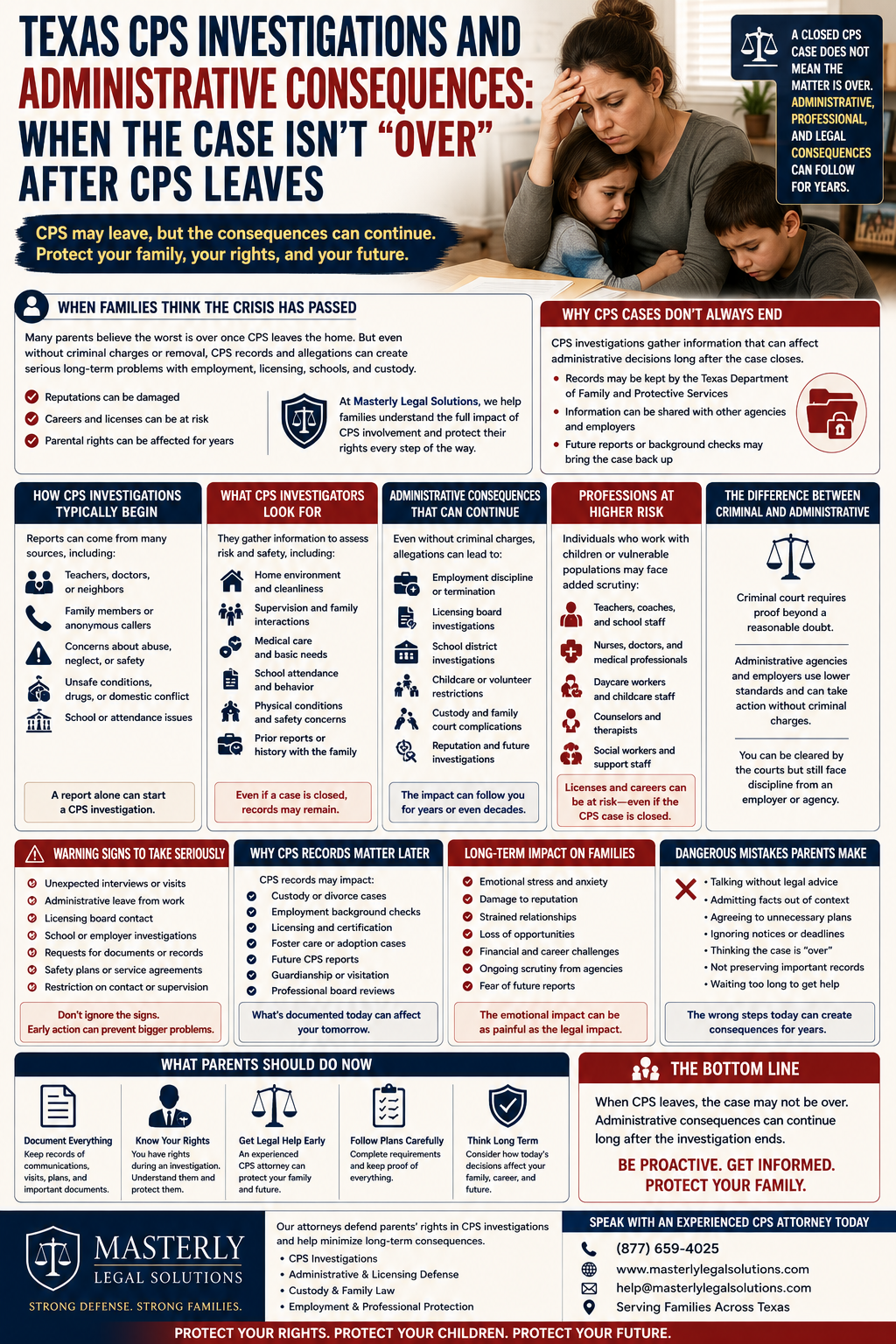
Texas CPS Investigations and Administrative Consequences: When the Case Isn’t “Over” After CPS Leaves
When Families Think the Crisis Has Passed
Many parents believe the worst part of a CPS investigation ends once Child Protective Services leaves the home. Families often feel relief after interviews stop, home visits slow down, or investigators say they are “closing the case.” Unfortunately, many people later discover that the real consequences may only be beginning.
In Texas, CPS investigations can create administrative, professional, and legal problems long after the initial investigation appears to end. A parent may avoid criminal charges yet still face employment consequences, licensing concerns, school investigations, custody disputes, or ongoing scrutiny from agencies and employers. These situations can affect careers, reputations, and parental rights for years.
At Masterly Legal Solutions, we understand how emotionally overwhelming these cases become for families. Parents often assume that if no one was arrested and the children remain at home, everything is resolved. However, CPS cases frequently create long-term complications involving schools, employers, licensing boards, and family court matters.
Understanding what happens after Child Protective Services closes an investigation is extremely important. Families who fail to take these situations seriously may later face unexpected consequences that could have been reduced or avoided with early legal guidance from a cps attorney.
Why CPS Cases Do Not Always End When Investigators Leave
Many people misunderstand how Child Protective Services operates. CPS investigations are not always limited to determining whether children should be removed from a home immediately. In many situations, the agency gathers information that later affects administrative decisions involving employment, licensing, education, or custody disputes.
The Texas Department responsible for protective services may maintain records even after a case closes. These records can later become relevant during background checks, employment reviews, or future allegations involving the same family.
For example, teachers, nurses, daycare workers, coaches, counselors, and medical professionals may face separate investigations through licensing boards or employers after CPS becomes involved. Even when no criminal charges exist, allegations connected to child abuse or neglect may still trigger administrative action.
This is why families should never assume a closed CPS case means the matter is truly over. Administrative consequences can continue long after investigators stop visiting the home.
How CPS Investigations Typically Begin
Most cps investigations begin after Child Protective Services receives a report involving possible abuse, neglect, unsafe conditions, or concerns about the well being of children. Reports may come from teachers, doctors, neighbors, social services workers, coaches, family members, or anonymous callers.
In many situations, the report may involve:
- Suspected child abuse
- Claims of neglect
- Unsafe living conditions
- Drug or alcohol concerns
- Domestic conflict
- School attendance issues
- Inadequate supervision
- Medical neglect
Once cps receives a report, the agency evaluates whether further investigation is necessary. Some reports close quickly, while others result in home visits, interviews, and ongoing monitoring.
Families are often shocked at how quickly CPS becomes involved after a complaint is made. Parents may receive little warning before investigators appear at their home, school, or workplace.
The Emotional Impact of a CPS Investigation
A CPS investigation can feel deeply personal and humiliating. Many parents feel embarrassed, angry, or terrified once investigators become involved with their children and household.
Even when allegations are false or exaggerated, the emotional pressure can become overwhelming. Families often worry about:
- Losing custody
- Public embarrassment
- Damage to careers
- Effects on children
- School consequences
- Future legal problems
Parents may also fear judgment from neighbors, co workers, teachers, or members of the community. The emotional toll often continues long after CPS leaves the home.
Children themselves may also experience confusion, fear, or anxiety during these investigations. Interviews at school or discussions involving protective services can create lasting emotional stress for younger children.
What CPS Investigators Look For
During cps investigations, investigators attempt to determine whether children face immediate danger or ongoing risk. They may review living conditions, interview parents, speak with children privately, and gather information from outside sources.
Investigators may evaluate:
- Home cleanliness
- Supervision practices
- Medical care
- School attendance
- Family interactions
- Physical conditions
- Safety concerns
- Prior reports involving the family
In some situations, cps believes temporary intervention is necessary to protect children while additional information is gathered. In other cases, investigators may close matters quickly after finding insufficient evidence.
However, even closed investigations can create future administrative consequences depending on the circumstances involved.
Why Administrative Consequences Continue After CPS Leaves
Many families focus only on whether children are removed from the home. While removal is certainly serious, it is not the only possible consequence connected to cps cases.
Administrative consequences may include:
- Employment discipline
- Licensing investigations
- School district investigations
- Professional board reviews
- Childcare restrictions
- Volunteer limitations
- Custody complications
An investigation involving allegations of abuse or neglect may affect a parent’s professional standing even without criminal charges or formal court proceedings.
This is especially true for professionals who work closely with children, vulnerable populations, or licensed facilities.
Teachers and School Employees Face Additional Risks
Educators often face unique challenges when CPS becomes involved. Teachers, coaches, counselors, administrators, and school staff may encounter school investigations separate from the original CPS matter, and many benefit from guidance grounded in education law and teacher license protection.
A school district may place an employee on administrative leave while reviewing allegations involving children. Even if Child Protective Services eventually closes the case, employers may still conduct internal investigations regarding workplace policies or professional standards.
Teachers may also face, in addition to CPS involvement, TEA investigations and related license protections:
- Licensing reviews
- Employment discipline
- Reputation damage
- Parent complaints
- Professional restrictions
This is one reason early legal representation matters so much. A cps attorney familiar with administrative consequences can help educators prepare before statements or records create additional problems, especially when TEA investigations threaten a Texas educator’s license.
Medical Professionals and Licensing Boards
Doctors, nurses, therapists, and professionals working in medical care institutions may also face administrative reviews after CPS involvement.
Licensing boards often take allegations involving children very seriously, even when criminal charges never occur. A professional may suddenly receive notice of an investigation weeks or months after CPS closes its file, and organizations sometimes turn to outside counsel experienced in labor, employment, and higher education investigations to navigate these reviews.
Protective services records may become relevant during these reviews, especially if allegations involve patient interactions, supervision concerns, or claims of neglect.
Professionals should never assume their licensing agency will automatically disregard CPS involvement simply because criminal charges were not filed, particularly educators who may need targeted legal support for school and TEA investigations.
Parents Often Make Dangerous Assumptions
One of the biggest mistakes parents make is believing cooperation alone guarantees protection. Many families speak freely to investigators without understanding how information may later affect employment, custody disputes, or licensing matters.
Parents sometimes believe:
- “The case is closed.”
- “Nothing formal happened.”
- “CPS said everything looked fine.”
- “No judge was involved.”
- “There was no court order.”
Unfortunately, administrative agencies and employers may still review the allegations independently later. Information shared during the original investigation may continue affecting the family long afterward.
This is why consulting a family law attorney or cps attorney early can help families better understand the long-term risks involved.
The Difference Between Criminal Cases and Administrative Consequences
Many people assume that if prosecutors decline criminal charges, the matter ends completely. However, administrative systems often use different standards than criminal court proceedings.
Criminal cases generally require proof beyond a reasonable doubt. Administrative investigations may use much lower standards when determining whether employment action, licensing discipline, or restrictions should occur.
For example:
- A licensing board may impose restrictions without criminal charges
- An employer may terminate employment based on internal findings
- A school district may conduct separate disciplinary procedures
- Child welfare cases may continue independently
This difference confuses many families who believe avoiding arrest means they face no further action.
Why CPS Records Matter Later
Even after an investigation closes, records maintained by the department may continue affecting future situations involving the family.
CPS records may later appear during, and can interact with broader planning for your family’s future, including essential estate planning documents for families:
- Custody disputes
- Divorce proceedings
- Licensing reviews
- Employment background checks
- Future investigations
- Foster care evaluations
- Guardianship proceedings
An attorney with experience handling cps cases can help families understand how records may affect future legal or professional concerns.
Ignoring these records can become a serious mistake, especially if future allegations occur later.
Child Abuse Allegations Can Follow Families for Years
Allegations involving child abuse often carry long-lasting reputational consequences. Even unproven accusations may create suspicion among employers, schools, neighbors, or members of the community.
Parents frequently underestimate how deeply these allegations affect personal and professional relationships. Families may feel isolated or judged even after CPS closes the investigation.
Some individuals also face:
- Loss of volunteer opportunities
- Restricted access to programs
- Professional scrutiny
- Relationship damage
- Public embarrassment
False or exaggerated allegations can still create serious consequences that follow families for years if not addressed properly, which is why some parents also explore long‑term tools like powers of attorney for their children as part of a broader protection plan.
Neglect Allegations Are Often Misunderstood
Neglect allegations do not always involve intentional harm to children. Sometimes families face CPS involvement because of poverty, housing instability, mental health struggles, or difficult life circumstances.
Investigators may review concerns involving:
- Supervision
- Medical care
- Food access
- Educational attendance
- Home conditions
- Transportation issues
Parents often feel shocked when financial struggles or temporary hardships result in CPS attention. However, neglect findings can still create administrative problems even when parents were doing their best under difficult circumstances.
Families should not assume investigators fully understand the challenges affecting their household without proper advocacy and documentation.
Why Statements to CPS Matter
During the investigation process, many parents speak openly because they believe honesty alone will resolve concerns quickly. Unfortunately, statements made during interviews may later appear in reports reviewed by employers, agencies, or licensing boards.
Parents may unintentionally:
- Admit facts out of context
- Speculate about injuries
- Minimize concerns improperly
- Contradict earlier statements
- Agree to unnecessary conditions
Investigators are trained to gather information carefully. Families should take these interviews seriously from the beginning.
Consulting a cps attorney before detailed interviews or written statements may help parents avoid mistakes that later affect the outcome of their case.
Home Visits Can Create Additional Concerns
Many parents feel pressured to allow unrestricted home access during cps investigations. While cooperation may appear beneficial, families should understand that investigators carefully document everything observed during visits.
Investigators may note:
- Home cleanliness
- Sleeping arrangements
- Food availability
- Child behavior
- Medication storage
- Household interactions
Even minor concerns may later appear in reports reviewed by employers, agencies, or the court.
Parents should prepare carefully before meetings and understand their legal rights regarding consent and investigative procedures.
The Role of Court Proceedings in CPS Cases
Not every CPS investigation results in formal court involvement. However, when investigators believe children face immediate danger, the agency may seek a court order authorizing removal or intervention.
In these situations, a judge may review:
- Safety concerns
- Evidence presented
- Allegations involving abuse or neglect
- Placement options
- Protective plans
Court proceedings move quickly in many child welfare cases. Families often feel overwhelmed by deadlines, hearings, and legal procedures occurring within only a few days.
Parents should prepare immediately once court involvement becomes possible.
Removal Does Not Always Mean Permanent Separation
When removal occurs, many parents panic and assume they will never see their children again. While these situations are serious, removal does not automatically terminate parental rights.
In many cps cases, the agency creates a service plan outlining steps parents must complete before children can return home safely.
This process may involve:
- Counseling
- Parenting classes
- Drug testing
- Evaluations
- Visitation requirements
- Housing improvements
Families who act quickly and obtain experienced legal guidance may improve the chances of a positive outcome significantly.
Administrative Investigations Can Begin Quietly
One of the most dangerous aspects of CPS-related administrative consequences is that they often begin quietly. Parents may believe everything has stabilized only to receive unexpected notices weeks later.
An employer, licensing board, or agency may begin reviewing:
- CPS reports
- Statements made during interviews
- School concerns
- Employment records
- Witness information
An individual may suddenly discover that separate investigations are already underway before they fully understand the risks involved.
This is why early legal guidance matters even when families believe the initial crisis has passed.
Why Parents Should Take Every Allegation Seriously
Some families dismiss allegations because they believe the claims are obviously false or exaggerated. Unfortunately, even weak accusations can trigger serious investigations and administrative consequences.
Child Protective Services often proceeds cautiously whenever children may face possible danger. As a result, investigations may continue even when evidence initially appears limited.
Parents should never assume:
- “They will realize this is a misunderstanding.”
- “The allegations are too ridiculous to matter.”
- “The case closed already.”
- “There is no proof.”
Administrative agencies and employers may still act based on concerns raised during the original investigation.
The Importance of Documentation
Families involved in cps investigations should preserve important records carefully.
Helpful documentation may include:
- Medical records
- School records
- Text messages
- Emails
- Photographs
- Witness information
- Counseling records
- Parenting program completion
Documentation may help defend against inaccurate allegations and provide important context regarding the family’s circumstances.
Strong preparation can become critical if future legal action or administrative proceedings occur later.
How Family Members Sometimes Become Involved
CPS investigations frequently extend beyond parents alone. Investigators may interview grandparents, siblings, neighbors, teachers, or other individuals connected to the children.
Sometimes a family member becomes involved because the agency considers alternative placement options or seeks additional information regarding the household.
These expanded investigations can create tension within families and increase emotional stress significantly.
Parents should understand that statements made by relatives or others may later appear in official reports or proceedings.
Why Parents Feel Pressured During CPS Cases
Many parents feel intense pressure to cooperate immediately with every request made during cps investigations. Fear often drives these decisions.
Families worry about:
- Losing their children
- Looking uncooperative
- Being judged unfairly
- Facing removal proceedings
- Long-term consequences
While cooperation can be important, parents should still understand their rights and seek legal guidance before making major decisions involving admissions, interviews, or signed agreements.
An experienced attorney can help families balance cooperation with proper protection of their legal interests, drawing on broader experience in family, education, and business law services.
Social Services Plans and Long-Term Consequences
In some situations, social services agencies create safety plans or service agreements instead of pursuing formal court action immediately.
These plans may appear informal, but they can still carry serious consequences. Agreements involving supervision restrictions, visitation limitations, or household requirements may later affect future proceedings, much like internal workplace issues that sometimes require outside counsel for neutral internal investigations.
Parents should carefully review any plan before agreeing to terms they do not fully understand.
What seems temporary during the stress of an investigation may later become part of larger administrative or legal concerns.
Why CPS Cases Affect Employment
Employers often react strongly when allegations involve children, neglect, or abuse concerns. Even if criminal charges never occur, many professions require reporting or internal review after CPS involvement.
An employee may face:
- Administrative leave
- Internal investigations
- Licensing concerns
- Termination risks
- Reputation damage
These situations are especially common for teachers, daycare workers, healthcare professionals, counselors, and individuals working with vulnerable populations.
Protective services records may continue affecting employment opportunities long after the original investigation ends, similar to how internal findings about misappropriation of funds and workplace misconduct can impact a person’s career for years.
The Risks of Waiting Too Long
Many families delay contacting an attorney because they believe the matter is resolving itself. Unfortunately, delays often make situations more difficult later.
By the time families seek help:
- Statements may already exist
- Deadlines may have passed
- Administrative proceedings may begin
- Records may become difficult to challenge
- Employers may already act
Early legal representation often creates better opportunities to defend against long-term consequences.
The sooner families consult experienced counsel, the more effectively they may prepare for potential challenges ahead.
Why Every CPS Investigation Deserves Serious Attention
No two cps investigations are exactly alike. Some cases close quickly with minimal long-term impact. Others create years of legal, professional, and emotional consequences for parents and children.
Families should never assume a closed investigation means complete protection from future problems. Administrative consequences can continue affecting:
- Employment
- Licensing
- Custody disputes
- School matters
- Reputation
- Future investigations
A proactive approach may help reduce risks and improve the overall outcome significantly.
The Importance of Experienced Legal Guidance
Families facing cps cases often feel overwhelmed and uncertain about what to expect next. The legal process can become confusing quickly, especially when multiple agencies or investigations become involved.
An experienced cps attorney can help:
- Explain procedures
- Prepare families for interviews
- Defend parental rights
- Review safety plans
- Challenge inaccurate allegations
- Protect professional interests
Strong legal guidance may also help families avoid mistakes that unintentionally increase risk during the investigation process.
At Masterly Legal Solutions, our firm understands the emotional pressure and uncertainty families experience during these cases.
Protecting Your Family After CPS Leaves
When CPS leaves the home, many families desperately want life to return to normal. However, this is often the moment when careful planning becomes most important.
Parents should consider:
- Whether administrative reviews may follow
- How records may affect employment
- What future allegations could trigger
- Whether documentation should be preserved
- How to protect long-term interests
Being proactive now may prevent serious complications later.
Families deserve accurate information, strong advocacy, and experienced legal guidance while navigating these difficult situations.
How Courts Evaluate the Best Interests of Children During CPS Cases
When CPS cases move further into the legal process, the court often focuses heavily on what it believes serves the best interests of the children involved. Judges may review allegations, school records, medical information, witness statements, and the overall stability of the family before making decisions about custody, visitation, or temporary placement. In some situations, a guardian may be appointed to help evaluate the circumstances and provide recommendations regarding the children’s safety and well being. Families are often surprised by how quickly these matters can escalate, especially when parents are being investigated after a report involving neglect, abuse, or dependency concerns. A CPS lawsuit may begin even when parents believe the situation was already resolved informally. This is why having an attorney with experience and knowledge of Texas CPS procedures can be extremely important when trying to protect parental rights and prepare for possible court involvement.
Why Early Legal Guidance Matters During CPS Investigations
Many families wait too long before seeking legal help because they assume CPS is simply gathering information and facilitating temporary services. Unfortunately, even within the first three days of an investigation, decisions may already be made that affect the long-term outcome of the case. Parents who are investigated often do not realize that statements, documents, and interviews may later become part of a formal petition filed with the court. An experienced attorney can help represent families during interviews, explain their rights, and provide critical support while preparing for possible administrative or legal consequences. At Masterly Legal Solutions, our firm brings extensive expertise to CPS matters involving children, parental rights, neglect allegations, and removal concerns. In some situations, a second lawsuit or administrative proceeding may develop later even after CPS initially appears to close the case, making early preparation extremely important for families trying to protect their future.
Speak With Masterly Legal Solutions About Your CPS Investigation
At Masterly Legal Solutions, we understand that families often feel lost and overwhelmed after Child Protective Services becomes involved. Many parents believe the situation is finally over once investigators leave the home, only to later discover that administrative investigations, employment consequences, and licensing concerns are still developing behind the scenes.
Our firm works with parents, professionals, teachers, and families facing cps investigations, allegations of neglect, child abuse concerns, removal proceedings, and administrative complications tied to protective services cases. We understand how quickly these situations can escalate and how deeply they affect parental rights, careers, reputations, and the future of children.
Whether you are currently under investigation, worried about administrative consequences, or trying to understand your legal options after CPS involvement, our team is prepared to help you prepare and defend your interests. Early legal guidance can make a significant difference in protecting your family and reducing long-term risks.
Contact Masterly Legal Solutions at (972) 236-5051 for a free consultation. Our cps attorney team can answer your questions, explain the process, and help you better understand your rights and legal options after CPS involvement in Texas.
Disclaimer: This article is provided for educational and informational purposes only. It is not legal advice and does not create an attorney-client relationship. Every CPS investigation and family situation is different. Individuals should consult directly with an attorney regarding their specific legal concerns and circumstances.


Teacher Rights When Assaulted by a Special Needs Student: Safety, Reporting and Investigation Issues


Looking for Legal & Business Solutions? Contact Us Now
Fill in the form or call us to set up a meeting





