
How CPS Defense Attorneys Prepare You for Interviews and Home Visits

May 19, 2026


When CPS Suddenly Becomes Part of Your Life

Few experiences are more stressful for parents than learning that Child Protective Services has opened an investigation involving their child. Many families feel shocked, confused, and emotionally overwhelmed the moment a cps caseworker contacts them or arrives unexpectedly at their home. Parents often fear losing their child, damaging their reputation, or facing court proceedings they do not fully understand. Even people who have never dealt with the legal system before may suddenly feel like every decision they make could affect their family’s future.


For many parents, the fear becomes even more intense when cps begins requesting interviews, inspecting the home, or asking questions about parenting decisions. Some families worry about false allegations, while others fear misunderstandings could place their parental rights at risk. These situations can quickly become emotionally exhausting, especially when the investigation involves school reports, medical concerns, or accusations involving child abuse and neglect.


At Masterly Legal Solutions, we understand how frightening these situations can become for families throughout texas. Parents often feel powerless when dealing with government investigators, social workers, and protective services agencies that seem to control every part of the process. Having an experienced attorney involved early can help families understand their rights, avoid costly mistakes, and prepare for the investigation in a calm and strategic way.


Understanding how cps defense attorneys prepare families for interviews and home visits can help parents protect themselves, their child, and their future during difficult investigations.


Why Interviews and Home Visits Matter in CPS Cases

Interviews and home visits are often the foundation of a cps investigation. During these interactions, cps attempts to gather information about the child, the parents, and the home environment. Investigators may use statements, observations, photographs, medical records, and school reports to determine whether allegations of abuse or neglect appear credible.


What many parents do not realize is that simple conversations with investigators may later become evidence during court proceedings. Statements made during interviews can affect custody decisions, safety plans, foster care placement, or even termination of parental rights in severe cases.


A cps defense attorney helps parents understand the importance of these early interactions and prepares them for what to expect before they speak with investigators.


Understanding the Role of Child Protective Services

Child protective services operates under the texas department responsible for investigating reports involving possible harm to children. The agency investigates allegations involving suspected child abuse, child neglect, unsafe living conditions, or threats to a child’s safety.


Child protective services cps may become involved after receiving a report from:

  • Teachers
  • Doctors
  • Neighbors
  • Family members
  • Social services agencies
  • Medical providers
  • Anonymous callers


Once cps receives a report, investigators determine whether the allegations justify opening a formal investigation.

Parents are often surprised by how quickly the process begins once a complaint is accepted.


Why Families Feel Overwhelmed During a CPS Investigation

A cps investigation can affect nearly every part of a family’s life. Parents often worry about losing custody, damaging their reputation, or facing criminal accusations involving child abuse or neglect.


Many families experience:

  • Fear
  • Anxiety
  • Embarrassment
  • Confusion
  • Financial pressure
  • Stress involving their job
  • Emotional exhaustion


Some parents feel powerless because they do not understand the process or what investigators are legally allowed to do.

Others fear that even innocent mistakes could place their child in danger of removal.


How a CPS Defense Attorney Helps Before Interviews Begin

One of the most important roles of a cps defense attorney is preparing parents before interviews occur. Many parents believe they should immediately answer every question investigators ask without understanding the possible consequences.


An attorney helps parents:

  • Understand their legal rights
  • Prepare accurate responses
  • Avoid harmful statements
  • Organize paperwork
  • Review allegations carefully
  • Identify weaknesses in the report


Without preparation, parents may unintentionally provide inconsistent information or statements that investigators later use against them.

Early legal guidance can make a major difference in the outcome of cps cases.


The Importance of Understanding the Allegations

Before speaking with investigators, parents should understand exactly what allegations triggered the investigation. Some reports involve serious accusations involving abuse, while others involve concerns about neglect, supervision, or home conditions.


A lawyer may request or review relevant information involving:

  • School complaints
  • Medical records
  • Witness statements
  • Prior reports
  • Safety concerns
  • Home conditions


Understanding the allegations allows parents to prepare carefully and avoid reacting emotionally during interviews.


Why Parents Should Avoid Guessing During Interviews

Many parents become nervous during cps interviews and attempt to answer every question immediately. Unfortunately, guessing or speculating can create serious problems later.


For example, a parent who cannot remember exact details may accidentally provide inconsistent answers that investigators interpret negatively.

A cps defense attorney prepares parents to:

  • Answer honestly
  • Avoid speculation
  • Remain calm
  • Clarify misunderstandings
  • Avoid unnecessary details


Careful communication is critical during any cps investigation.


Preparing Families for Home Visits

Home visits are among the most stressful parts of the cps process for many families. Parents often worry that investigators will judge every aspect of their home or parenting style unfairly.


A cps defense attorney helps families prepare for these visits by explaining, much like broader legal counsel that assists organizations with internal investigations and compliance matters, including labor and employment and internal investigations:

  • What investigators may look for
  • How the process works
  • What questions may be asked
  • What rights parents still maintain


Preparing in advance helps reduce panic and confusion during the visit itself.


What CPS Looks For During a Home Visit

During home visits, cps caseworkers typically evaluate whether the child appears safe and properly cared for. Investigators may observe:

  • Food availability
  • Sleeping arrangements
  • Cleanliness
  • Supervision concerns
  • Medication storage
  • Signs of violence
  • General safety conditions


A cluttered house alone does not automatically prove neglect. However, investigators document conditions they believe may affect the child’s safety.

An attorney can help parents understand how these observations may affect the investigation.


Why Parents Should Remain Calm During Home Visits

When cps arrives unexpectedly, many parents panic or become defensive. Emotional reactions are understandable, but aggressive behavior or hostility may complicate the investigation further.


A cps defense attorney prepares families to remain calm and respectful during interactions with investigators.

Parents should avoid:

  • Arguing aggressively
  • Threatening investigators
  • Refusing communication without legal advice
  • Providing false information
  • Becoming confrontational


Remaining composed can help prevent misunderstandings during an already stressful process.


Understanding Consent During CPS Investigations

Many parents do not realize that they may have certain rights involving consent during investigations. In some situations, investigators request permission to enter the home, inspect rooms, or interview children.


A lawyer can explain:

  • When consent is required
  • When investigators may seek a court order
  • What information parents must provide
  • How to respond appropriately


Understanding these rights helps parents make informed decisions rather than acting out of fear.


Why School Reports Often Trigger Investigations

Schools are one of the most common sources of cps reports. Teachers, counselors, and school staff are mandatory reporters under texas law and must report suspected child abuse or neglect.

A school report may involve:

  • Behavioral concerns
  • Statements made by the child
  • Visible injuries
  • Attendance issues
  • Emotional distress
  • Hygiene concerns


Once child protective services cps receives the report, investigators begin reviewing the allegations and gathering information.

Parents are often surprised to learn that their child may be interviewed at school before they are notified.


How Attorneys Prepare Parents to Speak With Caseworkers

Speaking with a cps caseworker can feel intimidating for parents who have never dealt with government investigations before. Caseworkers often ask detailed questions involving parenting, relationships, discipline, and household routines.


A cps defense attorney prepares parents by discussing:

  • Common interview questions
  • Areas investigators may focus on
  • Appropriate communication strategies
  • How to avoid misunderstandings


An experienced attorney helps parents feel more informed and confident before interviews occur.


The Difference Between Cooperation and Oversharing

Many parents believe cooperating means answering every question in unlimited detail. However, oversharing information can sometimes create unnecessary problems during an investigation.


A lawyer helps parents understand how to cooperate appropriately while still protecting their rights and interests.


This balance is important because statements made during interviews may later appear in:

  • Court proceedings
  • Safety plans
  • Custody disputes
  • Foster care recommendations


Careful preparation helps families avoid damaging mistakes.


Why CPS Investigates Reports So Aggressively

The department handling protective services investigations faces enormous pressure to protect children from harm. Because of this responsibility, investigators often approach allegations very seriously from the beginning.


Cps investigates reports involving:

  • Suspected child abuse
  • Child neglect
  • Unsafe environments
  • Drug exposure
  • Domestic violence
  • Educational neglect


Although protecting children is important, innocent families may still become involved in stressful investigations due to misunderstandings or false allegations.


Preparing Documentation Before Meetings

Paperwork can become extremely important during cps cases. A cps defense attorney often helps families organize documents before interviews or home visits occur.

Relevant paperwork may include:

  • Medical records
  • School records
  • Counseling reports
  • Housing documents
  • Custody agreements
  • Safety plans


Organized documentation can help defend against inaccurate allegations and support the family’s position during the investigation.


How Attorneys Help Parents Avoid Self-Incrimination

Parents sometimes unknowingly make statements that investigators interpret as admissions involving abuse or neglect.

For example, a frustrated parent may say:

  • “I was overwhelmed.”
  • “I lost my temper.”
  • “I should have handled it differently.”


While these statements may reflect honesty and stress, investigators may interpret them differently during the investigation.

A lawyer helps parents explain situations carefully without unintentionally harming their defense.


Why Home Conditions Matter in CPS Cases

Home conditions often become a major focus during cps investigations. Investigators evaluate whether the environment appears safe and appropriate for the child.

Concerns may involve:

  • Dangerous items within reach
  • Unsanitary conditions
  • Lack of utilities
  • Unsafe sleeping arrangements
  • Exposure to violence
  • Drug-related concerns


An attorney helps families understand which concerns are legally significant and which issues may simply require clarification.


The Role of Medical Records in Investigations

Medical concerns frequently trigger cps investigations, especially when injuries or health conditions appear unusual.

Investigators may review:

  • Hospital records
  • Doctor reports
  • Medication history
  • Emergency room visits
  • Pediatric evaluations


A cps defense attorney may work with medical professionals to explain injuries, challenge assumptions, or provide context involving the child’s condition, and may also coordinate with a full-service Texas law firm offering estate, corporate, and education law support when related legal issues arise.

Medical evidence often plays a major role in determining the outcome of investigations.


How CPS Cases Affect Custody Disputes

Many cps cases overlap with family law matters involving custody, divorce, or visitation disputes. In some situations, allegations arise during highly emotional disagreements between parents, and proactive planning tools such as a power of attorney for your children can become part of a broader strategy to protect a child’s welfare.


Unfortunately, false or exaggerated reports sometimes occur during divorce conflicts, and educators may face parallel school or licensing inquiries that require legal support for educators in education law and school investigations.


When cps becomes involved in custody disputes, the legal process becomes even more complicated because both family court and protective services proceedings may overlap.


An attorney helps parents defend their parental rights while navigating multiple legal issues at the same time.


Why Foster Care Becomes a Concern for Families

One of the greatest fears parents face during cps investigations is the possibility of foster care placement. If investigators believe the child faces immediate danger, they may seek removal from the home.


The child could be placed with:

  • Relatives
  • Family friends
  • Emergency caregivers
  • Foster care providers


An attorney works quickly to defend against unnecessary removal and protect the family whenever possible.


Understanding Court Orders During CPS Investigations

In some situations, cps may seek a court order allowing certain actions during the investigation.

Court orders may involve:

  • Removal of the child
  • Home inspections
  • Medical evaluations
  • Temporary custody changes
  • Protective restrictions


Parents should never ignore legal documents or court deadlines related to cps proceedings.

An attorney helps families understand what the court expects and how to respond effectively.


Why Parents Need Legal Representation Early

One of the biggest mistakes parents make is waiting too long before seeking legal representation. By the time some families contact a lawyer, investigators may already have gathered statements or evidence damaging to the case.


Early legal representation allows attorneys to:

  • Evaluate allegations
  • Prepare defense strategies
  • Protect parental rights
  • Explain the process
  • Communicate with investigators


The earlier families involve a lawyer, the more opportunities exist to defend against unfair accusations.


How Experienced Attorneys Build a Defense

Every cps case requires a unique defense based on the allegations, evidence, and family circumstances involved.

An experienced attorney may:

  • Review witness statements
  • Analyze reports
  • Challenge inaccurate claims
  • Identify procedural mistakes
  • Present evidence supporting the parents


Building an effective defense requires careful planning and strong legal expertise.


Why False Allegations Happen

Not every cps report involves actual abuse or neglect. Some allegations result from misunderstandings, family conflicts, or false accusations.

False allegations may arise from:

  • Divorce disputes
  • Custody battles
  • School misunderstandings
  • Neighbor complaints
  • Misinterpreted injuries


Even false allegations can create serious stress and long-term consequences for families if not handled properly.


How Attorneys Help Families Feel Informed

A major part of effective cps defense involves helping families feel informed throughout the investigation process.

Parents often fear the unknown because they do not know:

  • What happens next
  • What investigators can do
  • Whether removal is likely
  • How court proceedings work


An attorney explains the law, prepares clients for meetings, and helps families understand what to expect during every stage of the process.


Why CPS Cases Can Affect Every Part of Life

A cps investigation often impacts far more than parenting alone. Families may experience stress involving:

  • Employment
  • Relationships
  • Marriage
  • Emotional health
  • Financial stability
  • School issues involving kids


The emotional pressure of being accused of harming a child can affect every part of daily life.

Strong legal support helps families navigate these challenges more effectively, and some parents also benefit from personalized estate planning services such as wills and trusts to safeguard their children’s long-term stability.


The Importance of Protecting Parental Rights

Parental rights are among the most important legal protections families have. During cps investigations, parents must understand that their rights still matter even when allegations exist.


An attorney works to protect:

  • Custody rights
  • Visitation rights
  • Decision-making authority
  • Due process protections


Without strong advocacy, parents risk losing important legal protections during stressful investigations, including the ability to make long-term decisions about their child’s financial security through tools like trust-based estate planning.


Why Communication With CPS Should Be Strategic

Many parents assume casual conversations with investigators are harmless. However, every interaction during a cps investigation may later become part of the official file.


A cps defense attorney prepares parents to:

  • Speak carefully
  • Avoid emotional reactions
  • Clarify misunderstandings
  • Focus on accurate information


Strategic communication can significantly affect the outcome of the case.


How Attorneys Prepare Clients for Court Proceedings

If a cps case reaches court, preparation becomes even more important. Attorneys help clients understand courtroom expectations, procedures, and possible outcomes.

Preparation may involve:

  • Reviewing testimony
  • Organizing paperwork
  • Preparing witnesses
  • Explaining court procedures
  • Discussing defense strategies


Families who enter proceedings prepared often feel more confident and informed throughout the process.


Why Families Need Strong Advocacy During Investigations

Cps investigations involve powerful government agencies, legal procedures, and decisions that may permanently affect families.

Strong advocacy helps parents:

  • Defend against unfair allegations
  • Challenge inaccurate reports
  • Protect their child
  • Preserve their family’s future


Without professional guidance, families may struggle to navigate the complicated legal process effectively.
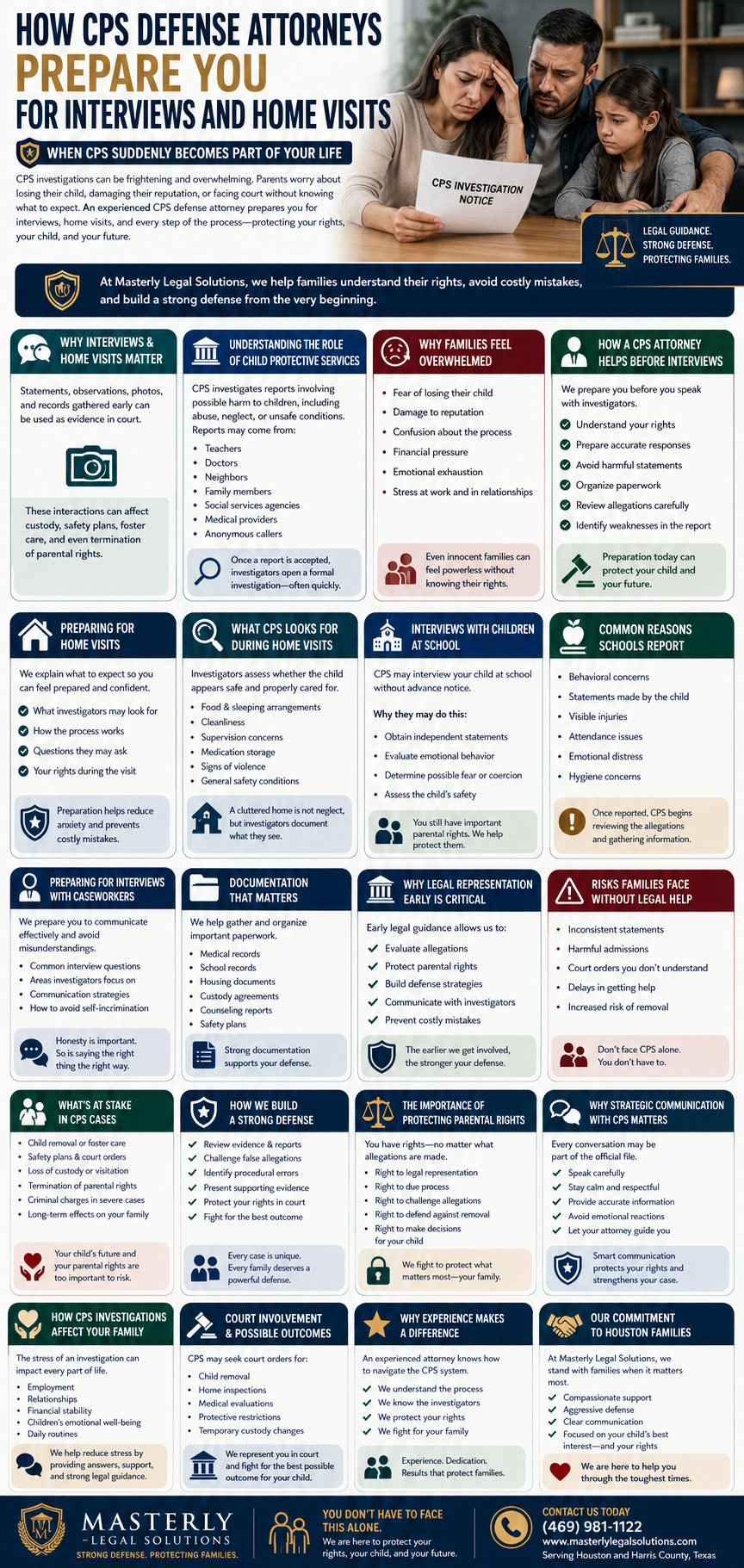
How CPS Defense Attorneys Prepare You for Interviews and Home Visits” from Masterly Legal Solutions. The image shows a worried family sitting together at a table reviewing a document labeled “CPS Investigation Notice” while discussing concerns about a Child Protective Services investigation. The infographic explains how CPS defense attorneys help families prepare for interviews, home visits, and court proceedings involving allegations of abuse or neglect. Multiple informational sections outline what CPS investigators look for during home visits, how schools and medical providers trigger reports, the importance of documentation, parental rights during investigations, and strategies for avoiding self-incrimination. Additional panels explain how attorneys help parents organize records, respond carefully to caseworkers, prepare for court, and protect custody and visitation rights. The infographic emphasizes the emotional impact CPS investigations have on families and highlights the importance of early legal guidance and strong advocacy. A footer banner includes the Masterly Legal Solutions logo, supportive messaging for Houston families, and contact information for legal assistance.


How Masterly Legal Solutions Helps Families Facing CPS Cases

At Masterly Legal Solutions, we understand how overwhelming cps investigations can become for parents and families throughout texas. Our law firm works closely with clients facing allegations involving child abuse, neglect, unsafe conditions, or custody disputes connected to child protective services, and we also provide education law and related legal services for teachers and administrators.


We know how frightening it can feel when investigators begin asking questions about your home, your parenting, and your child’s safety. Our attorneys work to protect parental rights, defend families during investigations, and help parents make informed decisions during stressful situations.


Whether your family is dealing with school reports, home visits, medical allegations, or emergency proceedings, our firm is prepared to provide experienced legal support and aggressive advocacy.


Why Families Trust an Attorney for CPS Cases

Families facing cps investigations often feel uncertain about who to trust or where to turn for help. Working with an attorney for cps cases provides families with guidance, structure, and legal protection during one of the most difficult moments of their lives.


A skilled lawyer can:

  • Explain the process clearly
  • Protect legal rights
  • Defend against false allegations
  • Challenge weak evidence
  • Prepare families for interviews
  • Help achieve the best possible outcome


Having a knowledgeable advocate involved early often helps families feel more prepared and less overwhelmed.


Speak With Masterly Legal Solutions About Your CPS Investigation

If your family is facing a cps investigation, home visit, school report, or allegations involving child abuse and neglect, the legal team at Masterly Legal Solutions is ready to help, and you can find our Texas office locations and contact information to schedule a consultation. We understand how quickly these situations can escalate and how important it is to act immediately when parental rights and your child’s future are at risk.


Our office proudly assists clients throughout texas who need experienced legal help involving child protective services investigations, custody disputes, foster care concerns, and court proceedings, and our firm also represents educators in other jurisdictions through services like North Carolina educator misconduct defense. Whether you need assistance preparing for interviews, reviewing paperwork, responding to investigators, or defending against removal efforts, our attorneys are prepared to stand beside your family every step of the way.


We know how emotionally exhausting these investigations can become for parents, kids, and families. Our firm is committed to helping clients feel informed, protected, and prepared throughout the legal process. If you are dealing with cps allegations, safety concerns, or protective services investigations, contact Masterly Legal Solutions today for a confidential consultation.


Contact us at (972) 236-5051 for a free consultation.


Disclaimer: This article is provided for informational and educational purposes only and does not constitute legal advice or legal guidance. Reading this article does not create an attorney-client relationship with Masterly Legal Solutions. Every cps investigation and family situation is different, and outcomes depend on the specific facts involved. Individuals facing cps investigations or legal concerns should consult with a qualified attorney regarding their particular circumstances.

972) 236-5051
Attorney for CPS speaking with family about child protection case.
May 19, 2026
Experienced CPS attorney and CPS lawyer helping families protect parental rights during child protective services and CPS investigation cases across Texas.
Atlanta estate planning attorney reviewing wills and estate documents with family
May 19, 2026
Atlanta estate planning attorney helping families protect assets and create an estate plan with trusted guidance from an experienced estate planning lawyer.
Arlington law attorney consultation services in Northern Virginia..
May 19, 2026
Arlington law attorney providing family law, estate planning, criminal defense & business law consultation in Northern Virginia. Trusted legal counsel for clients.
May 19, 2026
Understanding the Stress Behind a TEA Investigation Few situations are more overwhelming for an educator than learning they are under a TEA investigation. Many teachers, administrators, coaches, and school employees spend years building a career only to suddenly face allegations that threaten their reputation, teaching certificate, and future employment opportunities. In many cases, the process begins quietly with a complaint, an unexpected meeting with a supervisor, or being placed on administrative leave without fully understanding what happens next. For many workers in education, the emotional toll can be severe. An employee may feel isolated from co workers, worried about their family responsibilities, and uncertain about whether the employer intends to protect their rights or pressure them into resignation. These investigations often create fear, anxiety, and confusion, especially when the allegations involve workplace discrimination, harassment, retaliation, or accusations of inappropriate conduct. At Masterly Legal Solutions, we understand how quickly a TEA investigation can impact every part of a person’s professional life. Taking immediate steps after receiving a TEA investigation notice can help protect an educator’s license, career, and future opportunities. Even before the Texas Education Agency makes findings, school districts may begin internal disciplinary procedures, place an employee on paid administrative leave, or restrict access to the campus. The way an educator responds during the early stages of an investigation can significantly affect the outcome of the case. What Administrative Leave Means During a TEA Investigation Administrative leave is a temporary removal from regular duties while an employer reviews allegations or gathers facts related to an investigation. In the education setting, a school district may place teachers or administrators on administrative leave after receiving a complaint from a student, parent, co worker, or another staff member. Understanding the specific steps Texas teachers should take while on administrative leave can be critical to protecting both employment and certification. In some circumstances, the leave may be temporary and routine. In other cases, the leave can become prolonged and damaging to the employee’s professional reputation. Many educators assume that being placed on leave automatically means they have done something wrong, but that is not always true. Employers sometimes use administrative leave while determining whether allegations are supported by evidence. A school district may also use administration leave as a method of limiting access to students or staff during the review process. While districts often claim this step is precautionary, the consequences for the employee can still be serious. The employee may lose access to school systems, face public scrutiny, or experience emotional distress while waiting for the investigation to move forward. The Difference Between Paid and Unpaid Leave Not all leave policies are the same. Some educators are placed on paid administrative leave, while others may experience unpaid suspensions depending on the allegations and district policies. Understanding the difference is important because it can affect wages, benefits, retirement contributions, and future employment opportunities. Paid leave generally allows the employee to continue receiving pay and benefits while the employer conducts the investigation. However, even paid leave can create long-term damage when rumors spread throughout the workplace or the community. Unpaid leave can place extreme financial strain on workers and their family member obligations. In some cases, school districts attempt to pressure employees into resigning rather than allowing the investigation process to continue. Before agreeing to resign, sign documents, or provide detailed written statements, educators should seek legal guidance from an attorney experienced with TEA matters. Common Reasons Educators Are Placed on Administrative Leave School districts may place an employee on administrative leave for many reasons. Some allegations involve serious accusations, while others stem from misunderstandings, interpersonal conflicts, or false claims, particularly in situations where Texas educators must defend their licenses during a TEA investigation . Common examples include: Allegations of harassment involving students or co workers Claims of workplace discrimination Accusations involving inappropriate communication Reports related to sexual advances Complaints concerning classroom management Allegations involving discrimination based on disability or age discrimination Claims of retaliation after engaging in protected activity Disputes involving employment discrimination Reports concerning policy violations or misconduct In many cases, the school district begins its own internal investigation before reporting the matter to the TEA. The district may also cooperate with police or outside investigators depending on the circumstances. How Retaliation Can Develop During a TEA Investigation Retaliation is one of the most common concerns educators face after reporting misconduct or defending themselves during an investigation. Retaliation can take many forms, and it is not always obvious in the beginning, which is why many employees benefit from guidance from an education lawyer for teachers in Texas when workplace conditions begin to change. An employer may attempt to isolate an employee, alter the employee's work schedule, reduce opportunities for promotion, assign less favorable duties, or create a hostile workplace environment. In some situations, a manager or supervisor may encourage co workers to avoid the employee altogether. Federal law and state laws prohibit retaliation against workers who engage in protected activity. Protected activity can include filing a complaint, reporting workplace discrimination, cooperating with investigators, or participating in proceedings related to employment discrimination claims. Unfortunately, retaliation often occurs quietly. A school district may claim staffing changes are unrelated while simultaneously treating the employee differently after they report misconduct. This is why documenting events, preserving communications, and obtaining legal representation early can be critical. Recognizing Signs of Workplace Retaliation Some educators are unsure whether they actually face retaliation or whether their employer’s actions are simply part of the investigation process. While every case is different, there are several warning signs that may indicate unlawful conduct. Examples of retaliation may include: Sudden negative evaluations after filing a complaint Removal from a desirable position Transfer to a less desirable position Reduction in work hours or responsibilities Exclusion from meetings or professional opportunities Increased scrutiny from a supervisor or manager Unfair disciplinary action Threats regarding future employment Pressure to resign before the investigation concludes Retaliation laws exist to protect workers from being punished for asserting their rights. However, proving retaliation often requires strong documentation and strategic legal representation. Federal Protections for Employees Facing Retaliation Several federal statutes and regulations protect employees from retaliation and employment discrimination. These laws apply to many workplaces, including public schools and educational institutions, and often intersect with education law services from experienced attorneys who help employees enforce their rights. Discrimination on the basis of race, color, religion, sex, or national origin is forbidden by Title VII of the Civil Rights Act.. Title VII also prohibit retaliation against employees who report unlawful conduct or participate in investigations. The Equal Employment Opportunity Commission, commonly known as the EEOC, enforces many federal workplace protections. The EEOC investigates claims involving workplace discrimination, harassment, retaliation, and other unlawful employment practices. Additional federal protections may arise under the Disabilities Act, the Fair Labor Standards Act, and other employment laws. These statutes protect workers from unfair treatment related to disability, wages, labor issues, and protected conduct. How the EEOC Handles Retaliation Claims The EEOC plays an important role in reviewing employment discrimination and retaliation complaints. When an employee believes an employer violated federal law, the individual may file a claim with the eeoc before pursuing a lawsuit. The EEOC may: Review documentation and statements Interview witnesses Request employment records Examine workplace policies Determine whether discrimination or retaliation occurred Although TEA investigations involve educator certification issues, employment claims involving discrimination or harassment may also overlap with EEOC procedures. This overlap makes legal strategy especially important because statements made during one investigation can affect another proceeding. The Relationship Between TEA Investigations and Employment Law Many educators do not realize that a TEA investigation can involve both certification concerns and employment law issues. A teacher may face disciplinary proceedings with the TEA while simultaneously dealing with retaliation or discrimination in the workplace, and in some cases may need focused support from a Texas law firm that defends educators in TEA investigations and license actions . For example, an employee who reports sexual advances from a supervisor may later face increased scrutiny, disciplinary action, or removal from campus. In another example, an educator may report workplace discrimination based on disability or immigration status and later experience retaliation after participating in the investigation. These cases often involve overlapping legal issues under federal and state statutes. Because of this, educators should avoid assuming the school district will protect their interests throughout the process. The Impact of False Allegations on Educators False allegations can destroy careers even when the claims are eventually disproven. A simple complaint may lead to suspension, reputational damage, and emotional distress before investigators even determine whether misconduct occurred. Teachers and administrators frequently experience fear about losing their job, certification, and future opportunities. Some employees become concerned about how the allegations affect their family member relationships, finances, and mental health. Even after an investigation closes, the stigma associated with being placed on administrative leave can continue affecting employment opportunities. School districts sometimes hesitate to hire individuals who previously faced investigations, even if the allegations lacked merit. This is why responding quickly and strategically is so important. Educators should never assume the truth alone will automatically resolve the matter. How School Districts Conduct Internal Investigations Most school districts begin with an internal investigation before or during TEA involvement. The district may assign human resources personnel, administrators, or outside investigators to gather information, and educators often turn to an education law attorney for teachers to understand how these internal steps may affect later certification or employment proceedings. The process often includes: Witness interviews Requests for written statements Reviews of emails or electronic communications Examination of personnel files Meetings with supervisors and managers Employees sometimes feel pressured to answer questions immediately without legal guidance. However, statements made during these meetings can later be used in TEA proceedings, employment hearings, or litigation. Before participating in interviews or signing documents, educators should carefully evaluate their rights and legal options. Why Documentation Matters During an Investigation Strong documentation can significantly improve an employee’s ability to defend against allegations or prove retaliation. Educators should maintain organized records of communications, disciplinary actions, meeting notes, and performance evaluations, and may wish to review those records with an education law attorney for teachers and administrators to assess potential claims. Helpful documentation may include: Emails and text messages Copies of complaints or reports Witness information Work schedules and assignment changes Evidence of harassment or discrimination Notes regarding conversations with supervisors Documentation can help determine whether the employer acted fairly or engaged in prohibited conduct. Retaliation After Reporting Harassment Many educators who report harassment later experience negative treatment in the workplace. This can occur when an employee reports sexual advances, inappropriate comments, hostile behavior, or discriminatory treatment. Federal and state laws protect employees who report harassment or participate in investigations. Unfortunately, some employers still retaliate against workers by limiting opportunities, changing assignments, or increasing scrutiny. An employee who experiences retaliation after filing a complaint should carefully monitor workplace changes and seek legal guidance promptly. Family Responsibilities and Workplace Pressure TEA investigations can place enormous pressure on families. Educators often worry about supporting children, maintaining benefits, and protecting long-term career goals while dealing with uncertainty. Some employees face retaliation connected to family responsibilities. For example, a district may criticize an employee’s absence related to caregiving obligations or use scheduling changes to create additional hardship. These circumstances can create emotional and financial stress that affects every area of life. Protecting your professional reputation during this period is essential. Disability Discrimination and Retaliation Concerns Employees with a disability may face additional challenges during investigations. In some situations, an employer improperly assumes medical conditions affect job performance or reliability. Federal laws, including protections under the disabilities act, prohibit employment discrimination based on disability. Employers are also prohibited from retaliating against workers who request accommodations or report discriminatory treatment. If an employee believes the investigation process involves discrimination related to disability, medical conditions, or accommodations, immediate legal review may be necessary. Age Discrimination in Educational Workplaces Age discrimination can also arise during disciplinary proceedings or staffing changes. Older educators sometimes report being treated differently during investigations or targeted for removal from employment. Federal employment laws prohibit discrimination based on age. An employer cannot lawfully use age as justification for unfair discipline, denial of promotion opportunities, or retaliatory treatment. These cases may involve subtle patterns of behavior that become clearer over time. Careful documentation and legal analysis are important when evaluating potential claims. The Role of Protected Activity Protected activity refers to actions employees take that are legally protected under federal and state employment laws. Participating in an investigation, reporting misconduct, filing complaints, or opposing unlawful behavior can qualify as protected activity. Examples of protected activity include: Filing an EEOC complaint Reporting workplace discrimination Cooperating with investigators Reporting harassment Participating in hearings or interviews Employers cannot legally punish employees for engaging in these actions. If retaliation follows protected activity, the employee may have legal options available. When Retaliation Becomes Unlawful Not every workplace disagreement qualifies as unlawful retaliation. However, when an employer takes adverse action because an employee engaged in protected conduct, the situation may violate federal or state laws. Courts and agencies often examine whether the employer’s actions would discourage a reasonable employee from reporting misconduct or participating in investigations. Examples may include termination, demotion, denial of promotion opportunities, reduced pay, reduced hours, or hostile treatment from management. Sexual Harassment Allegations and TEA Cases Allegations involving sexual harassment or sexual advances often trigger immediate district responses. Schools may place an employee on administrative leave before fully evaluating the facts. While districts must take complaints seriously, employees also deserve fair treatment and due process. False allegations, misunderstandings, and exaggerated claims can occur in educational settings. Educators should avoid discussing allegations publicly or attempting to contact witnesses without legal advice. Mishandling communications during an investigation can create additional complications. How Federal Agencies Become Involved Several federal agencies may become involved depending on the allegations. The EEOC handles many workplace discrimination and retaliation matters, while other federal agencies oversee labor standards and employment regulations. Federal employees in educational environments may face separate procedures depending on the institution involved. Although many public-school educators work under state systems, federal employment laws still provide important protections. Understanding which agency has authority over a matter is important when building a legal strategy. Immigration Status and Employment Protections Federal employment laws generally protect workers regardless of immigration status in certain workplace matters involving discrimination and retaliation. Employers cannot use immigration concerns to intimidate employees who report unlawful conduct. Educators facing retaliation should understand that workplace protections may still apply even when complicated employment questions arise. The Importance of Legal Representation Early in the Process One of the biggest mistakes educators make is waiting too long to seek legal representation. Many employees assume cooperating fully with the district will automatically resolve the matter fairly. Unfortunately, statements made during early interviews can later affect certification proceedings, employment hearings, and even lawsuits. An attorney can help determine how to respond to requests, preserve evidence, and protect professional interests throughout the process. Early legal guidance may also help identify whether the employer violated laws related to retaliation, discrimination, harassment, or employment rights. Why Educators Should Be Careful With Written Statements School districts frequently request written responses from employees during investigations. These statements may later become part of TEA records or other proceedings. Before submitting statements, educators should carefully review the facts and understand how the information could be interpreted. Inconsistent wording, emotional responses, or incomplete explanations can create unnecessary risks. An attorney can help evaluate whether additional information should be provided and how to avoid statements that may unintentionally harm the employee’s case. The Emotional Impact of Administrative Leave Being removed from the workplace can feel humiliating and isolating. Many employees experience depression, anxiety, sleep issues, and fear about the future. Educators often dedicate years to serving students and communities. Suddenly facing allegations or retaliation can create emotional trauma that affects both professional and personal relationships. Support systems, careful planning, and experienced legal counsel can make a significant difference during this difficult period. Understanding Employer Responsibilities Employers have legal obligations during workplace investigations. School districts must follow policies, respect employee rights, and avoid unlawful retaliation or discrimination. An employer should conduct investigations fairly, avoid predetermined conclusions, and take appropriate action based on evidence rather than rumors or assumptions. When districts fail to follow regulations or engage in prohibited conduct, employees may have grounds to pursue legal claims. Common Mistakes Employees Make During Investigations Educators under stress sometimes make decisions that unintentionally harm their cases. Common mistakes include: Resigning too quickly Deleting communications or records Discussing allegations publicly Ignoring deadlines Providing inconsistent statements Failing to document retaliation Avoiding these mistakes can improve the employee’s ability to protect certification status and employment rights. The Importance of Preserving Professional Reputation Even when allegations are unfounded, investigations can damage reputations within the educational community. Rumors and speculation may spread quickly among co workers and administrators. Protecting professional credibility requires careful communication, strategic planning, and experienced legal guidance. Educators should remain professional throughout the process and avoid emotional confrontations with supervisors or managers. When a Lawsuit May Become Necessary Some retaliation and discrimination matters eventually lead to litigation. A lawsuit may become necessary when employers refuse to correct unlawful conduct or when significant damages occur, making it important to consult an education lawyer who represents teachers and schools about potential legal strategies. Potential claims may involve: Employment discrimination Workplace retaliation Harassment Wrongful termination Violations of federal employment laws Legal claims often depend on documentation, timelines, witness testimony, and procedural requirements. Missing deadlines or failing to file properly can affect an employee’s ability to pursue compensation or relief. How Masterly Legal Solutions Assists Educators At Masterly Legal Solutions, we understand the unique pressure educators face during TEA investigations and workplace disputes. As a Texas law firm focused on defending educators and their licenses , we work with teachers, administrators, coaches, and school employees who need guidance during complex disciplinary matters. Our firm helps clients: Respond to TEA investigations Address retaliation concerns Evaluate discrimination claims Protect teaching certifications Prepare responses to complaints Navigate employment disputes Defend professional reputations  Every case involves different facts and circumstances. Having experienced legal representation can help employees make informed decisions and avoid mistakes that may impact their future careers.
Houston CPS child protective services family support..
May 19, 2026
Houston CPS helps families facing child abuse or neglect investigations. Child Protective Services in Texas provide support, guidance, protection & family help.
Sports law attorney and sport management legal services..
May 19, 2026
Sports law guidance for the sports industry, helping sports organizations and leagues navigate legal matters and the business side of sport with trusted lawyers.
CPS attorney meeting with parents during child protection case.
May 18, 2026
Experienced CPS attorney and lawyer protecting parental rights in child protective services cases. Trusted PLLC law firm for strong CPS defense services now.
Dallas school district administration building and campus entrance.
May 18, 2026
Dallas workplace retaliation lawyer handling discrimination cases, employment law disputes, and legal services including employment matters for employees in TX.

Looking for Legal & Business Solutions? Contact Us Now

Fill in the form or call us to set up a meeting

(972) 236-5051
A black and white drawing of a straight line on a white background.