

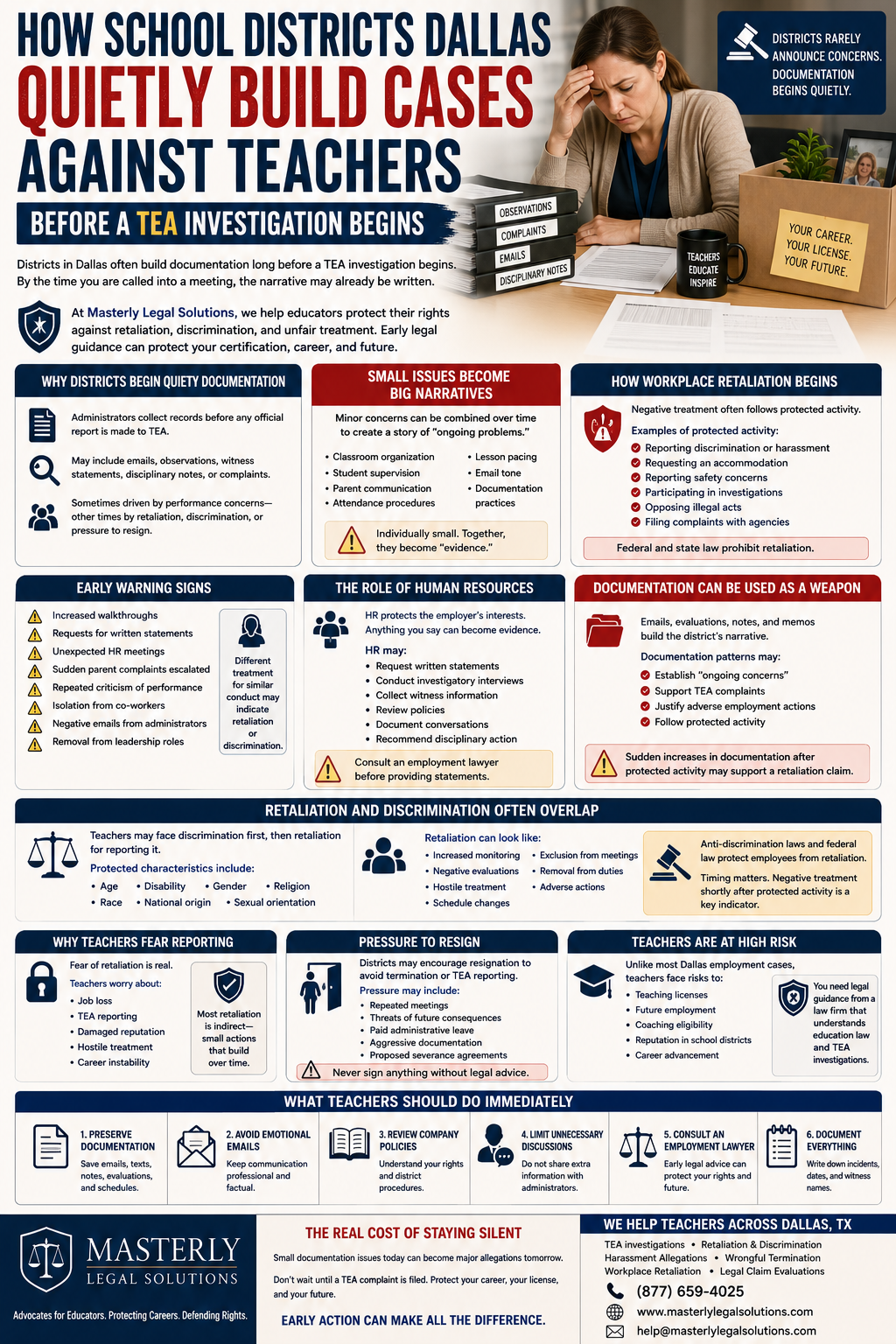
How School Districts Dallas Quietly Build Cases Against Teachers Before a TEA Investigation Begins
When Teachers Realize Something Has Changed
Most educators can feel when the atmosphere around them suddenly shifts. A principal who once praised classroom management may begin making repeated walkthroughs. Minor mistakes that were previously ignored may suddenly become formal concerns. Friendly conversations with administrators may become short, tense, and heavily documented. For many teachers in school districts Dallas, these changes happen long before a TEA investigation officially begins.
In many situations, teachers do not realize they are already under scrutiny until the district has spent weeks or months collecting documentation. Administrators may quietly build records involving attendance, classroom interactions, parent complaints, or communication concerns. While some investigations involve legitimate issues, other situations involve retaliation, workplace retaliation, discrimination, or efforts to pressure an employee into resigning before formal action is taken.
Many educators wrongly assume they will have an opportunity to explain themselves fairly later in the process. Unfortunately, by the time the employee is called into a meeting with human resources or administration, the district may already have a carefully prepared narrative in place. That is why speaking with an employment lawyer early can make a significant difference in protecting a teacher’s certification, career, and future opportunities.
At Masterly Legal Solutions, our law firm understands how stressful these situations become for educators across Dallas TX. Teachers often contact us after they realize the employer has already started creating a paper trail against them. Early legal guidance may help educators avoid mistakes that could later damage their defense during TEA proceedings or employment disputes.
Why School Districts Begin Quiet Documentation
School districts rarely announce when concerns about a teacher begin internally. In many cases, administrators start gathering records quietly before an official report is ever made to TEA. This process may involve emails, observations, witness statements, disciplinary notes, or parent complaints.
Some employers genuinely believe they are addressing performance concerns. However, there are also situations where workplace retaliation, unlawful retaliation, or discrimination influences the process. A teacher who recently engaged in protected activity may suddenly become the focus of increased scrutiny.
For example, an employee who reports workplace discrimination, sexual harassment, unsafe working conditions, or violations of workplace policies may later notice administrators documenting small issues repeatedly. The teacher may feel singled out compared to other employees who commit similar mistakes without consequences.
This is one reason retaliation claims arise so frequently in employment law matters involving school districts. Educators benefit from understanding legal protections against workplace retaliation in schools, especially when negative treatment begins shortly after an educator exercises workplace rights.
Small Issues Often Become Larger Narratives
Many TEA investigations do not begin with major incidents. Instead, districts may gradually collect multiple smaller concerns and combine them into a broader narrative regarding professionalism or judgment.
A teacher may initially receive minor criticism involving:
- Classroom organization
- Student supervision
- Parent communication
- Attendance procedures
- Lesson pacing
- Email tone
- Documentation practices
Individually, these issues may seem insignificant. Over time, however, the employer may portray them as evidence of ongoing misconduct or poor judgment. Teachers are often shocked when they discover how many records administrators have accumulated quietly.
An employee who notices sudden increases in written warnings or observation reports should take the situation seriously. These records may later become part of a TEA complaint or adverse employment action and may eventually feed into Texas Education Agency investigation processes and teacher protections.
How Workplace Retaliation Begins in Schools
Workplace retaliation within educational settings is more common than many teachers realize. Administrators may react negatively when educators challenge policies, report misconduct, or question district decisions.
Protected activity can include:
- Reporting discrimination
- Complaining about harassment
- Requesting a reasonable accommodation
- Reporting safety concerns
- Participating in investigations
- Opposing illegal acts
- Filing complaints with federal agencies
Federal and state law protect employees from retaliation connected to these activities. Unfortunately, some school administrators respond defensively instead of addressing concerns appropriately.
A retaliation claim may arise when negative treatment begins after an employee engages in protected activity. For example, a teacher who reports sexual harassment or discrimination based on age, disability, or sexual orientation may later face unusual scrutiny or disciplinary action.
Teachers Often Miss Early Warning Signs
One of the biggest mistakes educators make is assuming administrators are simply being more “thorough” or “strict.” In reality, districts may already be preparing for possible disciplinary proceedings or TEA reporting.
Common warning signs include:
- Increased classroom walkthroughs
- Requests for written statements
- Unexpected meetings with human resources
- Sudden parent complaints being escalated
- Repeated criticism of job performance
- Isolation from co workers
- Negative emails from administrators
- Removal from leadership responsibilities
An employee may also notice that other employees are treated differently for similar conduct. Unequal treatment can sometimes support discrimination claims or evidence of retaliation.
The earlier a teacher recognizes these warning signs, the more opportunity exists to protect important evidence and develop a legal strategy.
The Role of Human Resources in School Investigations
Many teachers believe human resources exists primarily to support employees. However, the human resources department typically works to protect the employer’s interests and reduce legal exposure for the district.
This does not mean every HR representative acts improperly. Still, educators should understand that statements made during meetings can later become evidence in TEA proceedings or employment disputes.
Human resources may:
- Request written statements
- Conduct investigatory interviews
- Collect witness information
- Review company policies
- Document conversations
- Recommend disciplinary action
Teachers often attend these meetings believing they can simply “clear things up.” Unfortunately, an employee may unintentionally provide information that strengthens the district’s case.
Speaking with an employment lawyer, such as a retaliation lawyer focused on workplace investigations, before making formal statements may help educators avoid damaging admissions or misunderstandings.
Documentation Can Be Used as a Weapon
Documentation is one of the most powerful tools school districts use during investigations. Administrators understand that written records often carry significant weight during Texas TEA disciplinary proceedings against educators.
Emails, evaluations, observation notes, and disciplinary memos may all become part of the district’s narrative. Even seemingly minor incidents may later appear more serious when viewed collectively.
Some districts also create documentation patterns designed to establish ongoing concerns about professionalism or compliance. An employee may suddenly receive detailed criticism after years of positive evaluations.
This is particularly concerning when retaliation or workplace retaliation may be involved. A teacher who recently engaged in protected activity should pay close attention to sudden changes in documentation practices.
How Retaliation and Discrimination Overlap
Retaliation and discrimination frequently overlap in school investigations. A teacher may first experience discrimination based on age, disability, gender, religion, or sexual orientation before later facing retaliation for reporting the conduct.
For example, an employee who complains about workplace discrimination may later receive:
- Increased monitoring
- Negative evaluations
- Hostile treatment
- Exclusion from meetings
- Schedule changes
- Adverse actions
Under anti discrimination laws and federal law, employers cannot punish workers for reporting unlawful conduct. The civil rights act and related protections, as well as options for filing labor and retaliation complaints with federal agencies, exist specifically to prevent employer retaliation.
Unfortunately, retaliation often appears subtle at first. Administrators may claim they are simply addressing performance concerns even when timing strongly suggests otherwise.
Why Teachers Should Never Ignore Informal Complaints
Some educators assume informal criticism does not matter because no official disciplinary action has occurred yet. However, districts often use informal conversations to begin creating documentation patterns.
An administrator may casually mention concerns about communication, professionalism, or classroom management during meetings. Later, those same concerns may appear in formal evaluations or investigative reports.
Teachers should not panic every time criticism occurs. However, repeated concerns involving vague or subjective issues should not be ignored either.
An employee who senses unusual scrutiny should begin preserving records and considering whether consultation with a retaliation lawyer or workplace retaliation attorney may be appropriate.
Protected Activity Often Triggers Increased Scrutiny
Federal law protects employees who engage in protected activity. This includes teachers who report misconduct, oppose unlawful discrimination, or participate in investigations with a good faith belief that violations occurred, and those protections become especially important when TEA investigations, common causes, and teacher rights are involved.
Examples of protected activity may include:
- Reporting sexual harassment
- Filing discrimination complaints
- Requesting fmla leave
- Reporting wage concerns
- Complaining about harassment
- Seeking a reasonable accommodation
- Participating in investigations
Despite these protections, some employers retaliate indirectly rather than openly punishing the employee. This can make retaliation difficult for educators to recognize initially.
A teacher may simply notice more criticism, increased observation frequency, or hostile treatment from supervisors. Over time, these retaliatory acts may become severe enough to threaten employment or certification status.
Why Timing Matters in Retaliation Cases
Timing often becomes critical when evaluating a retaliation claim. If negative treatment begins shortly after protected activity occurs, it may suggest unlawful retaliation.
For example, an employee who reports workplace discrimination may suddenly face:
- Poor evaluations
- Increased disciplinary action
- Investigatory meetings
- Classroom reassignment
- Removal from leadership duties
While employers may deny retaliation occurred, patterns and timing often reveal important details. An experienced employment lawyer may review records to determine whether a viable retaliation claim exists.
Teachers should also remember that very short deadlines may apply when filing complaints with agencies like the equal employment opportunity commission or the Texas Workforce Commission.
How Administrators Build Credibility Against Teachers
School districts often focus heavily on credibility during investigations. Administrators may attempt to portray the teacher as defensive, emotional, disorganized, or unprofessional.
This can happen through:
- Selective documentation
- Witness interviews
- Email reviews
- Meeting summaries
- Parent complaints
- Classroom observations
An employee may not realize the district is building a long-term narrative regarding judgment or professionalism until formal allegations appear.
This is why educators should remain calm, professional, and strategic once concerns arise. Emotional reactions, angry emails, or impulsive statements may later be used against the teacher.
The Danger of Speaking Too Quickly
Many educators feel pressured to explain themselves immediately during investigations. Unfortunately, quick explanations often create additional complications.
An employee may unintentionally:
- Admit facts out of context
- Contradict earlier statements
- Minimize concerns improperly
- Speculate about events
- Reveal information unnecessarily
School administrators and human resources personnel are often experienced in conducting interviews. Teachers should remember that anything said during these meetings may later appear in investigative records.
Consulting an employment lawyer before providing written or recorded statements can help teachers better understand the risks involved.
Workplace Retaliation Can Affect Every Part of a Teacher’s Career
Workplace retaliation rarely stays limited to one issue. Once an employee becomes targeted, the negative effects may spread throughout the workplace.
When retaliation escalates enough to threaten licensure or employment, educators may need guidance on how Texas educators can survive TEA investigations and protect licenses. Teachers experiencing retaliation may face:
- Isolation from co worker support
- Reduced committee roles
- Negative references
- Damaged reputations
- Increased monitoring
- Hostile work environment concerns
These situations can severely impact emotional wellbeing and professional confidence. Some teachers eventually resign simply to escape the stress and uncertainty.
Unfortunately, resignation may not always stop TEA involvement if the district has already initiated reporting procedures.
Medical Leave and Retaliation Concerns
Teachers who request medical leave or fmla leave sometimes experience retaliation afterward. Administrators may become frustrated by absences or accommodations connected to health conditions.
Federal law, including protections under the medical leave act, generally prohibit retaliation connected to lawful leave usage. However, some districts quietly begin documenting unrelated concerns shortly after leave requests occur.
An employee returning from medical leave may suddenly face criticism involving attendance, communication, or classroom performance. These situations may support retaliation claims depending on the circumstances.
Full time employees should not fear punishment simply for exercising lawful workplace rights connected to health concerns.
Disability Accommodations and School Resistance
Teachers with medical conditions sometimes request accommodations under the disabilities act. These requests may involve schedule adjustments, additional planning support, or other workplace modifications.
A reasonable accommodation request should not trigger retaliation or hostile treatment. Unfortunately, some employers react negatively when accommodations create scheduling or staffing challenges.
An employee who requests accommodations may later notice:
- Increased scrutiny
- Negative evaluations
- Isolation from administrators
- Documentation increases
- Hostile comments
Retaliation connected to accommodation requests may violate both federal law and state law protections, and it can quickly intersect with Texas TEA investigations and teacher certification defense.
Harassment Investigations Can Become Complicated Quickly
Allegations involving harassment or sexual harassment often create immediate panic for educators. Even unproven allegations can damage reputations and careers significantly.
Some investigations arise from misunderstandings or complaint based conflicts between teachers, students, or parents. Others may involve retaliation after an employee reports misconduct involving an employer or administrator.
An employee should never assume a school district will automatically conduct a fair or balanced investigation. Districts often focus heavily on liability protection and public image concerns.
Early involvement from a workplace retaliation attorney may help educators respond strategically while protecting their rights.
Why Teachers Fear Reporting Misconduct
Many teachers remain silent about serious problems because they fear retaliation from administrators or the employer. These legitimate fears are not always irrational.
Educators may worry about:
- Job loss
- TEA reporting
- Damaged reputations
- Retaliatory evaluations
- Hostile work environment issues
- Transfer requests
- Career instability
Unfortunately, employer retaliation often occurs indirectly rather than openly. Administrators may avoid obvious punishment while quietly building documentation against the employee over time.
Teachers should understand that most anti discrimination laws prohibit retaliation connected to reporting discrimination or participating in investigations.
School Districts Sometimes Pressure Resignations
Some school districts prefer resignations instead of formal termination proceedings. Resignations may reduce public attention and lower litigation risks for the employer.
Teachers may feel pressured through:
- Repeated meetings
- Threats of future consequences
- Paid administrative leave
- Aggressive documentation
- Suggested resignation discussions
An employee may even receive a proposed severance agreement encouraging voluntary departure before TEA reporting occurs.
Educators should never sign agreements without first consulting an employment lawyer. These documents may affect certification rights, future employment, or possible legal action later.
How Dallas Employment Cases Differ From Other Industries
Employment disputes involving educators differ significantly from traditional Dallas employment cases. Teachers face additional risks involving certification, public trust, and TEA oversight.
A single allegation may affect:
- Teaching licenses
- Future hiring opportunities
- Coaching eligibility
- Reputation within school districts Dallas
- Career advancement
This is why teachers need legal guidance from a law firm familiar with both employment law and education-related investigations.
Masterly Legal Solutions works with educators throughout Dallas TX facing retaliation, discrimination claims, harassment allegations, and workplace retaliation concerns tied to school investigations.
Why Waiting Too Long Can Hurt Your Case
One of the biggest mistakes teachers make is waiting too long before seeking legal guidance. An employee waits because they hope the situation will improve or believe cooperation alone will resolve concerns.
Unfortunately, districts may continue building documentation during this time. Important evidence may disappear, witnesses may become unavailable, and deadlines may pass.
Federal agencies and state agencies often impose strict filing requirements for retaliation claims and discrimination claims. Delays may limit available legal options significantly.
The sooner educators seek guidance, the more opportunity exists to gather evidence and protect their interests.
The Importance of Preserving Evidence
Teachers facing retaliation or investigation concerns should preserve important records carefully.
Useful evidence may include:
- Emails
- Text messages
- Observation reports
- Performance evaluations
- Meeting notes
- Witness names
- Schedule changes
- Policy documents
Documentation may help establish patterns showing workplace retaliation, unlawful retaliation, or discrimination.
An employment lawyer can help educators identify which records may become important later in potential legal claim situations.
Why School Investigations Feel So Personal
Teaching is deeply personal work. Educators often spend years building relationships with students, parents, and communities.
When an employer suddenly questions integrity or professionalism, the emotional impact can feel devastating. Teachers may lose sleep, fear future employment problems, and experience anxiety about certification consequences.
The stress often affects:
- Family relationships
- Financial stability
- Emotional health
- Confidence levels
- Career plans
An employee under investigation may feel isolated and overwhelmed, especially when administrators restrict communication with other employees during the process.
Hostile Work Environment Issues in Schools
A hostile work environment can develop gradually within educational settings. Administrators or co workers may engage in repeated conduct designed to intimidate or isolate a teacher.
Examples may include:
- Public criticism
- Humiliation during meetings
- Repeated negative comments
- Exclusion from activities
- Excessive monitoring
- Aggressive supervision
When harassment or retaliation creates severe emotional stress, legal protections may apply under federal and state law.
Teachers should not ignore hostile work environment concerns simply because administrators frame the conduct as “performance management.”
Why Employers Deny Retaliation
Most employers do not openly admit retaliation occurred. Instead, districts typically argue that disciplinary concerns were legitimate and unrelated to protected activity.
This is why evidence matters so much in retaliation cases. Timing, documentation patterns, witness testimony, and comparative treatment often become critical.
An employee who engaged in protected activity with a good faith belief that misconduct occurred still receives important legal protections under employment law, and experienced education law attorneys guiding teachers through investigations can help enforce those protections.
Even if districts claim concerns involve job performance, retaliatory motives may still exist beneath the surface.
Unsafe Working Conditions and Teacher Complaints
Teachers sometimes report unsafe working conditions involving classrooms, student behavior, staffing shortages, or campus security.
Federal and state protections may apply when employees raise safety concerns appropriately. However, some districts respond negatively when complaints create operational or public relations challenges.
An employee who reports safety issues may later experience retaliation through increased scrutiny or disciplinary action.
Retaliation connected to safety complaints may support legal action depending on the facts involved.
What Teachers Should Do Immediately
Teachers who suspect retaliation or investigation activity should remain calm and strategic.
Important steps may include:
- Preserving documentation
- Avoiding emotional emails
- Reviewing company policies
- Limiting unnecessary discussions
- Consulting an employment lawyer
- Documenting incidents carefully
An experienced retaliation lawyer Dallas educators trust, such as an education law attorney for teachers and administrators, may help teachers understand their options before mistakes occur.
The earlier an employee acts, the stronger the opportunity may be to protect career interests effectively.
Why Masterly Legal Solutions Focuses on Early Intervention
At Masterly Legal Solutions, we understand that many teachers contact a retaliation lawyer only after situations become severe. By that stage, the district may already have extensive records prepared.
Our law firm believes early intervention often creates stronger opportunities for protection. Educators deserve to understand their workplace rights before statements are made or decisions become permanent.
We help teachers throughout Dallas TX navigate:
- TEA investigations
- Workplace retaliation
- Harassment allegations
- Employment discrimination concerns
- Wrongful termination issues
- Retaliation claim evaluations
Whether the issue involves employer retaliation, discrimination based concerns, or hostile work environment allegations, early legal strategy matters.
The Real Cost of Staying Silent
Many educators remain silent because they hope cooperation alone will protect them. Unfortunately, silence sometimes allows retaliation and discrimination to continue without challenge.
Teachers may lose promotions, leadership opportunities, lost wages, or even careers because they waited too long before seeking guidance.
Retaliation does not always begin dramatically. Sometimes it starts with small documentation issues that slowly build into larger accusations over time.
Understanding these patterns early may help educators protect themselves before school districts Dallas move investigations further toward TEA involvement.
How Age Discrimination Can Quietly Influence School Investigations
Many experienced educators are surprised to learn how often age discrimination may play a hidden role in school investigations and disciplinary decisions. Some school districts begin increasing scrutiny against older teachers by questioning technology skills, classroom adaptability, or teaching methods while younger employees are treated differently for similar conduct. Under the employment act and other federal protections, employers cannot target an employee simply because of age or assumptions about retirement plans. In some situations, dallas workers discover that investigations begin shortly after discussions about retirement eligibility, salary concerns, or seniority. Teachers should also understand that retaliation and discrimination laws may protect both school employees and certain federal employees working within educational programs connected to federal agencies. When an employer's discrimination becomes part of a larger pattern involving retaliation, educators may need legal guidance quickly to protect their certifications and careers.
Why Teacher Participation in Investigations Matters More Than Most Educators Realize
Many teachers do not understand how carefully school districts evaluate an employee's participation during internal investigations. Administrators often document every statement, reaction, and response while determining whether further disciplinary action or TEA reporting may occur. In some situations, an employer participating in the investigation process may already be building a case long before the teacher realizes how serious the allegations have become. This can happen in public schools, universities, and even medical care institutions connected to educational training programs. Teachers who raise concerns about workplace rights, unsafe conditions, minimum wage issues involving extra duties, or retaliation may suddenly face increased scrutiny afterward. Because these situations can escalate quickly, many educators across Dallas TX contact legal counsel sooner rather than later to avoid damaging mistakes during interviews or written statements. In many cases, employee's participation in meetings without legal preparation can unintentionally strengthen the district’s position during a future TEA investigation.
Speak With Masterly Legal Solutions Before a TEA Investigation Escalates
If you believe a school district has started documenting issues against you unfairly, do not assume the situation will simply disappear on its own. Many teachers across Dallas TX only realize the seriousness of the problem after administrators have already built extensive files and prepared reports for TEA review.
At Masterly Legal Solutions, our law firm works with educators facing workplace retaliation, harassment, discrimination, wrongful termination concerns, and school investigations that may threaten teaching certifications and future careers. We understand how quickly these situations can escalate once an employer begins collecting documentation or involving human resources.
Our team helps teachers understand their rights, evaluate possible retaliation claim concerns, and develop a legal strategy before damaging statements are made. Whether you are dealing with adverse employment action, discrimination claims, hostile work environment concerns, or retaliation after protected activity, speaking with an employment lawyer early may help protect your future.
Contact Masterly Legal Solutions at (972) 236-5051 for a free initial consultation. We can answer your questions, review your concerns, and help you better understand the legal protections available to educators facing investigations in school districts Dallas.
Disclaimer: This article is for educational and informational purposes only and should not be considered legal advice. Reading this article does not create an attorney-client relationship. Every situation is different, and individuals should consult directly with an attorney regarding their specific legal concerns.



Teacher Rights When Assaulted by a Special Needs Student: Safety, Reporting and Investigation Issues



Looking for Legal & Business Solutions? Contact Us Now
Fill in the form or call us to set up a meeting





