

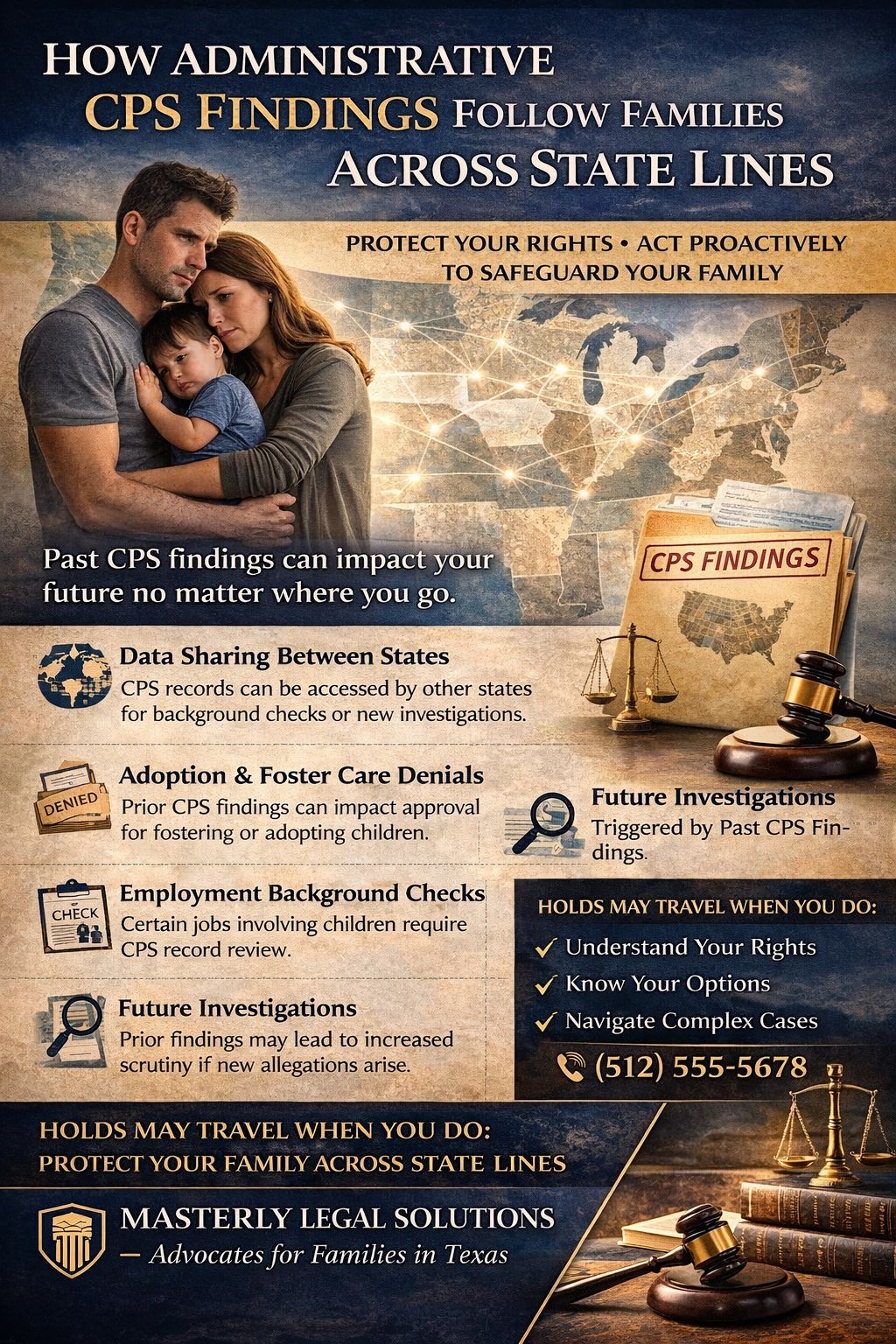
How Administrative CPS Findings Follow Families Across State Lines
When parents close a case with Child Protective Services, many believe the matter is finally behind them. They assume that once services are completed or an investigation ends, life will return to normal. What often surprises families is that administrative findings can follow them far beyond the state where the original report was made. At Masterly Legal Solutions, we help parents understand how these findings can impact their future and what steps may be available to protect their rights.
Child protection services operate within state systems, but information is frequently shared across jurisdictions. A single finding of child abuse or neglect can appear in databases that other states can access. When families move, apply for certain jobs, pursue adoption, or become involved in new investigations, prior CPS records may resurface. Understanding this reality is critical for parents who want to safeguard their family’s future.
What Are Administrative CPS Findings?
An administrative finding is the outcome of a child protective services investigation. After reviewing evidence, interviewing witnesses, and evaluating allegations, the agency may determine that abuse or neglect occurred. This determination does not always require a criminal conviction or court order.
Child protective services CPS operates under a legal definition of child abuse or neglect set by state law. Even if criminal charges are never filed, a substantiated finding can remain in agency records. These findings can affect employment, foster care licensing, adoption applications, and even future custody disputes.
The Structure of Child Protective Services Systems
Child protective services function under state departments, such as the Texas Department of Family and Protective Services. Each state has a department or division responsible for investigating suspected child abuse. These departments are guided by federal legislation as well as state-specific statutes.
Although each local department manages cases within its own state, data sharing between agencies is common. Federal child welfare laws encourage coordination to protect children and promote accountability. As a result, CPS findings are rarely confined to one geographic area.
How Reports Trigger Investigations
Most cases begin with a report of suspected child abuse or neglect. Reports may come from teachers, medical professionals, neighbors, or family members. Once a report is referred to the appropriate division, a cps worker is assigned to conduct an investigation.
The worker gathers information, interviews the child and parents, and may visit the home. The purpose of the investigation is to determine whether abuse, neglect, or child abuse and neglect occurred. Even if the allegations are later disputed, the findings can carry long-term consequences.
Administrative Findings Versus Criminal Charges
It is important to distinguish between administrative findings and criminal charges. A person can have a substantiated CPS finding without ever being charged in criminal court. The standard of proof in administrative proceedings is typically lower than in criminal law.
This means that even without criminal charges, a person’s name may be listed in a state registry. That listing can be accessed by certain agencies, particularly those involved in foster care, adoption, and child welfare services. Parents often underestimate how serious an administrative determination can be.
Federal Legislation and Interstate Impact
Several federal laws shape how child protective services share information. The Child Welfare Act, the Safe Families Act, and the Families Safe Act all emphasize promoting safe and stable families. These laws encourage coordination among states to protect children.
Other legislation, such as the Fostering Connections Act and the Increasing Adoptions Act, supports information sharing for adoption assistance and foster placements. The Prevention Services Act promotes early intervention and providing services to keep families together. While these laws aim to protect children, they also contribute to the interstate movement of records.
When Families Move to Another State
Families relocate for many reasons, including employment, education, or support from relatives. When a family with a prior CPS finding moves, the new state’s child protective services agency may access prior records. This often occurs during background checks for adoption, foster licensing, or certain employment positions.
For example, if parents apply to become foster parents in another state, the local department may request records from the prior state. A substantiated finding of abuse or neglect can complicate or delay approval. Even if years have passed, the administrative history may still be considered.
Adoption and Foster Care Consequences
Adoption and foster care systems are especially sensitive to prior CPS findings. Adoption agencies and foster licensing authorities routinely conduct background checks. These checks may include a review of child protective services CPS records.
Federal laws such as the Adoption Promotion Act and the Interethnic Placement Provisions emphasize fairness and child welfare. However, a substantiated history of child abuse or neglect can create significant barriers. Adoption assistance and placement decisions often consider whether children would be placed in a safe environment.
Families pursuing adoption or foster care may be surprised when old findings resurface. At that point, legal guidance becomes essential.
Employment and Volunteer Restrictions
Administrative findings can also affect employment. Many positions involving children, including work in a school or youth programs, require background checks. Agencies may review child protective services records before approving employment.
A parent who was once the subject of a CPS investigation may find that a prior report limits job opportunities. This is particularly true in fields related to social services, foster care, or child welfare. Understanding how these records are used is critical before applying for sensitive roles.
The Role of Evidence in CPS Determinations
CPS investigations rely on evidence collected by a cps worker. This may include interviews, medical records, and home visits. The worker evaluates whether the evidence supports a finding of abuse or neglect.
Unlike criminal court, these decisions are made within the agency’s administrative process. Parents may have an opportunity for a hearing to challenge the findings. Failing to act promptly can result in long-term consequences that follow a family across state lines.
Challenging a CPS Finding
Parents who disagree with a finding may have the right to request a hearing. The purpose of the hearing is to review the evidence and determine whether the finding should stand. Each state’s department has its own procedures and deadlines.
If the administrative decision is not challenged, it may remain in the system for years. When a family later moves or becomes involved in adoption or foster care, that record can resurface. Working with an attorney early in the process can make a significant difference.
Parental Rights and the Best Interest Standard
Child protective services operate under the principle of the child’s best interest. This standard guides decisions about removal, foster placement, and adoption. While promoting safe families is a central goal, parental rights must also be respected.
A substantiated finding does not automatically terminate parental rights. However, it can influence future proceedings in court. Judges may consider prior CPS history when deciding custody or placement issues.
How Social Services Agencies Share Information
Social services agencies often cooperate across state lines. When a child or family becomes involved in a new investigation, prior records may be requested. This coordination is intended to ensure children are protected from ongoing harm.
Agencies may also share statistics and policy updates through national databases. These systems are designed to track trends in child abuse prevention and child welfare. While data sharing can promote safety, it can also extend the reach of administrative findings.
The Impact on Youth and Long-Term Outcomes
Children who are subject to CPS investigations may experience emotional stress. Youth placed in foster care or referred to social services may carry the impact of these experiences for years. Families navigating this process must balance compliance with protecting their rights.
Statistics show that early intervention and supportive services can improve outcomes. However, once a finding is entered into the system, it can shape future decisions about adoption or placement. Understanding these long-term effects is essential.
When Removal and Court Orders Are Involved
In some cases, CPS may seek a court order for removal. Removal typically occurs when the agency believes children face immediate danger. A judge must review the evidence and decide whether removal is necessary.
Even if children are later returned, the record of the case remains. That record can influence future interactions with child protection services in another state. Parents should take every investigation seriously, even if the case appears minor at first.
How Masterly Legal Solutions Supports Families
At Masterly Legal Solutions, we represent clients facing complex CPS matters. We understand how administrative findings can affect adoption plans, employment, and relocation. Our role is to help families navigate this challenging system with clarity and confidence.
We work to review evidence, prepare for hearings, and challenge inaccurate findings when appropriate. Our goal is to protect parental rights while also recognizing the importance of keeping children safe. Legal guidance can help prevent long-term consequences that might otherwise follow your family for years.
Protecting Your Family Before Moving
If you are considering relocation and have prior CPS involvement, it is wise to seek legal advice first. Reviewing your record and understanding what other states may access can help you prepare. In some cases, steps can be taken to address or clarify past findings.
Being proactive is often the best approach. Do not assume that a closed case will remain hidden. Child protective services records are often more durable than families expect.
Moving Forward With Knowledge and Preparation
Administrative findings can feel overwhelming, especially when they resurface unexpectedly. However, families are not without options. By understanding the system and acting quickly, parents can protect their future and their children’s lives.
CPS cases involve serious legal and emotional considerations. With informed planning and experienced representation, families can work toward stability and success. Preparation today can prevent unnecessary obstacles tomorrow.
The Foster Care Independence Act and Support for Older Youth
The Foster Care Independence Act was created to help older youth transition successfully from foster care into adulthood. Many foster children face significant challenges once they reach a certain age and age out of the system. This federal legislation provides funding and guidance for housing, education, employment training, and other supportive services. Understanding how this act works can be important for families, caregivers, and youth who want to access long-term stability and independence.
Stable Families Amendments and Family Preservation
The Stable Families Amendments were designed to strengthen efforts aimed at keeping families together whenever it is safe to do so. These amendments encourage states to provide early intervention and supportive services rather than immediately moving toward long-term foster placements. By focusing on stability, the law seeks to reduce unnecessary disruption in a child’s life. Families navigating the child welfare system should be aware of how these amendments may affect their case and available services.
Foster Children and Long-Term Planning
Foster children often experience multiple placements, which can affect their emotional well-being and educational progress. Child welfare agencies are required to consider the best interest of the child when making placement decisions. Long-term planning may involve reunification with parents, placement with relatives, or adoption. Ensuring consistent support and appropriate treatment services can make a significant difference in a child’s development and future success.
Preventing Sex Trafficking Within the Child Welfare System
Preventing sex trafficking has become a major focus of modern child welfare reforms. Children who are in foster care or who have experienced abuse are at higher risk of exploitation. Laws now require agencies to implement specific policies aimed at identifying vulnerable youth and providing protective measures. These efforts are intended to protect children from predators and ensure that warning signs are not ignored.
Addressing the Risks of Sex Trafficking
Sex trafficking is a serious crime that can target minors, particularly those without stable family support. Child welfare systems are required to respond quickly if a child is missing from placement or suspected of exploitation. Agencies must coordinate with law enforcement and provide appropriate treatment and counseling services for victims. Raising awareness about these risks is essential to safeguarding vulnerable youth.
The Foster Care Independence Act and Support for Older Youth
The Foster Care Independence Act was created to help older youth transition successfully from foster care into adulthood. Many foster children face significant challenges once they reach a certain age and age out of the system. This federal legislation provides funding and guidance for housing, education, employment training, and other supportive services. Understanding how this act works can be important for families, caregivers, and youth who want to access long-term stability and independence.
Stable Families Amendments and Family Preservation
The Stable Families Amendments were designed to strengthen efforts aimed at keeping families together whenever it is safe to do so. These amendments encourage states to provide early intervention and supportive services rather than immediately moving toward long-term foster placements. By focusing on stability, the law seeks to reduce unnecessary disruption in a child’s life. Families navigating the child welfare system should be aware of how these amendments may affect their case and available services.
Foster Children and Long-Term Planning
Foster children often experience multiple placements, which can affect their emotional well-being and educational progress. Child welfare agencies are required to consider the best interest of the child when making placement decisions. Long-term planning may involve reunification with parents, placement with relatives, or adoption. Ensuring consistent support and appropriate treatment services can make a significant difference in a child’s development and future success.
Preventing Sex Trafficking Within the Child Welfare System
Preventing sex trafficking has become a major focus of modern child welfare reforms. Children who are in foster care or who have experienced abuse are at higher risk of exploitation. Laws now require agencies to implement specific policies aimed at identifying vulnerable youth and providing protective measures. These efforts are intended to protect children from predators and ensure that warning signs are not ignored.
Addressing the Risks of Sex Trafficking
Sex trafficking is a serious crime that can target minors, particularly those without stable family support. Child welfare systems are required to respond quickly if a child is missing from placement or suspected of exploitation. Agencies must coordinate with law enforcement and provide appropriate treatment and counseling services for victims. Raising awareness about these risks is essential to safeguarding vulnerable youth.
Using Official Resources and Each Agency Website
When families need accurate information, reviewing the official agency page or website can be helpful. State child welfare departments often provide guidance about procedures, rights, and available services. However, online information may not address the specific facts of your situation. Speaking directly with a qualified professional can help clarify how the law applies to your case.
How Age Impacts Child Welfare Decisions
A child’s age plays a significant role in placement and service decisions. Younger children may require different support than teenagers preparing for independence. Courts and agencies consider developmental needs, maturity, and long-term goals when evaluating cases. Understanding how age factors into the process can help parents and caregivers make informed decisions.
The Importance of Appropriate Treatment Services
Treatment services are often a key component of child welfare cases. This may include counseling, substance abuse programs, parenting classes, or trauma-informed care. The goal of treatment is to address underlying concerns while promoting stability and safety. When services are properly implemented, they can strengthen families and reduce the likelihood of future involvement with child welfare authorities.
Using Official Resources and Each Agency Website
When families need accurate information, reviewing the official agency page or website can be helpful. State child welfare departments often provide guidance about procedures, rights, and available services. However, online information may not address the specific facts of your situation. Speaking directly with a qualified professional can help clarify how the law applies to your case.
How Age Impacts Child Welfare Decisions
A child’s age plays a significant role in placement and service decisions. Younger children may require different support than teenagers preparing for independence. Courts and agencies consider developmental needs, maturity, and long-term goals when evaluating cases. Understanding how age factors into the process can help parents and caregivers make informed decisions.
The Importance of Appropriate Treatment Services
Treatment services are often a key component of child welfare cases. This may include counseling, substance abuse programs, parenting classes, or trauma-informed care. The goal of treatment is to address underlying concerns while promoting stability and safety. When services are properly implemented, they can strengthen families and reduce the likelihood of future involvement with child welfare authorities.
Contact Masterly Legal Solutions for Guidance
If you have concerns about how a CPS finding may affect your family across state lines, we encourage you to seek professional guidance from a Texas-based law firm offering comprehensive legal services. At Masterly Legal Solutions, we help clients understand their rights, evaluate their records, and prepare for hearings when necessary.
Call us at (972) 236-5051 to schedule a free consultation with our Dallas estate planning attorneys. We will listen carefully, review your situation, and discuss options tailored to your family’s needs. Your children’s future, your parental rights, and your assets deserve careful protection through thoughtful Texas estate planning services.
Disclaimer: This article is provided for informational purposes only and does not constitute legal advice. Reading this article does not create an attorney-client relationship. For advice regarding your specific situation, please contact a qualified attorney.


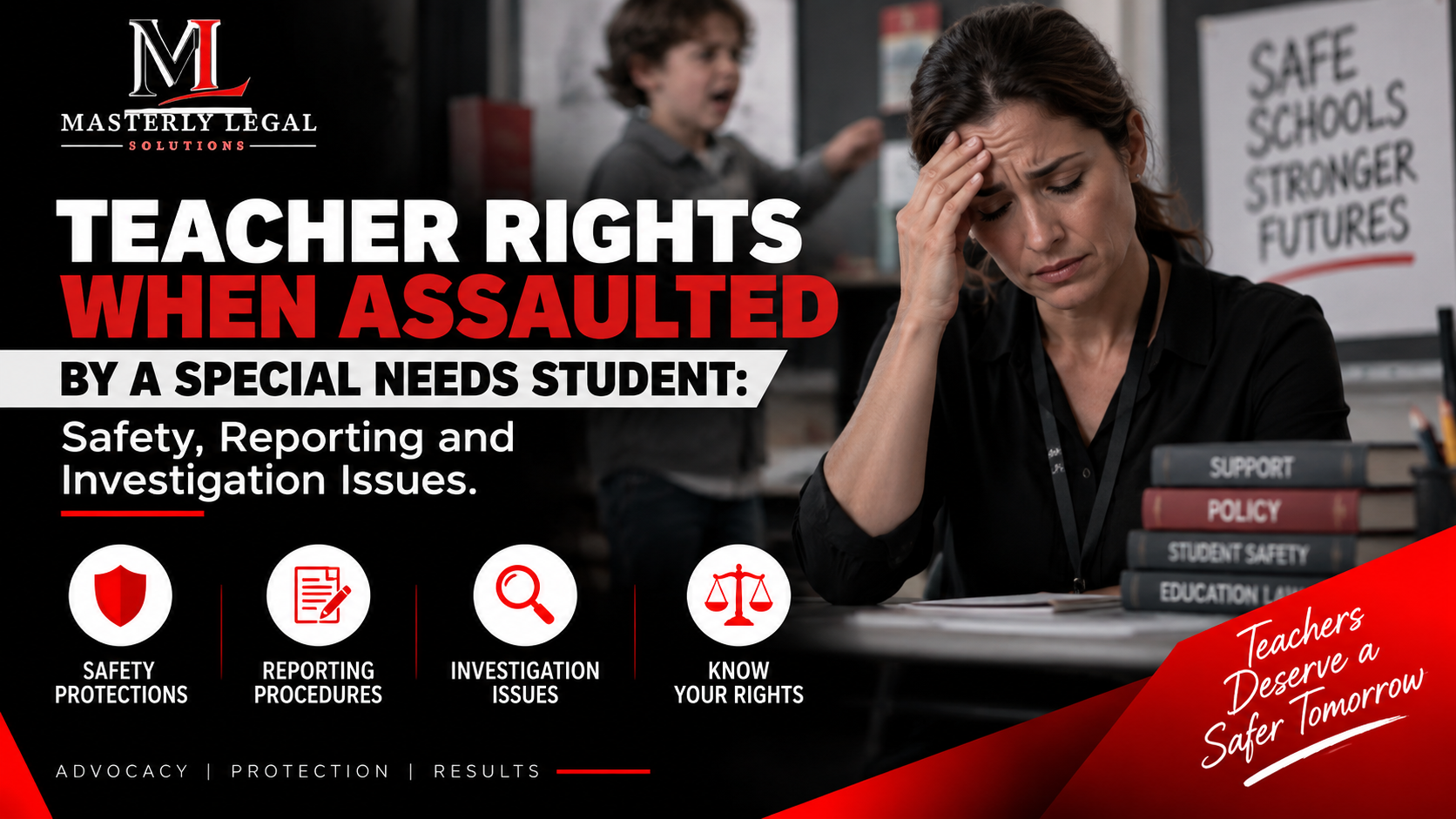
Teacher Rights When Assaulted by a Special Needs Student: Safety, Reporting and Investigation Issues



Looking for Legal & Business Solutions? Contact Us Now
Fill in the form or call us to set up a meeting





