
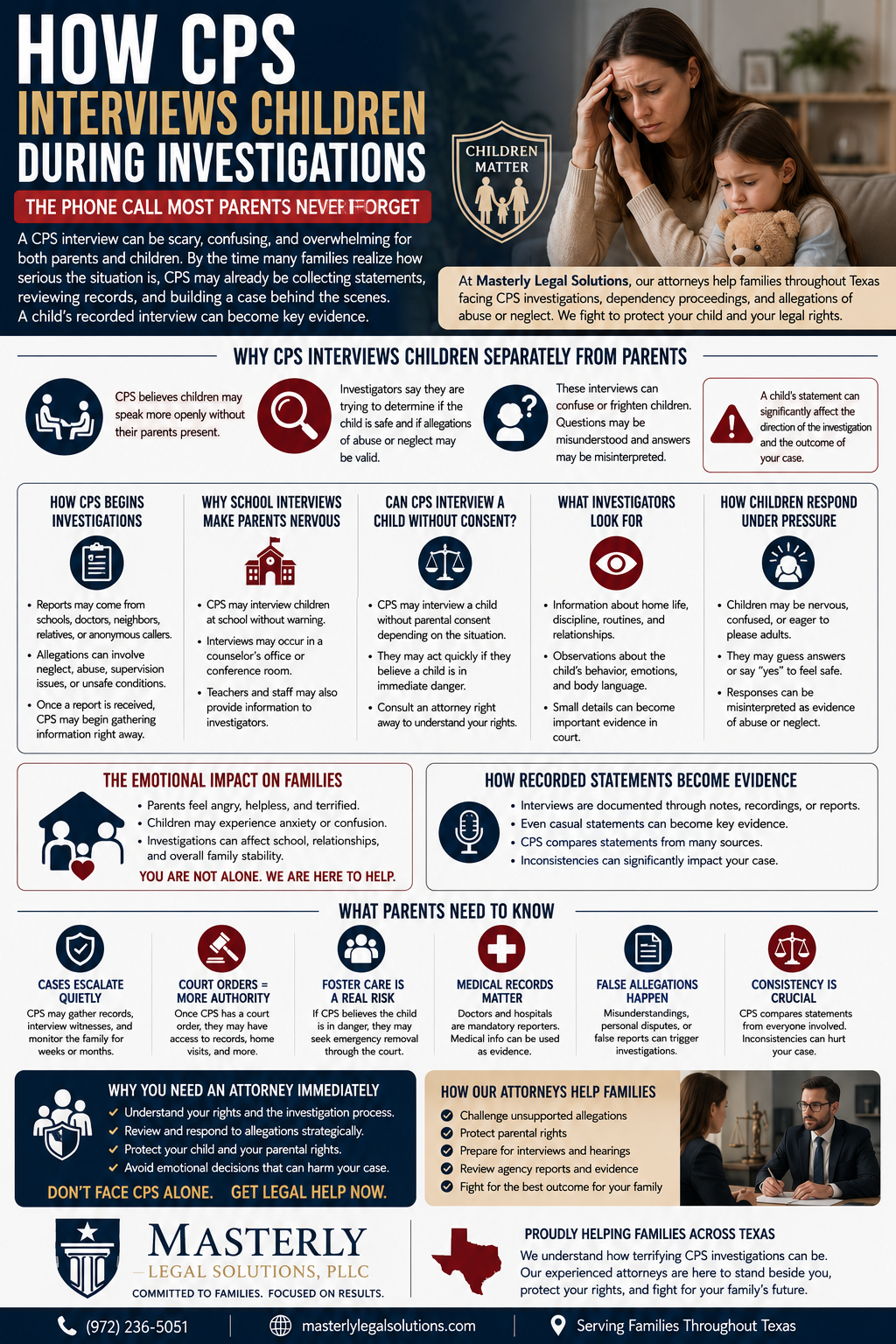
How CPS Interviews Children During Investigations
The Phone Call Most Parents Never Forget
For many parents, the moment they learn CPS wants to speak with their child feels like the ground suddenly disappears beneath them. One minute, life feels normal. The next, a school counselor, teacher, or investigator informs them that Child Protective Services has opened a case involving their family. Parents immediately begin asking themselves difficult questions. What did someone report? What will CPS ask my child? Can they interview my child without me there?
These situations become even more emotional when the interview happens at school. Many parents feel helpless knowing their child may be questioned while they are not present to provide comfort or guidance. Unfortunately, by the time many families realize how serious the situation is, the agency may already be collecting statements, reviewing records, and building a case behind the scenes. A child’s recorded interview can become one of the most important pieces of evidence during a CPS investigation.
At Masterly Legal Solutions, our attorneys understand how frightening these moments can become for families, and our Texas-based law firm offering a broad range of legal and business services is committed to helping clients navigate complex legal challenges with tailored strategies. Parents are often terrified they could risk losing custody of their child because of misunderstandings, exaggerated concerns, or false accusations. Our law firm works with families throughout texas facing CPS investigations, dependency proceedings, and allegations involving abuse or neglect. We know how important it is for parents to understand the process early so they can protect both their child and their legal rights.
Why CPS Interviews Children Separately From Parents
One of the first things many parents learn during a CPS investigation is that investigators often want to speak with the child separately from the family. This can feel shocking and invasive, especially for parents who believe they have done nothing wrong.
The reason CPS conducts separate interviews is because the agency believes children may speak more openly when their parents are not present. Investigators often claim they are trying to determine whether the child is safe and whether allegations of abuse or neglect may be valid.
Unfortunately, these interviews can create major concerns for families. Children may become confused, frightened, or overwhelmed during questioning. A young child may misunderstand questions, give inconsistent answers, or say things that are later interpreted incorrectly by investigators.
How Child Protective Services CPS Begins Investigations
Most investigations begin after a report is made to child protective services cps. These reports may come from schools, doctors, neighbors, relatives, or anonymous callers. In some situations, the allegations involve concerns about child neglect, physical abuse, supervision issues, or unsafe living conditions.
Once a report is received, the texas department connected to protective services evaluates whether the agency believes an investigation is necessary, and multidisciplinary firms with expertise in education law and related legal services often assist families and professionals in understanding how those investigations unfold. If the report meets the agency’s criteria, CPS workers may begin gathering information almost immediately.
Many parents mistakenly assume the situation is minor at first. However, investigators often begin collecting records, interviewing witnesses, and documenting concerns long before parents understand how serious the case has become.
Why School Interviews Make Parents Nervous
School interviews are one of the most emotionally difficult parts of many CPS cases. Parents often feel powerless when they discover their child was questioned at school without warning.
In some situations, CPS workers arrive at the school and ask administrators to remove the child from class for questioning. The interview may occur in a counselor’s office, conference room, or another private setting. Teachers, counselors, or school administrators may also provide information to investigators during the process,
and educators themselves sometimes need legal support for educators facing school investigations when their actions or professional judgment come under scrutiny.
Parents often fear their child may feel scared, pressured, or confused during these interviews. They also worry about what was said, how the questions were asked, and whether the child fully understood the conversation.
Can CPS Interview a Child Without Consent?
Many parents are surprised to learn that CPS may sometimes interview children without obtaining parental consent first. Depending on the circumstances, the agency may claim it has legal authority to speak with the child during an active investigation.
In some situations, CPS workers coordinate with school officials or law enforcement to conduct interviews. If investigators believe the child may be in immediate danger, they may act quickly without notifying the parents in advance.
However, every situation is different. Parents should speak with an experienced cps attorney as soon as possible to understand what rights they may still have during the investigation.
What Investigators Look for During Interviews
When CPS interviews a child, investigators are usually looking for information that supports or disproves the allegations. The worker may ask questions about discipline, living conditions, family routines, supervision, or interactions inside the home.
Investigators also pay close attention to the child’s behavior, emotional reactions, body language, and communication style. Small details may later appear in official reports and become part of the evidence used during court proceedings.
A child’s statement can significantly affect the direction of the investigation. That is why parents should never assume these interviews are informal conversations without legal consequences.
How Children Respond Under Pressure
Children do not always respond to stressful situations the way adults expect. A young child may become nervous, confused, emotional, or eager to please authority figures during questioning.
Some children try to guess what adults want to hear. Others may say “yes” to questions simply because they feel intimidated or uncomfortable. Younger children especially may struggle to understand complicated or emotionally charged questions.
Unfortunately, CPS workers may later interpret these responses as evidence supporting allegations of abuse or neglect. This is one reason experienced legal representation becomes so important in CPS cases.
The Emotional Impact on Families
When a child is interviewed by CPS, the emotional effects often spread throughout the entire family. Parents may feel angry, helpless, embarrassed, or terrified about what could happen next.
Children may also experience anxiety after being questioned by strangers about their home life. Some children become withdrawn or confused afterward, especially if they do not fully understand why the interview occurred.
These investigations can affect school performance, emotional health, relationships, and overall family stability. At Masterly Legal Solutions, we understand that these cases impact real people and real families, not just legal paperwork.
How Recorded Statements Become Evidence
In many CPS cases, interviews are documented through written notes, recordings, or official reports. A child’s statements may later be presented during hearings, dependency proceedings, or other court matters.
Parents are often shocked by how heavily CPS relies on recorded interviews. Even statements made casually by a child may later appear in agency documents or testimony.
Investigators may compare the child’s interview with statements from parents, teachers, doctors, or other individuals involved in the case. Inconsistencies can quickly become major issues during the investigation process.
Child Protective Services Often Builds Cases Quietly
One of the biggest mistakes parents make is believing the case will disappear after the first interview. In reality, child protective services often continues gathering information quietly behind the scenes for weeks or months.
The agency may collect school records, medical information, witness statements, criminal histories, and prior reports while continuing to monitor the family. By the time parents realize how serious the case has become, CPS may already believe intervention is necessary.
This is why early legal guidance is so important. Parents should never assume silence from the agency means the investigation is over.
Why Parents Should Contact an Attorney Immediately
Families facing CPS investigations should contact an attorney immediately after learning the agency wants to interview their child. Waiting too long can create serious risks for both the parents and the child.
An experienced cps attorney can help families understand the investigation process, prepare for interviews, review agency concerns, and protect parental rights. Legal counsel may also help prevent parents from making emotional decisions that unintentionally harm the case.
At Masterly Legal Solutions, our attorneys help clients respond strategically during CPS investigations while protecting the long-term interests of the family.
Child Abuse and Neglect Allegations Can Escalate Quickly
Even allegations that initially seem minor may quickly become much more serious. Claims involving child abuse, supervision concerns, or neglect often trigger extensive investigations by the agency.
A report involving unexplained injuries, school concerns, or family disputes may lead to interviews with multiple people connected to the child. CPS workers may continue investigating until they believe they can determine whether the child is safe.
Parents should understand that even weak allegations can grow into major legal battles if they are not handled carefully from the beginning.
Why Social Workers Focus on Consistency
During interviews, social workers often compare statements from the child, parents, teachers, doctors, and other witnesses. They look closely for inconsistencies or differences in the stories being told.
For example, if a parent describes discipline one way and the child describes it differently, investigators may view that as evidence supporting the allegations. Even small contradictions can significantly affect how CPS views the family.
This does not mean the family is guilty of wrongdoing. It simply shows how carefully investigators evaluate statements during the process.
Dependency Proceedings Often Begin Quietly
Some investigations eventually become formal dependency cases involving court supervision. Parents may not realize how close they are to court involvement until they suddenly receive notice regarding hearings or emergency proceedings.
Dependency cases focus on whether the child can safely remain in the home and whether state intervention is necessary. These proceedings often involve multiple hearings, court orders, and ongoing monitoring by CPS workers.
An experienced lawyer can help parents understand how quickly dependency proceedings may escalate and what legal options may exist.
Court Orders Give CPS Greater Authority
Once CPS obtains a court order, the agency often gains additional authority regarding the child and the investigation. This may include access to records, interviews, home visits, or temporary custody arrangements.
Parents sometimes believe they can simply refuse requests after court involvement begins. However, violating a valid court order can create additional legal problems and negatively affect the outcome of the case.
This is why legal representation becomes critical once the court becomes involved.
Why Parents Fear Foster Care Placement
One of the greatest fears parents face during CPS investigations is the possibility of their child entering foster care. Even temporary removal can feel devastating for families.
If the agency believes the child faces ongoing danger, CPS may seek emergency removal through the court system. In these situations, parents often feel overwhelmed and unprepared for how quickly events unfold.
A strong legal response early in the process may help families challenge unnecessary removal efforts and protect parental rights.
The Role of Medical Records in CPS Cases
Medical information often plays a major role in CPS investigations. Doctors, hospitals, and medical providers may provide records or statements that become part of the agency’s evidence.
In some situations, investigators focus heavily on injuries, missed appointments, medications, or concerns raised during examinations. Medical professionals are often mandatory reporters under child abuse reporting laws.
Parents should understand that CPS workers may use medical information to support allegations of neglect or abuse even before formal hearings begin.
How False Allegations Affect Families
Not every CPS report is accurate. Some investigations begin because of misunderstandings, personal disputes, custody battles, or completely false allegations.
Unfortunately, even false accusations can place enormous stress on families. Parents may suddenly find themselves dealing with interviews, school involvement, court hearings, and threats of removal despite believing they did nothing wrong.
This is one reason experienced cps lawyers are so important during investigations. Families need someone who understands how to challenge weak allegations and protect their rights.
Child Protective Services CPS and School Cooperation
Schools often cooperate closely with child protective services cps during investigations. Counselors, teachers, administrators, and school nurses may all provide information to the agency.
In some situations, school officials may allow CPS workers to interview children during school hours without notifying parents first. The agency may also request attendance records, behavioral reports, or academic information.
Parents are frequently surprised by how much information schools may share with investigators during the process.
Defending Families During CPS Investigations
At Masterly Legal Solutions, our attorneys focus on defending families facing difficult CPS investigations throughout Texas. We understand how quickly these cases can escalate and how emotionally damaging they become for parents and children alike.
Our firm works hard to help families challenge unsupported allegations, protect parental rights, and prepare for hearings or court proceedings, drawing on legal services for individuals, nonprofits, and organizations that prioritize personalized attention and effective risk management. Every family deserves careful legal guidance and strong advocacy during these stressful moments.
We know that no parent wants to feel powerless while strangers question their child and evaluate their home life, and some families also explore powers of attorney to protect children’s medical and financial decisions as part of broader planning for their child’s safety and stability.
Why Parents Should Never Face CPS Alone
Many parents try to handle investigations alone because they believe cooperating fully will make the case disappear faster. Unfortunately, that approach often creates additional risks.
Without experienced legal guidance, parents may unintentionally provide harmful statements, misunderstand their rights, or fail to challenge inaccurate information. By the time they realize the seriousness of the situation, the agency may already be preparing for court involvement.
Working with an experienced cps attorney early may help families avoid mistakes that damage their case later.
Child Interviews Can Affect Custody Cases
Statements made during CPS interviews may later influence custody disputes or family court proceedings. Parents involved in divorce or custody disagreements often discover that CPS records become important evidence later.
Even if the CPS case eventually closes, the allegations and reports may continue affecting the family for years. That is why every interview and every statement matters during the investigation.
Parents should never assume the impact of these interviews ends when CPS closes the file.
Court Hearings Often Depend on Agency Reports
During court hearings, judges often rely heavily on reports prepared by CPS workers. These reports summarize interviews, observations, medical concerns, and recommendations regarding the child.
Parents are frequently shocked by how influential these documents become during dependency proceedings. A worker’s interpretation of a child’s statement may shape how the court views the entire family.
Experienced attorneys help families review these reports carefully and challenge inaccurate or misleading conclusions whenever possible.
Why CPS Cases Feel So Overwhelming
The CPS system can feel intimidating and confusing for families who have never dealt with government investigations before. Parents often struggle to understand the rules, procedures, and legal terminology involved.
The emotional pressure becomes even greater when children are interviewed separately or the agency begins discussing possible removal. Many parents feel terrified they could lose their child because of misunderstandings or weak allegations.
At Masterly Legal Solutions, we understand how emotionally exhausting these situations become for families.
How Lawyers Help Protect Parental Rights
An experienced lawyer can help parents understand their legal options, prepare for hearings, and respond strategically during investigations. Attorneys also help families challenge unsupported allegations and protect their relationship with their child.
Strong legal representation may help prevent procedural mistakes, clarify misunderstandings, and ensure the family’s side of the story is properly presented. Early involvement often improves the family’s ability to respond effectively during the investigation process.
Parents should not wait until court proceedings begin before seeking legal guidance.
The Importance of Evidence and Documentation
CPS investigations often rely heavily on documentation, recorded statements, school records, and written reports. A single statement made during a child interview may later become a major issue in court.
Parents should preserve important communications, school records, medical information, and any evidence that may support their position, just as families benefit from essential legal documents such as wills, trusts, and directives when planning ahead to protect their future interests. Waiting too long to organize information can create serious problems later.
Strong documentation may help families challenge inaccurate allegations or agency conclusions.
Why the Agency Focuses on the Child’s Best Interests
CPS workers often explain that their decisions are based on what they believe serves the best interests of the child. However, parents and investigators may disagree about what that actually means.
In some situations, the agency may believe removal or ongoing supervision is necessary even when the parents strongly disagree. These disagreements frequently become central issues during dependency hearings and court proceedings.
Parents deserve experienced legal counsel when these life-changing decisions are being made.
CPS Hearings Can Change a Family’s Future
Once the case reaches formal hearings, the stakes become extremely high for the family. Judges may decide whether the child remains at home, enters foster care, or remains under agency supervision.
These hearings often involve testimony from investigators, medical providers, school personnel, and family members. Parents need experienced attorneys who understand how to challenge weak evidence and present strong arguments on behalf of the family.
The outcome of these proceedings can affect the family’s future for years to come.
Why Extensive Experience Matters in CPS Cases
CPS litigation is emotionally difficult and legally complex. Families need attorneys with extensive experience handling dependency matters, emergency hearings, and investigations involving allegations of abuse or neglect.
At Masterly Legal Solutions, our attorneys understand how the CPS system works and how cases quietly develop over time. We know how to analyze reports, challenge unsupported allegations, and prepare strong legal strategies designed to protect families.
Experience matters when parental rights and the future of a child are on the line.
Representing Parents During CPS Litigation
Our firm is committed to representing parents during some of the most stressful moments of their lives. We understand that families often feel frightened, judged, and uncertain about what will happen next.
We work hard to defend parents against unfair allegations while helping them understand the investigation process and their legal options. Every case deserves careful preparation, strong advocacy, and personalized attention.
Families should never feel alone while facing CPS investigations and dependency proceedings.
Defend Parents Before the Situation Escalates
Many parents wait too long before seeking help because they believe the investigation is temporary or minor. Unfortunately, CPS cases often become more serious quietly behind the scenes.
The agency may continue collecting statements, interviewing witnesses, and reviewing records long before the family realizes how much information has already been gathered. Early legal guidance may help families respond more effectively before the situation escalates further.
Parents should take every CPS contact seriously from the beginning.
Child Protective Services CPS and the Court System
Once CPS cases enter the court system, families often feel overwhelmed by the legal procedures and deadlines involved. Judges, attorneys, social workers, and agency representatives may all become involved in the process.
The court may issue temporary orders regarding custody, visitation, or required services while the investigation continues. Parents who fail to comply with court directives may face additional legal complications.
Experienced attorneys help families navigate this system while protecting their rights whenever possible.
Standing Beside Families During Difficult Moments
At Masterly Legal Solutions, we know these cases affect far more than legal paperwork. They affect children, parents, relationships, and the emotional stability of the entire family.
Our attorneys proudly stand beside families facing CPS investigations, school interviews, and allegations involving child safety. We work to protect parental rights, challenge unsupported claims, and help families understand what options may exist moving forward.
Every child deserves protection, and every family deserves fair treatment under the law.
Why Experienced CPS Representation Matters for Families
Families facing CPS investigations often feel overwhelmed, confused, and emotionally exhausted after learning the agency has opened a case involving their child. Many parents spend hours searching online for answers, reading every available page, and trying to understand whether the allegations could place their family at risk. Unfortunately, by the time many parents realize how serious the situation has become, CPS may already be gathering evidence, interviewing witnesses, and working closely with social services professionals behind the scenes. Parents who wait too long to seek legal guidance may unknowingly place themselves in even greater legal trouble during the investigation process.
Working with an experienced cps lawyer san antonio families can trust may help parents better understand what steps to take early in the case. Strong legal representation often becomes critical when CPS begins discussing child removal, dependency proceedings, or possible court involvement. Experienced attorneys use their legal expertise and case research to challenge weak allegations, review agency reports, and protect parental rights throughout the investigation. Families should remember that CPS workers are not the only people gathering information, and parents deserve someone who will stand beside them and aggressively advocate for their interests.
At Masterly Legal Solutions, we understand how stressful these cases become for families trying to protect their children and their future. Our attorneys work closely with parents throughout Texas, including individuals searching for guidance similar to what many families seek from san antonio cps lawyers handling difficult dependency and abuse cases. We believe every parent deserves fair treatment under the law, especially when facing allegations that could affect custody, family relationships, and long-term stability. During every stage of the process, we work hard to help parents remain informed, prepared, and responsible while building strong legal strategies designed to protect the family before the matter escalates into a courtroom trial, leveraging our broader education law and related legal services for teachers and administrators when school issues intersect with CPS concerns.
Many CPS investigations involve coordination between schools, law enforcement, counselors, medical professionals, and outside social services agencies, which can raise complex issues similar to those seen in higher education law services addressing FERPA and student privacy when institutions share sensitive information. These situations can quickly become emotionally draining for parents who feel isolated and uncertain about what comes next. Our attorneys remain committed to helping families understand the process, protect their rights, and avoid mistakes that could permanently affect the future of their child and family, much like our work providing expert legal support for teachers and schools in education matters.
Speak With Masterly Legal Solutions About Your CPS Case
If CPS has contacted your child’s school, requested interviews, or opened an investigation involving your family, do not assume the situation is minor. Child Protective Services cases can quietly become much more serious over time, especially when recorded interviews, reports, and court involvement begin shaping the direction of the case.
Masterly Legal Solutions helps parents understand their rights, protect their family, and respond strategically during CPS investigations and dependency proceedings. Whether you are facing allegations of abuse, neglect, or concerns involving your child’s safety, our attorneys are ready to help you understand the legal process and defend your future.
Our law firm proudly assists families throughout Texas facing difficult CPS cases and court proceedings, and our multiple office locations and contact options in Texas help make it easier for parents to reach us when urgent questions arise. If you need guidance from a CPS attorney or have concerns about child interviews, school investigations, or custody risks, contact Masterly Legal Solutions today at (972) 236-5051 for a free consultation. Let our team help protect your family, your rights, and your future.
Disclaimer: This article is for informational and educational purposes only and does not constitute legal advice. Reading this article does not create an attorney-client relationship with Masterly Legal Solutions. Every case is different, and individuals should consult qualified legal counsel regarding their specific circumstances.


Looking for Legal & Business Solutions? Contact Us Now
Fill in the form or call us to set up a meeting