
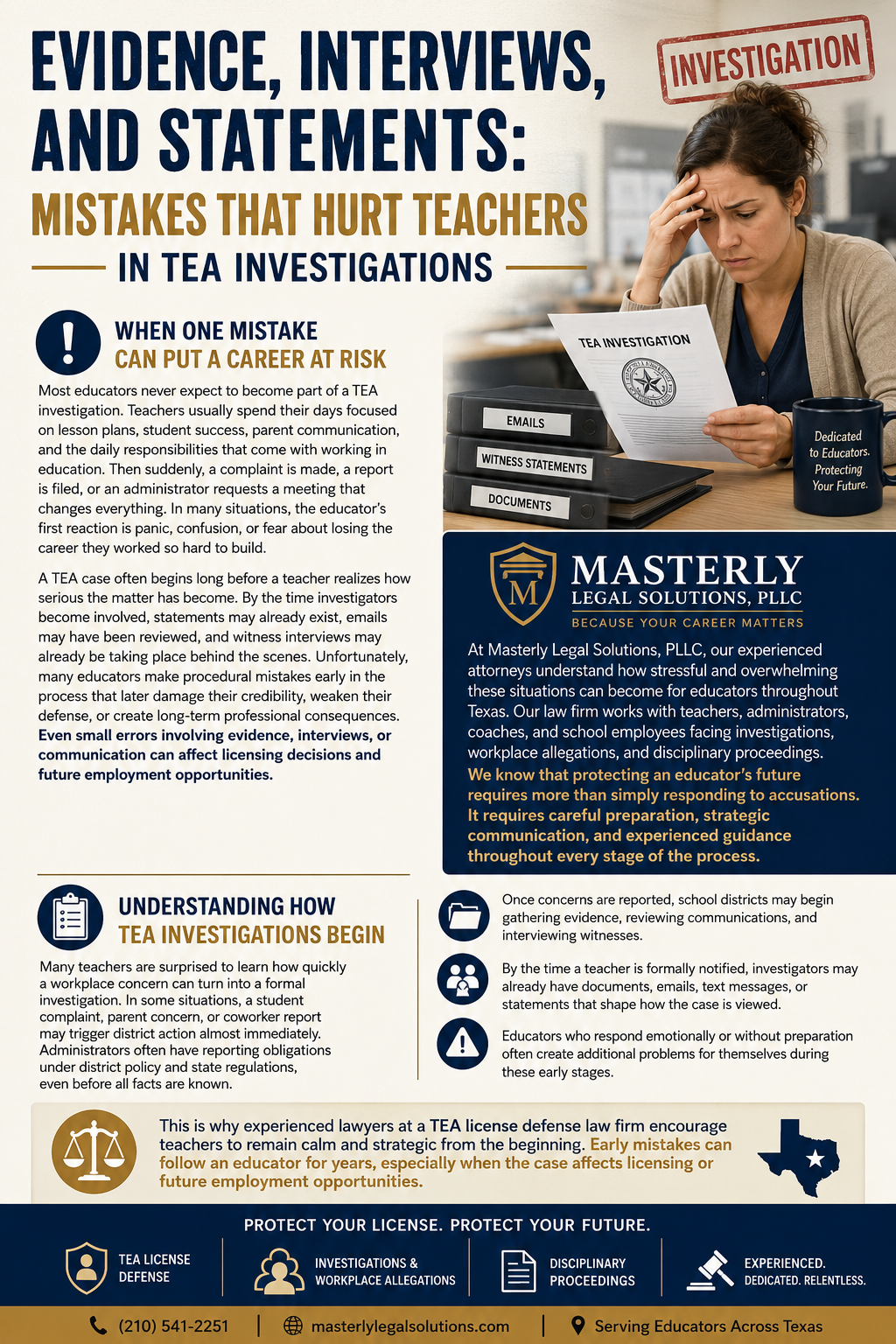
Evidence, Interviews, and Statements: Mistakes That Hurt Teachers in TEA Investigations
When One Mistake Can Put a Career at Risk
Most educators never expect to become part of a TEA investigation. Teachers usually spend their days focused on lesson plans, student success, parent communication, and the daily responsibilities that come with working in education. Then suddenly, a complaint is made, a report is filed, or an administrator requests a meeting that changes everything. In many situations, the educator’s first reaction is panic, confusion, or fear about losing the career they worked so hard to build.
A TEA case often begins long before a teacher realizes how serious the matter has become. By the time investigators become involved, statements may already exist, emails may have been reviewed, and witness interviews may already be taking place behind the scenes. Unfortunately, many educators make procedural mistakes early in the process that later damage their credibility, weaken their defense, or create long-term professional consequences. Even small errors involving evidence, interviews, or communication can affect licensing decisions and future employment opportunities.
At Masterly Legal Solutions, PLLC, our experienced attorneys understand how stressful and overwhelming these situations can become for educators throughout texas. Our law firm works with teachers, administrators, coaches, and school employees facing investigations, workplace allegations, and disciplinary proceedings. We know that protecting an educator’s future requires more than simply responding to accusations. It requires careful preparation, strategic communication, and experienced guidance throughout every stage of the process.
Understanding How TEA Investigations Begin
Many teachers are surprised to learn how quickly a workplace concern can turn into a formal investigation. In some situations, a student complaint, parent concern, or coworker report may trigger district action almost immediately. Administrators often have reporting obligations under district policy and state regulations, even before all facts are known.
Once concerns are reported, school districts may begin gathering evidence, reviewing communications, and interviewing witnesses. By the time a teacher is formally notified, investigators may already have documents, emails, text messages, or statements that shape how the case is viewed. Educators who respond emotionally or without preparation often create additional problems for themselves during these early stages.
This is why experienced lawyers at a TEA license defense law firm encourage teachers to remain calm and strategic from the beginning. Early mistakes can follow an educator for years, especially when the case affects licensing or future employment opportunities.
Why Procedural Errors Matter So Much
Teachers often assume the truth alone will protect them during an investigation. Unfortunately, the way an educator responds can become just as important as the allegations themselves. Procedural mistakes can damage credibility, create inconsistencies, or make investigators question whether the educator is being fully truthful.
An educator may unintentionally harm their own case by deleting communications, speaking impulsively, attending interviews unprepared, or discussing the matter publicly. These actions may seem harmless in the moment, but investigators often interpret them negatively.
At Masterly Legal Solutions, our attorneys focus on helping educators avoid these damaging mistakes while building strong strategies designed to protect their careers and professional standing through experienced education law representation.
The First Conversation Often Matters Most
One of the most dangerous moments in a TEA case often happens during the very first conversation with administrators or investigators. Teachers may feel pressured to immediately explain themselves without fully understanding the allegations or reviewing the evidence.
Many educators speak too quickly because they want to appear cooperative. Others assume they can “clear everything up” during a short meeting. Unfortunately, nervousness, stress, or incomplete memories can lead to inaccurate statements that later become part of the official record.
Our lawyers regularly help educators prepare for these conversations because early statements often influence the direction of the entire legal process.
Mistakes Teachers Make During Interviews
Interviews are one of the most critical parts of any TEA matter. Investigators pay close attention to tone, wording, consistency, and body language during questioning. Even truthful educators can unintentionally damage their case if they respond emotionally or without preparation.
Common interview mistakes include:
- Guessing instead of saying “I do not remember”
- Providing unnecessary information
- Becoming defensive or argumentative
- Contradicting prior statements
- Speculating about other people
- Attempting to fill uncomfortable silence
- Speaking without legal guidance
- Failing to review evidence beforehand
Educators should remember that interviews are not casual conversations. Statements made during these meetings may later affect licensing decisions, employment opportunities, or even future lawsuits.
Why Evidence Preservation Is Critical
Many teachers do not realize how important evidence preservation becomes once an allegation surfaces. Emails, text messages, classroom records, evaluations, lesson plans, and witness communications may all become important later.
One of the worst mistakes an educator can make is deleting information out of panic. Even if the deletion was not intended to hide wrongdoing, investigators may interpret missing evidence negatively. In some situations, deleting records may create allegations involving dishonesty or obstruction.
Our attorneys help clients identify what evidence should be preserved and how to organize important information in a professional and strategic way.
Social Media Can Create Serious Problems
Social media has become one of the biggest risks during school-related investigations. Teachers sometimes make the mistake of discussing allegations online, posting emotional comments, or responding publicly to criticism.
Even private messages or deleted posts can become evidence during an investigation. School districts may review online activity carefully when evaluating complaints or disciplinary concerns. Investigators may also examine photographs, comments, or interactions that appear unrelated at first glance.
Educators facing allegations should avoid discussing the case publicly and should review their online presence immediately. Experienced lawyers can help educators understand how digital evidence may affect the outcome of the case.
Workplace Retaliation and Investigations
Not every TEA case begins with actual misconduct. In many situations, educators face allegations shortly after reporting workplace concerns, safety issues, discrimination, or policy violations. Unfortunately, retaliation can occur in subtle ways inside educational environments.
An educator who speaks up may suddenly become the target of disciplinary scrutiny, negative evaluations, or formal complaints. Some teachers experience hostile treatment, exclusion from meetings, or pressure from supervisors after reporting concerns. These situations can become emotionally exhausting and professionally damaging.
Examples of possible retaliation include:
- Increased monitoring by supervisors
- Negative write-ups after reporting concerns
- Sudden investigations
- Removal from leadership opportunities
- Pressure to resign
- Threats involving employment status
- Isolation inside the workplace
Teachers who believe they are being unfairly targeted should seek experienced legal help, including legal protection for teachers facing discipline, as early as possible.
How Retaliation Affects Long-Term Careers
Many educators do not realize how much retaliation can affect future opportunities. Even if a teacher avoids formal discipline, rumors, complaints, or unresolved investigations may continue affecting their career for years.
School districts often communicate with one another regarding prior employment concerns. An educator who has been retaliated against may struggle to secure leadership positions, administrative roles, or coaching opportunities later.
Protecting professional standing requires more than simply surviving the immediate investigation. Teachers must also think about how today’s decisions may affect future employment and long-term career goals.
Employment Law Concerns in TEA Cases
Many investigations overlap with broader employment law issues involving discrimination, workplace treatment, contract disputes, or whistleblower protections that an education law attorney for teachers and administrators regularly handles. Teachers are often surprised to learn that multiple areas of law may apply to their case at the same time.
An employee who reports misconduct or policy violations may have legal protections under both state and federal law depending on the circumstances. Some cases involve allegations connected to discrimination, harassment, or unlawful retaliation that extend beyond school district procedures.
Understanding these overlapping legal concerns is essential for educators trying to protect both their license and their career, and many benefit from education law attorneys who protect teacher rights.
Why Teachers Should Never Alter Evidence
Teachers under pressure sometimes make the mistake of trying to “clean up” records before investigators review them. This can include deleting text messages, removing emails, editing documents, or discarding notes.
Even when the educator believes the material is harmless, altering evidence may create additional allegations involving dishonesty or possible fraud. Investigators often view missing information as suspicious, especially if they believe records were intentionally destroyed.
Our attorneys strongly encourage educators to preserve all potentially relevant information and seek legal guidance before making any decisions involving evidence.
The Risk of Talking Too Much
Many educators unintentionally hurt themselves by overexplaining during investigations. Nervous teachers sometimes continue speaking long after answering the original question because they fear silence or want to appear cooperative.
Unfortunately, excessive explanations often create inconsistencies or reveal information investigators had not previously considered. Statements made under stress can easily become misunderstood or taken out of context later.
Knowing when to stop talking is often just as important as knowing what to say. That is one reason experienced lawyers spend time helping educators prepare carefully before interviews occur.
Understanding the Importance of Documentation
Detailed documentation can make a significant difference during workplace disputes and TEA matters. Teachers should carefully preserve timelines, communications, witness information, evaluations, and any documents related to the allegations.
Strong documentation may help show inconsistencies, establish timelines, or demonstrate patterns involving unfair treatment or retaliation. Waiting too long to organize information can weaken an educator’s ability to defend themselves effectively.
Our firm works closely with clients to identify important records and build organized strategies designed to strengthen their overall defense.
How Emotional Reactions Can Hurt a Case
Investigations create enormous emotional pressure, especially when a teacher feels unfairly accused. However, emotional reactions often create additional risks during disciplinary proceedings.
Angry emails, heated confrontations, emotional social media posts, or arguments with supervisors may all become evidence later. Even understandable frustration can sometimes damage credibility or distract from the actual facts of the case.
Our attorneys help educators remain professional and strategic during difficult moments while protecting their long-term professional interests.
The Importance of Being Prepared Before Meetings
Many teachers enter meetings with administrators believing the discussion will be informal or routine. Unfortunately, school districts often begin gathering evidence long before a teacher fully understands the seriousness of the allegations.
An educator should never attend a significant meeting without being fully prepared. Reviewing timelines, documents, witness information, and communication history beforehand may help avoid inconsistencies or unnecessary mistakes.
At Masterly Legal Solutions, our lawyers spend significant time helping educators prepare for interviews, hearings, and administrative discussions.
Federal and State Issues That May Arise
Certain teacher investigations involve more than district policy concerns. Depending on the allegations, educators may encounter issues involving federal employment protections, discrimination claims, or whistleblower laws.
Disputes involving harassment, disability concerns, or unlawful retaliation may involve important protections under federal law as well as state regulations. Some cases may eventually proceed into state and federal courts if disputes remain unresolved.
Understanding these legal systems is important because statements made during investigations may later affect broader legal proceedings.
How Litigation Can Grow From Workplace Complaints
A school-related complaint sometimes expands far beyond the original allegation. Certain disputes may eventually involve administrative hearings, employment claims, or broader litigation involving school districts or administrators.
In some situations, allegations connected to discrimination, contract disputes, or professional misconduct may lead to formal lawsuits. Cases involving severe professional harm may also involve claims related to wrongful discipline or workplace retaliation.
Educators should understand that the actions they take during the earliest stages of the investigation may later affect future litigation outcomes.
Commercial Litigation Concepts in Education Disputes
Although schools operate differently than private corporations, certain professional disputes resemble matters commonly seen in commercial litigation. School districts often conduct formal investigations, review large amounts of documentation, and rely heavily on compliance procedures.
Some educational disputes may involve confidentiality concerns, contract obligations, or disputes over internal policies. In rare situations, allegations involving district information or confidential materials may even touch on concerns involving trade secrets.
Our practice includes education lawyer services for teachers and schools, helping educators navigate complicated workplace conflicts that involve multiple legal and professional concerns.
Why Filing Deadlines Matter
One procedural mistake that frequently harms educators is missing important filing deadlines. School districts, administrative agencies, and employment claims often involve strict timelines that must be followed carefully.
Missing deadlines for appeals, complaints, or required forms may limit an educator’s ability to challenge disciplinary actions later. Teachers should never assume they can “fix it later” if paperwork is incomplete or submitted late.
Experienced attorneys can help ensure all necessary filing requirements are handled properly and on time.
The Dangers of Workplace Rumors
Rumors spread quickly inside schools and educational communities. Once allegations surface, teachers may find themselves facing judgment from coworkers, parents, or administrators before the facts are fully reviewed.
Even educators who are ultimately cleared may continue dealing with damaged professional relationships or lost opportunities. A teacher’s reputation can suffer long before any final decision is made.
This is one reason strategic communication matters so much during investigations. Educators should avoid discussing ongoing matters publicly or casually with coworkers inside the workplace.
How False Allegations Affect Teachers
Unfortunately, some teachers become the victim of inaccurate accusations, misunderstandings, or personal conflicts. False allegations can arise from classroom disputes, parent complaints, student misunderstandings, or workplace politics.
Even when allegations lack evidence, teachers may still face interviews, disciplinary scrutiny, and emotional stress. These situations become even more difficult when an educator feels isolated or unsupported by supervisors.
Our lawyers understand how devastating false allegations can become. We work hard to help educators challenge inaccurate claims while protecting their professional future.
Why Retaliation Should Never Be Ignored
Teachers sometimes dismiss warning signs of retaliation because they fear making the situation worse. However, ignoring unfair treatment can allow problems to grow more serious over time.
An educator who reports concerns and then experiences sudden disciplinary action, hostile treatment, or unusual scrutiny should document events carefully. Patterns of retaliation may become important evidence later.
Our attorneys help educators evaluate whether adverse actions may involve unlawful retaliation connected to protected workplace activities.
Employment Law and Teacher Rights
Educators still maintain important rights during investigations and workplace disputes. However, many teachers do not fully understand those rights until serious disciplinary issues arise.
An employee facing allegations may have protections involving due process, workplace discrimination laws, whistleblower protections, or contractual rights. Some disputes may involve multiple layers of employment law at the same time.
Teachers should never assume school administrators are fully protecting their interests during investigations. Seeking experienced guidance early may help avoid serious procedural mistakes.
Why Experience Matters in Complex Cases
Some investigations become highly complex because multiple issues overlap simultaneously. A teacher may face workplace allegations, licensing concerns, employment disputes, and possible civil claims all at once.
Cases involving accusations of dishonesty, policy violations, or professional misconduct often require strategic planning and detailed preparation. Matters involving alleged fraud, retaliation, or discrimination may become even more complicated.
Our firm brings years of experience helping educators navigate difficult professional situations throughout texas as an education lawyer for teachers in Texas.
Understanding Court and Trial Risks
Most TEA investigations never reach a traditional courtroom, but some disputes eventually lead to formal legal proceedings. Administrative hearings, employment disputes, and professional claims may expand into broader court matters over time.
Certain employment disputes may involve hearings, depositions, or even a trial depending on the facts of the case. Matters involving discrimination or retaliation may also reach federal courts or other judicial proceedings.
Understanding these possibilities early helps educators make smarter decisions during the investigation process.
Civil Trial Law and Teacher Disputes
Some employment-related disputes involving teachers eventually move into areas involving civil trial law. Wrongful termination claims, retaliation allegations, or severe professional harm may create larger legal disputes requiring formal proceedings.
These cases can involve detailed evidence reviews, witness testimony, and extensive legal preparation. Teachers should understand that procedural mistakes made early may later affect the outcome if the matter reaches a trial setting.
Experienced lawyers help educators prepare strategically while protecting their long-term professional interests.
Business Disputes and School Employment Issues
Although educational settings differ from corporations, some school conflicts resemble broader business disputes involving compliance issues, contracts, and internal management concerns.
Disagreements regarding disciplinary procedures, employment contracts, or district policies sometimes create legal issues affecting both employees and administrators. In certain situations, schools may prioritize minimizing liability over fully protecting the educator’s interests.
Our attorneys understand how these workplace disputes can affect careers, financial stability, and future employment opportunities, and our education law attorneys provide expert legal guidance for teachers.
Why Retaliated Teachers Often Feel Isolated
Educators who believe they have been retaliated against often describe feeling unsupported and alone. Coworkers may become distant, supervisors may avoid communication, and professional relationships may quickly change.
This isolation can cause teachers to make emotional decisions that hurt their case later. Some educators resign too quickly, while others react publicly in frustration.
Our firm works closely with educators to provide guidance, support, and practical legal strategies during difficult workplace situations.
The Importance of Knowing District Procedures
Every school district follows different investigative procedures, timelines, and disciplinary policies. Teachers should take time to review district policies carefully when allegations arise.
Understanding district expectations may help educators avoid procedural mistakes involving interviews, communication, or evidence preservation. Teachers should also review employment contracts and policy manuals whenever possible.
Our attorneys assist educators throughout frisco and surrounding communities by helping them navigate district procedures effectively.
Helping Educators Protect Their Careers
At Masterly Legal Solutions, our focus is helping teachers protect their careers, licenses, and professional futures. We know how much educators sacrifice for their students and communities, and we believe they deserve strong advocacy when facing allegations or investigations.
Our offices proudly assist educators throughout frisco, dallas, and north texas who need strategic legal representation during workplace disputes and TEA matters. We understand how emotionally and financially damaging these situations can become.
Our team works hard to help clients avoid procedural mistakes while building strong strategies designed to protect their future opportunities.
Pursuing Justice While Protecting Your Future
Every educator deserves fairness, professionalism, and the opportunity to defend themselves properly during a TEA investigation. Teachers should not have to face complicated disciplinary proceedings alone while trying to continue performing their daily responsibilities at work.
Our attorneys believe experienced representation can make a major difference when careers and reputations are on the line. Whether the matter involves retaliation, employment disputes, or allegations connected to misconduct, we remain committed to helping educators pursue justice and protect their professional future.
We know that every case is different, and we take the time to evaluate each situation carefully so our clients can move forward with confidence.
Building the Best Possible Chance for a Positive Outcome
Teachers facing a TEA investigation often feel like their entire career is hanging in the balance. In many situations, one procedural mistake can place a professional license, future employment opportunities, and personal stability at risk. That is why educators should take every possible step to create the best possible chance of protecting their career and professional standing from the very beginning of the process. An experienced attorney can help an educator respond strategically instead of emotionally while preparing a strong response that is carefully based on evidence, timelines, and documentation.
Some teachers make the mistake of assuming their employer is automatically looking out for their personal interests during an investigation. Unfortunately, school districts often focus on reducing liability and protecting district operations first. An educator may suddenly feel isolated, uncertain about the future of their job, and overwhelmed by the pressure of disciplinary meetings or interviews. At a certain point, many teachers realize they need experienced guidance to help them avoid procedural mistakes that could permanently affect their career.
Certain disputes may eventually involve negotiations regarding a possible settlement, while other matters may move toward hearings, administrative proceedings, or even arbitration depending on the circumstances. Before an educator signs any agreement or accepts disciplinary terms, it is important to fully understand how the decision may affect future employment opportunities. Some agreements may contain language involving contract breach concerns, resignation terms, or licensing consequences that continue affecting a teacher for many decades after the case ends. Educators should never feel pressured to quickly agree to terms without first reviewing the situation carefully with experienced legal counsel.
At Masterly Legal Solutions, our attorneys proudly advocate on behalf of educators throughout Texas who are trying to protect their careers and professional reputation. We understand that teachers from every background and every age group may suddenly find themselves dealing with stressful allegations or disciplinary concerns. Our legal strategies are carefully based on the specific facts of each case because every educator’s situation is unique. We also recognize that a wide variety of workplace issues, retaliation concerns, and communication problems may contribute to TEA investigations. Additionally, our firm works closely with clients to help them achieve stronger outcomes by staying organized, remaining professional, and avoiding costly procedural mistakes throughout the process.
Many educators simply want the opportunity to continue doing the work they love without unfair accusations destroying their future. While no attorney can promise a guaranteed result, taking proactive steps early can improve the overall chance of protecting a teacher’s license, career opportunities, and professional reputation moving forward.
Building the Best Possible Chance for a Positive Outcome
Teachers facing a TEA investigation often feel like their entire career is hanging in the balance. In many situations, one procedural mistake can place a professional license, future employment opportunities, and personal stability at risk. That is why educators should take every possible step to create the best possible chance of protecting their career and professional standing from the very beginning of the process. An experienced attorney can help an educator respond strategically instead of emotionally while preparing a strong response that is carefully based on evidence, timelines, and documentation.
Some teachers make the mistake of assuming their employer is automatically looking out for their personal interests during an investigation. Unfortunately, school districts often focus on reducing liability and protecting district operations first. An educator may suddenly feel isolated, uncertain about the future of their job, and overwhelmed by the pressure of disciplinary meetings or interviews. At a certain point, many teachers realize they need experienced guidance to help them avoid procedural mistakes that could permanently affect their career.
Certain disputes may eventually involve negotiations regarding a possible settlement, while other matters may move toward hearings, administrative proceedings, or even arbitration depending on the circumstances. Before an educator signs any agreement or accepts disciplinary terms, it is important to fully understand how the decision may affect future employment opportunities. Some agreements may contain language involving contract breach concerns, resignation terms, or licensing consequences that continue affecting a teacher for many decades after the case ends. Educators should never feel pressured to quickly agree to terms without first reviewing the situation carefully with experienced legal counsel.
At Masterly Legal Solutions, our attorneys proudly advocate on behalf of educators throughout Texas who are trying to protect their careers and professional reputation. We understand that teachers from every background and every age group may suddenly find themselves dealing with stressful allegations or disciplinary concerns. Our legal strategies are carefully based on the specific facts of each case because every educator’s situation is unique. We also recognize that a wide variety of workplace issues, retaliation concerns, and communication problems may contribute to TEA investigations. Additionally, our firm works closely with clients to help them achieve stronger outcomes by staying organized, remaining professional, and avoiding costly procedural mistakes throughout the process.
Many educators simply want the opportunity to continue doing the work they love without unfair accusations destroying their future. While no attorney can promise a guaranteed result, taking proactive steps early can improve the overall chance of protecting a teacher’s license, career opportunities, and professional reputation moving forward.
Educators in the Frisco School District Should Seek Legal Help Early
Teachers and administrators working within the frisco school district often face enormous pressure to maintain professional standards while balancing classroom responsibilities, student needs, and district expectations, especially when Texas teachers are placed on administrative leave. When allegations, complaints, or disciplinary concerns suddenly arise, many educators feel overwhelmed and uncertain about what to do next. Unfortunately, waiting too long to seek legal help can create serious problems that affect both a teacher’s license and long-term career opportunities. Early guidance from experienced attorneys can help educators avoid procedural mistakes, protect important evidence, and respond strategically during every stage of the investigation process.
Speak With Masterly Legal Solutions About Your Situation
If you are facing a TEA investigation, disciplinary allegations, or concerns involving workplace retaliation, Masterly Legal Solutions is ready to help. Our experienced attorneys understand how stressful and confusing these situations can become, especially when your career and future employment opportunities are at risk.
We proudly serve educators throughout frisco, dallas, and communities across texas, including teachers working within the frisco school district. Whether you are dealing with interview concerns, evidence issues, workplace retaliation, or questions about your rights, our team is prepared to help you evaluate your legal options carefully.
At Masterly Legal Solutions, PLLC, we genuinely care about the educators we represent. Our offices work closely with teachers to help them avoid costly procedural mistakes while protecting their professional standing and future opportunities. Contact us today at (972) 236-5051 for a free consultation and take the next important step toward protecting your career.
Disclaimer: This article is for informational and educational purposes only and does not constitute legal advice. Reading this article does not create an attorney-client relationship with Masterly Legal Solutions, PLLC. Every case is different, and individuals should consult qualified attorneys regarding their specific circumstances.



Looking for Legal & Business Solutions? Contact Us Now
Fill in the form or call us to set up a meeting