

How Early Legal Representation Can Change the Outcome of a TEA Investigation
When a TEA Investigation Begins
For many educators, receiving notice of a TEA investigation can be one of the most stressful moments of their professional career. Teachers, administrators, and other school professionals dedicate years to building their reputation, so learning that allegations are being reviewed can create immediate uncertainty. The situation can become even more complicated when the investigation involves claims of alleged misconduct, retaliation, or workplace disputes.
A TEA investigation may begin after a complaint is filed by a student, parent, colleague, or supervisor. In some cases, the issue may involve allegations of harassment, policy violations, or concerns about professional conduct. Other investigations begin when school districts report incidents to the agency after conducting internal reviews. Regardless of how the process starts, educators often face significant professional risk while the investigation unfolds.
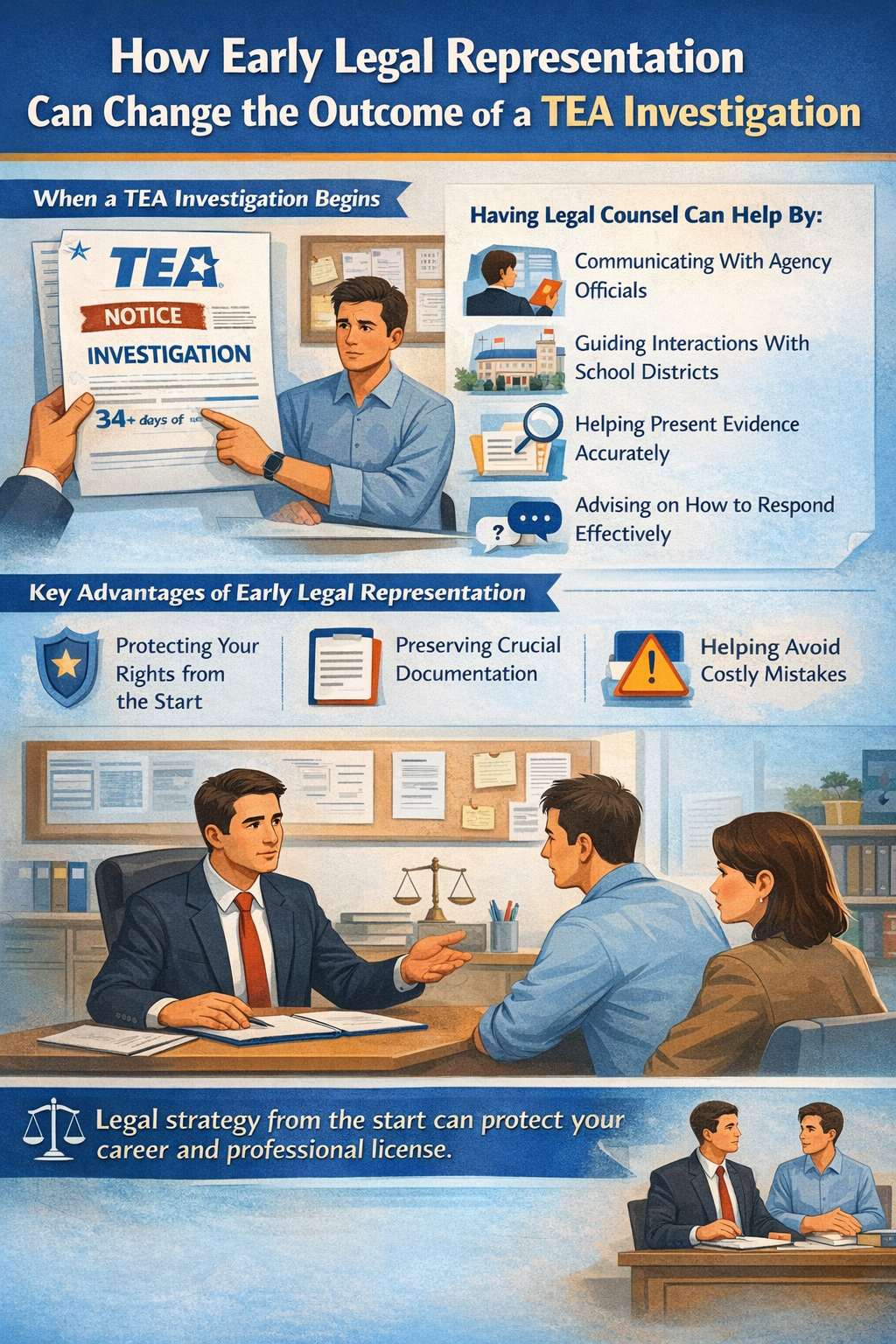
Early legal representation can play an important role in helping employees understand their rights, responsibilities, and options during these proceedings, especially in Texas TEA investigations and teacher certification matters. Having experienced counsel involved early can shape how information is presented, how evidence is preserved, and how communication with agency officials is handled.
Why Early Legal Guidance Matters in TEA Cases
Many educators wait until a case becomes serious before contacting legal counsel, even though there are critical immediate steps after receiving a TEA investigation notice that can protect their careers. However, early legal representation can influence the direction of the investigation from the beginning. Investigations often rely heavily on documentation, witness statements, and interpretations of agency policies.
A lawyer who understands education law can help ensure that a reasonable employee would respond appropriately during the process. They may also help protect the educator from making statements that could unintentionally harm their case. When attorneys become involved early, they can guide educators through interactions with human resources, school administrators, and agency officials.
Early involvement can also help protect an educator’s certification, employment status, and professional reputation while the investigation continues.
Understanding the Purpose of TEA Investigations
The Texas Education Agency investigates allegations that could affect an educator’s certification or professional standing, and educators often need focused legal defense during TEA investigations and disciplinary actions. The agency’s mission focuses on protecting students, maintaining professional standards, and ensuring schools follow state laws.
When an investigation begins, agency officials examine whether the allegations involve alleged misconduct that could justify disciplinary action. This may include reviewing reports, interviewing witnesses, and evaluating evidence gathered through internal reviews conducted by school districts.
In such cases, the agency determines whether the educator’s conduct violated professional standards or whether the allegations lack sufficient evidence. The outcome of these proceedings can influence an educator’s career and future employment opportunities.
How Administrative Leave Often Starts the Process
One of the first steps employers take during workplace investigations is placing the educator on administrative leave. Administrative leave allows employers to review allegations without disrupting the school environment or influencing witness statements.
Administrative leave may take several forms depending on district policies and the circumstances surrounding the investigation. These decisions are typically guided by human resources departments, supervisors, and agency policies designed to protect students and other employees.
Administrative leave can be confusing for educators because it may occur before any conclusions about alleged misconduct are reached. In many cases, administrative leave is simply used as a temporary measure while the investigation proceeds.
The Different Forms of Administrative Leave
During a TEA investigation, educators may encounter several types of administrative leave, and understanding steps to take when placed on administrative leave in Texas can be crucial. These categories help school districts manage investigations while balancing fairness to the educator involved.
Paid Administrative Leave
Paid administrative leave is commonly used when employers want to remove an employee from the workplace while maintaining compensation. Paid administrative leave allows educators to continue receiving pay and benefits while the investigation continues.
This type of administrative leave often lasts for brief periods or short periods while human resources gathers information. In many situations, employers grant administrative leave on a time limited basis to evaluate evidence and conduct interviews.
Paid administrative leave may also ensure that employees maintain access to health insurance and other benefits while the investigation continues.
Investigative Leave
Investigative leave is another form of administrative leave used when allegations require deeper review, often arising from common causes of TEA investigations and teacher protection issues. Investigative leave allows employers and agency officials to examine documentation, interview witnesses, and conduct internal reviews.
Investigative leave is often implemented when there is a possible violation of professional conduct standards. These investigations may involve multiple agency officials and sometimes other authorized agency officials who help gather evidence.
Investigative leave can extend for longer periods if the allegations are complex or if multiple individuals must be interviewed.
Safety Leave and Other Administrative Leave Categories
In some cases, districts may place educators on safety leave when administrators believe that remaining at the workplace could create concerns for students or staff. Safety leave is another form of administrative leave used when there is a risk of physical harm or workplace disruption.
Other forms of administrative leave include notice leave, excused absence, or administrative leave connected to job protected leave such as FMLA leave. Each category serves different purposes depending on the situation and the employer's decision.
The Impact of Administrative Leave on Educators
Although administrative leave is not a determination of guilt, it can have a negative impact on educators and their professional reputation. Being placed on administrative leave may create uncertainty about an employee's current position or future employment opportunities.
Administrative leave may also influence employee morale within the workplace. When other employees see a colleague placed on administrative leave, it can affect overall employee morale and create confusion about the situation.
Educators may also worry about how administrative leave affects their pay, overtime pay eligibility, and benefits such as health insurance.
Early Legal Representation During Administrative Leave
When administrative leave occurs, early legal guidance can help educators understand their rights and responsibilities. Attorneys can explain how administrative leave works and what steps should be taken during the investigation.
Legal representation can help employees avoid mistakes that might unintentionally harm their defense. For example, responding to investigators without preparation or providing incomplete information may create challenges later in the case.
Attorneys can also communicate with human resources, supervisors, and agency officials on behalf of the educator. This helps ensure that the educator’s rights remain protected while the investigation continues.
The Role of Protected Activity in Retaliation Claims
Some investigations involve claims that retaliation occurred after an educator engaged in protected activity, where Texas education lawyers providing expert legal help can evaluate whether employment protections were violated. Protected activity refers to actions that are legally protected under employment law.
Examples of protected activity may include reporting harassment, participating in workplace investigations, or assisting other employees who file complaints. Workers who report misconduct or safety concerns are often protected by whistleblower laws designed to protect employees from retaliation.
When retaliation occurs, it may involve adverse actions taken against the educator following the protected activity. These situations require careful evaluation to determine whether the employer’s actions were legitimate or retaliatory.
Examples of Protected Activity in Education
Protected activity can appear in many forms within school environments. For example, educators may report harassment involving colleagues or supervisors. They may also participate in internal reviews investigating misconduct.
Other examples of protected activity include reporting safety concerns or assisting coworkers who raise workplace complaints. Some employees may also report violations under Title VII or other workplace laws that protect workers from discrimination.
In such cases, retaliation may occur if the employer responds with adverse actions such as disciplinary action or reassignment to a less desirable position.
How Retaliation May Appear During Investigations
Retaliation may appear in subtle ways during an investigation. In some situations, retaliation involves direct disciplinary action or termination. In other cases, the employer treats an employee differently after the protected activity occurs.
For example, retaliation may involve:
- Reassignment to a less desirable position
- Reduction in pay or overtime pay opportunities
- Placement on extended administrative leave
- Negative evaluations or disciplinary action
- Transfer away from a desirable position
These adverse actions can create serious consequences for workers if not addressed properly.
The Legal Framework Protecting Educators
Several laws help protect workers who participate in protected activity, and working with an experienced education law attorney for teachers can help ensure these rights are fully understood and enforced. These protections come from federal statutes, state laws, and agency policies.
Title VII of the Civil Rights Act prohibits retaliation when employees report harassment or discrimination. The United States Code also contains provisions protecting whistleblowers and workers who report misconduct within government programs.
In addition, OPM regulations and OPM guidance help shape how federal employment protections are applied in certain contexts. Although TEA proceedings focus on state certification, these broader employment protections often influence how investigators interpret workplace conduct.
How Agency Officials Evaluate Evidence
During a TEA investigation, agency officials evaluate evidence collected through internal reviews and district reports. Investigators may review documentation such as personnel management records, employee handbook policies, and communications between administrators.
Agency officials may also interview supervisors, coworkers, and other employees who may have knowledge of the alleged misconduct. These interviews help investigators determine whether the allegations have merit.
The agency head ultimately reviews the findings and determines whether disciplinary action is warranted.
The Importance of Internal Reviews
Before TEA becomes involved, many school districts conduct internal reviews to evaluate workplace concerns. These internal reviews may involve human resources personnel and supervisors who gather preliminary information.
Internal reviews often determine whether the district should report the matter to TEA. These processes may also influence whether the district places the educator on administrative leave or implements other temporary measures.
Because internal reviews can shape the entire investigation, legal guidance during these early stages can be extremely valuable, particularly from counsel focused on helping Texas educators survive TEA investigations and protect their licenses.
The Role of Supervisors and Human Resources
Supervisors and human resources departments play an important role in workplace investigations. Supervisors often report concerns about alleged misconduct, while human resources manages documentation and communications.
Human resources professionals may recommend administrative leave while reviewing the situation. They may also review company policies, agency policies, and employee handbook provisions to determine appropriate next steps.
Their recommendations often influence the employer’s decision about whether disciplinary action is necessary.
Agency Judgments and Decision-Making
After reviewing evidence, the agency head and other agency officials make judgments about how the case should proceed. Agency judgments may involve determining whether a possible violation occurred or whether the evidence is insufficient.
The agency determines whether sanctions should be imposed on the educator’s certification. These decisions can affect future employment opportunities and professional licensing.
Because agency judgments carry significant consequences, educators benefit from having legal representation during the process.
The Role of Policy and Administrative Guidance
Government agencies often rely on policy guidance to interpret employment regulations. In some cases, a presidential directive or executive order may influence workplace policies within government institutions.
Similarly, a presidential memorandum may provide additional clarification regarding workplace protections and retaliation prevention. These directives may encourage agencies to issue internal policies consistent with federal employment standards.
OPM guidance may also shape how employers interpret workplace rules involving leave, workplace conduct, and employee protections.
Workplace Policies and Employee Rights
Employers often develop company policies and internal policies to ensure compliance with employment law. These policies may address issues such as workplace harassment, administrative leave, and employee benefits.
For example, employee handbook policies may describe when employers may grant administrative leave or paid leave. They may also outline rules governing excused absence, safety leave, and notice leave.
These policies help protect employees while ensuring employers maintain a safe and productive work environment.
When Adverse Actions Affect Employees
Adverse actions taken against employees can have serious professional consequences. For example, reassignment to a less desirable position may affect career advancement or professional reputation.
Adverse actions may also include pay reductions, loss of overtime pay opportunities, or extended administrative leave. In severe cases, adverse actions may lead to termination or disciplinary action.
When adverse actions occur following protected activity, investigators examine whether retaliation occurred.
The Importance of Fair Investigations
A fair investigation requires that both the employer and the educator have an opportunity to present evidence. Investigators must carefully evaluate documentation, witness testimony, and relevant policies.
The goal is to determine whether alleged misconduct occurred and whether the employer responded appropriately. These investigations are meant to protect both students and employees while maintaining fairness.
Legal representation can help ensure that educators are treated fairly throughout the process.
Early Legal Strategy Can Change the Outcome
Early legal representation allows attorneys to help shape how the case unfolds, especially in matters involving common causes of TEA investigations and teacher protections. Attorneys can advise educators about responding to investigators, preserving documentation, and communicating with agency officials.
Early strategy may also involve reviewing internal reviews conducted by the district and identifying potential weaknesses in the allegations. This preparation can help protect the educator’s certification and professional standing.
Having legal counsel involved early can significantly influence the direction of the investigation.
How Legal Support Helps Protect Educators
Attorneys who represent educators understand how investigations operate and what steps should be taken to protect clients. Legal professionals may communicate directly with agency officials, supervisors, and investigators while addressing potential TEA ethics violations that threaten a Texas teaching license.
They may also analyze agency policies, personnel management records, and evidence gathered during internal reviews. This analysis can reveal inconsistencies or errors that may influence the outcome.
By addressing issues early, legal counsel can help protect educators from unnecessary disciplinary action.
Protecting Your Professional Future
A TEA investigation can affect an educator’s entire career. Allegations of misconduct or retaliation may create uncertainty about future employment opportunities.
Educators facing these situations should understand that administrative leave and investigations do not automatically determine guilt. Many cases are resolved without severe consequences when evidence is properly evaluated.
Taking proactive steps early in the process can help protect both professional reputation and long-term career prospects.
Administrative Leave May Be Used for Brief or Short Periods
In many workplace investigations, administrative leave is implemented only for brief or short periods while employers review the situation. These temporary measures allow investigators to gather information, interview witnesses, and evaluate documentation without disrupting the workplace environment. Administrative leave during brief or short periods does not automatically indicate wrongdoing. Instead, it often reflects a precautionary step taken by employers while determining whether additional action is necessary.
Preventing Future Discrimination Through Strong Workplace Policies
A major goal of employment investigations is preventing future discrimination in the workplace. When employers identify weaknesses in policies or procedures during an investigation, they often update internal guidelines to prevent similar issues from occurring again. These changes may involve improved training programs, clearer reporting procedures, or updated company policies. By strengthening workplace systems, organizations can create safer environments for employees and reduce the risk of future disputes.
Understanding Who Qualifies as Eligible Employees
Certain workplace protections apply only to eligible employees depending on the type of leave or benefit involved. For example, eligibility requirements may determine whether workers qualify for job protected leave, paid time off, or other workplace benefits. Human resources departments typically evaluate employment records to determine which employees meet the eligibility criteria. Understanding who qualifies as eligible employees helps ensure fair and consistent application of workplace policies.
Workplace Actions Must Be Specifically Authorized
In many organizations, certain employment decisions must be specifically authorized by designated leadership before they are implemented. Actions such as extended administrative leave, disciplinary action, or reassignment may require approval from senior administrators or agency leadership. These authorization procedures help prevent arbitrary decision-making and ensure consistency in how policies are applied. When investigations occur, reviewing whether a decision was specifically authorized may become an important part of the process.
Community Participation Including Blood Donations
Some employers encourage employees to participate in community service opportunities such as blood donations. These initiatives may be organized through workplace wellness programs or community outreach efforts. Employees who participate in blood donations may sometimes receive brief periods of approved leave to contribute to these programs. These initiatives often reflect an organization’s commitment to supporting both employee health and community well-being.
Participation in Officially Sponsored Activities
Educational institutions and workplaces frequently organize community events that are officially sponsored by the organization. These events may include volunteer activities, professional development programs, or community outreach efforts. Participation in officially sponsored activities often strengthens teamwork and collaboration among employees. Clear policies help employees understand how these activities relate to their professional responsibilities and workplace expectations.
Ad Hoc Reviews During Workplace Investigations
During complex investigations, organizations may conduct ad hoc reviews to evaluate specific issues that arise during the process. These ad hoc reviews allow employers to address concerns quickly without waiting for lengthy formal procedures. For example, an ad hoc committee may review documentation or evaluate whether workplace policies were followed correctly. These targeted evaluations help ensure that investigations remain thorough and responsive to emerging concerns.
Additional Rights Under Other Provision of Workplace Policies
Workplace rules often include protections that appear under other provision sections of employment policies or regulatory guidelines. These provisions may address situations not covered in primary policy sections. For example, an employee handbook might include other provision language explaining how unusual workplace disputes should be handled. Reviewing these additional provisions can help ensure that employees understand their rights and responsibilities during investigations.
Compensation and Paid Time During Investigations
In certain circumstances, employees may receive paid time while workplace issues are being reviewed. Paid time ensures that employees continue receiving compensation even when they are temporarily removed from regular duties. For example, paid time may be provided during administrative leave or approved absences connected to investigations. Maintaining paid time during these periods can help reduce financial stress while the review process continues.
Workplace Leave When Caring for a Family Member
Some workplace policies allow employees to take time off to care for a family member experiencing medical or personal challenges. These policies may appear in leave programs connected to federal or state employment regulations. Allowing time off to care for a family member helps employees balance professional responsibilities with personal obligations. Clear communication between employees and employers helps ensure these leave policies are applied fairly.
Tracking Employment Benefits Over the Calendar Year
Many workplace benefits are measured across a calendar year, which helps employers track eligibility for leave and compensation programs. For example, certain types of leave or benefits may reset at the start of each calendar year. Tracking benefits over the calendar year allows organizations to maintain accurate records and ensure compliance with employment policies. Employees should review their workplace policies to understand how these timelines affect eligibility for benefits.
Recognizing Other Related Protected Activity
Employment laws often protect employees who participate in other related protected activity connected to workplace rights. These protections may apply when employees support coworkers who report misconduct or participate in investigations. Workers who assist in workplace reviews or provide testimony may also fall under other related protected activity protections. These safeguards help ensure employees can participate in workplace investigations without fear of retaliation.
Understanding Related Protected Activity in Employment Law
In addition to primary complaints, the law often protects workers involved in related protected activity connected to workplace investigations. Related protected activity may include participating in interviews, assisting investigators, or providing documentation during a complaint review. These protections ensure that employees who support fair workplace practices are not punished for their participation. Recognizing related protected activity helps maintain transparency and accountability during workplace investigations.
Speak With Masterly Legal Solutions About TEA Investigations
If you are facing a TEA investigation, administrative leave, or workplace retaliation concerns, it is important to understand your rights and options. Investigations involving alleged misconduct, protected activity, or adverse actions can be complicated and stressful for educators and other workers.
At Masterly Legal Solutions, we assist employees and workers navigating workplace investigations, retaliation issues, and disciplinary actions. Our team understands how agency officials evaluate evidence and how administrative leave can affect an educator’s career.
Early legal representation can help protect your professional license, employment status, and reputation. Whether the investigation involves harassment claims, retaliation concerns, or workplace disputes, understanding the process can make a meaningful difference in the outcome.
If you have questions about your situation, we encourage you to speak with experienced retaliation lawyers who understand employment law and educator investigations.
Contact Masterly Legal Solutions at (972) 236-5051 for a free consultation. We can review your situation, explain your options, and help you determine the best path forward for protecting your career.
Disclaimer: This article is for educational purposes only and does not constitute legal advice. Reading this content does not create an attorney-client relationship. Every case is different, and individuals should consult a qualified attorney regarding their specific circumstances.








Looking for Legal & Business Solutions? Contact Us Now
Fill in the form or call us to set up a meeting





