The Clock Is Already Ticking When a TEA Investigation Begins
The Moment Everything Changes
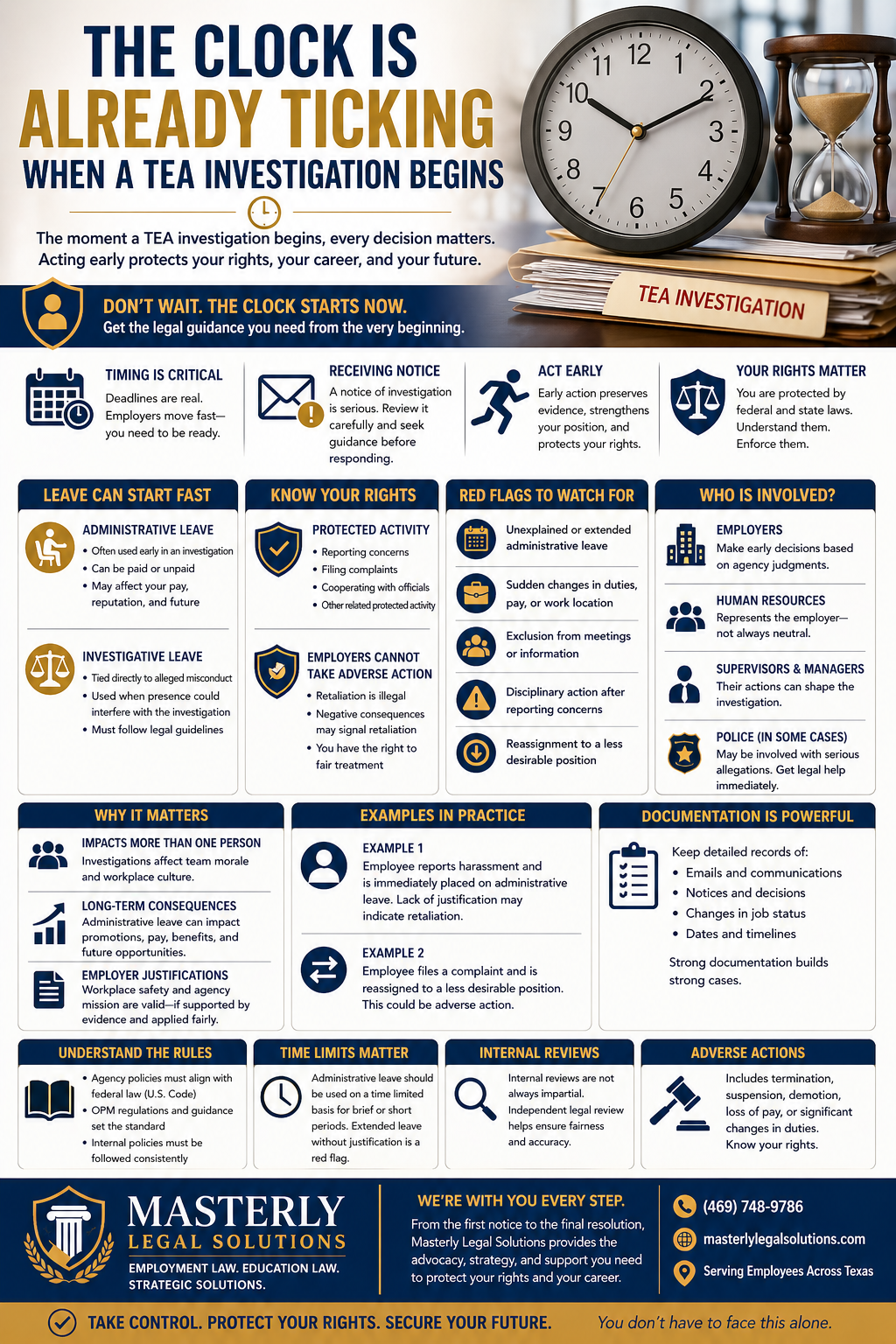
The moment a TEA investigation begins, everything shifts for employees. What felt like a normal day at work can suddenly turn into a situation filled with uncertainty, pressure, and serious consequences. Many workers are caught off guard, unsure of what steps to take or how quickly things can escalate. The reality is that the clock starts immediately, and every decision made early in the process matters. At Masterly Legal Solutions, we help employees respond strategically from the very beginning.
Why Timing Matters More Than You Think
Deadlines and timing play a critical role in any investigation. From the initial notice to follow-up requests for additional information, each step comes with expectations. Employers often move quickly, and employees must be prepared to respond just as fast. Missing deadlines or failing to act can create a negative impact on your case. Acting early helps protect your rights and strengthens your position.
The First Notice and What It Means
Receiving a notice of investigation is often the first formal step. This notice may outline alleged misconduct or describe a possible violation that needs review. While it may seem like a simple document, it carries serious implications. Employees should take the time to carefully review every detail and seek guidance before responding. A well-informed response can shape the direction of the entire process.
Administrative Leave Begins Quickly
In many cases, employers place employees on administrative leave shortly after an investigation begins. Administrative leave is often presented as a neutral step, but it can carry significant consequences, so understanding administrative leave and pay at work is critical. Whether it is paid administrative leave or unpaid leave, the decision can affect both pay and professional standing. Employees should understand why administrative leave was applied and how it aligns with agency policies. Early legal advice can help clarify whether the action is appropriate.
Paid Administrative Leave and Financial Stability
Being placed on paid administrative leave may seem like a relief at first. Employees continue to receive pay, which helps maintain financial stability during uncertain times. However, even paid administrative leave can affect an employee's current position and reputation. Employers may still be forming opinions about the situation. Understanding your rights during this period is essential.
When Administrative Leave Raises Questions
Administrative leave is not always applied fairly or consistently. Employers may claim it is necessary for brief or short periods, but in some cases, it extends much longer. When administrative leave continues without clear explanation, it may raise concerns. Employees should question whether the leave is justified under applicable regulations. Legal support can help evaluate these decisions.
Investigative Leave vs. Administrative Leave
Investigative leave is another form of removal from the workplace during an investigation. Unlike administrative leave, investigative leave is often tied directly to alleged misconduct. Employers may use it when they believe the employee’s presence could interfere with the investigation. While this may be valid in some circumstances, it must still follow legal guidelines. Employees should not assume these actions are always appropriate.
The Role of Employers in Early Decisions
Employers often rely on agency judgments when deciding how to proceed. These decisions can include placing employees on administrative leave, reassigning duties, or limiting access to the workplace. While employers may claim these actions support the agency’s mission, they must also protect employee rights. When decisions appear rushed or unsupported, it may signal deeper issues. Legal guidance helps employees challenge unfair actions.
Human Resources Is Not Always Neutral
Human resources departments are often involved in managing investigations. They may coordinate internal reviews, communicate with employees, and enforce internal policies. While they play an important role, their primary responsibility is to the employer. Employees should be cautious when relying solely on HR for guidance. Independent legal support ensures your interests remain the priority.
The Impact on Employee Morale
Administrative leave and investigations can affect more than just one employee. Other employees may feel uncertain or anxious about their own positions. This can lower overall employee morale and create tension in the workplace. Employers must consider how their actions affect the entire team. Fair and transparent processes help maintain trust.
Understanding Agency Policies and Procedures
Agency policies often dictate how investigations are handled, and well-drafted employee handbooks and workplace policies are central to how those investigations play out. These policies must align with federal law, including the United States Code and applicable regulations. Employers are expected to issue internal policies consistent with these requirements. When they fail to do so, it can create legal challenges. Employees should understand how these policies apply to their situation.
Federal Guidance and Regulatory Oversight
Federal regulations, including OPM regulations and OPM guidance, provide a framework for handling investigations, and effective HR consulting and compliance training can help employers follow that framework. These guidelines help ensure fairness and consistency across agencies. Employers must follow these rules when making decisions about administrative leave and disciplinary action. Employees should be aware of these protections. Legal professionals can help interpret how these rules apply.
When Retaliation Becomes a Concern
Retaliation occurs when employees face negative consequences for engaging in a protected activity, which is a serious concern for educators and Texas teachers placed on administrative leave. This could include reporting harassment, filing a complaint, or participating in an investigation. Retaliation can take many forms, including adverse action or reassignment to a less desirable position. Recognizing these signs is critical. Early intervention can help protect your career.
Protected Activity and Your Rights
Employees are protected when they engage in protected activity, such as reporting concerns or cooperating with agency officials. This protection extends to other related protected activity as well. Employers cannot take adverse action against employees for doing what the law allows. Understanding these rights is essential for building a strong defense. Legal support ensures these protections are enforced.
The Role of Supervisors and Managers
A supervisor or manager often plays a direct role in initiating or managing an investigation. Their actions can influence how the case unfolds. In some cases, a supervisor may also be involved in the underlying complaint. This can create potential conflicts of interest. Employees should carefully evaluate their supervisor’s role.
Workplace Safety and Employer Justifications
Employers often justify administrative leave by citing workplace safety concerns. While safety is important, it must not be used as an excuse for unfair treatment, and many employers rely on outside general counsel services to manage risk when making these decisions. Actions taken must be directly related to legitimate concerns. If the justification does not hold up, it may indicate retaliation. Legal professionals can help evaluate these claims.
The Risk of Adverse Action
Adverse action includes any negative change to an employee’s job status. This can involve reduced pay, reassignment, or termination. Employees must determine whether these actions are justified or retaliatory. Establishing a connection between the action and a protected activity is key. Legal guidance helps build this connection.
Examples of Administrative Leave in Practice
Consider an example where an employee reports harassment and is immediately placed on administrative leave. If the employer cannot justify the decision, it may indicate retaliation. Another example could involve an employee reassigned to a less desirable position after filing a complaint. These scenarios highlight the importance of early legal support. Each case requires careful evaluation.
Internal Reviews and Their Limitations
Internal reviews are often conducted to assess alleged misconduct, especially within colleges and universities that must navigate complex higher education compliance and investigations. While they can provide useful insights, they are not always impartial. Employees should not rely solely on internal findings. Independent legal review offers a more balanced perspective. This helps ensure fair outcomes.
Police Involvement and Serious Allegations
In some cases, police may become involved in an investigation. This is more likely when allegations involve serious misconduct or potential criminal activity. Police reports can influence the direction of the investigation. However, they must still be evaluated fairly. Employees should seek legal advice immediately in these situations.
Administrative Leave and Long-Term Impact
Administrative leave can have lasting effects on an employee’s career. Even after the investigation ends, the impact may remain. Employers may consider the leave when evaluating future opportunities. This can affect promotions, pay, and benefits. Addressing these issues early is critical.
Managing Pay, Benefits, and Job Security
Employees on administrative leave must understand how it affects their pay and benefits. Paid leave may continue for a period, but this is not guaranteed. Employers may adjust benefits based on the situation. Employees should carefully review all communications related to their status. Legal guidance helps clarify these issues.
Temporary Measures and Time Limits
Administrative leave is often intended to be used on a time limited basis. Employers may claim it is necessary for brief periods or short periods while gathering information. However, extended leave without justification can raise concerns. Employees should question prolonged absences. Accountability is essential.
The Importance of Documentation
Keeping detailed records is critical during an investigation. Employees should document communications, notices, and changes in job status. This information can provide valuable evidence. It helps establish timelines and identify patterns. Strong documentation strengthens your case.
How Employers Frame Their Decisions
Employers often present their decisions as necessary for business or organizational needs. They may reference the agency’s mission or internal policies. While these explanations can be valid, they must be supported by evidence. Employees should not accept these claims without question. Legal professionals can help evaluate their validity.
Recognizing Patterns of Retaliation
Retaliation may not always be obvious. It can develop over time through a series of actions. Employees should look for patterns, such as repeated negative treatment after reporting concerns. Recognizing these patterns is key to building a case. Legal support helps identify these issues.
Protecting Yourself From the Start
The best way to protect your rights is to act early. Employees should seek legal guidance as soon as an investigation begins. Early action helps preserve evidence and clarify options. It also ensures that deadlines are met. Being proactive can make a significant difference.
The Value of Experienced Legal Support
Navigating a TEA investigation alone can be overwhelming. Experienced legal professionals provide clarity and direction. They help employees understand their rights and build strong strategies. From reviewing evidence to challenging adverse action, their role is essential. Having support can improve outcomes.
How Masterly Legal Solutions Supports You
At Masterly Legal Solutions, we understand the urgency of these situations. Our team works closely with employees to protect their rights and careers as part of our broader legal and consulting services at Masterly Legal Solutions. We provide clear guidance, strong advocacy, and personalized strategies. From the first notice to the final resolution, we are here to help. Our goal is to ensure fair treatment at every step.
Taking Control of Your Situation
When the clock starts ticking, taking control becomes critical. Employees should not wait for the situation to escalate. Understanding your rights and options empowers you to act confidently. Legal guidance provides the tools needed to respond effectively. You do not have to face this alone.
How Authorized Agency Officials Influence Leave Decisions
During a TEA investigation, decisions are often guided by authorized agency officials and other authorized agency officials who review the facts and determine next steps. These individuals may grant administrative leave based on internal findings and the needs of the organization. The standard often considers what a reasonable employee would expect under similar circumstances. Their decisions are tied closely to personnel management practices and must follow established rules. When handled improperly, these decisions can raise concerns about fairness and transparency.
The Role of the Agency Head in Critical Determinations
The agency head plays a central role in shaping how investigations unfold. In many cases, the agency head is specifically authorized to approve key actions, including placing employees on leave or determining outcomes. When the agency determines how to proceed, it must balance the agency’s mission with the rights of the individual employee. These decisions can have long-lasting effects on an employee’s career. Legal review helps ensure accountability at this level.
Understanding Excused Absence and Notice Leave
In certain situations, employees may be placed on excused absence or given notice leave while an investigation continues. Notice leave may be issued more than once depending on how the situation develops. These actions are meant to provide time for review without immediately imposing discipline. However, they must be applied consistently and fairly. Employees should carefully review any notice they receive to understand their rights.
Federal Direction Through Policies and Orders
Federal guidance can shape how agencies handle investigations and employee leave. A presidential directive or presidential memorandum may outline expectations for handling workplace concerns. These directives can also introduce concepts like safety leave in specific situations. In some cases, an executive order or other provision may directly influence agency actions. Understanding these frameworks helps employees recognize whether procedures are being followed correctly.
Special Circumstances and Workplace Activities
Certain situations, such as participation in officially sponsored programs or blood donations, may qualify for approved time away from work. These activities should not negatively affect an employee’s standing. Employers must ensure that these absences are handled appropriately and not used against the employee. When these distinctions are ignored, it can create legal concerns. Employees should remain aware of how these situations are treated.
Temporary Decisions and Ad Hoc Actions
Some employer decisions during an investigation may be made on an ad hoc basis rather than through formal policy. While flexibility can be necessary, it can also lead to inconsistent outcomes. Employees should question decisions that appear unsupported or unclear. These actions must still align with broader legal standards. Legal guidance helps determine whether such decisions are justified.
Tracking Timeframes and Organizational Impact
Actions taken during an investigation can affect an employee over a calendar year or longer. This includes how leave, pay, and job status are handled. Employers must ensure that their decisions do not unfairly impact the employee over time. Tracking these changes is important for understanding the full effect on your career and when to seek help from a Texas-based full-service law firm. Proper documentation can make a significant difference.
The Role of the Office and Company in Compliance
Every office and company involved in an investigation must follow established laws and internal procedures, and many turn to a client-focused Texas law firm for ongoing guidance. This includes ensuring that decisions are fair, consistent, and properly documented. When organizations fail to meet these standards, it can create opportunities for legal challenges. Employees should not assume that every action taken is correct. Seeking guidance helps protect your rights throughout the process.
Speak With Our Team About Administrative Leave Today
If you have been placed on administrative leave or are facing a workplace investigation, now is the time to take action. Our team at Masterly Legal Solutions is ready to help you understand your rights, protect your career, and respond with confidence. Every situation is different, and we take the time to listen and provide guidance tailored to your needs.
Contact us today at (972) 236-5051 for a free consultation and let us help you navigate this challenging time.
This article is for educational purposes only and does not constitute legal advice.








Looking for Legal & Business Solutions? Contact Us Now
Fill in the form or call us to set up a meeting