

Can You Be Placed on Administrative Leave Without Evidence?
Understanding the Reality Behind Administrative Leave
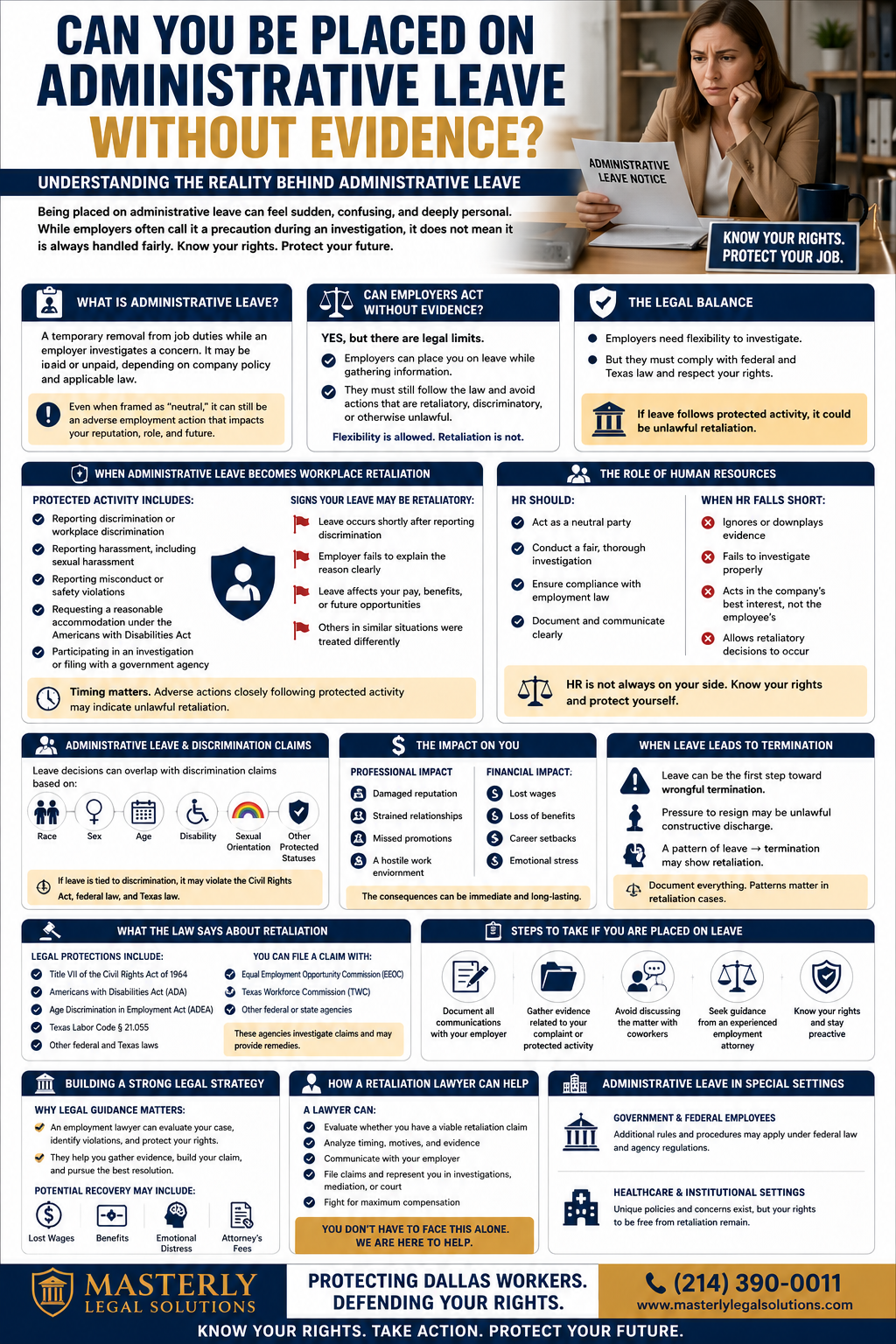
Being placed on administrative leave can feel sudden, confusing, and deeply personal. Many employees in Dallas, TX and across the country are left wondering whether their employer had the right to take such action—especially when no clear evidence has been presented. The truth is, administrative leave is often used as a precaution during an investigation, but that does not mean it is always handled fairly.
At Masterly Legal Solutions, we regularly speak with Dallas workers who feel blindsided by decisions that impact their livelihood. These situations can quickly evolve into concerns about workplace retaliation, particularly when the leave follows reporting discrimination or other protected activity. Understanding your rights is the first step in protecting yourself.
What Administrative Leave Really Means
Administrative leave is typically a temporary removal from job duties while an employer investigates a concern. It may be paid or unpaid, depending on company policy and applicable law, making it essential to understand how administrative leave and pay work at your job. While some employers claim it is a neutral action, the reality is that it can carry serious consequences.
Even when framed as a routine step, administrative leave can feel like an adverse employment action. It can affect your reputation, your role within the organization, and even future career opportunities. That is why it is important to examine whether the decision was truly justified or influenced by unlawful retaliation.
Can Employers Act Without Evidence?
The Short Answer
Yes, an employer can place an employee on administrative leave without having complete evidence at the start. However, that does not mean they are free from legal boundaries. Federal law and federal and Texas law require employers to act in a way that does not violate employee rights or create unlawful retaliation.
The Legal Balance
Employers often argue they need flexibility to investigate concerns. While that may be true, they must still avoid actions that appear retaliatory or discriminatory. If the timing of the leave follows protected activity—such as reporting harassment or requesting a reasonable accommodation—it raises serious legal concerns that may require guidance from an experienced workplace retaliation lawyer and employment law attorney.
When Administrative Leave Becomes Workplace Retaliation
Understanding Protected Activity
Employees are protected when they engage in protected activity, including reporting misconduct or discrimination in schools, where retaliation and workplace law attorney help can be especially critical:
- Reporting discrimination or workplace discrimination
- Reporting harassment, including sexual harassment
- Reporting misconduct or safety violations
- Requesting a reasonable accommodation under the disabilities act
- Participating in an investigation or filing with a government agency
When an employer retaliated after such actions, it may form the basis of a retaliation claim, and some workers may also need help with retaliation and labor complaints filed with the Department of Labor.
The Link Between Leave and Retaliation
Administrative leave can be considered workplace retaliation if it is used as punishment rather than a neutral step. If the employer retaliated after an employee acted in good faith belief that wrongdoing occurred, the situation may involve unlawful retaliation.
Signs Your Leave May Be Retaliatory
Red Flags to Watch For
Not every leave is improper, but certain patterns may indicate workplace retaliation:
- The leave occurs shortly after reporting discrimination
- The employer fails to explain the reason clearly
- The leave affects your pay, benefits, or future opportunities
- Other employees in similar situations were treated differently
These factors can help determine whether a viable retaliation claim exists.
The Impact of Timing
Timing is often one of the strongest indicators. If adverse actions follow closely after protected activity, it raises questions about the employer’s intent. Courts and federal agencies like the equal employment opportunity commission often look closely at this connection.
The Role of Human Resources in These Decisions
Human Resources Responsibilities
The human resources department is supposed to act as a neutral party that ensures compliance with employment law. However, in many cases, HR decisions may still favor the employer’s interests, which is why some organizations seek outside HR consulting services and investigation support.
When human resources fails to conduct a fair process, it can contribute to workplace retaliation cases. Employees should be aware that HR’s role is not always to advocate for them, but to protect the company.
When HR Falls Short
If the human resources department fails to properly investigate or ignores evidence, it may strengthen a legal claim. This is especially true if the employer participating in the decision had knowledge of the employee’s protected activity.
Administrative Leave and Discrimination Claims
Overlapping Legal Issues
Administrative leave does not exist in a vacuum. It often overlaps with discrimination claims involving age discrimination, sexual orientation, or other protected categories, especially in school settings where an education law attorney for teachers may be needed. When employer's discrimination plays a role, the situation becomes more complex.
Federal and State Protections
Anti discrimination laws, including the civil rights act and other federal law protections, prohibit employers from taking adverse actions based on protected characteristics. When leave is tied to these issues, it may violate both federal and state law.
The Impact on Your Career and Finances
Professional Consequences
Being placed on leave can damage your professional standing. Even if you return to work, the perception of wrongdoing can linger. This can create a hostile work environment and affect future promotions or opportunities.
Financial Strain
In some cases, administrative leave leads to lost wages or reduced income. This financial pressure can make it difficult for employees to challenge the situation, even when they suspect retaliation.
When Administrative Leave Leads to Wrongful Termination
Escalation of the Situation
Sometimes administrative leave is just the beginning. If the employer ultimately terminates the employee without proper justification or pressures them to resign, it may lead to wrongful termination or claims that an employer unlawfully forced an employee to quit a job.
Recognizing a Pattern
If the employer retaliated by first placing the employee on leave and then terminating them, it may demonstrate a pattern of retaliatory actions. This strengthens the case for legal action.
What the Law Says About Retaliation
Legal Protections in Place
Most anti discrimination laws include provisions that prohibit workplace retaliation. These protections apply under federal and Texas law and cover a wide range of employee actions.
Filing a Legal Claim
Employees who experience retaliation may file a legal claim through the Texas Workforce Commission or federal agencies like the EEOC, and businesses facing such claims often benefit from hiring an employment lawyer to navigate workplace disputes. These claims can lead to investigations and potential remedies.
Steps to Take If You Are Placed on Leave
Protect Yourself Early
If you are placed on administrative leave, it is important to act carefully and strategically. Consider taking the following steps:
- Document all communications with your employer
- Gather evidence related to your complaint or protected activity
- Avoid discussing the matter with coworkers unnecessarily
- Seek guidance from an experienced attorney
These actions can help protect your rights and strengthen your case.
Understanding Your Rights
Knowing your legal protections can make a significant difference. Whether the issue involves workplace discrimination, wage violations, or unsafe working conditions, employees have rights under employment law.
Building a Strong Legal Strategy
Why Legal Guidance Matters
Navigating these situations alone can be overwhelming. A skilled employment lawyer can help you understand whether your case involves employer retaliation or other violations.
Working With the Right Legal Team
At our law firm, we focus on developing a tailored legal strategy for each client. Our goal is to hold employers accountable while protecting your rights and future.
How a Retaliation Lawyer Can Help
Evaluating Your Case
A retaliation lawyer can assess whether your situation involves a viable retaliation claim. They will review the timing, circumstances, and actions taken by your employer.
Pursuing Legal Action
If necessary, your attorney can help you pursue legal action to recover damages, including lost wages and emotional distress. In some cases, attorney's fees may also be recoverable.
Why Dallas Employees Choose Legal Representation
Local Experience Matters
Dallas employment cases often involve unique challenges. Working with a workplace retaliation lawyer who understands the local landscape can make a difference.
Dedicated Support
Our team is committed to supporting Dallas workers through every step of the process. From initial consultation to resolution, we focus on achieving the best possible outcome.
Administrative Leave in Specialized Work Environments
Government and Federal Employees
Federal employees and those working for a government agency may face additional rules. These cases often involve specific procedures under federal law.
Healthcare and Institutional Settings
Employees in medical care institutions or similar environments may also encounter unique challenges, and Texas educators nearing retirement may have special concerns about how leave affects TRS benefits, making TRS retirement help for Texas teachers on administrative leave especially important. Administrative leave decisions in these settings must still comply with legal protections.
Protecting Yourself Moving Forward
Staying Informed
Understanding your rights is essential. Employees should stay informed about workplace policies and legal protections to avoid being caught off guard.
Taking Action When Needed
If you are a Texas teacher, it is especially important to understand the steps to take when you are placed on administrative leave so you can protect both your license and your career.
If you believe you have experienced suspected retaliation, do not wait to seek help. Early action can make a significant difference in the outcome of your case.
Speak With a Retaliation Lawyer Dallas Employees Trust
If you have been placed on administrative leave and are questioning whether it was justified, you do not have to navigate this alone. At Masterly Legal Solutions, we understand the stress, uncertainty, and legitimate fears that come with these situations. Our legal team is dedicated to helping you understand your rights and determine the best path forward.
Whether your case involves workplace retaliation, wrongful termination, or discrimination claims, we are here to help you take control of the situation. Speak with a retaliation lawyer Dallas professionals rely on and get the clarity you need.
Call us today at (972) 236-5051 for your initial consultation. Let us help you protect your career, your reputation, and your future with trusted employment law services.
Important Disclaimer: This article is for informational purposes only and does not constitute legal advice. Every situation is different, and laws may vary based on specific circumstances. If you need guidance regarding your case, please consult with a qualified employment lawyer.








Looking for Legal & Business Solutions? Contact Us Now
Fill in the form or call us to set up a meeting