
Navigating TEA Investigations With Retaliation Attorneys on Your Side
Understanding the Weight of a TEA Investigation
Facing a TEA investigation can feel overwhelming for any employee working in education. The moment an investigation begins, your professional reputation, income, and future opportunities can all be affected. Many workers are unsure how to respond, especially when the situation involves alleged misconduct or unclear claims. This is where having knowledgeable retaliation lawyers becomes critical to protecting your rights. At Masterly Legal Solutions, we help individuals navigate these complex situations with confidence and clarity.
Why These Investigations Demand Immediate Attention
A TEA investigation is not something to take lightly or delay addressing. Even what may seem like minor concerns can escalate into serious consequences, including disciplinary action or long-term damage to your career. When an employer or agency begins an investigation, they are often already evaluating your actions and determining next steps. This makes it essential for every employee to understand their rights early on. Acting quickly can make a significant difference in the outcome.
The Human Side of Being Under Investigation
Being under investigation is more than a legal issue—it is a personal and emotional challenge. Many workers experience stress, anxiety, and uncertainty about their future. In some cases, employee morale suffers not just for the individual involved but also for other employees observing the process. A supportive legal strategy helps protect not only your career but also your peace of mind. That support starts with understanding how retaliation in schools and workplaces occurs and how it can be addressed.
What Retaliation Means in TEA Cases
When an employer takes adverse action against a worker for participating in a protected activity while TEA investigations are underway, this is known as retaliation. This could include reporting harassment, filing a complaint, or participating in an investigation. Under federal and state laws, including Title VII, employees are protected from such behavior. Retaliation can take many forms, including changes in duties, reduced hours, or placement in a less desirable position. Recognizing these signs early is essential to building a strong case.
Protected Activity and Your Legal Rights
A protected activity includes actions such as reporting misconduct, cooperating with agency officials, or raising concerns about workplace safety. Employees should never fear punishment for doing what is right. Unfortunately, retaliation occurs more often than many realize, especially during sensitive investigations. Retaliation lawyers work to ensure that your rights are upheld and that any adverse action is properly challenged, especially in the context of common TEA investigation issues and teacher protections. Understanding your protections is the first step toward defending yourself.
How Administrative Leave Comes Into Play
Administrative leave is commonly used during investigations, but many employees do not fully understand what it means. In some cases, the employer may grant administrative leave as a precaution while reviewing alleged misconduct. This type of leave can be paid or unpaid, depending on agency policies and the specific circumstances. While administrative leave may seem neutral, it can sometimes carry a negative impact on an employee's reputation. That is why legal guidance is so important.
Paid Administrative Leave vs. Unpaid Leave
When an employer places an employee on paid administrative leave, it typically means the employee continues to receive pay during the investigation. However, even paid leave can affect an employee’s current position and standing within the organization. On the other hand, unpaid leave can create financial strain and additional stress. Understanding whether your administrative leave aligns with applicable laws and agency judgments is crucial. Legal counsel can help evaluate whether the employer acted appropriately.
Investigative Leave and Its Implications
Investigative leave is another tool used during an investigation, particularly in Texas TEA investigations and teacher certification cases. This type of leave is often used when the agency determines that removing an employee from the workplace is necessary. While it may be intended to protect workplace safety, it can also raise concerns about fairness and due process. Employees placed on investigative leave should carefully review their rights under federal guidelines and state laws. A retaliation attorney can help ensure that such decisions are not being used improperly.
The Role of Human Resources in TEA Cases
Human resources departments play a key role in managing investigations and enforcing internal policies, often relying on HR consulting and internal investigation support. They are often responsible for conducting internal reviews and coordinating with agency officials. While HR may appear neutral, their primary responsibility is to the employer. This means employees should not rely solely on HR for guidance. Independent legal support ensures that your interests are fully protected throughout the process.
When Administrative Leave Becomes a Concern
Administrative leave is not always applied fairly or consistently. In some cases, it may be used for brief periods while gathering information. In others, it may extend longer than necessary without clear justification. If an employee is placed on administrative leave for short periods or extended durations without explanation, it may raise red flags. Understanding whether the leave aligns with OPM regulations and internal policies is essential.
Recognizing Signs of Retaliation
Employees should be aware of behaviors that may indicate retaliation. These can include sudden changes in job responsibilities, reduced pay, or exclusion from important meetings. Other signs may involve being reassigned to a less desirable position or facing unwarranted disciplinary action. Retaliation can also occur subtly, making it difficult to identify without legal guidance. Having experienced retaliation lawyers on your side can help uncover these patterns.
How Employers Justify Their Actions
Employers often claim that their actions are based on legitimate business needs or agency’s mission requirements. They may cite concerns about workplace safety or the need to conduct internal reviews. While these reasons can be valid, they must be supported by evidence and applied consistently. If an employee can show that the employer’s actions were directly related to a protected activity, it may strengthen their case. Legal professionals can help evaluate these claims.
The Importance of Documentation
Documentation is one of the most powerful tools an employee has during an investigation. Keeping records of communications, notices, and changes in job status can provide critical evidence. This includes emails, written notices, and any documentation related to administrative leave. Detailed records help establish timelines and demonstrate patterns of behavior. They can be essential in proving retaliation or unfair treatment.
How Agency Policies Affect Your Case
Agency policies often dictate how investigations are conducted and how administrative leave is applied. These policies must align with broader laws, including federal guidelines and state laws. Employers are expected to issue internal policies consistent with legal requirements. If they fail to do so, it can create grounds for legal challenges. Understanding these policies is key to protecting your rights.
Federal Guidelines and Employee Protections
Federal regulations, including those outlined in the United States Code, provide important protections for employees. These guidelines set standards for how investigations should be conducted and how leave should be managed. OPM guidance also plays a role in shaping how agencies handle administrative leave. Employees should be aware of these protections to ensure fair treatment. Legal counsel can help interpret these complex rules.
The Role of Supervisors in Investigations
A supervisor often plays a direct role in initiating or managing an investigation. Their actions and decisions can significantly impact the outcome. In some cases, a supervisor may be involved in the alleged misconduct or the retaliation itself. This makes it essential to carefully evaluate their role and actions. Independent legal support ensures that any bias or improper conduct is addressed.
Workplace Safety vs. Employee Rights
Employers often justify administrative leave by citing workplace safety concerns. While safety is important, it must be balanced with the rights of the employee. Removing an employee from the workplace should not be done without proper justification. If the action is excessive or unnecessary, it may indicate retaliation. A careful legal review can help determine whether the employer acted appropriately.
The Impact on Employee Morale
Investigations and administrative leave can affect overall employee morale within the organization. Other employees may feel uncertain or fearful about their own positions. This can create a tense and unproductive work environment. Employers must consider the broader impact of their decisions. Fair and transparent processes help maintain trust and stability.
How Retaliation Lawyers Strengthen Your Case
Retaliation lawyers provide critical support during TEA investigations. They help employees understand their rights and build strong legal strategies. From reviewing evidence to challenging adverse action in TEA educator defense matters, their role is essential. They also ensure that employers are held accountable for any violations. Having experienced legal representation can significantly improve outcomes.
Navigating Complex Legal Standards
TEA investigations often involve complex legal standards and multiple layers of review. Employees must navigate agency policies, federal regulations, and state laws. This complexity can be overwhelming without proper guidance. Legal professionals simplify these processes and provide clear direction, especially when you need experienced education law attorneys. Their expertise helps employees make informed decisions.
The Role of Notice and Communication
Employers are required to provide notice when taking certain actions, including placing an employee on administrative leave. Clear communication is essential for ensuring fairness. If an employer fails to provide proper notice, it may indicate procedural issues. Employees should carefully review all communications related to their case. Legal counsel can help identify any inconsistencies.
When Administrative Leave Becomes Excessive
Administrative leave should not be used indefinitely without justification. In many cases, it is intended for brief or short periods while an investigation is conducted. If the leave extends beyond a reasonable timeframe, it may raise concerns. Employees should question prolonged leave and seek legal advice. Ensuring accountability is key to protecting your rights.
Evaluating Adverse Action
Adverse action includes any negative changes to an employee’s job status or conditions. This can include reduced pay, reassignment, or termination. Employees must evaluate whether such actions are justified or retaliatory. Establishing a connection between the action and a protected activity is crucial. Legal professionals can help build this connection.
Real-World Example of Retaliation
Consider an example where an employee reports harassment and is later placed on administrative leave. If the employer cannot justify the action based on legitimate concerns, it may indicate retaliation. Another example could involve reduced hours or reassignment following a complaint. These scenarios highlight the importance of legal protection. Each case requires careful evaluation.
The Importance of Legal Timing
Timing plays a critical role in TEA investigations and retaliation cases. Delayed responses can weaken an employee’s position. Acting promptly ensures that evidence is preserved and rights are protected. Employees should seek legal guidance as soon as possible. Early intervention can make a significant difference.
Balancing Agency Mission and Employee Rights
Employers often emphasize their agency’s mission when making decisions. While this is important, it should not come at the expense of employee rights. Balancing these priorities requires careful judgment. Employees should not be unfairly treated in the name of organizational goals. Legal support ensures that this balance is maintained.
Understanding Paid Leave and Its Limits
Paid leave can provide financial stability during an investigation. However, it does not eliminate the potential negative impact on an employee’s career. Employees should understand the terms and conditions of their leave. This includes how long it will last and what happens next. Legal guidance helps clarify these issues.
Internal Reviews and Their Limitations
Internal reviews are often conducted to evaluate alleged misconduct. While they can provide valuable insights, they are not always impartial. Employees should be cautious when relying solely on internal findings. Independent legal review ensures a more balanced perspective. This helps protect against unfair outcomes.
Protecting Your Career Moving Forward
A TEA investigation can have long-term effects on your career. Even after the investigation ends, the impact may remain. Employees must take proactive steps to protect their professional future. This includes addressing any records or findings that may affect future opportunities. Legal support plays a key role in this process.
Building a Strong Defense Strategy
A strong defense strategy involves understanding the facts, gathering evidence, and presenting a clear case. Employees should work closely with legal professionals to develop this strategy. This includes identifying key issues and addressing any weaknesses. A well-prepared defense increases the likelihood of a favorable outcome. Preparation is essential.
How Masterly Legal Solutions Can Help
At Masterly Legal Solutions, we understand the challenges employees face during TEA investigations. Our team provides comprehensive legal support tailored to each case. We work to protect your rights, reputation, and career. From initial consultation to final resolution, we are with you every step of the way. Our goal is to ensure fair treatment and justice.
Taking the First Step Toward Protection
If you are facing a TEA investigation or suspect retaliation, taking action is essential. Waiting too long can limit your options and affect your outcome. Seeking legal guidance early provides clarity and direction. It also ensures that your rights are fully protected. You do not have to face this process alone.
The Role of Authorized Agency Officials in Investigations
During a TEA investigation, decisions are often influenced by authorized agency officials and other authorized agency officials who are tasked with reviewing the facts. These individuals play a key role in determining whether actions taken against an employee are appropriate or excessive. A reasonable employee standard is often used to evaluate whether workplace decisions would appear fair under similar circumstances. When these officials fail to act impartially, it can raise concerns about personnel management practices and potential bias. Understanding who is involved in decision-making helps employees better assess the fairness of the process.
How Agency Leadership Impacts Outcomes
The agency head has significant authority in shaping how an investigation proceeds and how administrative leave is applied. In many cases, the agency head may be specifically authorized to approve certain actions or determine next steps. Their decisions can directly affect whether such claims are taken seriously or dismissed prematurely. Employees should be aware that leadership involvement can either strengthen or weaken the integrity of the process. Legal guidance ensures that these decisions are held to proper standards.
Understanding Excused Absence and Notice Leave
In some situations, an employee may be placed on excused absence or provided notice leave during an investigation. These actions are often used when there is a possible violation under review but no final determination has been made. Notice leave may be issued to give the employee time to respond or prepare for next steps. While these measures may seem routine, they must be applied fairly and consistently. Employees should carefully review any notice provided to ensure their rights are protected.
Federal Guidance Through Directives and Memoranda
Federal policies, including a presidential directive or presidential memorandum, often influence how agencies handle investigations and employee leave. These guidelines may also introduce concepts like safety leave to address workplace concerns. In some cases, actions taken during an investigation must align with an executive order or other provision of federal law. Understanding these frameworks helps employees recognize whether their situation is being handled properly. Legal professionals can interpret how these directives apply to specific cases.
Special Circumstances and Workplace Programs
Certain situations, such as participation in officially sponsored programs or blood donations, may qualify for excused time away from work. These instances are generally treated differently from disciplinary leave and should not negatively impact an employee. Employers must ensure that placing employees on leave in these contexts is done appropriately and without penalty. When handled improperly, it may raise questions about fairness and intent. Employees should remain aware of how these distinctions apply to their case.
Temporary Decisions and Ad Hoc Actions
Some employer decisions during an investigation are made on an ad hoc basis, meaning they are not part of a standard policy. These actions may be applied on a time limited basis while the situation is being evaluated. While flexibility can be necessary, it can also lead to inconsistent treatment of employees. If decisions appear arbitrary or unsupported, they may warrant further review. Legal counsel can help determine whether such actions are justified.
Tracking Time and Workplace Impact
The duration of an investigation and related leave can have lasting effects on an employee’s career. Actions taken within a calendar year may influence performance evaluations, pay, or future opportunities. Employers must ensure that their decisions do not unfairly penalize employees over time. Tracking how long an employee is affected is essential for understanding the full impact. This information can be critical when building a legal case and when working with full-service employment and education law counsel.
Recognizing Related Protected Activity
Retaliation is not always limited to one specific action. It can also involve other related protected activity or other related protected activity connected to the original complaint. Employees who participate in investigations or support colleagues may also be protected. Recognizing these connections is key to identifying patterns of unfair treatment. A thorough review helps ensure that all aspects of retaliation are addressed.
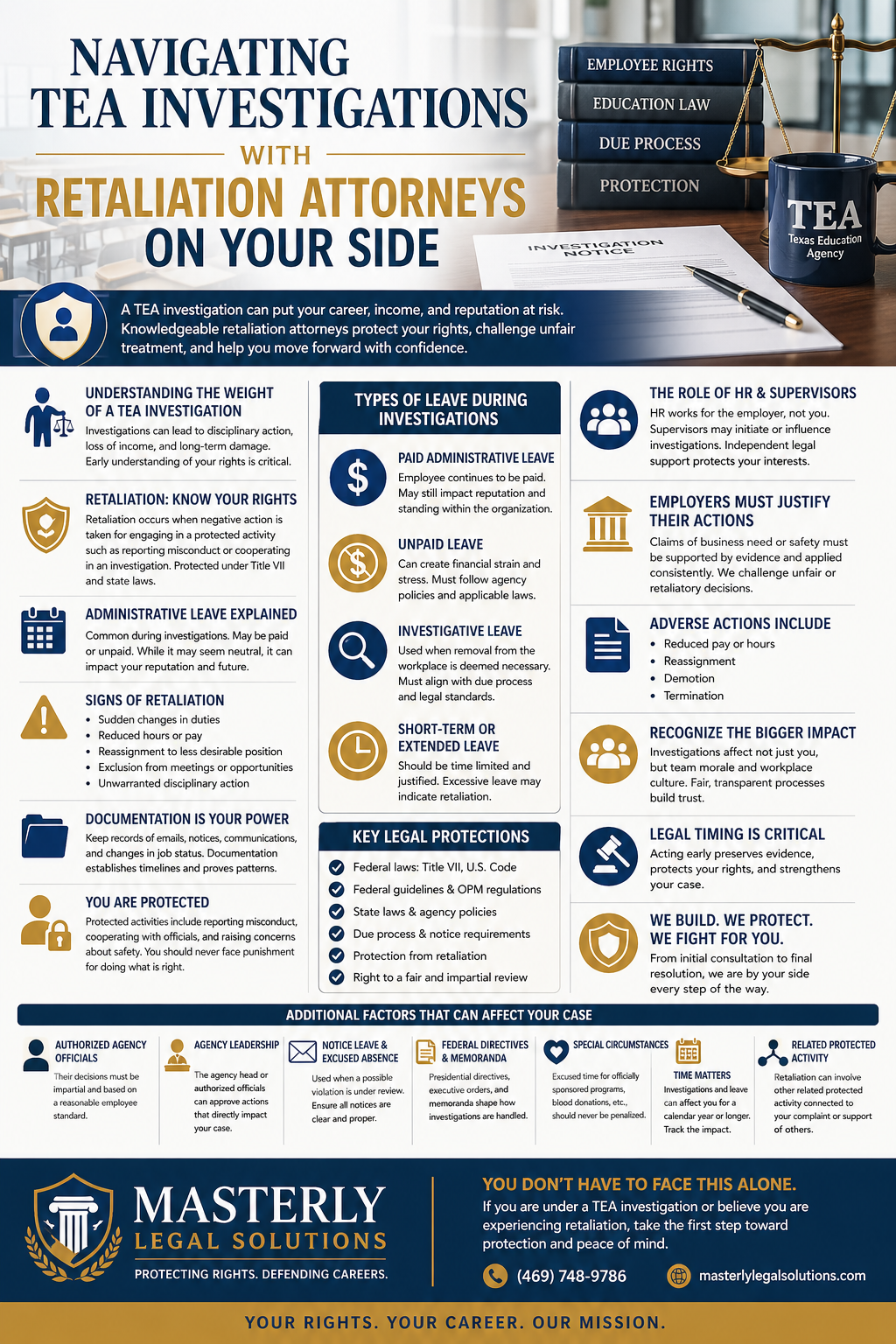
The Role of Authorized Agency Officials in Investigations
During a TEA investigation, decisions are often influenced by authorized agency officials and other authorized agency officials who are tasked with reviewing the facts. These individuals play a key role in determining whether actions taken against an employee are appropriate or excessive. A reasonable employee standard is often used to evaluate whether workplace decisions would appear fair under similar circumstances. When these officials fail to act impartially, it can raise concerns about personnel management practices and potential bias. Understanding who is involved in decision-making helps employees better assess the fairness of the process.
How Agency Leadership Impacts Outcomes
The agency head has significant authority in shaping how an investigation proceeds and how administrative leave is applied. In many cases, the agency head may be specifically authorized to approve certain actions or determine next steps. Their decisions can directly affect whether such claims are taken seriously or dismissed prematurely. Employees should be aware that leadership involvement can either strengthen or weaken the integrity of the process. Legal guidance ensures that these decisions are held to proper standards.
Understanding Excused Absence and Notice Leave
In some situations, an employee may be placed on excused absence or provided notice leave during an investigation. These actions are often used when there is a possible violation under review but no final determination has been made. Notice leave may be issued to give the employee time to respond or prepare for next steps. While these measures may seem routine, they must be applied fairly and consistently. Employees should carefully review any notice provided to ensure their rights are protected.
Federal Guidance Through Directives and Memoranda
Federal policies, including a presidential directive or presidential memorandum, often influence how agencies handle investigations and employee leave. These guidelines may also introduce concepts like safety leave to address workplace concerns. In some cases, actions taken during an investigation must align with an executive order or other provision of federal law. Understanding these frameworks helps employees recognize whether their situation is being handled properly. Legal professionals can interpret how these directives apply to specific cases.
Special Circumstances and Workplace Programs
Certain situations, such as participation in officially sponsored programs or blood donations, may qualify for excused time away from work. These instances are generally treated differently from disciplinary leave and should not negatively impact an employee. Employers must ensure that placing employees on leave in these contexts is done appropriately and without penalty. When handled improperly, it may raise questions about fairness and intent. Employees should remain aware of how these distinctions apply to their case.
Temporary Decisions and Ad Hoc Actions
Some employer decisions during an investigation are made on an ad hoc basis, meaning they are not part of a standard policy. These actions may be applied on a time limited basis while the situation is being evaluated. While flexibility can be necessary, it can also lead to inconsistent treatment of employees. If decisions appear arbitrary or unsupported, they may warrant further review. Legal counsel can help determine whether such actions are justified.
Tracking Time and Workplace Impact
The duration of an investigation and related leave can have lasting effects on an employee’s career. Actions taken within a calendar year may influence performance evaluations, pay, or future opportunities. Employers must ensure that their decisions do not unfairly penalize employees over time. Tracking how long an employee is affected is essential for understanding the full impact. This information can be critical when building a legal case and when working with full-service employment and education law counsel.
Recognizing Related Protected Activity
Retaliation is not always limited to one specific action. It can also involve other related protected activity or other related protected activity connected to the original complaint. Employees who participate in investigations or support colleagues may also be protected. Recognizing these connections is key to identifying patterns of unfair treatment. A thorough review helps ensure that all aspects of retaliation are addressed.
When Law Enforcement Becomes Involved
In some TEA investigations, police involvement may occur, particularly if the alleged misconduct involves serious concerns. The presence of police can add another layer of complexity to the case. Employees should understand that police reports and findings may influence the outcome of the investigation. However, these findings must still be evaluated fairly and independently. Legal representation helps ensure that employee rights are protected throughout the process.
General Considerations for Employees Facing Investigations
Employees should generally approach investigations with caution and awareness. It is important to remain professional and avoid actions that could complicate the situation. At the same time, employees should not hesitate to assert their rights when necessary. Understanding the process and seeking guidance can make a significant difference. A proactive approach helps protect both reputation and career.
Taking Action and Knowing When to Reach Out
If you believe your rights have been violated during an investigation, it is important to take action quickly. Seeking legal advice early allows you to understand your options and build a strong response. Our team is here to help you navigate these challenges with confidence. Do not hesitate to contact experienced attorneys who can guide you through the process. You can contact our office to discuss your situation and receive personalized support.
Speak With Our Retaliation Attorneys Today
If you are dealing with administrative leave, a workplace investigation, or potential retaliation, now is the time to get answers. Our team at Masterly Legal Solutions is here to help you understand your rights and take the next step with confidence. We offer a free consultation to discuss your situation and provide guidance tailored to your needs.
Call us today at (972) 236-5051 to connect with experienced retaliation lawyers who are ready to advocate for you.
This article is for educational purposes only and does not constitute legal advice.








Looking for Legal & Business Solutions? Contact Us Now
Fill in the form or call us to set up a meeting