

How Higher Education Attorneys Help Colleges Navigate Complex Faculty Disputes
When Faculty Disputes Disrupt the Educational Mission
Faculty disputes can quickly disrupt the educational mission of colleges and universities. What may begin as a disagreement between a faculty member and administration can evolve into complex legal issues involving policies, contracts, or compliance. In the higher education arena, these disputes often carry consequences that go beyond the individuals involved and impact student life, campus culture, and institutional reputation.
At Masterly Legal Solutions, we understand that these matters are not just legal—they are deeply connected to how institutions of higher education function day to day. With the right legal counsel, colleges and universities can address disputes effectively while preserving their core values and long-term goals.
The Unique Nature of Higher Education Legal Challenges
The higher education sector operates under a unique set of expectations that differ from other industries. Colleges and universities must balance academic freedom, free speech, and regulatory compliance while maintaining a safe and productive environment for faculty, staff, and students. This balancing act often leads to complex disputes that require experienced attorneys with a deep understanding of higher education law.
Higher education institutions must also consider federal laws, internal policies, and evolving societal expectations. This makes resolving disputes more challenging than in many other workplaces.
Why Faculty Disputes Are Increasing in Higher Education
Faculty disputes are becoming more common across colleges and universities. Issues involving tenure decisions, employment contracts, and academic misconduct can quickly escalate into formal complaints or legal proceedings. The involvement of graduate students, adjunct faculty, and administrative leadership can add layers of complexity.
In many cases, these disputes are tied to broader concerns within the education sector, including workplace expectations, diversity initiatives, and changes in campus culture.
The Role of Higher Education Attorneys
Higher education attorneys play a critical role in helping institutions navigate these challenges. They provide legal counsel, advise on compliance, and represent colleges and universities in disputes. Their work involves both proactive guidance and reactive defense when issues arise, especially when institutions need comprehensive higher education law services and compliance support.
A higher education team typically works closely with general counsel, human resources, and academic affairs departments to ensure that decisions align with federal and state law.
Providing Legal Advice Across Academic Institutions
Providing legal advice in the higher education sector requires a comprehensive understanding of policies, regulations, and institutional structures. Higher education attorneys assist institutions in interpreting laws and applying them to real-world situations.
This includes advising on student discipline, faculty rights, and internal procedures. By offering clear guidance, attorneys help institutions avoid unnecessary disputes and protect their interests.
Supporting Colleges and Universities Through Disputes
Higher education attorneys support institutions during disputes by developing strategies, gathering evidence, and representing them in proceedings. Whether the issue involves a faculty member, graduate students, or administrative staff, legal representation ensures that the institution’s position is clearly presented and reflects the value of dedicated higher education attorneys for colleges.
These attorneys also work to resolve disputes efficiently, minimizing disruption to academic affairs and student life.
Addressing Title IX and Sexual Misconduct Claims
Title IX cases are among the most sensitive disputes in higher education. Allegations of sexual misconduct require careful handling to ensure fairness and compliance with federal laws. Institutions must balance the rights of all parties while maintaining a safe environment.
Higher education attorneys guide colleges and universities through Title IX investigations, policy development, and hearings. Their experience helps ensure that procedures are followed correctly and that outcomes are legally sound, including in complex situations involving suspended or delayed Title IX investigations.
Navigating Academic Misconduct Allegations
Academic misconduct cases can involve both faculty and students. These situations often require thorough workplace investigations and careful review of evidence. Allegations may include plagiarism, research violations, or other breaches of academic integrity.
Attorneys assist institutions by ensuring that investigations are fair, transparent, and consistent with policies. This protects both the institution and the individuals involved, particularly when navigating the Title IX investigation process and respondent rights.
Faculty Tenure and Employment Contracts
Faculty tenure decisions and employment contracts are common sources of disputes. Questions about performance, evaluation, and renewal can lead to disagreements between faculty and administration.
Higher education attorneys help institutions interpret employment contracts and ensure that decisions are consistent with policies and labor law requirements. Their guidance can prevent disputes from escalating into litigation, which is especially important for education law issues facing teachers and faculty.
The Importance of Labor Law in Higher Education
Labor law plays a significant role in faculty disputes. Issues related to hiring, termination, and employee benefits must comply with federal laws and institutional policies. Colleges and universities must also address concerns raised by adjunct faculty and full-time staff.
Attorneys with experience in labor law help institutions navigate these challenges while maintaining compliance and fairness.
Workplace Investigations and Compliance
Workplace investigations are a key component of resolving faculty disputes. These investigations must be thorough, unbiased, and well-documented. Higher education attorneys assist institutions in conducting investigations that meet legal standards.
They also help develop compliance programs that reduce the risk of future disputes.
Regulatory Compliance in Academic Institutions
Regulatory compliance is essential for colleges and universities. Institutions must follow federal laws, including the disabilities act, as well as state regulations and internal policies. Failure to comply can lead to legal consequences and damage to reputation.
Higher education attorneys provide guidance on regulatory compliance, helping institutions meet their obligations while supporting their educational mission.
Protecting Intellectual Property in Higher Education
Intellectual property is a critical concern for many academic institutions, especially private research university environments and academic medical centers. Disputes over ownership of research, publications, and inventions can arise between faculty and institutions.
Attorneys help resolve these disputes and ensure that intellectual property rights are protected.
Supporting Human Resources in Faculty Disputes
Human resources departments play a central role in managing faculty disputes. From handling complaints to implementing policies, HR teams rely on legal counsel for guidance.
Higher education attorneys work closely with human resources to ensure that decisions are consistent with laws and institutional policies, often drawing on a firm’s broader labor, employment, and internal investigation services.
Policy Development and Institutional Stability
Policy development is essential for preventing disputes. Clear policies help set expectations for faculty, staff, and students. Higher education attorneys assist institutions in creating policies that address issues such as academic misconduct, student discipline, and workplace behavior.
Well-developed policies contribute to a stable and productive campus culture.
Balancing Academic Freedom and Free Speech
Academic freedom and free speech are fundamental principles in higher education. However, these rights can sometimes conflict with institutional policies or other legal considerations.
Higher education attorneys help institutions navigate these challenges, ensuring that decisions respect both legal requirements and academic values.
Handling Civil Rights Investigations
Civil rights investigations can arise from allegations of discrimination or unfair treatment. These cases may involve federal and state courts or government agencies.
Attorneys provide representation and guidance, helping institutions respond effectively while protecting their interests, similar to how an education lawyer supports teachers and schools.
Supporting Graduate Students and Faculty Members
Graduate students and faculty members are central to the academic environment. Disputes involving these groups can affect research, teaching, and campus operations.
Higher education attorneys assist institutions in resolving these disputes while maintaining strong and lasting relationships within the academic community.
The Role of General Counsel in Higher Education
General counsel serves as the primary legal advisor for many institutions. They work closely with higher education attorneys to address complex issues and develop strategies.
This collaboration ensures that institutions receive comprehensive legal support.
Technology Agreements and Modern Challenges
Technology agreements are increasingly important in the higher education sector. These agreements may involve research partnerships, data sharing, or intellectual property rights.
Attorneys help institutions navigate these agreements and address any disputes that arise.
Financial and Regulatory Considerations
Colleges and universities must also manage financial and regulatory concerns, including compliance with the internal revenue code and handling restricted funds. These issues can intersect with faculty disputes and require careful legal oversight.
Higher education attorneys provide guidance on these matters, ensuring compliance and protecting institutional interests.
Training Programs and Preventative Strategies
Training programs are an effective way to prevent disputes. These programs educate faculty and staff about policies, expectations, and legal requirements, and can be part of a broader strategy of higher education compliance and risk mitigation.
Higher education attorneys assist institutions in developing and implementing training programs that reduce risk and promote compliance.
Building Strong Legal Strategies for Institutions
Developing strong legal strategies is essential for resolving disputes. This involves analyzing the facts, understanding the applicable laws, and preparing for potential outcomes.
Experienced attorneys work closely with institutions to build strategies that align with their goals and protect their interests.
Representing Institutions in Legal Proceedings
When disputes escalate, institutions may need representation in federal and state courts. Higher education attorneys advocate on behalf of their clients, presenting evidence and arguments to support their position.
In some cases, attorneys have obtained summary judgment, resolving disputes efficiently and avoiding lengthy trials.
Why Experience Matters in Higher Education Law
Experience is critical when handling faculty disputes. Higher education attorneys bring knowledge of the education sector, legal requirements, and institutional practices.
This expertise allows them to provide effective representation and achieve favorable outcomes for their clients.
Supporting Institutions Across the Education Sector
Higher education attorneys support institutions across the education sector, including community colleges, private colleges, and large universities. Their work helps ensure that institutions can continue to fulfill their educational mission.
By providing comprehensive legal services, attorneys help institutions navigate challenges and maintain stability.
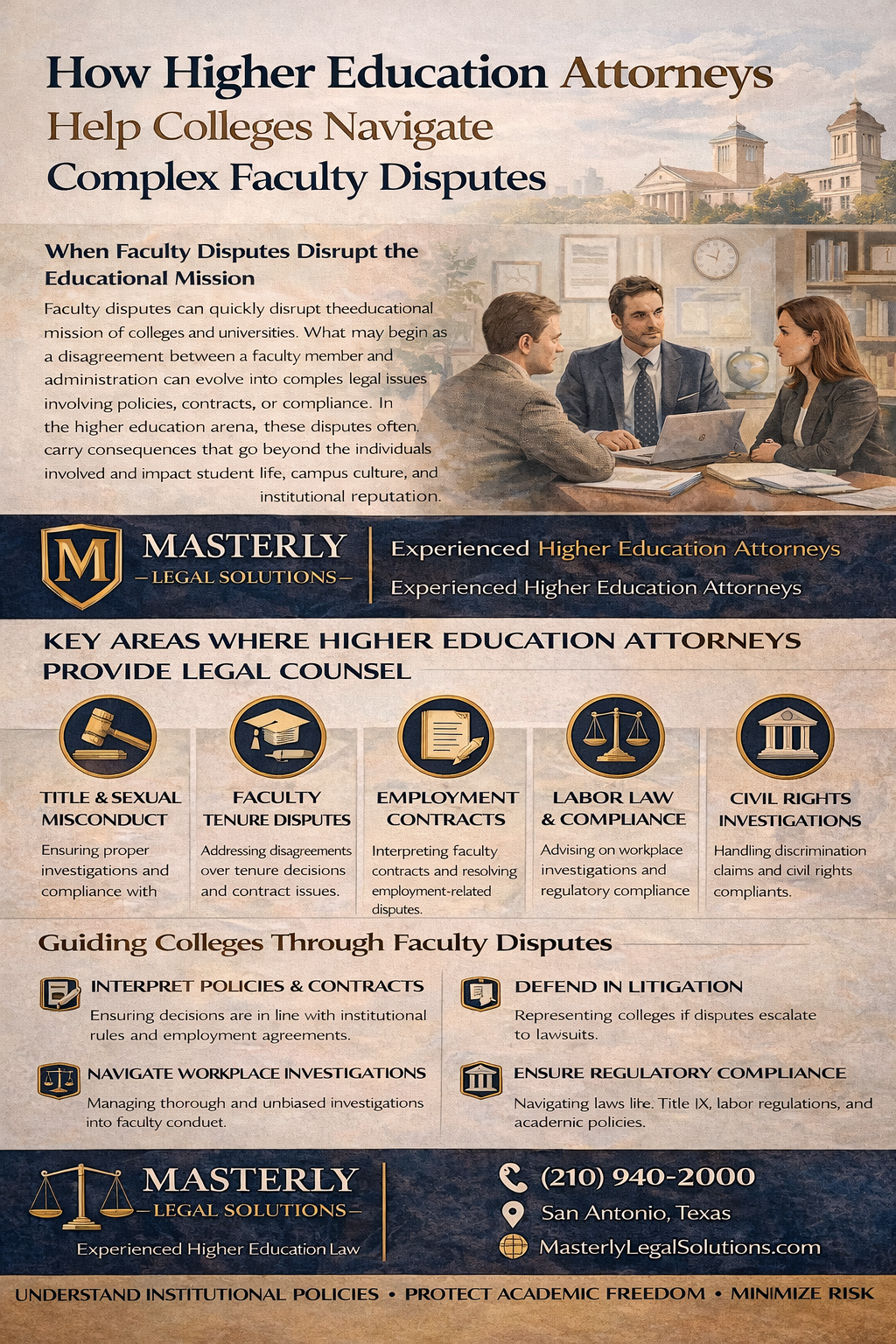
How Educational Institutions Rely on Legal Guidance for Stability
Educational institutions face a wide range of legal challenges that can impact daily operations and long-term planning. From faculty disputes to student-related concerns, these matters require careful attention and strategic decision-making. Higher education clients often depend on experienced legal teams to help them navigate these complexities while maintaining compliance. With the right guidance, institutions can continue focusing on their academic mission while addressing legal risks effectively.
Supporting Higher Education Clients Through Complex Matters
Higher education clients benefit from legal support that is tailored to the unique structure of colleges and universities. These institutions operate differently from traditional businesses, requiring specialized knowledge and a thoughtful approach. Attorneys work closely with administrators to resolve disputes, interpret policies, and ensure compliance with applicable laws. This level of support helps institutions remain stable even during challenging situations.
Meeting the Needs of College and University Clients
College and university clients often face issues that involve faculty, staff, and students simultaneously. These overlapping concerns require coordinated solutions that address multiple perspectives. Legal professionals assist by developing strategies that align with institutional policies and legal requirements. By working closely with leadership, attorneys help colleges and universities make informed decisions.
The Role of Student Handbooks in Preventing Disputes
Student handbooks play a critical role in setting expectations and outlining policies for behavior, discipline, and academic integrity. Clear and well-drafted handbooks can help prevent misunderstandings that lead to disputes. Legal counsel often reviews and updates these documents to ensure they comply with current laws and reflect institutional values. Strong policies contribute to a more consistent and fair campus environment, just as focused legal support for educators and licensure protection helps safeguard professional standards.
Legal Considerations for Private University Operations
A private university often faces unique legal challenges compared to public institutions. These challenges may include governance structures, funding considerations, and internal policies. Attorneys help ensure that private universities operate within the bounds of applicable laws while maintaining their independence. This support is essential for managing risk and protecting institutional interests.
Addressing Legal Issues in Private Institutions
Private institutions must navigate legal requirements while preserving their distinct identity and mission. Whether dealing with faculty disputes or student matters, these institutions rely on legal guidance to maintain compliance. Attorneys assist by reviewing policies, addressing concerns, and representing institutions when disputes arise. This proactive approach helps reduce potential liabilities and aligns with a firm’s broader education law and compliance-focused legal services.
How the Firm’s Higher Education Practice Supports Clients
The firm’s higher education practice is designed to address the unique needs of colleges and universities. By focusing on the specific challenges within the education sector, attorneys can provide targeted solutions. This practice includes advising on disputes, compliance, and policy development. Institutions benefit from having a dedicated team that understands their environment.
Understanding Family Educational Rights in Higher Education
Family educational rights laws are essential in protecting student privacy and information. These regulations govern how institutions handle student records and share information with others. Colleges and universities must ensure that they follow these rules carefully to avoid violations. Legal guidance helps institutions maintain compliance while protecting student rights.
Managing Student Records with Care and Compliance
Student records contain sensitive information that must be handled responsibly. Institutions are required to follow strict guidelines when accessing, storing, and sharing these records. Attorneys assist in developing policies that ensure compliance and reduce the risk of legal issues. Proper management of student records is critical for maintaining trust and accountability.
Working With Numerous Institutions Across the Sector
Legal teams often work with numerous institutions, gaining insight into a wide range of challenges and solutions. This experience allows attorneys to apply best practices across different cases. By understanding trends within the higher education sector, they can provide more effective guidance. This broad perspective benefits clients facing complex issues.
Expanding the Reach of a Higher Education Practice
A strong higher education practice allows attorneys to address a variety of legal matters within the education sector. From faculty disputes to regulatory compliance, this practice covers a wide range of concerns. Institutions benefit from working with attorneys who understand the nuances of higher education. This specialized focus leads to more effective outcomes.
Compliance With the Equal Employment Opportunity Commission
Colleges and universities must comply with regulations enforced by the Equal Employment Opportunity Commission. These rules address issues such as discrimination, harassment, and workplace fairness. Legal counsel helps institutions develop policies and respond to complaints in a way that aligns with these requirements. Compliance reduces the risk of legal action and supports a fair workplace.
Addressing Issues Related to National Origin
Disputes involving national origin can arise in both employment and student-related matters. Institutions must ensure that their policies and actions do not result in discrimination. Legal professionals assist by reviewing practices and addressing any concerns that may arise. This helps create an inclusive and respectful environment for all individuals.
The Role of Student Affairs in Legal Compliance
Student affairs departments are often at the center of campus operations, handling issues related to student life and discipline. These departments must balance institutional policies with legal requirements. Attorneys work with student affairs professionals to ensure that decisions are fair and compliant. This collaboration helps maintain consistency across the institution.
Supporting International Students Through Legal Guidance
International students bring valuable diversity to campuses but also present unique legal considerations. Institutions must navigate visa requirements, cultural differences, and compliance with federal laws. Legal counsel helps ensure that policies support international students while meeting regulatory obligations. This support enhances the overall campus experience.
Financial Aid Compliance and Legal Oversight
Financial aid programs are subject to strict regulations that institutions must follow. Errors in administration can lead to significant legal and financial consequences. Attorneys assist by reviewing policies and ensuring compliance with applicable laws. Proper oversight helps institutions maintain eligibility and protect their funding.
Providing Legal Support to University Clients
University clients rely on experienced attorneys to handle a wide range of legal issues. From faculty disputes to regulatory compliance, legal support is essential for maintaining stability. Attorneys work closely with leadership to develop strategies that address both immediate concerns and long-term goals. This partnership strengthens the institution’s ability to operate effectively.
How Attorneys Have Advised Universities in Complex Cases
Attorneys have advised universities on complex matters involving faculty disputes, policy interpretation, and compliance challenges. Their guidance helps institutions navigate difficult situations while minimizing risk. By providing strategic advice, legal professionals help universities achieve favorable outcomes. This experience is invaluable in high-stakes cases.
Understanding the False Claims Act in Higher Education
The False Claims Act can impact colleges and universities, particularly in areas involving funding and compliance. Institutions must ensure that their practices align with legal requirements to avoid potential violations. Attorneys help review procedures and address any concerns related to this law. Proper compliance reduces the risk of penalties.
When a Student Is Dismissed and Legal Issues Arise
When a student is dismissed, legal issues may arise regarding fairness, due process, and policy enforcement. Institutions must ensure that their actions are consistent with established guidelines. Legal counsel helps review these decisions and address any disputes that may follow. This ensures that institutions handle dismissals appropriately.
How Attorneys Counsel Clients in Higher Education
Attorneys counsel clients by providing clear, practical advice tailored to the needs of educational institutions. This includes reviewing policies, addressing disputes, and guiding decision-making processes. By working closely with clients, attorneys help ensure that actions align with both legal requirements and institutional goals. This ongoing support is essential for navigating the complexities of higher education.
Contact Us for a Free Consultation
If your institution is facing complex faculty disputes or needs guidance in the higher education arena, Masterly Legal Solutions is here to help. Our experienced attorneys understand the challenges that colleges and universities face and are committed to providing strategic legal support.
We invite you to contact us at (972) 236-5051 for a free consultation. Whether you are seeking an attorney grand prairie institutions trust or need assistance with higher education law, our team is ready to listen and provide clear direction. Your institution deserves thoughtful legal guidance that protects your mission and supports long-term success.
Disclaimer: This article is provided for educational purposes only and does not constitute legal advice. Reading this content does not create an attorney-client relationship. For advice regarding your specific situation, please consult with a qualified attorney.


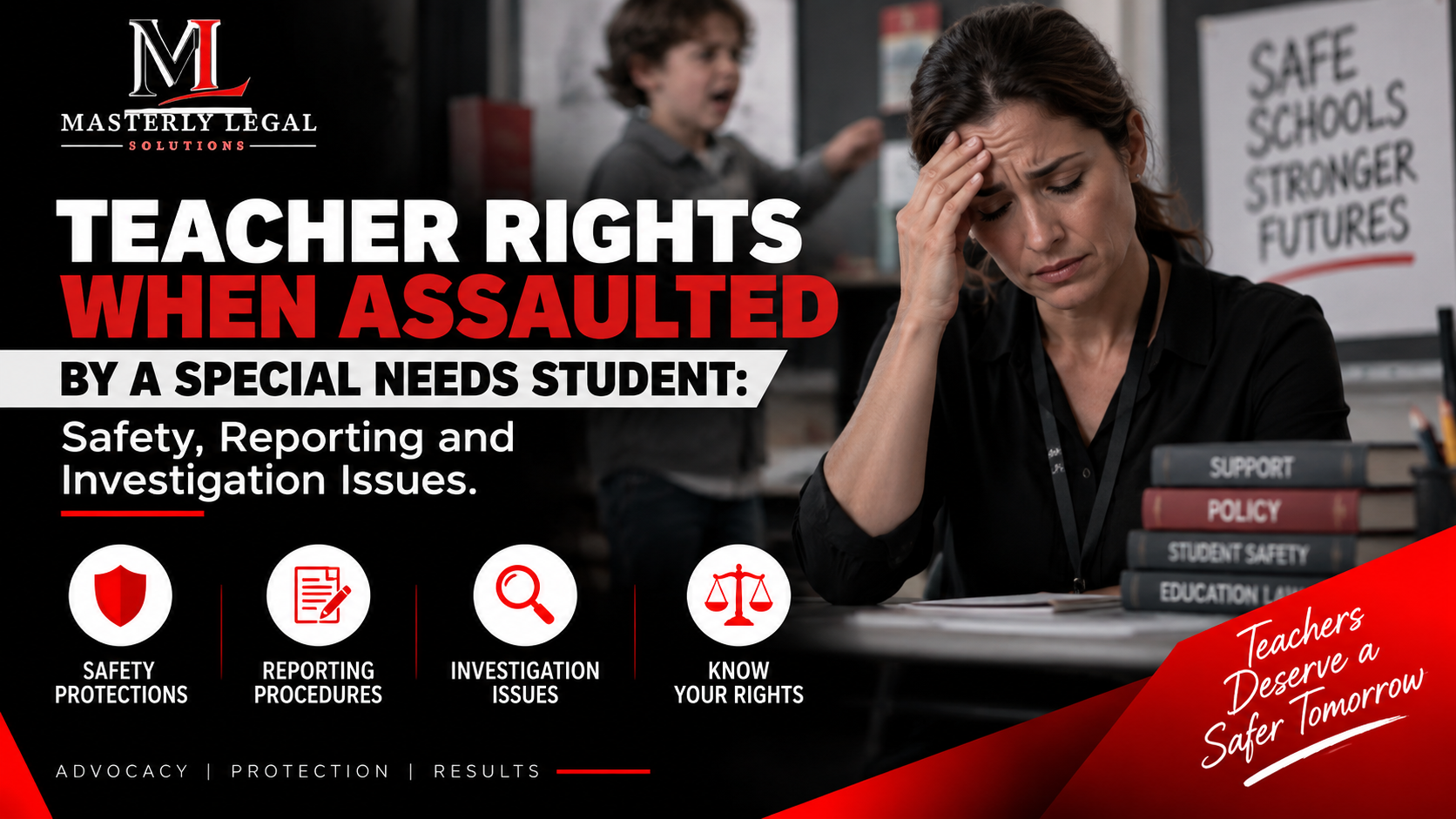
Teacher Rights When Assaulted by a Special Needs Student: Safety, Reporting and Investigation Issues

Looking for Legal & Business Solutions? Contact Us Now
Fill in the form or call us to set up a meeting





