

Retaliation Cases for Teachers: What Evidence Matters Mos
Understanding Retaliation in the Education Workplace
Retaliation in the workplace is one of the most misunderstood areas of employment law, especially for teachers and other school-based workers. Many employees believe that once they report discrimination or harassment, they are fully protected, but retaliation can still occur in subtle and complex ways. In many cases, retaliation is not obvious at first and may appear as routine workplace decisions. However, under federal and state laws, retaliation is strictly prohibited, and school employers must follow clear regulations when responding to complaints.
For teachers and school staff, retaliation often arises after engaging in a protected activity such as reporting discrimination, filing a complaint, or participating in an investigation. These situations can involve administrators, a supervisor, or even a co worker. When retaliation occurs, it may create a negative impact not only on the individual employee but also on overall employee morale within the district.
What Counts as a Protected Activity
A protected activity is any action where an employee asserts their rights under employment laws. Teachers and school workers are protected when they report issues like harassment, discrimination, or other unlawful conduct. This protection applies whether the complaint is made internally to a manager or externally to a federal agency such as the EEOC.
Examples of protected activity include:
- Filing a complaint about discrimination based on disability, race, or immigration status
- Reporting harassment by a supervisor or co worker
- Participating in an investigation conducted by federal agencies
- Assisting another employee with a complaint
- Opposing policies that may violate state laws or federal regulations
Engaging in these activities should not result in punishment. If an employer responds negatively, that response may qualify as retaliation under Title VII and other laws.
How Retaliation Occurs in Schools
Retaliation can take many forms, and it is not always obvious. In schools, retaliation may happen after a teacher reports misconduct or participates in an investigation. Administrators or managers may change the employee’s role, schedule, or responsibilities in ways that seem minor but have a serious effect.
Common forms of retaliation include:
- Placing an employee on administrative leave or paid administrative leave without justification
- Assigning the employee to a less desirable position
- Removing the employee from a desirable position
- Reducing pay, hours, or benefits
- Increasing scrutiny or issuing unfair discipline
Each of these actions may be considered an adverse action if it would discourage a reasonable employee from engaging in protected activity.
The Legal Definition of Adverse Action
An adverse action is any action taken by an employer that negatively affects an employee’s job. This can include termination, demotion, or even subtle changes in duties. Courts often use the “reasonable employee” standard to determine whether the action would deter someone from reporting misconduct.
For example, placing a teacher on administrative leave during an investigation may be appropriate in some circumstances. However, if the leave is extended unnecessarily or used as punishment, it could be considered retaliation. Similarly, repeated placement on administrative leave without proper cause may raise serious legal concerns.
Why Evidence Matters in Retaliation Cases
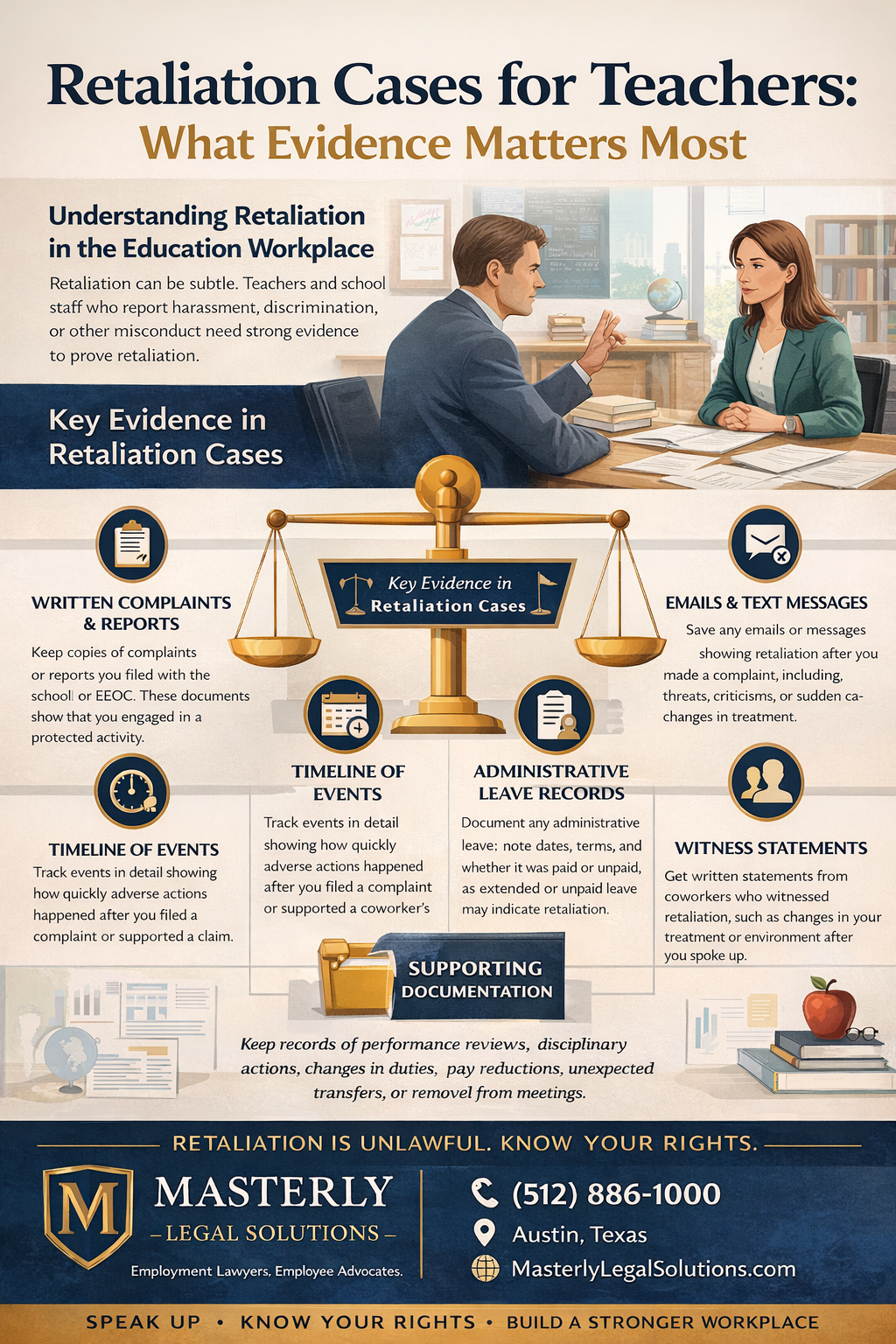
Evidence is the foundation of any retaliation claim. Without strong documentation, it can be difficult to prove that the employer’s actions were unlawful. Teachers and school workers must be able to show a clear connection between their protected activity and the adverse action taken against them.
The most effective evidence often includes:
- Written complaints or reports submitted to the school or agency
- Emails or messages from a supervisor or manager
- Documentation of administrative leave decisions
- Records of changes in pay, hours, or job duties
- Witness statements from co workers or other employees
This evidence helps establish a timeline and shows how retaliation developed after the protected activity.
Building a Timeline of Events
A clear timeline is one of the most powerful tools in a retaliation case. It helps demonstrate how quickly an employer acted after an employee engaged in protected activity. If adverse action occurs shortly after a complaint, it may support a claim of retaliation.
For example, if a teacher files a complaint about discrimination and is placed on administrative leave within days, that timing may raise red flags. The closer the connection between the complaint and the action, the stronger the case becomes.
The Role of Administrative Leave in Retaliation Claims
Administrative leave is often used by schools during an investigation. While it can be a legitimate tool, it is sometimes misused. Being placed on paid administrative leave may seem neutral, but it can still have a negative impact on an employee’s reputation and career.
In some cases, administrative leave is extended beyond a reasonable period, or the employee is excluded from workplace activities. This can affect employee morale and create long-term damage. When administrative leave is used as a form of punishment rather than a neutral measure, it may be considered retaliation.
Paid Administrative Leave vs. Unpaid Leave
There is an important distinction between paid administrative leave and unpaid leave. Paid administrative leave allows the employee to continue receiving pay and benefits while an investigation is ongoing. However, even paid leave can become problematic if it is used improperly.
Unpaid leave, on the other hand, can significantly impact wages and financial stability. If an employer places an employee on unpaid leave without justification after a protected activity, it may be viewed as an adverse action under employment laws.
Recognizing Subtle Forms of Retaliation
Not all retaliation is obvious. Some employers take subtle actions that are harder to detect but still harmful. These actions can include:
- Excluding the employee from meetings or opportunities
- Assigning undesirable tasks
- Reducing support from administrators
- Increasing workload without justification
These actions may not seem severe on their own, but over time they can create a hostile workplace and discourage employees from speaking out.
The Importance of Witness Testimony
Witnesses can play a crucial role in retaliation cases. Co workers, administrators, or other staff members may have observed changes in how the employee was treated. Their testimony can support claims of discrimination, harassment, or retaliation.
For example, a co worker may confirm that a supervisor treated the employee differently after a complaint was filed. This type of evidence can strengthen the case and provide additional context.
Federal Laws That Protect Teachers
Several federal laws protect teachers and school employees from retaliation. Title VII is one of the most important, as it prohibits discrimination and retaliation based on race, color, religion, sex, or national origin.
Other federal protections may apply depending on the situation, including laws related to disability, military service, and family responsibilities. These laws ensure that employees are protected when they report unlawful conduct or participate in investigations.
State Laws and Local Regulations
In addition to federal laws, state laws and local regulations provide additional protections for workers. These laws may offer broader coverage or additional remedies for retaliation claims. Teachers working in dallas fort worth school districts may be subject to specific policies and procedures that govern employment disputes.
Understanding both federal and state laws is essential when evaluating a retaliation claim. Each case must be analyzed based on the specific circumstances and applicable regulations.
The Role of the EEOC in Retaliation Cases
The EEOC is a federal agency responsible for enforcing employment laws related to discrimination and retaliation. Employees who believe they have experienced retaliation can file a complaint with the EEOC.
The EEOC may conduct an investigation, gather evidence, and determine whether a violation has occurred. In some cases, the agency may issue a right-to-sue letter, allowing the employee to pursue a lawsuit.
How Investigations Are Conducted
An investigation is a critical part of any retaliation case. Schools and employers are expected to conduct thorough and impartial investigations when complaints are made. This includes reviewing evidence, interviewing witnesses, and documenting findings.
However, not all investigations are handled properly. If an employer conducts a biased or incomplete investigation, it may raise concerns about fairness and compliance with laws.
Common Mistakes Employers Make
Employers sometimes make mistakes that increase their risk of liability. These mistakes include:
- Failing to document decisions related to administrative leave
- Ignoring complaints of discrimination or harassment
- Taking adverse action without sufficient evidence
- Treating employees inconsistently
These errors can weaken the employer’s defense and strengthen the employee’s claim.
The Impact on Employee Morale
Retaliation does not only affect the individual employee; it can also harm overall employee morale. When workers see that complaints lead to negative consequences, they may be less likely to report issues in the future.
This creates a workplace culture where misconduct goes unreported, which can lead to further violations and legal risks for the employer.
Family Responsibilities and Retaliation
Family responsibilities can sometimes play a role in retaliation cases. For example, an employee who takes leave to care for a family member may face negative treatment upon returning to work.
If the employee has also engaged in protected activity, the employer’s actions may be scrutinized more closely. Laws protect employees from being penalized for balancing work and family responsibilities.
Immigration Status and Workplace Protections
Employment laws generally protect workers regardless of immigration status. Employers are prohibited from using immigration status as a basis for retaliation or discrimination.
This means that even employees with limited status are protected when they report unlawful conduct or participate in investigations.
Disability and Reasonable Accommodations
Employees with a disability are entitled to reasonable accommodations under the law. If an employee requests accommodations and then experiences adverse action, it may raise concerns about retaliation.
Employers must ensure that their actions do not violate laws protecting individuals with disabilities.
Military Service and Job Protection
Employees who serve in the military are protected under federal laws. These protections ensure that workers can return to their job without facing retaliation or discrimination.
If an employee experiences adverse action after military service, it may be considered unlawful.
The Role of Documentation
Documentation is essential in any retaliation case. Employees should keep records of:
- Complaints filed with the employer or agency
- Communications with a supervisor or manager
- Changes in job duties, pay, or hours
- Instances of harassment or discrimination
This information can provide valuable evidence and help determine whether retaliation has occurred.
When Retaliation Becomes Unlawful
Retaliation becomes unlawful when an employer takes adverse action against an employee because of protected activity. This can include actions that affect the employee’s job, pay, or opportunities.
To prove a claim, the employee must show that:
- They engaged in protected activity
- The employer took adverse action
- There is a connection between the two
Filing a Complaint or Lawsuit
Employees who experience retaliation may choose to file a complaint with the EEOC or pursue a lawsuit. The process can be complex and requires careful preparation.
An experienced retaliation and employment law legal team can help gather evidence, evaluate the case, and determine the best course of action.
How Masterly Legal Solutions Can Help
At Masterly Legal Solutions, we understand how challenging retaliation cases can be for teachers and school employees. Our team works closely with clients to evaluate evidence, build strong cases, and protect teachers’ legal rights and options.
We have experience handling cases involving administrative leave, discrimination, harassment, and other workplace issues. Our goal is to ensure that every employee receives fair treatment under the law.
Protecting Your Rights Moving Forward
If you believe you have experienced retaliation, it is important to take action promptly. Document your experiences, report concerns to the appropriate agency, and seek legal guidance.
Taking these steps can help protect your rights and improve your chances of a successful outcome.
Speak With a Legal Team That Understands School Systems
Navigating retaliation cases within schools requires a deep understanding of employment laws and education systems. Teachers and school employees face unique challenges that require specialized legal support.
At Masterly Legal Solutions, we are committed to helping teachers and schools with expert education law support to navigate these challenges and achieve the best possible results.
How Protections Extend to Federal Employees in Education Settings
Although most teachers work within local school systems, some roles intersect with federal employees or federally funded programs. In these situations, additional layers of protection may apply, especially when federal regulations govern employment practices. Understanding how these protections work is important because they can influence how retaliation claims are handled and which agency may oversee the matter. When federal employees or federally connected positions are involved, the standards for accountability may be even more stringent, and understanding how to pursue retaliation and labor complaints becomes especially important.
Laws That Prohibit Retaliation in the Workplace
Employment laws at both the federal and state level clearly prohibit retaliation against an employee who engages in protected activity. These laws are designed to ensure that workers can report discrimination, harassment, or misconduct without fear of punishment. When an employer ignores these rules, it can create serious legal exposure and undermine trust within the workplace. Schools and administrators must be careful to follow these legal requirements to avoid liability, and many turn to education law attorneys for guidance through investigations and disputes.
Identifying a Possible Violation Early
Recognizing a possible violation early can make a significant difference in how a case develops. Teachers and staff should pay attention to sudden changes in treatment after filing a complaint or participating in an investigation. Even subtle shifts, such as changes in job duties or increased scrutiny, may signal a problem. Addressing these concerns promptly can help preserve evidence and strengthen a potential claim.
Understanding Other Related Protected Activity
In addition to common complaints about discrimination or harassment, there are other related protected activity situations that employees may not immediately recognize. These can include supporting a co worker’s complaint, refusing to follow instructions that violate laws, or reporting unsafe conditions. Each of these actions is protected under various employment laws, and retaliation against employees for engaging in them is unlawful. Knowing the full scope of protected actions helps employees better protect themselves.
What Counts as Related Protected Activity
Related protected activity includes any action connected to asserting workplace rights under applicable laws. This may involve participating in an internal review, providing statements during an investigation, or cooperating with a federal agency. Even informal complaints can qualify if they address unlawful behavior. Employers must treat these activities seriously and avoid any conduct that could be seen as retaliatory.
Seeking Additional Information When Concerns Arise
When employees suspect retaliation or misconduct, gathering additional information is a critical step. This may involve reviewing workplace policies, documenting communications, or consulting with a legal professional. Having accurate and complete information allows employees to better understand their rights and options with an education law attorney. It also helps determine whether further action, such as filing a complaint, is appropriate.
When Situations Involve Police or External Authorities
In some cases, workplace issues may escalate to involve police or other external authorities. This can happen if there are allegations of serious misconduct, threats, or violations of law. Employees who report such concerns are still protected from retaliation under applicable laws. Employers must handle these situations carefully to ensure compliance with legal obligations and maintain a safe environment.
Maintaining Respect in the Workplace
Respect is a fundamental expectation in any professional environment, including schools. When retaliation occurs, it often erodes respect between employees and management. This can lead to a toxic workplace culture where workers feel undervalued or unsafe. Promoting respect and fairness is essential to maintaining a healthy and productive workplace.
Addressing Issues Related to Absence and Leave
An employee’s absence from work, whether due to illness, family responsibilities, or administrative leave, should not be used as a basis for retaliation. Employers must handle leave-related matters in accordance with laws and policies, often with support from experienced education law attorneys who understand teacher leave and investigations. If an employee experiences negative treatment after returning from an absence, it may raise concerns about unlawful conduct. Proper documentation can help clarify whether the employer’s actions were justified.
Recognizing Other Type of Retaliatory Behavior
Retaliation can take many forms, including actions that may not fit traditional definitions. Any other type of behavior that negatively impacts an employee after protected activity should be evaluated carefully. This includes changes in scheduling, exclusion from opportunities, or unfair performance evaluations, all of which may warrant advice from a law firm experienced in teacher license defense and school investigations. Each situation must be reviewed based on its specific facts and circumstances.
What These Laws Cover in Real-World Scenarios
Employment laws are designed to cover a wide range of workplace situations, including those involving teachers and school staff. These laws protect employees from retaliation, discrimination, and other unlawful conduct. Understanding what these laws cover helps employees recognize when their rights may have been violated. It also empowers them to take appropriate action when necessary.
Contact Us for a Free Consultation
If you are dealing with retaliation, administrative leave, or any workplace concern within dallas fort worth school districts, you do not have to handle it alone. Our team is here to listen, evaluate your situation, and provide clear guidance based on your specific circumstances.
We invite you to contact us at (972) 236-5051 for a free consultation. We will take the time to understand your concerns, review any evidence you have, and explain your options moving forward. Every situation is different, and having the right legal support can make a meaningful difference in how your case is handled.
Disclaimer: This article is provided for educational purposes only and does not constitute legal advice. Reading this content does not create an attorney-client relationship. For advice regarding your specific situation, please contact a qualified attorney.


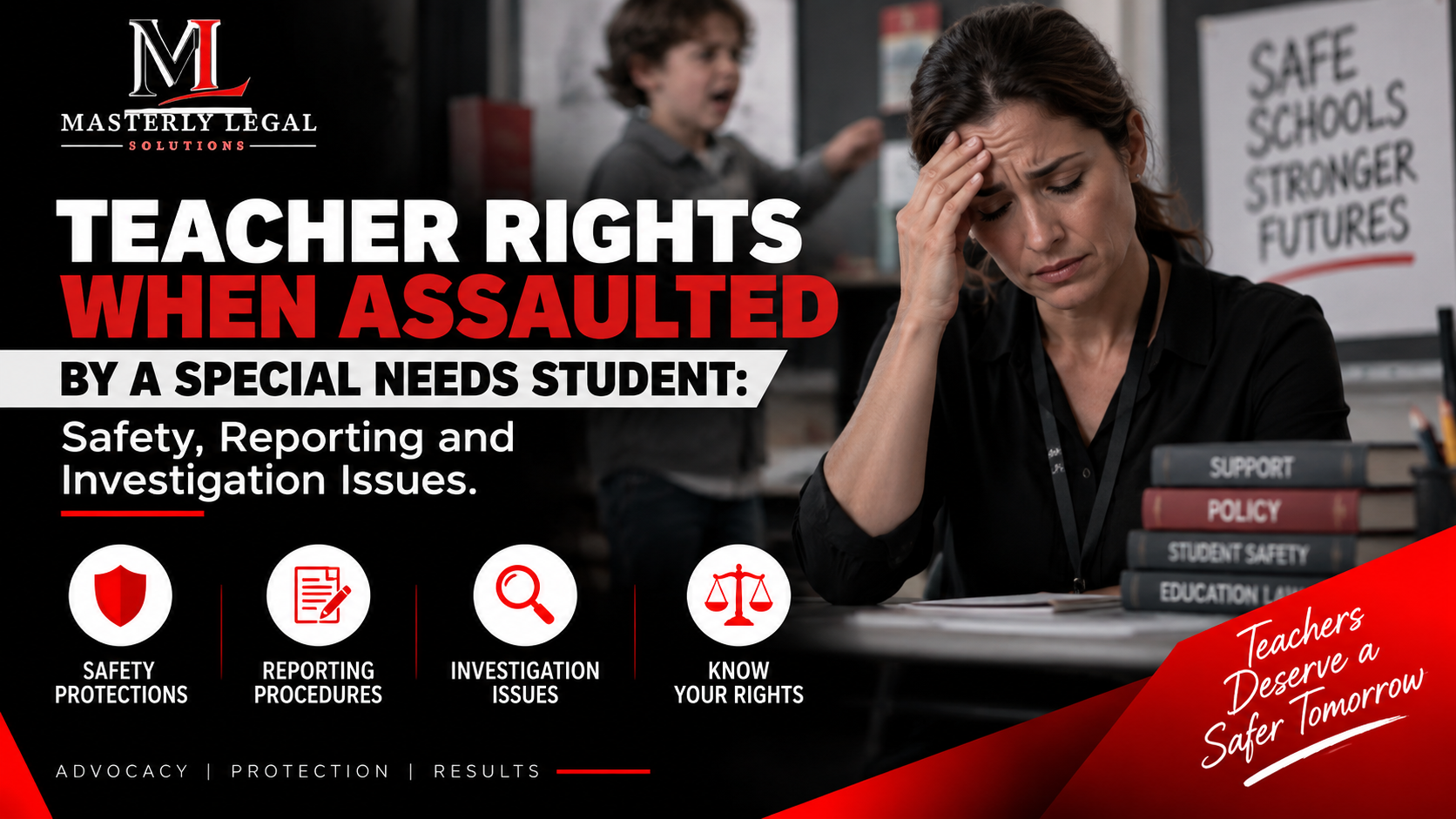
Teacher Rights When Assaulted by a Special Needs Student: Safety, Reporting and Investigation Issues


Looking for Legal & Business Solutions? Contact Us Now
Fill in the form or call us to set up a meeting





