

How Managers Can Foster a Harassment-Free Environment in Your Organization
A workplace harassment complaint can quickly become a serious concern for school leaders, human resources teams, and business owners. When employees do not understand acceptable conduct or supervisors fail to respond to complaints appropriately, organizations may face legal disputes, damaged trust, and workplace disruption.
For teachers, school administrators, superintendents, and other education professionals, these concerns can affect staff relationships, school operations, and institutional reputation.
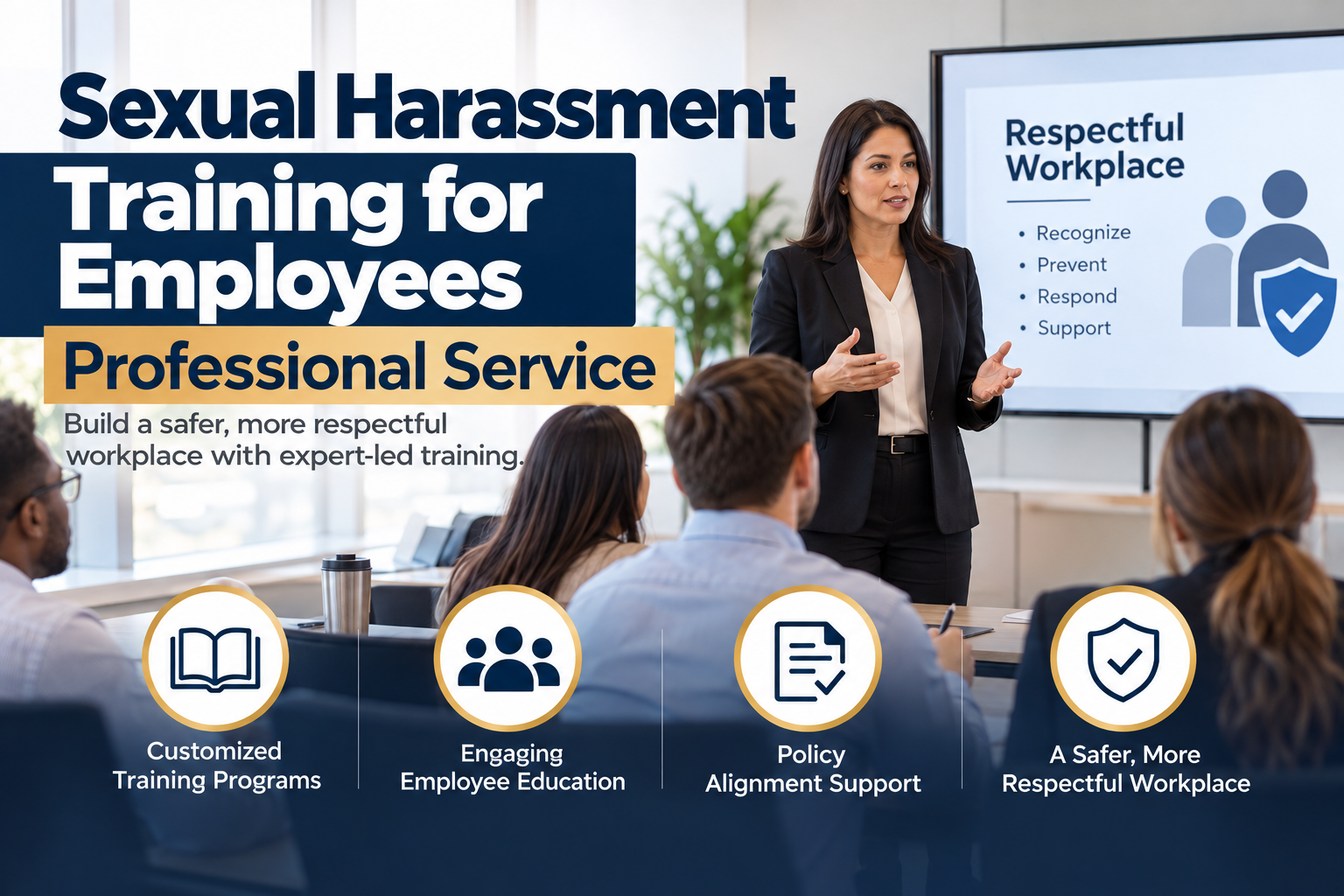
Sexual harassment training for employees helps organizations establish clear expectations, strengthen reporting procedures, and prepare supervisors to address inappropriate workplace behavior before problems escalate.
However, training alone does not guarantee compliance. Employers also need effective policies, responsible leadership, and procedures that meet applicable legal requirements.
At Masterly Legal Solutions, we provide attorney-guided workplace harassment prevention training for businesses, school districts, colleges, and other organizations. Our programs help employers strengthen compliance practices, educate employees, and address potential legal risks through training designed for their workplaces.
Why Sexual Harassment Training for Employees Matters
Sexual harassment can affect employees at every level of an organization. It may involve unwelcome sexual advances, requests for sexual favors, or other conduct of a sexual nature that meets the legal standards for unlawful harassment.
It may also involve conduct based on sex without an explicit sexual request.
Under Title VII of the Civil Rights Act of 1964, covered employers are prohibited from unlawful employment discrimination, including sexual harassment.
A single complaint may raise questions about workplace policies, supervisory conduct, employee reporting procedures, and the organization's response.
The Risks of Inadequate Workplace Training
When employee expectations are unclear, inappropriate conduct may continue without being reported or corrected.
Possible consequences include:
- Formal employee complaints and internal investigations.
- Reduced trust in management and human resources.
- Disruption of school or workplace operations.
- Employment disputes and potential legal claims.
- Increased concerns about retaliation.
- Harm to an organization's professional reputation.
For educational institutions, these concerns can be especially sensitive because employees work in environments that require trust, professional conduct, and effective leadership.
A strong employee harassment training program helps employees recognize prohibited conduct and understand the organization's expectations around harassment in the workplace, including conduct that may be verbal, non-verbal, physical, or visual.
Examples can include offensive jokes and intimidation, and bullying may also be addressed as workplace harassment.
It also demonstrates leadership's commitment to addressing workplace concerns fairly, including conduct tied to protected characteristics.
Masterly Legal Solutions develops harassment prevention programs tailored to the legal and operational needs of each organization.
Employee and Manager Responsibilities in Harassment Prevention
Employees and supervisors play different roles in maintaining a respectful workplace.
While all employees should understand workplace conduct policies, managers have additional responsibilities when they observe harassment or receive a complaint.
Training should reflect these differences.
What Employees Need to Understand
Employee training should define harassment, explain what constitutes harassment, and explain what constitutes sexual harassment under workplace policies, along with how employees can report concerns.
Important topics include:
- Recognizing inappropriate behavior.
- Understanding professional boundaries.
- Respecting coworkers, workplace policies, and acceptable behaviors.
- Identifying available reporting channels.
- Understanding protections against unlawful retaliation.
- Cooperating appropriately with workplace investigations.
Training should also help employees report incidents through the organization's procedures.
Training should also address behavior involving coworkers, supervisors, and other individuals encountered during employment.
Why Managers Need Specialized Training
Harassment training for managers should address duties that differ from training for non-supervisors and apply once someone takes on a supervisory role, extending beyond recognizing inappropriate conduct.
School principals, department heads, HR professionals, and other supervisors may have responsibilities when employees report misconduct, and those responsibilities may begin when someone moves into a supervisory role.
Managers need to understand how to respond without dismissing complaints, making premature conclusions, or creating additional legal exposure.
Supervisory training may address recognizing warning signs, escalating complaints, maintaining appropriate confidentiality, and avoiding retaliation.
A manager's response can influence whether an organization identifies concerns early or allows them to develop into larger disputes.
Masterly Legal Solutions provides separate training programs for employees and supervisors, helping each group understand its responsibilities under applicable workplace policies and employment laws.
Reporting Channels and Anti-Retaliation Protections
Employees may hesitate to report harassment because they fear losing professional opportunities, damaging workplace relationships, or experiencing retaliation.
This can be particularly concerning when the person accused of misconduct holds a supervisory position.
A harassment prevention program should clearly explain where employees can raise concerns and how reports will be addressed.
Why Multiple Reporting Channels Matter
Employers should consider reporting systems that allow employees to contact appropriate personnel outside their direct supervisory relationship.
Depending on the organization, reporting channels may include human resources representatives, designated compliance officers, or other authorized officials.
Clear procedures help employees understand whom to contact when the usual reporting structure may present a conflict.
For school districts, reporting responsibilities should also reflect applicable district policies and legal obligations.
Preventing Retaliation After a Complaint
Federal employment discrimination law prohibits retaliation against employees for engaging in protected activities, including certain harassment complaints and participation in investigations.
Retaliation concerns may involve adverse employment decisions connected to legally protected conduct.
Employees should understand that reporting suspected misconduct does not automatically justify negative treatment.
Managers also need training on how to handle employment decisions involving individuals who have raised complaints or participated in investigations.
Workplace sexual harassment prevention requires more than a written prohibition against retaliation; training should help prevent harassment and make clear that such behavior will not be tolerated. Employers need procedures that support fair treatment and appropriate review of complaints.
Masterly Legal Solutions assists organizations with harassment prevention policies, supervisor training, and legal guidance concerning employee reporting and retaliation risks.
How to Plan Practical Harassment Prevention Training
Organizations have different structures, work environments, and legal responsibilities.
A small administrative office does not face every challenge encountered by a large school district, university, or corporation.
For this reason, generic training may fail to address the situations employees actually experience.
A practical program should consider the employer's workforce, management structure, reporting procedures, and applicable legal requirements.
Training Tailored to Educational Institutions
School districts and educational organizations may need scenarios involving teachers, principals, district staff, and supervisors.
Training topics can address professional boundaries, employee interactions, workplace communications, and supervisory responsibilities.
School leaders may also need guidance concerning allegations that involve both employment law and separate education-related policies.
Workplace sexual harassment training should be distinguished from student-focused Title IX training, although some institutions may have obligations under both legal frameworks.
Counsel can help determine which programs are appropriate.
Flexible Training Options
Masterly Legal Solutions offers in-person and online harassment prevention training.
Programs can be structured to address organizational needs, including:
- Employee awareness and professional conduct.
- Manager and supervisor responsibilities.
- Workplace reporting procedures.
- Harassment prevention policies.
- Complaint handling and investigation concerns.
- Legal compliance and institutional risk management.
Interactive examples and practical workplace situations can help employees understand how policies apply to their responsibilities, including gray areas, while providing practical guidance through real-world scenarios.
Advanced programs may also include bystander intervention training, with methods for safely stepping in when employees witness inappropriate behavior to support a safer workplace.
An organization may also benefit from an annual refresh or periodic training updates to reinforce key concepts when policies, personnel, or legal requirements change.
An attorney-guided training program can help leadership determine which subjects deserve attention and how to align the content with existing workplace procedures.
Recordkeeping and Evaluating Training Effectiveness
Training is more useful when organizations can demonstrate what was delivered, who participated, and whether important policies were communicated.
Accurate documentation may also become relevant when an employer must explain its preventive measures during a workplace investigation or legal dispute.
Why Training Records Matter
Organizations may maintain records such as:
- Training dates and attendance information.
- Employee acknowledgments of workplace policies.
- Course materials and program descriptions.
- Records of completed online sessions.
- Supervisor training participation.
- Documentation of relevant program updates.
Records may also be tracked against an employee’s hire date or start date when laws set deadlines for new employees.
Recordkeeping practices should reflect applicable legal requirements, confidentiality concerns, and organizational policies.
Maintaining attendance records does not establish that an employer has met every legal obligation or all broader compliance requirements.
Measuring Whether Training Works
An employer may provide effective training while employees still need clarity on reporting procedures or manager responsibilities.
Effective harassment prevention training should reinforce key features such as legally accurate content, interactive scenarios, and policy-based instruction.
For this reason, training effectiveness should be considered alongside broader workplace practices.
Relevant considerations include whether employees understand reporting channels, supervisors know their duties, and organizational policies remain accessible.
Periodic evaluation may help identify areas where additional instruction is appropriate.
Masterly Legal Solutions helps organizations develop training programs intended to support practical understanding, legal awareness, and stronger workplace accountability.
When Legal Counsel Should Review a Harassment Training Program
Not every workplace has identical legal training requirements.
Federal law prohibits unlawful workplace harassment for covered employers, but it does not impose one universal annual sexual harassment training requirement on every private employer.
Some states, industries, government entities, contracts, and legal settlements have additional training obligations. For example, sexual harassment prevention training rules vary by jurisdiction: California employers with five or more employees must train staff, including two hours for supervisors, Connecticut employers with one or more employees must provide two hours for all employees, Delaware applies to employers with 50 or more employees, Illinois and New York State require annual training for all employees, and New York City employers must provide annual training that includes one hour plus bystander intervention, while organizations should also review any separate mandatory training requirements in York State, york city, and other local laws.
Texas employers must also consider applicable state employment discrimination laws and any requirements specific to their organizations.
For school districts and higher education institutions, additional rules may affect employee conduct, reporting, and institutional responses.
When Attorney Review Is Valuable
Legal counsel may be especially helpful when:
- An organization is developing its first formal training policy.
- Existing training materials have not been reviewed recently.
- Supervisors are uncertain about complaint-handling responsibilities.
- Employee complaints reveal gaps in reporting procedures.
- The organization operates across multiple jurisdictions.
- A school district needs training aligned with applicable education policies.
- Leadership wants coordinated prevention training and workplace legal guidance.
A legal review can help identify whether existing training covers relevant risks and whether organizational policies are consistent with current obligations.
How Masterly Legal Solutions Supports Employers
Masterly Legal Solutions provides employment-law counsel and harassment prevention training tailored to organizational needs.
Our services include:
Attorney-guided training: Programs addressing harassment prevention, workplace expectations, and legal compliance concerns.
Employee and supervisor education: Separate training content reflecting the responsibilities of staff members and leadership.
Workplace policy review: Legal assessment of a sexual harassment prevention policy, reporting procedures, and related workplace standards.
Complaint-response guidance: Advice concerning employee complaints, internal investigations, and retaliation concerns.
Flexible training delivery: In-person and virtual programs designed for different organizational structures, including group training where appropriate for employee cohorts.
Ongoing compliance support: Guidance concerning policy updates, workplace risks, changing legal requirements, and related legal liabilities
Our training services are designed to help employers move beyond basic awareness and establish stronger workplace practices.
By working with experienced legal counsel, organizations can obtain training aligned with their workforce, policies, and compliance needs.
Frequently Asked Questions About Sexual Harassment Training for Employees
What is sexual harassment training for employees?
Sexual harassment training for employees teaches workers how to recognize prohibited conduct, understand what workplace behavior and inappropriate behavior are unacceptable, and receive training on reporting and response procedures. Programs may also address anti-retaliation protections and complaint procedures. Effective training can also support employee morale.
Is employee harassment training required everywhere?
No. Training requirements vary by jurisdiction, employer type, and applicable legal obligations. Federal law does not impose one universal annual training mandate on every private employer. Some states, including New York, Illinois, Massachusetts, Washington, and Rhode Island, have mandatory training requirements, while others do not. Some states and workplaces have additional requirements.
How should managers handle harassment reports?
Managers should take complaints seriously, follow established reporting procedures, avoid retaliation, and involve appropriate personnel. Employers should ensure complaints receive a prompt, fair, and appropriate response.
How often should organizations provide harassment prevention training?
Training frequency depends on applicable requirements and organizational needs. Many employers use onboarding sessions for new employees, with deadlines that may run from the employee’s hire date or start date depending on the jurisdiction, periodic refresher programs, and additional supervisor training to reinforce workplace expectations. Some employers must also provide supplemental training.
Can sexual harassment training reduce employer liability?
Training may help employers prevent misconduct, demonstrate reasonable preventive efforts, and reduce legal exposure, including financial penalties in some jurisdictions, when they meet their obligations and address complaints appropriately. Transparent training and a workplace culture that values respect can also support recruiting and retaining employees. However, completing training does not automatically eliminate legal liability. Employers must also maintain effective policies and respond appropriately to complaints.
Should supervisors receive different training from employees?
Yes. Training requirements can differ for employees versus someone in a supervisory role. Supervisors may need additional instruction on reporting obligations, complaint handling, confidentiality, anti-retaliation measures, and corrective action.
Can harassment prevention training be completed online?
Yes. Online training may be appropriate when it satisfies applicable requirements and includes practical guidance, accessible technical support, and content that helps reinforce key concepts. Masterly Legal Solutions offers both online and in-person programs.
Why hire an attorney for workplace harassment training?
An attorney can help employers understand applicable laws, review policies, address workplace risks, and develop training suited to their organizational responsibilities. Counsel can also review training against guidance issued by relevant state or city agencies, including human rights bodies, and applicable laws.
Invite Qualified HR Teams to Request a Compliance Training Discussion
If your organization needs sexual harassment training for employees, choosing a program that addresses your workforce's actual responsibilities is an important decision.
Training should support clear workplace expectations, help prevent harassment, strengthen reporting procedures, and address compliance concerns.
At Masterly Legal Solutions, we help HR teams, school administrators, superintendents, business owners, and organizational leaders develop legally informed harassment prevention programs that support a respectful workplace culture and values respect.
Our attorneys can review your organization's needs, discuss relevant compliance concerns, and recommend appropriate employee and management training services.
Whether you need a new training program, updated supervisor education, or a review of existing workplace policies, our team can help you evaluate the next steps.
Call (972) 236-5051 to request a compliance training consultation.
Visit www.masterlylegal.com to learn more about our employee harassment training, workplace compliance, and employment-law services.
Contact Masterly Legal Solutions to discuss tailored sexual harassment prevention training for employees, managers, and leadership teams.



Looking for Legal & Business Solutions? Contact Us Now
Fill in the form or call us to set up a meeting





