How NCAA Infractions Can Destroy a Program and How Legal Intervention Prevents It
College athletics can feel unstoppable when a program is winning, recruiting top athletes, and drawing national attention. Stadiums are full, donors are engaged, and the sports world is watching. Yet all of that momentum can shift overnight when the NCAA opens an investigation. What many universities fail to understand is how quickly a compliance issue can grow into a crisis that threatens the entire foundation of a program.
At Masterly Legal Solutions, we work in the area of sports law with a clear understanding of what is at stake. NCAA infractions are not just paperwork violations. They can impact athletes, coaches, administrators, sponsors, and the broader business structure supporting collegiate sports. Early legal intervention often determines whether a program survives the scrutiny or suffers long-term damage that takes years to repair.
The Fragile Balance Within College Sports Programs
College sports programs operate within a complex regulatory system. The NCAA establishes rules governing recruiting, amateur status, academic eligibility, and financial benefits. Athletic departments must constantly monitor compliance while still focusing on performance and development.
The sports industry moves quickly, and pressure to compete can blur lines. Boosters, agents, and even well-meaning supporters sometimes create situations that lead to violations. When those issues surface, the investigation process begins almost immediately.
Programs that appear stable on the outside can be more vulnerable than they realize. Without proactive sports law guidance, small errors can escalate into formal charges. Once that process begins, the stakes increase dramatically.
What Happens When the NCAA Opens an Investigation
An NCAA investigation often begins quietly. Athletic directors and compliance officers may receive notice of potential violations. From that point forward, every communication, document, and interview matters.
The NCAA may review recruiting activities, contract negotiations with coaching staff, or endorsement agreements involving athletes. Investigators often request extensive documentation, including contracts, financial records, and communications. The speed and scope of the inquiry can overwhelm even experienced administrators.
At this stage, engaging sports lawyers is not optional—it is essential. Legal counsel ensures that the institution responds strategically rather than reactively. Protecting the program requires careful coordination from day one.
How Infractions Impact Athletes and Their Futures
Athletes often suffer the most visible consequences of NCAA infractions. Scholarship reductions, postseason bans, and eligibility suspensions can derail careers. For some, it may eliminate the opportunity to transition into professional sports teams.
In the sports sector, visibility matters. A player who misses a championship season may lose exposure to scouts and media companies. Even professional athletes who later emerge from sanctioned programs may carry lingering reputational questions.
Sports clients, including student-athletes and their families, deserve protection during these moments, often with guidance from an experienced sports attorney. A strong legal strategy can help mitigate penalties and protect individual eligibility whenever possible. That intervention can preserve both opportunity and dignity.
The Financial Fallout for Universities
NCAA sanctions often carry serious financial consequences. Media rights agreements, content distribution deals, and sponsorship agreements may be affected. Revenue generated through ticket sales, merchandise, and licensing can decline sharply.
Universities that rely heavily on athletics to support broader institutional goals may face budget shortfalls. Corporate partners may hesitate to renew agreements. Financing arrangements for facilities or sports arena development projects can come under scrutiny.
In some cases, intellectual property assets tied to well known brands must be reevaluated. Trademark and copyright licenses associated with team logos may lose value. The business side of sports is deeply intertwined with compliance.
The Role of Intellectual Property and Branding
Intellectual property is a cornerstone of modern sports. Logos, mascots, digital content, and broadcast rights generate significant revenue. Intellectual property law plays a central role in protecting these assets.
When infractions occur, sponsors and licensees may reassess their relationships. Disputes over licensing and copyright licenses can arise if performance or reputation declines. Intellectual property matters must be managed carefully during an investigation.
Sports organizations cannot afford to overlook branding risks. Protecting intellectual property during a crisis requires experienced counsel who understands both sports law and intellectual property law. The wrong move can compound financial damage.
Employment and Labor Complications
NCAA investigations frequently involve employment matters. Coaches, recruiters, and administrators may face discipline or termination. Contract negotiations for new hires may stall.
Labor and employment issues can quickly become contentious. Collective bargaining agreements in affiliated contexts, especially with professional teams, add layers of complexity. Disputes may arise regarding executive compensation or contractual obligations.
Sports lawyers must analyze employment contracts and ensure compliance with applicable law. Failure to address labor issues properly can lead to additional litigation. Legal intervention helps protect both individuals and institutions.
Title IX and Gender Equity Concerns
Title IX compliance is another area where infractions can escalate. Allegations related to gender equity in funding, facilities, or opportunities can lead to parallel investigations. These claims may carry federal implications.
Athletic directors must ensure that resources are allocated fairly. Failure to meet Title IX standards can jeopardize federal funding and trigger civil litigation. The overlap between NCAA compliance and Title IX enforcement can complicate defense strategies.
Experienced sports law attorneys understand how to navigate these overlapping frameworks. Early legal analysis helps prevent long-term damage. Protecting equity while defending the program is a delicate balance.
The Expanding Influence of Sports Technology
Modern college sports rely heavily on sports technology. Data analytics, wearable devices, and digital recruiting platforms play central roles in program development. Violations involving impermissible benefits tied to technology can create new legal issues.
Improper use of digital platforms may also raise intellectual property concerns. Contracts involving technology vendors must be reviewed carefully. Disputes may arise over data ownership and rights agreements.
As technology becomes more integrated into athletics, the risk of regulatory missteps increases. Legal guidance in sports law and consulting must evolve alongside technological development. Programs that fail to anticipate these risks may face preventable penalties.
Media Pressure and Public Perception
The sports world thrives on media attention. When allegations surface, news spreads quickly across social media, television, and digital platforms. Media companies may request statements or interviews before investigations conclude.
Public perception can shape recruiting and donor behavior. Negative headlines may overshadow years of achievement. In some cases, a motion picture documentary or investigative series can prolong reputational harm.
Managing public relations while preserving legal defenses requires strategic coordination. Sports lawyers must work alongside communications teams. Protecting the institution’s brand is as important as defending against sanctions.
Litigation and Dispute Resolution
If sanctions are imposed, litigation may follow. Universities may challenge penalties or dispute findings. Coaches or athletes may pursue claims related to employment termination or lost opportunities.
Dispute resolution strategies vary depending on the facts. Mediation, arbitration, or formal appeals may be available. Each option requires careful preparation and evidence analysis.
Litigation in the sports industry is rarely simple, especially when it involves professional athletes and their careers. It often involves complex agreements, intellectual property considerations, and employment law issues. Experienced attorneys are essential to navigating these disputes effectively.
The Human Cost of Infractions
Beyond finances and branding, NCAA infractions carry a human cost. Coaches who dedicated their careers to development may face public criticism. Athletes may experience emotional distress or personal injury from abrupt program changes.
Families invest time, energy, and trust into collegiate athletics. When a program collapses under sanctions, the ripple effect touches entire communities. This is why legal intervention must be swift and strategic.
Sports clients rely on experienced sports law counsel to defend their interests. Protecting reputations and restoring confidence requires more than compliance—it requires advocacy.
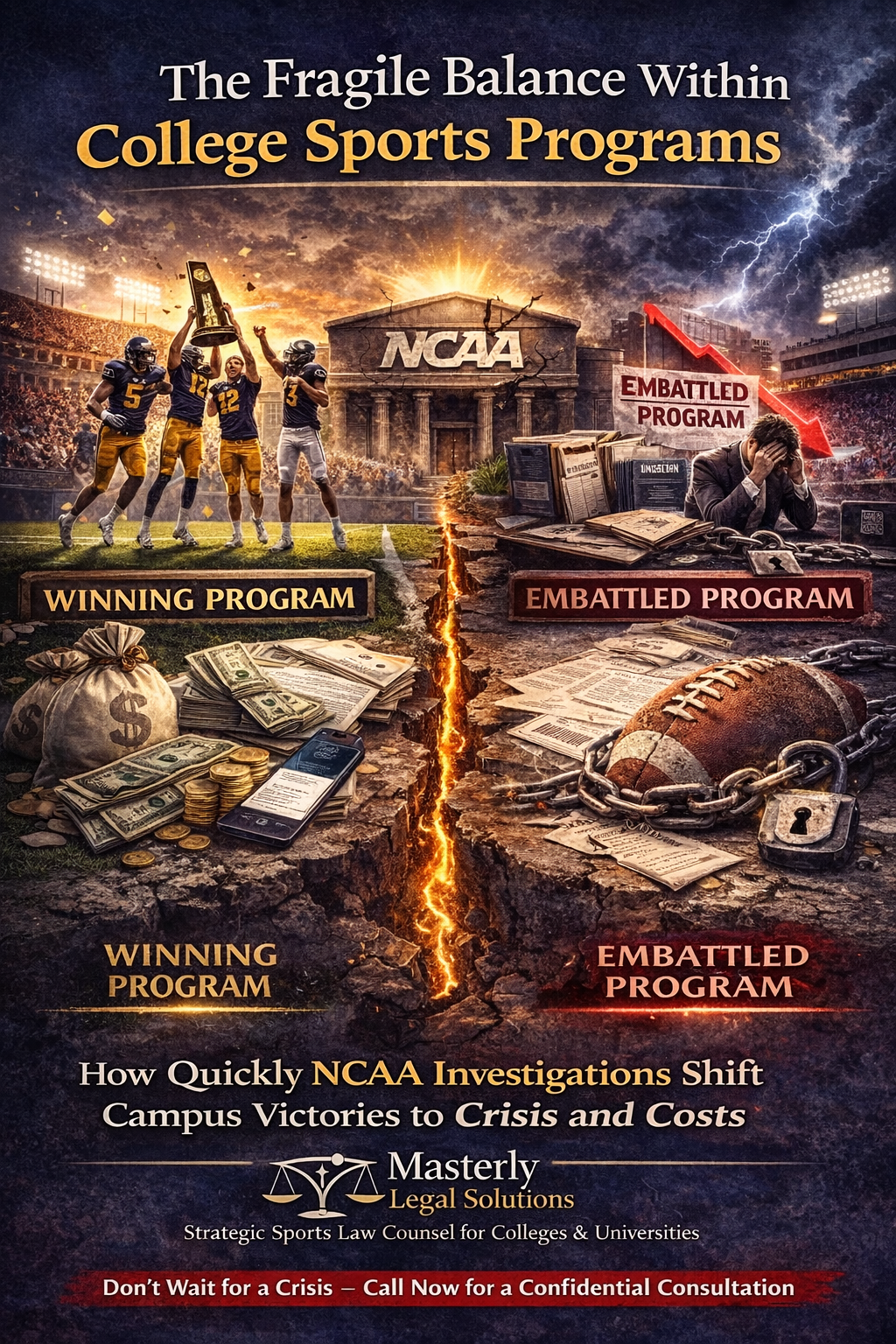
Strategic Legal Support for Sports Agencies, Team Owners, and Expanding Athletic Enterprises
Modern athletics extend far beyond the playing field, requiring coordinated legal strategy for sports agencies, team owners, and organizations operating across multiple sports leagues and leagues nationwide, particularly when navigating NCAA violations and investigations. From advising entities connected to the National Basketball Players Association to addressing corporate governance, tax planning, and wealth management, experienced outside counsel must bring deep knowledge of the sports industry’s legal and financial structure. Today’s programs often involve joint ventures, partnerships with an investor group, oversight of charitable foundations, and even real estate development tied to stadiums or training facilities. When complex acquisitions or potential antitrust matters arise, having attorneys who understand the regulatory environment and competitive balance within each league can make a decisive difference. Effective representation ensures that business growth, compliance, and long-term stability remain aligned both on and off the field.
Preventive Strategies Through Proactive Sports Law
The most effective defense against NCAA infractions begins before any investigation. Comprehensive compliance programs, clear internal policies, and regular audits reduce risk. Athletic departments benefit from ongoing legal counsel.
Outside general counsel arrangements allow sports organizations to access continuous guidance from attorneys experienced in sports law and education law. Contract negotiations, sponsorship agreements, and production agreements can be reviewed in advance. Risk management becomes part of daily operations.
At Masterly Legal Solutions, our firm emphasizes proactive NCAA compliance and investigation strategies. Prevention often saves institutions from devastating consequences. Being prepared is far less costly than defending against sanctions.
Why Legal Intervention Makes the Difference
When allegations arise, timing is critical. Institutions that wait too long to involve experienced sports lawyers may lose valuable opportunities to shape the narrative. Early investigation strategies can limit exposure.
A dedicated attorney can review evidence, challenge unsupported claims, and protect intellectual property assets. Coordinated responses to governing bodies demonstrate professionalism and accountability. This approach can influence the severity of penalties.
Our firm is committed to serving as a trusted Texas-based legal counsel in complex sports matters. We work closely with clients to defend their programs and protect their long-term viability.
Contact Masterly Legal Solutions for Strategic Sports Law Guidance
If your athletic program is facing NCAA scrutiny, do not assume the issue will resolve itself. Infractions can expand quickly, affecting athletes, administrators, and the broader business structure supporting your teams. Immediate legal intervention can help preserve what you have built.
At Masterly Legal Solutions, we provide comprehensive legal and business representation tailored to the realities of today’s sports industry. Our attorneys are dedicated to protecting sports clients, institutions, and athletes from avoidable damage. We strive to deliver the same level of strategic insight associated with the best lawyers in the field.
Call us at (972) 236-5051 to schedule your free consultation. Let us review your situation, discuss your options, and help you safeguard your program before lasting harm occurs.
This article is provided for educational purposes only and does not constitute legal advice. Since each case is different, you should speak with knowledgeable legal counsel about your particular situation.

Teacher Rights When Assaulted by a Special Needs Student: Safety, Reporting and Investigation Issues

Looking for Legal & Business Solutions? Contact Us Now
Fill in the form or call us to set up a meeting