

How Safety Plans Are Used During CPS Investigations
When a family first learns that child protective services CPS has opened an investigation, the experience can feel overwhelming and deeply personal. Questions arise quickly. What does this mean for our children? Will our parental rights be affected? Are we at risk of losing custody or facing criminal charges?
At Masterly Legal Solutions, we understand how frightening it can be when child protective services becomes involved in your life. Many parents assume that once CPS is investigating allegations of child abuse or neglect, removal of children is inevitable. In reality, one of the most common tools used by child protective services is a safety plan. Understanding how safety plans work, and how they may affect your family, is critical to protecting both your children and your rights.
This article explains how safety plans are used during CPS cases, how they relate to state laws and federal law, and why early legal representation can make a significant difference.
Understanding the Role of Child Protective Services
Child protective services CPS is the government agency responsible for investigating reports of child abuse and neglect. In Texas, the Texas Department oversees these protective services through its child welfare divisions. The agency’s stated mission is to protect children from harm while promoting safe and stable families.
When child protective services CPS receives a report of suspected child abuse, physical abuse, child sexual abuse, or child neglect, it must respond under state laws and federal regulations. Certain professions, such as teachers and medical professionals, are required by law to report suspected child abuse or neglect.
Once a report is made, the investigation process begins. The focus is on assessing risk, determining whether abuse or neglect occurred, and evaluating the well being of the children involved.
What Triggers a CPS Investigation
An investigation may be triggered by allegations of physical abuse, sex abuse, educational neglect, medical neglect, or exposure to illegal activity. Reports may involve physical harm, child sexual abuse, or concerns about preventing sex trafficking or sex trafficking risks.
Sometimes, a report is based on a misunderstanding. Other times, there may be legitimate concerns that need to be addressed. Regardless of the source, child protective services CPS must assess the risk to the child involved and determine what protective services are necessary.
The investigation may include home visits, interviews with parents and youth, obtaining witness statements, and reviewing medical care or school records. The goal is to gather evidence and evaluate the safety of the children.
What Is a Safety Plan
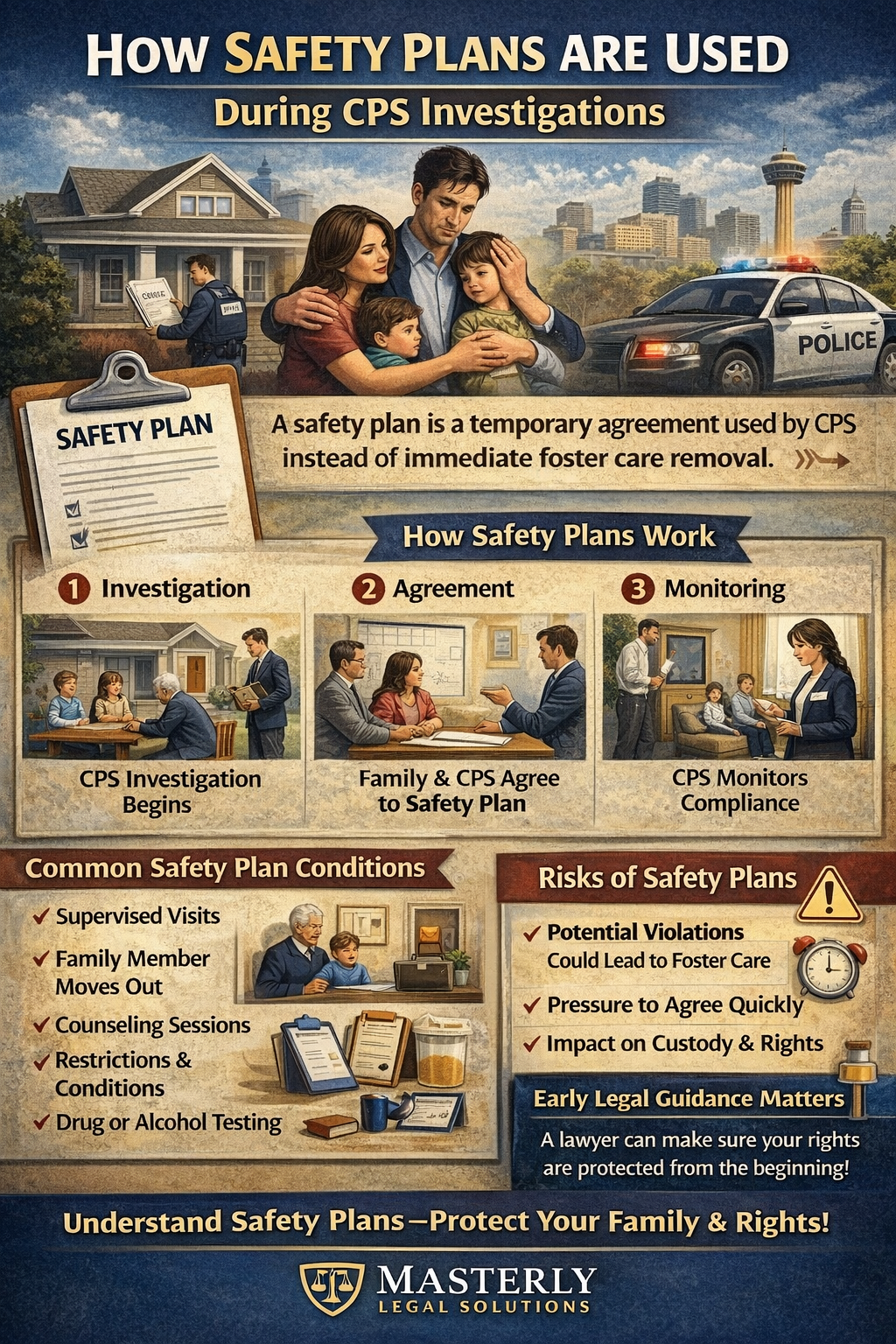
A safety plan is a written agreement developed by child protective services CPS and the family during an investigation. It outlines specific steps parents and family members must take to address immediate concerns related to abuse and neglect.
Safety plans are typically used when CPS believes there is a risk to children but removal into foster care may not yet be necessary. Instead of immediately placing children in foster care, protective services may attempt to keep children in the home with conditions designed to reduce risk.
These plans are often presented as voluntary. However, parents may feel pressured to agree, especially when faced with the possibility of foster care placement.
The Purpose of a Safety Plan
The stated purpose of a safety plan is to protect children while allowing families to remain together when possible. Under both state laws and federal law, child protective services CPS is required to make reasonable efforts to prevent removal and to preserve families when safe to do so.
Safety plans are part of broader child abuse prevention strategies. Federal legislation such as the prevention services act, families safe act, and safe families act reflect a policy preference for supporting families rather than immediately separating them.
In theory, a safety plan promotes safe environments while the investigation continues. In practice, the terms of the plan can significantly affect parental rights and daily life.
Common Conditions in CPS Safety Plans
Safety plans vary depending on the allegations. However, they often include conditions such as:
- A specific family member supervising all contact between a parent and the children
- Temporary relocation of one parent from the home
- Mandatory participation in counseling or social services
- Restrictions on who may be present in the home
- Requirements related to medical care or education
In cases involving child sexual abuse or sex abuse allegations, the safety plan may restrict contact entirely between the accused individual and the children. When physical abuse or child neglect is alleged, the plan may require parenting classes or ongoing monitoring by protective services.
How Safety Plans Affect Parental Rights
Although safety plans are often described as voluntary, they can have significant consequences for parental rights. Parents may agree to terms without fully understanding how those terms could later be used as evidence in court.
If a parent violates a safety plan, child protective services CPS may seek removal of the children into foster care. In some situations, violations may lead to court involvement under the child welfare act or related state laws.
It is important to remember that agreeing to a safety plan does not mean you admit to child abuse or neglect. However, the language of the agreement can influence future CPS cases.
Interaction With Federal and State Law
Safety plans operate within a framework shaped by both federal and state laws. Federal legislation such as the adoption promotion act, foster care independence act, increasing adoptions act, and stable families amendments influences how protective services are delivered.
State laws, particularly those administered by the Texas Department, govern investigation procedures and the rights of parents. The child welfare act and related statutes require agencies to focus on the best interest of children while balancing family preservation.
Federal initiatives like fostering connections and interethnic placement provisions also affect foster care and adoption decisions. These laws emphasize permanency planning, adoption assistance, and promoting safe and stable placements.
When Foster Care Becomes a Possibility
If child protective services CPS determines that children face immediate danger, removal into foster care may occur. Foster children may be placed with relatives, licensed foster families, or in group settings depending on age and availability.
The goal of protective services is generally reunification when safe. However, repeated findings of child abuse and neglect can lead to termination of parental rights under certain circumstances.
Adoption and adoption assistance programs may become relevant if reunification is not possible. Federal programs under the adoption promotion act and increasing adoptions act support permanent placements.
Investigating Allegations of Child Abuse and Neglect
During an investigation, CPS workers gather evidence to determine whether child abuse or neglect occurred. This may involve interviewing children of different age groups, speaking with parents, and obtaining witness statements.
Allegations may include physical abuse, child sexual abuse, sex abuse, educational neglect, or failure to provide adequate medical care. In severe cases, authorities may coordinate with police if criminal charges are possible.
Parents should understand that statements made during the investigation can later be used in court. Having legal representation during this stage can provide critical protection.
The Role of Social Services and Support
Protective services often coordinate with social services to provide support for families. This may include counseling, parenting classes, substance abuse treatment, or other community based programs.
The intention is to address underlying issues contributing to abuse and neglect. Programs related to child abuse prevention and promoting safe environments are designed to reduce long term risk.
Families may also receive referrals for medical assistance or education resources. While these services can be helpful, participation requirements may be mandatory under a safety plan.
Youth, Age, and Individual Needs
The age of the children involved can influence how safety plans are structured. Younger children may require more direct supervision, while older youth may be given certain freedoms under monitored conditions.
In cases involving sex trafficking or preventing sex trafficking concerns, protective services may implement additional safeguards. Youth who have experienced child sexual abuse may receive specialized counseling services.
Each child involved has unique needs. Safety plans should account for age, developmental stage, and overall well being.
Risks of Signing Without Legal Guidance
Parents often feel pressured to sign safety plans quickly. However, the long term impact can be significant.
A poorly drafted agreement may limit contact with children, impose strict supervision requirements, or create conditions difficult to meet. Violations can strengthen CPS cases and increase the risk of foster care placement.
Consulting an experienced attorney before signing can help you understand your rights. Legal support can also clarify whether the proposed plan aligns with state laws and federal requirements.
Evidence and Documentation During CPS Cases
Documenting interactions with child protective services CPS is essential. Keep copies of any safety plans, reports, and communications.
If allegations of abuse or neglect are unfounded, evidence such as medical records, school attendance records, and witness statements can help demonstrate compliance. Accurate documentation may counter claims of educational neglect or physical harm.
An attorney can assist in reviewing evidence and identifying inconsistencies in the investigation.
The Balance Between Protection and Family Unity
The law recognizes the importance of keeping children safe while preserving families whenever possible. Reasonable efforts must be made to avoid unnecessary removal.
However, safety plans can blur the line between voluntary cooperation and coercion. Parents may feel they must agree to any condition to avoid foster care.
Understanding your rights under state laws and federal regulations helps ensure that protective services actions are lawful and appropriate.
Adoption, Permanency, and Long Term Planning
If a CPS case progresses, the focus may shift to permanency planning. Adoption becomes a consideration if reunification is not achievable.
Adoption assistance programs, supported by federal acts such as the adoption promotion act and increasing adoptions act, provide financial and medical assistance to adoptive families.
While adoption can offer stable homes for foster children, parents facing CPS investigations should be aware of how early decisions affect long term outcomes.
How Masterly Legal Solutions Can Assist Families
At Masterly Legal Solutions, we provide legal representation for parents navigating CPS cases. We understand the stress that child abuse or neglect allegations place on families.
Our team works to protect parental rights, review safety plans, and advocate for fair treatment under the law. We analyze whether child protective services CPS has complied with state laws and federal standards.
An experienced attorney can communicate with the Texas Department on your behalf, assist in court proceedings, and help protect your children’s well being.
Taking Action to Protect Your Family
If child protective services CPS has contacted you or presented a safety plan, do not ignore the situation. Early action can prevent misunderstandings and protect your rights.
We encourage families to seek legal support before signing agreements or making significant decisions. Understanding the investigation process empowers you to make informed choices.
Your children deserve protection, and so do your parental rights.
Bills Introduced That May Impact CPS Cases
Each legislative session, new bills introduced at the state and federal level can significantly affect how CPS investigations are handled. These proposals may address parental rights, timelines for investigations, standards of evidence, or funding for protective services and foster care programs. In Texas and across the country, lawmakers often review concerns related to child abuse and neglect, aiming to balance child safety with family preservation. Staying informed about bills introduced that impact CPS procedures is important because changes in the law can directly influence how cases are investigated and resolved.
Seeking Justice in CPS Proceedings
For many families, a CPS investigation is not only about compliance but about justice. Parents want a fair process, an unbiased review of the evidence, and decisions that truly reflect the best interest of their children. When allegations of abuse or neglect are unfounded or exaggerated, pursuing justice may involve challenging findings, presenting documentation, and asserting parental rights in court. Having experienced legal guidance can make a critical difference in ensuring that the process remains fair, transparent, and grounded in the law.
Speak With Masterly Legal Solutions Today
If you are facing a CPS investigation, questions about a safety plan, or concerns about child abuse and neglect allegations, you do not have to navigate this alone. The decisions you make early in the process can shape the outcome for your children and your family’s future.
At Masterly Legal Solutions, we are committed to helping families understand their rights and options under child protection services and Texas law. Contact us at (972) 236-5051 for a free consultation. We will listen to your concerns, review your circumstances, and provide guidance tailored to your situation so you can move forward with clarity and confidence.
This article is provided for informational and educational purposes only and does not constitute legal advice. Every CPS case is unique, and you should consult directly with a qualified attorney regarding your specific circumstances.


Teacher Rights When Assaulted by a Special Needs Student: Safety, Reporting and Investigation Issues


Looking for Legal & Business Solutions? Contact Us Now
Fill in the form or call us to set up a meeting





