

Documenting Retaliation at Work While Under School Investigation
Facing an internal school investigation can feel isolating and overwhelming. For many employees, the stress is not only about the underlying allegations but also about how they are treated afterward. When negative treatment follows a complaint, report, or participation in a review, concerns about retaliation at work quickly arise.
At Masterly Legal Solutions, we regularly speak with workers who believe they are being punished for standing up for themselves or others. Whether you are a teacher, administrator, or support staff member, understanding how to document what is happening can make a meaningful difference. Careful documentation can help protect your rights under federal, state laws, and local laws, especially when discrimination or harassment may be involved.
This article is designed to help you recognize, record, and respond to retaliation while under a school investigation. The goal is not only to provide information, but to empower you to take steps that safeguard your employment and future.
Understanding Retaliation in the Workplace
Retaliation occurs when an employer takes adverse actions against employees because they engaged in protected activity. Protected activity can include filing a complaint about discrimination, reporting harassment, participating in an investigation, or raising concerns about occupational safety.
Under federal and state laws, it is unlawful for an employer to punish workers for exercising their legal protections. Retaliation can take many forms, and it is not always obvious. Sometimes it appears subtle at first, such as being excluded from meetings or reassigned to a less desirable position.
In school settings, the dynamics can be particularly complex. When an investigation is already underway, it may be difficult to determine whether discipline is legitimate or retaliatory. That is why documentation becomes so important.
What Is Protected Activity
Protected activity includes actions that are safeguarded under laws such as Title VII of the Civil Rights Act, the Disabilities Act, and other employment act provisions. For example, filing a complaint with the equal employment opportunity commission or cooperating with federal agencies during an inquiry is considered protected activity.
Protected activity may also involve reporting occupational safety concerns, participating in whistleblower laws processes, or raising issues related to age discrimination. Even informal complaints to a supervisor can qualify if they relate to discrimination or harassment.
Other related protected activity can include supporting a co worker who has filed a complaint. The law recognizes that employees should be able to participate in these processes without fear of retaliation.
Common Examples of Retaliation Under School Investigation
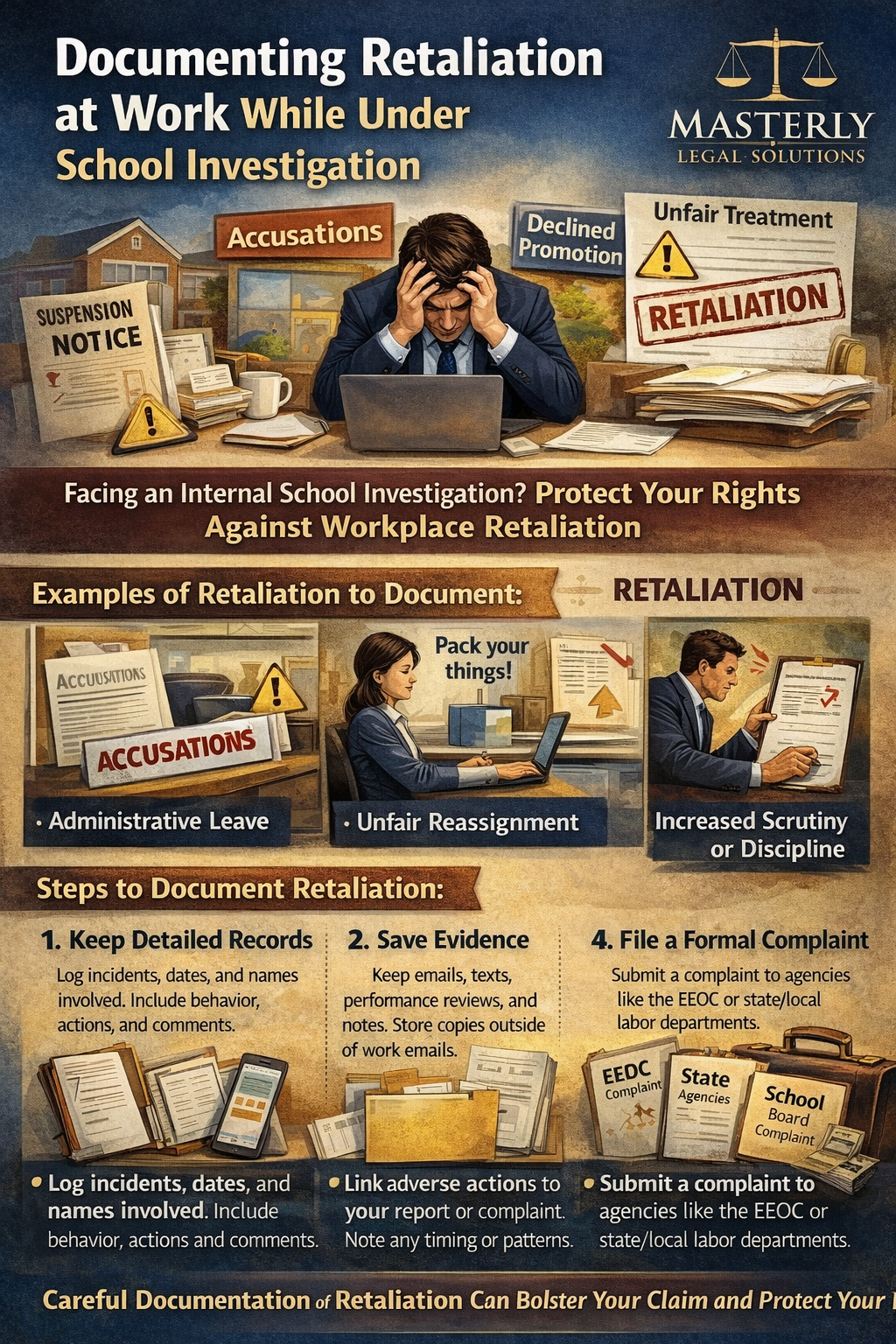
Retaliation can appear in many forms, especially when a school investigation is ongoing. Employees may notice subtle changes in treatment that gradually escalate.
Examples of adverse actions may include:
- Placement on administrative leave without clear justification
- Removal from a desirable position and reassignment to a less desirable position
- Reduction in pay or wages
- Denial of benefits or professional development opportunities
- Increased scrutiny or sudden disciplinary action
In some cases, retaliation occurs when an employer imposes a negative impact on scheduling, family responsibilities, or opportunities for advancement. The key is whether the action would dissuade a reasonable employee from engaging in protected activity.
Administrative Leave and Its Implications
Administrative leave can be neutral in some situations, particularly when used to allow an investigation to proceed. However, repeated or extended administrative leave may raise concerns, especially if it appears connected to a complaint or other protected activity.
Paid administrative leave may still carry stigma within the workplace. Colleagues may speculate, and employee morale can decline. If administrative leave is used as a tool to sideline or isolate someone who reported discrimination, it may be considered an adverse action.
Because administrative leave can be imposed multiple times during an investigation, employees should document each instance carefully. Record the date, stated reason, and any changes in duties or pay.
Federal and State Legal Protections
Federal laws such as Title VII and the Civil Rights Act prohibit retaliation tied to discrimination based on race, sex, religion, or national origin. The Disabilities Act offers similar legal protections for employees with disabilities, while age discrimination laws protect older workers.
State laws and local laws often provide additional protections. In some cases, state and local laws extend coverage to smaller employers or offer broader remedies than federal statutes. School employees should be aware that federal agencies and state agencies may both have jurisdiction over certain claims.
Federal employees have separate procedures under federal regulations, but they are still protected from unlawful retaliation. Understanding which laws apply to your situation is a critical step in documenting your claim.
The Role of Whistleblower Laws
Whistleblower laws protect workers who report illegal conduct, safety violations, or misuse of government funds. In school settings, this may include reporting concerns about occupational safety, improper use of public resources, or misconduct involving students.
When retaliation follows a whistleblower complaint, the timing can help establish a connection. Documentation showing that adverse actions occurred soon after the report can be strong evidence.
Workers should keep copies of any written complaint and responses from the department or employer. Even if the complaint was made verbally, follow up with a written summary to create a record.
Documenting Adverse Actions Step by Step
When you believe retaliation occurs, begin documenting immediately. Do not rely on memory alone, especially during stressful circumstances.
Keep a detailed log that includes:
- Dates and times of incidents
- Names of individuals involved, including a supervisor or co worker
- Specific statements made
- Changes in duties, pay, or benefits
- Witnesses who may support your account
Save emails, text messages, and performance evaluations. If possible, store copies outside your workplace system to ensure continued access.
Connecting Protected Activity to Retaliation
To establish retaliation, employees must show a connection between protected activity and adverse actions. Timing is often important, but it is not the only factor.
For example, if you filed a discrimination complaint and were placed on administrative leave shortly afterward, that sequence may suggest a link. However, additional information is usually needed to establish that the leave was motivated by retaliation rather than legitimate concerns.
Document conversations where your complaint is referenced. If a supervisor makes comments suggesting frustration with your reporting, record those details as soon as possible.
The Importance of a Reasonable Employee Standard
Courts often evaluate whether an action would deter a reasonable employee from engaging in protected activity. This standard looks at the broader context of the workplace.
For example, being moved from a desirable position to a less desirable position could be considered significant if it affects career advancement. A minor scheduling change may not qualify unless it has a negative impact on family responsibilities or wages.
Careful documentation helps demonstrate how the action affected you personally and professionally. Describe the impact on your duties, reputation, and overall employee morale.
Harassment as a Form of Retaliation
Harassment can be a form of retaliation when it intensifies after a complaint. Increased scrutiny, public criticism, or exclusion from meetings may contribute to a hostile workplace.
If harassment escalates under the supervision of a particular supervisor, document each instance. Include specific words used, tone, and how the situation differed from past treatment.
Harassment tied to protected activity can violate federal and state laws, especially when it involves discrimination or creates a hostile environment.
Special Considerations for Teachers and School Staff
Teachers and other school employees often face unique pressures. An investigation may involve students, parents, or even police if serious allegations arise.
When police or government authorities become involved, the stress level increases. However, the presence of an investigation does not eliminate legal protections against retaliation.
Document any shift in treatment following your participation in interviews or submission of a complaint. Note whether the employer altered your duties, imposed administrative leave, or restricted access to the office.
Family Responsibilities and Retaliatory Impact
Retaliation can affect more than professional standing. Changes in schedule, denial of absence requests, or reduced pay can interfere with family responsibilities.
For example, if an employee is reassigned to a shift that conflicts with caregiving for a family member shortly after filing a complaint, that may be relevant. Document how the change disrupts your life and whether similar accommodations were previously granted.
State and local laws may offer additional protections related to family responsibilities. Recording these details strengthens your claims if a lawsuit becomes necessary.
Immigration Status and Vulnerable Workers
In some cases, workers fear retaliation tied to immigration status. Threats related to immigration status may be unlawful, especially when used to silence complaints about discrimination or occupational safety.
Federal and state laws prohibit retaliation regardless of immigration status in many contexts. Workers should not be discouraged from reporting a possible violation due to fear.
Document any comments or threats related to immigration status. Such statements can support claims of unlawful retaliation.
Filing a Complaint With Agencies
If internal reporting does not resolve the issue, employees may file a complaint with the equal employment opportunity commission or relevant federal agencies. State and local agencies may also accept claims under state laws.
Keep copies of all forms submitted and confirmation of receipt. Document the dates of filing and any responses from the agency.
Participating in an agency investigation is protected activity. If retaliation follows, note the timing and nature of the adverse actions.
Building Strong Claims for a Lawsuit
Not every workplace dispute leads to a lawsuit, but some do. To succeed, employees must establish that they engaged in protected activity, suffered adverse actions, and that a connection exists between the two.
Claims may involve discrimination, harassment, or violation of whistleblower laws. Evidence such as emails, witness statements, and documentation of administrative leave can help establish your case.
A jury will often evaluate credibility and consistency. Detailed records can make the difference between limited proof and persuasive evidence.
The Emotional Toll and Limited Internal Remedies
Being under investigation while experiencing retaliation can take a serious emotional toll. Employees may feel isolated, anxious, or uncertain about their future.
Internal remedies are sometimes limited, especially when the same employer controls the investigation and discipline. That is why seeking outside guidance can be critical.
Protecting your rights is not just about financial recovery. It is about justice, respect, and preserving your professional reputation.
How Masterly Legal Solutions Can Protect You
At Masterly Legal Solutions, our office focuses on helping employees navigate complex workplace disputes. We understand how retaliation at work can escalate quickly, especially in educational environments.
Our team evaluates whether your circumstances involve unlawful discrimination, harassment, or retaliation under federal, state laws, and local laws. We work to protect your rights while minimizing further risk.
We assist in reviewing documentation, advising on communication strategies, and determining whether claims should be filed with a government agency or pursued through a lawsuit.
Taking Action Before It Is Too Late
Timing matters in employment disputes. Many laws impose strict deadlines for filing a complaint or lawsuit.
Delays can limit your options and weaken your position. The sooner you begin documenting adverse actions and seeking guidance, the better positioned you will be.
Even if you are still on administrative leave or dealing with an ongoing investigation, proactive steps can protect your future.
Reach Out for Support and Clarity
If you believe you are experiencing retaliation at work while under a school investigation, you do not have to navigate this alone. Whether you are dealing with discrimination, harassment, administrative leave, or other adverse actions, informed guidance can help you move forward with confidence.
At Masterly Legal Solutions, we invite you to contact us at (972) 236-5051 for a free consultation. We will listen carefully to your concerns, review your documentation, and provide additional information about your legal options. Taking this step can help you protect your employment, your reputation, and your peace of mind.
This article is intended for educational purposes only and does not constitute legal advice. Every situation is unique, and you should consult directly with a qualified attorney regarding your specific circumstances.



Teacher Rights When Assaulted by a Special Needs Student: Safety, Reporting and Investigation Issues



Looking for Legal & Business Solutions? Contact Us Now
Fill in the form or call us to set up a meeting