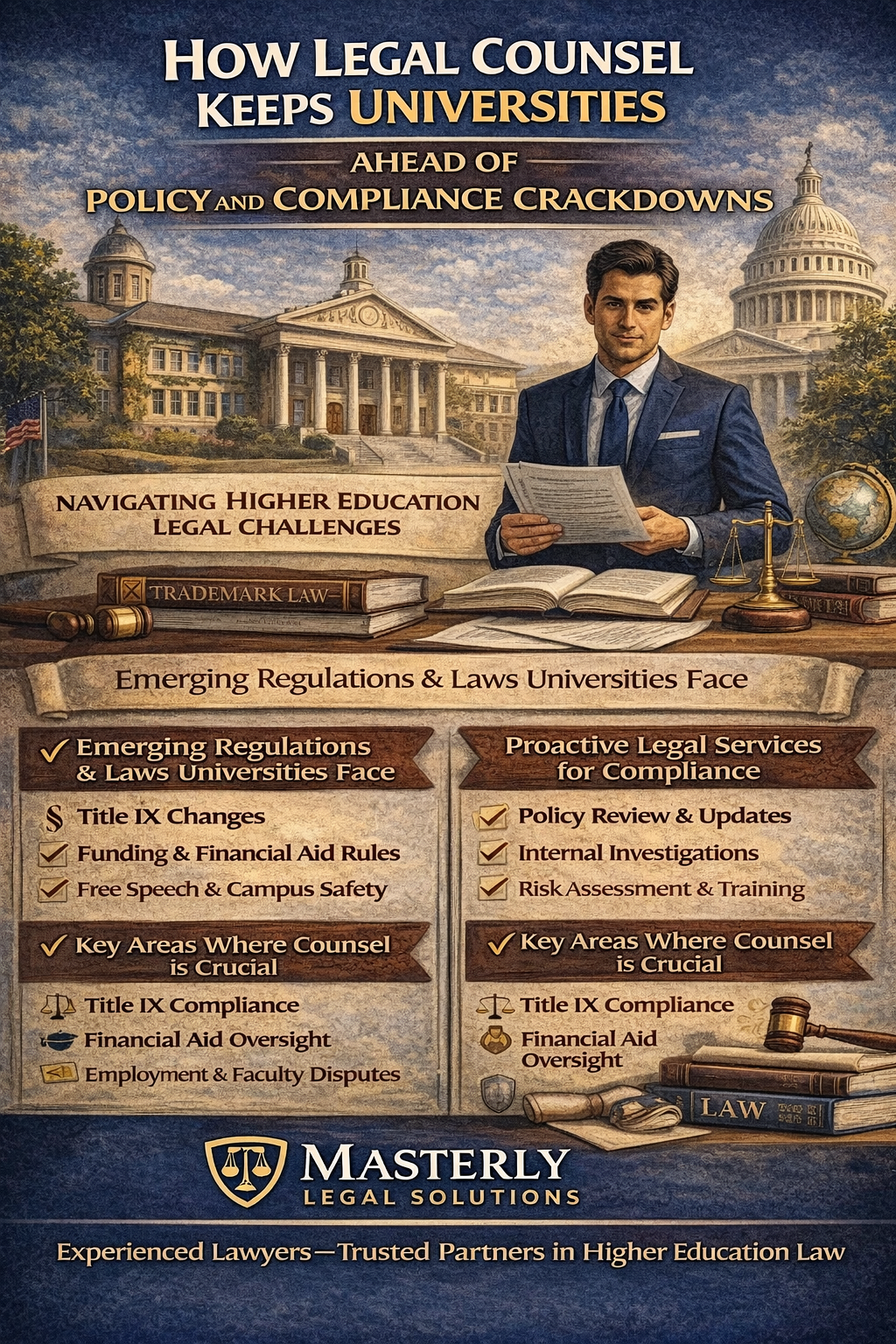
How Legal Counsel Keeps Universities Ahead of Policy and Compliance Crackdowns
Universities today operate in an environment that changes almost overnight. New regulations, shifting political priorities, and increasing scrutiny from government agencies can quickly place colleges and universities under pressure. For many educational institutions, staying compliant is no longer just about following established rules. It requires forward thinking strategy, experienced attorneys, and ongoing legal guidance grounded in higher education law.
At Masterly Legal Solutions, our higher education team works closely with university clients, private college leadership, and general counsel offices to help institutions anticipate compliance challenges before they become crises. In the higher education sector, waiting for a policy crackdown to arrive is a costly mistake. Proactive legal services can help academic institutions protect their mission, reputation, and financial stability.
This article explores how legal counsel helps colleges and universities stay ahead of regulatory scrutiny, enforcement actions, and emerging legal issues in higher education.
The Expanding Regulatory Landscape in Higher Education
The higher education sector is governed by a complex network of federal and state law. Colleges and universities must comply with rules involving financial aid, student records, employment contracts, and civil rights protections. The internal revenue code also shapes how private institutions manage restricted funds and tax exempt status.
Educational institutions are also subject to oversight from government agencies, including the Department of Education and the national labor relations board. Each regulatory body has authority to investigate and enforce compliance.
Without a deep understanding of higher education law, many institutions struggle to interpret evolving requirements. Legal counsel provides clarity in this rapidly changing environment.
Why Proactive Compliance Matters More Than Ever
Policy crackdowns often follow national headlines or legislative changes. When pending legislation reshapes regulatory expectations, higher education institutions must adapt quickly. Institutions that delay risk government investigations, financial penalties, or reputational harm.
Proactive regulatory compliance allows academic institutions to update policies before enforcement intensifies. This includes revising student handbooks, reviewing academic misconduct procedures, and reassessing title ix compliance frameworks.
Our firm’s higher education practice focuses on identifying vulnerabilities early. By doing so, we support institutions in avoiding reactive crisis management.
The Role of General Counsel in Universities
General counsel serves as the legal backbone of colleges and universities. They advise leadership on governance, employment contracts, intellectual property, and compliance matters. In larger private research university settings, general counsel offices coordinate closely with external higher education attorneys.
However, even well staffed offices benefit from outside support. External law firms bring additional legal resources and a broader perspective on trends affecting numerous institutions.
At Masterly Legal Solutions, we work alongside general counsel teams to provide focused legal guidance on complex matters within the education sector.
Title IX Compliance Under Heightened Scrutiny
Title ix compliance has become one of the most closely monitored areas in higher education. Educational institutions must respond promptly and fairly to allegations of sexual misconduct. Failure to follow appropriate procedures can lead to federal investigations or litigation in federal and state courts.
Title ix policies must balance free speech, academic freedom, and due process rights. Colleges and universities often revise procedures in response to regulatory changes and court decisions.
Our higher education attorneys assist institutions in evaluating policies, conducting internal investigations, and defending decisions when challenged. By strengthening title ix compliance, universities reduce the risk of enforcement actions.
Academic Freedom and Free Speech Challenges
Academic freedom and free speech are foundational principles within higher education. Yet these principles frequently intersect with legal issues involving student discipline and faculty member conduct. Public and private university campuses alike face tension between expression and institutional values.
Legal counsel helps higher education institutions craft policies that respect free speech while maintaining campus safety. This includes reviewing student affairs policies, academic affairs guidelines, and faculty tenure procedures.
Clear policies and consistent enforcement help preserve campus culture and avoid costly litigation.
Student Discipline and Academic Misconduct Procedures
Student discipline cases can escalate quickly, particularly when allegations involve academic misconduct or sexual misconduct. A student dismissed for policy violations may file suit, claiming procedural errors or discrimination based on national origin or disability under the disabilities act.
Institutions must ensure that student handbooks and disciplinary processes comply with federal and state law. When disputes arise, legal representation is essential.
Our higher education team has represented clients in summary judgment motions and obtained summary judgment in complex cases. Strong documentation and consistent procedures are critical to defending institutional decisions.
Faculty Member Disputes and Employment Contracts
Faculty member disputes often involve faculty tenure, academic freedom, and employment contracts. Higher education institutions must balance contractual rights with institutional policies and budgetary realities.
Legal counsel assists in drafting employment contracts that align with institutional goals while reducing risk. When disputes arise, experienced attorneys help navigate mediation, arbitration, or litigation.
By addressing potential conflicts early, institutions can maintain stability and strong and lasting relationships with faculty and staff.
Navigating Government Investigations and Enforcement
Government investigations can be triggered by whistleblower complaints, false claims act allegations, or concerns about financial aid practices. In some cases, agencies scrutinize compliance with the internal revenue code or grant restrictions.
Crisis management during investigations requires coordination among leadership, communications professionals, and legal counsel. Providing legal advice at the earliest stage helps contain risk and protect the institution’s reputation.
Our higher education attorneys counsel clients during government investigations, helping them respond strategically and transparently.
Financial Aid and Restricted Funds Oversight
Financial aid compliance is central to institutional stability. Colleges and universities must manage restricted funds carefully and comply with detailed reporting obligations.
Errors in financial aid administration can lead to enforcement actions or repayment demands. Legal counsel reviews procedures to ensure compliance with federal and state law.
By proactively auditing practices, institutions reduce exposure and strengthen regulatory compliance.
Intellectual Property and Technology Agreements
In the modern higher education sector, intellectual property plays a vital role. Universities develop patents, research partnerships, and technology agreements that generate revenue and innovation.
Legal guidance is essential when negotiating technology agreements or protecting institutional intellectual property. This is particularly true for private research university environments where research output is significant.
A broad range of legal services supports academic institutions in safeguarding these assets.
The Importance of Campus Culture and Community Trust
Campus culture influences how policies are received and enforced. Community members, including students and faculty, expect fairness and transparency.
Legal counsel works with student affairs and academic affairs leadership to align policy enforcement with institutional values. Thoughtful communication strategies help maintain trust.
When universities respond consistently to legal issues, they reinforce credibility across the education sector.
Employment Matters and Employee Benefits
Educational institutions also face legal issues related to employee benefits, labor relations, and compliance with national labor relations board requirements. These matters can affect both private institutions and public colleges.
Higher education attorneys assist institutions in addressing union issues, faculty contracts, and compliance with evolving labor standards.
Proactive review of policies reduces risk and supports institutional stability.
Litigation Strategy and Summary Judgment Success
When disputes escalate into litigation, law firms representing colleges and universities must be prepared for complex proceedings. Summary judgment motions can resolve cases before trial, saving time and resources.
Our firm has obtained summary judgment in multiple matters involving higher education clients. Careful preparation and a deep understanding of the education sector are critical.
Strategic litigation management protects institutional interests while preserving resources for academic missions.
Supporting Institutions Through Change
The higher education sector continues to evolve in response to social, political, and economic forces. Private college leaders and university boards must adapt to new expectations.
By partnering with experienced attorneys who understand higher education law, institutions gain insight into emerging risks. Our higher education team stays informed through engagement with the national association community and monitoring pending legislation.
We support institutions not only during crises but throughout ongoing change.
Why Masterly Legal Solutions Is a Trusted Partner
Masterly Legal Solutions brings a deep understanding of higher education and a commitment to supporting educational institutions nationwide. Our higher education practice is built on representing clients with integrity, responsiveness, and strategic foresight.
We provide legal services tailored to the specific needs of university clients, private institutions, and academic leaders. Whether addressing title ix compliance, internal investigations, intellectual property disputes, or regulatory compliance, our firm works diligently to protect institutional interests.
By building strong and lasting relationships, we help colleges and universities remain resilient in the face of policy and compliance crackdowns.
Supporting College and University Clients Across Campus Operations
Our higher education practice is designed to serve college and university clients facing complex regulatory and operational challenges. From governance issues to risk management, we understand that legal concerns often affect every part of campus life. Colleges and universities rely on clear policies to guide decision-making in academic affairs, employment matters, and compliance initiatives. By providing proactive legal counsel, we help institutions protect their mission while maintaining stability across departments and leadership teams.
Protecting Student Life and Family Educational Rights
Legal issues frequently intersect with student life, especially when questions arise about privacy, discipline, or access to student records. Institutions must carefully comply with family educational rights laws while balancing transparency and safety concerns. Proper handling of student records and disciplinary procedures reduces exposure to litigation and regulatory review. Thoughtful legal guidance ensures that policies governing student life support both compliance obligations and a fair campus environment.
Legal Oversight in Collegiate Athletics Programs
Collegiate athletics programs present unique legal considerations for colleges and universities. From scholarship agreements to eligibility disputes and compliance with conference regulations, athletics departments operate within a detailed legal framework. Institutions must also address issues related to student athlete rights, recruitment practices, and potential liability risks. Strategic legal counsel helps universities protect their programs, maintain regulatory compliance, and support the long term integrity of their athletic initiatives.
Connect With Our Higher Education Law Team
If your institution is facing regulatory scrutiny, government investigations, or complex legal issues within the higher education sector, proactive legal counsel can make all the difference. At Masterly Legal Solutions, our higher education attorneys are prepared to assist institutions with strategic planning, compliance audits, and litigation defense.
We invite you to contact us at (972) 236-5051 for a free consultation. Our team will listen to your concerns, evaluate your current compliance framework, and provide practical recommendations grounded in higher education law. With the right legal guidance, your institution can stay ahead of policy changes and protect its mission with confidence.
This article is provided for educational purposes only and does not constitute legal advice. Each institution’s circumstances are unique, and you should consult directly with qualified counsel regarding your specific legal needs.


Teacher Rights When Assaulted by a Special Needs Student: Safety, Reporting and Investigation Issues

Looking for Legal & Business Solutions? Contact Us Now
Fill in the form or call us to set up a meeting