

Retaliation or Discipline? How Work Retaliation Laws Protect Teachers from Unlawful Punishment
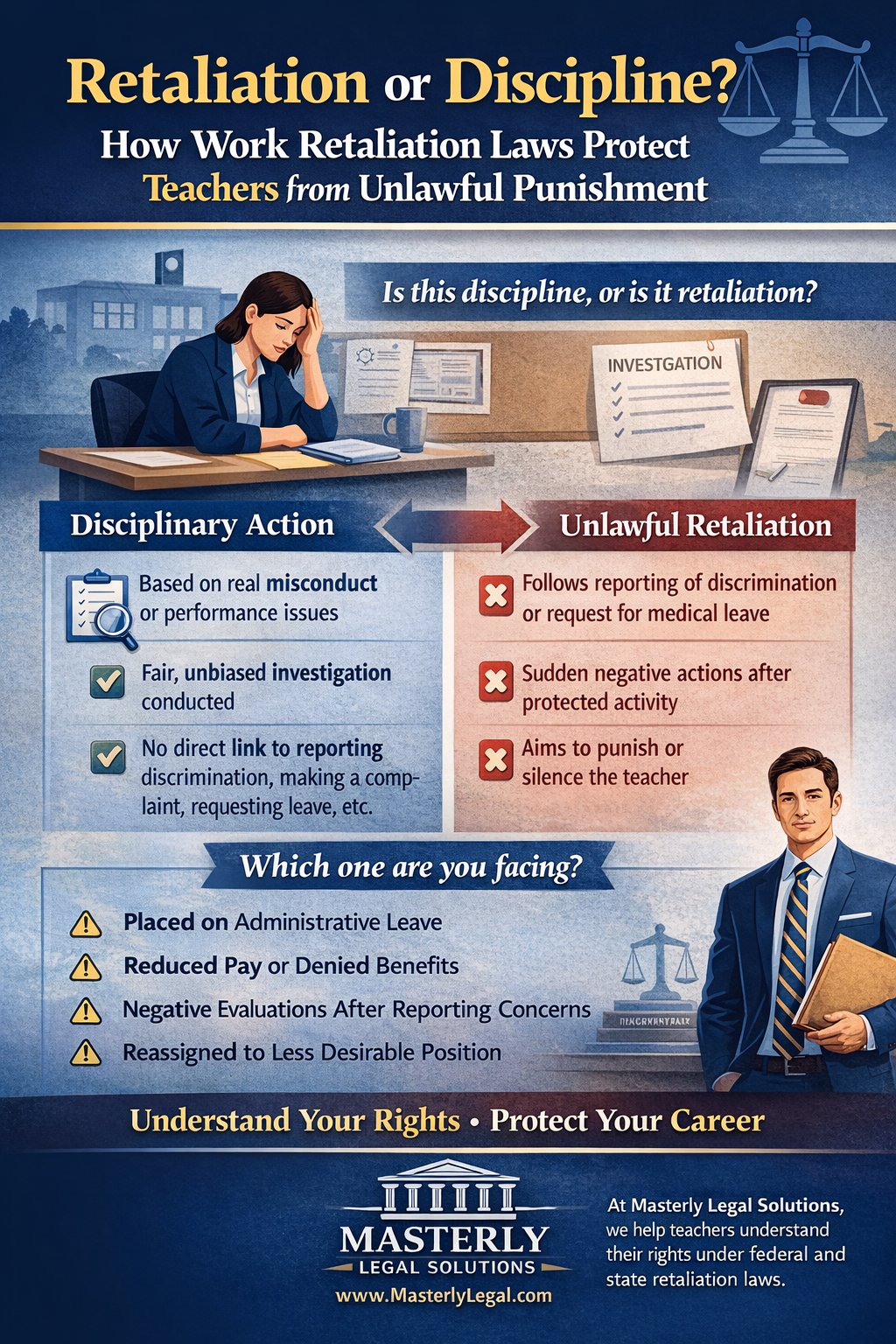
Teachers often come to us with the same question: “Is this discipline, or is it retaliation?” The confusion is understandable. School districts and administrators have authority to enforce rules, investigate alleged misconduct, and manage job duties. But when an employer crosses the line and punishment follows a protected activity, the law may step in to protect the employee.
At Masterly Legal Solutions, we regularly guide educators through this difficult gray area. Many workers are unsure when discipline is lawful and when retaliation occurs. Our role is to clarify how employment laws protect teachers from unlawful punishment, and to help them take the right steps to defend their job, pay, and professional reputation.
Why Teachers Often Feel Confused
Most teachers respect authority and want to cooperate during an investigation. When they are placed on administrative leave or paid administrative leave, they may assume it is a routine process. They are told the employer simply needs time to review alleged misconduct.
However, retaliation occurs when an employer takes adverse actions because the employee engaged in protected activity. That distinction is not always obvious. A reasonable employee may not immediately recognize that discipline tied to reporting discrimination or harassment can be unlawful.
What Is Lawful Discipline?
Schools have the right to enforce policies and address alleged misconduct. An employer may conduct an investigation if there are credible concerns about job duties, safety, or compliance with workplace rules. Administrative leave can sometimes be appropriate during that period.
For example, if there are claims of physical harm or serious classroom violations, the employer may temporarily remove the employee from the workplace while facts are gathered. In these circumstances, administrative leave may be used as a neutral step rather than punishment.
When Discipline Becomes Retaliation
Retaliation occurs when an employer takes adverse actions because an employee engaged in protected activity. That protected activity can include reporting discrimination, filing a complaint, participating in an investigation, requesting fmla leave, or seeking accommodations for a disability.
If an employee reports harassment to human resources and is then placed on administrative leave, reassigned to a less desirable position, or denied pay and benefits, those actions may not be neutral. They may instead signal retaliation.
Understanding Protected Activity in Education
Protected activity is central to retaliation claims. It includes filing a discrimination complaint under title vii, reporting safety concerns under whistleblower laws, or raising wage issues such as unpaid overtime pay.
It also covers other related protected activity, such as supporting other employees who report misconduct. When an employee engages in related protected activity and soon faces adverse actions, the timing may be critical evidence.
Examples Teachers Commonly Face
Consider this example. A teacher reports age discrimination and harassment by a supervisor. Within weeks, the employer begins an investigation into alleged misconduct that had never before been raised.
The teacher is placed on administrative leave during the investigation period. Shortly after, pay is reduced and benefits are limited. In this example, retaliation may be present if the discipline is tied to the complaint rather than legitimate concerns.
Administrative Leave as a Neutral Tool
Administrative leave is not automatically unlawful. Employers generally may place an employee on administrative leave during an investigation into alleged misconduct. Paid administrative leave can sometimes protect both the school and the employee while facts are reviewed.
However, the context matters. If administrative leave follows closely after protected activity, the timing may suggest retaliation occurs. Courts often look at whether a reasonable employee would view the action as punishment.
How Administrative Leave Can Become Punitive
Administrative leave can shift from neutral to punitive in subtle ways. If an employee is placed on administrative leave without explanation, cut off from colleagues, or denied paid time and benefits, the impact can be severe.
For example, being on administrative leave for an extended period can harm overall employee morale and damage professional standing. Even if labeled paid administrative leave, the stigma can have a negative impact on future employment opportunities.
The Role of Investigations
An investigation must be fair and unbiased. An employer has the right to investigate alleged misconduct, but it must not use the investigation as a pretext for retaliation.
We often review written communications, interview potential witnesses, and analyze whether the employer treated other employees differently under similar circumstances. A flawed investigation can reveal a possible violation of employment laws.
Recognizing Adverse Actions
Adverse actions go beyond termination. They may include demotion, reduction in pay, loss of wages, reassignment to a less desirable position, or removal from a desirable position.
For example, if a teacher reports discrimination and is suddenly moved to a classroom with fewer resources or more difficult job duties, that change may be considered an adverse action. Retaliation occurs when an employer’s response would discourage a reasonable employee from reporting misconduct.
Retaliation and Pay Issues
Changes in pay and wages are common in retaliation cases. An employer may reduce pay, deny overtime pay, or limit access to paid leave or paid time.
In one example, a teacher who reported harassment noticed a sudden reduction in wages and elimination of certain benefits. That shift followed a complaint and occurred during an investigation period, raising serious concerns.
Discrimination and Retaliation Often Overlap
Discrimination and retaliation frequently appear together. An employee may first report discrimination based on disability, race, or another protected category under title vii. The employer may then respond with adverse actions.
This pattern can create two separate claims: one for discrimination and one for retaliation. Both are protected under federal and state laws designed to protect workers in the workplace.
The Importance of Documentation
Teachers should document events carefully. Keeping records of written communications, changes in job duties, and shifts in pay can strengthen a future claim.
For example, if an employee files a complaint and is placed on administrative leave the next week, that timing is important. Documentation helps determine whether retaliation occurs.
The Role of Human Resources
Human resources departments are often involved in investigations. While they may offer guidance, they ultimately represent the employer.
An employee should not assume that reporting discrimination to human resources alone will resolve the issue. In some circumstances, retaliation may follow even after an internal complaint.
Union Representation and Additional Support
Some teachers have access to a union representative. A union representative can provide support during meetings and investigations into alleged misconduct.
However, union involvement does not replace legal guidance. Employment laws are complex, and additional assistance from experienced retaliation attorneys may be necessary.
Federal and State Legal Protections
Federal employment laws and state laws provide overlapping protections. Title vii prohibits discrimination and retaliation in many circumstances. Whistleblower laws protect workers who report safety concerns or misconduct.
These laws aim to protect employee rights and ensure fair treatment. They are designed to prevent unlawful punishment and future discrimination.
Special Considerations for Disability and Leave
Teachers with a disability may request accommodations under employment laws. Eligible employees may also request job protected leave under the fmla leave provisions.
If an employer responds to these requests with administrative leave, reduction in pay, or disciplinary action, retaliation may be present. These circumstances require careful legal review.
How Courts Evaluate Retaliation Claims
Courts generally examine three factors. First, did the employee engage in protected activity? Second, did the employer take adverse actions? Third, is there a connection between the two?
For example, if retaliation occurs when an employer disciplines a teacher immediately after a complaint, that timing can support a claim. The outcome often depends on the specific facts.
When Administrative Leave Is Extended
An extended period of administrative leave can raise red flags. If the investigation drags on without clear findings, the employee may experience financial strain and loss of benefits.
Administrative leave that stretches over months can feel like punishment, even if labeled paid administrative leave. The longer the period, the more likely courts will examine the employer’s motives.
The Emotional Toll on Teachers
Facing retaliation can deeply affect employee morale. Teachers may feel isolated from other employees and uncertain about their job security.
The stress can also impact a family member who depends on the teacher’s pay and benefits. Protecting workers from retaliation helps restore stability in the workplace.
How We Determine If Discipline Is Unlawful
At Masterly Legal Solutions, we examine the full timeline. We determine whether the employer had a legitimate basis for disciplinary action or whether the action followed a protected activity too closely.
We also compare how the employer treated other employees in similar circumstances. Differences in practices can reveal a possible violation.
Taking the Right Steps After Retaliation
If you believe retaliation has occurred, taking the right steps is critical. You should gather documents, preserve evidence, and seek legal guidance promptly.
Do not assume the investigation will resolve fairly without outside assistance. Employment laws include strict deadlines for filing a complaint or lawsuit.
The Role of an Employment Lawyer
An experienced employment lawyer can review your case and explain your legal options. Retaliation attorneys understand how to analyze adverse actions and determine whether retaliation occurs.
We provide clear guidance about next steps, whether that involves filing with a department or pursuing a lawsuit in court.
Protecting Your Job and Career
Your job and reputation matter. Being placed on administrative leave or accused of alleged misconduct can damage your career if not handled properly.
We work to protect your professional standing and seek a fair outcome. That may include restoring pay, recovering lost wages, and ensuring proper benefits are reinstated.
Why Early Legal Guidance Matters
Early legal guidance can change the outcome of a case. An employer may reconsider adverse actions once it understands the employee is represented by experienced lawyers.
Prompt assistance also ensures that critical deadlines are not missed. The right steps taken early can protect your rights under federal and state laws.
Preventing Future Discrimination and Retaliation
Legal action can also deter future discrimination. When employers are held accountable, they are more likely to change practices and protect other workers.
Standing up against retaliation protects not only the individual employee but also the integrity of the entire workplace.
Our Commitment to Teachers
At Masterly Legal Solutions, we believe educators deserve respect and fairness. When retaliation occurs, we step in to protect your rights and provide strong representation.
Our team offers practical guidance, strategic support, and compassionate assistance during every phase of the investigation and legal process.
Contact Masterly Legal Solutions for a Free Consultation
If you are unsure whether you are facing discipline or retaliation, we encourage you to speak with experienced retaliation attorneys. A single conversation can provide clarity about your circumstances and explain your legal options.
During your consultation, we will review your situation, examine any investigation details, and help determine whether your employer’s actions may violate employment laws. You do not have to navigate this alone.
Contact Masterly Legal Solutions at (972) 236-5051 for a free consultation. Let us provide the guidance and support you need to protect your job, your pay, and your professional future.
This article is for educational purposes only and does not constitute legal advice. Every case is unique, and you should seek personalized legal guidance regarding your specific circumstances.





Teacher Rights When Assaulted by a Special Needs Student: Safety, Reporting and Investigation Issues



Looking for Legal & Business Solutions? Contact Us Now
Fill in the form or call us to set up a meeting





