
How School Investigations Become TEA Enforcement Cases
When a Routine School Inquiry Becomes Something Much Bigger
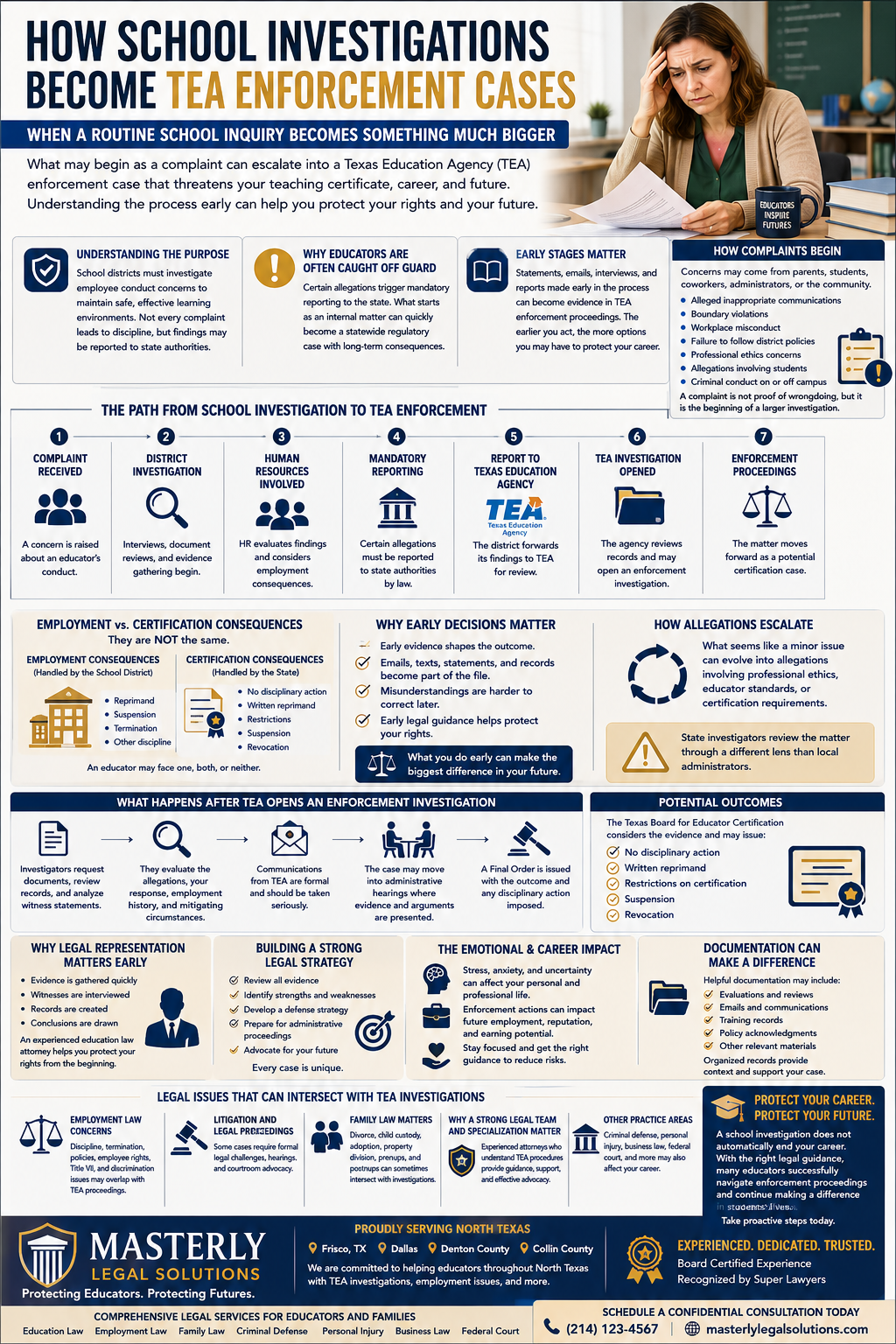
Most educators never expect a routine workplace concern to evolve into a Texas Education Agency enforcement case. What may begin as a complaint from a parent, coworker, administrator, or student can quickly develop into an investigation that places an educator's certification, career, and future at risk. Many teachers are shocked when they discover that issues initially handled by a school district can eventually be reviewed by state regulators.
The uncertainty surrounding these situations often creates tremendous stress. Educators who have dedicated years of their life to helping students suddenly find themselves answering difficult questions about their conduct and professional judgment. In some cases, they may not even realize the seriousness of the situation until they receive notice that the Texas Board responsible for educator discipline has become involved.
Understanding how school investigations become TEA enforcement cases is critical for protecting your rights. The earlier educators understand the process, the better positioned they are to make informed decisions and avoid mistakes that could negatively affect their careers.
Understanding the Purpose of School Investigations
School districts have a responsibility to maintain safe and effective learning environments for students. When concerns arise regarding employee conduct, administrators are often required to investigate the allegations and determine whether corrective action is necessary.
Not every complaint results in serious consequences. Many investigations conclude with no findings of misconduct. However, certain allegations may require additional review depending on the facts involved.
District investigations often focus on gathering information, interviewing witnesses, reviewing records, and determining whether policies were violated. What happens during this early stage can significantly influence what occurs later if the matter is reported to state authorities.
Why Educators Are Often Caught Off Guard
Many educators assume that school investigations are internal employment matters that will remain within the district. Unfortunately, that is not always the case.
Certain allegations may trigger mandatory reporting obligations. School administrators are often required to notify state agencies when they believe conduct may violate educator standards or certification requirements. As a result, an issue that begins inside a school building can quickly become a statewide regulatory matter.
Educators frequently underestimate the long-term consequences of statements, emails, reports, and interviews conducted during the district's investigation. Information gathered during those early stages may later become evidence in TEA enforcement proceedings.
How Complaints Begin the Investigation Process
Most investigations start with a complaint. These concerns may come from parents, students, coworkers, administrators, or members of the community.
Common complaints involve:
- Alleged inappropriate communications
- Boundary violations
- Workplace misconduct
- Failure to follow district policies
- Professional ethics concerns
- Allegations involving students
- Criminal conduct occurring on or off campus
The complaint itself does not prove wrongdoing occurred. However, it often serves as the starting point for a much larger investigation.
The School District's Initial Response
Once a complaint is received, administrators typically begin gathering information. The district may interview witnesses, review electronic communications, evaluate personnel records, and examine any relevant documentation.
During this stage, educators are often asked to provide statements regarding the allegations. Many individuals believe they can simply explain the situation and move forward. While cooperation may be important, statements provided during district investigations can later be reviewed by outside agencies.
This is one reason why educators should carefully consider their responses before participating in interviews or providing written statements.
When Human Resources Becomes Involved
Human resources departments frequently play a central role in school investigations. HR professionals may coordinate interviews, collect records, and evaluate potential employment consequences.
The district's concerns often extend beyond whether misconduct occurred. Administrators may also assess whether policies were followed, whether additional training is necessary, and whether disciplinary action should be considered.
In some situations, HR findings become part of the documentation later reviewed by state regulators.
Understanding Mandatory Reporting Requirements
One of the most important realities educators must understand is that school districts are often legally obligated to report certain conduct to state authorities.
Mandatory reporting requirements exist to help protect students and maintain professional standards within Texas schools. When administrators believe specific types of misconduct may have occurred, they may have little discretion regarding whether a report must be made.
This means that even if an educator resigns, retires, or changes jobs, a report may still be submitted for state review.
How Reports Reach the Texas Education Agency
After a district completes its review, certain findings may be forwarded to the Texas Education Agency for further evaluation. The agency then determines whether additional investigation is necessary.
At this point, the matter moves beyond a local employment issue. The focus shifts from district policy compliance to potential certification and professional licensing concerns.
Many educators first realize the seriousness of the situation when they receive official correspondence from the agency regarding an investigation.
The Difference Between Employment Consequences and Certification Consequences
One of the biggest misconceptions educators have is believing that employment discipline and certification discipline are the same thing.
A school district may impose workplace consequences such as reprimands, suspension, or termination. The Texas Education Agency, however, focuses on whether an educator's certificate should be disciplined.
An educator may face one type of consequence, both types of consequences, or neither. Understanding the distinction is critical when developing an effective legal strategy.
Why Early Decisions Matter
The earliest stages of an investigation often have the greatest impact on the outcome. Decisions made before TEA becomes involved can influence how evidence is interpreted later.
Emails, text messages, written statements, interview responses, and employment records frequently become part of the investigative file. Once information is documented, correcting misunderstandings can become more difficult.
Educators who seek guidance early are often in a stronger position to protect their rights throughout the process, especially when facing TEA investigations that could affect their teaching licenses.
How Workplace Allegations Escalate Into Enforcement Matters
Many enforcement cases begin with allegations that appear relatively minor at first. A misunderstanding, complaint, or policy violation may seem manageable until additional scrutiny occurs.
Once state investigators review the matter, they may evaluate issues differently than local administrators. What began as a workplace concern can evolve into allegations involving professional ethics, educator standards, or certification requirements.
Understanding this progression helps explain why early intervention can be so important.
The Role of the Texas Board in Enforcement Cases
The Texas Board responsible for educator discipline plays a significant role in reviewing serious allegations. The board evaluates evidence and determines whether disciplinary action is appropriate.
Potential outcomes may include:
- No disciplinary action
- Written reprimands
- Restrictions on certification
- Suspension
- Revocation
Each decision depends on the facts, evidence, and circumstances involved in the case.
Why Legal Representation Matters Early
One of the most common mistakes educators make is waiting until formal enforcement proceedings begin before seeking legal assistance.
By the time TEA becomes involved, substantial evidence may already have been collected. Witness statements may have been recorded, documents reviewed, and conclusions drawn.
Working with a Texas attorney early allows educators to better understand their rights and prepare for potential challenges before problems become larger legal issues, particularly when they need education law attorneys who help protect teacher rights.
Building an Effective Legal Strategy
Every case requires an individualized legal strategy. The facts, allegations, employment history, and evidence all influence how a defense should be developed.
An effective strategy often involves reviewing records, identifying favorable evidence, addressing weaknesses in the allegations, and preparing for possible administrative proceedings with support from experienced education law legal services.
No two cases are identical. What works in one matter may not be effective in another.
The Emotional Toll of an Investigation
School investigations affect more than professional licenses. They often impact personal confidence, financial stability, and family relationships.
Educators frequently experience anxiety regarding their job, reputation, and future employment opportunities. The uncertainty can feel overwhelming, particularly when investigations remain ongoing for extended periods.
Recognizing these challenges is important because stress often affects decision-making. Maintaining focus and obtaining reliable guidance, including legal protection for teachers and their rights, can help reduce unnecessary mistakes.
How Enforcement Cases Affect Future Employment
Even when educators ultimately retain their certification, enforcement proceedings may affect future employment opportunities.
School districts often review employment history, disciplinary records, and certification information when evaluating applicants. The outcome of an enforcement case may influence hiring decisions.
Protecting your professional record today can significantly affect opportunities available in the future.
Why Documentation Can Make a Difference
Documentation frequently becomes one of the most valuable tools available during an investigation. Records often provide context that verbal explanations alone cannot.
Examples of helpful documentation may include employment evaluations, emails, training records, policy acknowledgments, and other relevant materials.
Maintaining organized records can help support an educator's position and challenge inaccurate assumptions.
Understanding the Long-Term Impact of Enforcement Actions
A TEA enforcement action can affect far more than a current teaching position. It may influence future employment, professional reputation, earning potential, and long-term career goals.
Because the consequences can be significant, educators should approach investigations seriously from the very beginning.
The decisions made during the early stages of a case often have lasting effects that continue long after the investigation concludes.
Why Informed Decisions Protect Careers
When facing allegations, many educators feel pressure to act quickly. However, rushed decisions often create additional risks.
Taking time to understand the facts, evaluate options, and seek professional guidance allows educators to make informed decisions. This approach helps reduce mistakes and strengthens the ability to respond effectively.
Knowledge remains one of the most valuable tools available during any investigation.
The Importance of Protecting Your Future
Teaching is more than a job for most educators. It represents years of education, dedication, and commitment to helping students succeed.
When allegations arise, it is easy to focus only on immediate concerns. However, protecting your future requires looking beyond the current investigation and considering long-term consequences.
The earlier educators take proactive steps, the better positioned they may be to preserve their professional opportunities.
What Happens After TEA Opens an Enforcement Investigation
Once the Texas Education Agency opens an enforcement investigation, the process often becomes much more formal. Investigators may request documents, review employment records, analyze witness statements, and examine evidence gathered during the school district's inquiry.
Many educators are surprised by the amount of information reviewed during these investigations. The agency often evaluates not only the original allegations but also the educator's response, employment history, and any mitigating circumstances. Every detail can influence the direction of the case and potential outcomes.
Because enforcement investigations can directly affect certification status, educators should approach every communication carefully and strategically, and many benefit from education lawyers for teachers in Texas who understand the TEA process.
Administrative Proceedings and Legal Proceedings
If the agency believes disciplinary action may be appropriate, the matter can move into formal legal proceedings. These proceedings often involve administrative hearings where evidence is presented and arguments are made before a decision-maker.
Unlike routine workplace meetings, administrative hearings may involve rules regarding evidence, witness testimony, and legal procedures. The outcome of these proceedings can affect an educator's ability to continue working in Texas schools.
Preparation is critical. Educators who understand the process and have experienced legal representation are often better positioned to protect their interests during these proceedings.
Understanding the Importance of a Final Order
Many TEA enforcement cases eventually result in a final order. This document outlines the resolution of the case and any disciplinary action that may be imposed.
A final order can include a variety of outcomes ranging from no disciplinary action to certificate suspension or revocation. The terms of the order may also affect future employment opportunities and professional licensing matters.
Because the consequences can be long-lasting, educators should carefully evaluate all options before agreeing to any resolution.
Employment Law Issues Often Overlap With TEA Cases
Many TEA investigations involve issues that extend beyond educator certification. Employment law concerns frequently arise when school districts take disciplinary action against employees during or after investigations.
Questions regarding workplace policies, employee rights, disciplinary procedures, and termination decisions can all become relevant. In some situations, employment disputes and TEA proceedings occur simultaneously.
Understanding how employment law intersects with educator discipline allows individuals to better protect both their professional licenses and their careers, sometimes with help from an education law attorney for teachers and administrators.
When Workplace Investigations Create Additional Legal Risks
A workplace investigation may seem limited to district policies at first, but the consequences can extend much further. Information gathered by employers may later become evidence in state enforcement actions.
This creates unique challenges for educators. Statements made during workplace interviews can sometimes affect later proceedings. Documents prepared by administrators may also become part of the investigative record.
Taking workplace investigations seriously from the beginning often provides the best opportunity to avoid unnecessary complications later.
The Role of Litigation in Educator Defense Cases
While many enforcement matters are resolved without extensive litigation, some disputes require formal legal challenges. Litigation may become necessary when significant factual disagreements exist or when disciplinary action threatens an educator's future.
Litigation often involves extensive preparation, evidence review, witness testimony, and legal advocacy. These cases can become complex quickly, which is why many educators turn to an education lawyer for teachers and schools for support.
Educators facing serious allegations should understand that strategic legal representation may be critical when disputes reach this stage.
How Legal Specialization Benefits Educators
Not every attorney handles educator disciplinary matters. Legal specialization can make a substantial difference when dealing with complex regulatory investigations.
An attorney familiar with TEA enforcement procedures understands the unique rules, standards, and challenges involved in these cases. This knowledge helps create more effective legal strategies and better prepares educators for what lies ahead, especially when working with an education law attorney providing expert legal guidance.
Choosing representation with relevant experience can often improve an educator's ability to navigate difficult situations.
Why a Strong Legal Team Matters
A strong legal team provides more than legal knowledge. It provides guidance, support, preparation, and advocacy during one of the most stressful periods of an educator's career.
Effective attorneys help clients understand their options, evaluate risks, and make informed decisions. They also help ensure that important facts are presented clearly and accurately throughout the process.
Having a dedicated team can provide peace of mind during uncertain circumstances.
Family Law Issues Can Sometimes Influence Investigations
Although TEA enforcement matters primarily focus on professional conduct, certain family law issues occasionally intersect with educator investigations. Allegations arising during family law matters may sometimes lead to additional scrutiny.
Issues involving child custody, custody disputes, divorce, adoption, property division, prenuptial agreements, and postnuptial agreements can create circumstances that draw attention from employers or regulators. While family law cases and educator discipline are separate legal matters, information from one case can occasionally affect another.
Educators facing overlapping legal concerns should seek guidance from experienced professionals who understand these complexities.
The Impact of Divorce and Family Disputes
The divorce process can create emotional and financial stress that affects many aspects of a person's life. For educators already dealing with investigations, family disputes can add another layer of difficulty.
Disagreements involving a spouse, children, custody arrangements, or property division may create additional concerns that require careful handling. Parents often worry about protecting both their family relationships and professional futures.
Taking a thoughtful approach to these matters helps reduce risks and supports better long-term outcomes.
Family Law Attorneys and Related Legal Services
Many educators find themselves facing multiple legal challenges at the same time. Experienced family law attorneys and family lawyers often assist individuals dealing with family law matters while other legal proceedings are ongoing.
Family law services may involve child custody disputes, adoption matters, divorce proceedings, property division issues, and other concerns affecting families. Working with legal professionals who understand the broader picture can help individuals make more informed decisions.
A coordinated approach often benefits clients facing complex personal and professional challenges, particularly when they need a firm that offers tailored legal solutions across education and other practice areas.
The Value of Working With a Frisco Law Firm
Choosing the right law firm can significantly impact the outcome of a case. A trusted Frisco law firm understands the concerns educators face and can help develop a strategy tailored to the specific circumstances involved.
Whether the issue involves educator discipline, employment law, family law, business law, or related legal matters, experienced counsel can provide valuable guidance. Every case deserves careful attention and individualized planning.
The right legal representation often makes a meaningful difference when important professional interests are at stake.
Serving Clients Throughout North Texas
Masterly Legal Solutions is committed to serve clients throughout North Texas, including Frisco TX, Dallas, Denton County, and Collin County. We understand the challenges educators face when allegations threaten their certifications, careers, and reputations.
Our attorneys work closely with clients to identify risks, evaluate evidence, and develop effective legal strategies. We are committed to helping educators make informed decisions throughout every stage of the process.
Protecting professional licenses requires dedication, preparation, and a clear understanding of the legal landscape.
Why Board Certified Experience Matters
Many educators look for attorneys with substantial experience handling complex legal matters. Some seek counsel from board certified professionals because advanced knowledge and demonstrated experience can provide additional confidence.
Recognition through organizations such as Super Lawyers may also reflect a commitment to professional excellence. While every case is unique, experience often helps attorneys identify opportunities and challenges that others may overlook.
When your future is on the line, experience matters.
Other Practice Areas That May Affect Educators
Educators sometimes face legal concerns beyond TEA investigations. Matters involving criminal defense, personal injury claims, business disputes, employment discrimination, Title VII issues, or federal court proceedings may also affect professional careers.
A firm with a wide array of practice areas can often provide broader insight into how different legal issues intersect. Understanding these connections helps clients evaluate risks more effectively.
Every situation requires a strategy tailored to the specific facts involved.
The Importance of Protecting Your Career and Future
A teaching certificate represents years of education, hard work, and commitment. When allegations arise, the potential impact on a person's job, reputation, and future can feel overwhelming.
However, a school investigation does not automatically mean an educator's career is over. Many professionals successfully navigate enforcement proceedings and continue serving students after resolving their cases.
The key is taking proactive steps, understanding your rights, and obtaining experienced legal guidance before problems become larger obstacles.
Why an Attorney Frisco Educators Trust Can Make a Difference
An attorney Frisco educators trust can help evaluate allegations, review evidence, prepare responses, and advocate for favorable outcomes. Every decision made during an investigation has the potential to affect future opportunities.
Having a knowledgeable advocate provides clarity during uncertain times. Educators deserve legal counsel that is committed to protecting their professional interests and helping them move forward with confidence.
The earlier legal guidance is obtained, the more opportunities may exist to influence the direction of the case.
How Frisco Family Law Attorneys Help Educators Protect What Matters Most
Although TEA enforcement cases primarily focus on professional licensing issues, educators sometimes face personal legal challenges at the same time. Experienced Frisco family law attorneys often assist individuals dealing with sensitive family-related matters that may affect their personal and professional lives. Issues involving children, parenting responsibilities, and family disputes can create additional stress when an educator is already responding to an investigation.
In some situations, information arising from family-related conflicts may become part of broader legal discussions. Working with knowledgeable legal professionals can help ensure that important matters are handled appropriately while allowing educators to remain focused on protecting their careers and future opportunities.
Serving the Frisco Community With Personalized Legal Guidance
At Masterly Legal Solutions, we are proud to serve the Frisco community and educators throughout North Texas. We understand that legal issues often affect more than a person's career. They can impact families, finances, reputations, and long-term goals. Our team is committed to providing practical guidance that helps clients navigate difficult situations with confidence.
Whether an educator is responding to a school investigation or evaluating potential enforcement concerns, our goal is to provide clear information and effective legal support. Every case deserves individual attention and a strategy tailored to the client's unique circumstances.
Why Mediation and Strategic Advocacy Can Benefit Educators
Not every legal matter requires lengthy litigation. In some circumstances, mediation and other alternative resolution methods may help address disputes more efficiently. While TEA enforcement cases follow specific procedures, the ability to resolve related conflicts through productive discussions can sometimes benefit all parties involved.
At our Frisco office, we believe every legal strategy should focus on protecting the client's rights while working toward practical solutions. Our approach is guided by the best interests of the individuals and families we represent. By carefully evaluating each situation, our office helps clients make informed decisions that support both their immediate needs and long-term goals.
Speak With Masterly Legal Solutions Today
If you are facing a school investigation, TEA enforcement action, workplace allegations, or certification concerns, do not wait until the situation becomes more complicated. Early intervention often provides the best opportunity to protect your rights, your certification, and your professional future.
At Masterly Legal Solutions, our attorneys are committed to helping educators navigate TEA license defense and school investigations throughout Texas. Our approach ensures that every client receives personalized attention, strategic guidance, and dedicated advocacy. We understand how much your career means to you, and we are prepared to assist you every step of the way.
If you have questions about a TEA investigation, employment concerns, educator discipline, legal proceedings, or any related matter, contact Masterly Legal Solutions today at (972) 236-5051 for a free consultation. We are ready to answer your questions, evaluate your situation, and help you develop a plan to protect your future.
Your Future Is Worth Defending
Few situations create more uncertainty than discovering that a school investigation may become a TEA enforcement case. The process can be stressful, confusing, and emotionally draining. Yet many educators successfully navigate these challenges when they understand the process and obtain the right legal support.
Every case presents unique facts, opportunities, and challenges. By staying informed, making thoughtful decisions, and working with experienced legal counsel, educators can better protect their careers and move forward with confidence. When your professional reputation and future are at stake, having the right advocate by your side can make all the difference.
Disclaimer: This article is provided for educational and informational purposes only and does not constitute legal advice. Reading this article does not create an attorney-client relationship with Masterly Legal Solutions. Every legal matter involves unique facts and circumstances that require individualized analysis. If you need legal advice regarding a TEA investigation, educator discipline matter, employment issue, or any related legal concern, you should consult directly with a qualified attorney regarding your specific situation.




Looking for Legal & Business Solutions? Contact Us Now
Fill in the form or call us to set up a meeting