
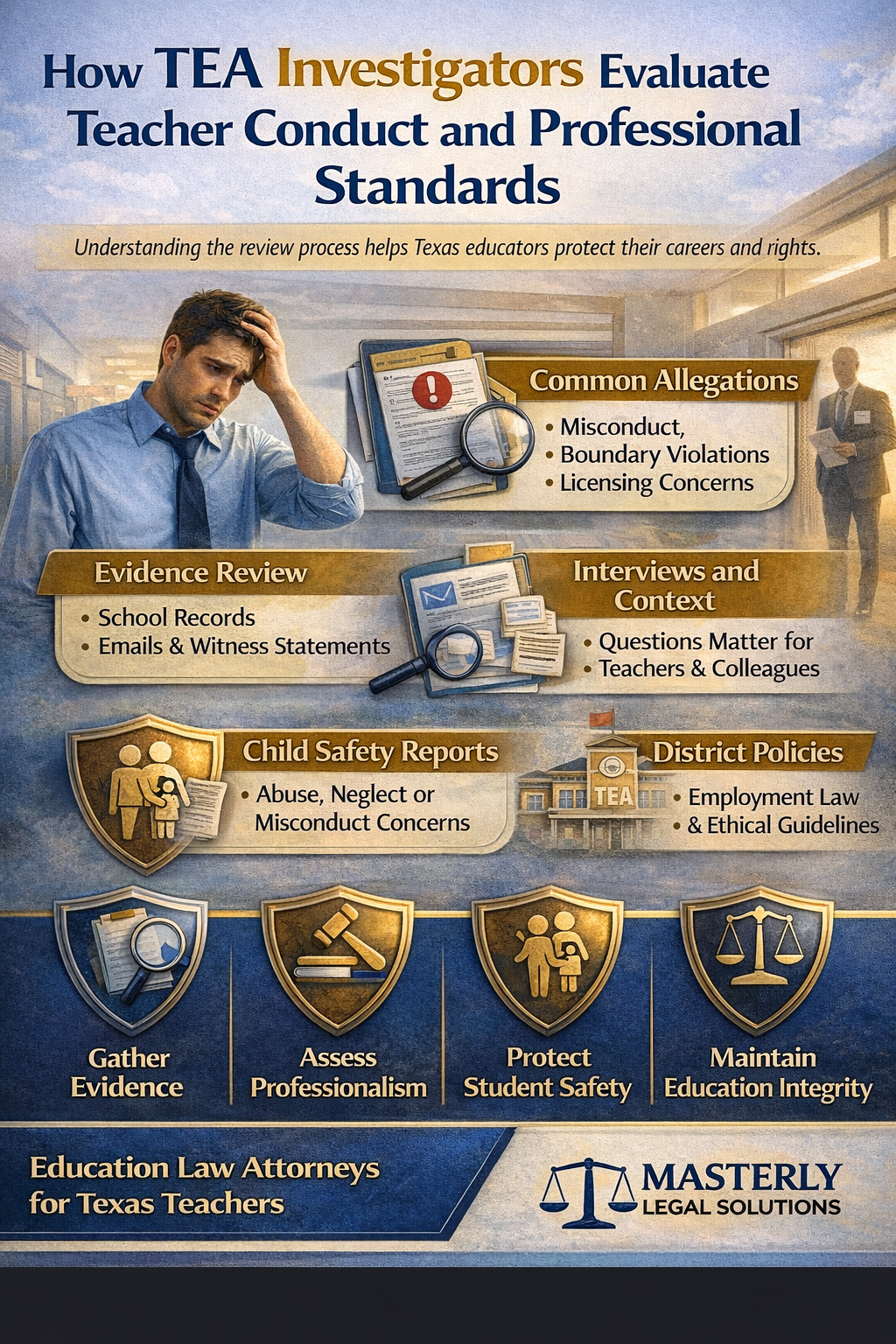
How TEA Investigators Evaluate Teacher Conduct and Professional Standards
When a teacher learns that their conduct is under review, the experience can feel sudden and disorienting. Questions arise quickly about professional reputation, employment, and the future within education. Investigations conducted under Texas education rules are structured, methodical, and rarely forgiving of early missteps. At Masterly Legal Solutions, our role as education law attorneys is to help educators understand how these evaluations work and how to protect their rights from the beginning.
Understanding the Purpose Behind TEA Investigations
The Texas education system relies on oversight to maintain trust in schools and universities. Investigations are designed to determine whether a teacher’s conduct aligns with professional standards established by law. While these reviews are framed as protective measures for students, they also carry serious consequences for teachers. Knowing the purpose behind an investigation helps educators respond with clarity rather than fear.
The Role of the Texas Education Agency in Oversight
The Texas Education Agency serves as the regulatory body overseeing public schools, charter schools, and certain private schools. Its authority extends to investigating allegations that may affect the integrity of the education system. These evaluations are administrative in nature but can lead to disciplinary proceedings. Education lawyers help teachers understand how agency authority is exercised.
Professional Standards Applied to Teachers
Teacher conduct is evaluated against ethical and professional standards defined by law and policy. These standards govern interactions with students, colleagues, and parents. Investigators examine whether actions meet expectations for public education professionals. Even conduct outside the classroom may be considered if it impacts trust in the school system.
How Complaints Typically Begin
Investigations often begin with complaints submitted by parents, staff members, or school administrators. Reports may involve allegations of misconduct, policy violations, or boundary concerns. Once a complaint is filed, investigators begin collecting information. Early guidance from an education attorney can shape how that information is interpreted.
Evidence Review as the Foundation of Evaluation
Investigators rely heavily on evidence when assessing teacher conduct. This may include written statements, emails, classroom records, and witness interviews. Evidence is reviewed in the context of compliance requirements and professional expectations. Education law attorneys assist in reviewing evidence for accuracy and context.
The Importance of Context in Teacher Conduct Reviews
Context matters in education law matters, yet it is often overlooked. Teaching environments are complex, and decisions are made quickly under pressure. Investigators may not fully understand classroom realities without explanation. Legal representation ensures context is properly presented.
Interviews With Teachers and Staff Members
Interviews are a critical part of the evaluation process. Teachers may be questioned by investigators, school attorneys, or district representatives. Statements made during these interviews become part of the official record. Education lawyers help teachers prepare so interviews do not unintentionally create legal challenges.
Evaluating Allegations of Child Abuse or Neglect
Allegations involving child abuse or neglect are among the most serious reviewed by investigators. Claims of physical or sexual abuse trigger heightened scrutiny and mandatory reporting obligations. Even unsubstantiated allegations can affect employment. Education law attorneys help teachers respond carefully and protect their professional standing.
Addressing Claims of Sexual Harassment or Sexual Abuse
Claims involving sexual harassment or sexual abuse often involve overlapping legal issues. Investigators may coordinate with other agencies while conducting their review. These allegations can lead to administrative leave and long-term consequences. Skilled lawyers ensure responses are measured and legally sound.
Title IX and Its Role in Investigations
Title IX complaints introduce additional layers of review within schools and universities. These cases involve civil rights considerations and procedural requirements. Investigators assess whether conduct violated federal protections for students. Education lawyers familiar with Title IX help navigate these complex legal issues.
The Impact of Administrative Leave on Teachers
Being placed on administrative leave is often one of the first actions taken during an investigation. While not a disciplinary action on its own, it signals serious concern. Administrative leave can affect employment, benefits, and professional reputation. Legal professionals help teachers understand their options during this period.
How School District Policies Influence Evaluations
School districts establish policies that guide acceptable conduct. Investigators compare teacher actions against district rules and state standards. Differences between district policy and state law can create confusion. Education law firm guidance helps reconcile these standards.
Charter Schools and Private Schools Under Review
Charter schools and private schools operate under different frameworks but remain subject to oversight. Investigations may vary depending on governance structure. Teachers in these educational institutions still face professional evaluations. Education attorneys tailor strategies based on the specific school setting.
The Role of School Administrators in the Process
School administrators often provide input during investigations. Their assessments of teacher conduct can influence outcomes. Administrative perspectives may not always reflect the full situation. Legal representation ensures teacher voices are equally represented.
Student Discipline and Classroom Management Concerns
Issues involving student discipline can trigger investigations when complaints arise. Decisions made to maintain order may be scrutinized for appropriateness. Investigators evaluate whether actions align with professional standards. Education lawyers help explain disciplinary decisions within an educational setting.
Special Education and Heightened Scrutiny
Special education cases often involve additional oversight due to students’ disabilities and individualized education plans. Investigators may review compliance with special education law and services. IEP meetings, accommodations, and documentation are closely examined. Education law attorneys with extensive experience in special education protect teachers from misinterpretation.
Representing Students While Protecting Teachers
Education law often balances representing students rights with safeguarding teachers rights. Investigators consider whether actions served the best interests of students. Teachers must demonstrate adherence to professional responsibilities. Legal services help ensure this balance is accurately reflected.
Due Process and Administrative Hearings
Teachers have due process rights during investigations and potential disciplinary hearings. Administrative hearings and process hearings allow educators to respond formally. Understanding procedural protections is essential. Education lawyers guide teachers through each step.
Disciplinary Proceedings and Possible Outcomes
Disciplinary proceedings may result from investigative findings. Outcomes range from warnings to license sanctions. Disciplinary actions can affect long-term employment within the public school system. Education law attorneys help mitigate these consequences.
The Role of the State Board in Professional Discipline
In some cases, findings are reviewed by a state board responsible for educator standards. The board evaluates recommendations and evidence presented. Decisions at this level can permanently affect a teaching career. Skilled lawyers prepare compelling arguments before the board.
Employment Law Considerations for Teachers
Employment law intersects with education law during investigations. Issues involving contracts, employee benefits, and workplace rights may arise. Teachers must navigate both systems simultaneously. Legal representation ensures employment protections are not overlooked.
Legal Challenges Beyond the Classroom
Investigations may raise legal issues involving civil rights, personal injury claims, or criminal allegations. Even when no criminal charges are filed, administrative consequences remain. Education lawyers assess the full scope of legal challenges. Comprehensive guidance prevents surprises.
The Importance of Legal Representation Early
Early legal representation makes all the difference during investigations. Waiting can limit options and increase risk. Education law attorneys provide tailored legal services from the outset. Early strategy often leads to better outcomes.
How Education Law Attorneys Build Defense Strategies
Defense strategies are built through careful review of evidence, policy, and law. Education lawyers analyze compliance requirements and procedural errors. Each case requires an individualized approach. Tailored legal services address the specific facts at hand.
Supporting Teachers Through a Challenging Time
Investigations are emotionally taxing for teachers and their families. Stress, uncertainty, and fear are common reactions. Legal professionals provide clarity and support throughout the process. Guidance reduces anxiety and restores focus.
Parents and Community Impact
Investigations can affect relationships with parents and the broader school community. Public perception may shift before facts are established. Education lawyers help manage communication responsibly. Protecting reputation is part of effective legal strategy.
Universities and Higher Education Considerations
Teachers working within a university environment face additional policies and oversight. University investigations may involve overlapping procedures. Education law applies differently in higher education settings. Legal professionals with wide array experience guide educators effectively.
Ensuring Fair Evaluation of Evidence
Evidence must be evaluated fairly and objectively. Investigators may rely heavily on documentation without hearing full explanations. Education law attorneys challenge incomplete or misleading interpretations. Fair evaluation protects both teachers and students.
New Challenges in Modern Education
Modern education presents new challenges involving technology, social media, and communication boundaries. Investigators increasingly consider online conduct. Teachers must adapt to evolving expectations. Education lawyers help navigate these changing standards.
Protecting Teachers Rights Throughout the Process
Teachers rights include due process, fair treatment, and representation. These rights exist even during administrative reviews. Legal representation ensures rights are respected. Protection begins with knowledge.
How Masterly Legal Solutions Assists Educators
Masterly Legal Solutions is a law firm focused on education law and educator defense. Our education law attorneys provide strategic guidance during investigations and disciplinary hearings. We work with teachers across public schools, charter schools, private schools, and universities. Our approach emphasizes clarity, preparation, and professionalism.
Taking the Next Step With Confidence
Facing an investigation can feel overwhelming, but support is available. Understanding how investigators evaluate conduct empowers teachers to respond effectively. Education lawyers help educators move forward with confidence. Early action protects careers and futures.
Legal Matters That Require Immediate Attention in Education Cases
Education-related legal matters often arise quickly and without warning, leaving educators unsure of how to respond. These situations can involve professional conduct, employment concerns, or student-related allegations that carry long-term consequences. Texas education lawyers help educators understand the scope of these legal matters and respond strategically before issues escalate.
Texas Education Lawyers and Their Role in Educator Defense
Texas education lawyers focus on protecting teachers, administrators, and school professionals navigating regulatory oversight. Their knowledge of state rules, agency procedures, and administrative standards allows them to anticipate challenges before they arise. Early guidance from Texas education lawyers often prevents unnecessary disciplinary action.
Special Education Services and Heightened Oversight
Special education services are subject to strict regulatory standards and frequent review. Allegations involving accommodations, instructional decisions, or service delivery often trigger additional scrutiny. Legal guidance ensures educators understand compliance expectations while safeguarding professional responsibilities.
Due Process Hearings and Procedural Protections
Due process hearings provide educators and families a formal opportunity to address disputes within the education system. These hearings require careful preparation, documentation, and understanding of procedural rules. Legal representation helps ensure rights are preserved throughout due process hearings.
Student Services and Professional Responsibility
Student services include counseling, academic support, and behavioral interventions that place educators in sensitive roles. Decisions related to student services are often evaluated during investigations. Legal guidance helps educators demonstrate appropriate professional judgment in these situations.
Administrative Matters That Shape Long-Term Outcomes
Administrative matters often determine the direction of education-related cases long before court involvement. Decisions made during internal reviews, investigations, or agency oversight can carry lasting effects. Strategic legal guidance ensures administrative matters are handled carefully and correctly.
Grievance Hearings Within School Systems
Grievance hearings allow educators to formally challenge workplace decisions or disciplinary actions. These hearings follow specific procedures that must be followed precisely. Legal support helps educators present their position clearly during grievance hearings.
Protecting a Child’s Rights While Supporting Educators
Investigations often involve balancing a child’s rights with the professional responsibilities of educators. Agencies assess whether actions served the student’s best interests. Legal guidance ensures a child’s rights are respected without unfairly compromising an educator’s career.
Speak With Education Law Attorneys at Masterly Legal Solutions
If your professional conduct is under review or you anticipate an investigation, speaking with education law attorneys early can make all the difference. Masterly Legal Solutions offers a free consultation to discuss your situation and explain how we can assist with education law issues. Our law firm provides experienced legal representation tailored to teachers, administrators, and education professionals. Contact us at (972) 236-5051 to schedule a free consultation and receive guidance from education lawyers who understand the Texas education system.
Disclaimer: This article is for informational and educational purposes only and does not constitute legal advice. Reading this content does not create an attorney-client relationship. You should consult with qualified education law attorneys regarding your specific legal situation.

Teacher Rights When Assaulted by a Special Needs Student: Safety, Reporting and Investigation Issues

Looking for Legal & Business Solutions? Contact Us Now
Fill in the form or call us to set up a meeting