

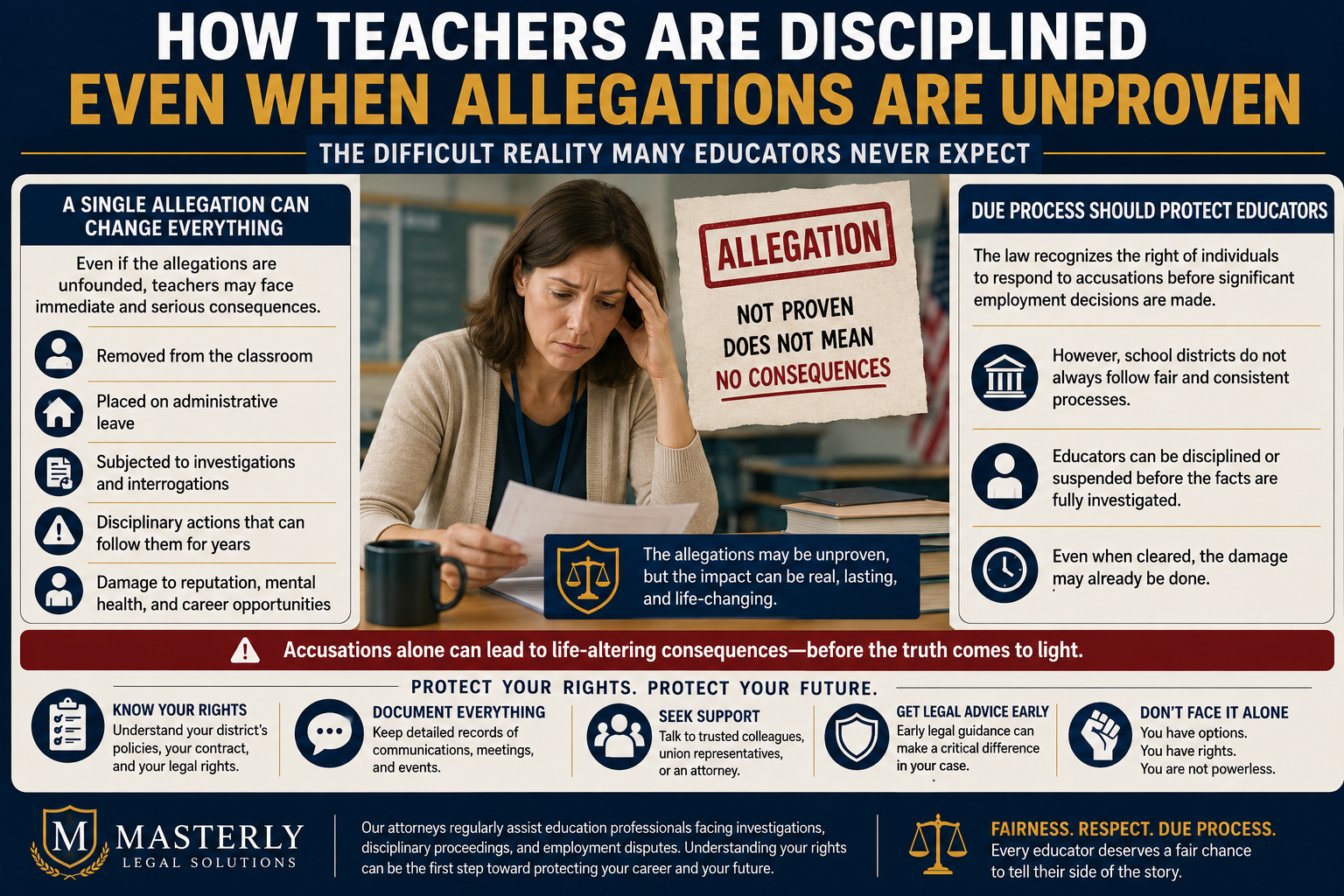
How Teachers Are Disciplined Even When Allegations Are Unproven
The Difficult Reality Many Educators Never Expect
Most teachers enter the profession because they want to make a difference in the lives of students. They spend years earning degrees, obtaining certifications, attending professional development programs, and dedicating countless hours to helping young people succeed. Few educators imagine that a single allegation—one that may never be proven—could suddenly place their career, reputation, and livelihood at risk.
Unfortunately, many teachers discover that allegations alone can trigger serious consequences. Even before an investigation is completed, educators may be removed from classrooms, placed on administrative leave, or subjected to disciplinary measures that can follow them for years. In some cases, the allegations are ultimately found to be unsupported, yet the damage has already been done.
For teachers and administrators alike, fairness and due process matter. The legal system recognizes the importance of allowing individuals an opportunity to respond to accusations before significant employment decisions are made. However, the reality is that school districts do not always handle these situations in a manner that fully protects educators.
At Masterly Legal Solutions, our attorneys regularly assist education professionals facing investigations, disciplinary proceedings, and employment disputes. Understanding your rights can be the first step toward protecting your career and your future.
Why Unproven Allegations Can Still Lead to Discipline
Many educators assume that discipline cannot occur unless allegations are proven. While that assumption seems logical, school districts often have broad authority to investigate complaints and take interim actions while an investigation remains ongoing.
An allegation does not need to result in criminal charges to create employment consequences. School administrators may decide to remove a teacher from the classroom while they investigate the situation. In some circumstances, teachers face restrictions that continue long after the original complaint has been resolved.
The concern is not necessarily that schools investigate allegations. Most parents, teachers, and community members agree that concerns should be taken seriously. The problem arises when educators suffer career damage before the facts are fully examined.
Understanding Due Process in Education Employment Matters
Due process is a principle deeply rooted in American law. At its core, due process seeks to ensure fairness when important decisions affect an individual's rights, reputation, or employment.
For educators, due process may involve the opportunity to respond to allegations, present evidence, challenge inaccurate information, and receive a fair review of the facts. While the exact procedures may vary depending on employment status and district policies, fairness should remain a central consideration.
When proper procedures are ignored, educators may find themselves facing discipline based on incomplete information or assumptions rather than verified facts. This can have devastating consequences for teachers who have spent years building their professional reputation.
Administrative Leave Is Not Always Neutral
Many school districts utilize administrative leave when allegations arise. While administrative leave is often described as a neutral employment action, teachers frequently experience it very differently.
Being removed from the classroom can create immediate stress and uncertainty. Students, parents, and fellow educators may begin asking questions. Rumors can spread quickly, even when little information is available.
Although administrative leave may be presented as temporary, the professional consequences can be long lasting. Teachers often find that their reputation suffers even when allegations are ultimately determined to be unsubstantiated.
How Administrative Leave Impacts a Teacher's Career
A period of administrative leave can affect much more than daily work responsibilities. Educators may miss important training opportunities, leadership assignments, and professional development events.
In some situations, administrative leave creates concerns about future employment opportunities. Potential employers may question why a teacher was removed from active duty, even if no wrongdoing was ever established.
The emotional impact should not be overlooked either. Many educators describe administrative leave as one of the most stressful experiences of their professional lives.
The Difference Between Allegations and Findings
An allegation is simply a claim that something occurred. A finding is a conclusion reached after reviewing evidence and completing an investigation.
Unfortunately, the distinction between these two concepts is often lost in public discussions. Some individuals assume that an allegation automatically means misconduct occurred.
Educators deserve to have allegations evaluated objectively before conclusions are reached. Fairness requires that accusations be treated as claims rather than facts until evidence supports a different conclusion.
Why Investigations Must Be Thorough
When concerns arise involving educators, school districts have an obligation to investigate appropriately. A thorough investigation benefits everyone involved, including students, parents, teachers, and administrators.
A rushed investigation may overlook important evidence or fail to consider alternative explanations. Incomplete reviews can lead to inaccurate conclusions that harm innocent educators.
The goal should be to determine the truth rather than simply close a case quickly. When investigations prioritize speed over accuracy, fairness may suffer.
The Role of Evidence in Teacher Discipline Cases
Evidence plays a critical role in employment investigations. Decisions that affect a teacher's career should be based on reliable information rather than speculation or assumptions.
Evidence may include witness statements, documents, emails, videos, classroom records, and other relevant materials. Each piece of evidence should be carefully evaluated within the context of the allegations.
When disciplinary decisions occur without sufficient evidence, educators may have grounds to challenge those actions. Understanding what information was considered can be an important part of protecting legal rights.
When Retaliation Becomes Part of the Problem
Some educators find themselves facing difficulties after reporting concerns within their school district. In certain situations, retaliation may occur after a teacher files a complaint, raises safety concerns, or participates in an investigation.
Retaliation can take many forms. It may involve reassignment, increased scrutiny, exclusion from opportunities, or disciplinary actions that appear connected to protected conduct.
Teachers should never be punished for exercising legal rights or fulfilling professional obligations. When retaliation becomes a factor, additional legal issues may arise beyond the original allegation.
Educators Have Rights Under Federal and State Law
Teachers are protected by various federal and state laws designed to promote fairness in the workplace. These laws recognize that employees deserve protection when facing investigations, disciplinary actions, and employment disputes.
Employment protections may apply in situations involving discrimination, retaliation, due process concerns, and other workplace issues. The specific rights available will depend on the circumstances of each case.
Because education-related employment matters can be complex, many educators benefit from consulting education law attorneys for teachers and administrators who understand the unique challenges facing teachers.
How Employers Balance Student Safety and Employee Rights
School districts must balance competing responsibilities. On one hand, they have an obligation to protect students and investigate concerns promptly. On the other hand, they must respect the rights of employees who may be accused of misconduct.
Most employers genuinely want to make informed decisions that protect everyone involved. However, pressure from parents, media attention, or public scrutiny can sometimes influence how situations are handled.
Fair investigations require patience, objectivity, and a commitment to evaluating all available information before reaching conclusions.
The Emotional Toll on Teachers and Their Family
Allegations often affect more than the educator involved. Family members may experience anxiety, embarrassment, and uncertainty while waiting for an investigation to conclude.
Teachers frequently describe sleepless nights, concerns about finances, and fear regarding their professional future. Even when allegations are disproven, the emotional effects can linger long after the case ends.
A supportive family can play an important role during these difficult periods. However, legal protection from an education law attorney is often equally important when employment rights are at stake.
When a Supervisor Makes Assumptions Too Early
A supervisor plays a significant role in how investigations are conducted and how employees are treated during the process. Problems can arise when conclusions are reached before all relevant facts are reviewed.
Teachers deserve fair treatment regardless of the nature of the allegation. Premature assumptions may influence witness interviews, investigative decisions, and disciplinary recommendations.
Maintaining neutrality throughout the investigative process helps preserve confidence in the outcome and promotes fairness for all parties involved.
Why Teachers Should Take Every Allegation Seriously
Even allegations that appear minor should be taken seriously. Small misunderstandings can quickly evolve into significant employment concerns if not addressed properly.
Educators should carefully document communications, preserve relevant records, and seek guidance whenever allegations arise. Early action often places teachers in a stronger position as investigations move forward.
Waiting until disciplinary proceedings have advanced can make it more difficult to address problems that might have been resolved earlier.
The Long-Term Impact on Future Employment
One of the greatest concerns educators face involves future employment opportunities. Even unproven allegations can create questions during future job searches.
School districts reviewing applicants may notice references to prior investigations or employment disputes. Although allegations may have been dismissed, educators often find themselves needing to explain events repeatedly throughout their careers.
Protecting professional reputations is one reason many teachers seek legal representation early in the process.
Not Every Complaint Results in Misconduct
A complaint is not proof of wrongdoing. School districts receive complaints for a variety of reasons, and many ultimately prove to be unsupported by the evidence.
Unfortunately, public perception does not always distinguish between an allegation and a finding. Teachers may experience reputational harm even when investigations clear them completely.
The principle of fairness requires decision-makers to evaluate evidence carefully rather than assume guilt based solely on accusations.
Why Administrative Leave Can Feel Like Discipline
Administrative leave is often explained as a temporary measure, not a punishment. Still, many educators experience it as discipline because they are removed from their job, separated from students, and left without clear answers. Even when pay continues, the teacher may feel isolated from peers and uncertain about what comes next. The situation can become even more stressful when the school provides limited details about the timeline or process.
A teacher placed on administrative leave may also worry about how the absence will be interpreted. Parents may ask questions, students may hear rumors, and other staff members may assume the worst. This is why administrative leave should be handled carefully and respectfully. Schools should avoid creating unnecessary harm while they investigate allegations.
Paid Leave Does Not Always Mean No Harm
Some districts place educators on paid administrative leave while reviewing allegations. Receiving pay during that period may help with financial stability, but it does not erase the professional damage that can occur. A teacher may still lose classroom connection, leadership opportunities, and trust within the school community. In some cases, the experience can affect confidence and emotional well-being long after the matter ends.
Teachers should also pay attention to whether administrative leave affects stipends, coaching assignments, extra duties, or supplemental income. A change in pay or opportunities may create additional concerns. When the leave appears connected to retaliation or unfair treatment, the circumstances should be reviewed carefully. Legal assistance can help educators understand whether the district's actions may be challenged.
When Unproven Allegations Lead to Disciplinary Action
Disciplinary action should be based on facts, not assumptions. However, some teachers face written reprimands, reassignment, suspension, or other penalties before allegations are fully proven. This can be especially troubling when the educator has not had a meaningful chance to respond. A fair system should allow both sides to be heard before decisions are made.
When discipline follows an incomplete investigation, teachers may feel powerless. They may worry that challenging the decision will make the situation worse. However, accepting unfair discipline without review may create long-term consequences. Records created during this period may later affect promotions, transfers, certifications, or future employment.
How School Districts Should Investigate Allegations
A fair investigation should be organized, objective, and thorough. Investigators should gather relevant documents, speak with appropriate witnesses, and avoid reaching conclusions too early. The process should focus on facts rather than rumors or pressure from outside sources. When the investigation is handled poorly, the outcome may be unreliable.
Teachers should be told enough about the allegation to respond in a meaningful way. They should also have an opportunity to provide records, names of witnesses, and context that may clarify the incident. When a district fails to investigate fairly, educators may need attorneys to review whether their rights were violated. A strong response often begins with understanding what the district did and did not consider.
The Problem With One-Sided Investigations
A one-sided investigation can make a teacher feel as though the decision has already been made. This may happen when the district only interviews people who support the complaint or ignores witnesses who could help the teacher. It may also happen when investigators fail to review records that contradict the allegations. These problems can lead to unfair findings and unnecessary discipline.
A fair investigation should not be designed to confirm a preferred conclusion. It should be designed to find the truth. When educators believe important information was ignored, they should document what was left out. That information may become important if the teacher needs to appeal, file a grievance, or pursue a legal claim.
Why Timing Matters in Retaliation Cases
Timing can be important when evaluating possible retaliation. If a teacher reports misconduct and then quickly faces discipline, reassignment, or administrative leave, the sequence of events may raise concerns. Retaliation does not always appear openly. It may be presented as a performance issue, policy concern, or ordinary employment decision.
Teachers who engage in protected conduct should watch for sudden changes in how they are treated. This may include increased scrutiny, negative evaluations, exclusion from meetings, or criticism that did not exist before. Retaliation cases often require careful review of dates, communications, and prior performance history. The goal is to determine whether the district's stated reason matches the facts.
Protecting Teachers From Career Damage
Teachers should take steps to protect themselves as soon as allegations arise, especially when they are Texas teachers placed on administrative leave. Waiting too long can make it harder to gather documents, recall details, or identify supportive witnesses. Even when a teacher believes the truth is obvious, the district may not see the situation the same way. Preparation can make a significant difference.
Important steps may include preserving emails, saving written notices, keeping a timeline, and avoiding informal conversations that could be misunderstood. Teachers should also be careful about posting online or discussing the matter with too many people. A thoughtful approach helps protect the teacher's position and reduces the risk of additional complications. Guidance from experienced lawyers can help educators respond strategically.
When Police Become Involved
Some allegations involving teachers may be reported to police. This can happen when a complaint involves alleged abuse, threats, physical contact, or other serious claims. Even if the allegation is false or exaggerated, police involvement can make the situation much more stressful. Educators should be careful about making statements without understanding their rights.
A school investigation and a police investigation may move on separate tracks. What a teacher says in one setting may affect the other. This is one reason legal guidance can be important when allegations involve law enforcement. Teachers should not assume that cooperation means giving up important protections.
Criminal Allegations and Employment Consequences
A teacher may face employment consequences even when no criminal charge is filed. A school district may claim it has a lower standard for taking employment action than a criminal court would use. This means an educator could be disciplined even if police do not pursue the matter. That reality can feel deeply unfair when the allegations are unproven.
Teachers should understand that the employment process and criminal process are different. Each can affect the other, but they are not the same. Attorneys who understand education employment matters can help teachers manage both concerns when they overlap. The right strategy depends on the facts, timing, and seriousness of the allegation.
How Allegations Affect Professional Reputation
A teacher's reputation is one of their most valuable assets. Years of service, strong evaluations, and student success can be overshadowed by one unresolved allegation. Even if the educator is later cleared, the memory of the accusation may remain among colleagues, parents, or community members. This is why reputation protection must be part of the response.
Schools should avoid unnecessary disclosure of allegations. Confidentiality helps protect both the teacher and the integrity of the investigation. When information spreads without proper basis, the teacher may suffer harm that cannot be easily repaired. Educators should keep records of who was told, what was said, and how the information affected them.
Why Educators Need Knowledgeable Attorneys
Education employment disputes are not ordinary workplace disagreements. They can involve school policy, certification issues, reporting duties, administrative procedures, federal law, and state law. Knowledgeable education lawyers can help teachers understand the risks and options involved. Without guidance, educators may unknowingly make statements or decisions that weaken their position.
An attorney can assist by reviewing documents, preparing responses, communicating with the district, and identifying potential violations. Lawyers can also help educators understand whether administrative leave, discipline, or dismissal may be challenged. For many clients, having legal support reduces confusion and gives them a clearer plan. The earlier attorneys become involved, the more options may be available.
When Teachers Are Pressured to Resign
Some educators are encouraged to resign before allegations are fully investigated. A district may suggest that resignation is the easiest option, especially when the teacher feels embarrassed or overwhelmed. However, resigning can have serious consequences for future job opportunities, certification, benefits, and legal rights. Teachers should not make that decision without understanding the full impact.
A resignation may also affect whether the educator can later challenge the district's actions. In some cases, a resignation may be treated as voluntary even if the teacher felt pressured. Before signing any form, agreement, or separation document, educators should seek legal advice. What feels like a quick escape may create long-term problems.
Dismissal Before the Full Story Is Known
Dismissal is one of the most serious outcomes an educator can face. Losing a teaching position based on unproven allegations can affect income, career identity, and professional standing. It can also make future applications more difficult, especially when the teacher must explain why employment ended. When dismissal occurs without fair review, the educator may have legal options.
Teachers should pay close attention to the reasons given for termination. They should compare those reasons with the evidence, prior evaluations, and timeline of events. If the stated reason does not match the facts, further review may be necessary. A legal team can help determine whether the dismissal involved procedural errors, retaliation, discrimination, or other concerns.
Why Documentation Matters From the First Day
Documentation can become one of the most important tools in defending against unproven allegations. Teachers should write down what happened, when it happened, who was present, and what was said. These notes should be factual and organized. Emotional statements are understandable, but clear details are usually more helpful.
Educators should also preserve emails, letters, texts, meeting notices, and performance records. If a district later claims a teacher had long-standing problems, past evaluations may help show a different history. Documentation can also help attorneys identify patterns of unfair treatment. The more complete the record, the easier it may be to challenge inaccurate claims.
The Role of School Leadership in Fair Outcomes
Leadership matters when allegations arise. Administrators set the tone for whether a case is handled with fairness, professionalism, and respect. Good leadership means protecting students while also recognizing that teachers deserve due process. It also means avoiding gossip, assumptions, and unnecessary public embarrassment.
When school leaders act too quickly, they may cause harm that could have been avoided. A fair process requires patience and careful review. Teachers should not be treated as guilty simply because an allegation exists. The strength of the evidence should guide the outcome, not pressure or fear.
How Business Principles Apply to School Employment Decisions
Although schools are different from a private business, they still manage employees, policies, records, and risk. Like any company, a school district must make decisions that follow the law and respect employee rights. Poor handling of allegations can expose districts to grievances, complaints, or a lawsuit. Sound employment practices help protect both the institution and the people who work there.
Education and business law principles also remind organizations to document decisions and apply policies consistently. When rules are applied differently to different workers, concerns about unfairness may arise. Employers should be careful not to allow public pressure to replace proper procedure. Teachers benefit when schools follow consistent and transparent standards.
Why Unproven Claims Can Still Affect Pay
Allegations can affect pay even when they are never proven. A teacher may lose stipends, coaching income, summer opportunities, or extra-duty assignments. In some cases, the educator may remain employed but experience financial harm because responsibilities are reduced. These changes should be reviewed closely when they follow a complaint or investigation.
Pay issues can become especially concerning when the teacher was placed on administrative leave or removed from duties without a clear basis. Even if base salary continues, lost opportunities may still matter. Teachers should keep records of all financial changes connected to the allegation. This information may be important when evaluating damages or possible claims.
Supporting Educators Through Legal Matters
Teachers facing legal matters need more than general information. They need practical guidance that fits the facts of their situation. Every case can vary depending on the allegation, district policy, employment status, and available evidence. That is why personalized legal assistance is often so important.
Masterly Legal Solutions works with clients who need help understanding their options during difficult employment disputes. Our attorneys review the details, explain potential risks, and help educators make informed decisions. Whether the issue involves administrative leave, retaliation, discipline, pay, or reputation damage, our services are designed to help teachers move forward with clarity. We aim to serve educators with professionalism, preparation, and compassion.
How Retaliation Can Hide Behind Policy Language
Retaliation is not always announced directly. A district may use ordinary policy language to justify actions that are actually connected to a teacher's protected conduct. For example, a teacher who filed a complaint may suddenly receive negative write-ups for issues that were previously ignored. This can make retaliation difficult to recognize at first.
The key question is often whether the stated reason is genuine or simply a cover for punishment. Attorneys may compare the teacher's treatment with how other employees were treated in similar situations. If the district's actions appear inconsistent, that may support a retaliation claim. Teachers should preserve records that show changes in treatment after they exercised protected rights.
When Employees Are Treated Differently Than Peers
Fairness requires consistency. If one teacher is disciplined harshly for an allegation while peers are treated more leniently for similar situations, the difference may raise concerns. Employees should not be singled out because of protected conduct, personality conflicts, or prior complaints. Unequal treatment can become an important issue in employment disputes.
Teachers should document how similar incidents were handled when they have reliable information. This does not mean relying on gossip. It means identifying facts that show whether the district followed the same rules for everyone. Differences in treatment may help attorneys evaluate whether the teacher was targeted.
Why Teachers Should Be Careful With Written Statements
Teachers are often asked to provide written statements during investigations. While it may seem simple to explain what happened, written statements can later be used in disciplinary hearings, employment reviews, or other proceedings. A poorly worded statement may create confusion even when the teacher did nothing wrong. For that reason, educators should be thoughtful before submitting anything in writing.
A statement should be accurate, complete, and limited to facts the teacher actually knows. Teachers should avoid guessing, exaggerating, or trying to translate another person's motives. If the allegations are serious, legal guidance before submitting a statement can be extremely helpful. Once a statement is filed, it may be difficult to correct misunderstandings later.
Administrative Leave and Access to Resources
Teachers placed on administrative leave may lose access to important school resources. This can include email, classroom files, lesson plans, student records, or district systems. Losing access can make it harder to respond to allegations or gather information needed for a defense. Districts should consider whether restricting access unfairly harms the educator's ability to participate in the process.
Teachers should ask how they can obtain documents needed to respond. They should also keep copies of employment records when allowed by policy and law. If access is denied, that denial should be documented. The ability to review relevant information can be essential to due process.
When Family Law or Probate Issues Overlap With a Teacher's Crisis
A serious employment accusation can affect more than a teacher's job. It can also create stress at home, especially when family finances, child-related responsibilities, or caregiving needs are involved. In some cases, family law concerns may arise if the employment issue affects custody schedules, household stability, or financial planning. Teachers facing a career crisis often need support that looks at the whole picture, not just the workplace.
Other legal concerns may also become important. Probate planning, wills, and protection of assets may matter when a loved one depends on the teacher's income or benefits. While an employment case may be the immediate concern, a broader legal review can help the family prepare for uncertainty. A full service law firm with experience in education and employment matters can be valuable when multiple legal issues are connected.
Why Masterly Legal Solutions Offers Broad Support
Masterly Legal Solutions understands that one employment accusation can create several legal concerns at once, and our education law and estate planning practice is structured to address those overlapping needs. A teacher may need education employment guidance, help with family law questions, support with wills, or advice about probate matters. Our law firm is built to assist clients with different legal needs that may arise during stressful seasons. Having one team that understands the broader context can make the process less overwhelming.
Our attorneys know that teachers are not just case files. They are professionals, parents, spouses, caregivers, and community members. We work to protect clients while helping them understand the practical consequences of each decision. This compassionate approach allows us to provide strong advocacy while respecting the personal strain these situations create.
The Arlington Connection for Educators Seeking Help
Educators in Arlington and surrounding communities may face the same difficult problems as teachers across Texas. A teacher in Arlington may be placed on administrative leave before allegations are proven. Another Arlington educator may be accused of misconduct based on a misunderstanding. A third may face retaliation after making a report or filing a complaint.
Masterly Legal Solutions provides support to educators who need help understanding their rights and options. Arlington teachers should not assume they have to face school district pressure alone. Whether the matter involves administrative leave, discipline, dismissal, or reputation concerns, legal guidance may help protect the teacher's future. Our attorneys are prepared to assist educators in Arlington and beyond.
Why Experience and Excellence Matter
Teachers facing unproven allegations need attorneys who understand the stakes. A careless response can affect a career for years or even decades. Legal excellence requires preparation, careful listening, and attention to the details that may change the outcome. Educators deserve a team that treats their concerns with seriousness and respect.
A recognized legal team can help teachers identify risks before they become larger problems. This includes reviewing district notices, preparing for meetings, and responding to inaccurate claims. The goal is not only to address the current allegation but also to protect the educator's professional future. Strong advocacy can make a meaningful difference during one of the most stressful moments in a teacher's career.
Communication, Consent, and Client Updates
Clear communication matters during any legal case. Clients should understand the process, the possible risks, and the decisions they may need to make. Attorneys should also explain when consent is needed before major steps are taken. This helps educators feel informed rather than lost in a system they do not control.
Because legal matters often involve calls, emails, and written updates, teachers should provide accurate contact details. They should also review messages carefully and respond when information is requested. Some law office communications may include standard notices such as reply stop for certain automated text messages, but direct attorney communications should always be reviewed with care. Good communication helps the legal team act quickly when timing matters.
Using a Website or Reporting Site Carefully
Teachers often submit concerns through a district website, employee portal, or reporting site. These tools can be useful, but educators should keep copies of anything they submit. A report made through an online form may later become important evidence. Teachers should also save confirmation pages, dates, and any reply received from the district.
The same caution applies when reviewing district policy pages. A policy page may explain deadlines, grievance procedures, or reporting requirements. Educators should not assume that online information tells the whole story. Attorneys can help interpret how district policies apply to a specific case.
When Data Rates, Phone Calls, and Notices Matter
Legal and employment communications may arrive by phone, email, text message, or mail. Teachers should monitor all channels carefully during an investigation or administrative leave period. Missing calls or notices can lead to missed deadlines or misunderstandings. If text messages are used, ordinary data rates may apply depending on the teacher's phone plan.
Educators should keep a record of important calls, including the date, time, caller, and topic discussed. They should also avoid giving rushed responses during emotional conversations. When a message asks for a meeting, statement, or signature, it may be wise to speak with an attorney first. Good recordkeeping can help prevent confusion later.
The Difference Between Legal Information and Legal Guidance
Reading an article can help teachers understand general issues, but it cannot replace legal guidance. Every employment dispute depends on specific facts, documents, deadlines, and district policies. What applies in one case may not apply in another. The law can also vary depending on whether the teacher works for a public school, private school, charter school, or other educational employer.
Teachers should be cautious about relying only on information from coworkers, online forums, or general articles. Those resources may not address the exact circumstances involved. A lawyer can review the facts and provide guidance tailored to the teacher's situation. This is especially important when the case may involve administrative leave, retaliation, pay, dismissal, or a formal claim that calls for experienced education law legal insights.
Why Teachers Need Experienced Leadership on Their Side
When educators face serious allegations, having strong legal leadership can make a significant difference. At Masterly Legal Solutions, every case is approached with careful attention to the facts, evidence, and long-term impact on a teacher's career. An experienced managing partner understands how employment disputes, investigations, and administrative leave cases can affect both professional and personal lives. Effective legal representation begins with a clear strategy and a commitment to protecting the rights of educators throughout the process.
When a Teacher Becomes the Victim of False Allegations
Not every complaint is supported by evidence, and in some situations, a teacher may become the victim of false accusations or misunderstandings. Even when allegations are ultimately found to be unsubstantiated, the emotional and professional consequences can be severe. Educators may experience damage to their reputation, stress within their family, and uncertainty about their future employment opportunities. Schools should remember that fairness requires treating teachers with respect and avoiding assumptions until all facts have been carefully reviewed.
Lessons Educators Can Learn From Cases Across Virginia and Beyond
Concerns involving administrative leave, due process, and unproven allegations are not limited to one state or school district. Educators in Virginia and across the country have faced situations where investigations resulted in significant career disruptions despite a lack of proven misconduct. While employment laws and procedures may differ from state to state, the importance of fairness remains consistent. Teachers in Texas, Virginia, and other jurisdictions should understand their rights and seek legal guidance when allegations threaten their careers and professional standing.
Why Allegations Require a Strategic Response
A teacher's response to allegations should be careful and strategic. Acting too quickly may create mistakes, while waiting too long may allow the district's version of events to become accepted. The best approach often involves reviewing documents, organizing a timeline, and preparing a clear explanation supported by evidence. Teachers should not assume the school will automatically understand their side.
A strategic response also considers the teacher's goals. Some educators want to return to the classroom. Others want to clear their record, protect certification, recover lost pay, or avoid an unfair resignation. The right plan depends on the desired outcome and the strength of the available information. Attorneys can help educators choose a path that fits the situation.
Why Teachers Need Experienced Leadership on Their Side
When educators face serious allegations, having strong legal leadership can make a significant difference. At Masterly Legal Solutions, every case is approached with careful attention to the facts, evidence, and long-term impact on a teacher's career. An experienced managing partner understands how employment disputes, investigations, and administrative leave cases can affect both professional and personal lives. Effective legal representation begins with a clear strategy and a commitment to protecting the rights of educators throughout the process.
When a Teacher Becomes the Victim of False Allegations
Not every complaint is supported by evidence, and in some situations, a teacher may become the victim of false accusations or misunderstandings. Even when allegations are ultimately found to be unsubstantiated, the emotional and professional consequences can be severe. Educators may experience damage to their reputation, stress within their family, and uncertainty about their future employment opportunities. Schools should remember that fairness requires treating teachers with respect and avoiding assumptions until all facts have been carefully reviewed.
Lessons Educators Can Learn From Cases Across Virginia and Beyond
Concerns involving administrative leave, due process, and unproven allegations are not limited to one state or school district. Educators in Virginia and across the country have faced situations where investigations resulted in significant career disruptions despite a lack of proven misconduct. While employment laws and procedures may differ from state to state, the importance of fairness remains consistent. Teachers in Texas, Virginia, and other jurisdictions should understand their rights and seek legal guidance when allegations threaten their careers and professional standing.
How a Full Service Law Firm Can Help Teachers Facing Unproven Allegations
When a teacher becomes the subject of an investigation, the legal issues often extend beyond a single employment dispute. A full service law firm can provide comprehensive support by addressing employment concerns while also assisting with related legal matters that may arise during the process. Educators may face questions involving contracts, professional licensing, administrative proceedings, and personal legal concerns that develop as a result of workplace allegations. Having access to attorneys with experience across multiple practice areas can provide peace of mind during an uncertain time.
Why Choosing the Right Law Firm Matters
Not every law firm has experience representing educators who are placed on administrative leave or facing disciplinary action based on unproven allegations. Teachers need legal counsel that understands the unique challenges involved in school investigations, employment disputes, and due process concerns. The right law firm can help evaluate evidence, identify procedural issues, and develop a strategy designed to protect both a teacher's career and professional reputation. Early legal intervention often provides educators with more options as their case progresses.
Business Law Principles Often Apply to School Employment Decisions
Although schools are educational institutions, many of the same concepts found in business law influence how employment decisions are made. Issues involving investigations, workplace policies, recordkeeping, risk management, and employee discipline are commonly addressed through legal principles that also affect private businesses. Understanding how business law concepts apply to school districts can help educators recognize when policies are being applied inconsistently or unfairly. When allegations threaten a teacher's career, legal representation can help ensure that employment decisions comply with applicable laws and procedural requirements.
Contact Masterly Legal Solutions for Help With Administrative Leave
If you are a teacher facing administrative leave, discipline, retaliation, or an investigation based on unproven allegations, Masterly Legal Solutions can help you understand your options. Our attorneys work with educators who need answers, protection, and a practical plan during uncertain moments. We know how quickly an allegation can affect your job, your family, your reputation, and your future. You do not have to wait until the situation becomes worse before seeking assistance.
Contact Masterly Legal Solutions at (972) 236-5051 for a free consultation. We can review your circumstances, answer questions about administrative leave, and help you decide what steps may protect your rights. Whether you are in Arlington, another Texas community, or dealing with a district that has already taken action, our team is ready to listen. The earlier you contact a lawyer, the more time there may be to respond before important decisions are made.
Disclaimer: This article is for educational and informational purposes only. It is not legal guidance, does not create an attorney-client relationship, and should not be treated as advice for any specific legal matter. Every case is different, and the outcome may vary depending on the facts, documents, deadlines, and applicable law. If you need assistance with administrative leave, discipline, retaliation, dismissal, or other employment-related concerns, contact Masterly Legal Solutions directly to discuss your situation with an attorney.



Teacher Rights When Assaulted by a Special Needs Student: Safety, Reporting and Investigation Issues



Looking for Legal & Business Solutions? Contact Us Now
Fill in the form or call us to set up a meeting





