

How Teachers Are Penalized for Actions the Law Protects
The Growing Problem of Retaliation Against Educators
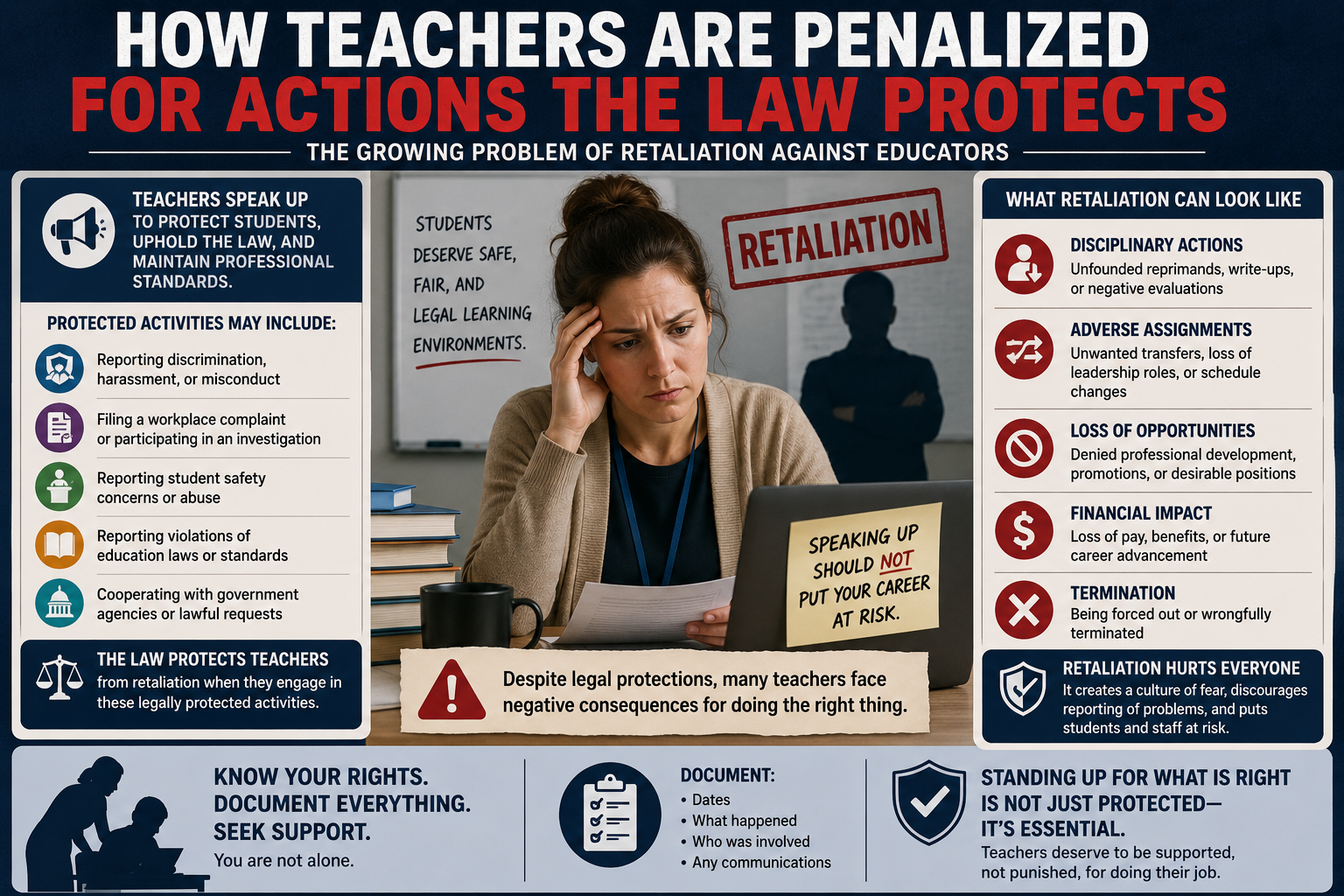
Teaching has never been limited to delivering lessons in a classroom. Educators are often expected to advocate for students, report safety concerns, comply with legal requirements, and uphold professional standards. Ironically, many teachers discover that taking legally protected steps can place their careers at risk. Across the country, teachers have faced disciplinary measures, loss of opportunities, changes in assignments, and even termination after speaking up about issues they believed needed attention.
Many educators assume that if the law protects their actions, they will automatically be shielded from negative consequences. Unfortunately, that is not always how real-world situations unfold. Schools and districts may take actions that create a chilling effect on employees who attempt to exercise their rights. In some situations, retaliation occurs subtly, making it difficult for teachers to immediately recognize what is happening.
The reality is that educators often find themselves caught between their legal obligations and their desire to maintain positive relationships within their workplace. When administrators or school districts react negatively to legally protected conduct, teachers can experience significant professional and personal stress. Understanding these issues is often the first step toward protecting both a teaching career and legal rights.
Understanding Protected Rights for Teachers
Teachers are not only educators; they are also workers protected by numerous federal and state laws. These legal protections exist because society recognizes that employees should be able to report concerns, participate in investigations, and advocate for lawful practices without fear of punishment.
A protected activity can include reporting discrimination, filing a workplace complaint, participating in an investigation, reporting student safety concerns, reporting violations of educational standards, or cooperating with government agencies. In many situations, teachers are legally required to make reports when they observe misconduct or potential harm to students.
The law attempts to protect educators from retaliation when they engage in activities that are legally protected. However, despite these safeguards, many teachers continue to face consequences that may discourage others from coming forward.
What Is Retaliation in the Educational Setting?
Retaliation generally occurs when an employer takes negative action against an employee because the employee engaged in a protected activity. The action does not always have to involve termination. Many forms of retaliation are less obvious but can still cause significant harm.
In educational settings, retaliation may involve changes to assignments, reduction of responsibilities, denial of opportunities, or placement under heightened scrutiny. The key issue is whether the adverse action was connected to the employee's protected conduct.
A reasonable employee might view certain actions as punishment even if the school district attempts to characterize them differently. Courts often examine whether the employer's conduct would discourage a reasonable employee from exercising protected rights in the future.
Common Examples of Protected Activity
Teachers engage in protected activity more frequently than many realize. Educational professionals are often required to report concerns and participate in processes designed to ensure accountability.
Examples may include:
- Reporting student safety concerns.
- Filing discrimination complaints.
- Reporting harassment by colleagues or administrators.
- Cooperating with a government investigation.
- Participating in labor-related proceedings.
- Reporting violations of school policies.
- Reporting concerns involving special education compliance.
- Assisting other employees with workplace complaints.
When educators engage in these actions, they should not be punished for doing so. Unfortunately, many disputes arise because schools fail to properly separate legitimate employment decisions from unlawful retaliation.
Reporting Student Safety Concerns
One of the most important responsibilities teachers have is protecting students. Educators frequently report concerns involving bullying, abuse, unsafe facilities, or threats of violence.
When a teacher makes a report in good faith, the law often provides protection. Nevertheless, some educators experience backlash after raising concerns. They may find themselves excluded from meetings, subjected to increased scrutiny, or assigned undesirable duties.
Teachers should never be forced to choose between protecting students and protecting their careers. Yet this difficult choice is a reality for many professionals working in schools today.
When Reporting Harassment Leads to Problems
Harassment complaints can create tension within a workplace. Whether the complaint involves another teacher, a supervisor, or an administrator, the reporting employee may become the target of negative treatment.
Federal protections, including Title VII, prohibit retaliation against individuals who report unlawful discrimination or harassment. These protections exist because employees must feel safe bringing concerns forward.
Unfortunately, some educators discover that after filing a complaint, their workplace environment changes dramatically. Colleagues may become hostile, opportunities may disappear, and administrators may begin documenting issues that were never previously raised.
The Role of Title VII in Teacher Protection
Title VII serves as one of the primary federal laws protecting employees from discrimination and retaliation. The statute applies to many public and private employers, including educational institutions.
Under Title VII, retaliation is prohibited when an employee opposes unlawful discrimination or participates in an investigation related to discrimination claims. Teachers who file complaints or assist with investigations are often covered by these protections.
Schools that fail to respect these protections may face significant legal consequences. However, teachers frequently need experienced legal representation to enforce their rights effectively.
Administrative Leave: Protection or Punishment?
One of the most misunderstood employment actions in education is administrative leave. School districts often place employees on administrative leave while allegations are reviewed.
In some situations, administrative leave serves a legitimate purpose. It can allow an investigation to proceed while minimizing disruptions. However, administrative leave may also be used in a way that creates stigma and damages a teacher's reputation.
The circumstances surrounding administrative leave often determine whether it is viewed as appropriate or potentially retaliatory. Teachers should understand why they are being removed from active duties and how the decision affects their employment status.
Paid Administrative Leave and Its Hidden Consequences
Many educators assume paid administrative leave is harmless because they continue to receive pay. While paid administrative leave may preserve wages, it can still carry serious professional consequences.
A teacher placed on paid administrative leave may face rumors, damaged professional relationships, and concerns about future employment opportunities. Parents, colleagues, and students may assume wrongdoing occurred even when no misconduct is ultimately found.
The emotional impact of paid administrative leave should not be underestimated. For many educators, being removed from the classroom can be deeply distressing regardless of whether pay continues.
Investigations That Follow Protected Reports
Schools often launch an investigation after receiving complaints or reports. An investigation can be an important tool for uncovering facts and ensuring compliance with regulations.
Problems arise when an investigation appears designed to target the reporting teacher rather than address the reported issue. Educators sometimes find themselves under scrutiny shortly after making complaints about safety, discrimination, or policy violations.
When timing suggests a connection between the protected activity and the investigation, questions about retaliation may arise. Careful review of the facts is often necessary to determine whether legal protections have been violated.
Adverse Actions Teachers Commonly Experience
Not every adverse action involves termination. In fact, many retaliation claims involve actions that seem minor when viewed individually but become significant when viewed collectively.
Examples may include:
- Unfavorable schedule changes.
- Reduction in classroom resources.
- Loss of leadership opportunities.
- Increased monitoring.
- Negative evaluations.
- Denial of professional development opportunities.
- Reassignment to less desirable positions.
- Reduced access to support staff.
Each adverse action must be evaluated within the broader context of the teacher's circumstances.
Schedule Changes and Reduced Hours
Teachers sometimes experience reductions in responsibilities or changes in hours after reporting concerns. Although schools may present these decisions as administrative necessities, timing often becomes an important factor.
A reduction in hours can directly affect pay and future advancement opportunities. Even if the reduction appears temporary, it may create lasting financial and professional consequences.
When schedule changes occur immediately after a protected activity, educators should carefully document the sequence of events.
The Impact on Pay and Benefits
Employment decisions can significantly affect a teacher's compensation package. Reduced responsibilities may lead to lower pay, loss of stipends, or reduced opportunities for supplemental income.
Benefits may also be affected when teachers experience changes in employment status. The loss of benefits can create serious hardships for educators and their families.
Teachers should pay close attention to any changes involving wages, compensation, insurance coverage, or retirement contributions following a protected activity.
Speaking Out About Student Rights
Educators often advocate for students who need accommodations, special services, or additional support. These efforts are essential to ensuring legal compliance and educational equity.
Unfortunately, teachers who advocate aggressively for students sometimes encounter resistance. An administrator may view persistent advocacy as disruptive even when the teacher is simply attempting to comply with the law.
Protecting student rights should never expose an educator to professional punishment, yet these conflicts continue to occur across many schools.
Whistleblower Protections for Educators
Certain laws protect workers who report misconduct, fraud, safety concerns, or legal violations. These protections are often referred to as whistleblower protections.
Teachers who report misuse of funds, regulatory violations, or other serious concerns may qualify for legal protection. These safeguards are intended to encourage transparency and accountability.
Even with these protections in place, some educators face retaliation after making reports. Understanding available legal remedies is critical when this occurs.
The Connection Between Employee Morale and Retaliation
Retaliation affects more than the individual teacher involved. It can create fear among other employees who witness the consequences of speaking up.
When educators observe a colleague being punished after raising concerns, overall employee morale may decline significantly. Teachers may become reluctant to report future problems.
This environment can ultimately harm students, faculty, and the educational mission itself. Schools function best when employees feel comfortable reporting issues without fear.
How Retaliation Affects Other Employees
The effects of retaliation often extend beyond the original victim. Other employees may decide not to report concerns because they fear similar treatment.
This reluctance can allow serious issues to remain hidden. Problems involving safety, compliance, or discrimination may persist because workers no longer trust internal reporting systems.
Educational institutions benefit when concerns are addressed early rather than ignored until they become larger problems.
Documentation Can Make a Difference
Teachers who believe they are experiencing retaliation should consider maintaining detailed records. Documentation often becomes critical when evaluating legal claims.
Helpful documentation may include emails, performance reviews, schedules, meeting notes, and communications related to complaints or reports. Preserving information can help establish timelines and identify patterns.
Evidence frequently becomes one of the most important factors in determining whether unlawful conduct occurred.
Administrative Leave During Investigations
Administrative leave is frequently used during investigations involving educators. While administrative leave can be appropriate under certain circumstances, it should not automatically be used as a punitive measure.
The manner in which administrative leave is implemented matters greatly. Questions often arise regarding communication, duration, confidentiality, and treatment of the affected employee.
Educators should understand their rights and obligations whenever administrative leave is imposed.
Paid Leave Versus Unpaid Leave
A school district may place employees on either paid leave or unpaid status depending on the circumstances involved. The distinction can significantly affect financial stability.
Unpaid periods may create substantial hardship, particularly when investigations remain unresolved for extended periods. Teachers facing unpaid leave often struggle to meet financial obligations.
Understanding district policies and applicable laws is important when evaluating whether leave decisions are lawful.
Reporting Possible Violations of Law
Teachers frequently report conduct they believe may constitute a possible violation of educational regulations or other legal requirements. Such reports often trigger internal reviews.
Making a report should not expose educators to punishment. The purpose of legal protections is to encourage reporting rather than discourage it.
When retaliation follows a report, legal analysis may be necessary to determine whether the school's actions crossed the line into unlawful conduct.
The Importance of Workplace Accountability
Accountability helps maintain trust within educational institutions. Schools must have systems that encourage transparency while protecting those who raise legitimate concerns.
Without accountability, misconduct may remain hidden. Employees may become reluctant to engage in reporting activities that benefit students and the broader community.
Strong policies can help address concerns before they develop into significant legal disputes.
Federal and State Laws That Protect Teachers
Numerous federal and state laws provide protections for educators. These laws address discrimination, whistleblower activity, wage issues, labor concerns, and other employment matters.
The specific protections available often depend on the facts of a particular case. Teachers should avoid assuming that one law applies universally to every situation.
Careful legal analysis is often required to determine the full extent of available protections.
Recognizing Retaliatory Behavior
Retaliatory conduct is not always obvious. Sometimes the behavior develops gradually over time rather than appearing immediately after a complaint.
Teachers should pay attention to changes involving job duties, evaluations, opportunities, treatment by supervisors, and access to resources. A pattern of conduct may reveal issues that individual incidents do not.
Recognizing potential retaliation early can help educators take appropriate steps to protect their rights.
The Role of Supervisors and Administrators
A supervisor plays a critical role in shaping workplace culture. Administrators who respond appropriately to complaints can reduce the risk of legal disputes and strengthen trust among staff.
Conversely, supervisors who react negatively to protected conduct may expose schools to liability. Their decisions can influence how employees perceive organizational fairness.
Leadership decisions often determine whether concerns are addressed professionally or allowed to escalate into legal conflicts.
What Teachers Should Do After Retaliation Occurs
When retaliation occurs, educators should act thoughtfully rather than emotionally. Immediate reactions can sometimes complicate already difficult situations.
Teachers should preserve records, document communications, and seek reliable legal guidance. Understanding available options can help protect careers and future opportunities.
Every situation is unique, and legal strategies should be tailored to the specific facts involved.
Seeking Legal Guidance From Retaliation Attorneys
Retaliation attorneys assist employees who believe they have been punished for engaging in protected conduct. These cases often involve complex factual and legal issues.
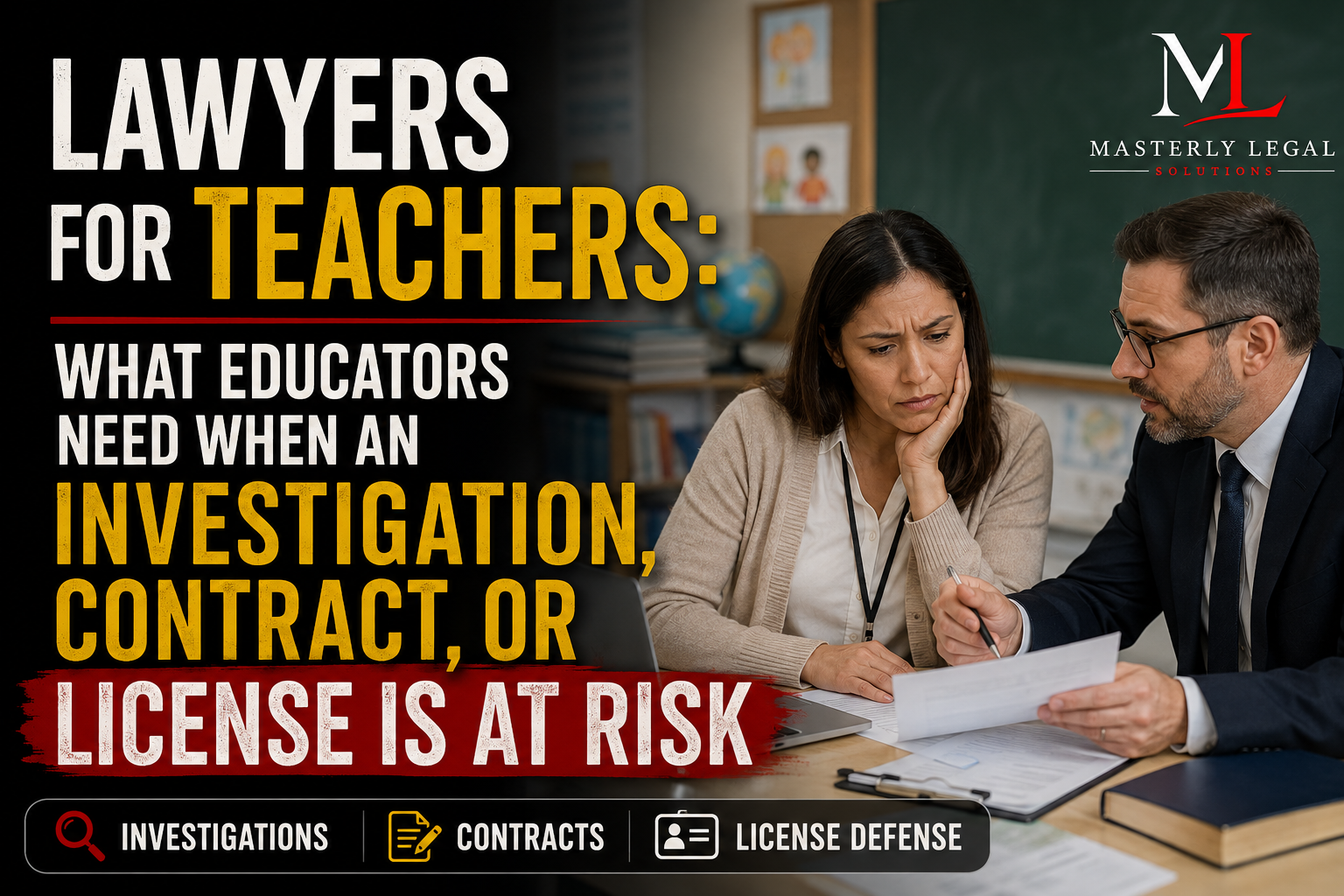
An education law attorney for teachers and administrators can review records, evaluate timelines, identify relevant laws, and determine whether legal claims may exist. Early legal assistance can be especially valuable when important decisions must be made quickly.
Teachers should not assume they must navigate these challenges alone.
How Masterly Legal Solutions Helps Educators
Masterly Legal Solutions is a Texas-based law firm focused on supporting educators. At Masterly Legal Solutions, we understand the unique challenges teachers face when standing up for what is right. Educators often find themselves caught between legal obligations, professional responsibilities, and administrative pressures.
Our team works with teachers, administrators, and education professionals who believe they have experienced retaliation, improper disciplinary measures, or adverse employment actions after engaging in protected conduct. We carefully evaluate the facts, explain available options, and help clients understand their rights under applicable laws.
Whether the issue involves administrative leave, a workplace investigation, discrimination complaints, whistleblower concerns, wage disputes, or other employment-related matters, our goal is to help educators protect their careers and reputations while pursuing appropriate legal remedies.
When Disciplinary Action Follows Protected Conduct
Teachers who engage in legally protected activities should not face disciplinary action simply because administrators disagree with their concerns. Unfortunately, some educators discover that after filing complaints, participating in investigations, or reporting violations, they become the focus of corrective measures that appear unrelated to their actual job performance. While schools have the authority to enforce legitimate workplace standards, disciplinary decisions must not be used as a tool for retaliation. When timing and circumstances suggest otherwise, educators should carefully review their legal protections and options as teachers.
The Negative Impact Retaliation Can Have on a Teaching Career
Retaliatory conduct can have a lasting negative impact on an educator's professional future. Even if a teacher remains employed, damage to their reputation, advancement opportunities, and professional relationships can follow them for years. Many educators report increased stress, anxiety, and uncertainty after experiencing retaliation. These consequences can affect both their personal well-being and their ability to continue serving students effectively.
Understanding Other Related Protected Activity
Many teachers are unaware that legal protections often extend beyond formal complaints. Other related protected activity may include assisting coworkers with discrimination claims, providing witness statements during investigations, or supporting individuals who raise workplace concerns. These protections exist to encourage participation in lawful processes without fear of punishment. Schools should not discourage educators from helping others exercise their legal rights.
How Related Protected Activity Is Treated Under Employment Laws
A related protected activity does not have to involve filing a complaint personally. In many situations, educators who cooperate with investigations or provide information regarding potential misconduct are also protected. Employment laws recognize that workplace accountability depends on individuals being willing to participate honestly in investigative processes. Without these protections, many employees would hesitate to come forward with important information.
Seeking Additional Information About Your Rights
Teachers facing possible retaliation often need additional information before deciding how to proceed. Employment laws can be complex, particularly when multiple legal issues overlap. Understanding available protections, reporting requirements, and potential remedies can help educators make informed decisions. Reviewing how education law attorneys help protect teacher rights and consulting with experienced legal counsel can provide clarity regarding the options available in a specific situation.
How Retaliation Is Defined Under the Law
Retaliation is generally defined as an adverse employment action taken against an employee because they engaged in protected conduct. The law recognizes that employees must be able to report concerns, participate in investigations, and exercise legal rights without fear of punishment. Whether retaliation has occurred depends on the specific facts and circumstances involved. A careful legal analysis is often necessary to evaluate potential claims.
The Role of a Government Department in Employment Complaints
Depending on the nature of the issue, a government department may be responsible for reviewing complaints involving discrimination, wage violations, or workplace retaliation. These agencies investigate allegations, gather information, and determine whether enforcement action may be appropriate. Teachers should understand which agencies have authority over their specific concerns and how education law attorneys guide teachers through investigations. Filing with the correct department can be an important step in protecting legal rights.
When Teachers Must Cooperate With Police Investigations
Certain situations require educators to cooperate with police or other law enforcement authorities. Reports involving criminal conduct, threats of violence, or allegations of abuse often trigger mandatory reporting obligations. Teachers who fulfill these responsibilities should not face retaliation from their employer. The law generally protects individuals who act in good faith to promote student safety and comply with reporting requirements.
Educational Institutions Face Risks Similar to Any Business
Although schools serve a unique public function, they often face employment challenges similar to those encountered in a private business environment. Issues involving retaliation, discrimination, investigations, and employee relations can arise in any workplace. Experienced education lawyers supporting teachers and schools can help institutions navigate these risks. Educational institutions that fail to address these concerns appropriately may expose themselves to significant legal liability. Strong compliance practices benefit both employees and employers.
The Impact of Retaliation During an Extended Absenc
An extended absence from the classroom can have significant professional consequences for educators. Whether the absence results from administrative leave, medical concerns, or an ongoing investigation, prolonged time away from students may affect professional development and career opportunities. Teachers should understand how employment decisions made during an absence may affect their rights and future employment status.
Recognizing Another Other Type of Retaliation
Retaliation is not always obvious. Another other type of retaliatory conduct may involve exclusion from meetings, denial of leadership opportunities, or removal from important committees. These actions may appear minor when viewed individually, but collectively they can significantly affect an educator's career. Teachers should pay attention to patterns of conduct that emerge after engaging in protected activities and consider legal insights for teachers facing retaliation and investigations.
Why a Fair Determination Matters
Every investigation should result in a fair and impartial determination based on credible evidence. Educators deserve an opportunity to respond to allegations before decisions affecting their careers are made. A flawed determination can damage a teacher's reputation and professional standing long after an investigation concludes. Schools should ensure that investigative processes are objective, thorough, and consistent, and may need experienced education law attorneys for investigation and defense services.
When Retaliation Leads to Dismissal
In severe cases, retaliation may ultimately result in dismissal from employment. Losing a teaching position can have devastating financial and emotional consequences, particularly for educators who have spent years building their careers. Teachers who believe dismissal occurred because of protected activity should seek legal guidance immediately. Early action may help preserve important rights and legal remedies.
School Districts Must Operate Like Any Responsible Company
Like any responsible company, educational institutions must comply with employment laws and maintain fair workplace practices. Employees should be able to report concerns without fear of punishment or retaliation. When school districts fail to uphold these standards, they risk legal disputes and damage to employee trust. Compliance benefits both the institution and the individuals it serves.
Using the School District's Reporting Site
Many school districts maintain an online reporting site where employees can submit complaints, safety concerns, or reports of misconduct. While these systems are intended to encourage transparency, teachers sometimes worry that using a reporting site could lead to negative consequences. Educators should understand that legal protections often apply regardless of whether concerns are reported internally or externally, and that having a lawyer for legal protection in education settings can be especially important when using these systems. Proper documentation of reports submitted through a site can also be valuable if disputes arise later.
Speak With a Retaliation Attorney About Your Situation
Every teacher's situation is different. What may appear to be a routine employment decision could actually have serious legal implications when viewed within the full context of the events involved.
If you have concerns about retaliation, adverse employment actions, administrative leave, discrimination complaints, investigations, or other employment issues affecting your teaching career, speaking with knowledgeable counsel can provide clarity and direction. A careful review of the facts can help determine whether your rights may have been violated and what options may be available.
Contact Masterly Legal Solutions at (972) 236-5051 for a free consultation. We welcome the opportunity to answer your questions, review your circumstances, and provide assistance regarding employment-related concerns affecting educators. Taking action early may help preserve important rights and place you in a stronger position moving forward.
Disclaimer: This article is provided for educational and informational purposes only. It is not legal advice and does not create an attorney-client relationship. Every legal matter is different, and outcomes depend on the specific facts and applicable law. If you need legal guidance regarding retaliation, administrative leave, employment disputes, or other education-related legal issues, contact Masterly Legal Solutions, led by attorney Andrew F. Rhoden, directly to discuss your situation with a qualified attorney.


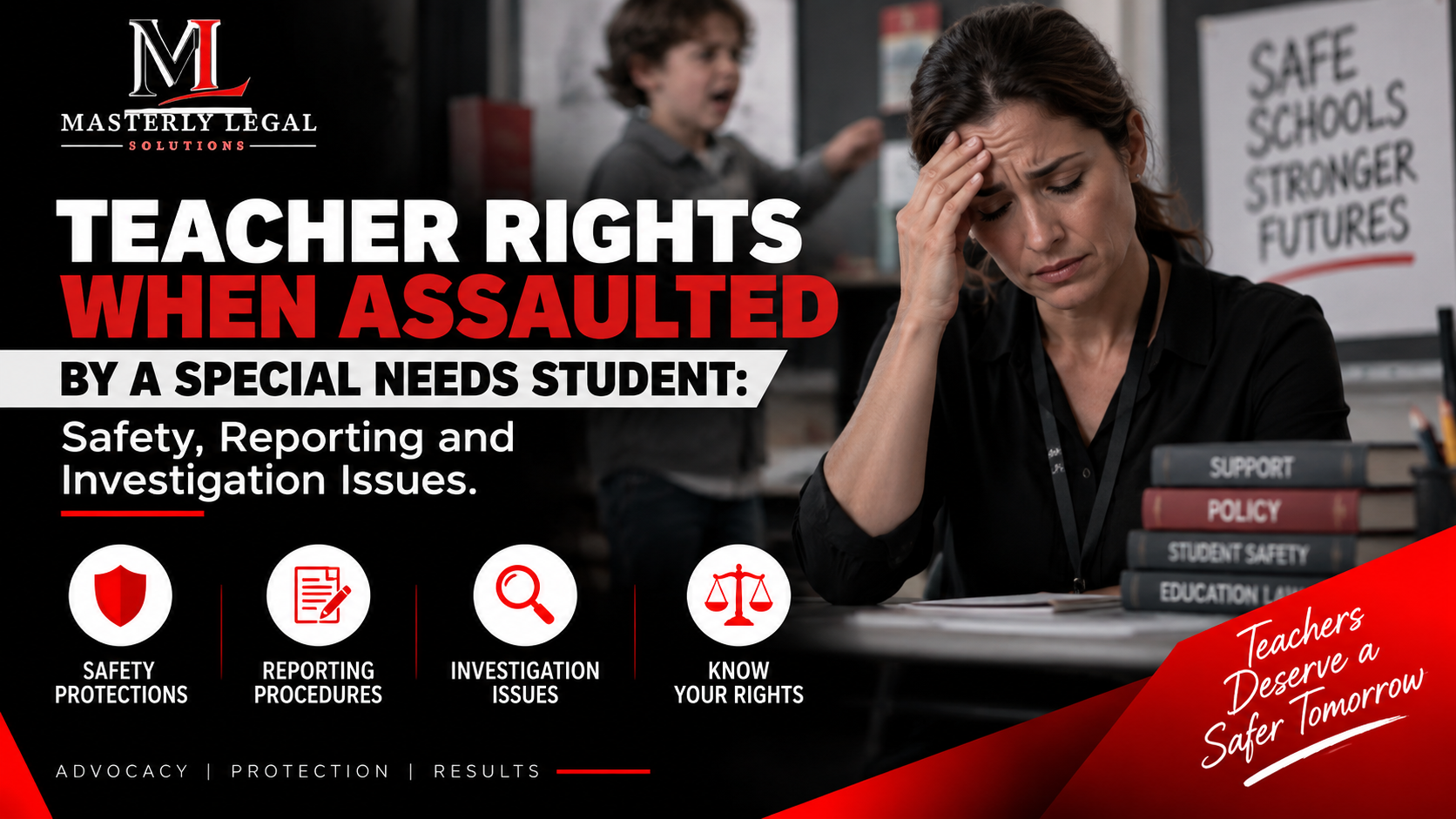
Teacher Rights When Assaulted by a Special Needs Student: Safety, Reporting and Investigation Issues


Looking for Legal & Business Solutions? Contact Us Now
Fill in the form or call us to set up a meeting