
How to Challenge UIL Violations and Protect Your Rights
Understanding UIL Complaints and Why They Matter
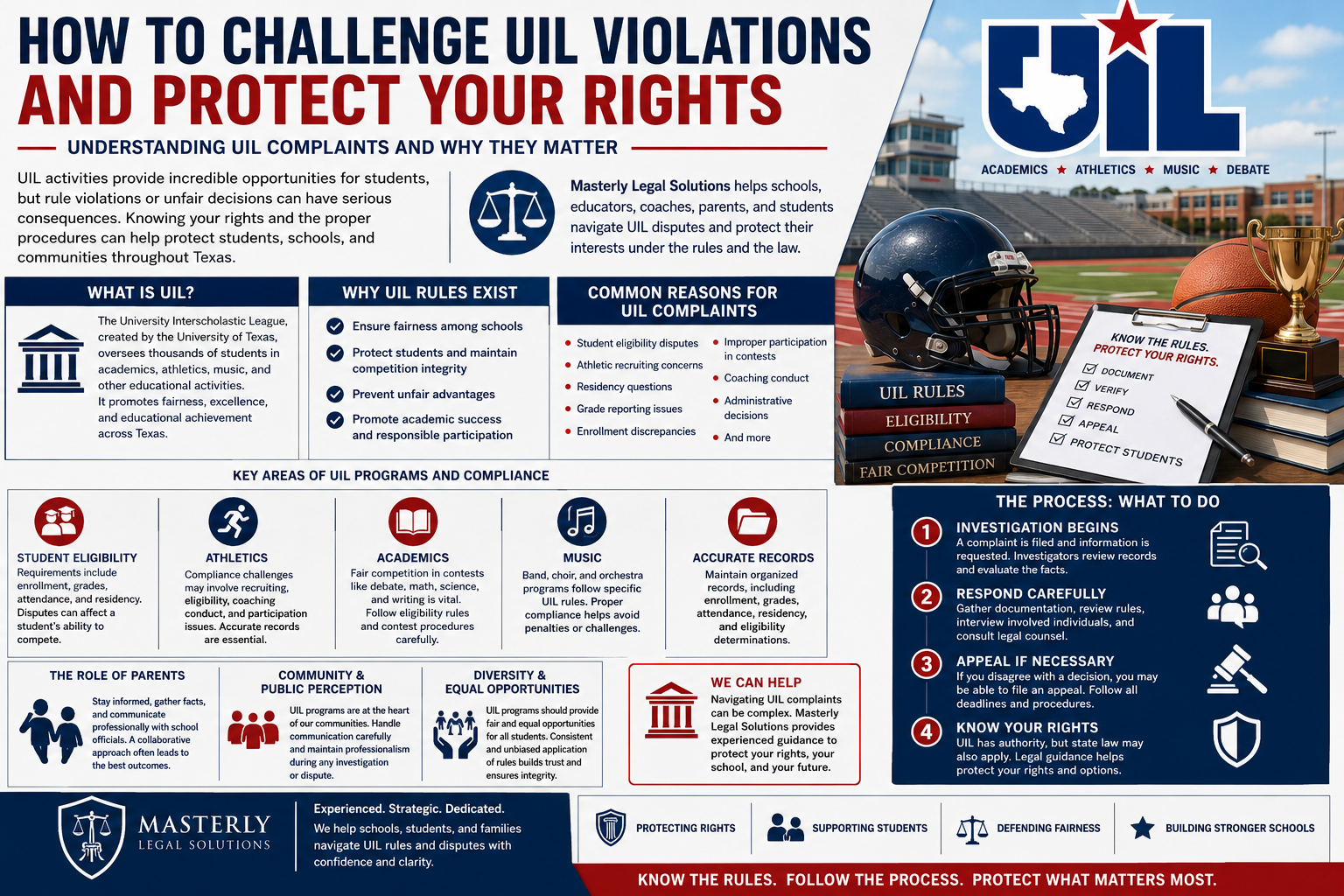
For many students, parents, coaches, and school administrators, participation in University Interscholastic League activities is one of the most rewarding parts of the educational experience. Whether students compete in athletic contests, academic contests, music events, or debate competitions, these opportunities help shape leadership skills, teamwork, and personal growth. However, when questions arise regarding rule violations, eligibility decisions, or unfair treatment, UIL complaints can quickly become stressful and complicated.
The University Interscholastic League is the largest inter school organization in Texas and plays a significant role in regulating competition among participating schools. Because UIL rules impact everything from student eligibility to state contests, a violation can affect not only an individual student but an entire school community. When allegations surface, understanding your rights and the proper procedures for challenging decisions becomes extremely important.
At Masterly Legal Solutions, we assist schools, educators, coaches, parents, and students facing UIL-related disputes, including UIL athlete and coach defense services across Texas. Our goal is to help clients protect their interests while navigating the complex rules that govern UIL programs throughout Texas.
What Is the University Interscholastic League?
The University Interscholastic League, often referred to simply as UIL, was created through the University of Texas and continues to operate under the auspices of the University of Texas at Austin. Since its beginning, the organization has grown into a system that oversees thousands of students participating in academics, athletics, music, and other educational activities.
The university interscholastic system was developed to provide structure, fairness, and consistency among schools throughout Texas. Today, schools compete in a variety of events at the district, region, and state level. These programs encourage excellence while promoting educational achievement and community engagement.
The university interscholastic league has become an important part of the educational landscape in Texas. As participation has grown over the years, so has the need for clear enforcement of rules and procedures.
Why UIL Rules Exist
Every organization needs standards, and UIL is no exception. The purpose of UIL rules is to ensure fairness among schools, protect students, and maintain the integrity of competition.
Without consistent rules, schools could gain unfair advantages through improper recruiting, inaccurate eligibility reporting, or other violations. By establishing clear expectations, UIL seeks to create equal opportunities for students regardless of where they attend school.
The rules also help ensure that students remain focused on education. Academic performance, attendance, enrollment status, and conduct often play a role in determining eligibility to participate.
Common Reasons UIL Complaints Are Filed
Many UIL complaints arise because individuals believe a rule has been violated or improperly applied. In some situations, schools discover potential violations during routine reviews. In others, parents, coaches, or community members raise concerns.
Common complaints often involve:
- Student eligibility disputes
- Athletic recruiting concerns
- Residency questions
- Grade reporting issues
- Enrollment discrepancies
- Improper participation in contests
- Coaching conduct
- Administrative decisions
Regardless of the issue, complaints should be handled carefully because the outcome can affect students, schools, and competitive programs.
Student Eligibility Disputes
One of the most common reasons for UIL complaints involves student eligibility. Students must meet specific requirements regarding enrollment, grades, attendance, and residency in order to participate in UIL activities.
A disagreement over eligibility can affect a student's ability to compete during the school year. In some cases, an eligibility decision may prevent a student from participating in a game, contest, or state competition despite months of preparation.
When disputes arise, schools should carefully review all records and supporting documentation. A thorough review can often identify errors or misunderstandings before the matter escalates further.
Understanding Eligibility Requirements
Eligibility rules are designed to maintain fairness throughout Texas competition programs. Students generally must be enrolled full time, maintain qualifying grades, and satisfy other requirements established by UIL rules.
Questions frequently arise when students transfer schools, experience changes in residence, or encounter unusual circumstances. While the rules provide guidance, exceptions sometimes apply depending on the facts of a particular situation.
Determining whether a student is eligible often requires careful analysis of records and applicable regulations. Because these decisions can affect educational opportunities, legal guidance may be beneficial when disputes occur.
Transfer Cases and Enrollment Concerns
Transfer cases often generate significant attention because they can directly impact athletic and academic participation. Schools must verify whether students are properly enrolled and whether transfer circumstances comply with UIL requirements.
A student who changes schools may face additional scrutiny if there are concerns about recruitment or competitive advantage. Administrators must carefully document enrollment decisions and maintain records supporting eligibility determinations.
Failure to properly evaluate transfer situations can lead to investigations, complaints, and appeals that affect both the student and the school, and experienced guidance on avoiding common mistakes in UIL investigations can be critical when these issues arise.
Academic Performance and Eligibility Standards
Academic achievement remains a central focus of the UIL system. Students are expected to maintain certain grades in order to participate in extracurricular activities.
While competition can be exciting, the organization emphasizes that educational success should remain a priority. Schools must accurately monitor grades and report academic standing when determining eligibility.
Mistakes involving grade calculations or reporting procedures can create compliance concerns and potentially affect participation opportunities.
Athletic Contests and Compliance Challenges
Athletic contests often receive the most public attention. Football, basketball, baseball, softball, volleyball, track, and other sports generate enthusiasm throughout Texas communities.
Because athletics are highly competitive, allegations of rule violations can quickly become serious matters. Complaints may involve recruiting practices, eligibility concerns, coaching conduct, or participation issues.
Schools should ensure coaches and athletic staff understand applicable rules and maintain appropriate documentation throughout the season.
Academic Contests and Fair Competition
While athletics often dominate headlines, academic contests are equally important components of UIL programs. Students compete in writing, mathematics, science, speech, journalism, debate, and numerous other academic events.
These contests help prepare students for college and future careers while encouraging intellectual achievement. Maintaining fairness in academic competition is just as important as maintaining fairness in athletics.
Schools should monitor eligibility requirements and contest procedures carefully to avoid unnecessary disputes.
Music Programs and UIL Participation
Music programs provide valuable opportunities for students to develop discipline, creativity, and teamwork. Band, choir, orchestra, and other performing activities play an important role in many schools.
Like other UIL programs, music competitions operate under specific rules governing participation and eligibility. Failure to comply with these requirements may result in penalties or challenges.
Administrators and directors should work together to ensure that all procedures are followed properly.
The Importance of Accurate Records
Records frequently determine the outcome of UIL complaints. Whether a dispute involves eligibility, enrollment, grades, or participation, documentation often serves as the most persuasive evidence.
Schools should maintain organized records that include:
- Enrollment documentation
- Attendance records
- Grade reports
- Residency information
- Competition results
- Eligibility determinations
Accurate records can help schools respond effectively when questions arise.
How Investigations Typically Begin
Many investigations begin when a complaint is submitted regarding a possible violation. The complaint may originate from another school, a parent, a coach, or another interested party.
Once concerns are raised, administrators may be asked to provide information supporting their decisions. Investigators often review records, interview witnesses, and evaluate relevant facts before reaching conclusions.
Because investigations can become complex, schools should respond carefully and strategically.
Responding to a UIL Complaint
Receiving notice of a complaint can be unsettling. However, schools should avoid reacting emotionally or making assumptions before reviewing the facts.
An effective response often includes:
- Gathering documentation
- Reviewing applicable rules
- Interviewing involved individuals
- Preserving records
- Consulting legal counsel
Early preparation can significantly improve a school's ability to defend its position.
Appeals and Challenging Adverse Decisions
Not every UIL decision is final. In some circumstances, schools and students may have opportunities to pursue appeals.
Appeals allow individuals to challenge decisions they believe were based on incomplete information, procedural errors, or incorrect interpretations of the rules. Success often depends on the quality of documentation and the strength of the supporting evidence.
Because appeals can affect eligibility, awards, and competitive opportunities, careful preparation is essential, and many schools benefit from counsel experienced in Texas UIL appeals and legal representation.
Understanding the Appeals Process
The appeals process exists to provide fairness and accountability. Schools that disagree with a determination may be permitted to present additional evidence and arguments.
Appeals often require strict adherence to deadlines and procedural requirements. Missing important deadlines can limit available options and make it more difficult to challenge a decision.
Legal representation can help ensure that appeals are properly prepared and presented.
State Law and UIL Authority
The UIL possesses significant authority over sanctioned competitions throughout Texas. However, schools must also consider applicable state law when addressing compliance issues.
In some situations, disputes may involve broader legal concerns relating to education, employment, administrative procedures, or student rights. Understanding the relationship between UIL authority and other legal requirements, including those that apply in higher education law and university compliance, is critical when evaluating options.
Careful legal analysis can help schools determine the most appropriate course of action.
The Role of Parents During a UIL Dispute
Parents often feel frustrated when eligibility decisions affect their children. Many have invested years supporting participation in athletics, academics, music, and other activities.
While emotions can run high, parents should focus on gathering facts and understanding applicable rules. Working collaboratively with school officials and legal counsel often produces better outcomes than reacting solely out of frustration.
A well-informed approach can help protect a student's interests while preserving important educational opportunities, especially when parents and educators understand the basics of UIL education law and student opportunity protection.
Community Engagement and Public Perception
UIL activities create strong community engagement throughout Texas. Local residents frequently support school programs and take pride in student accomplishments.
Because of this visibility, complaints and investigations can sometimes attract public attention. Schools should approach communication carefully and avoid making statements that could complicate ongoing proceedings.
Maintaining professionalism helps protect both the institution and the students involved, and it can also support broader goals related to sports law and athletics compliance in the United States.
Diversity and Equal Opportunities in UIL Programs
Modern educational programs place significant emphasis on diversity and inclusion. UIL activities should provide fair opportunities for students from a variety of backgrounds and experiences.
Schools should ensure policies are applied consistently and fairly. Equal treatment promotes trust in the system and supports the integrity of competition.
When concerns arise regarding fairness or unequal application of rules, those issues should be reviewed carefully and objectively.
The Role of the Texas Education Agency in Educational Compliance
Although the University Interscholastic League operates through the University of Texas, schools must also remain aware of the broader educational framework established by the Texas Education Agency. The Texas Education Agency oversees public education standards throughout the state and may become relevant when disputes involve student records, educator responsibilities, or school policies.
Understanding the relationship between UIL requirements and educational regulations can help schools avoid compliance mistakes. Administrators who take a proactive approach are often better prepared when challenges arise.
Exceptions That May Affect Eligibility Decisions
Not every situation fits neatly within a standard rule. Certain exceptions may apply when evaluating eligibility concerns, residency questions, or enrollment issues.
Schools should avoid making assumptions and instead carefully review all relevant facts. A student who appears ineligible at first glance may qualify under an exception that changes the outcome of the case.
Because exceptions often require detailed analysis, legal guidance can be valuable when interpreting complicated situations.
The Importance of Being Enrolled Full Time
Many UIL rules focus on whether students are enrolled full time at a participating school. Enrollment status frequently becomes a central issue during investigations and appeals.
Administrators should ensure that enrollment records are complete and accurate. Errors in documentation can create unnecessary complications and may affect participation opportunities.
Maintaining organized records helps schools demonstrate compliance when questions arise.
How Schools Can Prepare Before Problems Occur
The best time to address compliance concerns is before a complaint is filed. Schools that establish strong internal procedures are often able to identify potential issues before they become significant legal challenges.
Preventive measures may include:
- Staff training
- Policy reviews
- Eligibility audits
- Documentation procedures
- Internal reporting systems
These efforts can reduce risk and strengthen confidence in administrative decisions.
Understanding the Purpose of UIL Enforcement
The purpose of enforcement is not simply to punish violations. Rather, enforcement helps maintain fairness and integrity throughout UIL programs.
Students, schools, and communities benefit when everyone follows the same standards. Consistent enforcement helps ensure that contests remain competitive and educational opportunities remain meaningful.
While disputes can be frustrating, understanding the purpose behind the rules often helps participants navigate challenges more effectively.
Why Schools Must Comply With Established Rules
Compliance is essential for preserving trust in educational competition. Schools that fail to comply with UIL requirements may face penalties that affect students, programs, and institutional reputation.
Administrators should view compliance as an ongoing responsibility rather than a one-time task. Regular reviews and training can help ensure that rules are followed consistently throughout the year.
A culture of compliance often leads to fewer disputes and stronger programs.
The Impact of Violations on Students
Students frequently bear the greatest consequences when violations occur. An eligibility dispute can prevent a student from participating in important events or advancing in competition.
For many students, UIL participation represents years of hard work and dedication. Losing an opportunity because of an administrative error can be disappointing and difficult.
Schools should carefully evaluate decisions to ensure students receive fair treatment while maintaining compliance with applicable rules.
State Contests and High-Stakes Competition
State contests represent the highest level of achievement for many UIL participants. Students who advance to state level events often invest significant time and effort preparing for competition.
Because so much is at stake, compliance concerns become especially important during the advancement process. Eligibility questions, documentation issues, or procedural mistakes can jeopardize opportunities.
Schools should conduct thorough reviews before major competitions to identify and address potential concerns.
Recognition, Awards, and Competitive Integrity
Students participate in UIL programs for many reasons, including personal growth, teamwork, and recognition. Awards, medals, and honors reflect the effort students invest throughout the school year.
Protecting competitive integrity ensures that winners earn recognition fairly. When rules are applied consistently, students can compete with confidence knowing that standards are being enforced appropriately.
Fair competition benefits everyone involved.
Academic Achievement and UIL Academics
UIL academics provides opportunities for students to demonstrate intellectual excellence in a wide range of subjects. Academic competition encourages critical thinking, creativity, and problem-solving skills that benefit students long after graduation.
Schools should treat academic contests with the same level of compliance attention given to athletics. Accurate records, eligibility verification, and procedural consistency remain essential.
Strong academic programs contribute to overall educational success.
Debate, Speech, and Educational Development
Debate and speech contests help students develop communication skills, confidence, and leadership abilities. These activities often prepare participants for college, professional careers, and civic engagement.
Because debate events operate under specific contest rules, schools must ensure compliance throughout the competition process. Proper oversight helps protect students and preserve competitive fairness.
Educational development remains one of the most valuable outcomes of UIL participation.
Music and Performing Programs Continue to Grow
Music and performing arts programs have grown significantly across Texas. Students participate in band, choir, orchestra, and other activities that promote discipline and artistic achievement.
As participation continues to increase, compliance responsibilities become even more important. Directors and administrators should work together to ensure all requirements are satisfied.
Strong compliance practices help students focus on performance rather than procedural concerns.
The Role of Community Spirit in UIL Activities
One of the most rewarding aspects of UIL participation is the sense of spirit it creates within schools and communities. Students, parents, teachers, and supporters often come together to celebrate achievements and encourage participation.
This enthusiasm strengthens educational programs and promotes community pride. However, schools should ensure that excitement never overshadows compliance responsibilities.
Balancing competitive passion with accountability helps preserve the integrity of UIL activities.
Competition Across Every Region of Texas
Texas is divided into multiple competition classifications and geographic areas. Each region presents unique opportunities and challenges for participating schools.
Whether located in a large metropolitan area or a smaller rural community, schools must follow the same fundamental rules. Consistency across every region helps maintain fairness and accountability throughout the state.
Understanding regional structures can help schools navigate competition more effectively.
The Growth of UIL Programs Over the Years
Since it was created, the University Interscholastic League has grown into one of the most influential educational organizations in the world. Thousands of schools now participate in athletic contests, academic competitions, music programs, and other activities.
This growth reflects the value these programs provide to students and communities. As participation expands, compliance efforts become increasingly important.
Schools must adapt to changing expectations while maintaining adherence to established standards.
Understanding Official UIL Materials and Publications
Administrators frequently rely on official resources when reviewing rules and procedures. Some publications feature the image of white crest associated with UIL branding and organizational identity.
Schools should ensure they are using current materials rather than relying on outdated information or unofficial interpretations. Accurate guidance helps reduce confusion and supports compliance efforts.
Staying informed remains one of the most effective ways to avoid violations.
Leadership and Administrative Oversight
Strong leadership is essential for successful compliance programs. School leaders establish expectations and provide guidance regarding eligibility, participation, and contest procedures, and some partner with counsel experienced in sports law and the role of law in school athletics.
In some organizations, a vice president or senior administrator may oversee compliance initiatives. Regardless of title, leadership plays a critical role in ensuring accountability and consistency.
Effective oversight can prevent many common compliance issues before they occur.
Important Notes for Schools Facing Complaints
Schools that receive complaints should approach the matter carefully and professionally. Gathering records, reviewing facts, and preserving documentation are often among the first steps in responding effectively.
Important notes should be documented throughout the process. Maintaining detailed records can help support decisions and strengthen a school's position during investigations or appeals.
Preparation frequently makes a significant difference in the outcome of a dispute.
College Preparation and Long-Term Student Success
Many students who participate in UIL programs continue their educational journey into college. The skills developed through athletics, academics, debate, music, and leadership activities often contribute to long-term success.
Protecting participation opportunities helps students maximize the benefits of these experiences. Schools that prioritize compliance help ensure students can continue pursuing their goals without unnecessary disruptions.
Educational opportunities should be protected whenever possible.
How Masterly Legal Solutions Helps Challenge UIL Violations
When schools, students, parents, or educators face UIL complaints, having experienced legal guidance can make a significant difference. The rules governing eligibility, participation, appeals, and investigations can be complex, and mistakes during the process may affect the outcome.
Masterly Legal Solutions assists clients with a wide range of UIL dispute and violation defense services, including:
- UIL complaints and investigations
- Student eligibility disputes
- Appeals and administrative proceedings
- Documentation review
- Employment-related issues
- Compliance assessments
- Risk management strategies
- School policy reviews
Our team understands the challenges schools face and works to protect the interests of students, educators, and educational institutions throughout Texas.
Protecting Your Rights During a UIL Dispute
A UIL complaint does not automatically mean that a violation occurred. Schools, students, and parents have rights that should be respected throughout the investigative and appeals process.
Understanding those rights, preserving evidence, and seeking legal guidance early can help improve the likelihood of a favorable outcome. Every case is different, and careful analysis is essential before making important decisions.
A proactive approach often provides the strongest foundation for resolving disputes successfully.
Complaints Involving Other Schools and Competitive Fairness
Many UIL complaints arise when one school believes that other schools may have violated eligibility requirements, recruiting restrictions, or participation rules. Because schools compete for advancement opportunities, district titles, and state-level recognition, concerns about fairness can quickly become serious matters. Administrators should avoid making assumptions and instead rely on accurate records, documentation, and established procedures when evaluating allegations. A thorough review of the facts helps ensure that complaints involving other schools are handled fairly and in accordance with UIL regulations.
Protecting High School Students During UIL Disputes
A UIL investigation or complaint can have a significant impact on a high school student who has dedicated countless hours to academics, athletics, music, or other extracurricular activities. Eligibility disputes often arise at critical moments in a student's educational journey, potentially affecting scholarships, recognition, and advancement opportunities. Schools should take every reasonable step to ensure that decisions are supported by accurate information and consistent application of UIL rules. Protecting the rights of high school students requires careful attention to both compliance requirements and due process considerations, especially when they face the formal UIL disciplinary defense process in Texas.
UIL Compliance Challenges Across TX Communities
UIL programs serve students throughout TX, from large metropolitan districts to smaller rural communities. Regardless of location, schools face similar responsibilities when it comes to eligibility verification, recordkeeping, and compliance with competition rules. While local circumstances may differ, every school must follow the same fundamental standards established by the University Interscholastic League. Proactive compliance efforts can help TX schools avoid disputes and better protect students, educators, and athletic programs, and many programs also seek advice from a top sports lawyer for complex athletic issues.
Every Kind of UIL Violation Requires Careful Review
There are many different kinds of UIL complaints, and each kind presents unique challenges for students, parents, coaches, and administrators. Some cases involve eligibility concerns, while others focus on recruiting allegations, contest procedures, enrollment issues, or academic requirements. Because no two situations are exactly alike, schools should carefully evaluate the specific facts and circumstances before taking action. A thorough and objective review can help identify the most effective path forward while reducing the risk of additional complications.
Contact Masterly Legal Solutions for Help With UIL Complaints
When a UIL complaint threatens a student's eligibility, a school's reputation, or the future of an academic or athletic program, timely legal guidance can be critical. Waiting too long to address a dispute may limit available options and make resolution more difficult.
At Masterly Legal Solutions, we work closely with students, parents, coaches, educators, and school administrators facing complex University Interscholastic League matters. Whether you need assistance responding to an investigation, challenging a decision, preparing an appeal, or reviewing compliance concerns, our team is prepared to help.
If you have questions regarding UIL complaints, eligibility disputes, participation issues, academic contests, athletic contests, or other compliance concerns, contact Masterly Legal Solutions at (972) 236-5051 for a free consultation. We can evaluate your situation, explain your options, and help you take meaningful steps toward protecting your rights and interests.
Disclaimer: This article is provided for informational and educational purposes only. It is not intended as legal advice and should not be relied upon as a substitute for professional legal counsel. Reading this article does not create an attorney-client relationship with Masterly Legal Solutions. Individuals, parents, students, educators, and schools facing UIL-related concerns should consult qualified legal counsel regarding their specific circumstances.








Looking for Legal & Business Solutions? Contact Us Now
Fill in the form or call us to set up a meeting