

If You’ve Been Reported or Investigated, You May Already Be Facing Retaliation Here’s What to Do Now
When an Investigation Changes Everything at Work
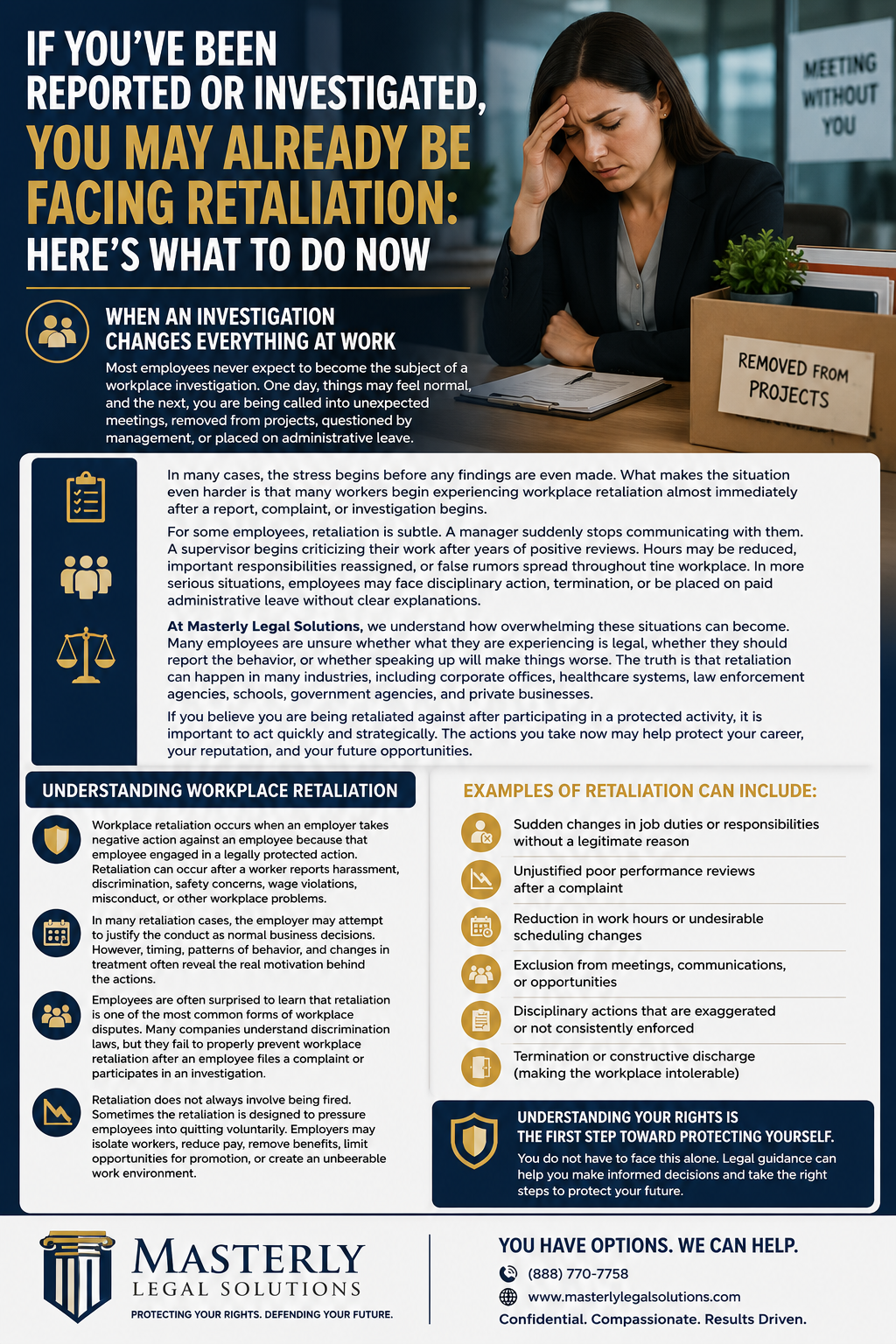
Most employees never expect to become the subject of a workplace investigation. One day, things may feel normal, and the next, you are being called into unexpected meetings, removed from projects, questioned by management, or placed on administrative leave. In many cases, the stress begins before any findings are even made. What makes the situation even harder is that many workers begin experiencing workplace retaliation almost immediately after a report, complaint, or investigation begins.
For some employees, retaliation is subtle. A manager suddenly stops communicating with them. A supervisor begins criticizing their work after years of positive reviews. Hours may be reduced, important responsibilities reassigned, or false rumors spread throughout the workplace. In more serious situations, employees may face disciplinary action, termination, or be placed on paid administrative leave without clear explanations.
At Masterly Legal Solutions, we understand how overwhelming these situations can become. Many employees are unsure whether what they are experiencing is legal, whether they should report the behavior, or whether speaking up will make things worse. The truth is that retaliation can happen in many industries, including corporate offices, healthcare systems, law enforcement agencies, schools, government agencies, and private businesses.
If you believe you are being retaliated against after participating in a protected activity, it is important to act quickly and strategically. The actions you take now may help protect your career, your reputation, and your future opportunities.
Understanding Workplace Retaliation
Workplace retaliation occurs when an employer takes negative action against an employee because that employee engaged in a legally protected action. Retaliation can occur after a worker reports harassment, discrimination, safety concerns, wage violations, misconduct, or other workplace problems.
In many retaliation cases, the employer may attempt to justify the conduct as normal business decisions. However, timing, patterns of behavior, and changes in treatment often reveal the real motivation behind the actions.
Employees are often surprised to learn that retaliation is one of the most common forms of workplace disputes. Many companies understand discrimination laws, but they fail to properly prevent workplace retaliation after an employee files a complaint or participates in an investigation.
Retaliation does not always involve being fired. Sometimes the retaliation is designed to pressure employees into quitting voluntarily. Employers may isolate workers, reduce pay, remove benefits, limit opportunities for promotion, or create an unbearable work environment.
Understanding your rights is the first step toward protecting yourself.
Why Retaliation Often Begins After a Report or Investigation
When a company receives a complaint, managers and supervisors sometimes react emotionally instead of professionally. Even though businesses are expected to follow laws and regulations regarding employee rights, some employers view complaints as personal attacks or threats to the company.
For example, an employee may report harassment to human resources, only to later experience reduced hours or increased scrutiny from management. Another employee may cooperate during an internal investigation and suddenly find themselves excluded from meetings or important projects.
Retaliation can also occur when employees report wage issues, safety concerns, or policy violations. In some workplaces, management becomes defensive when employees expose problems that could lead to liability or public criticism.
An investigation can create tension throughout the workplace. Supervisors may worry about consequences, while coworkers may feel pressure to choose sides. In some cases, employees who speak up become targets of false rumors or negative treatment intended to damage their credibility.
This type of behavior is not only harmful to workers, but it may also create serious legal exposure for the employer.
What Counts as a Protected Activity?
Not every disagreement at work qualifies as protected activity under employment laws. However, many employee actions are legally protected, especially when workers report unlawful conduct or cooperate in investigations.
Examples of protected activity may include:
- Reporting harassment or discrimination
- Filing a retaliation complaint
- Participating in an internal investigation
- Cooperating with the EEOC
- Reporting safety concerns
- Reporting wage violations
- Requesting accommodations related to disability
- Reporting illegal behavior
- Assisting another employee with a complaint
- Participating in a police investigation involving the workplace
Employees in the federal sector may also receive additional protections depending on the agency and circumstances involved.
A protected action does not require the employee to ultimately win the case. Employees are generally protected when they make good-faith reports or cooperate honestly during investigations.
Common Signs of Workplace Retaliation
Many employees do not immediately recognize retaliation because the behavior often starts gradually. Managers may avoid direct statements and instead engage in conduct designed to pressure or intimidate workers over time.
Some of the most common warning signs include sudden changes in treatment after an employee files a complaint or participates in an investigation, and many workers ultimately need guidance from an experienced retaliation lawyer for workplace disputes.
Sudden Administrative Leave
Administrative leave can sometimes be necessary during an investigation. However, repeated or unnecessary administrative leave may raise concerns, especially if the employee is excluded from communication or treated differently than others.
Some employees are placed on paid administrative leave while the company investigates allegations. Although paid administrative leave may sound harmless, it can still damage reputations and create emotional stress.
For example, an employee placed on administrative leave may miss career opportunities, lose access to clients, or face embarrassment among coworkers. In some retaliation cases, administrative leave is used as a tactic to isolate workers or force them out.
Reduced Hours or Pay
Retaliation frequently affects employee pay and schedules. Workers may suddenly lose overtime opportunities, experience pay cuts, or have their hours reduced without explanation.
A manager might claim the changes are related to budget concerns or business needs. However, when the timing closely follows a complaint or investigation, employees should carefully document the circumstances.
Loss of wages can place enormous financial pressure on workers and their families. Some employees feel forced to resign simply because they can no longer afford the reduced income.
Exclusion From Meetings and Projects
Employees who previously played active roles within the company may suddenly be excluded from meetings, communications, or projects after reporting concerns.
For example, a supervisor may stop inviting the employee to leadership meetings or remove them from major assignments. This can negatively affect promotion opportunities and long-term career development.
In some workplaces, retaliation occurs through isolation rather than direct punishment.
Increased Scrutiny and Discipline
Retaliating supervisors sometimes begin closely monitoring employees after they engage in protected activity. Workers may receive harsh evaluations, excessive criticism, or write-ups for minor issues that were previously ignored.
An employer may suddenly begin documenting trivial mistakes in an effort to build a case for termination. This pattern is common in many retaliation cases.
Employees should recognize that sudden disciplinary action after a complaint may not be coincidental.
The Emotional Impact of Retaliation
Retaliation affects far more than a paycheck. Many employees experience anxiety, stress, embarrassment, and fear after becoming the target of retaliation.
Workers often begin questioning themselves. They may wonder whether speaking up was a mistake. Some become afraid to report future misconduct because they fear additional consequences.
In serious situations, retaliation can affect relationships, financial stability, and mental health. Employees may struggle to sleep, experience panic attacks, or dread going to work each day.
For many workers, the emotional burden becomes even worse when coworkers distance themselves or management spreads false rumors about the employee, particularly in sensitive environments like schools where retaliation lawyers help protect educators’ careers.
No employee should feel forced to endure intimidation simply because they reported concerns or cooperated during an investigation.
Why Documentation Matters So Much
One of the most important proactive steps employees can take is to document everything carefully. Strong documentation may help determine whether retaliation occurred and may strengthen future employee claims.
Employees should collect documents related to the investigation, disciplinary actions, emails, schedules, pay records, and communications with management.
Important information to document may include:
- Dates of meetings
- Names of witnesses
- Changes in pay
- Reduced hours
- Written warnings
- Schedule changes
- Comments made by supervisors
- Emails from human resources
- Incidents involving harassment
- Sudden changes in job responsibilities
A detailed document trail may become valuable evidence later.
For example, if an employee receives excellent evaluations for years and then suddenly receives harsh criticism after filing a complaint, those records may help establish a pattern of retaliation.
Employees should also preserve text messages, emails, and notes whenever possible.
How Human Resources May Respond
Many employees assume human resources exists primarily to protect workers. In reality, human resources departments generally work to protect the company from liability.
This does not mean human resources will ignore complaints. Some HR departments investigate concerns properly and take corrective action. However, employees should understand that HR representatives are ultimately employed by the company.
When filing a complaint with human resources, employees should remain professional, factual, and organized. Emotional outbursts may sometimes distract from the actual issues, and some employers rely on HR consulting services and training to better manage investigations and employee concerns.
Employees should also request copies of written complaints whenever possible.
For example, if an employee reports harassment to human resources, they should document the date, time, and individuals involved. If HR later fails to investigate properly, those records may become important, especially when companies bring in outside counsel for internal investigations to review how the situation was handled.
What To Do Immediately After Being Reported or Investigated
The early stages of an investigation are often critical. Employees who react impulsively may unintentionally harm their position.
Stay Professional
Even if you feel angry or betrayed, remain professional during meetings and communications. Avoid emotional confrontations with managers or coworkers.
Employers sometimes attempt to portray employees as unstable or disruptive during retaliation cases. Staying calm may help protect your credibility.
Request Information in Writing
Whenever possible, request additional information about the investigation in writing. Ask for clarification regarding allegations, policies, or administrative leave decisions.
Written communication often creates accountability.
Avoid Discussing the Matter Publicly
Employees should be cautious about discussing investigations on social media or with coworkers. Public comments may later be used against you.
Continue Performing Your Job Duties
Unless instructed otherwise, continue completing assignments professionally and on time. Avoid giving the employer excuses to claim performance issues.
Administrative Leave Does Not Always Mean You Did Something Wrong
Many employees panic when placed on administrative leave. However, administrative leave does not automatically mean misconduct occurred.
Companies sometimes use administrative leave while they investigate allegations or conduct internal reviews. In some cases, administrative leave may simply be intended to separate employees temporarily during the process.
Still, employees should not assume every administrative leave decision is neutral. Some employers misuse administrative leave as retaliation after employees report misconduct or participate in protected activity.
For example, a worker may be placed on paid administrative leave after reporting discrimination, while the accused manager remains actively working. This type of situation may raise serious concerns.
Employees should carefully document all communication related to administrative leave, including explanations provided by the employer.
Retaliation in Schools and Educational Institutions
Employees working in schools often face unique challenges during workplace investigations. Teachers, administrators, counselors, and support staff may experience retaliation after reporting misconduct involving students, coworkers, or supervisors.
For example, a school employee who reports harassment or safety concerns may suddenly receive negative evaluations or lose leadership opportunities.
Some schools attempt to discourage complaints in order to avoid public attention or scrutiny. Employees may fear retaliation from administrators, school boards, or coworkers.
Workers in educational settings should take proactive steps to document incidents carefully and protect their rights throughout the investigation process.
When False Rumors Become Part of Retaliation
One common retaliation tactic involves spreading false rumors about employees after they file complaints or cooperate during investigations.
Managers or coworkers may attempt to damage the employee’s reputation by questioning their honesty, professionalism, or motives.
For example, employees may suddenly hear rumors suggesting they are “difficult,” “unstable,” or “not a team player” after reporting harassment or discrimination.
False rumors can seriously damage careers, especially in industries where reputation matters. Workers should document incidents involving defamatory statements whenever possible.
Understanding EEOC Retaliation Protections
The EEOC enforces federal laws involving workplace discrimination and retaliation. Employees who file EEOC complaints are generally protected from retaliating behavior by employers.
Retaliation protections may apply when employees:
- File discrimination complaints
- Participate in EEOC investigations
- Serve as witnesses
- Oppose unlawful workplace conduct
- Request accommodations related to disability
mployers cannot legally punish employees for exercising protected rights under these laws.
Still, many retaliation cases become complicated because employers often claim the negative actions were based on performance or business reasons instead of retaliation.
This is why detailed evidence and legal guidance may become extremely important.
Why Timing Often Matters in a Retaliation Case
Timing can play a major role in a retaliation case. If negative treatment begins shortly after an employee files a complaint or participates in an investigation, that timing may support the employee’s claim.
For example, imagine an employee reports discrimination to human resources. Two weeks later, the employee is placed on administrative leave and removed from leadership responsibilities. That timing could raise important questions.
Courts and agencies often examine whether negative treatment closely followed protected activity.
Employees should carefully document dates involving complaints, meetings, disciplinary action, and workplace changes.
Retaliation Can Happen in Any Industry
Workplace retaliation is not limited to corporate environments. Employees across many industries experience retaliation after reporting concerns.
Retaliation may occur in:
- Healthcare facilities
- Government agencies
- Schools
- Police departments
- Retail businesses
- Construction companies
- Manufacturing plants
- Technology companies
- Financial institutions
No matter where an employee works, retaliation can create serious personal and professional consequences.
Why Some Employees Stay Silent
Many workers recognize retaliation happening around them but still choose not to report concerns. Fear is often the biggest reason.
Employees worry they may lose pay, benefits, promotions, or even their jobs. Others fear becoming isolated within the workplace or damaging their careers permanently.
Unfortunately, some employers rely on this fear to discourage complaints.
Workers should recognize that silence often allows harmful behavior to continue unchecked.
How Employers Attempt to Defend Retaliation Claims
In many retaliation cases, the employer denies wrongdoing entirely. Companies often argue that their actions were based on performance issues, restructuring, or business needs.
For example, an employer may claim reduced hours were caused by financial problems rather than retaliation. A manager may argue disciplinary action was justified because of attendance issues or policy violations.
This is why employees should gather evidence early and maintain organized records.
Strong documentation may help determine whether the employer’s explanations are consistent or misleading.
The Importance of Witnesses
Coworkers sometimes witness retaliating behavior but hesitate to speak up. Still, witness testimony may become valuable in certain cases.
For example, another employee may have observed a supervisor making retaliatory comments after a complaint was filed. A witness may also confirm changes in treatment, exclusion from meetings, or hostile behavior.
Employees should document the names of individuals who observed important incidents.
Can Retaliation Happen Even if the Original Complaint Is Not Proven?
Yes. Employees are generally protected from retaliation even if the original complaint is not ultimately substantiated.
For example, an employee may report suspected harassment in good faith. Even if the company later determines there was insufficient evidence to support the harassment allegation, retaliation may still be illegal.
The key issue is often whether the employee engaged in protected activity honestly and reasonably.
What Happens When Employees Are Forced Out
Some retaliation becomes so severe that employees feel pressured to resign. This may involve repeated hostility, isolation, humiliation, or impossible working conditions.
For example, a worker may experience:
- Repeated administrative leave
- Extreme schedule changes
- Public criticism
- Demotions
- Loss of benefits
- Excessive scrutiny
- Ongoing harassment
When employers intentionally create unbearable conditions, employees may feel they have no realistic option except resignation.
These circumstances can become legally significant depending on the facts involved.
Retaliation and Workplace Harassment Often Overlap
Harassment and retaliation frequently occur together. After an employee reports misconduct, coworkers or supervisors may engage in hostile behavior intended to intimidate or punish the employee.
This may include verbal abuse, exclusion, ridicule, threats, or humiliating treatment during meetings.
For example, a manager may repeatedly embarrass an employee in front of coworkers after a complaint is filed. Over time, this behavior can create a toxic workplace environment.
Employees should recognize that retaliating conduct is not always limited to formal disciplinary action.
The Role of Federal and State Laws
Federal and state laws provide important protections for employees who report misconduct or participate in investigations.
Different laws may apply depending on the industry, type of complaint, and employee role.
For example, some laws protect workers who report wage violations, while other regulations apply to discrimination, harassment, whistleblower activity, or safety concerns.
Employees in the federal sector may also have unique procedures and deadlines, and workers with wage or safety issues may need to understand retaliation and labor complaints filed with the Department of Labor.
Because every situation is different, it is important to understand how the laws apply to your specific circumstances, and many organizations rely on a full-service labor and employment law firm to navigate these obligations.
Why Early Legal Guidance Can Matter
Many employees wait too long before seeking legal guidance. By the time they reach out for help, critical evidence may already be lost.
An experienced legal team may help employees:
- Recognize retaliation early
- Preserve evidence
- Document incidents properly
- Respond strategically during investigations
- Understand filing deadlines
- Protect professional reputations
- Evaluate possible claims
Taking proactive steps early may improve the employee’s ability to protect themselves moving forward.
How Retaliation Affects Long-Term Careers
Retaliation can create long-term damage beyond a single job. Employees may lose networking opportunities, professional references, or future advancement possibilities.
For example, a manager who spreads false rumors may affect an employee’s ability to secure future employment within the same industry.
Some workers also experience emotional burnout that affects confidence and job performance long after the incident ends.
Protecting your reputation during an investigation is often just as important as protecting your current position.
What Employees Should Avoid During an Investigation
Employees facing investigations should avoid actions that could weaken their position.
Avoid Destroying Documents
Never delete emails, messages, or records related to the investigation.
Avoid Retaliating Against Others
Even if you feel mistreated, avoid engaging in hostile behavior toward coworkers or supervisors.
Avoid Signing Documents Without Understanding Them
Employees should carefully review any agreements, statements, or disciplinary forms before signing.
Avoid Assuming the Situation Will Resolve Itself
Some workers hope the retaliation will stop on its own. Unfortunately, delays may sometimes make the situation harder to address later.
Building a Stronger Workplace Culture
Employers who genuinely want to prevent workplace retaliation must create environments where employees feel safe reporting concerns.
An effective way to foster accountability includes:
- Training supervisors properly through manager-focused sexual harassment prevention programs
- Enforcing anti-retaliation policies supported by a clear, compliant employee handbook drafted by legal professionals
- Investigating complaints fairly
- Encouraging respectful behavior
- Protecting employees from punishment
- Following workplace rules consistently
When companies fail to address retaliation seriously, workplace morale often declines and employee trust disappears, which is why employers should invest in compliant sexual harassment training for their workforce.
Healthy workplaces protect employees who speak up instead of retaliating against them, and regular sexual harassment training that improves workplace culture can be an important part of that effort.
Recognizing the Warning Signs Early
Employees should recognize early warning signs before retaliation escalates further.
Examples may include:
- Sudden hostility from a supervisor
- Exclusion from meetings
- Reduced pay
- Loss of responsibilities
- Negative evaluations
- Unexplained schedule changes
- Increased monitoring
- Pressure to resign
Early recognition may help employees take action before the situation becomes worse.
How Retaliation Can Lead to Larger Legal Problems for Employers
When employers fail to address retaliation properly, the consequences may extend far beyond one employee complaint.
Retaliation allegations can lead to:
- EEOC investigations
- Lawsuits
- Financial damages
- Public scrutiny
- Loss of employee trust
- Reputation damage
- Increased turnover
Businesses that ignore retaliation risks may face significant long-term consequences.
Every Retaliation Situation Is Different
No two retaliation cases are exactly alike. The facts, industry, company policies, witnesses, and documentation all matter.
For example, retaliation involving police departments may involve different procedures than retaliation within schools or private corporations. Similarly, workers in healthcare or government positions may face unique reporting requirements.
Employees should avoid assuming their situation is too small or unimportant to address.
Even subtle retaliating behavior can have serious impacts over time.
Protecting Yourself Starts With Taking Action
Employees who experience retaliation often feel powerless at first. However, taking thoughtful and informed action may help protect your career and future opportunities.
If you believe your employer is retaliating against you after a complaint, report, or investigation, it is important to act strategically instead of emotionally.
Document incidents carefully. Preserve evidence. Stay professional. Seek guidance before making major decisions.
Most importantly, recognize that retaliation is not something employees should simply accept as part of workplace culture.
How Employees Decide Whether to Speak Up
Many employees struggle to decide whether they should report misconduct or remain silent out of fear of retaliation. Some workers worry that filing a complaint could damage their reputation, affect their pay, or place their career under unnecessary scrutiny. Others fear that management or a supervisor may begin treating them differently after they raise concerns about harassment, discrimination, or illegal behavior in the workplace. In some situations, employees delay reporting problems because they believe the company will ignore the issue or protect the wrong people. Understanding your rights and documenting concerns early can help employees make informed decisions before workplace retaliation escalates further.
Retaliation Can Take More Than One Form
Many people assume retaliation only happens when an employee is fired, but retaliation can appear in almost every other type of workplace behavior as well. For example, a manager may suddenly reduce an employee’s hours, remove responsibilities, spread false rumors, deny promotion opportunities, or create a hostile work environment after a complaint or investigation begins. Some employees are placed on administrative leave, while others experience increased disciplinary action or isolation from meetings and coworkers. Retaliating behavior is not always obvious at first, which is why employees should carefully recognize patterns of mistreatment following a protected activity. No matter the other type of retaliation involved, workers should take proactive steps to document incidents and protect themselves professionally.
Speak With Masterly Legal Solutions About Workplace Retaliation
If you believe you are experiencing workplace retaliation after reporting misconduct, participating in an investigation, or filing a complaint, you do not have to face the situation alone. At Masterly Legal Solutions, we understand how stressful and isolating these circumstances can become for employees trying to protect their careers, finances, and reputations.
Our team works with employees facing retaliation, harassment, discrimination, administrative leave issues, disciplinary action, and other workplace disputes. Whether you are dealing with reduced pay, false accusations, hostile treatment from a supervisor, or pressure from management after engaging in protected activity, we can help you better understand your options.
Contact Masterly Legal Solutions at (972) 236-5051 for a free consultation. We can answer your questions, discuss your concerns, and help you take proactive steps to protect yourself moving forward. Every workplace situation is different, and having experienced guidance early may make a significant difference in how your case develops.
Disclaimer: This article is provided for educational and informational purposes only and does not constitute legal advice. Reading this article does not create an attorney-client relationship with Masterly Legal Solutions. Individuals facing workplace retaliation, harassment, discrimination, or investigation-related concerns should consult directly with a qualified legal professional regarding their specific circumstances.



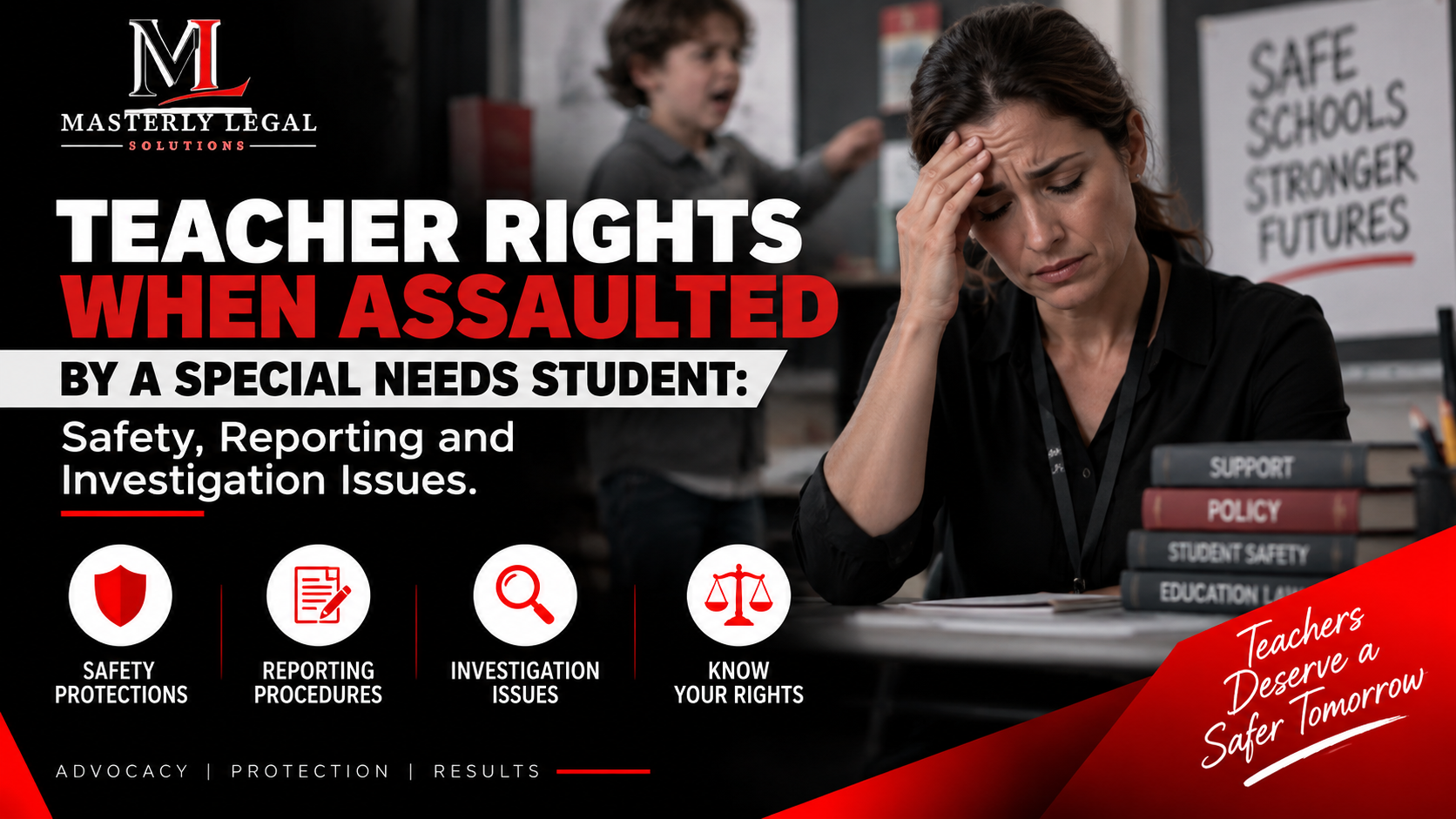
Teacher Rights When Assaulted by a Special Needs Student: Safety, Reporting and Investigation Issues


Looking for Legal & Business Solutions? Contact Us Now
Fill in the form or call us to set up a meeting





