

School Investigations and Administrative Leave: Understanding Your Legal Rights
When a School Investigation Suddenly Changes Your Career
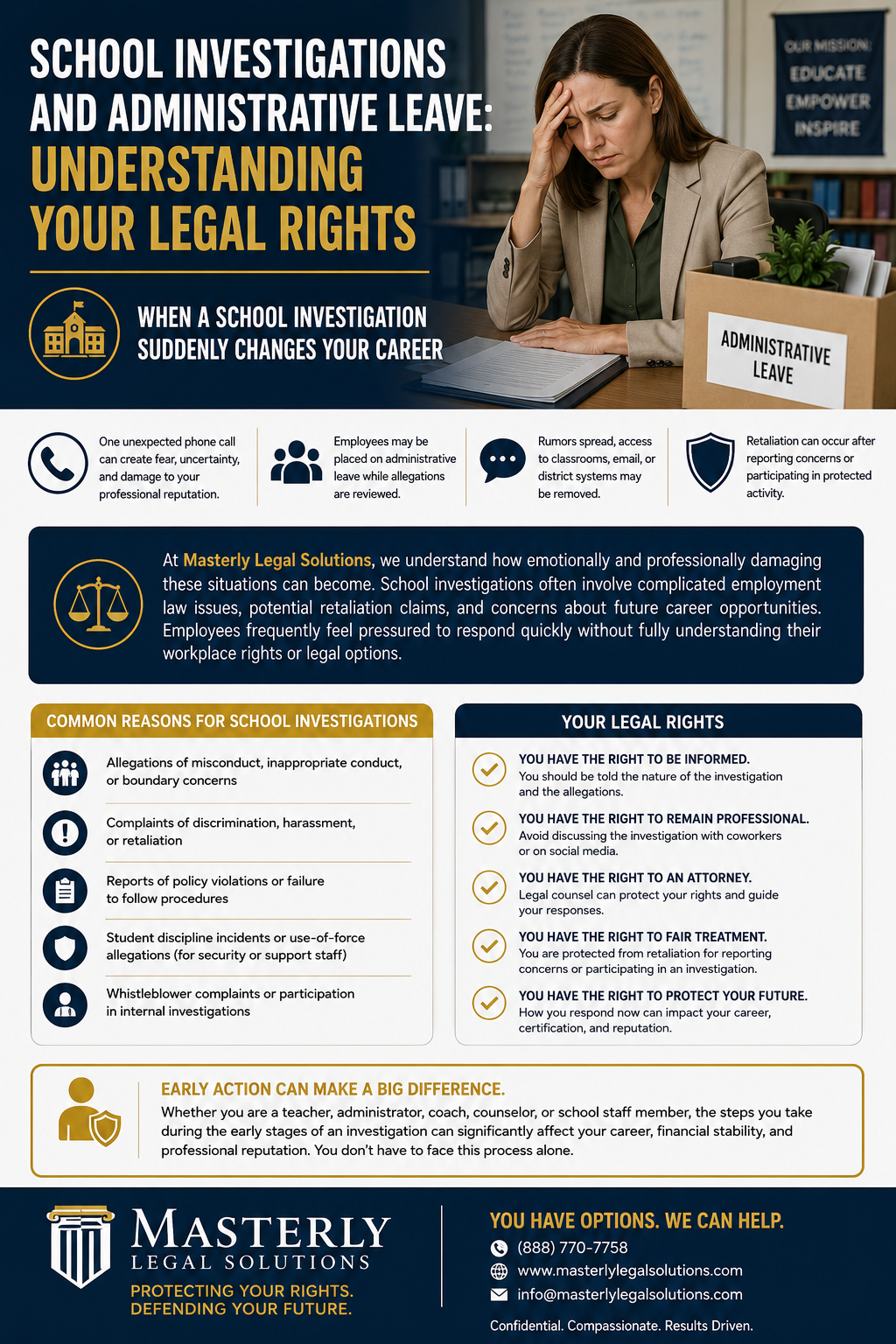
For teachers, administrators, coaches, counselors, and school staff, few experiences are more stressful than learning you are under investigation. One unexpected phone call from a supervisor or human resources department can instantly create fear, uncertainty, and damage to your professional reputation. In many cases, employees are immediately placed on administrative leave while the school district begins reviewing allegations or complaints.
What makes these situations even more difficult is that many school employees feel isolated during the process. Rumors begin spreading, coworkers stop communicating, and the employee may suddenly lose access to classrooms, email accounts, or district systems. Some workers experience workplace retaliation almost immediately after reporting concerns or participating in protected activity related to discrimination, harassment, or misconduct investigations, and may need support from an experienced retaliation lawyer for workplace investigations and claims.
At Masterly Legal Solutions, we understand how emotionally and professionally damaging these situations can become. School investigations often involve complicated employment law issues, potential retaliation claims, and concerns about future career opportunities that may require guidance from an experienced education law attorney for teachers and administrators. Employees frequently feel pressured to respond quickly without fully understanding their workplace rights or legal options.
Whether you are a teacher placed on administrative leave, an administrator accused of misconduct, or an employee facing employer retaliation after reporting concerns, understanding your rights early may help protect your future. The steps you take during the early stages of an investigation can significantly affect your career, financial stability, and professional reputation.
Why School Investigations Are So Serious
School investigations are different from many other workplace investigations because educators and school employees are often held to extremely high professional standards. Even allegations that are ultimately unsubstantiated may still create lasting damage to a person’s career and reputation.
For example, an employee accused of inappropriate conduct may immediately be removed from campus while the school district investigates the complaint. Parents, students, coworkers, and community members may begin speculating long before any findings are made. In some cases, employees experience workplace retaliation simply because they became involved in a complaint or investigation.
Schools also face pressure from state agencies, public scrutiny, and internal company policies that may influence how investigations are handled. Districts often move quickly to protect themselves from liability, which can sometimes leave employees feeling abandoned or presumed guilty before the process is complete.
Because of these risks, employees should never assume an investigation is merely a routine matter that will resolve itself quietly, and many educators benefit from working with Masterly Legal Solutions, a Texas law firm for educators and school investigations.
Understanding Administrative Leave in School Settings
Administrative leave is one of the most common actions taken during school investigations. Many employees are shocked when they are suddenly told not to return to campus while an investigation takes place.
Administrative leave may be paid or unpaid depending on the circumstances, district policies, and employment agreements. In many cases, schools place employees on paid leave while administrators gather information and interview witnesses.
However, administrative leave can still carry serious consequences even when the employee continues receiving pay. Staff members often feel humiliated, isolated, and uncertain about their future employment status. Some employees later discover that rumors spread throughout the workplace while they were away.
For example, a teacher placed on leave after a complaint involving student interactions may later struggle to rebuild trust with coworkers even if no misconduct occurred. Administrative leave can also interfere with promotion opportunities, professional relationships, and future job searches, and in some cases may trigger Texas Education Agency (TEA) license defense and investigation proceedings.
What Triggers School Investigations
School investigations can begin for many reasons. Some involve student complaints, while others arise from disputes between employees, allegations of workplace discrimination, or concerns about policy violations.
Common reasons for investigations include:
- Allegations of harassment
- Sexual harassment complaints
- Claims of workplace discrimination
- Concerns involving student safety
- Reporting discrimination
- Accusations of policy violations
- Retaliation complaints
- Wage disputes
- Alleged illegal acts
- Claims involving reasonable accommodation requests
- Conflicts involving other employees
In some cases, investigations begin after an employee reports misconduct involving a supervisor or administrator. Unfortunately, some workers later experience employer retaliation for participating in the investigation process, making it important to understand how a dedicated retaliation lawyer for workplace and school employees can help protect their rights.
Employees should understand that even false allegations can lead to serious professional consequences if the matter is not handled carefully.
Workplace Retaliation in School Environments
Many school employees are surprised to learn how common workplace retaliation can become after reporting concerns or participating in investigations. When an employer treats a worker unfairly because they participated in protected behavior, this is known as retaliation.
Examples of workplace retaliation in schools may include:
- Removal from leadership roles
- Negative evaluations
- Schedule changes
- Increased scrutiny
- Demotions
- Hostile treatment
- Exclusion from meetings
- Reduction in responsibilities
- Threats involving future employment
- Wrongful termination
For example, a teacher who reports workplace discrimination may later experience retaliatory acts from administrators or coworkers. A school employee who files a complaint involving harassment may suddenly face criticism regarding job performance despite years of positive reviews.
Retaliation can sometimes be subtle, making it difficult for employees to recognize immediately.
Protected Activity and Your Legal Rights
Under federal law and state law, employees are protected when they engage in certain legally protected activities. These protections apply even if the original complaint is ultimately not substantiated.
Protected activity may include:
- Reporting discrimination
- Reporting harassment
- Filing discrimination claims
- Participating in investigations
- Cooperating with the equal employment opportunity commission
- Requesting reasonable accommodation
- Opposing illegal workplace behavior
- Reporting wage theft
- Reporting workplace safety concerns
- Taking protected medical leave
Employees do not lose protection simply because an employer disagrees with the complaint. Many anti discrimination laws protect workers who report concerns based on a good faith belief that misconduct occurred.
This is especially important in school environments where employees may fear retaliation from administrators or supervisors.
The Emotional Toll of Administrative Leave
Being placed on leave during an investigation often creates emotional distress for employees and their families. Many workers describe the experience as one of the most difficult periods of their professional lives.
Employees frequently worry about:
- Losing their teaching certificate
- Damage to their reputation
- Financial instability
- Future employment opportunities
- Community gossip
- Relationships with students and parents
- Potential retaliation
- Wrongful termination
Some employees feel completely isolated after being removed from the workplace. Friends and coworkers may stop communicating out of fear or uncertainty about the investigation.
These legitimate fears can become overwhelming, especially when the employee receives little information from the employer regarding the status of the investigation.
Why Employees Should Take Investigations Seriously
One major mistake employees make is assuming the investigation will automatically clear them without consequences. Unfortunately, some investigations lead to discipline, termination, or long-term career damage even when evidence is weak or incomplete.
School districts often focus heavily on protecting the institution from liability. This may sometimes create pressure to move quickly rather than fairly.
For example, an employee may believe the allegations are obviously false and fail to properly gather evidence or seek legal guidance. Later, the employee may discover that witness statements, documentation, or misunderstandings significantly affected the outcome.
Taking investigations seriously from the beginning may help employees protect themselves more effectively.
The Role of Human Resources During School Investigations
Many employees believe the human resources department exists primarily to protect workers. In reality, human resources departments generally work to protect the employer and reduce organizational liability.
This does not mean human resources will ignore employee concerns. Some HR professionals conduct fair investigations and follow workplace policies carefully. However, employees should understand that HR representatives ultimately represent the school district or company.
When communicating with human resources, employees should remain professional, factual, and organized. Emotional reactions may sometimes distract from the key issues involved, and employers often rely on outside HR consulting services and workplace investigations guidance to structure these processes.
Employees should also document all meetings, requests, and communications whenever possible.
Common Signs of Employer Retaliation
Employer retaliation does not always involve immediate termination. In many retaliation cases, the conduct develops gradually over time.
Common warning signs include:
- Sudden negative evaluations
- Increased monitoring
- Hostile work environment behavior
- Exclusion from meetings
- Schedule changes
- Unfair disciplinary actions
- Reduced responsibilities
- Threats involving promotion opportunities
- Pressure to resign
- Isolation from coworkers
For example, an employee participating in an investigation may suddenly receive criticism from a supervisor who previously praised their work. Another worker may experience adverse employment action shortly after reporting discrimination.
Recognizing retaliation early can help employees respond strategically.
Hostile Work Environment Concerns in Schools
A hostile work environment may develop when harassment, retaliation, or discrimination becomes severe enough to interfere with an employee’s ability to work effectively.
For example, a teacher may experience repeated humiliation during staff meetings after filing a complaint involving workplace discrimination. A supervisor may intentionally isolate the employee or encourage other employees to avoid them.
Hostile work environment situations can seriously affect emotional health, job performance, and long-term career stability.
Employees should document incidents carefully, including dates, witnesses, and communications related to the behavior.
Sexual Harassment Allegations and Investigations
Sexual harassment allegations often lead to immediate investigations within schools and medical care institutions. These situations can become extremely sensitive and emotionally charged for everyone involved.
Employees accused of sexual harassment may feel pressured to defend themselves immediately without fully understanding their rights. On the other hand, employees reporting harassment may fear employer retaliation after coming forward.
Both situations require careful handling. Investigations involving sexual harassment should be conducted fairly, professionally, and without assumptions about guilt or innocence.
Employees should avoid discussing the matter publicly or on social media during the investigation process.
How Employment Law Protects School Employees
Employment law provides important protections for employees facing retaliation, discrimination, or wrongful treatment in the workplace.
Federal and state law may protect employees from:
- Workplace retaliation
- Employment discrimination
- Sexual harassment
- Wrongful termination
- Wage theft
- Employer retaliation
- Retaliatory acts
- Failure to provide reasonable accommodation
The civil rights act, disabilities act, and other anti discrimination law protections may apply depending on the circumstances.
Because school employees often work under detailed workplace policies and contractual agreements, investigations may involve multiple layers of legal issues, many of which are shaped by the district’s employee handbook policies and procedures.
Federal Law and State Law Protections
Federal law and state law both play major roles in protecting employees during workplace investigations. In Texas, school employees may have rights under multiple legal frameworks depending on the nature of the complaint.
Federal law often applies to discrimination claims involving:
- Age discrimination
- Sexual orientation discrimination
- Disability discrimination
- Harassment
- Retaliation for protected activity
State law protections may also apply through agencies such as the Texas Workforce Commission.
Employees should understand that some claims involve very short deadlines, which is why early legal guidance can become extremely important, especially when considering retaliation and labor complaints filed with government agencies.
Why Timing Matters in a Retaliation Case
Timing is often one of the most important factors in a retaliation case. If negative treatment begins shortly after an employee engages in protected activity, that timing may support the employee’s legal claim.
For example, an employee reporting discrimination to the human resources department may suddenly experience hostile treatment from management two weeks later. Another employee may be placed on administrative leave shortly after cooperating with investigators.
Courts and agencies frequently examine whether an employer retaliated against an employee soon after protected conduct occurred.
Employees should carefully document dates involving complaints, meetings, investigations, and disciplinary actions.
How False Allegations Can Affect Careers
False accusations during school investigations can permanently affect careers if not addressed properly. Even when allegations are disproven, the damage to professional reputation may continue long after the investigation ends.
For example, a teacher falsely accused of misconduct may later struggle to obtain new employment opportunities because of rumors or incomplete records.
Some employees also experience emotional distress that affects confidence and future job performance.
Employees should take allegations seriously while remaining calm and professional throughout the process, and many teachers choose to consult an education law attorney for investigation and discipline defense to protect their careers.
Workplace Discrimination in Educational Institutions
Workplace discrimination may occur in schools based on race, gender, disability, religion, age, sexual orientation, or other protected categories.
Examples of workplace discrimination may include:
- Unequal discipline
- Denied promotions
- Hostile comments
- Retaliation after complaints
- Unequal pay
- Failure to provide reasonable accommodation
An employer's discrimination practices may become more obvious after an employee reports concerns internally.
Employees who experience unfair treatment should document incidents carefully and seek guidance regarding possible discrimination claims.
The Importance of Documentation
Documentation may become one of the strongest tools employees have during investigations or retaliation disputes.
Employees should gather evidence including:
- Emails
- Text messages
- Evaluations
- Meeting notes
- Witness names
- Schedule records
- Administrative leave notices
- Complaint records
Detailed documentation may help determine whether retaliation, discrimination, or policy violations occurred.
For example, if an employee receives excellent evaluations for years before suddenly facing criticism after reporting misconduct, those records may become highly relevant.
Why Some Employees Stay Silent
Many school employees remain silent about misconduct because they fear retaliation from supervisors or administrators. Others worry about losing opportunities, damaging relationships, or becoming isolated in the workplace.
These legitimate fears are common, especially in close-knit educational environments where reputations spread quickly.
Unfortunately, silence sometimes allows harmful behavior to continue unchecked.
Employees should understand that workplace rights exist to help protect workers who report concerns in good faith.
The Connection Between Retaliation and Wrongful Termination
Some employees eventually face wrongful termination after participating in investigations or reporting misconduct.
For example, an employer retaliated against an employee may begin creating disciplinary records designed to justify termination later. A school district may claim the decision was based on performance issues even when the timing suggests retaliation.
Wrongful termination cases can become legally complex because employers often provide alternative explanations for their actions.
Strong evidence and careful documentation may become critical in these situations.
FMLA Leave and School Investigations
Employees dealing with stress, emotional distress, or medical conditions during investigations may also have rights under the medical leave act.
FMLA leave may apply when employees experience serious health conditions affecting their ability to work.
For example, an employee suffering severe anxiety after harassment or retaliation may qualify for protected medical leave. Employers cannot legally retaliate against workers for taking protected leave under federal law.
Employees should understand how medical leave protections may intersect with school investigations and employment law rights.
Reasonable Accommodation and Disability Rights
Employees with disabilities may also have rights involving reasonable accommodation during investigations or disciplinary proceedings.
The disabilities act may require employers to provide accommodations that allow employees to continue performing essential job duties.
For example, an employee experiencing anxiety or mental health challenges related to workplace harassment may request adjustments to meetings, schedules, or communication methods.
Failure to address accommodation requests properly can create additional legal concerns for the employer.
How Employers Attempt to Defend Retaliation Claims
In many retaliation claims, employers argue that adverse employment action occurred for legitimate business reasons rather than retaliation.
For example, a school district may claim schedule changes resulted from staffing needs instead of retaliation for reporting discrimination.
Employers often point to:
- Performance concerns
- Policy violations
- Budget issues
- Staffing changes
- Administrative restructuring
This is why employees should gather evidence early and maintain organized records throughout the process.
Severance Agreements and Investigations
Some employees are offered severance agreements during or after investigations. Employers may present these agreements as opportunities to move forward quietly.
However, employees should review severance agreements carefully before signing. Some agreements may affect future legal options or require employees to waive certain rights.
Employees should avoid feeling pressured into immediate decisions during stressful situations, and organizations may benefit from broader legal services for internal investigations and workplace training to prevent disputes from escalating.
Consulting an employment lawyer before signing important documents may help employees better understand the consequences involved.
Why Early Legal Guidance Matters
One of the biggest mistakes employees make is waiting too long before speaking with an employment lawyer.
By the time an employee waits until termination occurs, valuable evidence may already be lost. Witnesses may forget important details, documents may disappear, and deadlines may expire.
An experienced workplace retaliation attorney may help employees:
- Understand workplace rights
- Build a legal strategy
- Preserve evidence
- Evaluate a viable retaliation claim
- Respond to investigations professionally
- Protect their reputation
- Determine legal options
Early action may significantly improve an employee’s ability to protect themselves.
The Role of an Employment Lawyer During Investigations
An employment lawyer may help employees navigate complex investigations while protecting their rights and professional interests.
For example, an employment lawyer may assist with:
- Reviewing investigation procedures
- Preparing for meetings
- Responding to allegations
- Evaluating discrimination claims
- Addressing retaliation concerns
- Reviewing company policies
- Analyzing workplace policies
- Reviewing severance agreements
Employees often feel more confident and prepared when they understand the legal issues involved in their situation.
Dallas Employees Facing Workplace Retaliation
Employees throughout Dallas TX often contact legal professionals after experiencing retaliation in schools, businesses, and medical care institutions.
Dallas workers may face retaliation after:
- Reporting harassment
- Participating in investigations
- Requesting accommodations
- Reporting wage theft
- Reporting discrimination
- Taking protected leave
Workplace retaliation can affect employees in nearly every industry, including education, healthcare, law enforcement, and government positions.
Employees in Dallas TX should understand that legal protections may exist even if the employer denies wrongdoing.
Holding Employers Accountable for Retaliation
Employees who experience retaliation often feel powerless against large institutions or school districts. However, anti discrimination law protections exist to hold employers accountable for unlawful conduct.
Retaliation protections help hold companies accountable when they punish employees for engaging in protected activity.
Employers should not be allowed to intimidate workers into silence through retaliatory acts, harassment, or wrongful discipline.
Employees who understand their rights may be better positioned to challenge unfair treatment appropriately.
The Impact of Retaliation on Job Performance
Retaliation can severely affect job performance and emotional well-being. Employees under constant scrutiny often experience anxiety, fear, and exhaustion.
For example, a teacher facing retaliation may struggle to focus in the classroom because of ongoing stress involving investigations or disciplinary threats.
Workplace retaliation may also damage relationships with students, coworkers, and administrators.
These situations can create long-term professional and personal consequences if left unaddressed.
Why Workplace Policies Matter
School districts and employers often rely heavily on company policies during investigations and disciplinary proceedings.
Employees should review workplace policies carefully to understand:
- Investigation procedures
- Reporting requirements
- Leave policies
- Disciplinary rules
- Complaint procedures
- Confidentiality expectations
Understanding internal policies may help employees identify procedural problems or inconsistent treatment during investigations.
Very Short Deadlines Can Affect Your Rights
Many retaliation claims and discrimination complaints involve very short deadlines under federal law and state law.
For example, employees may need to file complaints with the Equal Employment Opportunity Commission or Texas Workforce Commission within strict time limits.
Missing deadlines can seriously affect legal rights and future legal action opportunities.
Employees should avoid assuming they have unlimited time to decide what steps to take.
Why Schools Must Investigate Fairly
Schools have a responsibility to investigate complaints professionally and fairly. Employees should not be presumed guilty simply because allegations were made.
A fair investigation should involve:
- Neutral fact gathering
- Proper documentation
- Consistent procedures
- Respect for confidentiality
- Equal treatment for all parties
When schools fail to investigate properly, the consequences may affect both employees and students.
Recognizing When Retaliation Is Escalating
Employees should recognize warning signs when retaliation begins escalating beyond isolated incidents.
Examples may include:
- Repeated hostile interactions
- Public humiliation
- Sudden disciplinary write-ups
- Pressure to resign
- Exclusion from meetings
- Threats involving future employment
- Increased monitoring
Early recognition may allow employees to take proactive steps before the situation worsens.
Building a Stronger Retaliation Case
Employees pursuing a retaliation case often strengthen their position by remaining professional and organized throughout the process.
Helpful steps may include:
- Documenting communications
- Preserving emails
- Gathering witness information
- Following reporting procedures
- Avoiding emotional confrontations
- Seeking legal guidance early
Professional conduct can become important evidence when disputes later arise regarding employee behavior.
Why Legal Representation Can Make a Difference
Investigations involving retaliation, discrimination, or harassment can quickly become legally complicated. Employees often feel overwhelmed trying to navigate employment law issues alone while protecting their careers.
An experienced retaliation lawyer may help employees evaluate possible claims, understand legal options, and develop an effective legal strategy.
Whether the issue involves workplace retaliation, wrongful termination, sexual harassment, or employer retaliation, having experienced legal guidance may help employees make informed decisions during stressful situations.
Speak With Masterly Legal Solutions About School Investigations and Retaliation
If you are facing a school investigation, administrative leave, workplace retaliation, or concerns involving discrimination or harassment, you do not have to navigate the situation alone. At Masterly Legal Solutions, our legal team understands how emotionally and professionally difficult these situations can become for employees throughout Dallas TX and surrounding areas.
Our law firm works with employees dealing with retaliation claims, workplace discrimination, wrongful termination, hostile work environment concerns, and complex school investigations. Whether you are a teacher, administrator, counselor, coach, or school staff member, we can help you better understand your workplace rights and legal options.
If you believe your employer retaliated against you after participating in protected activity, reporting discrimination, or cooperating during an investigation, speaking with a retaliation lawyer Dallas employees trust may help you protect your future. The sooner employees in Dallas employment disputes seek guidance, the more opportunities they may have to preserve evidence and respond strategically.
Contact Masterly Legal Solutions at (972) 236-5051 for a free initial consultation. We are committed to helping hold employers accountable, protect employee rights, and guide workers through difficult workplace situations with professionalism and experience.
Disclaimer: This article is intended for informational and educational purposes only and does not constitute legal advice. You do not establish an attorney-client relationship with Masterly Legal Solutions by reading this material. Every workplace situation is different, and individuals facing retaliation, discrimination, harassment, or school investigation concerns should consult directly with a qualified employment lawyer regarding their specific circumstances.


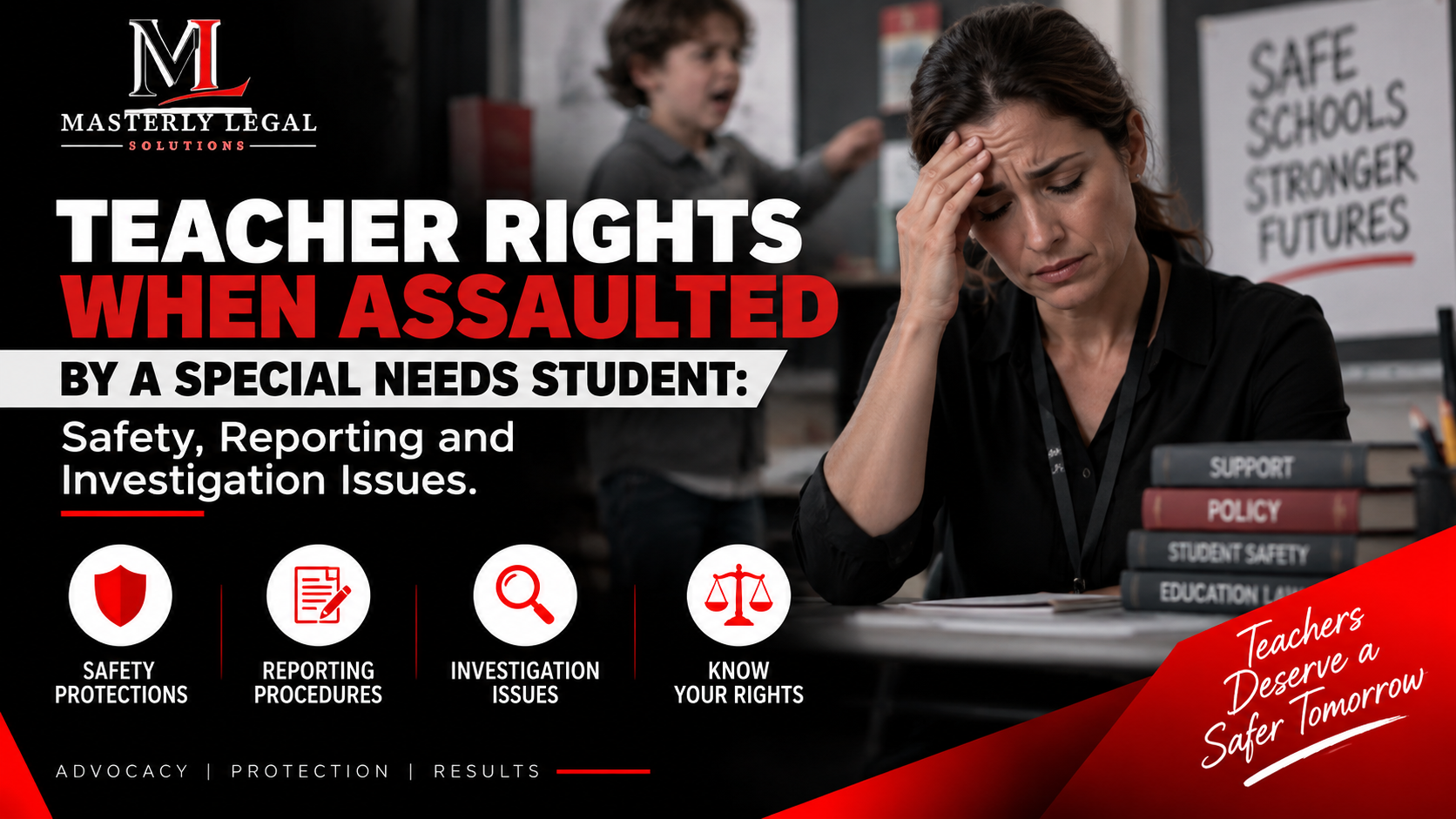
Teacher Rights When Assaulted by a Special Needs Student: Safety, Reporting and Investigation Issues


Looking for Legal & Business Solutions? Contact Us Now
Fill in the form or call us to set up a meeting