

Lawyers for CPS Cases Explain the Texas CPS Investigation Process Step-by-Step
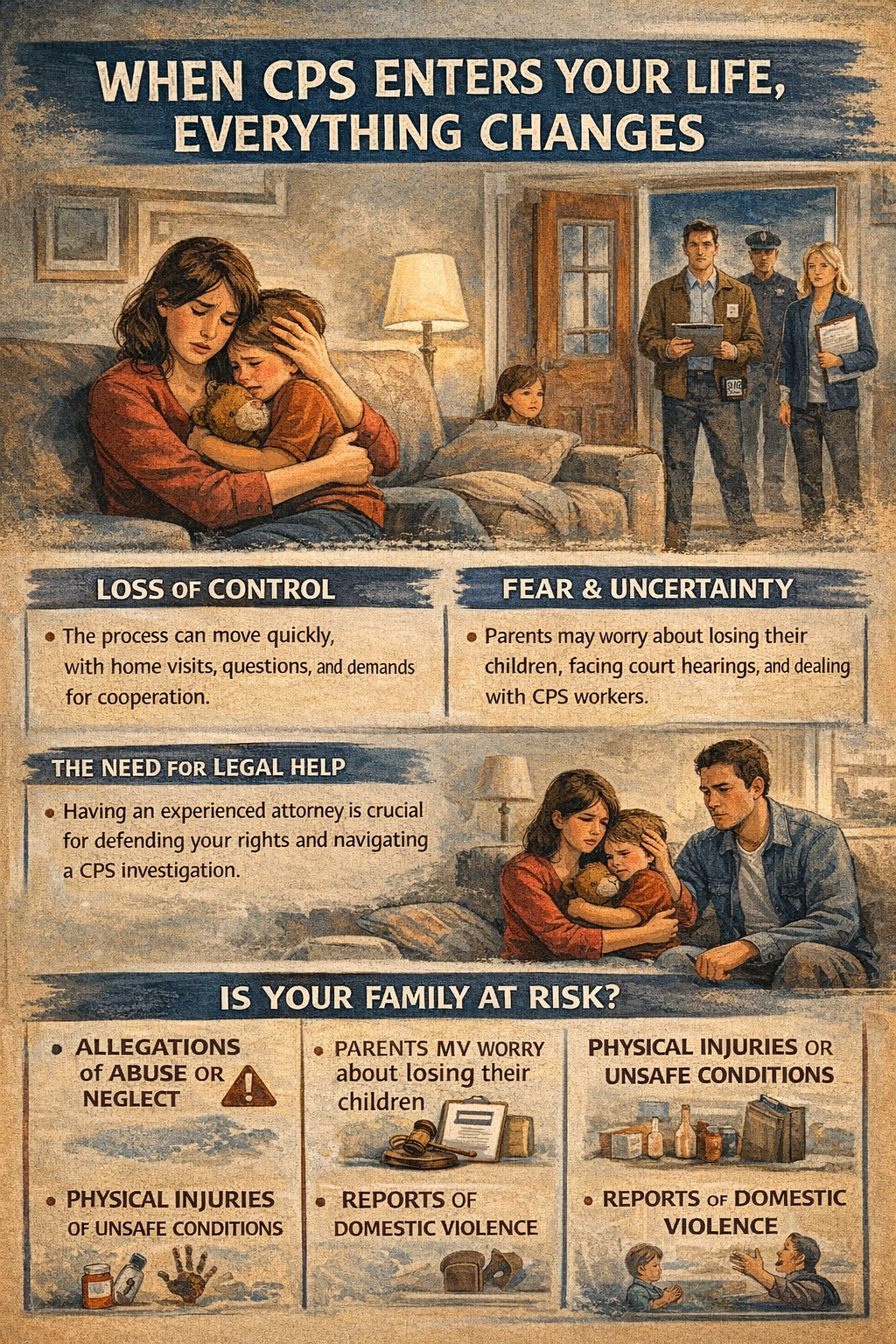
When CPS Enters Your Life, Everything Changes
For many parents, the moment CPS becomes involved can feel like everything shifts overnight. A knock on the door, a phone call, or a report can quickly turn into a serious situation involving child protective services. Even if you believe there has been a misunderstanding, the investigation process begins immediately and can move faster than expected.
Families often feel uncertain about what will happen next, especially when allegations involve child abuse or neglect. The fear of losing custody, facing court hearings, or dealing with a cps caseworker can create overwhelming stress. This is why understanding the process early—and having guidance from lawyers for cps cases—can make a meaningful difference.
What Child Protective Services Does in Texas
Child protective services cps operates under the Texas Department of Family and Protective Services, which is responsible for investigating reports involving a child’s safety. These government agencies are required to respond when there are concerns about abuse, neglect, or danger to a child.
The goal of protective services is to protect the best interests of the child while also evaluating the situation involving the parents and family members. However, the process is not always simple, and decisions can have long-term consequences for families.
Why CPS Investigations Begin
A cps investigation typically starts after someone files a report. This could be a teacher, a child’s doctor, a neighbor, or another individual concerned about a child’s well-being.
Common reasons CPS becomes involved include:
- Allegations of child abuse or neglect
- Reports involving domestic violence in the home
- Concerns about physical injuries or unsafe conditions
- Situations involving substance use or supervision issues
Even if the report is not accurate, CPS is required to begin investigating the situation.
The First Step: Intake and Report Review
The process begins when CPS receives reports and evaluates whether the claims meet the criteria for investigation. This intake stage is handled by trained professionals who assess the urgency of the situation.
If the report suggests immediate danger, CPS may act quickly to protect the child. In less urgent situations, the case may still move forward but with a different timeline.
The Investigation Stage Begins
Once the case is accepted, a cps caseworker or cps investigator is assigned. This marks the official start of the cps investigation.
The investigator will begin gathering information, speaking with parents, children, and other individuals involved. This stage is critical because it shapes how the case will move forward.
What CPS Is Looking For During Investigating
During the investigation, CPS focuses on determining whether child abuse or neglect occurred. This involves reviewing evidence, conducting interviews, and assessing the environment.
CPS workers are trained in investigating allegations and identifying risk factors. Their goal is to determine whether the child is safe and whether intervention is needed.
Interviews with Parents and Families
Parents are usually among the first individuals contacted during a cps investigation. These conversations can feel informal, but they are an important part of the case.
It is important to understand that anything said during these interviews may be used later in court or during hearings. This is why many families seek support from a cps defense attorney early in the process.
Interviews with the Child
CPS will often speak directly with the child involved in the case. These interviews are designed to gather information about the child’s environment and experiences.
In some cases, these conversations may take place at school or another neutral location. Parents are not always present during these interviews, which can be concerning for families.
Home Visits and Observations
A cps investigation often includes a visit to the home. The cps caseworker will observe the living conditions and assess whether there are safety concerns.
They may look for signs of neglect, physical injuries, or other factors that could indicate danger. These observations play a key role in determining the next steps.
Reviewing Medical and School Records
CPS may request records from schools, doctors, and other professionals. These documents can provide insight into the child’s health, behavior, and overall well-being.
For example, reports from a child’s doctor may be used to evaluate claims of abuse or neglect. School records may also be reviewed to identify patterns or concerns.
The Role of Social Workers
Social workers are often involved in cps cases to provide support and gather information. They may help connect families with counseling or other services.
While their role is to support families, their findings can also influence the direction of the case. This dual role can sometimes create confusion for parents.
Risk Assessment and Safety Decisions
A key part of the cps investigation is the risk assessment. CPS workers evaluate whether the child is in danger and whether immediate action is needed.
If there is a concern about immediate danger, CPS may take steps to protect the child, including seeking a court order. These decisions are made quickly and can have lasting effects.
Safety Plans and Temporary Solutions
In some cases, CPS may implement a safety plan instead of removing the child. This plan outlines steps parents must follow to ensure the child’s safety.
These plans may include supervision requirements or temporary changes in the home. While they may seem helpful, they can also impact parental rights if not fully understood.
When CPS Seeks Court Involvement
If concerns cannot be resolved informally, CPS may take the case to court. This can lead to court hearings and involvement in juvenile dependency proceedings.
A judge will review the case, consider evidence, and determine what actions are necessary. This may include decisions about custody or services for the family.
Understanding Juvenile Dependency Court
Juvenile dependency court handles cases involving allegations of child abuse or neglect. These proceedings focus on protecting the child while evaluating the parents’ ability to provide care.
The court process can involve multiple hearings, each addressing different aspects of the case. Parents should be prepared for ongoing involvement once the case reaches this stage.
The Importance of Evidence in CPS Cases
Evidence plays a central role in cps cases. This can include witness statements, medical records, and documentation from CPS workers.
The ability to present and challenge evidence can significantly impact the outcome of the case. This is where a cps defense attorney can provide valuable support.
Court Hearings and What to Expect
Court hearings are formal proceedings where decisions are made about the case. Parents may need to appear before a judge and respond to allegations.
These hearings can determine custody, services, and other critical outcomes. Being prepared is essential for protecting your rights.
How Judges Make Decisions
Judges are responsible for making final decisions in cps cases. They review evidence, hear testimony, and determine what is in the best interests of the child.
These decisions can affect custody, visitation, and long-term outcomes for families. Understanding how judges evaluate cases can help parents prepare effectively.
The Risk of Criminal Charges
In some situations, cps cases may involve criminal charges. This can happen when allegations involve serious abuse or neglect.
A prosecutor may become involved, leading to additional legal challenges. This makes it even more important to have legal support early in the process.
Defending Families During CPS Investigations
Defending families requires a strategic approach that focuses on protecting rights and addressing concerns. A cps defense attorney works to defend parents and ensure fair treatment.
This includes reviewing evidence, advising clients, and representing families during hearings. Early involvement can make a significant difference in the outcome.
Protecting Parental Rights Throughout the Process
Parental rights are a critical part of any cps case. These rights include the ability to make decisions about the child’s care and upbringing.
CPS involvement can impact these rights, especially if the case progresses to court. Understanding your rights is essential for protecting your family.
How CPS Cases Can Affect Custody
Custody decisions are often central to cps cases. These decisions determine where the child will live and who will provide care.
Changes to custody can happen quickly, especially if there are concerns about safety. Parents should be prepared for this possibility and seek guidance early.
The Emotional Impact on Families
CPS investigations can affect every part of a family’s life. Stress, uncertainty, and fear can take a toll on parents and children alike.
Maintaining stability and seeking support during this time is important for both emotional and legal reasons.
Why Early Legal Support Matters
The earlier families seek legal support, the better their chances of protecting their rights. Waiting too long can limit options and make the situation more difficult.
An experienced attorney can help families understand the process and avoid common mistakes.
How Masterly Legal Solutions Helps Clients
At Masterly Legal Solutions, our law firm focuses on providing proactive cps defense for families across Texas. We understand the challenges parents face and work to provide clear guidance at every stage.
Our team has a proven track record of defending families and helping clients navigate complex cps cases. We focus on preparation, strategy, and protecting your future.
Preparing for Every Stage of the CPS Process
Preparation is key to navigating cps investigations successfully. Families should take steps to document information, understand expectations, and respond carefully.
Working with a lawyer can help ensure that you are prepared for each stage, from investigation to court proceedings.
Building a Strong Defense Strategy
A strong defense involves understanding the facts, challenging evidence, and presenting a clear case. This requires knowledge of the law and experience with cps cases.
Attorneys with expertise in cps defense can help families build a strategy that protects their rights and addresses concerns.
Taking Action Immediately to Protect Your Family
Time is critical in cps cases. Taking action immediately can help prevent issues from escalating and protect your family’s future.
Waiting can lead to missed opportunities and increased risk. Being proactive is one of the most important steps you can take.
Speak With Lawyers for CPS Cases Today
If you are dealing with CPS or have concerns about an investigation, now is the time to act. These cases move quickly, and early decisions can shape the outcome.
At Masterly Legal Solutions, we provide strategic guidance and support for families navigating cps cases. Our team is ready to help you understand your options and protect what matters most.
Call us today at (972) 236-5051 or visit our Masterly Legal Solutions contact page for a free consultation. We will listen to your concerns, answer your questions, and help you move forward with confidence.
This article is for educational purposes only and does not constitute legal advice. For advice specific to your situation, please contact our office directly.

Teacher Rights When Assaulted by a Special Needs Student: Safety, Reporting and Investigation Issues


Looking for Legal & Business Solutions? Contact Us Now
Fill in the form or call us to set up a meeting