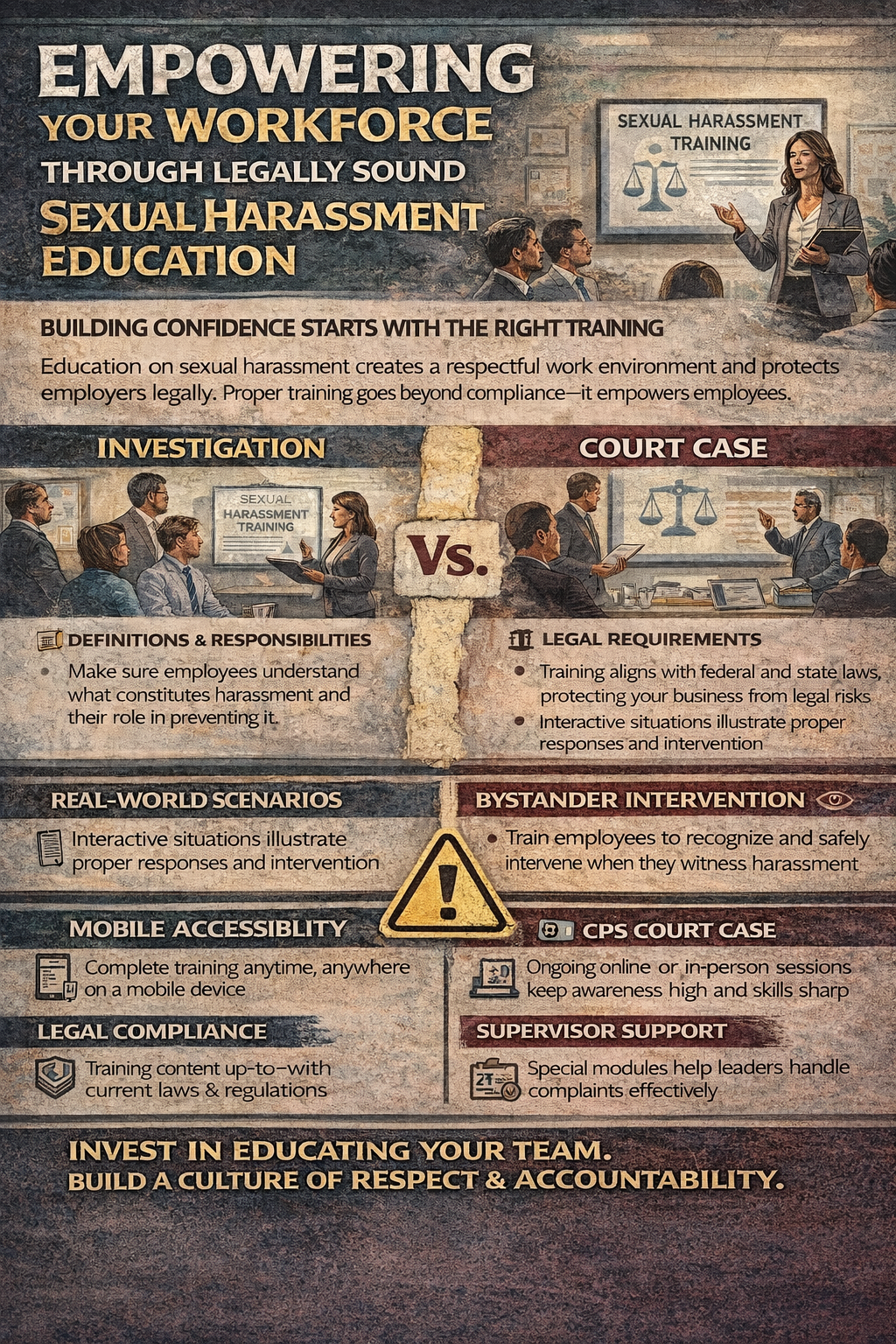
Empowering Your Workforce Through Legally Sound Sexual Harassment Education
Building Confidence Starts With the Right Training
A strong workplace does not happen by accident. It is built through clear expectations, consistent communication, and meaningful education. One of the most effective ways employers can strengthen their teams is through sexual harassment prevention training that goes beyond basic compliance. When employees understand their rights and responsibilities, they are more confident in their roles and better equipped to contribute to a respectful work environment.
Many employers underestimate the impact of proper sexual harassment training. It is not just about checking a box or meeting a requirement. It is about creating a culture where employees feel safe, respected, and supported. When done correctly, sexual harassment prevention becomes a foundation for trust and long-term success.
Why Sexual Harassment Education Matters More Than Ever
Workplace expectations are evolving, and so are the legal standards that govern them. Federal and state regulations continue to emphasize the importance of sexual harassment prevention training as a core responsibility for employers. These requirements are not just legal obligations—they are practical tools for protecting both employees and businesses.
In today’s environment, harassment in the workplace can quickly lead to legal claims, reputational damage, and loss of employee trust. Providing effective training ensures employees understand what constitutes inappropriate conduct and how to report concerns. This proactive approach helps prevent harassment before it starts.
Understanding the Legal Landscape for Employers
Employers must navigate a complex framework of laws when addressing workplace harassment. Federal law, along with state regulations, establishes clear expectations for how organizations should handle sexual harassment and discrimination. Agencies such as the Equal Employment Opportunity Commission provide guidance and enforce compliance.
In states like New York, the rules are even more detailed. New York state law requires employers to implement a sexual harassment prevention policy and provide annual training. New York city employers must also comply with additional local requirements. These legal standards highlight the importance of structured and consistent training programs.
The Role of Sexual Harassment Prevention Training in Compliance
Sexual harassment prevention training plays a central role in helping employers comply with legal requirements. It ensures that employees understand what behaviors are considered unlawful harassment and how to respond appropriately.
A well-designed sexual harassment training program typically includes:
- Definitions of harassment and discrimination
- Real life situations that demonstrate inappropriate conduct
- Guidance on reporting procedures
- Information about legal protections under human rights laws
This type of training helps ensure employees are informed and prepared to act when necessary.
Creating a Respectful Work Environment Through Education
A respectful work environment does not happen overnight. It requires consistent effort and a commitment to educating employees at all levels. Sexual harassment prevention training is one of the most effective ways to promote respect and accountability.
When employees understand expectations, they are more likely to engage in positive behavior. This reduces the likelihood of harassment and supports a healthier workplace culture. Employers who prioritize education often see improved morale and stronger team dynamics
.
How Training Empowers Employees
Training empowers employees by giving them the knowledge and confidence to address workplace issues. When employees understand their rights, they are more likely to report concerns and participate in maintaining a safe environment.
This empowerment is especially important for new employees and those in supervisory roles. Supervisors must understand their responsibilities in preventing harassment and addressing complaints, including heightened manager accountability in sexual harassment prevention. Providing targeted training for employees at different levels ensures a deeper understanding of key concepts.
The Importance of Interactive Training Programs
Interactive training is more effective than passive learning methods. Employees benefit from engaging content that encourages participation and discussion. This approach helps reinforce important concepts and ensures better retention.
Interactive training often includes:
- Scenario-based exercises
- Group discussions
- Real life examples of workplace harassment
These methods help employees connect the material to their daily experiences.
Online Training and Accessibility
Online training has become a valuable tool for modern workplaces. It allows employees to complete training at their own pace and from any location. Many programs are accessible through a mobile device, making it easier for employees working remotely or on flexible schedules.
Online training also provides technical support and tracking features. Employers can monitor completion rates and ensure compliance with training requirements. This level of accessibility helps maintain consistency across the organization.
Meeting Mandatory Training Requirements
Certain employers are required to meet mandatory training requirements based on the number of employees and their location. For example, New York city employers with three or more employees must provide annual training.
These training requirements are designed to ensure that all employees receive consistent education on harassment prevention. Employers must also document completion and provide training within specific timeframes, such as within the first business days after a start date.
Tailoring Training for Different Roles
Not all employees have the same responsibilities, which is why training should be tailored to different roles. Supervisory employees require additional guidance on handling complaints and enforcing policies.
Training for employees should also address the unique challenges faced by domestic workers and other specialized roles. Industry focused training ensures that content is relevant and applicable to real workplace situations, such as legal support and training for educators.
The Role of Bystander Intervention
Bystander intervention is an important component of sexual harassment prevention. Employees should be trained to recognize inappropriate conduct and take action when necessary.
This approach encourages a shared responsibility for maintaining a respectful work environment. When employees feel empowered to intervene, it reduces the likelihood of harassment escalating.
Developing a Comprehensive Training Program
A comprehensive training program should cover all aspects of sexual harassment prevention. This includes legal requirements, company policies, and practical strategies for addressing issues.
Employers should ensure that training content is updated regularly to reflect changes in laws and best practices. Providing consistent and effective training helps maintain compliance and protect the organization.
Supporting New Employees From Day One
New hires should receive training as part of their onboarding process. This ensures they understand workplace expectations from the start.
Providing training for employees early helps prevent misunderstandings and establishes a strong foundation for positive behavior. It also demonstrates the employer’s commitment to maintaining a safe workplace.
The Impact of Training on Workplace Culture
Training has a direct impact on workplace culture. When employees understand expectations and feel supported, they are more likely to contribute positively.
A strong culture reduces the risk of harassment and improves overall employee satisfaction. Employers who invest in training often see long-term benefits, especially when they prioritize the benefits of regular sexual harassment training.
Addressing Challenges in Training Implementation
Implementing a training program can present challenges, especially for larger organizations. Employers must ensure that all employees complete training and understand the material.
Using tools such as live webinars, fact sheets, and follow-up sessions can help reinforce learning. These resources, along with tailored HR consulting and compliance training services, provide additional support and ensure employees remain engaged.
Why Compliance Alone Is Not Enough
While compliance is important, it should not be the only goal. Effective training goes beyond meeting minimum standards and focuses on creating meaningful change.
Employers who prioritize education and engagement are better positioned to prevent harassment and build a positive workplace environment.
The Role of Legal Guidance in Training Programs
Working with a law firm can help employers develop training programs that meet legal requirements and address specific risks. Legal guidance ensures that training content aligns with current laws and best practices.
This support can be especially valuable for employers operating in multiple states, where requirements may vary, particularly when navigating sexual harassment training legal requirements for employers.
Strengthening Employee Confidence Through Education
Confidence comes from understanding. When employees understand their rights and responsibilities, they are more confident in addressing workplace issues.
This confidence leads to better communication, stronger relationships, and a more supportive work environment.
Preventing Harassment Through Proactive Measures
Preventing harassment requires a proactive approach. Training is one of the most effective tools for identifying risks and addressing them early.
Employers who invest in prevention reduce the likelihood of legal claims and create a safer workplace for everyone.
The Long-Term Benefits of Effective Training
Effective training provides long-term benefits for both employees and employers. It reduces legal risks, improves morale, and strengthens the organization.
By prioritizing education, employers can create a workplace that supports growth and success and is better equipped to address issues like workplace retaliation and related employment law claims.
Workplace Harassment Prevention Training as a Foundation for Compliance
Workplace harassment prevention training is a critical first step in building a legally compliant and respectful work environment. Employers must go beyond basic policies and actively educate employees on recognizing and addressing inappropriate behavior. This type of training helps ensure that everyone understands their role in maintaining a safe workplace. When implemented correctly, it reduces risk and strengthens overall organizational accountability.
Strengthening Teams Through Workplace Harassment Training
Workplace harassment training gives employees the tools they need to identify and respond to misconduct. It helps clarify expectations, reinforces acceptable behavior, and promotes accountability across all levels of an organization. By focusing on real-world scenarios, employers can create a more informed workforce. This type of training also supports a culture where employees feel confident in reporting concerns.
Integrating Workplace Training Into Daily Operations
Effective workplace training should not be treated as a one-time event. Instead, it should be integrated into ongoing employee development and company practices. Regular training sessions help reinforce policies and keep employees updated on any changes in laws or expectations. This continuous approach ensures that workplace standards remain clear and consistent.
Understanding the Workplace Transparency Act
The workplace transparency act plays a role in shaping how employers address harassment and discrimination. It emphasizes the importance of openness, accountability, and proper handling of complaints. Employers must understand how this law impacts their policies and procedures. Aligning training programs with these standards helps reduce legal exposure.
Conflict Resolution as a Key Component of Training
Conflict resolution is an important part of any harassment prevention strategy. Employees should be trained on how to handle disagreements professionally and respectfully. This reduces the likelihood of issues escalating into harassment claims. Teaching effective communication skills helps maintain a positive work environment.
Addressing Unlawful Discrimination in the Workplace
Training programs must also address unlawful discrimination and how it can occur in different forms. Employees need to understand how bias and unfair treatment impact the workplace. By identifying these behaviors early, organizations can take steps to prevent further issues. This awareness is essential for maintaining compliance with employment laws.
Clarifying Employer Responsibilities in Training Programs
Employer responsibilities include providing clear policies, consistent training, and proper enforcement of workplace standards. Employers must ensure that all employees receive accurate and up-to-date information. This includes addressing complaints promptly and fairly. Fulfilling these responsibilities helps protect both the organization and its employees.
Why Training Duration Matters in Compliance
Many regulations specify that training must meet certain time requirements, often recommending at least two hours of instruction. This ensures that employees receive enough information to fully understand key concepts. Short or rushed sessions may not provide the depth needed for effective learning. Employers should prioritize quality and thoroughness in their training programs.
Designing an Effective Course for Employees
A well-structured course should include clear objectives, engaging content, and practical examples. Employees benefit from training that is easy to understand and relevant to their daily experiences. Incorporating interactive elements can improve retention and participation. A strong course design supports better outcomes and long-term compliance.
When the Requirement Applies to Your Business
Understanding when a requirement applies is essential for compliance. Certain laws depend on factors such as company size, location, or industry. Employers must stay informed about the specific rules that affect their organization. Failing to meet these requirements can lead to penalties and legal challenges.
Adapting Training Standards Across Other States
Employers operating in other states must be aware that training requirements can vary. While some states have strict regulations, others may have more flexible guidelines. Organizations should tailor their programs to meet the standards of each location, including colleges and universities that require specialized higher education compliance and Title IX counseling. This approach ensures consistent compliance and reduces legal risk across all operations.
Speak With a Sexual Harassment Lawyer Frisco TX Businesses Trust
If your organization is looking to strengthen its approach to sexual harassment prevention training, now is the time to take action. The right training program can protect your employees, reduce risk, and ensure compliance with evolving laws. Waiting too long to address these issues can lead to serious consequences that impact your entire workplace.
At Masterly Legal Solutions, we help employers develop legally sound training programs that align with federal and state regulations and integrate seamlessly with broader labor and employment law services. Whether you need guidance on compliance, policy development, or training implementation, our team is here to support you. As a sexual harassment lawyer Frisco TX businesses rely on, we understand how to protect your organization while empowering your workforce.
Contact us at (972) 236-5051 or visit our Masterly Legal Solutions contact locations page for a free consultation. Let us help you build a safer, more confident workplace through effective education and legal guidance.
Disclaimer: This article is for informational purposes only and does not constitute legal advice. Every situation is unique, and you should consult with a qualified attorney to receive guidance specific to your organization’s needs.



Teacher Rights When Assaulted by a Special Needs Student: Safety, Reporting and Investigation Issues

Looking for Legal & Business Solutions? Contact Us Now
Fill in the form or call us to set up a meeting