

Retaliation in the Workplace Claims Against Schools: How Fast They Can Turn Into Lawsuits
Understanding How Quickly Retaliation Can Escalate in a School Workplace
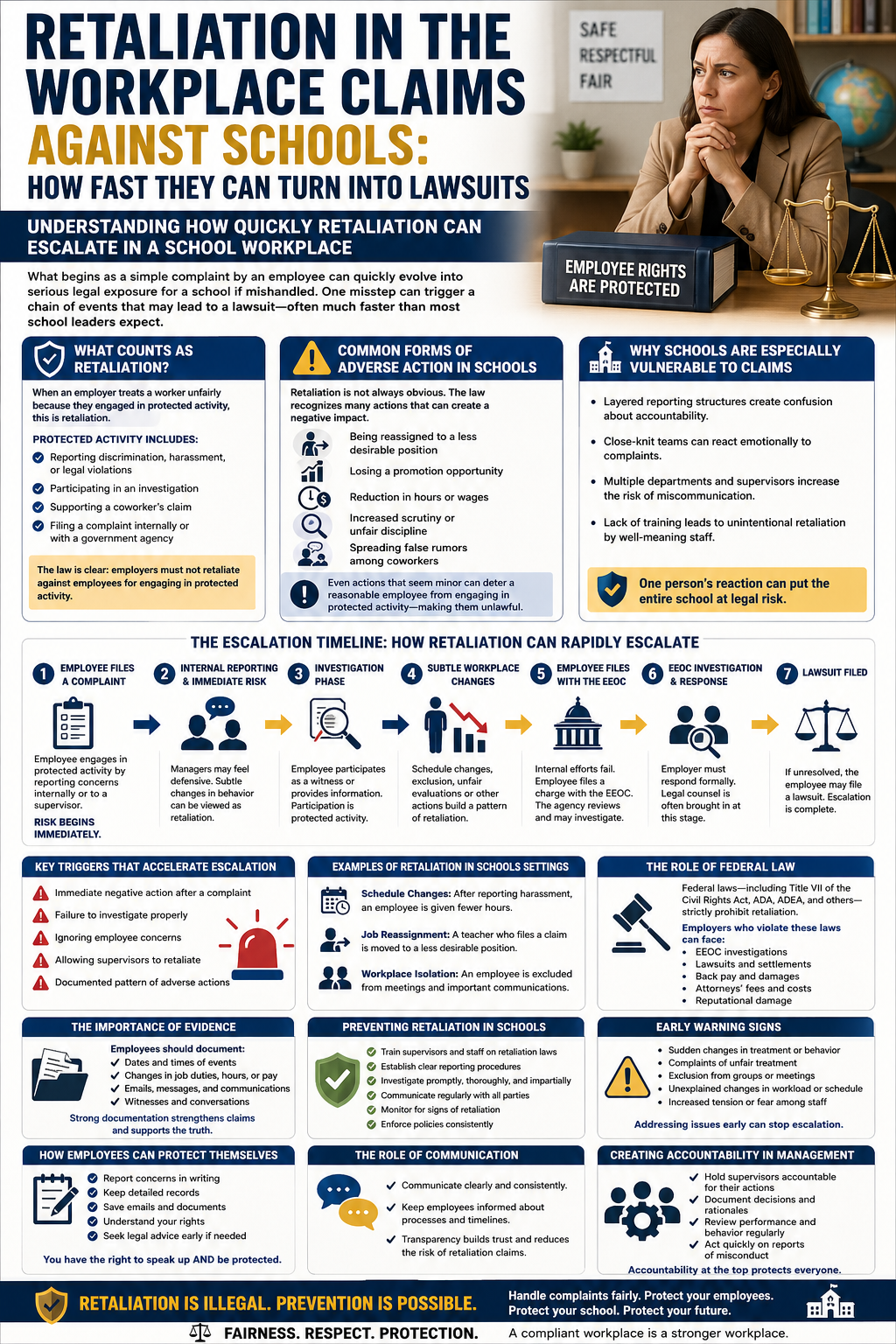
In a school workplace, issues involving retaliation rarely stay small for long. What begins as a simple complaint by an employee can quickly evolve into serious legal exposure for an employer if the situation is mishandled. Schools, like any other employer, are required to follow strict employment laws that protect workers from retaliation when they engage in protected activity. When these protections are ignored, claims can escalate rapidly.
For teachers, administrators, and other workers, understanding how retaliation unfolds is critical. A single report about discrimination, harassment, or a possible violation can trigger a chain of events that, if handled poorly, may lead to a lawsuit. The timeline from initial complaint to legal action is often much shorter than most school management teams expect.
What Counts as Retaliation in a School Workplace
When an employer treats a worker unfairly because they participated in protected behavior, this is known as retaliation. In schools, this could involve teachers, staff, or administrators who raise concerns about workplace conditions or legal violations.
Protected activity includes more than just filing a complaint. It can involve reporting discrimination, participating in an investigation, or even supporting a coworker’s claim. When an employee takes these steps, the law is clear: the employer must not retaliate.
Common Forms of Adverse Action in Schools
Retaliation does not always look obvious. Many employers assume that only termination qualifies, but the law recognizes a wide range of adverse action scenarios. These can include subtle or indirect negative actions that impact an employee’s role or career.
Examples of adverse action include:
- Being reassigned to a less desirable position
- Losing a promotion opportunity
- Reduction in hours or wages
- Increased scrutiny or unfair discipline
- Spreading false rumors among coworkers
Even actions that seem minor can create a negative impact if they would discourage a reasonable employee from engaging in protected activity.
Why Schools Are Especially Vulnerable to Retaliation Claims
School environments are unique because of their layered structure. Teachers report to supervisors, who report to administrators, and decisions often involve multiple departments. This structure can lead to confusion about accountability, especially during investigations.
Additionally, schools often involve close-knit teams. When one employee files a complaint, the social dynamics can shift quickly. Coworkers, supervisors, and management may react emotionally, increasing the risk that someone will retaliate without fully understanding the legal consequences.
The First Stage: Filing a Complaint
The escalation timeline usually begins when an employee engages in protected activity by filing a complaint. This could involve reporting discrimination based on national origin, religion, disability, or another protected category.
At this stage, the employer is officially on notice. Once notified, the employer has a legal duty to respond appropriately. Failure to act carefully can immediately create exposure to a retaliation claim.
Internal Reporting and Immediate Risk
When an employee begins reporting concerns internally, the risk of retaliation begins almost instantly. Supervisors and managers may feel defensive or threatened, especially if the complaint involves serious allegations.
Even subtle behavior changes—such as excluding the employee from meetings or assigning less favorable tasks—can be viewed as retaliation. This is why employers must take proactive steps to protect both the employee and the integrity of the process.
The Role of Management and Supervisors
Management plays a critical role in either preventing or accelerating retaliation claims. A single supervisor’s reaction can determine whether a situation is resolved internally or escalates into a lawsuit, which is why many institutions rely on HR consulting services and training to prepare leaders for these situations.
Supervisors must be trained to recognize protected activity and avoid any negative action that could be interpreted as retaliation. Without proper training, even well-intentioned decisions can be seen as unlawful.
The Investigation Phase and Its Risks
Once a complaint is filed, an investigation typically follows. This phase is critical and often where retaliation claims begin to take shape, making an independent internal workplace investigation an important tool for maintaining fairness and legal compliance. Employees may be asked to participate as witnesses, provide statements, or support the complaint.
If an employer fails to handle the investigation properly, it can lead to additional claims. For example, if an employee who participates in the investigation later experiences adverse action, it may strengthen a retaliation claim.
Participation as Protected Activity
Employees who participate in an investigation are protected under federal law. This includes individuals who act as witnesses or provide information during the process.
Employers must ensure that no adverse action is taken against employees for participating. Even indirect actions, such as changes in job duties or increased monitoring, can be considered retaliation.
Escalation Through Subtle Workplace Changes
One of the most common ways retaliation escalates is through subtle workplace changes. These actions may not seem significant at first but can quickly build a pattern of behavior.
Examples include:
- Changes in schedules or hours
- Being excluded from important communications
- Receiving unfair performance evaluations
When these actions occur after protected activity, they may be viewed as evidence of retaliation.
The Impact on Employee Morale
Retaliation affects more than just the individual employee. It can damage overall employee morale across the entire workplace. When workers see retaliation go unaddressed, it creates fear and discourages others from reporting concerns.
This can lead to a toxic work environment where issues remain hidden. Over time, this not only harms employees but also exposes the employer to greater legal risk.
How Retaliation Claims Develop
A retaliation claim often develops when an employee connects their protected activity to a negative action taken by the employer. The timing between these events is critical.
If an adverse action occurs shortly after a complaint, it may suggest a causal connection. This is one reason why retaliation claims can escalate so quickly into lawsuits.
Filing with the Equal Employment Opportunity Commission
When internal processes fail, employees may file a complaint with the Equal Employment Opportunity Commission (EEOC) or pursue retaliation and labor complaints through other agencies. This step marks a significant escalation in the timeline.
The EEOC will review the claim and may launch an investigation. At this stage, the employer must respond formally, often with legal counsel involved.
The Role of Federal Law in Retaliation Cases
Federal law strictly prohibits retaliation in the workplace, and experienced retaliation lawyers and workplace law attorneys can help employees and schools understand how these rules apply. These laws are designed to protect employees who oppose discrimination or report violations.
Employers who fail to comply may face serious consequences, including lawsuits and financial liability. Schools are not exempt from these requirements.
When Retaliation Becomes a Lawsuit
If the issue is not resolved through the EEOC process, the employee may file a lawsuit. At this point, the situation has fully escalated.
A lawsuit can involve significant legal costs, reputational damage, and operational disruption for the employer. This is why early intervention is critical.
Key Triggers That Accelerate Escalation
Certain actions can accelerate the timeline from complaint to lawsuit. Employers must be aware of these triggers and avoid them at all costs.
These include:
- Immediate negative action after a complaint
- Failure to investigate properly
- Ignoring employee concerns
- Allowing supervisors to retaliate
Each of these actions increases the likelihood of legal action.
Examples of Retaliation in School Settings
Understanding real-world scenarios can help clarify how retaliation occurs. Each example highlights how quickly a situation can escalate.
Example of Schedule Changes
An employee reports harassment and is later assigned fewer hours. This reduction may be seen as retaliation, especially if it impacts wages.
Example of Job Reassignment
A teacher files a discrimination claim and is moved to a less desirable position. This reassignment may qualify as adverse action.
Example of Workplace Isolation
After filing a complaint, an employee is excluded from meetings and communications. This behavior can create a negative impact and support a retaliation claim.
The Importance of Documentation and Evidence
Evidence plays a crucial role in retaliation claims. Employees who document changes in behavior, communication, and job conditions strengthen their case.
Employers must also maintain clear records to demonstrate that decisions were not based on protected activity.
The Role of Retaliation Lawyers
Retaliation lawyers play a critical role in protecting employee rights. They help individuals navigate complex legal processes and build strong claims.
For employers, having legal guidance can help prevent costly mistakes and ensure compliance with the law.
Preventing Retaliation in Schools
Prevention is always better than litigation. Schools must take proactive steps to create a safe and compliant workplace, often by working with education and employment law attorneys focused on retaliation in schools.
These steps include:
- Training supervisors and management
- Establishing clear reporting procedures
- Responding promptly to complaints
- Monitoring for signs of retaliation
By taking these actions, employers can reduce risk and foster a healthier environment.
Recognizing Early Warning Signs
Employers must recognize early warning signs of retaliation. These may include changes in behavior, complaints about unfair treatment, or increased tension among coworkers.
Addressing these issues early can prevent escalation and protect all parties involved.
Protecting Employees Who Engage in Protected Activity
Employees who engage in protected activity must be protected from retaliation. This includes individuals who report concerns, participate in investigations, or support others.
Employers must ensure that no adverse action is taken against these individuals.
Building a Culture of Compliance
Creating a culture that prioritizes compliance and fairness can reduce the risk of retaliation claims. This involves clear policies, consistent enforcement, and open communication, supported by a full-service law firm for schools and employees when complex legal issues arise.
When employees feel safe reporting concerns, the workplace becomes more productive and legally compliant.
The Legal Consequences of Retaliation
Retaliation is not just a workplace issue—it is a legal violation. Employers who retaliate may face penalties, damages, and legal fees.
In some cases, the cost of a retaliation lawsuit can far exceed the original issue that triggered the complaint.
Why Timing Matters in Retaliation Claims
Timing is one of the most important factors in retaliation claims. The closer the adverse action is to the protected activity, the stronger the claim may appear.
Employers must be especially cautious during this period to avoid any actions that could be misinterpreted.
How Employees Can Protect Themselves
Employees should take steps to protect themselves when they engage in protected activity. This includes documenting events, keeping records, understanding their rights, and in some cases seeking guidance on related issues such as the Title IX investigation process and respondent rights.
Seeking legal guidance early can also make a significant difference.
The Role of Communication in Preventing Escalation
Clear communication can help prevent misunderstandings and reduce the risk of retaliation claims. Employers should keep employees informed throughout the process.
Transparency builds trust and reduces the likelihood of escalation.
Addressing Complaints the Right Way
Handling complaints properly is essential. Employers must investigate thoroughly, remain neutral, and take appropriate action based on findings.
Failure to address complaints correctly can lead to further claims and legal exposure.
Creating Accountability Within Management
Accountability is key to preventing retaliation. Managers and supervisors must be held responsible for their actions and decisions.
This ensures that policies are followed and employees are treated fairly.
How Employment Discrimination Often Leads to Retaliation Concerns
Employment discrimination is one of the most common triggers for retaliation in a school workplace. When an employee raises a concern about unequal treatment based on factors like race, disability, or religion, they are engaging in protected activity under the law. Unfortunately, some employers respond negatively instead of addressing the issue properly. This can create a chain reaction where the original discrimination concern turns into a retaliation claim. Schools must understand that once discrimination is reported, every action that follows will be closely examined.
Understanding Other Related Protected Activity in School Settings
Other related protected activity goes beyond simply filing a complaint. Employees are protected when they assist others, provide information, or speak up about workplace concerns tied to discrimination or harassment. For example, supporting a coworker’s complaint or cooperating with an internal investigation qualifies as protected conduct. Employers must recognize that protection extends to these actions as well. Ignoring this can expose the employer to additional liability if retaliation occurs.
What Counts as Related Protected Activity Under the Law
Related protected activity includes any action where an employee participates in a process tied to workplace rights. This may involve giving a statement, testifying as a witness, or helping gather information during an investigation. Even informal conversations with management about concerns can fall under this category. Employers must treat these actions with the same level of care as formal complaints. Failure to do so increases the risk of a retaliation claim.
The Role of Labor Laws in Protecting School Employees
Labor laws at both the state and federal level are designed to protect workers from retaliation and unfair treatment. These laws establish clear boundaries for employer behavior and outline what actions are prohibited. In a school environment, these protections apply to teachers, administrators, and support staff alike. Employers who fail to comply with labor requirements may face serious consequences. Partnering with counsel that focuses on labor, employment, and training services can help schools stay ahead of these obligations. Understanding these legal obligations is essential to maintaining a compliant workplace.
How Bullying Can Evolve Into Retaliation
Bullying in the workplace is often overlooked, but it can quickly become part of a retaliation claim. When an employee reports a concern and is then subjected to ongoing negative behavior, it may be seen as retaliation. This includes repeated criticism, exclusion, or hostile treatment by supervisors or coworkers. Over time, this behavior can create a toxic environment and lead to legal action. Schools must take bullying seriously, especially when it follows protected activity.
When Workplace Actions Cross the Line Into Illegal Conduct
Not all workplace conflicts are unlawful, but certain actions clearly cross into illegal territory. Retaliation is considered illegal when it is directly tied to an employee’s protected activity. This includes taking adverse action because an employee spoke up or participated in an investigation. Employers must be careful to distinguish between legitimate business decisions and actions that could be perceived as retaliatory. Missteps in this area can lead to significant legal exposure.
Recognizing Other Type of Retaliation in School Environments
Retaliation does not always follow a predictable pattern. There may be other type of actions that, while less obvious, still qualify as retaliation under the law. These can include subtle changes in job duties, denial of resources, or limiting professional opportunities. Each situation must be evaluated based on its impact on the employee. Employers should avoid assuming that only major actions will be scrutinized.
When Law Enforcement or Police Involvement Becomes Relevant
In certain situations, workplace issues may escalate to the point where police involvement is necessary. This can happen in cases involving threats, intimidation, or serious misconduct. While not all retaliation claims involve law enforcement, the possibility highlights the seriousness of these situations. Employers must handle complaints carefully to avoid escalation. Proper internal processes can often prevent issues from reaching this level.
The Responsibility of the Company in Preventing Retaliation
Every company, including schools, has a responsibility to prevent retaliation in the workplace. This includes creating policies, training staff, and responding appropriately to complaints. Employers must ensure that all levels of management understand their role in maintaining compliance. A proactive approach can help reduce risk and protect both employees and the organization. Ignoring this responsibility can lead to costly consequences.
How Employees Exercise Their Rights in the Workplace
Employees have the right to speak up about concerns and expect protection when they do so. When an employee has exercised their rights, the employer must ensure that no negative consequences follow, particularly in higher education settings where specialized higher education legal counsel can help institutions align their responses with complex regulations. This includes safeguarding against subtle forms of retaliation that may not be immediately obvious. Respecting these rights is essential for maintaining trust and compliance. Employers who fail to do so may face legal challenges.
The Importance of Handling an Employee Request Properly
An employee request for accommodations, schedule changes, or workplace adjustments can also be considered protected activity in certain situations. For example, requesting changes related to disability or religious practices is protected under the law. Employers must respond thoughtfully and avoid any negative action tied to the request. Mishandling these situations can lead to retaliation claims. Proper documentation and communication are key.
How Intimidation Can Signal Retaliation
Intimidation is a serious issue that can indicate retaliation in the workplace. This may involve threats, pressure, or actions designed to discourage an employee from continuing their complaint. Even subtle forms of intimidation can have a chilling effect on employees. Employers must take immediate steps to address this behavior. Failing to act can strengthen a retaliation claim and increase legal risk.
Contact Masterly Legal Solutions for Guidance
If your concerns involve pressure to resign or questions about whether an employer can push a teacher out of their role, resources on forced resignation and quitting in education settings can help frame your next steps.
If you believe you are experiencing retaliation in the workplace, especially within a school environment, it is important to act quickly. These situations can escalate faster than most people expect, and early action can make a significant difference in protecting your rights.
At Masterly Legal Solutions, we understand how complex retaliation claims can be. Our team is here to help you navigate every step of the process, from filing a complaint to addressing adverse actions and pursuing justice when necessary. Whether you are dealing with discrimination, harassment, or retaliation after engaging in protected activity, we are ready to support you.
Contact us at (972) 236-5051 for a free consultation. We will take the time to listen to your concerns, evaluate your situation, and provide clear guidance on your options. Your voice matters, and you deserve to work in an environment free from retaliation.
Disclaimer: This article is for educational purposes only and does not constitute legal advice. For advice specific to your situation, please contact a qualified attorney directly.






Looking for Legal & Business Solutions? Contact Us Now
Fill in the form or call us to set up a meeting





