Retaliation at Work After Speaking Up in the Classroom or Faculty Meetings
Speaking up in a classroom or during a faculty meeting should never put someone’s career at risk. Yet many educators and school employees quietly experience workplace retaliation after raising concerns, asking questions, or reporting misconduct. What begins as a professional effort to improve learning environments can suddenly turn into stress, isolation, or disciplinary action. When retaliation occurs, it often leaves the employee feeling powerless and unsure of what protections exist.
At Masterly Legal Solutions, we regularly hear from workers who did the right thing and were punished for it. This article explains how retaliation can appear in educational workplaces, what the law protects, and how employees can recognize and respond to adverse actions. Understanding these issues early helps protect careers, income, and professional dignity.
Why Speaking Up Matters in Educational Workplaces
Schools rely on open communication to function properly. Teachers, staff, and administrators are expected to raise concerns related to student safety, curriculum, discipline, or compliance. When employees speak up, they are often engaging in activity protected by law.
Despite this, some employers respond defensively. Instead of addressing the concern, they focus on the individual who raised it. This shift creates risk for retaliation and damages trust within the workplace.
What Retaliation Means Under the Law
When an employer takes adverse action against an employee for engaging in protected behavior, this is known as retaliation. Protected activity includes reporting misconduct, participating in an investigation, or opposing unlawful practices. The law does not require the original complaint to be proven true for protection to apply.
If retaliation occurs, the focus becomes the employer’s response, not whether the complaint was perfect. A reasonable employee should feel free to speak up without fear. When that freedom is compromised, legal protections may apply.
Protected Activity in Schools and Universities
In educational settings, protected activity takes many forms. Teachers and staff may raise concerns during faculty meetings, submit written complaints, or report issues to outside agencies. These actions are often protected under federal and state laws.
Protected activity may include:
- Reporting discrimination or harassment
- Raising safety or compliance concerns
- Participating in internal or external investigations
- Filing a formal complaint or report
Even informal discussions can qualify if they relate to unlawful conduct.
How Retaliation Often Begins
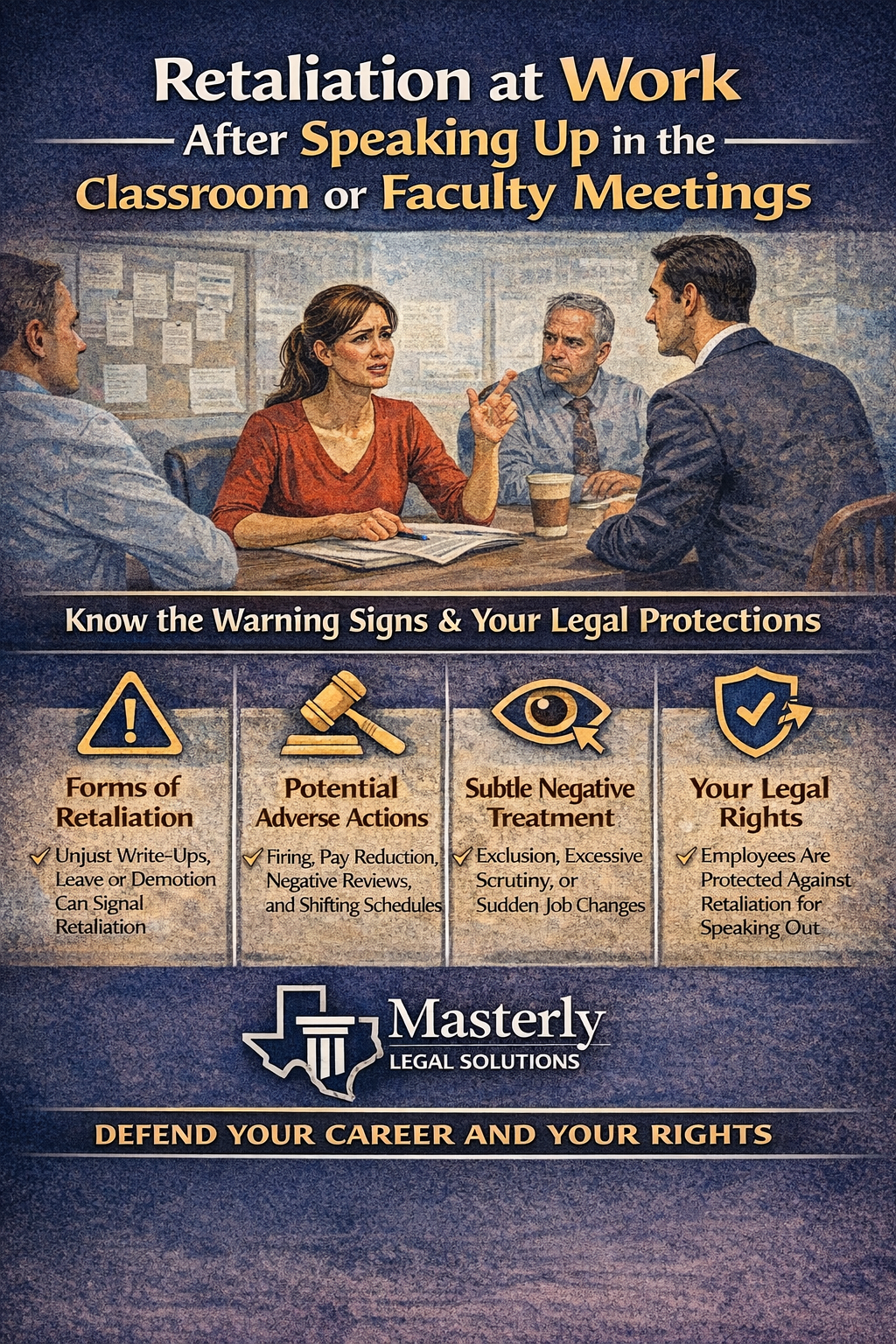
Retaliation rarely starts with termination. Instead, it often unfolds gradually. An employee may first notice subtle changes in tone, responsibilities, or treatment by a supervisor or manager.
Over time, these changes may escalate into administrative leave, disciplinary write-ups, or schedule changes. Each action alone may seem minor, but together they can create a negative impact on the employee’s career.
Administrative Leave as a Retaliation Tool
Administrative leave is one of the most common responses after an employee raises concerns. While administrative leave can be legitimate, it is frequently misused. Placing someone on administrative leave immediately after a complaint can signal retaliation.
Paid administrative leave may seem harmless, but it often isolates the employee and damages professional reputation. Extended administrative leave without explanation can feel punitive, especially when others are not treated the same way.
When Administrative Leave Becomes Adverse Action
Not all administrative leave is unlawful. However, administrative leave may qualify as an adverse action when it affects pay, benefits, hours, or professional standing. Removing someone from their duties can also disrupt career advancement.
Courts look at whether the action would discourage a reasonable employee from speaking up again. If the answer is yes, retaliation laws may apply. The context and timing matter greatly.
Understanding Adverse Action in the Workplace
Adverse action includes any employer conduct that negatively affects employment conditions. This can involve changes to pay, work hours, job assignments, or evaluations. Adverse action does not require termination.
Examples of adverse action include demotion, reduced hours, loss of benefits, or placement in a less desirable position. Even removing an employee from a desirable position may qualify if it follows protected activity.
Subtle Forms of Retaliation
Retaliation takes many forms beyond obvious discipline. Employers may engage in subtle behaviors that slowly erode an employee’s standing. These actions are often harder to recognize but just as harmful.
Examples include exclusion from meetings, increased scrutiny, or negative performance reviews. Over time, these actions affect employee morale and overall employee morale within the organization.
The Role of Supervisors and Managers
A supervisor or manager often plays a central role in retaliation cases. These individuals may feel personally challenged when an employee raises concerns. Instead of addressing the issue, they may act defensively.
Retaliatory conduct can include micromanagement, hostility, or unwarranted discipline. When supervisors are acting in response to protected activity, the employer may still be legally responsible.
Retaliation After Faculty Meetings
Faculty meetings are common places for raising concerns. When an employee speaks openly in these settings, retaliation may follow quietly afterward. Changes in treatment may not be immediate but develop over a period.
Employers sometimes justify actions as unrelated, but timing can reveal intent. Close proximity between a complaint and adverse action is often key evidence.
Complaints and Investigations
Once a complaint is made, an investigation may begin. Participating in an investigation is itself protected activity. Employees cannot legally be punished for cooperating with investigators.
Retaliation during or after an investigation is prohibited. This includes actions taken while the investigation is ongoing or after it concludes.
Retaliation and Harassment Combined
Sometimes retaliation overlaps with harassment. An employee who reports harassment may experience further harassment as punishment. This compounds the harm and strengthens legal claims.
Harassment may include intimidation, ridicule, or isolation. When harassment follows protected activity, it can clearly demonstrate retaliatory intent.
Police Reports and External Agencies
Reporting concerns to police or a government agency is protected activity. Employees cannot be punished for involving outside authorities. This includes reporting safety issues or criminal conduct.
When retaliation follows such reports, it may constitute a possible violation of both employment and criminal laws. External reporting often triggers strong employer reactions.
Federal and State Laws That Protect Employees
Multiple federal laws protect workers from retaliation. These include civil rights laws, labor laws, and whistleblower protections. State regulations often provide additional safeguards.
These laws are designed to protect employees who raise concerns in good faith. Employers are prohibited from retaliating even if they disagree with the complaint.
Immigration Status and Retaliation
Immigration status cannot be used as leverage or retaliation. Threatening to report immigration status after protected activity is prohibited. This behavior is taken seriously by enforcement agencies.
Workers are protected regardless of immigration status. Employers who retaliate in this way may face severe consequences.
Retaliation in Many Forms Across the Workforce
Retaliation appears in many forms across different workplaces. In education, it may involve schedules, assignments, or evaluations. In other industries, it may involve pay, hours, or benefits.
The law looks at patterns, not just single events. A series of smaller actions may collectively demonstrate retaliation.
Recognizing Retaliation Early
Recognizing retaliation early is critical. Employees should document changes in treatment, timing, and communication. Keeping records helps establish patterns.
Employees should also seek additional information about their rights. Understanding what is prohibited helps workers protect themselves.
Filing a Complaint or Report
Employees may file a complaint internally or with an external agency. Filing is often the first step toward accountability. Complaints should be factual and timely.
Retaliation after filing a complaint strengthens legal claims. Employers are prohibited from punishing employees for exercising this right.
The Role of Agencies and Departments
Government agencies enforce retaliation laws. These agencies investigate complaints and determine whether violations occurred. Departments may impose penalties or require corrective action.
Agency involvement often leads to more careful employer behavior. It also provides oversight and accountability.
Retaliation and Performance Reviews
Negative performance reviews following protected activity are common examples of retaliation. Employers may attempt to justify adverse action through performance issues.
Timing and consistency are critical factors. Sudden negative reviews after years of positive evaluations raise red flags.
Absence, Hours, and Schedule Changes
Changes to hours, schedules, or approved absence may be retaliatory. Reducing hours or altering schedules can significantly affect wages and benefits.
These changes often occur quietly. Employees may not immediately recognize them as retaliation.
Dismissal and Termination Risks
Dismissal is the most obvious form of retaliation. Termination following protected activity often leads to legal action. However, termination is not required to prove retaliation.
Even short of dismissal, adverse actions can still violate the law. Employees do not need to wait until they are fired to seek help.
Retaliation Can Lead to Lawsuits
When internal resolution fails, retaliation claims may lead to a lawsuit. Lawsuits seek to address harm caused by employer conduct. Remedies may include lost wages, reinstatement, or damages.
Early legal guidance helps employees determine the best course of action. Not every case requires litigation, but preparation matters.
The Impact on Employee Morale and Schools
Retaliation affects more than one person. It sends a message to the entire workforce. When employees see retaliation go unchecked, overall employee morale suffers.
Schools thrive on trust and collaboration. Retaliation undermines these values and damages institutional integrity.
Employers’ Responsibilities Under the Law
Employers have a duty to prevent retaliation. This includes training managers, responding appropriately to complaints, and maintaining fair processes.
Failure to do so may result in legal consequences. Employers must actively protect employees who engage in protected activity.
What a Reasonable Employee Would Expect
The legal standard often asks what a reasonable employee would do. Would the employer’s action discourage someone from speaking up? If so, retaliation may be found.
This standard helps courts evaluate real-world impact. It focuses on effect, not just intent.
Taking Action and Protecting Yourself
Employees who suspect retaliation should act thoughtfully. Document events, seek advice, and avoid escalation without guidance. Protecting oneself does not mean remaining silent.
Understanding rights empowers employees to respond confidently. Legal advice can clarify options and next steps.
How Masterly Legal Solutions Can Help
At Masterly Legal Solutions, we help employees who experience retaliation after speaking up. We understand how complex and personal these situations can be. Our approach focuses on protecting rights, careers, and professional reputations.
We work with clients to evaluate circumstances, determine whether retaliation occurred, and identify effective strategies. Our goal is to provide clarity during uncertain times.
Contact Masterly Legal Solutions for Support
If you believe you have experienced retaliation after raising concerns in the classroom or during faculty meetings, you do not have to face it alone. Speaking with a knowledgeable legal professional can help you understand your rights and options. Early guidance can prevent further harm and protect your future.
We invite you to contact Masterly Legal Solutions for a free consultation. Our team is ready to listen, answer your questions, and help you determine the best path forward. Call (972) 236-5051 today to begin the conversation.
Disclaimer: This article is for informational purposes only and does not constitute legal advice. Reading this content does not create an attorney-client relationship. For legal advice specific to your situation, please consult a qualified attorney.


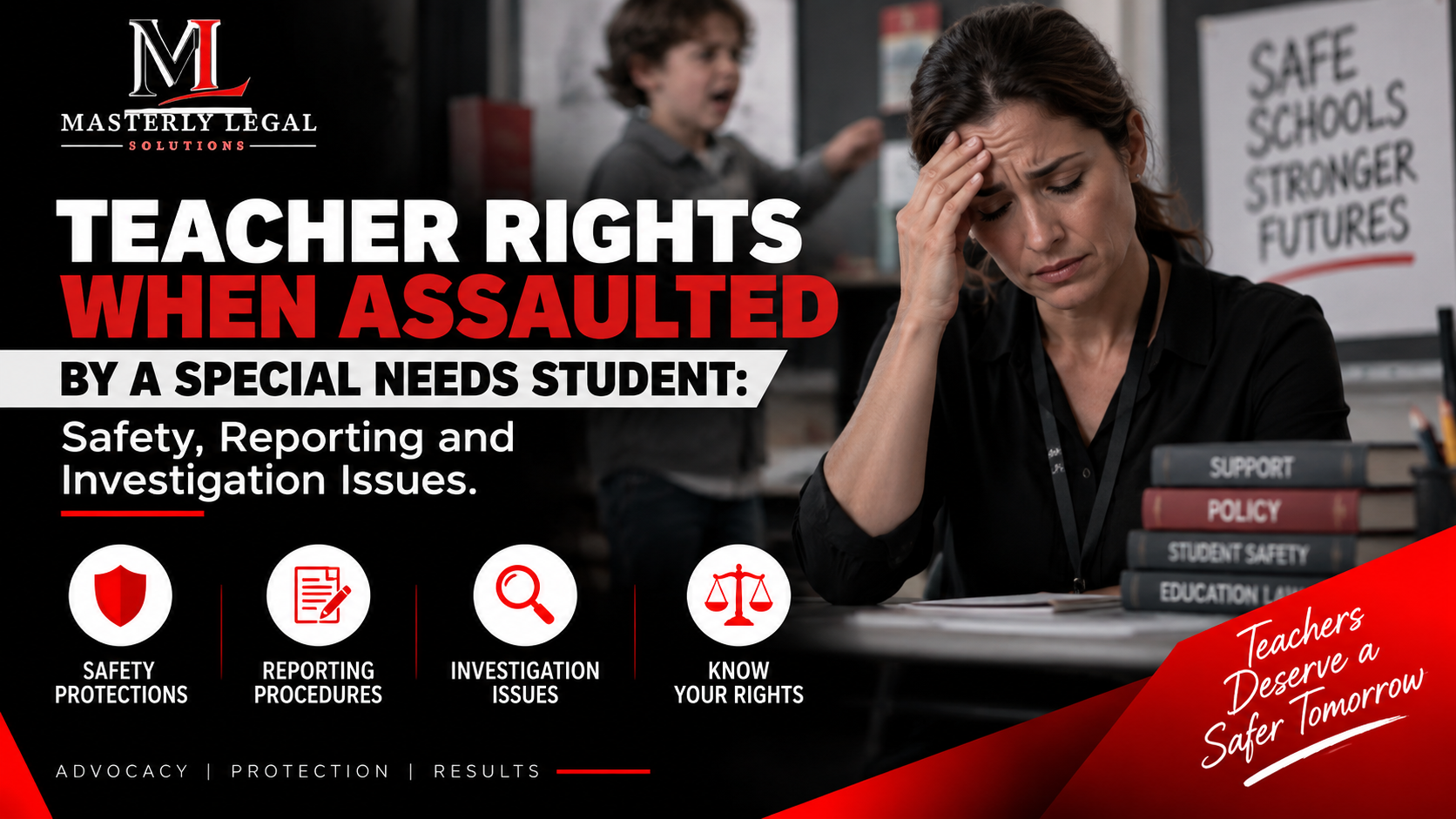
Teacher Rights When Assaulted by a Special Needs Student: Safety, Reporting and Investigation Issues


Looking for Legal & Business Solutions? Contact Us Now
Fill in the form or call us to set up a meeting