TEA License Sanctions and What They Mean for Your Career
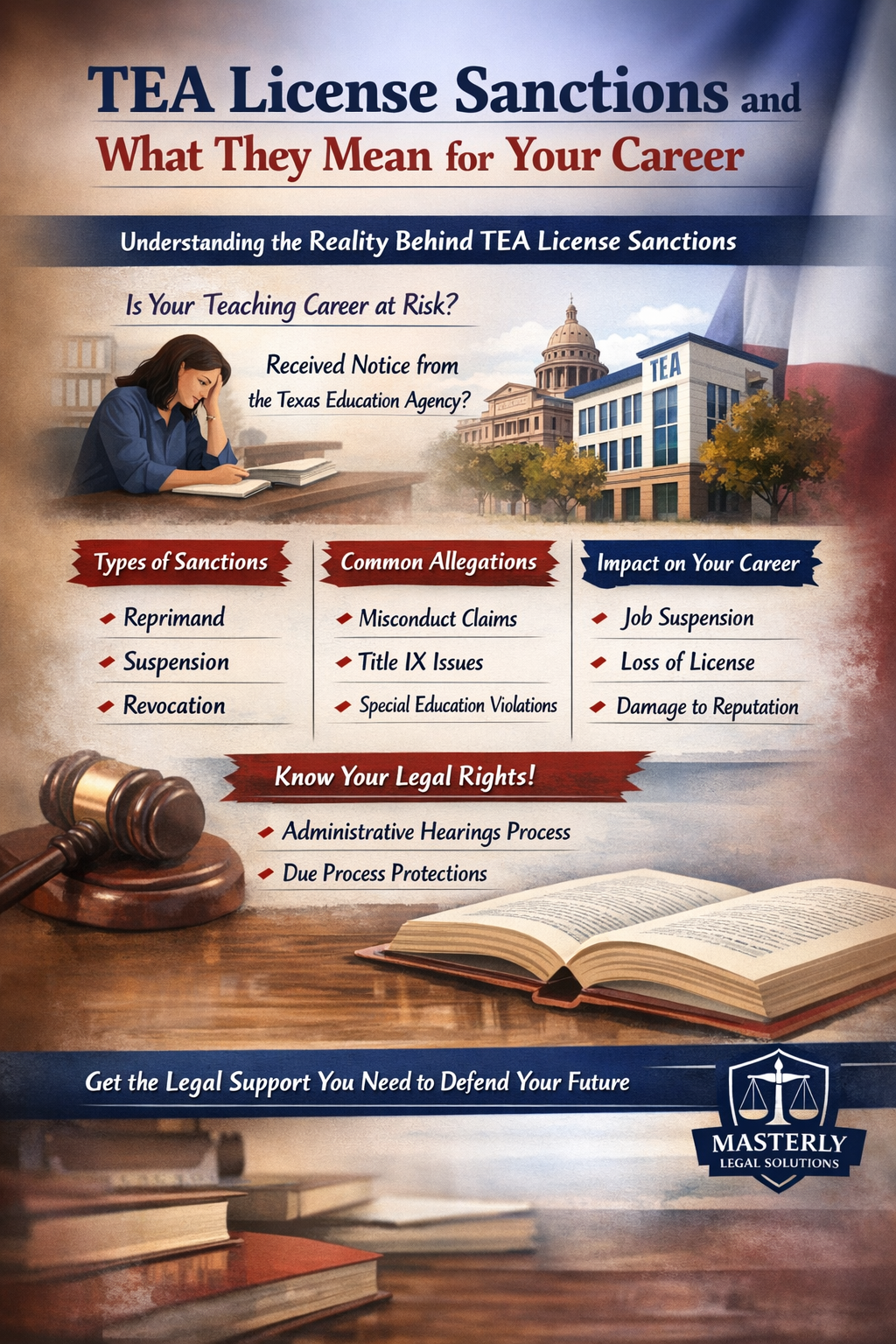
Understanding the Reality Behind TEA License Sanctions
For many teachers and educators, receiving notice from the Texas Education Agency can be overwhelming and frightening. Your teaching certificate is not just a credential; it represents years of education, dedication, and service to students and schools. When TEA license sanctions are on the table, your career, reputation, and financial stability may all feel at risk at the same time. These situations often arise suddenly, leaving teachers unsure of what steps to take next.
At Masterly Legal Solutions, we regularly speak with teachers and administrators who feel blindsided by the process. Many are passionate educators who never imagined facing disciplinary proceedings tied to their professional license. Understanding how education law applies to these situations is the first step toward protecting your future. With the right legal representation, it is possible to navigate the process with clarity and confidence.
What Is the Texas Education Agency’s Role in Licensing
The Texas Education Agency, often referred to as the texas education agency, oversees certification and enforcement for educators across the state. Its authority comes from state law and applies to public school systems, charter schools, and, in some circumstances, private school environments. The agency’s goal is to uphold standards within the education system while protecting students and maintaining trust in public education.
However, the enforcement process can feel intimidating for teachers who suddenly find themselves under scrutiny. Investigations may involve school districts, school administrators, or school boards, and can escalate quickly. TEA has the power to recommend sanctions to the state board, which ultimately decides the outcome of many cases. Knowing how this process works is critical for teachers facing potential discipline.
Common Reasons Educators Face License Sanctions
TEA investigations can stem from a wide range of allegations. Some involve classroom management or student discipline concerns, while others relate to administrative matters or employment issues. In more serious cases, allegations may include physical or sexual abuse, sexual harassment, or violations involving Title IX obligations within an educational setting. Even unfounded claims can have serious consequences if not handled properly.
Other cases involve compliance with special education law, failures to follow special education requirements, or disputes over appropriate services for students with disabilities. Educators may also face scrutiny over free speech concerns, professional boundaries, or alleged civil rights violations. Each situation presents unique legal issues that require careful analysis by an education attorney.
Types of TEA License Sanctions Explained
Reprimands and Warnings
A reprimand is often considered one of the least severe sanctions, but it should not be taken lightly. It becomes part of your professional record and may impact future employment within schools or educational institutions. Warnings signal that TEA believes corrective action is necessary, even if your license remains active.
Suspension of Certification
A suspension temporarily removes your ability to work as a teacher or administrator in a public school or charter school. This can create immediate employment concerns and financial stress. Suspensions often follow administrative hearings or disciplinary proceedings where TEA believes a serious violation occurred.
Revocation of a Teaching License
Revocation is the most severe outcome and can effectively end a teaching career in Texas. In some cases, educators may apply for reinstatement years later, but success is never guaranteed. This is why having an experienced education lawyer involved early can make all the difference in how a case unfolds.
How Investigations Typically Begin
Investigations often start with a complaint filed by a parent, student, colleague, or school administrator. School districts and educational institutions may conduct internal reviews before referring matters to TEA. Once TEA becomes involved, the process can feel formal and rigid, with strict deadlines and documentation requirements.
Teachers are sometimes asked to provide written statements without fully understanding the legal consequences. What you say early in the process can be used later during administrative hearings or process hearings. Consulting an education attorney before responding can help protect your rights from the outset.
The Impact on Your Professional Reputation
Even before a case is resolved, the mere existence of an investigation can affect how schools and administrators view you. Educators often worry about being placed on leave, reassigned, or quietly pushed out of their roles. These employment issues can follow teachers long after a case concludes.
In tight-knit school environments, rumors can spread quickly, making the situation even more stressful. A teachers rights attorney understands how to manage not only the legal aspects but also the professional fallout that may arise during these cases. Protecting your reputation is often just as important as protecting your license.
Administrative Hearings and Due Process Rights
What Happens During Administrative Hearings
Administrative hearings are formal proceedings where evidence is presented and arguments are made regarding alleged misconduct. These hearings may involve testimony from students, parents, staff members, and school administrators. They are governed by strict rules that differ from traditional court cases.
Your Due Process Protections
Educators are entitled to due process rights throughout the disciplinary process. This includes notice of allegations, the opportunity to respond, and the right to be represented by attorneys. Understanding these rights is essential when facing complex legal issues tied to education law matters.
The Role of the State Board in License Decisions
The state board plays a critical role in reviewing recommendations and issuing final decisions on sanctions. Board members consider evidence, legal arguments, and policy implications for the education system as a whole. Their decisions can affect not only individual teachers but also broader standards within schools.
Appearing before the state board can be intimidating without skilled lawyers who understand education law and administrative procedures. Preparation and strategic advocacy are key components of effective legal representation in these cases.
How Special Education Issues Can Trigger Sanctions
TEA investigations are a frequent source of TEA investigations. Educators working with students with disabilities must comply with detailed federal law and state law requirements. Allegations may involve failures to provide special education services, improper IEP meetings, or violations of a child’s rights.
Even well-intentioned teachers can face sanctions if procedures are not followed precisely. Special education law is complex, and mistakes can be interpreted as serious violations. An education attorney with extensive experience in special education matters can help clarify obligations and defend against unfair allegations.
Title IX and Educator Discipline
Title IX cases have become increasingly common in schools and higher education institutions. Allegations related to sexual abuse, sexual harassment, or discrimination can trigger immediate investigations. These cases often move quickly and carry significant consequences for teachers and administrators.
Title IX obligations intersect with civil rights protections and require careful handling. Educators accused in title ix cases need legal professionals who understand both education law and federal law requirements. A strong defense can help ensure that investigations remain fair and evidence-based.
Public School Versus Private School Considerations
Teachers in public school settings are subject to different rules than those in private school environments. Public education employees are directly regulated by TEA and state boards, while private school educators may face different contractual and regulatory issues. However, complaints can still affect certification status.
Charter schools often fall somewhere in between, combining public funding with unique governance structures. Understanding how your specific school system operates is essential when responding to TEA inquiries. An education law firm can help navigate these distinctions effectively.
The Importance of Early Legal Guidance
One of the most common mistakes educators make is waiting too long to seek legal help. Early involvement from an education attorney allows for proactive strategies rather than reactive damage control. This can include guiding communications with school districts and advising on documentation.
Legal services provided early can shape how a case develops, sometimes preventing formal sanctions altogether. Experienced attorneys understand how TEA evaluates cases and what factors influence outcomes. This knowledge can make all the difference in protecting your career.
Representing Teachers Through Disciplinary Proceedings
At Masterly Legal Solutions, we focus on representing teachers and educators throughout disciplinary proceedings. Our approach is rooted in understanding the realities of the classroom and the pressures educators face daily. We recognize that teachers are often advocates for students while navigating complex systems.
Our law firm has extensive experience working with teachers and administrators across various school environments. We understand how allegations can arise and how quickly they can escalate. Our goal is to provide clear guidance and strong legal representation at every stage.
Employment Issues Tied to License Sanctions
License sanctions often trigger parallel employment issues within school districts. Teachers may face termination, non-renewal, or reassignment while investigations are pending. These employment concerns can create additional stress and uncertainty.
An education attorney can address both certification and employment matters simultaneously. Coordinating these efforts helps ensure consistent strategies and protects your long-term interests. Employment issues should never be handled in isolation from licensing concerns.
Civil Rights and Educator Protections
Educators, like students, are protected by civil rights laws. Allegations involving discrimination, retaliation, or free speech can raise serious legal issues. These cases often involve complex issues that require careful legal analysis.
Understanding how civil rights intersect with education law is critical for building a strong defense. Legal professionals experienced in this area can identify violations and advocate for fair treatment. Protecting educators’ rights ultimately supports a healthier education system.
The Role of Parents and Students in Complaints
Parents and students play a significant role in initiating complaints that lead to TEA investigations. While many concerns are raised in good faith, misunderstandings and miscommunications are common. Educators must navigate these situations carefully to avoid escalation.
Representing students and addressing parents’ concerns requires balance and professionalism. Legal guidance can help educators respond appropriately while safeguarding their own rights. Maintaining focus on the best interests of children is often central to resolving disputes.
Higher Education Institutions and Certification Issues
Educators working within higher education institutions may also face certification-related challenges. While these environments differ from K–12 schools, certification standards can still apply. Allegations in colleges or universities can have broader professional implications.
Education attorneys familiar with higher education settings can provide targeted advice. Understanding how policies differ across educational institutions is essential when addressing legal issues. Tailored strategies help ensure effective representation.
The Value of Experienced Legal Representation
Not all attorneys are equipped to handle education law matters. These cases involve specialized rules, agencies, and procedures. Working with an experienced education lawyer ensures that your case is handled with the attention it deserves.
Skilled lawyers bring not only legal knowledge but also insight into how schools and administrators operate. Their extensive experience allows them to anticipate challenges and develop effective strategies. Choosing the right legal representation can truly make all the difference.
How Masterly Legal Solutions Supports Educators
Our team is committed to supporting educators through some of the most difficult moments of their careers. We provide personalized legal services designed to address the unique challenges of education law. From initial investigations to formal hearings, we stand by our clients every step of the way.
We regularly work with teachers, administrators, and other educators facing new challenges within the school system. Our approach emphasizes clear communication, strategic planning, and strong advocacy. We believe that informed clients are empowered clients.
Navigating Complex Legal Issues With Confidence
TEA license sanctions involve complex legal issues that can feel overwhelming without guidance. Understanding procedures, deadlines, and expectations is critical. An education attorney helps translate legal language into practical advice.
Confidence comes from preparation and support. With experienced attorneys on your side, you can approach each stage of the process with clarity. This support can reduce stress and improve outcomes.
Protecting Your Future in Education
Your career in education represents more than a job; it reflects your commitment to students and schools. Protecting that future requires proactive action and informed decisions. Addressing legal issues early can preserve opportunities and reputations.
Educators deserve fair treatment and a voice in the process. Legal representation ensures that your perspective is heard and your rights are respected. Taking action today can shape your professional tomorrow.
A Thoughtful Approach to Difficult Situations
Facing TEA sanctions is never easy, but it does not have to define your career. With the right support, educators can navigate these challenges and move forward. Understanding your options is the first step toward resolution.
At Masterly Legal Solutions, we believe in standing with educators during uncertain times. Our focus is on protecting your license, your livelihood, and your peace of mind. You do not have to face this process alone.
Contact Masterly Legal Solutions for Trusted Guidance
If you are a teacher or administrator facing TEA license sanctions or related education law concerns, we invite you to reach out to Masterly Legal Solutions. We offer a free consultation to help answer your questions and discuss your options with a knowledgeable education attorney. Our team is dedicated to protecting teachers’ rights and providing clear, practical legal guidance tailored to your situation. Contact us at (972) 236-5051 to schedule your free consultation and take the first step toward protecting your career.
Disclaimer: This article is for informational purposes only and does not constitute legal guidance or create an attorney-client relationship. Every situation is different, and you should consult with a qualified attorney regarding your specific circumstances.

Teacher Rights When Assaulted by a Special Needs Student: Safety, Reporting and Investigation Issues

Looking for Legal & Business Solutions? Contact Us Now
Fill in the form or call us to set up a meeting