Performance Reviews Used as Retaliation at Work During Investigations
When a Performance Review Suddenly Changes Everything
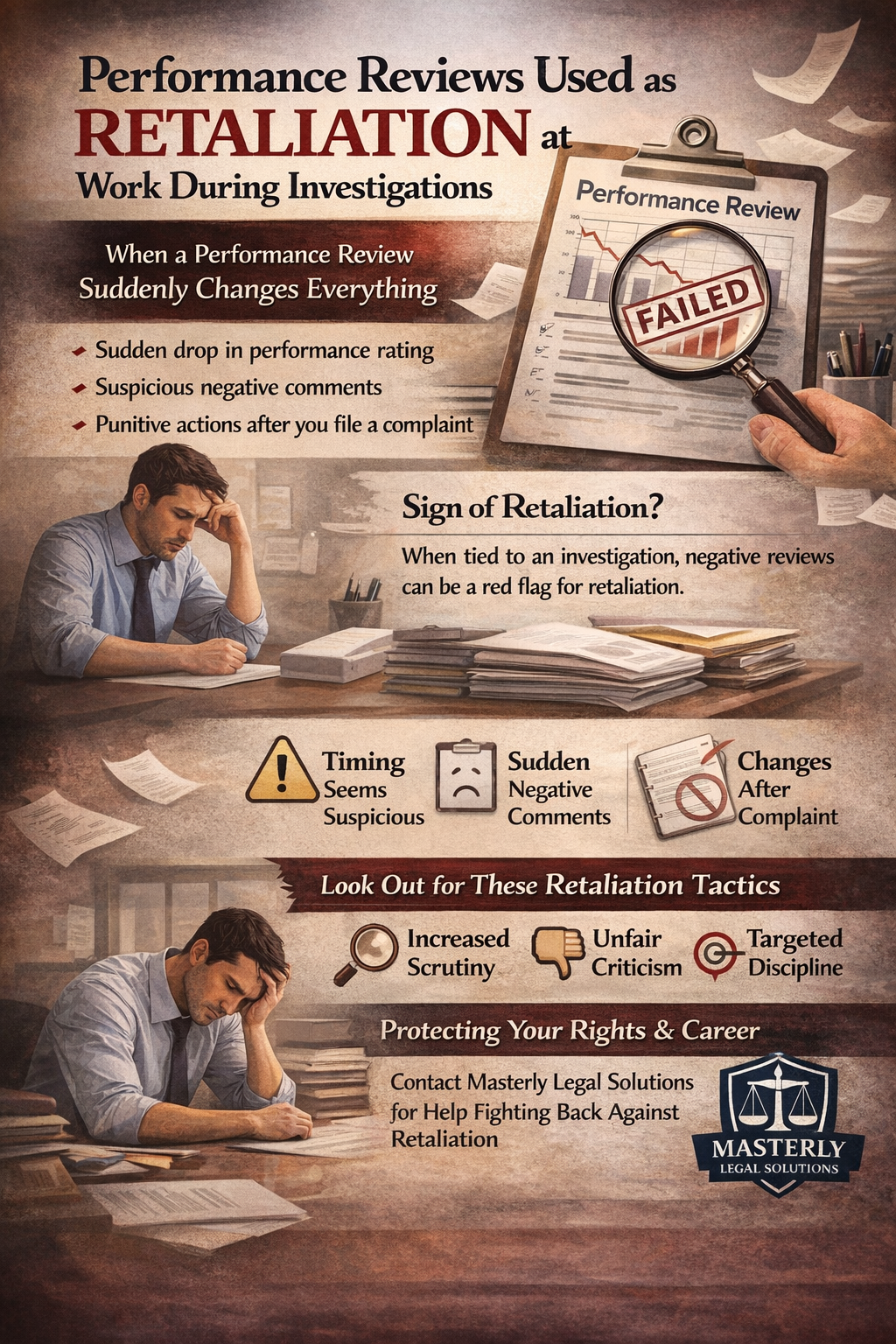
Most employees expect performance reviews to reflect their actual work, effort, and professionalism. When reviews suddenly turn negative during or after an investigation, it can feel personal, confusing, and unfair. Many workers describe a moment where they realize the review is no longer about performance, but about punishment. This experience is common across many workplaces and industries, including education, healthcare, and public service.
At Masterly Legal Solutions, we frequently hear from employees who feel targeted after speaking up. These situations often arise when an employee has engaged in protected activity, such as reporting misconduct or encourages compliance with laws. Understanding when retaliation occurs is critical to protecting your rights and career.
Why Performance Reviews Matter So Much
Performance reviews influence promotions, pay, job security, and future opportunities. Employers rely on them to justify decisions related to wages, benefits, and continued employment. When used improperly, a review can become a powerful tool for retaliation rather than feedback.
A negative review can have a lasting negative impact on employee morale and overall employee morale across the workplace. Other employees may feel discouraged from reporting issues when they see retaliation unfold. This chilling effect undermines legal protections designed to protect workers.
How Retaliation Can Appear During Investigations
Retaliation does not always look dramatic or obvious. In many cases, it appears quietly through subtle changes in treatment, assignments, or evaluations. A performance review may suddenly cite vague concerns, inconsistent standards, or issues that were never raised before.
This type of adverse action may be considered retaliatory if it follows a complaint or report. Federal and state laws prohibit employers from punishing workers for engaging in legally protected conduct. Even small changes can qualify if they would deter a reasonable employee from speaking up.
Understanding Protected Activity in the Workplace
Protected activity includes actions employees are legally allowed to take without fear of punishment. This can include filing a complaint, participating in an investigation, reporting harassment, or raising safety concerns. Employees who engage in other related protected activity are also covered.
Examples of protected activity often include:
- Reporting discrimination or harassment
- Participating as a witness in an investigation
- Filing a claim with a government agency
- Requesting medical or family leave
- Reporting occupational safety concerns
When an employer responds negatively to these actions, retaliation may be present.
The Legal Framework That Protects Employees
Employment law provides safeguards under federal and state laws to protect workers from retaliation. Key statutes include Title VII of the Civil Rights Act, the Disabilities Act, the Medical Leave Act, and whistleblower laws. These laws apply across many workplaces, including public and private employers.
The Equal Employment Opportunity Commission enforces many retaliation protections. State laws may also provide additional remedies. Employment lawyers often evaluate both federal and state regulations when determining whether a possible violation has occurred.
Performance Reviews as an Adverse Action
An adverse action is any employer action that negatively affects employment. This includes termination, demotion, pay reduction, schedule changes, or negative performance evaluations. Courts recognize that a damaging review can qualify as an adverse action when tied to protected activity.
If a performance review leads to disciplinary action, loss of benefits, or wrongful termination, it may strengthen a retaliation claim. The context and timing of the review are critical factors.
Timing and Patterns That Raise Red Flags
One of the strongest indicators of retaliation is timing. If a negative review follows closely after an investigation or complaint, it raises questions. A sudden shift in tone from prior reviews can also suggest retaliatory intent.
Patterns matter as well. If other employees who did not engage in protected activity are treated more favorably, that comparison can be important evidence. Employment lawyers often look for inconsistencies across departments and supervisors.
Investigations and Employer Responsibilities
During an investigation, employers have a duty to avoid retaliatory conduct. This includes decisions about administrative leave, paid administrative leave, or changes to working conditions. Investigations should be neutral, fair, and focused on fact-finding.
Unfortunately, some employers misuse administrative leave excessively or punitively. While administrative leave can be appropriate in limited circumstances, repeated or extended administrative leave may itself become an adverse action.
Administrative Leave and Retaliation Concerns
Administrative leave is commonly used during workplace investigations. In some cases, it is paid time meant to separate parties while facts are reviewed. However, excessive use of administrative leave can signal retaliation.
Administrative leave becomes problematic when it:
- Is imposed only after protected activity
- Lasts far longer than necessary
- Is paired with negative performance reviews
- Leads to isolation from other employees
When administrative leave is used in many forms as punishment, legal protections may be triggered.
The Role of Supervisors in Retaliation Claims
A supervisor often plays a central role in performance reviews and investigations. If a supervisor is the subject of a complaint, conflicts of interest may arise. Retaliation can occur when supervisors influence evaluations to protect themselves.
Statements made by a supervisor, even informally, can become evidence. Emails, messages, and comments to a co worker may support a claim. Employers are responsible for the actions of supervisors acting within their authority.
Harassment, Discrimination, and Retaliation Overlap
Harassment and discrimination claims frequently involve retaliation concerns. Employees who report harassment often face subtle punishment afterward. This may include exclusion, reduced hours, or negative evaluations.
Discrimination based on age discrimination, disability, or other protected traits is prohibited. Retaliation for reporting discrimination is a separate violation. Employment lawyers often pursue both claims simultaneously.
Federal Employees and Retaliation Protections
Federal employees are also protected from retaliation under federal laws. Additional regulations apply to workers in government roles, including police and other public servants. Investigations in these settings can be complex and highly regulated.
Federal workers may have different filing deadlines and procedures. Understanding these distinctions is essential when determining next steps.
The Impact on Workers and Their Families
Retaliation does not only affect the worker. It often impacts family stability, finances, and emotional well-being. Reduced pay, loss of benefits, or being fired can disrupt household security.
Employee morale suffers when retaliation is tolerated. Other workers may disengage or fear reporting issues. Over time, this damages the workplace culture and trust in leadership.
Examples of Retaliatory Performance Reviews
An example may include an employee who receives positive feedback for years, files a complaint, and then suddenly receives a poor review citing attitude or teamwork. Another example involves inflated criticism that does not align with prior documentation.
Examples can also include reviews that:
- Penalize employees for taking protected leave
- Criticize reporting behavior
- Reference investigation participation negatively
- Lead directly to termination or reduced pay
Each example must be analyzed within its circumstances.
Determining Whether Retaliation Occurred
To determine whether retaliation occurred, several factors are considered. These include timing, consistency, documentation, and employer explanations. Employment lawyers often compare prior reviews to current evaluations.
A reasonable employee standard is used to assess whether the action would discourage protected activity. If the answer is yes, retaliation may be present.
Filing a Complaint or Claim
Employees may file a complaint internally or with an external agency. Filing with the Equal Employment Opportunity Commission is common for federal claims. State agencies may also accept filings depending on the laws involved.
Deadlines are strict, and missing them can bar recovery. Guidance from experienced lawyers is critical during the filing process. Documentation and reporting accuracy matter greatly.
The Role of Employment Lawyers and Attorneys
Employment lawyers help workers understand their rights, evaluate evidence, and pursue claims. Attorneys can assess whether a performance review constitutes an adverse action. They also communicate with employers and agencies on the employee’s behalf.
Lawyers provide guidance through investigations, filing, and negotiations. Skilled attorneys understand how retaliation cases unfold and how employers defend them.
Employer Defenses and Common Arguments
Employers often argue that reviews reflect legitimate performance concerns. They may claim business necessity or unrelated reasons for changes. Documentation is frequently used to support these defenses.
However, inconsistencies, lack of prior warnings, or shifting explanations can undermine employer credibility. Employment lawyers scrutinize these defenses closely.
Retaliation in Education and School Workplaces
In education settings, retaliation claims often arise during investigations involving school employees. This includes situations within dallas fort worth school districts where performance reviews follow internal reports. Educators and staff may be placed on administrative leave or reassigned.
School employers must follow regulations while respecting employee rights. Retaliation in these environments can affect long-term careers.
Government Regulations and Enforcement
Government agencies enforce retaliation laws and regulations. These agencies investigate complaints, request records, and may impose penalties. Employers found engaging in illegal practices can face serious consequences.
Understanding regulatory authority is essential when navigating these matters. Legal guidance helps employees interact appropriately with government entities.
Protecting Yourself During an Investigation
Employees should document interactions, save communications, and request copies of evaluations. Reporting concerns promptly and accurately is important. Avoid confrontations that could escalate situations.
Consultation with employment lawyers early can help protect rights. Guidance during investigations can prevent missteps that employers may later use against workers.
Why Early Legal Guidance Matters
Retaliation cases are often strongest when addressed early. Delays can result in lost evidence or missed deadlines. Early consultation allows attorneys to shape strategy and preserve claims.
Workers should not assume retaliation is obvious or automatic. Legal analysis is required to evaluate whether conduct violates laws.
Moving Forward With Confidence and Support
Facing retaliation through performance reviews can feel isolating and stressful. Many employees worry about being fired or labeled as troublemakers. Understanding your rights helps restore confidence.
With proper support, workers can take informed steps to protect their careers. Legal professionals play a key role in restoring balance and accountability in the workplace.
Contact Masterly Legal Solutions for Trusted Guidance
If you believe a performance review was used as retaliation during a workplace investigation, Masterly Legal Solutions is here to help. We offer a free consultation to discuss your situation and help you understand your options, particularly for employees working within Dallas–Fort Worth school districts and surrounding workplaces. Our team focuses on employment law and retaliation matters, providing clear guidance and strong advocacy. Contact us at (972) 236-5051 to schedule your free consultation and take the next step toward protecting your rights.
Disclaimer: This article is for informational purposes only and does not constitute legal guidance or create an attorney-client relationship. Laws and circumstances vary, and you should consult a qualified attorney regarding your specific situation.


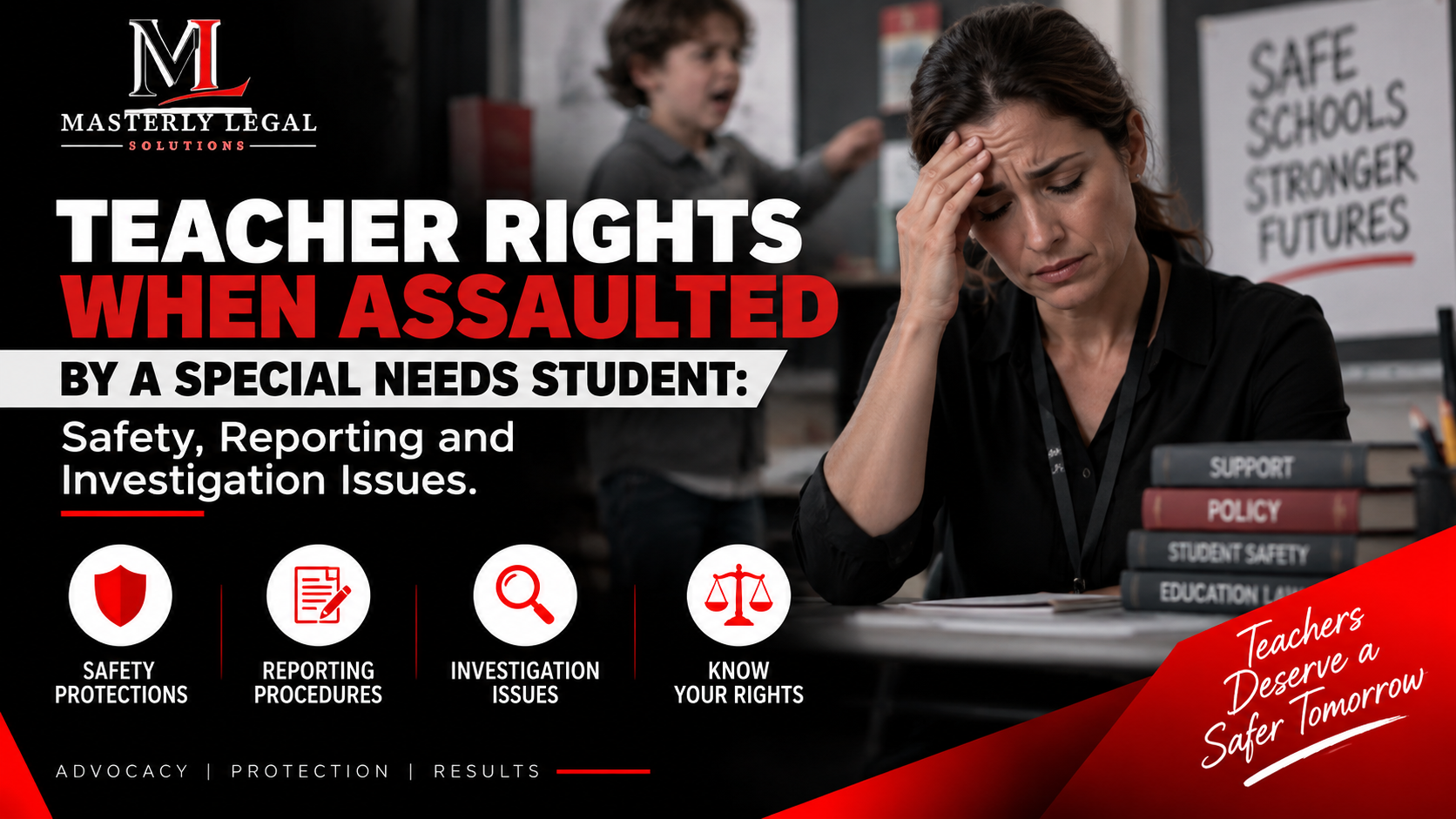
Teacher Rights When Assaulted by a Special Needs Student: Safety, Reporting and Investigation Issues



Looking for Legal & Business Solutions? Contact Us Now
Fill in the form or call us to set up a meeting