

TEA Investigations and Retaliation: What Texas Educators Must Watch For
For many Texas educators, a Texas Education Agency investigation begins with confusion, stress, and a sense of disbelief. Teachers, administrators, and other employees often enter the process assuming that honesty and cooperation will naturally lead to fairness. Unfortunately, that is not always how these situations unfold. When retaliation enters the picture, the investigation can quickly shift from a professional review into a threat to long-term employment and reputation.
At Masterly Legal Solutions, we routinely speak with workers who did not realize the warning signs until the damage was already underway. Retaliation during TEA investigations is more common than most employees expect, and it often starts quietly. Understanding what to watch for early can help educators protect themselves, their careers, and their well being before lasting harm occurs.
Understanding the Purpose of a TEA Investigation
A TEA investigation is designed to review allegations involving professional conduct, safety, or compliance with regulations. In theory, these investigations are meant to protect students and uphold public policy within education. However, the process is also deeply intertwined with employment decisions made by an employer.
Because these investigations rely on documentation, interviews, and internal reports, the way an employer responds matters greatly. Decisions made during this period can shape an employee’s record for years. That is why awareness and preparation are essential from the very beginning.
Why Retaliation Often Appears During Investigations
Retaliation often surfaces when an employee engages in protected activity connected to a TEA investigation. This can include filing a complaint, reporting misconduct, or participating as a witness. Retaliation occurs when an employer responds to that protected activity with adverse actions rather than addressing the underlying issue.
In many cases, retaliation occurs subtly and gradually. The employer may claim neutral reasons for decisions, even as the employee experiences a clear negative impact. Recognizing these patterns early is key.
What Retaliation Really Looks Like in Education Settings
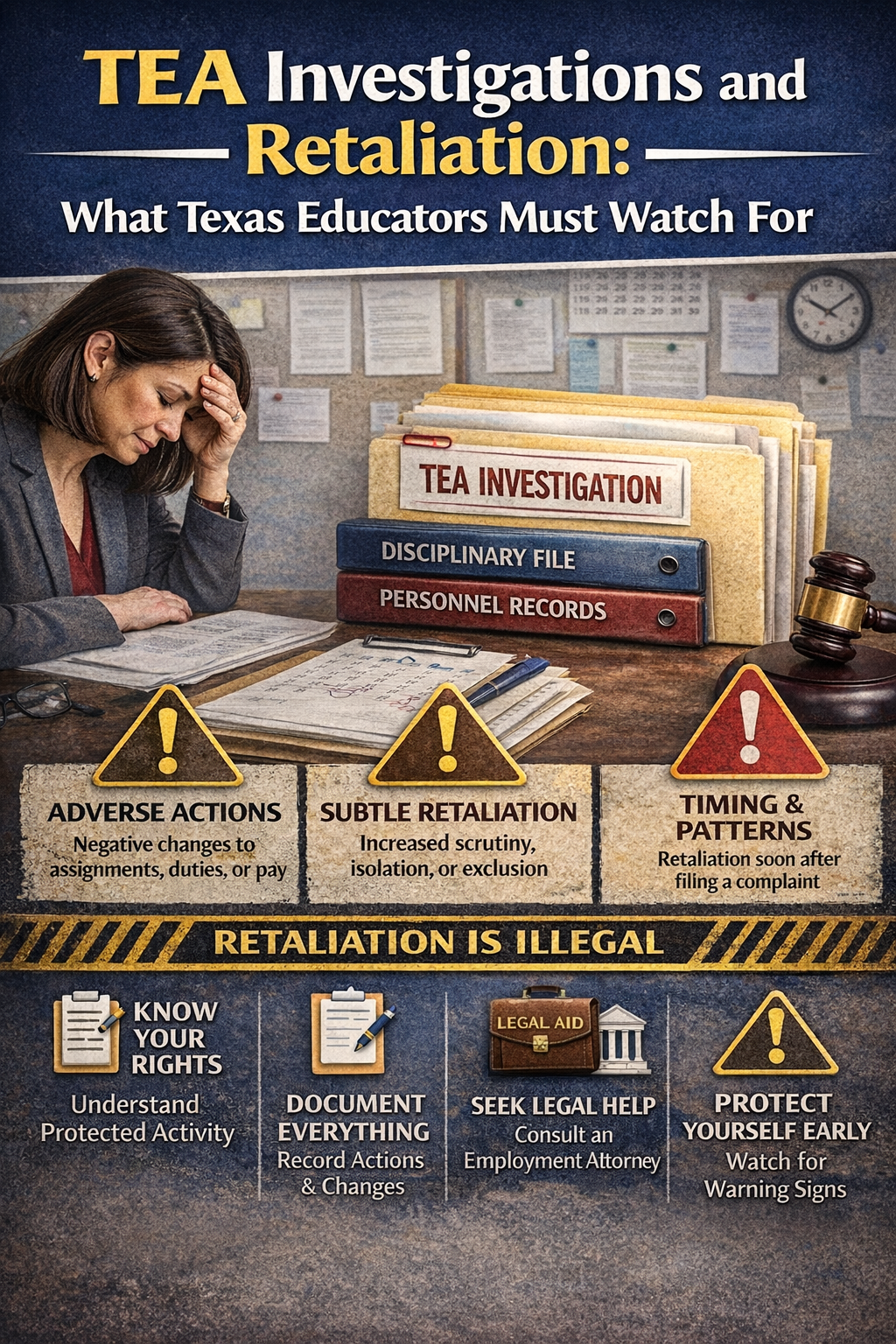
Retaliation is not always obvious or dramatic. It often appears through changes that seem administrative or routine on the surface. These actions may be considered retaliatory when they would discourage a reasonable employee from engaging in protected activity.
Common examples include increased scrutiny, altered working conditions, or exclusion from meetings. Over time, these actions can undermine confidence and professional standing. Educators should pay close attention to changes that follow protected activity.
Adverse Actions Educators Should Not Ignore
Adverse actions are central to retaliation claims. These actions involve any employer decision that negatively affects employment. During TEA investigations, adverse actions can quietly accumulate.
Examples of adverse actions may include:
- Sudden changes in assignments or duties
- Negative performance evaluations without prior issues
- Loss of benefits or paid time
- Reduced opportunities for advancement
Each example on its own may seem manageable, but together they can signal retaliation.
Protected Activity and Why It Matters
Protected activity is conduct that is legally protected under federal and state laws. Educators engage in protected activity when they report workplace discrimination, harassment, safety concerns, or violations of law. Requesting job protected leave or workplace accommodations may also qualify.
Other related protected activity includes cooperating with investigations or supporting complaints made by other employees. When an employer punishes an employee for engaging in protected activity, the law may offer remedies. Understanding this distinction is essential for recognizing a possible violation.
How Retaliation Occurs After Complaints Are Filed
Retaliation often occurs after an employee files a complaint or participates in an investigation. The timing of adverse actions can be a strong indicator of retaliatory intent. When discipline or unfavorable treatment closely follows protected activity, it raises concerns.
For example, an educator who reports sexual harassment may later face sudden disciplinary measures unrelated to job performance. These patterns deserve careful attention and documentation.
Workplace Discrimination and TEA Investigations
Workplace discrimination frequently intersects with TEA investigations. Discrimination based on age, national origin, sexual orientation, or other protected characteristics may influence how investigations are handled. Discrimination based motives can affect credibility assessments and disciplinary outcomes.
Laws such as Title VII and the civil rights act exist to protect employees from these practices. When discrimination appears during an investigation, it can amplify the harm and extend the consequences well beyond the school district.
Harassment Reports and Retaliation Risks
Harassment complaints, including sexual harassment, place educators in a vulnerable position. While the law protects employees who report harassment, retaliation remains a real risk. Employers sometimes shift focus away from the misconduct and toward the reporting employee.
This shift can result in adverse actions that damage employment prospects. Educators should be aware that retaliation following harassment complaints is prohibited under federal law and state laws.
The Role of Federal and State Laws in Protection
Federal and state laws form the backbone of employee protections during investigations. Federal law sets baseline standards, while state laws often provide additional safeguards. Together, these laws regulate how employers may respond to complaints and protected activity.
Understanding these legal protections helps employees identify when conduct crosses the line. Violations may involve discrimination, retaliation, or failure to follow required procedures.
Whistleblower Laws and Reporting Misconduct
Whistleblower laws protect employees who report illegal, unsafe, or unethical conduct. This includes reporting issues related to occupational safety or risks of physical harm. Educators who speak up under these laws should not face punishment.
When retaliation follows whistleblowing, it can have severe professional consequences. These laws are designed to protect workers, but they require awareness and timely action to enforce.
Occupational Safety Concerns in School Environments
Occupational safety is a serious concern in educational settings. Teachers and staff may report unsafe workplace conditions involving facilities, equipment, or student behavior. Reporting these concerns is often legally protected.
If an employer refuses to address safety issues and instead disciplines the reporting employee, retaliation may be present. Safety-related complaints should always be documented carefully.
Documentation as a Defensive Tool
Documentation is one of the most powerful tools employees have during a TEA investigation. Keeping records of complaints, emails, evaluations, and policy documents can help establish a clear timeline. This information is often critical when assessing whether retaliation occurs.
Without documentation, disputes become harder to resolve. Detailed records help demonstrate how adverse actions followed protected activity.
Human Resources and Conflicting Interests
Human resources departments often play a central role during investigations. While they may present themselves as neutral, their primary responsibility is to the employer. This can create conflicts for individual employees.
Educators should approach communications with human resources thoughtfully. Understanding this dynamic helps protect against unintended consequences.
The Impact on Employee Morale
Retaliation during investigations affects more than the targeted employee. Employee morale across the workplace often suffers when others witness unfair treatment. Overall employee morale declines when workers fear consequences for speaking up.
This environment can discourage reporting and undermine trust. Addressing retaliation is essential not only for individuals but for the health of the workplace.
Financial Consequences of Retaliation
Adverse actions may affect pay, overtime pay, and benefits. Some employees experience lost wages or reduced paid time during or after investigations. These financial impacts add stress to an already difficult situation.
When compensation is affected, employees may have legal remedies. Labor and employment lawyers can help evaluate these issues.
Leave Rights and Family Responsibilities
Educators may need leave for medical needs or childcare responsibilities. Laws such as administrative leave, the medical leave act and FMLA leave provide protections for eligible employees. Retaliation for using these rights is prohibited.
If an employer punishes an employee for requesting or taking leave, it may constitute a violation. These situations should be addressed promptly.
Workplace Accommodations and Disability Issues
Employees with disabilities may request workplace accommodations under the disabilities act. Employers must provide reasonable accommodations unless doing so causes undue hardship. Retaliation for requesting accommodations is unlawful.
TEA investigations involving accommodation requests require careful handling. Protecting these rights helps prevent long-term consequences.
When Retaliation Leads to Wrongful Termination
In severe cases, retaliation results in wrongful termination. When termination violates laws or public policy, employees may have claims for reinstatement or damages. Wrongful termination can permanently alter an educator’s career path.
Understanding when termination is unlawful requires careful legal analysis. Early guidance is often critical.
Filing a Retaliation Complaint
Employees may file a retaliation complaint internally or with external agencies. The equal employment opportunity commission handles many claims involving discrimination and retaliation. Filing a complaint can preserve rights and trigger investigations.
Deadlines apply, and missing them can limit options. Timely action is essential.
The Role of Employment Lawyers
Employment lawyers and labor and employment lawyers help educators navigate complex investigations. They understand how retaliation claims are evaluated and how records are created. Their guidance can help protect employment and reputation.
Retaliation attorneys focus specifically on identifying unlawful employer conduct. Their involvement can shift the balance back toward fairness.
Recognizing a Possible Violation Early
Many employees wait too long to act, hoping the situation resolves itself. Recognizing a possible violation early allows for better protection. Early action can prevent adverse actions from escalating.
Awareness is the first step toward control.
Why Timing Matters in Retaliation Cases
Timing often determines the strength of a retaliation claim. The closer adverse actions occur to protected activity, the stronger the inference may be. Delays in seeking help can weaken a case.
Prompt attention helps preserve evidence and options.
Taking Legal Action When Necessary
Sometimes taking legal action is the only way to stop retaliation. Legal action may seek remedies such as lost wages, reinstatement, or punitive damages. Each case depends on its facts and applicable laws.
Taking action is about protecting fairness, not escalating conflict.
How Retaliation Disrupts the Playing Field
Retaliation undermines the level playing field that employment laws aim to create. When educators are punished for protected activity, trust erodes. Addressing retaliation restores balance and accountability.
Protecting one employee often protects others as well.
Supporting Well Being During Investigations
The stress of investigations and retaliation affects mental and emotional well being. Anxiety, uncertainty, and fear are common among workers in these situations. Support and guidance can help restore stability.
Seeking help is a sign of strength, not weakness.
Moving Forward With Awareness and Confidence
Educators do not have to face TEA investigations and retaliation alone. Understanding early warning signs empowers employees to act thoughtfully. Knowledge and preparation help reduce long-term harm.
Every situation is unique, but awareness creates options.
How the Employment Act Influences Educator Rights During TEA Investigations
The employment act establishes baseline standards that govern how employees must be treated during disciplinary actions and investigations. For educators, this law helps define fairness in notice, procedure, and accountability when an employer takes action. When decisions during a TEA investigation conflict with the employment act, it may indicate a possible violation of legally protected rights. Understanding how this framework applies allows employees to recognize when an investigation has moved beyond policy enforcement and into unlawful territory.
Federal Employees and Their Unique Considerations in Education Settings
While most educators work at the state or local level, federal employees in education-related roles face additional layers of regulation and oversight. These employees are protected by both federal law and agency-specific rules that govern investigations and discipline. When federal employees are involved in TEA-related matters, overlapping procedures can complicate the process. Awareness of these distinctions is critical to protecting employment status and professional records.
Why the Employee Handbook Matters During Retaliation Concerns
An employee handbook often outlines the procedures an employer claims to follow during investigations and discipline. Educators should review this document carefully to understand timelines, reporting structures, and disciplinary steps. When an employer ignores its own handbook or applies it inconsistently, that conduct may support claims of unfair treatment or retaliation. Comparing written policies to real-world actions can reveal important discrepancies.
Recognizing Age Discrimination in Investigation Outcomes
Age discrimination can subtly influence how investigations are conducted and how discipline is imposed. Experienced educators may find themselves scrutinized more harshly than younger colleagues for similar conduct. Employment laws prohibit adverse actions based on age, regardless of tenure or proximity to retirement. When age appears to factor into disciplinary decisions, it deserves careful review.
How a Co Worker Can Influence the Investigation Process
A co worker may play a significant role in how a TEA investigation unfolds, whether as a complainant, witness, or participant in interviews. Statements made by a co worker can shape perceptions and impact outcomes, especially when taken out of context. In some cases, conflicts between employees escalate into formal complaints that trigger investigations. Understanding how these dynamics affect the process helps educators respond more strategically.
The Importance of Work Hours in Retaliation Claims
Changes to work hours may seem minor but can have a significant impact during or after an investigation. Adjustments to schedules can affect pay, family obligations, and overall well being. When changes to work hours follow protected activity, they may be viewed as adverse actions. Context and timing are critical when evaluating whether such changes are retaliatory.
How Retaliation Can Take Many Forms
Retaliation can take many forms, and it is not always immediately recognizable. Beyond termination, it may include isolation, increased scrutiny, or exclusion from opportunities. These actions can gradually undermine confidence and professional standing. Recognizing the wide range of retaliatory behaviors helps employees identify issues early.
The Role of a Supervisor in Retaliation Situations
A supervisor often has direct influence over assignments, evaluations, and daily working conditions. During TEA investigations, actions taken by a supervisor may significantly affect how an employee is treated. Retaliation may occur when a supervisor responds negatively to protected activity or complaints. Monitoring supervisory conduct is an important part of protecting one’s rights.
Contact Masterly Legal Solutions
If you are facing a TEA investigation and are concerned about retaliation, speaking with experienced retaliation attorneys can help you understand your rights and next steps. At Masterly Legal Solutions, we offer free consultations to answer questions and help educators protect their careers during high-stakes investigations. Our team works with employees who need clarity and support when it matters most. Call (972) 236-5051 to schedule your free consultation and discuss your situation with professionals who understand the challenges educators face.
Disclaimer: This article is provided for educational purposes only and does not constitute legal guidance or legal advice. Reading this article does not create an attorney-client relationship. For advice regarding your specific situation, consult a qualified attorney.




Teacher Rights When Assaulted by a Special Needs Student: Safety, Reporting and Investigation Issues



Looking for Legal & Business Solutions? Contact Us Now
Fill in the form or call us to set up a meeting





