

Teachers' Legal Options After Unjust Discipline from School Districts
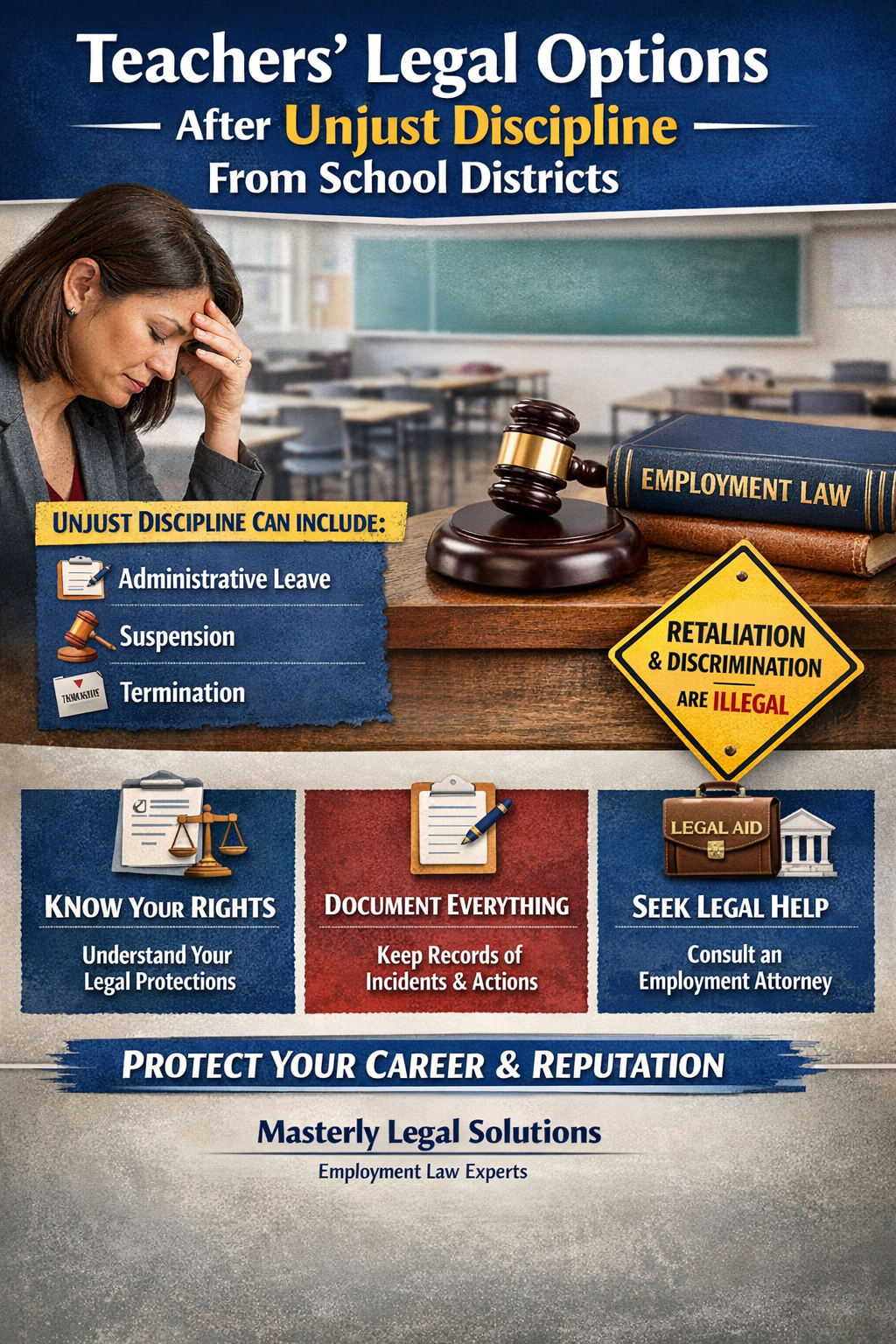
Educators dedicate their careers to supporting students, families, and communities, yet many teachers find themselves facing discipline that feels unfair, disproportionate, or improperly motivated. Being placed on administrative leave, receiving a suspension, or facing termination can be emotionally overwhelming and professionally damaging. When these actions occur without clear justification, teachers often feel powerless against a large employer with legal resources and internal procedures that are difficult to navigate. This article is written for teachers who believe they have been treated unjustly and want to understand how to protect their careers, income, and professional reputation.
At Masterly Legal Solutions, we regularly speak with employees and workers in education who feel blindsided by discipline that does not reflect their performance or conduct. Understanding your legal options is the first step toward restoring control and confidence. While every case is different, there are clear paths teachers can take to push back, document a possible violation, and seek accountability under federal and state laws.
Understanding Unjust Discipline in School Employment
Unjust discipline can take many forms in the workplace, especially in public school systems. Teachers may be placed on paid administrative leave pending an investigation, reassigned to less favorable duties, or subjected to adverse actions that harm their career trajectory. These decisions often occur quickly and with limited explanation, leaving employees confused and anxious about what comes next.
Discipline becomes legally concerning when it is inconsistent with established policies, applied selectively to certain employees, or follows protected activity such as filing a complaint or report. In some situations, retaliation occurs when an employer punishes a teacher for asserting legally protected rights. Recognizing when discipline crosses from management discretion into unlawful conduct is critical.
Common Reasons Teachers Face Discipline
School districts discipline employees for a wide range of stated reasons, some legitimate and others questionable. Allegations may involve classroom management, alleged misconduct, policy violations, or conflicts with a supervisor or co worker. While districts have authority to maintain standards, that authority is not unlimited.
Problems arise when discipline is based on incomplete information, biased reporting, or discriminatory motives. In many cases, teachers discover that other employees engaged in similar conduct but were not disciplined in the same way. This unequal treatment may signal discrimination based on protected characteristics or retaliation linked to prior complaints.
Administrative Leave and What It Really Means
Being placed on administrative leave can feel like an immediate judgment, even when described as temporary or neutral. Paid administrative leave is often used during an investigation, but it still carries a negative impact on employee morale and professional standing. Colleagues may speculate, and the teacher may feel isolated from the workplace.
Administrative leave should not be used as a punishment before facts are determined. When administrative leave extends for long periods, affects pay or benefits, or is imposed selectively, it may raise legal concerns. Teachers should understand whether their leave complies with district policies, state laws, and applicable labor regulations.
The Emotional and Financial Toll on Teachers
Unjust discipline does not only affect a teacher’s job title. It can disrupt pay, benefits, and long-term career prospects. Even when wages continue during paid administrative leave, uncertainty creates stress that affects well being and family stability.
Teachers may also experience a loss of professional confidence and damage to their reputation within the school community. These outcomes can negatively affect overall employee morale and discourage other employees from reporting concerns or engaging in protected activity. The law recognizes that these harms matter.
The Role of the Employee Handbook
Most school districts outline disciplinary procedures in an employee handbook or similar policy manual. These documents often explain how investigations should be conducted, what rights employees have, and what steps must occur before discipline is imposed. When an employer refuses to follow its own handbook, that failure can support a claim of unfair treatment.
Teachers should review the employee handbook carefully and compare the district’s actions to its written policies. Deviations from required procedures may indicate a possible violation of employment rules or contractual obligations. Documentation at this stage is essential.
Protected Activity and Why It Matters
Protected activity is a central concept in employment law, especially for teachers facing retaliation. Protected activity includes actions such as reporting discrimination, filing a complaint about harassment, requesting workplace accommodations, or taking job protected leave under the medical leave act or FMLA leave.
When a teacher engages in protected activity, the employer is prohibited from taking adverse actions in response. Retaliation occurs when discipline, reassignment, or termination follows closely after a protected report or complaint. Understanding what qualifies as protected activity helps teachers recognize when discipline may be unlawful.
Retaliation in the School Workplace
Retaliation is one of the most common legal issues teachers face after discipline. Retaliation occurs when an employer punishes an employee for engaging in legally protected conduct. This can include reporting workplace discrimination, participating in an investigation, or supporting other employees who file complaints.
Retaliation can take many forms, including reduced pay, changes to work hours, negative evaluations, or placement on administrative leave. Even subtle actions that create a negative impact on working conditions may be considered retaliatory under federal law and state laws.
Examples of Retaliatory Conduct
Retaliation does not always involve termination. In fact, many retaliation claims involve patterns of conduct that build over time. For example, a teacher who reports sexual harassment may later receive unwarranted discipline or be excluded from professional opportunities.
Another example includes an employer who disciplines a teacher after they report unsafe workplace conditions or potential physical harm to students or staff. When adverse actions follow protected activity, timing and context are key factors used to determine whether retaliation occurred.
Workplace Discrimination in Education
Workplace discrimination remains a serious concern in school systems. Discrimination based on race, national origin, sexual orientation, gender, disability, or other protected characteristics is prohibited by the civil rights act and Title VII. Yet discrimination still occurs in subtle and overt ways.
Teachers may notice that discipline is imposed more harshly on certain employees while others receive leniency. When discipline aligns with discriminatory patterns, legal action may be appropriate. Discrimination claims often overlap with retaliation claims, especially when a teacher reports unfair treatment and is later punished.
Harassment and Hostile Work Environments
Harassment is another form of unlawful conduct that can lead to unjust discipline. Teachers who report harassment, including sexual harassment, may find themselves targeted by supervisors or administrators. Instead of addressing the misconduct, the employer may discipline the reporting teacher.
A hostile work environment can develop when harassment is severe or pervasive and interferes with employment. When teachers report harassment and face adverse actions instead of support, the law may provide remedies to protect them.
Federal and State Laws That Protect Teachers
Teachers are protected by a combination of federal and state laws designed to ensure fair employment practices. Federal law includes Title VII, the fair labor standards act, and the family and medical leave act. These laws regulate pay, overtime pay, job protected leave, and anti-discrimination protections.
State laws often provide additional protections, including whistleblower laws and public policy exceptions that limit an employer’s ability to punish employees unfairly. Understanding how these laws interact is essential when evaluating a possible violation.
Whistleblower Laws and Reporting Misconduct
Whistleblower laws protect employees who report illegal or unethical conduct, including misuse of funds, safety violations, or misconduct involving students. Teachers who report concerns to administration, law enforcement, or other agencies may be engaging in protected activity.
If retaliation occurs after a whistleblower report, teachers may have strong legal claims. These laws exist to protect workers who speak up in the public interest, especially in educational environments where safety and integrity matter.
The Importance of Documentation
Documentation plays a critical role in protecting teachers after unjust discipline. Teachers should keep records of emails, performance reviews, complaints, and any communications related to discipline or administrative leave. These documents help determine whether actions were consistent with policy and law.
Detailed records also help establish timelines that show when protected activity occurred and when adverse actions followed. This information is often essential during an investigation or legal claim.
Investigations and Due Process
School districts often cite investigations as the reason for placing teachers on administrative leave. While investigations are sometimes necessary, they must be conducted fairly and promptly. Prolonged or biased investigations can themselves become a violation of employment laws.
Teachers have the right to understand the nature of the investigation, respond to allegations, and be treated as a reasonable employee would expect under similar circumstances. Lack of transparency may signal deeper problems.
Human Resources and Internal Complaints
Human resources departments are often involved in disciplinary decisions, but their role is to protect the employer, not the employee. Teachers should be cautious and strategic when communicating with human resources, especially during investigations.
Filing an internal complaint can be a necessary step, but it should be done with awareness of potential retaliation. Legal guidance can help teachers decide how and when to raise concerns internally.
Appealing Disciplinary Decisions
Many school districts provide formal appeal processes for discipline. Appeals may involve hearings, written responses, or review by a school board or department. Teachers should follow appeal procedures carefully and meet all deadlines.
An appeal allows teachers to challenge factual inaccuracies, procedural errors, and unfair conclusions. Even when appeals are denied, they create a record that may support later legal action.
When an Employer Refuses to Correct Mistakes
Sometimes an employer refuses to reconsider discipline despite clear evidence of unfairness. This refusal can intensify the harm to the teacher and increase the likelihood of legal claims. Persistent refusal may also suggest retaliatory motives.
In these situations, teachers should consider external options, including filing a claim with the equal employment opportunity commission or pursuing legal counsel. Employers are not immune from accountability.
Filing Complaints With Government Agencies
Teachers may file complaints with agencies such as the equal employment opportunity commission when discrimination or retaliation is suspected. These agencies investigate claims and may attempt resolution or issue findings that support legal action.
Agency complaints often have strict deadlines, so timely action is critical. Filing a complaint can also protect a teacher’s right to pursue claims in court if necessary.
Understanding Adverse Actions
Adverse actions include any employment decision that negatively affects a teacher’s job. This can involve changes to pay, benefits, work assignments, or promotional opportunities. Even actions that seem minor can be adverse if they create a negative impact.
Courts look at whether adverse actions would discourage a reasonable employee from engaging in protected activity. This standard helps protect teachers from subtle forms of retaliation.
Pay, Wages, and Benefits at Risk
Unjust discipline can affect a teacher’s pay and wages, especially if administrative leave becomes unpaid or leads to termination. Loss of benefits, retirement contributions, and future earning potential may also occur.
In some cases, teachers may be entitled to recover lost wages or back pay if discipline is found unlawful. Protecting financial stability is a key reason teachers pursue legal guidance.
Leave Rights and Family Obligations
Teachers often rely on leave protections for medical needs or childcare responsibilities. FMLA leave and other job protected leave options exist to support employees during critical life events.
When discipline follows a request for leave or use of paid time, it may be considered retaliatory. Employers must accommodate eligible employees unless doing so creates an undue hardship.
Workplace Accommodations and Disabilities
Teachers with disabilities may request workplace accommodations to perform their job effectively. When an employer punishes a teacher for requesting accommodations, it may constitute discrimination.
Failure to engage in an interactive process or claims of undue hardship must be supported by evidence. Teachers should not be disciplined simply for asserting their rights.
The Broader Impact on the School Community
Unjust discipline affects more than one teacher. It sends a message to other employees that speaking up may lead to punishment. This erodes trust and harms overall employee morale within the workplace.
When retaliation and discrimination go unchecked, the educational environment suffers. Legal protections exist not only to protect individual teachers but also to promote fairness and accountability in public institutions.
Recognizing When Legal Action Is Appropriate
Not every disciplinary issue requires legal action, but some situations clearly warrant it. When discipline involves retaliation, discrimination, or repeated violations of law, teachers should consider taking legal action to protect themselves.
Recognizing patterns, understanding rights, and seeking advice early can make a significant difference in outcomes. Teachers do not have to face these challenges alone.
How Legal Representation Helps Teachers
Legal representation provides teachers with an advocate who understands employment laws and education systems. An attorney can evaluate whether discipline was lawful, identify possible violations, and develop strategies to protect the teacher’s career.
Legal counsel also helps manage communications, appeals, and investigations. Having support can reduce stress and help teachers make informed decisions during a difficult time.
Protecting Your Professional Future
Teachers invest years building their careers, credentials, and reputations. Unjust discipline threatens all of that in an instant. Taking steps to protect yourself is not about conflict, but about fairness and dignity.
Understanding your rights empowers you to respond confidently and thoughtfully. With the right guidance, many teachers are able to restore their standing and move forward.
Moving Forward With Confidence
Facing discipline from a school district can feel isolating, but many teachers share this experience. By recognizing protected activity, documenting events, and seeking knowledgeable support, teachers can regain a sense of control.
Every situation is unique, but the law provides tools to protect educators from unfair treatment. Taking action is often the first step toward resolution and peace of mind.
Other Related Protected Activity in the School Workplace
In addition to filing formal complaints or reports, teachers may engage in other related protected activity that is legally protected under employment laws. This related protected activity can include cooperating with internal investigations, providing witness statements for other employees, or requesting clarification about workplace policies that affect working conditions. Even informal actions, such as raising concerns in meetings or submitting written feedback to administration, may qualify as protected when done in good faith. When an employer responds negatively to these actions, it may signal retaliation that warrants closer review.
When Police Involvement Becomes Part of a Teacher’s Case
In certain situations, school-related issues escalate to the point where police involvement occurs, particularly when allegations involve safety concerns, threats, or potential physical harm. While police investigations are separate from employment decisions, districts sometimes take adverse actions against teachers simply because law enforcement was contacted or involved. If a teacher is disciplined for cooperating with police or reporting a matter that reasonably required outside intervention, this may be considered a related protected activity. Teachers should seek additional information about how law enforcement involvement intersects with employment rights and disciplinary procedures.
Why Additional Information Can Strengthen Your Legal Position
Gathering additional information is often critical when challenging unjust discipline. This may include requesting personnel records, investigation findings, policy documents, or communications related to the disciplinary decision. Access to additional information helps determine whether policies were followed and whether discipline aligns with how other employees were treated in similar situations. Thorough documentation can also clarify whether adverse actions were tied to protected activity, providing valuable support if legal action becomes necessary.
Contact Masterly Legal Solutions for Support
If you are a teacher facing administrative leave or other discipline that feels unjust, speaking with an experienced employment attorney can help clarify your options. At Masterly Legal Solutions, we offer free consultations to help teachers understand their rights and determine the best path forward. Whether you are dealing with retaliation, discrimination, or concerns tied to an investigation, we are here to answer your questions and help you protect your professional future. Call (972) 236-5051 to schedule your free consultation and take the first step toward clarity and confidence.
Disclaimer: This article is provided for educational purposes only and does not constitute legal guidance or legal advice. Reading this article does not create an attorney-client relationship. For advice regarding your specific situation, you should consult directly with a qualified attorney.



Teacher Rights When Assaulted by a Special Needs Student: Safety, Reporting and Investigation Issues



Looking for Legal & Business Solutions? Contact Us Now
Fill in the form or call us to set up a meeting





