
The Business Case for Implementing Mandatory Sexual Harassment Training Now
Effective sexual harassment prevention training is no longer optional—it is a critical business priority. This article explains why employers must act now, how proper training protects employees and supervisors, and why immediate workplace training safeguards your organization from legal, financial, and cultural risks.
Implementing mandatory sexual harassment training is one of the most important steps an employer can take to create a safe and respectful work environment. While many companies understand the value of training, far fewer recognize the urgency. With growing legal pressure, evolving federal and state laws, and the increasing visibility of sexual harassment in the workplace, delaying training can expose your organization to unnecessary risks. This article offers clear, human-centered guidance to help employers understand not just why training is crucial, but why the timing matters now more than ever.
Why Immediate Sexual Harassment Prevention Training Matters
Creating a respectful and inclusive workplace culture requires more than policies on paper. Training is crucial for ensuring that employees and supervisors understand what constitutes harassment, how to prevent inappropriate behavior, and how to address workplace issues before they escalate. Even employers with existing policies may fall out of compliance if their training program is outdated.
Mandatory workplace harassment training helps employees recognize early signs of misconduct and understand the rights they have under federal and state laws. Taking action now rather than later helps prevent legal claims, improves the work environment, and fosters greater trust across your workforce.
What Are the Current Workplace Training Requirements?
Understanding training requirements is essential for any employer committed to reducing the risk of unlawful harassment. Many states have passed laws requiring employers with a certain number of employees to provide sexual harassment training for employees, such as employers with 15 or more employees under some regulations.
In states including Connecticut, California, New York, and others, sexual harassment prevention training requirements include both employees and supervisors. Texas employers—though not currently mandated by a statewide requirement—are strongly encouraged to implement training to better protect the business.
Any organization with a workforce across multiple states must follow various state laws to maintain training compliance. Providing uniform online training or online sexual harassment training courses helps ensure everyone receives consistent information and meets each state requirement.
How Federal and State Laws Impact Sexual Harassment Training
At the federal level, Title VII of the Civil Rights Act of 1964 and EEOC (Equal Employment Opportunity Commission) guidelines make it clear that employers have a legal responsibility to prevent and address workplace harassment. The EEOC encourages employers to proactively provide training and educate employees to prevent discrimination and harassment in the workplace.
For employers operating in multiple states, understanding federal and state laws ensures compliance and reduces exposure. Even without a strict state requirement, failure to conduct training can still be used as evidence against an employer in harassment claims.
Because the U.S. continues to refine expectations for employers, implementing workplace training immediately helps protect the business and ensures employers stay ahead of changing laws and regulations.
What Does Effective Sexual Harassment Training Include?
An effective training program must go beyond vague definitions. The best training programs clearly outline acceptable behaviors, explain what constitutes harassment, and help employees recognize inappropriate behavior in real-world scenarios. Training should always cover:
- Types of workplace harassment
- Recognizing and addressing inappropriate behavior
- Sexual harassment in the workplace and its impact
- Reporting procedures
- Rights under federal and state laws
- The employer’s sexual harassment prevention policy
To access these materials, some employers provide a PDF with key policies or distribute online training content that employees can review. Incorporating video training and practical examples also makes the training course more engaging and effective.
Why Online Sexual Harassment Training Is the Best Option for Many Employers
Modern workplaces benefit greatly from online sexual harassment training because it offers flexibility, consistency, and easy access for employees and supervisors. Online training is especially useful for businesses with remote workers or multiple locations.
Online training platforms allow employees to complete their required training course at their own pace. These courses are available in various formats, including interactive modules, video training, quizzes, and more. Online sexual harassment training ensures the same training content is delivered to everyone, regardless of geography.
For large organizations, online sexual harassment training courses simplify documentation, tracking, and renewals, making training compliance easier to manage.
How Sexual Harassment Training Protects Your Business
One of the most important reasons to prioritize sexual harassment training is the protection it offers the employer. By educating employees and supervisors, employers demonstrate a commitment to preventing unlawful harassment and fostering a respectful work environment.
Proper workplace training can:
- Reduce the risk of costly lawsuits
- Prevent workplace harassment and discrimination
- Improve morale
- Strengthen workplace culture
- Encourage a safe and respectful work environment
Training also helps employees understand their rights under the rights act, Title VII of the Civil Rights Act, and other laws that protect them. Employers who fail to train risk severe financial and legal consequences that can affect operations and reputation across the U.S.
What Happens When Employers Delay Training?
Waiting to implement a sexual harassment training program can significantly impact the workplace. Without training, employees may be unsure how to respond to harassment in the workplace, leaving harmful behaviors unaddressed. This uncertainty increases risk for both the employee and the employer.
Delaying training can also result in:
- Confusion about reporting procedures
- Increased workplace violence or escalation
- Failure to recognize and address inappropriate behavior
- Greater exposure to legal claims
- Difficulty building a respectful and inclusive workplace culture
Employers must understand that preventing harassment is not just about legal compliance—it’s about valuing the well-being of every employee.
Do Supervisors Need Specialized Sexual Harassment Training?
Yes. Sexual harassment training for supervisors is critically important. Supervisors hold responsibility for maintaining a safe workplace environment and often serve as the first point of contact when an employee reports misconduct.
Training for supervisors should include:
- How to respond to complaints
- Documenting incidents
- Preventing sexual harassment
- Understanding harassment prevention training requirements
- Creating a respectful and inclusive workplace
Failure to properly train supervisors can lead to major liability issues for the employer.
What Are Industry-Specific Training Needs?
Sexual harassment in the workplace varies across industries, making it crucial to provide training tailored to specific risks. For example:
- Hospitality and food industries often face issues with customer harassment
- Healthcare settings may encounter workplace violence
- Office environments struggle with power dynamics and supervisory harassment
In industries with a diverse workforce, employers should offer training that addresses workplace environment concerns, acceptable behaviors, and ways to prevent and address sexual harassment.
How Sexual Harassment Training Supports Employee Well-Being
When employees feel protected and respected, they perform better, collaborate more effectively, and trust leadership. Comprehensive training helps create a safe and respectful work environment where people feel comfortable reporting misconduct.
Sexual harassment training also helps employees:
- Recognize inappropriate behavior
- Understand reporting options
- Work confidently without fear of retaliation
- Engage in a respectful and inclusive work environment
Well-being is not a side benefit—it is central to preventing harassment and building a strong workforce.
Does Sexual Harassment Training Reduce Legal Risk?
Absolutely. Training significantly reduces the risk of claims by showing courts that the employer is committed to preventing harassment. Documentation of a completed training course demonstrates the employer provided training and acted responsibly.
Courts often consider training when determining whether an employer took steps to prevent harassment. Without proper training, employers may be seen as negligent.
Taking proactive steps now helps prevent and address issues before they lead to investigations, lawsuits, or penalties.
How to Address Workplace Harassment Immediately
Addressing workplace harassment early is essential to maintaining a healthy work environment. Employers should implement clear, accessible reporting methods and ensure employees know exactly how to initiate a complaint.
Steps include:
- Educating employees and supervisors
- Documenting all complaints thoroughly
- Following reporting procedures
- Investigating complaints quickly
- Offering support resources
- Reinforcing acceptable behaviors
Delaying action can lead to more severe incidents, including workplace violence and retaliation claims.
What Should Employers Look for in a Training Course?
A high-quality training course should include:
- Clear definitions of harassment
- Sexual harassment prevention policy details
- Examples of inappropriate behavior
- Workplace violence training
- Information on federal and state laws
- Recognition and addressing techniques
- Practical guidance for employees and supervisors
Courses are available through various online platforms, and many training is available in multiple formats, including industry-specific training.
Is Sexual Harassment Training Required if Your Company Has Fewer Than 15 Employees?
Even if state laws only apply to employers with 15 or more employees, small businesses should still provide sexual harassment training for employees. It helps prevent unlawful harassment, promotes safety, and reduces the risk of claims.
In Texas, while not required by law, providing training is considered the best practice and is strongly recommended by legal professionals and HR experts.
Regardless of size, every employer has the responsibility to create a safe and respectful workplace.
How Does Sexual Harassment Training Strengthen Workplace Culture?
Training helps build a respectful and inclusive workplace culture by ensuring everyone understands acceptable behaviors. It reinforces the employer’s commitment to maintaining a safe and respectful work environment.
A strong workplace culture leads to:
- Higher morale
- Better employee retention
- Fewer conflicts
- Increased productivity
- A safer workplace
Employers who prioritize training often report improvements in communication, teamwork, and overall performance.
Does Online Sexual Harassment Training Provide Technical Support?
Many online platforms include technical support to ensure that employees can complete their required course without difficulty. This is especially important for companies with remote or older employees who may need assistance navigating online modules.
Technical support ensures the training experience is smooth, accessible, and inclusive for all employees.
Frequently Asked Questions About Sexual Harassment Training
Common questions employers ask include how often training should be conducted, whether online training is acceptable, and how long the training must be. Some states require a 2-hour training session, while others mandate annual training.
Employers should consult federal and state laws or speak with legal counsel to determine the appropriate training intervals.
Key Takeaways
- Mandatory training protects both employees and employers
- Online training offers consistency, accessibility, and documentation
- Training must comply with federal and state laws
- Employers should act now to reduce the risk of unlawful harassment
- Employee well-being and workplace culture improve with proper training
Comprehensive Sexual Harassment Training for Employees
Implementing effective sexual harassment training for employees is essential in fostering a safe and respectful workplace. This training is designed to educate all staff members, including managers, on the implications and consequences of bullying and harassment.
The course covers critical topics, including sexual harassment laws, sexual harassment training requirements, and best practices for prevention. Our program emphasizes prevention training for all employees, ensuring that everyone understands their responsibilities in maintaining a harassment-free environment.
In Florida, organizations are encouraged to meet specific training mandates to comply with state laws. The training is not just a regulatory requirement but a vital component of promoting a healthy workplace culture.
By participating in this training, employees gain valuable insights into recognizing and addressing inappropriate behavior, thereby contributing to a more inclusive and respectful workplace.
Ready to Strengthen Your Workplace? Contact Masterly Legal Solutions
If your organization is ready to protect your workforce, strengthen your policies, and meet training compliance standards, our team at Masterly Legal Solutions is here to help. We guide employers through their legal responsibilities, develop effective training programs, and answer any questions you may have about harassment prevention training for employees and supervisors.
Your employees deserve a respectful and inclusive environment, and your business deserves legal protection. Contact us at (972) 236-5051 for a free consultation and let us help you create a safer, stronger future for your organization.
This article is for educational purposes only and does not constitute legal advice.



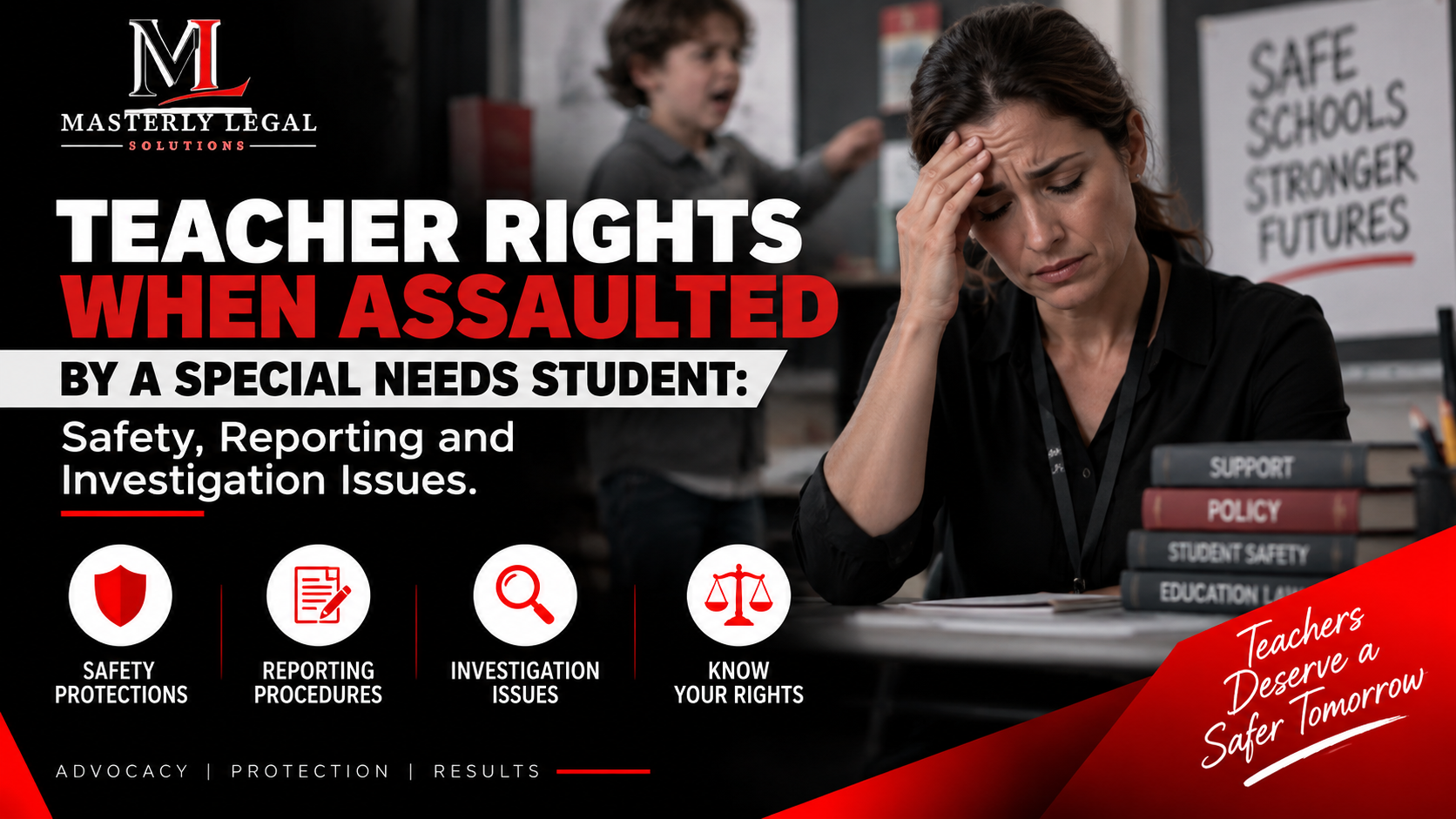
Teacher Rights When Assaulted by a Special Needs Student: Safety, Reporting and Investigation Issues


Looking for Legal & Business Solutions? Contact Us Now
Fill in the form or call us to set up a meeting