

The Evidence CPS Uses Most in Texas Investigations
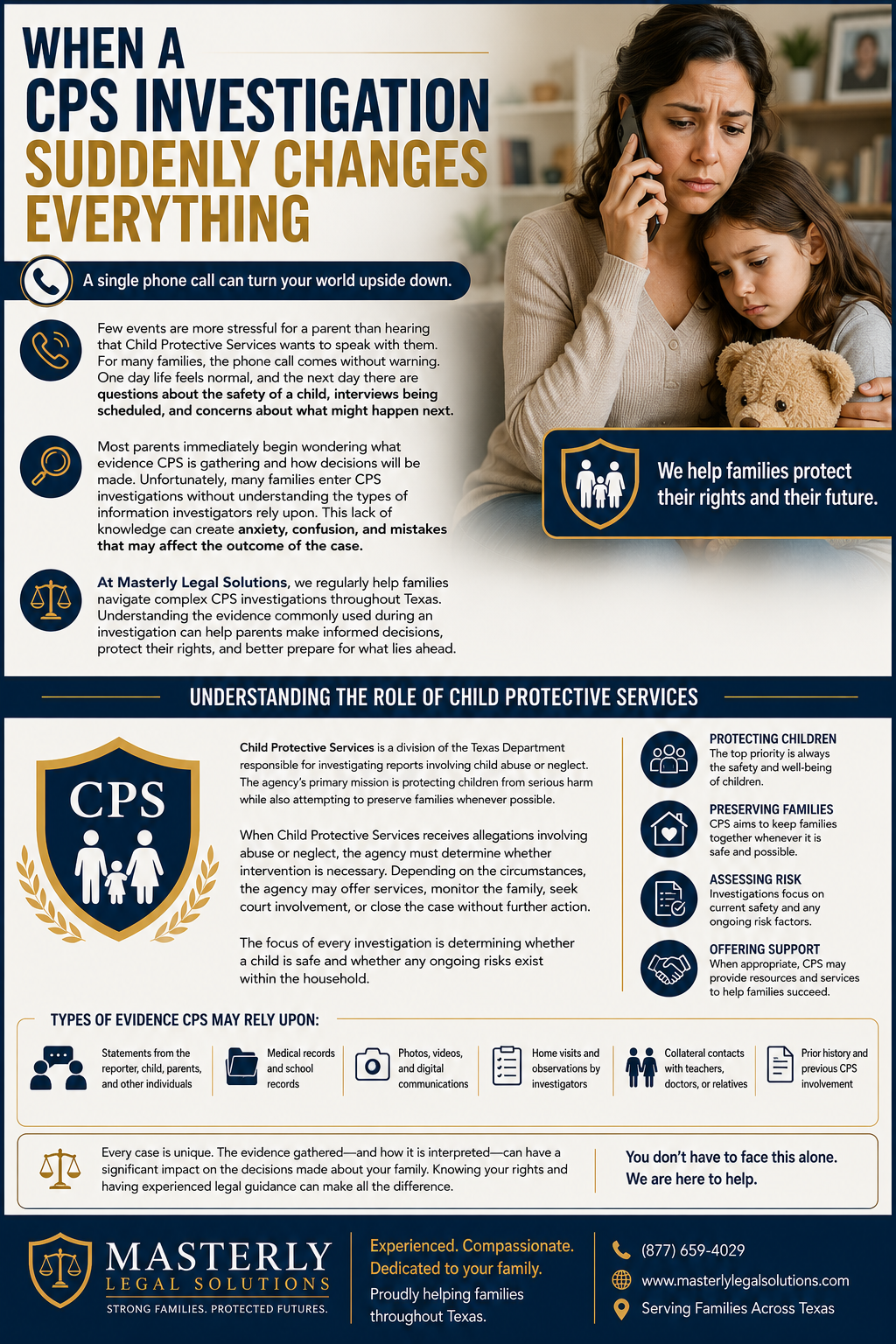
When a CPS Investigation Suddenly Changes Everything
Few events are more stressful for a parent than hearing that Child Protective Services wants to speak with them. For many families, the phone call comes without warning. One day life feels normal, and the next day there are questions about the safety of a child, interviews being scheduled, and concerns about what might happen next.
Most parents immediately begin wondering what evidence CPS is gathering and how decisions will be made. Unfortunately, many families enter CPS investigations without understanding the types of information investigators rely upon. This lack of knowledge can create anxiety, confusion, and mistakes that may affect the outcome of the case.
At Masterly Legal Solutions, we regularly help families navigate complex CPS investigations throughout Texas. Understanding the evidence commonly used during an investigation can help parents make informed decisions, protect their rights, and better prepare for what lies ahead.
Understanding the Role of Child Protective Services
Child Protective Services is a division of the Texas Department responsible for investigating reports involving child abuse or neglect. The agency's primary mission is protecting children from serious harm while also attempting to preserve families whenever possible.
When Child Protective Services receives allegations involving abuse or neglect, the agency must determine whether intervention is necessary. Depending on the circumstances, the agency may offer services, monitor the family, seek court involvement, or close the case without further action.
The focus of every investigation is determining whether a child is safe and whether any ongoing risks exist within the household.
Why Evidence Matters During CPS Investigations
Many parents assume that CPS investigations are based solely on accusations. In reality, investigators typically gather information from multiple sources before reaching conclusions.
Evidence allows CPS to evaluate allegations, assess risk factors, and determine whether additional action is necessary. The strength and reliability of that evidence often influence the direction of a CPS case.
Understanding what information investigators collect can help parents recognize the importance of documentation, preparation, and obtaining legal representation when necessary.
How CPS Investigations Usually Begin
Most CPS investigations start when someone reports suspected abuse or neglect. Reports may come from teachers, medical professionals, neighbors, family members, counselors, law enforcement officers, or other individuals who believe a child may be at risk.
Once a report is received, CPS evaluates the allegations and determines whether an investigation is warranted. If the allegations meet statutory requirements, a CPS investigator may be assigned to begin investigating allegations involving the child and family.
The severity of the allegations often influences how quickly CPS responds and the level of scrutiny involved.
The Initial Risk Assessment
One of the first steps in many CPS investigations involves a risk assessment. During this stage, CPS attempts to determine whether a child faces an immediate risk of harm.
Investigators evaluate available information to identify safety concerns and assess the likelihood that future abuse could occur. This assessment helps determine whether emergency action is necessary.
If CPS believes the child's safety may be threatened, the agency may take additional steps to protect the child while the investigation continues.
Interviews With the Child
Perhaps the most important evidence gathered during many child protective investigations comes directly from the child. Investigators often conduct interviews designed to obtain information regarding the reported incident and the child's living environment.
The child's statements can significantly influence how a CPS case develops. Investigators may ask questions about daily routines, discipline methods, household relationships, and any incidents involving alleged abuse.
The age of the child, communication abilities, and consistency of statements can all affect how investigators interpret the information provided.
Statements From Family Members
Family members are another critical source of evidence during CPS investigations. Parents, grandparents, siblings, and other individuals living in the home may be interviewed.
Investigators often compare statements from different family members to identify inconsistencies or corroborating details. These interviews may provide insight into household dynamics, parenting practices, and the overall well being of the child.
Because statements can become important evidence, families should carefully consider seeking legal counsel before participating in extensive interviews.
The Child's Home Environment
The condition of a child's home frequently plays a significant role in CPS investigations. Investigators may request access to observe the living environment and evaluate whether safety concerns exist.
Factors often considered include:
- Cleanliness of the residence.
- Availability of food.
- Sleeping arrangements.
- Utilities and basic services.
- Physical hazards.
- Supervision practices.
The child's living conditions may influence whether CPS believes neglect occurred or whether intervention is necessary to protect the child.
Physical Evidence Collected During Investigations
Physical evidence can be extremely important when allegations involve child abuse or neglect. Depending on the circumstances, investigators may review photographs, medical records, damaged property, or other tangible evidence.
For example, photographs documenting injuries may be compared with witness accounts and medical evaluations. Physical evidence often helps investigators determine whether reported events are consistent with available facts.
When physical evidence exists, it frequently becomes a significant factor in the final determination.
Medical Records and Healthcare Evidence
Medical records are among the most influential forms of evidence used during CPS investigations. Physicians, hospitals, therapists, and other healthcare providers may possess information relevant to the allegations.
Medical professionals often document injuries, behavioral concerns, developmental issues, and treatment histories. These records may help investigators evaluate whether abuse or neglect occurred.
When allegations involve serious injuries, medical evidence frequently becomes one of the most important components of the investigation.
School Records and Educational Information
Schools are often valuable sources of information during child protective services CPS investigations. Attendance records, disciplinary reports, counselor notes, and academic performance may provide insight into a child's circumstances.
Teachers and school personnel may also provide observations regarding behavior changes, emotional concerns, or indicators of possible abuse or neglect, and in some situations may themselves need legal support for school investigations and TEA license issues.
Because children spend significant time in educational settings, school-related evidence can play an important role in helping investigators assess overall safety.
Witness Statements and Independent Observations
Witness statements are commonly used to support or challenge allegations made during a CPS investigation. Witnesses may include neighbors, relatives, teachers, childcare providers, medical professionals, or other individuals familiar with the family.
Independent observations often carry significant weight because the individuals providing information may not have a direct personal interest in the outcome of the case.
Investigators frequently compare witness statements against other evidence to determine whether allegations appear credible and supported by available facts.
Social Services Records and Prior Agency Involvement
Social services records can provide important context regarding a family's history. Prior involvement with protective services, family services, or other agencies may be reviewed during the investigation.
Previous reports do not automatically establish wrongdoing. However, investigators may consider patterns, recurring concerns, and prior interventions when evaluating current allegations.
Understanding how these records are used is important because historical information sometimes influences the direction of a CPS case.
Domestic Violence as Evidence in CPS Cases
Domestic violence allegations often receive significant attention during CPS investigations. Even when a child is not the direct victim, exposure to violence within the home may create safety concerns.
Investigators frequently examine police reports, protective orders, witness accounts, and other evidence related to domestic violence incidents.
The presence of domestic violence may affect how CPS evaluates a child's safety and whether protective measures are necessary.
Why Parents Should Take Every CPS Case Seriously
Some parents assume that cooperating fully will automatically result in a favorable outcome. While cooperation is often important, parents should recognize that every statement, document, and interaction may become part of the evidence reviewed during the investigation.
A CPS case can affect parental rights, child custody arrangements, and even future court proceedings. Understanding the evidence being gathered is an important step toward protecting both your family and your legal interests.
Early guidance from family law attorneys can help families navigate the investigation process while avoiding mistakes that may complicate the case later.
Safety Plans and Why CPS Uses Them
One of the most common tools used during CPS investigations is a safety plan. A safety plan is often created when CPS believes there are concerns that need to be addressed while the investigation remains open. These plans may include restrictions on who can be around the child, requirements for supervision, or agreements regarding living arrangements.
Many parents mistakenly believe signing a safety plan is a simple formality. In reality, the terms of a safety plan can significantly affect a family's life and may influence future decisions made by Child Protective Services. Before agreeing to any plan, parents should fully understand their rights and obligations.
A safety plan may be presented as voluntary, but it can still have important consequences. Understanding how the plan fits into the larger CPS process is critical.
Interviews With the Alleged Victim
When a report involves an alleged victim, investigators generally devote substantial attention to obtaining detailed information from that child. The child's statements often become one of the most heavily relied upon pieces of evidence in a CPS case.
Investigators may conduct interviews at school, at a child advocacy center, or in another setting designed to make the child comfortable. Questions often focus on family relationships, discipline methods, daily routines, and the specific allegations being investigated.
The consistency of statements provided by the alleged victim may significantly influence how CPS evaluates the allegations.
Interviews With the Alleged Perpetrator
The alleged perpetrator is also frequently interviewed during the investigation. These interviews allow investigators to hear the accused individual's explanation and gather additional information regarding the allegations.
Many parents underestimate the importance of these conversations. Statements made during interviews can become evidence that is reviewed throughout the investigation and may later be referenced in court proceedings.
Because of the potential consequences, families often benefit from seeking legal representation before participating in extensive interviews with investigators.
Criminal History Reviews
A person's criminal history is another form of evidence commonly reviewed during CPS investigations. Investigators may examine past arrests, convictions, protective orders, or other records that could relate to child safety concerns.
A criminal history does not automatically mean a parent is unfit. However, CPS may consider whether prior conduct creates risk factors affecting the child's safety.
The nature of the offense, the amount of time that has passed, and evidence of rehabilitation often play important roles in how these records are evaluated.
When CPS Reviews Prior Neglect Reports
Investigators frequently review previous neglect reports involving the family. While prior reports do not prove that abuse or neglect occurred, they may provide context regarding recurring concerns.
Patterns can be important during child protective investigations. Multiple reports involving similar allegations may receive closer scrutiny than an isolated allegation with no prior history.
Parents should remember that even reports that were previously closed can sometimes be reviewed as part of a new investigation.
Family Assessments and Household Evaluations
Many CPS investigations include a family assessment. This process allows investigators to evaluate the overall functioning of the household and identify strengths as well as concerns.
A family assessment may examine:
- Parenting practices.
- Household relationships.
- Financial stability.
- Child supervision.
- Emotional well being.
- Access to support systems.
The goal is not simply to investigate allegations but also to understand whether the family can safely meet the child's basic needs moving forward, which may include long-term planning such as putting essential legal documents in place for the family.
Evaluating the Child's Basic Needs
Investigators carefully examine whether a child's basic needs are being met. This evaluation extends beyond food and shelter.
Factors often considered include access to healthcare, educational support, supervision, emotional care, and a stable living environment. CPS wants to determine whether the child receives appropriate care and whether additional support may be necessary.
When concerns arise regarding unmet needs, investigators may recommend services designed to improve family stability.
The Role of Community Resources and Family Services
One objective of Child Protective Services is to support families whenever possible. Rather than immediately seeking removal, investigators often evaluate whether community resources or family services can address concerns.
Services may include counseling, substance abuse treatment, parenting education, housing assistance, or other programs designed to improve household stability.
In many cases, connecting families with appropriate resources helps address safety concerns without requiring more significant intervention, and some families may also benefit from proactive trust-based estate planning services that support long-term stability for children.
Parenting Classes and Other Recommended Services
Parenting classes are among the most frequently recommended services provided during CPS investigations. These programs are often intended to help parents strengthen skills and improve family functioning.
Participation in parenting classes does not necessarily mean CPS has determined that abuse or neglect occurred. Instead, investigators may view these programs as preventive measures designed to reduce future abuse concerns, similar to how establishing powers of attorney and other protections for children can serve as proactive safeguards.
Parents should understand that participation may still become part of the evidence considered throughout the case.
Voluntary Services and Their Impact
CPS sometimes offers voluntary services to families during the investigation process. These services may be intended to address concerns identified through interviews, assessments, or evidence gathered during the investigation stage.
Although participation is described as voluntary, parents should carefully consider how accepting or declining services may affect the case. Every decision can influence how investigators assess risk and safety.
Obtaining legal counsel before agreeing to extensive services may help families understand potential implications.
Service Plans and Compliance Expectations
A service plan is often created when CPS believes specific actions are necessary to address concerns. These plans may require counseling, evaluations, treatment programs, parenting classes, or other activities.
Compliance with a service plan may affect how CPS views a family's progress. Failure to complete required services can sometimes become an issue during court hearings or other proceedings.
Because service plans can affect parental rights, families should fully understand the expectations involved before agreeing to any requirements.
How CPS Evaluates Child Custody Concerns
Child custody issues frequently arise during CPS investigations. If investigators believe a child faces substantial risks, they may evaluate whether custody arrangements need to be modified.
Evidence reviewed during this process often includes household conditions, parenting history, witness accounts, and risk assessments. The primary focus remains protecting the child's safety.
Parents involved in custody disputes should understand that CPS findings may influence future family law proceedings, including related issues such as estate planning and protecting family assets through wills and trusts.
Temporary Custody and Emergency Interventions
In some situations, CPS may seek temporary custody of a child. This generally occurs when investigators believe the child faces immediate risk or serious harm if left in the current environment.
Emergency removals are among the most serious actions available to Child Protective Services. These decisions often involve judicial oversight and may require a court order authorizing intervention.
The evidence supporting removal is usually scrutinized carefully because of the significant impact on both the child and family.
Foster Care Placement Decisions
When a child is removed from the home, foster care placement may become necessary. CPS evaluates available options while attempting to identify environments that can keep the child safe.
Investigators may consider relatives, licensed foster homes, or other approved placements. Placement decisions are influenced by the child's needs, safety concerns, and available resources.
Whenever possible, CPS generally seeks placements that maintain family connections while addressing safety risks.
Ongoing Criminal Investigations and CPS Cases
Some CPS investigations occur alongside an ongoing criminal investigation. Allegations involving physical abuse, sexual abuse, severe neglect, or other serious conduct may attract the attention of law enforcement.
When a criminal investigation is active, information may be shared between agencies. Statements made during CPS interviews can sometimes have implications beyond the protective services matter.
Families facing both CPS and criminal concerns should seek experienced attorney guidance as early as possible.
The Relationship Between Criminal Charges and CPS Findings
Criminal charges are not required for CPS to take action. Likewise, the absence of criminal charges does not automatically result in the closure of a CPS case.
The standards used in criminal cases differ from those used during CPS investigations. As a result, CPS may continue evaluating allegations even when prosecutors decline to pursue criminal charges.
Understanding this distinction is important for families attempting to navigate multiple legal processes simultaneously.
Understanding the CPS Investigation Timeline
Many parents ask about the CPS investigation timeline immediately after learning a report has been made. While every case is unique, investigations typically involve several stages including evidence gathering, interviews, assessments, and review.
The length of an investigation depends upon factors such as the complexity of allegations, availability of witnesses, and the amount of evidence that must be reviewed.
Families should understand that delays do not necessarily indicate a particular outcome. Thorough investigations often require time to complete properly.
Court Orders and Their Impact on CPS Cases
As CPS investigations progress, there are situations where Child Protective Services may seek a court order to obtain legal authority for certain actions. Court involvement often occurs when investigators believe voluntary cooperation is insufficient to address safety concerns or when immediate intervention is considered necessary.
A court order may authorize actions such as access to records, medical examinations, temporary placement decisions, or other measures related to the child's safety. Judges reviewing these requests typically consider the evidence gathered during the investigation and whether legal requirements have been satisfied.
Families should understand that court involvement significantly changes the nature of a CPS case. Once the matter enters the court system, decisions may affect parental rights, custody arrangements, and future proceedings.
How Court Hearings Influence CPS Decisions
Court hearings provide an opportunity for evidence to be reviewed and legal arguments to be presented. These proceedings often become important milestones during CPS investigations.
During court hearings, judges may consider witness testimony, records, assessments, reports, and recommendations from Child Protective Services. The court determines whether actions taken by CPS are supported by the available evidence and whether additional intervention is necessary.
Because court proceedings can have long-lasting consequences, families should strongly consider obtaining legal representation before appearing in court, particularly from counsel experienced in handling investigations and employment-related legal matters.
The Evidence CPS Relies Upon Most
Not all evidence carries the same weight during CPS investigations. While every case is different, certain forms of evidence are often viewed as particularly influential.
Some of the most commonly relied upon evidence includes:
- Statements made by the child.
- Medical records.
- Photographs of injuries or living conditions.
- Witness statements.
- School records.
- Police reports.
- Prior CPS history.
- Professional evaluations.
When multiple sources support the same allegations, CPS often considers the evidence more persuasive. Understanding which evidence receives the most attention can help families better prepare for the investigation process.
How CPS Determines Whether Abuse or Neglect Occurred
A common question parents ask is how CPS determines whether abuse or neglect occurred. Investigators evaluate all available information before reaching a finding.
This process may involve reviewing records, interviewing witnesses, examining physical evidence, and conducting risk assessments. Investigators consider both evidence supporting the allegations and evidence that may contradict them.
Ultimately, CPS decides whether the available information supports the reported concerns and whether additional protective actions are necessary to protect the child.
Understanding Administrative Closure
Not every investigation results in court involvement or ongoing services. In some situations, CPS may conclude that the allegations are unsupported or that sufficient concerns do not exist to justify further action.
When this occurs, the case may proceed toward administrative closure. Administrative closure generally means that CPS has completed investigations and determined that no additional intervention is currently necessary.
Although closure can bring relief to families, it remains important to maintain records and documentation in case future allegations arise.
The Balance Between Child Safety and Parental Rights
One of the most challenging aspects of CPS investigations is balancing a child's safety with parental rights. Both interests are extremely important and are recognized under Texas law.
Child Protective Services is responsible for protecting children from serious harm. At the same time, parents possess important legal protections that cannot be ignored simply because an allegation has been made.
Maintaining this balance requires careful evaluation of evidence, adherence to legal procedures, and respect for the rights of everyone involved.
The Texas Family Code and CPS Investigations
The Texas Family Code provides much of the legal framework governing CPS investigations and related court proceedings. These laws establish procedures, define legal standards, and outline the authority of Child Protective Services.
Understanding the Texas Family Code is important because many decisions affecting families are based upon statutory requirements. Investigators, judges, attorneys, and agencies rely upon these provisions when evaluating allegations and determining appropriate actions.
Families facing CPS investigations often benefit from guidance regarding how these laws apply to their specific circumstances.
Legal Protections Available to Families
Many parents are surprised to learn that they have important legal protections during CPS investigations. While Child Protective Services possesses significant authority, that authority is not unlimited.
Families may have rights relating to:
- Court review.
- Legal representation.
- Notice of proceedings.
- Access to certain records.
- Challenging allegations.
- Presenting evidence.
Understanding these protections can help parents make informed decisions while navigating a stressful and unfamiliar process.
Why Legal Representation Matters During CPS Investigations
The stakes involved in CPS investigations are often incredibly high. A finding of abuse or neglect can affect parental rights, employment opportunities, professional licenses, and future custody disputes.
Legal representation can help families understand the allegations, evaluate evidence, prepare for interviews, and respond appropriately to agency requests. An attorney can also help ensure that procedural protections are respected throughout the process.
Families frequently discover that early legal intervention provides greater opportunities to address concerns before a case becomes more complicated.
Family Law Attorneys and CPS Cases
Experienced family law attorneys often play a critical role during CPS investigations. These cases frequently involve issues extending beyond protective services, including custody disputes, visitation concerns, and broader family law matters, and sometimes intersect with education law issues for teachers and school administrators.
An attorney familiar with CPS procedures can help identify weaknesses in the evidence, explain available options, and advocate for the family's interests throughout the investigation.
Early involvement often allows families to make informed decisions rather than reacting to events as they unfold.
When to Seek Legal Counsel
Many parents wait until a hearing has been scheduled before seeking legal counsel. Unfortunately, valuable opportunities to protect rights may be missed during the early stages of an investigation.
Families should consider consulting an attorney as soon as they learn that a CPS case has been opened. Early guidance may help prevent misunderstandings, protect important evidence, and improve overall case strategy.
Prompt action can often make a significant difference in the outcome of a CPS investigation.
Resources Available to Families During CPS Investigations
Families facing CPS investigations may have access to various forms of assistance. Depending on the circumstances, resources may include community services, social services programs, family services, counseling, and educational programs.
Organizations such as the Texas Legal Services Center may also provide information regarding available legal aid resources for qualifying individuals, and families can also contact Masterly Legal Solutions’ Texas offices directly to discuss their situation. While every family's situation is unique, understanding available resources can help reduce stress and improve decision-making during the investigation.
Seeking help early often allows families to address concerns before they become more serious.
The Role of the Local Department During Investigations
The local department responsible for handling a CPS case plays a central role in gathering evidence, conducting interviews, and evaluating allegations. Investigators working through the local department are responsible for reviewing reports and determining what additional action may be necessary.
Although procedures are generally guided by statewide policies, individual investigations are often managed at the local department level. This means the experiences of families can vary depending upon the personnel involved and the specific circumstances of the case.
Understanding how the local department operates can help families navigate the process more effectively.
Protecting Your Family During a CPS Investigation
A CPS investigation can be one of the most stressful events a family experiences. Questions about the future, concerns regarding a child, and uncertainty about the investigation often create significant emotional strain.
The most effective approach is to remain informed, understand your rights, preserve important documentation, and seek qualified guidance when necessary. Decisions made during the early stages of a CPS case can affect a family's life long after the investigation has ended.
Being proactive rather than reactive often places families in a stronger position throughout the process.
Understanding Written Notice and Available Support During the CPS Investigation Process
One of the first questions many parents have is what happens after Child Protective Services opens a case. The CPS investigation process often begins with contact from an investigator, followed by interviews, evidence collection, and an evaluation of potential safety concerns. In many situations, parents may receive written notice explaining certain aspects of the investigation, their rights, upcoming meetings, or actions being considered by the agency. Reviewing all communications carefully is important because deadlines, requests for information, and procedural details may affect the direction of the case.
While an investigation can feel overwhelming, families should remember that resources may be available to help them navigate the situation. Depending on the circumstances, CPS may recommend or connect families with family and community resources designed to address concerns and strengthen household stability. These resources can include counseling programs, parenting education, housing assistance, substance abuse treatment, childcare support, and other services intended to improve the child's safety and overall well-being. Understanding the investigation process and taking advantage of available support services can often help families respond more effectively while working toward a positive resolution.
Speak With Masterly Legal Solutions About CPS Investigations
If your family is facing a CPS investigation, you do not have to navigate the process alone. Allegations involving child abuse, abuse or neglect, custody concerns, safety plans, or court proceedings can create significant uncertainty and stress. Understanding the evidence being gathered and knowing how to respond can make a meaningful difference in protecting both your family and your future.
At Masterly Legal Solutions, we help families facing CPS investigations throughout Texas. Our team understands the challenges involved when Child Protective Services becomes involved in your life, and we are committed to helping parents understand their rights, evaluate their options, and protect their families.
Contact Masterly Legal Solutions today at (972) 236-5051 for a free consultation. We can answer your questions, discuss your concerns, and help you understand the next steps available in your specific situation. The decisions made during a CPS case can have lasting consequences, and obtaining guidance early may help protect what matters most.
Disclaimer: This article is provided for informational and educational purposes only. It is not legal advice and does not create an attorney-client relationship. Every CPS investigation involves unique facts and circumstances, and outcomes vary from case to case. Individuals facing CPS investigations or related legal matters should consult with a qualified attorney regarding their specific situation before making legal decisions or taking action.






Looking for Legal & Business Solutions? Contact Us Now
Fill in the form or call us to set up a meeting