

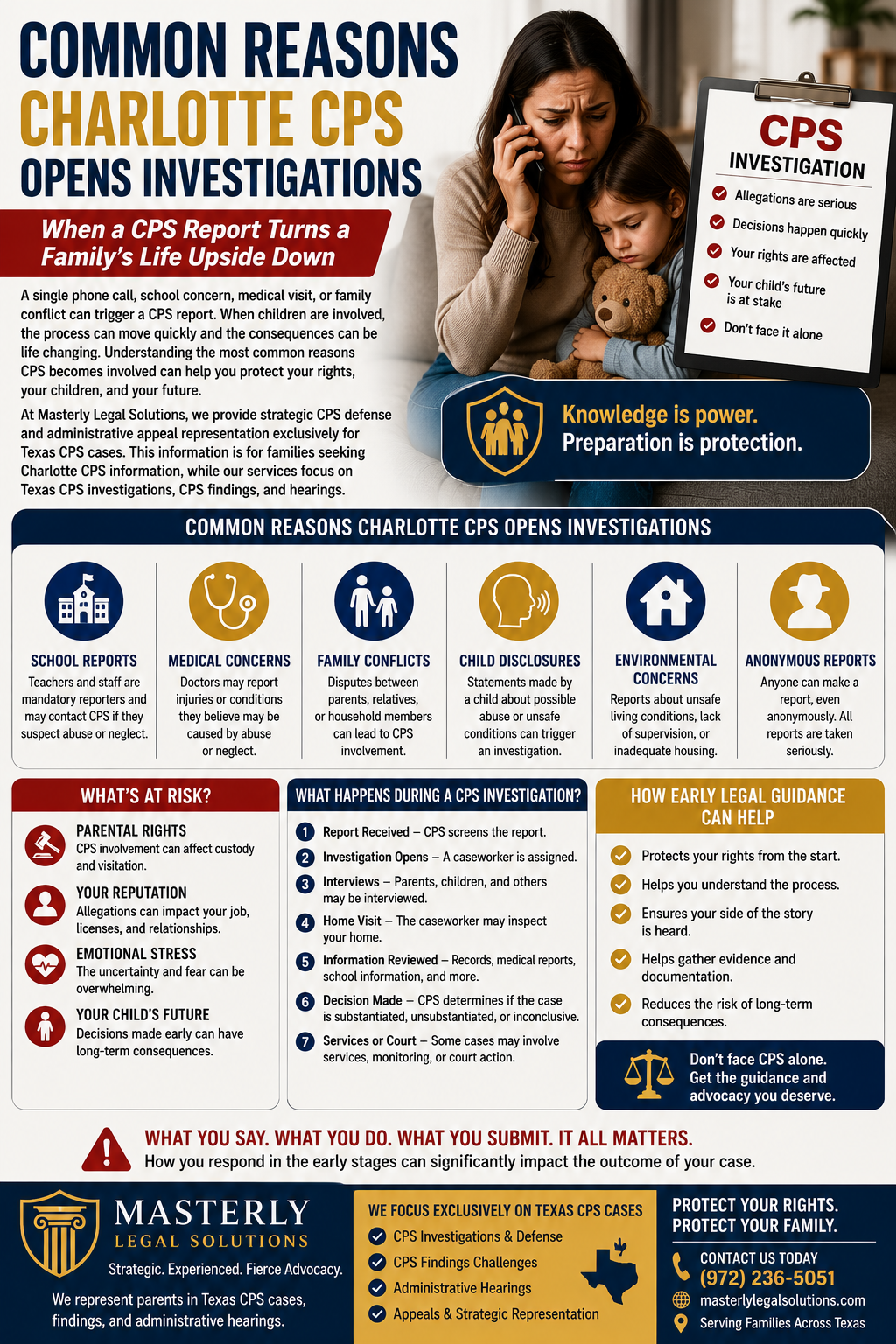
Common Reasons Charlotte CPS Opens Investigations
When a CPS Report Turns a Family’s Life Upside Down
Few moments feel more personal or frightening than learning that CPS has received a report about your family. Parents may feel confused, embarrassed, angry, or afraid, especially when they believe the allegations are false or exaggerated. A single phone call, school concern, medical visit, or family conflict can suddenly place parents under investigation. When children are involved, the process can move quickly, and the decisions made early may affect custody, reputation, employment, and parental rights.
For many families searching for charlotte cps information, the goal is not just to understand what CPS does. They want to know why CPS became involved, what happens next, and how to protect their family before the situation becomes worse. At Masterly Legal Solutions, our law firm provides strategic CPS defense and administrative appeal representation exclusively for Texas CPS cases. While this article discusses common issues people search for when looking up CPS Charlotte NC, our services focus on Texas CPS investigations, CPS findings, administrative hearings, and helping parents respond with preparation instead of panic.
What Child Protective Services Does
Child protective services is responsible for reviewing reports involving suspected child abuse, neglect, or safety concerns. The purpose of child protective services is to protect children from serious harm while also considering whether families can safely remain together. CPS may become involved when a report suggests that a parent, guardian, caretaker, or other person responsible for a child may have placed that child at risk. These cases are serious because even an initial referral can lead to interviews, home visits, safety plans, and court involvement.
Child protective services cps investigations often begin before parents fully understand what has been reported. A cps worker or social worker may contact the parents, visit the home, speak with children, or request documents. Parents sometimes assume that cooperation alone will make the matter disappear, but CPS may already be gathering evidence from schools, doctors, relatives, and others. That is why early knowledge and legal preparation are important.
Why CPS Opens Investigations
CPS opens an investigation when a report raises concerns about abuse or neglect. The report does not have to prove that child abuse occurred before CPS becomes involved. It only has to describe facts that may suggest children are unsafe, neglected, harmed, or at high risk. This is why families can be investigated even when they strongly disagree with the allegations.
When cps receives a report, the agency reviews the information and determines whether it meets the threshold for further action. In some cases, the report is screened out. In other cases, CPS opens a cps investigation and begins contacting people involved with the children. Once that process begins, parents should take the matter seriously, even if they believe the report came from a misunderstanding.
Reports of Suspected Child Abuse
One of the most common reasons CPS opens investigations is suspected child abuse. This may include concerns about physical harm, discipline, bruises, injuries, threats, or behavior that someone believes placed children in danger. A school employee, doctor, neighbor, relative, or police officer may file a report if they believe child abuse may have occurred. Sometimes, the report is based on direct observation, while other times it comes from something a child said.
Not every injury constitutes child abuse, and not every concern is accurate. Children fall, play roughly, and sometimes explain injuries in ways that create confusion. However, once CPS becomes involved, parents must be careful about how they respond. A rushed explanation, emotional reaction, or inconsistent statement may create more concern than the original allegation.
Allegations of Neglect
Neglect is another major reason CPS opens investigations. Neglect may involve claims that parents failed to provide care, supervision, food, shelter, medical attention, education, or a safe environment. Reports of neglect can be especially complicated because families may be facing financial stress, housing problems, health challenges, or misunderstandings about parenting decisions. CPS may investigate whether the children’s needs are being met and whether the home environment is safe.
Parents should understand that neglect allegations do not always mean intentional wrongdoing. Sometimes a report is based on incomplete information from a school, neighbor, medical provider, or relative. However, allegations of abuse or neglect can still lead to serious consequences. Parents should respond with organization, documentation, and a clear understanding of the process.
School Reports and Mandatory Concerns
Schools are a common source of CPS reports. Teachers, counselors, nurses, coaches, and administrators may report concerns when they believe children may be experiencing abuse or neglect. A school may contact CPS because of frequent absences, unexplained injuries, concerning statements, hygiene issues, behavior changes, or signs of emotional distress. These reports can quickly lead to a cps investigation because schools often interact with children daily.
Parents may feel blindsided when a school report leads to CPS involvement. They may believe the school misunderstood the situation or failed to contact them first. Even if the report is based on incomplete knowledge, CPS may still investigate the circumstances. Parents should avoid reacting angrily toward school staff and instead focus on gathering records, attendance information, medical notes, and other evidence that may help explain the situation.
Medical Concerns and Health-Related Reports
Medical professionals may file a report when they believe a child’s health or safety is at risk. This may involve injuries, missed medical appointments, delayed treatment, concerns about medication, or suspected child abuse. A medical report may carry significant weight because doctors, nurses, and hospital staff are often viewed as credible reporters. CPS may investigate whether the parents are able to meet the child’s health needs.
Some cases involve genuine medical misunderstandings. Parents may seek a second opinion, choose a different treatment path, or struggle with transportation, insurance, or communication. Those facts matter, but they must be presented clearly. When medical issues are involved, parents should keep records, appointment notes, prescriptions, discharge paperwork, and written explanations from healthcare providers.
Domestic Violence in the Home
Domestic violence can trigger CPS involvement even when the children were not physically harmed. CPS may investigate whether children witnessed violence, heard threats, were placed in danger, or experienced emotional harm because of conflict in the home. A report may come from police, relatives, neighbors, school staff, or one of the parents. When domestic violence is mentioned, CPS may view the situation as a safety concern for the children.
These cases can be painful because the non-offending parent may feel blamed for circumstances they were trying to survive. CPS may still ask what steps were taken to protect the children and whether the home remains safe. Parents should understand that domestic violence allegations can affect custody, safety planning, and court intervention. Legal guidance can help parents explain the circumstances without making statements that may later be misunderstood.
Substance Abuse Concerns
CPS may open an investigation when a report alleges substance abuse by a parent, guardian, or caretaker. Concerns may involve alcohol misuse, illegal drugs, prescription medication abuse, impaired supervision, unsafe storage, or drug activity in the home. These reports may come from police, hospitals, schools, relatives, or former partners. CPS may investigate whether the children were exposed to harm or whether the parent can safely provide care.
Substance abuse allegations can quickly become serious because CPS may request testing, treatment, safety planning, or supervision changes. Parents who deny the allegations should still treat the matter carefully. Refusing requests without understanding the consequences can create additional problems. Parents should consult an attorney before making major decisions that may affect custody or parental rights.
Unsafe Living Conditions
Reports about unsafe living conditions can also lead to CPS investigations. These may include concerns about utilities, sanitation, hazardous items, lack of food, dangerous people in the home, unsafe sleeping arrangements, or lack of security. CPS may inspect the home to determine whether children are living in a safe environment. The agency may also ask whether parents have resources, support, and stable housing.
Not every messy home is neglect, and not every temporary hardship means children are unsafe. Families may experience sudden job loss, illness, repairs, or financial emergencies. However, CPS may still require proof that the home is safe and that parents can meet the children’s needs. Taking photos, saving receipts, documenting repairs, and identifying support from relatives may be helpful.
Lack of Supervision
Supervision concerns are another common reason CPS opens investigations. Reports may involve young children left alone, children wandering outside, unsafe caregivers, lack of childcare, or older siblings caring for younger children in questionable circumstances. CPS may consider the age of the children, maturity level, neighborhood safety, length of time alone, and whether harm occurred. These cases often depend heavily on specific facts.
Parents may believe the report is unfair because they were dealing with work, emergencies, transportation problems, or childcare challenges. However, CPS may focus on whether the children were placed at risk. A cps worker may ask who was watching the children, how long they were unsupervised, and whether there is a plan to prevent future concerns. Parents should respond with practical solutions, not just frustration.
Reports From Relatives or Family Members
Family members and relatives sometimes make CPS reports during disputes, separations, custody conflicts, or disagreements over parenting. A grandparent, sibling, former partner, or other relative may believe children are unsafe or may use CPS involvement as leverage in a family conflict. Whether the report is sincere or exaggerated, CPS may still investigate. Parents should not assume the agency will immediately recognize a false motive.
When relatives are involved, emotions often run high. Parents may want to confront the person they believe filed the report. That can make the situation worse. Instead, parents should focus on facts, evidence, documentation, and how to protect the children’s best interests.
Custody Disputes and CPS Referrals
CPS investigations sometimes arise during custody disputes. One parent may accuse the other of abuse or neglect, unsafe supervision, substance use, domestic violence, or poor living conditions. These allegations can affect legal custody, visitation, and court proceedings. Even if CPS does not remove children, the report may influence how the court views the family situation.
Parents involved in custody disputes must be especially careful. Statements made during the CPS process may later appear in custody litigation. A court order may also affect where children live, who supervises visits, and what services parents must complete. An attorney can help parents understand how CPS, custody, and court issues may overlap.
Allegations of Sexual Abuse
Sexual abuse allegations are among the most serious reasons CPS opens investigations. These cases may involve CPS, police, local law enforcement, forensic interviewers, medical professionals, and the court system. The investigation may focus on who had access to the children, what the children disclosed, whether there is evidence, and whether immediate safety steps are needed. Parents and caregivers should never treat these allegations casually.
Even false allegations can cause lasting harm to a family’s reputation and relationships. These cases often involve sensitive interviews and strict procedures. A person accused of alleged abuse should avoid giving unprepared statements. Legal representation is critical when the allegations involve sexual abuse, exploitation, or possible criminal exposure.
Emotional Harm and Mental Injury
CPS may investigate reports involving emotional abuse, threats, intimidation, or conduct that allegedly caused mental injury. These cases can be difficult because emotional harm is not always visible. A report may come from a counselor, school, medical provider, relative, or another concerned person. CPS may examine whether children have experienced fear, trauma, anxiety, or emotional distress connected to the home environment.
Parents may disagree with how their parenting style has been described. Discipline, household conflict, and communication problems can be misinterpreted. However, CPS may still investigate whether the children’s well being has been affected. Parents should be prepared to provide context, counseling records if appropriate, and evidence of a stable home environment.
Dependency Concerns
Some CPS cases involve dependency rather than intentional abuse. A dependency concern may arise when parents, guardians, or custodians are unable to provide care or supervision and there is no safe alternative arrangement. This can happen because of hospitalization, incarceration, abandonment, severe mental health concerns, or other emergency circumstances. CPS may investigate whether children need temporary protection or services.
These situations are often heartbreaking because the issue may not be a lack of love. A parent may be dealing with a crisis and need help stabilizing the situation. However, CPS may still seek protective services if children do not have safe care. Parents should act quickly to identify safe relatives, guardians, documentation, and a plan for the children.
Prior CPS History or Criminal Background
CPS may review prior CPS history or criminal background when evaluating a new report. A past case does not automatically mean current abuse or neglect occurred. However, prior findings, repeated referrals, or certain criminal concerns may affect how CPS views risk. This can make the investigation feel more intense from the beginning.
Parents with prior CPS involvement should be especially prepared. The agency may compare current allegations to past concerns. A cps worker may ask about previous services, safety plans, court orders, or case outcomes. Parents should avoid minimizing the history and instead be ready to explain what changed, what services were completed, and why the children are safe now.
What Happens After CPS Receives a Report
After cps receives a report, the agency reviews the information to decide whether it should open a case. If accepted, CPS may assign a social worker or cps worker to begin the investigation. The worker may contact parents, interview children, visit the home, speak with school staff, review medical records, and contact relatives. The goal is to determine whether abuse or neglect occurred and whether children are safe.
Parents should remember that the first contact is important. A calm, prepared response can help prevent unnecessary confusion. However, parents should also understand their rights before giving detailed statements. If CPS is investigating your family, speaking with an attorney early can help you avoid mistakes that may affect the outcome.
Why CPS May Speak With Children
CPS may speak with children as part of the investigation. A social worker may ask children about their home, discipline, safety, school, health, and relationships with adults in the household. Depending on the situation, interviews may happen at school, home, or another setting. Parents often feel uncomfortable when children are interviewed without them present.
These interviews can be stressful because children may misunderstand questions or feel pressure to answer. A child may also use words that adults interpret differently than intended. Parents should not coach children, pressure them, or punish them for speaking with CPS. Instead, they should seek legal guidance and focus on protecting the integrity of the process.
Home Visits and Safety Assessments
A home visit is common in many CPS investigations. During the visit, a cps worker or social worker may look at sleeping areas, food availability, cleanliness, utilities, medications, hazards, and general safety. The worker may also observe how parents interact with children. These observations may become part of the file.
Parents should take home visits seriously without panicking. A clean, safe, organized environment can help reduce concerns, but the visit is not just about appearances. CPS may also evaluate supervision, household members, and whether the children appear safe. If concerns exist, parents should document steps taken to correct them.
When CPS Requests a Safety Plan
CPS may ask parents to agree to a safety plan when the agency believes immediate concerns need to be addressed. A safety plan may involve supervision, temporary placement with relatives, restrictions on contact with certain people, or requirements that parents complete services. Although a safety plan may seem informal, it can have major practical consequences. Parents should understand what they are agreeing to before signing or verbally accepting terms.
A safety plan can affect custody, visitation, household routines, and parental rights. In some situations, agreeing too quickly can create problems later. In other cases, refusing without a strategy can escalate the matter. An attorney can help parents evaluate whether the proposed plan is reasonable and how it may affect the broader investigation.
Court Intervention and Court Orders
Some CPS cases lead to court intervention. This may happen when CPS believes children face immediate danger, when parents refuse certain safety measures, or when the agency seeks authority from the court. A court order may require parents to complete services, follow visitation rules, submit to evaluations, or comply with placement restrictions. Violating a court order can create serious consequences.
Court involvement often raises the stakes. Parents may be expected to appear at hearings, respond to allegations, and follow deadlines. A second court order may later modify custody, services, or placement depending on the circumstances. Parents should not walk into court alone if they do not understand the process.
Protective Custody and Emergency Removal
Protective custody may occur when CPS believes children cannot safely remain in the home. This is one of the most frightening outcomes for parents. Removal may happen quickly, especially if CPS claims there is a risk of serious harm. The agency may place children with relatives, foster caregivers, or another approved placement.
Parents should act quickly if protective custody becomes a possibility. Emergency removal can affect children emotionally and disrupt family stability. The court may review the situation and decide whether the children should remain outside the home while the investigation continues. A lawyer can help parents prepare for hearings, gather evidence, and seek a path toward reunification when appropriate.
CPS Requirements Parents May Face
During a CPS investigation, parents may be asked to complete certain cps requirements. These may include parenting classes, counseling, drug testing, psychological evaluations, domestic violence services, home repairs, or supervised visitation. Some requirements may be voluntary, while others may be connected to a court order. Parents should clarify whether the requirement is optional, recommended, or mandatory.
Completing services may help show cooperation, but parents should understand how the requirements fit into the case. Agreeing to unnecessary or poorly explained services may create confusion. Refusing services may also be used against the parents. This is why legal knowledge and strategy matter during CPS cases.
How Evidence Shapes the Investigation
Evidence plays a major role in CPS decisions. Evidence may include photographs, school records, medical records, police reports, text messages, witness statements, home conditions, counseling notes, and prior CPS file information. Parents should not rely only on verbal explanations. Written documentation often carries more weight.
Parents should begin organizing helpful evidence as soon as they learn they are being investigated. This may include proof of medical care, school communication, childcare arrangements, home repairs, employment schedules, and supportive relatives. Evidence can help correct misunderstandings and provide context. A prepared attorney can help identify what information may strengthen the response.
CPS Findings and Long-Term Consequences
At the end of an investigation, CPS may issue cps findings based on the information gathered. Findings can matter long after the investigation ends. Depending on the state and type of case, findings may affect employment, professional licensing, childcare work, foster care approval, adoption, volunteering, and future investigations. Parents should not assume the case is harmless simply because children were not removed.
Masterly Legal Solutions focuses on Texas CPS defense and administrative appeal representation as part of a broader set of legal services aimed at maximizing client satisfaction. In Texas, certain CPS findings may be challenged through administrative processes, including administrative hearings or reviews when available. This is one reason parents should contact a law firm early, before deadlines are missed. Once findings are made, the strategy may shift from investigation defense to appeal preparation.
Administrative Hearings and Appeals
Administrative hearings can be critical when a person wants to challenge certain CPS findings. These proceedings are different from general family court hearings and may involve agency records, investigative conclusions, deadlines, and specific legal standards. Parents, caregivers, and professionals may need to show why the finding is unsupported, incomplete, or inaccurate. Preparation matters because the file may contain statements, reports, and evidence gathered throughout the investigation.
A strong administrative appeal begins before the hearing date. It often requires reviewing the CPS file, identifying weaknesses, gathering documents, and preparing testimony. Masterly Legal Solutions helps clients in Texas CPS cases approach these matters strategically and professionally, and families can use the firm’s Texas office locations and contact information to reach out for help. The goal is to protect rights, reputation, and future opportunities.
Why Parents Should Not Ignore CPS Contact
Some parents avoid CPS because they are scared, angry, or convinced the report is false. Ignoring CPS contact can make the situation worse. The agency may interpret silence as lack of cooperation or concern. In some cases, failure to respond may lead CPS to seek court involvement.
Parents should respond carefully, not impulsively. They should avoid hostile messages, social media posts, or conversations that may be used against them. The better approach is to consult an attorney, understand the allegations, and prepare a clear response. CPS matters require urgency, but urgency does not mean panic.
The Role of an Attorney During a CPS Investigation
An attorney can help parents understand what CPS is asking, what rights they have, and how to respond without creating unnecessary risk. A CPS attorney may help prepare parents for interviews, organize evidence, review safety plans, and communicate with the agency. Legal guidance can also help parents understand when a request may affect custody, court involvement, or future findings. This support can be especially important when allegations involve abuse, neglect, domestic violence, or substance abuse.
Parents often wait until the case becomes serious before contacting an attorney. By then, statements may already be in the file, deadlines may be approaching, and CPS may have formed opinions. Early attorney involvement can help protect the family from preventable mistakes. When children, custody, and reputation are at stake, preparation is not optional.
How a Law Firm Helps Families Stay Focused
A law firm can help families move from fear to strategy. CPS investigations are emotional, but the response must be organized, factual, and timely. Parents need to know what to say, what not to say, what documents to gather, and how to avoid making the situation worse. A law firm with CPS experience can help parents focus on the steps that matter most.
Masterly Legal Solutions provides calm, proactive guidance for Texas CPS cases. Our approach is not fear-driven or litigation-heavy. We focus on investigation strategy, administrative defense, rights protection, and careful preparation, backed by comprehensive legal and business services that support clients beyond CPS matters. Families deserve legal support that treats the matter seriously without creating unnecessary conflict.
Common Mistakes Parents Make During CPS Cases
Parents often make mistakes because they are overwhelmed and trying to protect their children. Unfortunately, even well-meaning actions can create problems. A parent may speak without preparation, sign a safety plan without understanding it, contact the reporter angrily, or fail to keep records. These mistakes can affect how CPS views the family.
Common mistakes include:
- Giving long emotional statements without knowing the allegations
- Refusing all communication without legal advice
- Posting about the case online
- Failing to document medical, school, or childcare records
- Ignoring a court order or agency deadline
- Assuming false allegations will disappear on their own
The best response is usually calm, prepared, and guided by knowledge.
When Police or Criminal Issues Are Involved
Some CPS investigations overlap with police involvement. This may happen when allegations involve physical abuse, sexual abuse, exploitation, severe neglect, domestic violence, or serious injury. Local law enforcement may investigate whether a crime occurred while CPS investigates child safety. Parents must understand that statements made in one process may affect another.
When criminal exposure is possible, parents should not guess their way through the process. A person accused of harming children needs to protect legal rights immediately. Even if the parent believes the allegation is false, the investigation may still move forward. An attorney can help parents understand the risks and avoid damaging statements.
How CPS Cases Affect Professionals
CPS cases can affect more than parents. Teachers, nurses, childcare workers, foster parents, coaches, counselors, and other professionals may face career consequences if they are investigated. A CPS finding may affect employment, background checks, licensing, or professional reputation. These cases require careful handling because the impact may reach far beyond the home.
Masterly Legal Solutions assists professionals in Texas CPS matters involving investigations and administrative appeals. We understand that a CPS file can affect a person’s future, including their role in workplaces that may already rely on our legal services for organizations and internal investigations. Professionals need to respond with documentation, preparation, and a strategy tailored to the allegations. Protecting your name may be just as important as resolving the immediate case.
Why the Best Interests of Children Matter
CPS, courts, and child welfare services often focus on the best interests of children. This means decisions may be based on safety, stability, emotional needs, health, family relationships, and long-term well-being. Parents should frame their response around how they protect and care for their children, which can include proactive steps like establishing powers of attorney and legal planning for children. Anger toward CPS may be understandable, but it is rarely the most helpful message.
Parents should show that they are focused on the children’s needs. This may include stable housing, school attendance, medical care, emotional support, safe supervision, and appropriate relatives when needed. For employers and organizations supporting families, maintaining compliant workplaces through HR consulting services and training and ongoing general counsel services for businesses can indirectly support children’s stability as well. The best interests standard can influence custody, services, and court decisions. A prepared response helps parents demonstrate that their children are safe and supported.
Why Urgency Matters
CPS investigations move quickly. The agency may interview children, contact relatives, review records, and create a file before parents fully understand the report. A cps worker may form early impressions based on limited information. Those early impressions can influence the direction of the investigation.
Parents should act quickly when CPS contacts them. Waiting can allow misunderstandings to grow and evidence to become harder to gather. Quick action does not mean making rushed decisions. It means contacting an attorney, learning your rights, organizing documents, and responding with purpose.
How Masterly Legal Solutions Assists With Texas CPS Matters
Masterly Legal Solutions provides strategic CPS defense and administrative appeal representation exclusively for Texas CPS cases. We help parents, caregivers, and professionals navigate investigations, respond to allegations, protect parental rights, and prepare for agency decisions, drawing on our broader role as a Texas-based law firm offering a wide range of legal and business services. Our work is focused on clarity, preparation, and professional legal representation. We help clients understand the process instead of feeling controlled by fear.
Although this article addresses common questions people may search for using the phrase Charlotte CPS, Masterly Legal Solutions represents clients in Texas CPS matters. If your case is in Texas, we can help you understand CPS requirements, investigation concerns, administrative appeal options, and how to respond appropriately. We take these matters seriously because CPS involvement can affect children, family stability, custody, employment, and reputation. Our goal is to help clients move forward with a clear plan.
Understanding the Goal of Child Protection Investigations
The primary objective of any CPS investigation is child protection. Agencies responsible for investigating reports are tasked with determining whether children are safe and whether intervention is necessary to prevent future harm. While the goal is to protect children from dangerous situations, parents often find the investigation process stressful and confusing. Understanding that child protection efforts focus on safety concerns can help families better prepare for interviews, documentation requests, and other steps that may occur during the investigation.
How Social Services Become Involved in Family Matters
Many families first encounter social services after a report is made to CPS regarding concerns about a child's well-being. Social services professionals may gather information, conduct interviews, review records, and evaluate living conditions to determine whether additional action is needed. Although these investigations are intended to address safety concerns, the process can feel overwhelming for parents who have never been involved with CPS before. Knowing how social services operate and what information they may review can help families respond more effectively when questions arise, just as businesses benefit from comprehensive business consulting services when navigating complex organizational challenges.
What CPS Looks for in Child Abuse or Neglect Investigations
When investigating allegations of child abuse or neglect, CPS examines a wide range of factors to determine whether children may be at risk. Investigators often review evidence, speak with parents and children, interview witnesses, and assess the overall home environment. Reports involving child abuse or neglect may stem from concerns raised by schools, healthcare providers, relatives, neighbors, or other individuals who believe a child could be in danger. Because these investigations can have significant consequences for a family, parents should take every allegation seriously and understand their rights throughout the process, including how CPS findings might interact with personalized estate planning, wills, and trusts designed to protect their children’s long-term stability.
Contact Masterly Legal Solutions for a Free Consultation
If CPS has contacted you, opened an investigation, or issued findings against you in Texas, do not wait until the situation becomes harder to manage. Early guidance can help you understand your rights, avoid preventable mistakes, and prepare for the next step. Whether the report involves child abuse, neglect, abuse or neglect, custody concerns, domestic violence, medical issues, or questions about child safety, Masterly Legal Solutions is ready to help you evaluate your options and can be reached using their Texas CPS contact details and office locations.
Contact Masterly Legal Solutions at (972) 236-5051 for a free consultation. We can answer your questions, explain how Texas CPS investigations and administrative appeals work, and help you determine what steps may be appropriate for your situation. You do not have to face CPS alone or rely on guesswork during a process that can affect your family’s future. A prepared response can make a meaningful difference.
Take CPS Involvement Seriously Before It Escalates
A CPS investigation can begin with one report, one conversation, or one misunderstanding. However, once the agency becomes involved, the process can affect children, parents, relatives, custody, court proceedings, and long-term records. The sooner parents understand the allegations and begin preparing, the better positioned they may be to respond. Waiting too long can leave families reacting to decisions that have already been made.
Masterly Legal Solutions believes families deserve guidance that is practical, calm, and focused on protecting rights. CPS cases require urgency, but they also require strategy. If your Texas family is being investigated, or if you are concerned about CPS findings, contact our law firm before the matter moves further out of your control.
Disclaimer: This article is for informational and educational purposes only and is not legal guidance or legal advice. Reading this article does not create an attorney-client relationship with Masterly Legal Solutions. CPS laws and procedures vary by state, and Masterly Legal Solutions provides CPS defense and administrative appeal representation exclusively for Texas CPS cases. If you need advice about your specific situation, contact a qualified attorney directly.





Looking for Legal & Business Solutions? Contact Us Now
Fill in the form or call us to set up a meeting