

The TEA Investigation Timeline: What Teachers Should Expect and When to Call a Lawyer
When a Simple Complaint Turns Into Something Bigger
For many educators, the moment a complaint is filed can feel confusing and deeply personal. One day you are focused on your students, and the next, you are the subject of a formal investigation. In Dallas Fort Worth school districts, these situations often begin quietly but can quickly escalate into serious professional risks.
What many teachers do not realize is that timing matters. Every response, every document, and every interaction with an employer or manager can influence the outcome. Understanding the timeline is not just helpful—it can help you protect your career and avoid long-term consequences.
Why Timing Is Critical in TEA Investigations
A TEA investigation follows a structured process, but it does not always feel predictable from the outside. There are deadlines, interviews, and requests for records that can come quickly. Missing even one step or responding without preparation can create a negative impact on your case.
Teachers who act early often have more control over the situation. Those who wait may find themselves reacting instead of planning. This is where understanding when to involve legal assistance becomes essential.
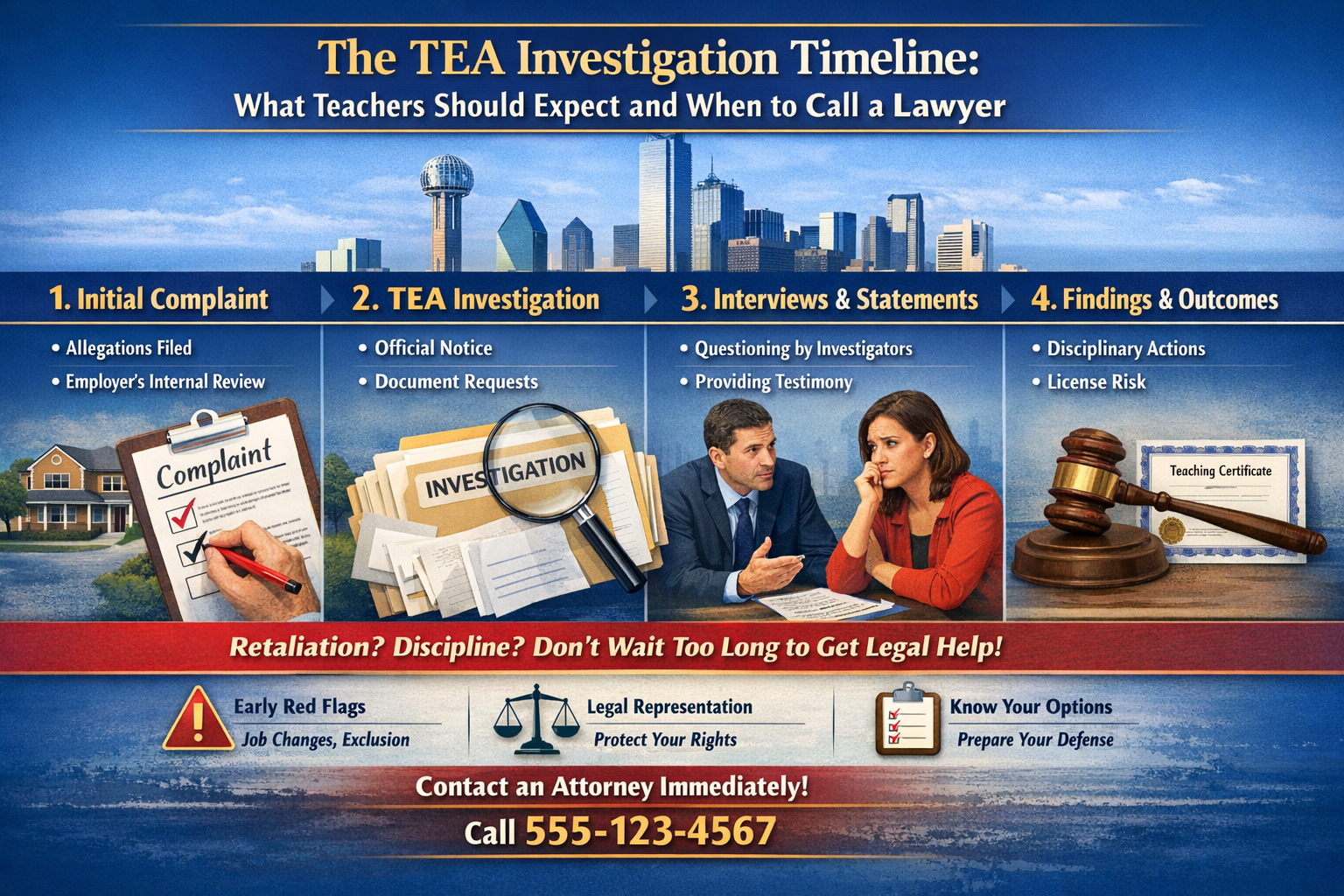
The First Stage: The Initial Complaint
What Triggers a Complaint
A TEA case usually starts when someone files a complaint. This could come from a parent, student, coworker, or even a supervisor. The allegations may involve harassment, discrimination, or concerns about professional conduct.
In some cases, the complaint may relate to a protected activity, such as reporting misconduct or raising concerns about wages, overtime pay, or working conditions. When this happens, there is also a risk that retaliation occurs shortly after.
How Employers Respond First
Once a complaint is made, the employer or school administration typically begins an internal review, which may resemble broader internal investigations in education and workplace settings. This may involve gathering statements, reviewing emails, or interviewing other workers.
During this stage, an employee may already begin to feel pressure. They may be placed in a less desirable position, reassigned, or removed from certain leadership roles. These changes can signal potential adverse action, especially if they follow a protected activity.
Recognizing Early Warning Signs
Not every investigation starts with a formal notice. Sometimes, the first signs are subtle changes in the workplace.
Examples of Early Red Flags
- A manager suddenly limiting your responsibilities or other signs that call for legal protection for teachers facing discipline
- Being excluded from meetings or decisions
- A shift to a less desirable position without explanation
- Increased scrutiny from a supervisor
- Being treated differently than other workers
These situations may seem minor, but they can indicate that retaliation is beginning to take shape.
The Second Stage: Formal TEA Investigation Begins
Notification and Documentation Requests
Once TEA becomes involved, the process becomes more formal. You may receive notice that you are under investigation and be asked to provide records or statements.
This is where many educators feel overwhelmed. The request for additional information can be extensive, and how you respond can affect the entire case. Many teachers benefit from following immediate steps after a TEA investigation notice, and at this point, it is often wise to contact an attorney for guidance.
Why Documentation Matters
Documentation is critical in determining whether a violation occurred. Your records may help determine whether the allegations are supported or whether they are based on misunderstandings.
For example, emails, lesson plans, and communication logs can show context that might otherwise be missing. Without proper organization, important details can be overlooked.
The Role of Protected Activity in Your Case
What Counts as Protected Activity
A protected activity includes actions such as reporting discrimination, participating in an investigation, or raising concerns about workplace issues, and understanding how education law attorneys protect teacher rights can be critical at this stage.
Other related protected activity may include:
- Reporting harassment or unsafe conditions
- Filing a wage complaint about overtime pay or unpaid wages
- Requesting accommodations for a disability
- Taking FMLA leave or requesting job protected leave
These actions are legally protected under both state laws and federal regulations.
Why It Matters in a TEA Investigation
If your case involves a protected activity, it changes how the situation is evaluated. Any adverse action taken by an employer afterward may be considered retaliation.
For a reasonable employee, even subtle changes—like reduced work hours or loss of a desirable position—can have a negative impact and may qualify as unlawful conduct.
When Retaliation Occurs During the Process
Understanding Retaliation in Real Situations
Retaliation occurs when an employer takes action against an employee for engaging in a protected activity. This can happen at any stage of the investigation.
Examples of retaliation include:
- Being demoted to a less desirable position
- Losing paid time or benefits
- Facing disciplinary action after filing a complaint
- Being reassigned away from students or responsibilities
These actions can affect not only your current job, but your future opportunities as well.
The Impact on Employee Morale
When retaliation happens, it does not just affect one person. It can damage employee morale and even overall employee morale within the school.
Teachers who see a colleague being punished for speaking up may hesitate to report issues themselves. This creates a culture where problems go unaddressed and can lead to future discrimination.
The Third Stage: Interviews and Statements
Preparing for Investigator Questions
During this phase, you may be asked to participate in interviews. Investigators may ask detailed questions about events, communications, and your role in the situation.
It is important to remember that everything you say becomes part of the record. Preparing with an attorney can help you provide accurate and clear responses.
Avoiding Common Mistakes
Many educators unintentionally harm their case by:
- Speaking without preparation
- Guessing when unsure of details
- Providing incomplete answers
- Sharing unnecessary information
A thoughtful approach can help ensure your statements support your position.
Understanding Federal and State Protections
Key Laws That Apply to Educators
Several laws may apply during a TEA investigation, including:
- Title VII, which addresses discrimination based on factors like national origin
- The FMLA, which protects eligible employees taking fmla leave
- Various whistleblower laws that prohibit retaliation
- Protections under federal agencies such as the EEOC
These laws exist to ensure that employees are not punished for exercising their rights, and experienced education lawyers in Texas regularly rely on them to defend educators.
The Role of Federal Agencies
The equal employment opportunity commission plays a key role in handling discrimination and retaliation claims.
If you believe a violation has occurred, you may need to file a complaint with the EEOC. This step can be critical if your case involves broader employment issues beyond the TEA process, and an education law attorney offering expert legal guidance for teachers can help you through it.
Filing Complaints and Legal Options
When to File a Complaint
You may need to file a complaint if you experience issues that call for help from an education law attorney for teachers and administrators, such as:
- Unfair treatment
- Discrimination or harassment
- Retaliation after engaging in a protected activity
Filing early can help preserve your rights and strengthen your case.
What Happens After Filing
Once you file, the agency will review your complaint and may begin its own investigation. This can lead to mediation, findings, or even a lawsuit if necessary.
The outcome often depends on the strength of your evidence and how clearly the violation is demonstrated.
The Fourth Stage: Findings and Potential Consequences
Possible Outcomes of a TEA Investigation
The results of a TEA investigation can vary. Some cases are dismissed, while others may result in disciplinary action or license restrictions, making it essential to know how Texas educators can survive a TEA investigation and protect a license.
For example, outcomes may include:
- Written warnings
- Suspension
- Revocation of certification
- Employment termination
Each outcome carries long-term consequences for your career.
How Employer Actions Affect the Outcome
The employer’s response during the process can also influence the result. If an employer engages in unlawful conduct or fails to follow proper procedures, it may strengthen your case.
When to Call a Lawyer
The Best Time to Seek Legal Help
The best time to contact a lawyer is early—often as soon as you learn of a complaint. Waiting too long can limit your options and make it harder to respond effectively, especially when you need Texas TEA investigation and teacher certification help.
An attorney can help you recognize risks, prepare responses, and ensure your rights are protected throughout the process.
How Legal Guidance Changes the Outcome
Having professional guidance can:
- Help you determine the best course of action
- Ensure compliance with deadlines
- Strengthen your documentation
- Protect against retaliation
This support can make a meaningful difference in your case.
Protecting Yourself Throughout the Timeline
Practical Steps to Take
To protect your career, consider the following:
- Keep detailed records of events and communications
- Avoid discussing the case with coworkers
- Maintain professionalism in all interactions
- Seek legal advice before responding to requests
These steps can help you maintain control during a stressful situation.
The Bigger Picture: Your Career and Reputation
A TEA investigation is not just about a single event. It can shape how you are viewed within your district and beyond.
Whether the issue involves harassment, discrimination, or a misunderstanding, taking the right steps early and learning about common causes of TEA investigations and teacher protections can help protect your reputation and future opportunities.
Support for Educators in Dallas Fort Worth
Educators in Dallas Fort Worth school districts face unique challenges. Large districts, complex policies, and diverse environments can create situations where misunderstandings occur.
At Masterly Legal Solutions, we understand these challenges and are committed to helping teachers navigate them with clarity and confidence.
Recognizing Complex Factors That Can Impact Your Case
Every TEA investigation unfolds under different circumstances, and understanding the full picture is critical to protecting your career. Allegations may involve many forms of concerns, ranging from claims of physical harm to accusations tied to harassment, workplace conduct, or even issues connected to a family member. In some situations, educators may feel they are being discriminated against based on factors such as immigration status or genetic information, both of which are protected under certain federal and labor laws.
It is also common for complaints to move through multiple levels within a school system, sometimes involving a higher level manager or a district department responsible for reviewing the matter. These layers can make it more difficult to clearly identify a possible violation or determine how decisions are being made. For example, an educator may notice a shift in how they are treated compared to others in similar roles within schools, raising concerns about fairness and respect in the process. Because these cases can take different forms, it is important to carefully review all available information and documentation to fully understand what is happening and how best to respond.
Talk With a Team That Understands What You’re Facing
If you are dealing with a TEA investigation, facing retaliation, or concerned about your rights as an employee, now is the time to act. These situations can move quickly, and having the right support can make all the difference.
Our team takes a thoughtful, strategic approach to every case. We focus on protecting your career, your reputation, and your long-term goals. Every situation is unique, and we are here to help you understand your options clearly.
Call (972) 236-5051 to contact Masterly Legal Solutions for a free consultation. We are ready to listen, evaluate your situation, and help you move forward with confidence.
Disclaimer: This article is for informational purposes only and does not create an attorney-client relationship. It should not be considered legal advice. For guidance specific to your situation, please consult a qualified attorney.







Looking for Legal & Business Solutions? Contact Us Now
Fill in the form or call us to set up a meeting





