Trademarks Are Not Just for Big Brands Small Businesses Need Them More

June 17, 2025


Small Business Branding Deserves Big Legal Protection

Your brand is more than a name—it's your reputation, your value, and your voice in the marketplace. Yet many entrepreneurs believe only large corporations need trademark protection. This is a dangerous misconception. Whether you're a solo entrepreneur, growing a startup, or operating a family-owned business, you should register for a trademark as early as possible. At Masterly Legal Solutions, we help small businesses like yours safeguard their hard-earned success through strategic legal services.


What Is a Trademark and Why Does It Matter?

A trademark is any symbol, word, or design that identifies and distinguishes the source of goods or services. It includes your business name, logo, slogans, sound marks, colors, and even the look of your packaging. Trademarks help your customers recognize your brand and associate it with quality and trust. Without a trademark, your identity can be copied or infringed upon with little legal recourse.


The Role of the USPTO and Trademark Office

The United States Patent and Trademark Office (USPTO) is the trademark office and an agency responsible for overseeing all applications, maintaining the Trademark Center, and publishing the Trademark Official Gazette. The patent and trademark office plays a vital role in helping businesses secure their registration. Once filed, your trademark application goes through several stages, including review by an examining attorney, potential office actions, and public review.


Why Small Businesses Need to Register Now

If you wait to register, you risk losing your trademark rights to another party. We've seen example after example of small businesses being forced to rebrand after learning their mark had already been approved for use by a competitor. Early trademark filing establishes your ownership and gives you priority in the eyes of the law.


Trademark Registration Builds Legal Strength

A completed trademark registration gives you exclusive rights to your mark and the ability to enforce it in federal court. That means you can pursue legal action against anyone who attempts to use a confusingly similar form, design, or name. Registered trademark owners can also request that customs block counterfeit products and monitor other domain names attempting to impersonate your brand.


The Application Process: What to Expect

The trademark application process involves:

  • Conducting trademark searches to ensure availability of your desired trademark
  • Selecting the appropriate filing basis (use in commerce or intent to use)
  • Completing the application process with all required documentation
  • Responding to potential office action letters


Our firm handles this process for you, minimizing the risk of rejection or mistake.


The Cost of Inaction Is Higher Than You Think

Not filing for trademark protection can lead to serious issues. If someone else registers your business name or logo, you may be forced into a costly lawsuit or rebranding process. Even a single mistake in your filing could cost you time, money, and customer trust. Avoid unnecessary delays and filing fees by getting it right the first time.


What Can Be Trademarked?

Under trademark law, small business owners can file for:

  • Names of services or products
  • Business slogans
  • Graphic logos or stylized names
  • Product packaging
  • Sounds (like jingles)
  • Unique colors associated with your brand (think of the U.S. flag in advertising)


This helps identify your business clearly in a competitive marketplace.


Filing Domestic and International Trademarks

While most clients begin with federal registration through the USPTO, we also assist with foreign registration and international registration under treaties like the Madrid Protocol. This is ideal for companies aiming to expand outside the U.S. Protecting your brand globally requires a sound legal strategy, which our attorneys provide.


How a Trademark Attorney Helps You Succeed

Hiring a qualified trademark attorney is crucial. At Masterly Legal Solutions, we:

  • Conduct full searches to uncover conflicting marks
  • Handle your trademark application from start to finish
  • Respond to examining attorneys and navigate office actions
  • Represent you before the Trademark Trial and Appeal Board if necessary


Working with a legal firm saves time and reduces the chance of rejection.


Avoiding Common Trademark Mistakes

Many business owners:

  • Confuse LLC registration with trademark protection
  • Skip comprehensive trademark searches
  • Misunderstand the role of the trademark office
  • Attempt to file without legal assistance and miss critical steps


Our services are designed to eliminate these risks.


The Trademark Trial and Appeal Process

If your application is challenged or denied, it may go before the Trademark Trial and Appeal Board (TTAB). This board hears disputes, including trademark trial cases and oppositions. Without experienced legal representation, your chances of success are slim. Our attorneys know how to prepare for and advocate in these proceedings.


Monitoring and Enforcement for Long-Term Protection

Trademark protection doesn't end with approval. As your brand grows, you'll need to monitor:

  • New trademark applications that could cause confusion
  • Infringing products or names
  • Improper uses on social media and domain names


Our services include ongoing support to help you enforce your rights and prevent future infringement.


Your Brand Deserves More Than Hope—It Deserves Legal Protection

A trademark isn’t just a creative element. It’s a legal shield for your identity. You didn’t build your business to lose it in court or to see your brand mimicked by others. Proper registration is a small investment that yields long-term protection.


Why Choose Masterly Legal Solutions

We know small businesses, and we’re passionate about helping entrepreneurs thrive. Our firm understands what it means to build a company from the ground up. That’s why we’ve made it our mission to deliver the best trademark service to protect what matters most to you—your brand.


From your first filing to defending your trademark rights, we offer clear communication, affordable services, and powerful results. Whether you're filing for the first time or dealing with an opposition, we’re here to help.

Illustration featuring the headline


Navigating the Trademark Registration Process with Confidence

For small business owners, understanding the registration process is key to protecting your brand from the start. The USPTO, the trademark office—an agency of the federal government, oversees this process and requires careful attention to detail. When you're ready to submit your application, you'll need to include a comprehensive log of your trademark's use in commerce—such as screenshots, packaging images, or marketing materials. These supporting documents help demonstrate how your mark is actively used to identify your business in the marketplace. With so much on the line, it’s essential to handle the registration process correctly from the beginning to avoid costly setbacks later.


The Role of the United States Patent and Trademark System in Your Business Growth

The States Patent and Trademark system exists to help business owners, large and small, protect their intellectual property and brand identity. Through the United States Patent and Trademark Office (USPTO), small businesses gain access to a legal framework that allows them to secure exclusive rights to their logos, names, and other brand elements. This system is not limited to major corporations—it’s designed to serve any business serious about long-term growth and protection. By working with legal professionals who understand the full scope of the states patent and trademark structure, small business owners can take advantage of powerful protections that deter infringement and build lasting market recognition.


Choosing the Right Filing Basis for Your Trademark Application

When preparing your trademark application, selecting the correct filing basis is a critical step that can affect the outcome of your registration. The USPTO allows applicants to file based on either “use in commerce” or “intent to use,” depending on whether the trademark is already being used in the marketplace. Many small business owners make mistakes at this stage, which can lead to delays, rejections, or unnecessary amendments. Working with an experienced trademark attorney ensures your filing basis aligns with your actual business activities and long-term goals. Making the right choice early on streamlines the application process and improves your chances of approval.


Why Federal Registration Gives Your Trademark More Power

While common law rights offer limited protection, federal registration with the USPTO provides powerful legal benefits that every small business should consider. A federally registered trademark gives you nationwide rights to your brand, not just protection within your local market. It allows you to bring legal action in federal court, request U.S. Customs to block counterfeit imports, and use the ® symbol to deter potential infringers. With federal registration, your brand gains credibility, enforceability, and stronger footing as you grow. It’s a strategic step that adds lasting value to your business identity.


Trademark Law Protects More Than Just Logos

Many small business owners underestimate how expansive and vital trademark law really is. It doesn't just cover names and logos—it also protects slogans, product packaging, colors, and even sounds that distinguish your business in the marketplace. Under U.S. trademark law, registered marks give you the legal right to stop others from using confusingly similar branding, both online and in physical markets. Understanding how trademark law applies to your business can mean the difference between safeguarding your brand or exposing it to unnecessary legal risks. With expert guidance, you can leverage trademark law to establish credibility and secure long-term protection for your identity.


Understanding the True Cost Behind the Filing Fee

Many small business owners hesitate to pursue trademark protection because they worry about the filing fee. However, the cost to file with the USPTO is minimal compared to the potential expense of rebranding or fighting infringement later. While the exact filing fee depends on the number of classes and the type of application submitted, it’s a small investment in your business's long-term security. More importantly, errors in your application can result in additional fees or lost time. At Masterly Legal Solutions, we help clients avoid unnecessary costs by ensuring that each application is properly filed the first time—saving money and stress in the process.


Trademark Filing Is the First Step Toward Brand Ownership

For small businesses, trademark filing is more than a formality—it's your official move to claim and protect your brand in the marketplace. Filing with the USPTO gives you legal standing and priority rights over your mark, allowing you to act swiftly if another party tries to use a similar name, logo, or slogan. Mistakes during the filing process—like using the wrong class or missing critical information—can delay approval or lead to rejection. That’s why working with a knowledgeable trademark attorney can ensure your trademark filing is accurate, complete, and strategically positioned for success. When done right, filing your trademark lays the legal foundation your business needs to grow confidently.


Talk to Us Today About Protecting Your Brand

You’ve put everything into building your business—now let’s make sure no one else can take it. If you're ready to register for a trademark or need help navigating the trademark application process, our legal team is standing by to support you.


At Masterly Legal Solutions, we provide personalized legal guidance to small business owners just like you. From trademark searches and filing to full enforcement and TTAB representation, we’re committed to helping you secure lasting protection for your brand.


Contact us at (972) 236-5051 for a free consultation. We’ll walk you through your options and help you avoid costly mistakes that could impact your brand's future.


Disclaimer: This content is for informational purposes only and does not constitute legal advice. For guidance specific to your situation, please consult a licensed trademark attorney.


(972) 236-5051
Texas school nurse reviewing medication incident records during a school investigation.
November 9, 2026
Texas school nurses facing a medication incident can protect critical records, understand school employment and licensing reviews, and seek timely legal guidance.
November 6, 2026
A parent complaint, student allegation, or unexpected meeting with school leadership can place a private-school teacher's career at risk. What begins as an internal concern may l ead to administrative leave, a formal investigation, disciplinary action, or termination. For educators facing private school teacher employment investigations in Texas, understanding the employment relationship is essential. Private schools operate under different rules than traditional public school districts. Those differences can affect employment contracts, investigation procedures, disciplinary decisions, and available legal protections. A teacher may be asked to provide a written statement, attend an interview, or resign before fully understanding the allegations. Each decision can affect future employment, professional reputation, and, in certain cases, educator certification. Masterly Legal Solutions provides legal guidance to Texas educators facing employment investigations, workplace allegations, and professional disciplinary concerns. An attorney can review the relevant d ocuments, evaluate potential risks, and help determine appropriate steps before important employment decisions are made. 1. How Private-School Employment and Public-School Employment Differ Private schools and public school districts serve students, but their employment systems are not identical. Texas public school districts generally employ qualifying teachers under probationary, term, or continuing contracts governed by Chapter 21 of the Texas Education Code. These arrangements may provide specific procedures for contract termination, nonrenewal, and employment disputes. Private schools generally do not operate under those same statutory teacher-contract requirements. Instead, the employment relationship may be controlled by an individual agreement, school policies, and applicable state and federal employment laws. Why Private-School Employment Agreements Matter A private-school teacher may work under a fixed-term contract or an at-will employment arrangement. The difference can affect how a school handles discipline, termination, and contract renewal. For example, a written agreement may explain: The length of employment and renewal conditions. Grounds for discipline or termination. Required notice before certain employment decisions. Internal complaint or grievance procedures. Responsibilities involving student safety and professional conduct. Resignation requirements and possible contractual consequences. Private schools may also have religious missions or institutional policies that affect certain employment disputes. Applicable legal protections depend on the school's structure, the employee's responsibilities, and the specific claim. Teachers should not assume that public-school appeal procedures automatically apply to their private-school positions. Masterly Legal Solutions can examine the employment relationship and identify which contractual provisions and legal protections may apply when an investigation threatens a teaching career. 2. What to Retrieve From an Employment Agreement and Staff Handbook A school investigation may begin with limited information. An administrator might request an immediate meeting without explaining whether the concern involves classroom performance, student conduct, a parent complaint, or alleged policy violations. Before responding, it is important to identify the documents that establish the teacher's employment obligations. Private School Employment Agreement and Contract Provisions An attorney may need to review the signed employment contract, offer letter, renewal agreement, any amendments, and any available background-check paperwork or pre-employment screening documents. These records may explain whether the school must follow particular notice procedures, whether the teacher has a contractual right to respond, what job the teacher was hired to do, and what happens if either party ends the employment relationship early. Hiring records may also show whether the school checked the TEA Do Not Hire Registry and followed any required screening rules before employing the applicant. Private schools are not generally required by the state to run criminal-history checks, though qualified private schools may access national criminal history information and may keep those records if screening was performed. Some agreements also describe assigned duties, and some contain confidentiality, dispute-resolution, or separation provisions that deserve careful review. Background-check materials may also reflect Fair Credit Reporting Act procedures, Texas DPS Sex Offender Registry screening, or pre-employment affidavits required in some Texas educational settings. Staff Handbook and Investigation Policies The staff handbook may contain additional rules concerning: Employee conduct and professional boundaries. Reporting student or parent complaints. Investigations and disciplinary procedures. Administrative leave and workplace restrictions. Confidentiality and student information. Employee grievance or appeal procedures. A handbook does not automatically create an enforceable employment contract. Its legal effect depends on its language, disclaimers, and the surrounding employment agreement. Performance Records and Written Notices Relevant records may also include teaching assignments, prior evaluations, documented performance concerns, emails from administrators, investigation notices, and meeting invitations. These materials can help establish what the teacher was expected to do and whether earlier concerns are related to the current allegations. Teachers should preserve records they are lawfully permitted to retain. They should not access restricted school systems, remove confidential student files, or forward protected information to personal accounts without authorization. Masterly Legal Solutions can review available employment documents and help determine whether additional records should be requested through appropriate legal procedures. 3. How to Document a Parent or Student Complaint Without Contacting Witnesses A parent or student complaint can create immediate concern for a teacher's professional standing. Allegations may involve classroom discipline, inappropriate communication, unfair treatment, supervision, student safety, or suspected misconduct. Not every complaint establishes wrongdoing. However, an educator's response may become part of the school's official investigation record. Preserve a Clear Timeline of Events An accurate timeline can help legal counsel understand what happened before and after the complaint. A teacher may record the dates of relevant events, the nature of any official communications, when the allegation was disclosed, and what instructions school leadership provided. The timeline should distinguish personally observed facts from assumptions, secondhand information, and matters the teacher cannot confirm. Avoid Independent Witness Contact Teachers may feel tempted to contact students, parents, or colleagues to explain their position or ask what they witnessed. During an active investigation, that approach can create additional risks. Even well-intended conversations may be interpreted as attempts to influence witnesses, interfere with the investigation, or violate school confidentiality rules. Rather than conducting an independent inquiry, educators should discuss witness-related concerns with legal counsel. An attorney can assess appropriate ways to identify relevant evidence and address factual disputes without creating unnecessary complications. Protect Student Privacy Student records and communications may contain protected or sensitive information. Federal privacy requirements, school confidentiality policies, and other applicable laws may restrict how those records are accessed or shared. An educator should not assume that documents needed for a defense can be copied or disclosed without permission. Masterly Legal Solutions can help evaluate relevant evidence, confidentiality concerns, and lawful ways to obtain information needed for an employment defense. 4. When an Investigator, School Leader or Licensing Body Becomes Involved Private-school investigations can involve different decision-makers depending on the allegation and the school's internal policies. An initial complaint may be reviewed by a principal, head of school, human resources representative, governing board, or outside investigator. The school's response may involve interviews, document review, administrative leave, or disciplinary recommendations. Internal School Investigations Internal investigations generally focus on whether an employee violated an employment agreement, staff policy, or workplace expectation, and the review may also consider the nature and severity of the alleged conduct, including reported behavior, when the school decides how to proceed. Teachers may receive instructions not to discuss allegations, communicate with certain individuals, or enter school property while the review is pending. Administrative leave does not automatically establish misconduct. However, the terms of that leave may affect compensation, benefits, access to records, and employment status, and schools may outline possible outcomes before reaching a final decision. An attorney can evaluate whether the school's actions are consistent with applicable employment agreements and laws and whether the process is fair. Texas Education Agency and Certification Concerns A private-school investigation may also create state-level concerns. Texas does not generally require private-school teachers to hold state teaching certification. However, certified private-school educators may still face educator certification consequences when allegations fall within the authority of the Texas Education Agency (TEA) or State Board for Educator Certification (SBEC). In that role, TEA reviews and evaluates misconduct allegations against Texas educators to enforce professional standards and protect students, and it may evaluate criminal history information during the matter. Texas Education Code Section 22A.301 also establishes reporting requirements for specified misconduct involving private-school employees or applicants. Certain allegations may require reporting even if the employee resigns before the investigation is completed. The legal significance depends on the alleged conduct, the reporting law, and the employee's circumstances. An internal school employment decision and a state educator investigation are separate processes. Their procedures and possible consequences may differ, including what is investigated, whether a person is subject to state action, and whether state review leads to different investigative steps or disciplinary outcomes tied to high standards than the school's own employment process. When Allegations Extend Beyond Employment and Lead to Disciplinary Outcomes Certain complaints may involve suspected child abuse or neglect, criminal conduct, discrimination, physical abuse, or other matters requiring outside reporting or investigation where student health or safety may be at issue. These situations can involve agencies or authorities beyond the private school. Private-school teachers remain subject to general Texas criminal laws and mandatory-reporting statutes, including the duty to report suspected child abuse or neglect immediately to law enforcement, child protective services, or the police as required for compliance. In child-abuse matters involving private schools, Texas DFPS may conduct the investigation, and Texas law requires training for mandatory reporters to recognize signs of abuse. Legal guidance becomes particularly important when an educator faces overlapping employment, certification, or criminal concerns. Masterly Legal Solutions can help assess the nature of the allegations, identify the applicable processes, and address legal risks affecting the educator's professional future, including when a teacher should not be penalized for making a required child-abuse report. 5. Questions to Ask Counsel Before Written Statements, Resignation or Agreement An educator may face pressure to respond quickly after receiving an investigation notice. School leadership might request a written explanation, schedule an interview, or present a proposed separation agreement. Before making a significant employment decision, legal counsel can help clarify the teacher's rights, responsibilities, and potential consequences. Should I Provide a Written Statement Immediately? Written statements can influence how an investigation develops. A statement prepared without understanding the allegations may contain unnecessary assumptions, incomplete explanations, or wording that creates confusion. An attorney can review the request, evaluate deadlines, and advise on an appropriate response. Legal review does not necessarily mean refusing to cooperate. It helps educators understand their obligations before providing information that may affect future proceedings. Could Resigning End the Investigation? Resignation does not necessarily stop an investigation or prevent a required report. In certain misconduct cases, the school may remain obligated to report information to the appropriate state authority even when the employee leaves. A resignation may also affect contractual obligations, compensation, benefits, or future employment references. Teachers should understand these consequences before submitting a resignation letter, and should also consider whether any contract, association, collective bargaining rights, or other collective-representation rights may affect how the matter should be handled, including what support may be available to members. What Should I Review Before Signing an Agreement? A school may offer a resignation agreement, settlement, release, or other employment-related document. Before signing, educators should ask whether the agreement affects: Unpaid wages, benefits, other compensation, or pay. Confidentiality and nondisparagement obligations. Employment references, future opportunities, and how criminal-history information may be used by later employers in employment decisions. Potential legal claims or waivers of rights. Continuing reporting obligations. Existing employment contract requirements. When criminal-history information is at issue, employers should make an individualized assessment of its relevance and should not discriminate unlawfully during hiring. The meaning and enforceability of each provision depend on the agreement and applicable law. How Can Masterly Legal Solutions Help? Masterly Legal Solutions provides education-law representation and legal guidance for educators facing employment and professional disciplinary matters. Depending on the circumstances, legal services may include reviewing contracts and investigation notices, assessing applicable employment protections, evaluating evidence, advising on interviews or written statements, and addressing proposed employment actions. Early legal consultation can help teachers make informed decisions before a workplace complaint develops into a larger career concern. Employment Contract Lengths and Early Termination Risks Private schools ma y offer one year contracts or agreements lasting two years, three years, or four years, depending on the institution and position. Teachers who need to end a contract early should understand their contractual obligations before submitting a resignation. Leaving before an agreement expires may create disputes involving notice requirements, compensation, or other employment terms. Masterly Legal Solutions can review employment agreements and advise educators about their legal options before m aking important career decisions. Paid Sick Leave, Unpaid Time, and Employee Benefits Employment investigations can ra ise questions about paid sick leave, administrative leave, and unpaid time away from work. Unlike traditional public school districts, private schools may establish their own leave policies within applicable employment laws. Teachers should understand whether their employment agreement provides paid leave, whether any protected unpaid l eave applies, and how an investigation could affect wages or benefits. Legal counsel can help evaluate these issues when an educator's financial stability and professional future are at stake. Private Schools, Charter Schools, and Preschool Employment Protections Employment rights can differ among private schools , charter schools, and preschool programs in Texas. These institutions may operate under different legal structures, employment contracts, and government regulations. Classroom teachers, teaching assistants, and other individuals working in educational settings may face complaints involving student supervision, professional conduct, or workplace policies. Masterly Legal Solutions can assess the employment relationship and identify the protections and obligations relevant to each educator's circu mstances. School Supervisors, Investigation Teams, and Family Complaints A workplace investigation may begi n after a complaint from a student, parent, or family member. School supervisors, administrators, or an internal investigation team may review allegations using information gathered from multiple sources, including employment records, witness statements, and school communications. Educators should avoid contacting potential witnesses independently or disclosing confidential student information. An attorney can help assess the investigation process and provide guidance before the employee participates in formal interviews or submits written statements. Regulatory Compliance, Department Investigations, and Civil Penalties Texas private schools mu st ensure compliance with applicable employment laws, student safety requirements, and reporting regulations. Depending on the allegations, an investigation may involve the Texas Education Agency, the Department of Family and Protective Services, or another government department. Certain statutory violations may expose responsible parties to civil penalties or other legal consequences, depending on the law and circumstances. Educators facing investigations involving outside authorities shoul d seek legal advice to understand their rights, reporting obligations, and potential professional consequences. Key Takeaways: Understanding Your Rights During a Private-School Investigation The key takeaways for Texas private-school educators include understanding employment contracts, preserving relevant records, reviewing investigation procedures, and seeking legal counsel before making significant decisions. This article provides general information about private-school employment investigations and does not replace advice tailored to an individual situation. Masterly Legal Solutions can help teachers evaluate allegations, understand potential employment consequences, and determine appropriate legal options.
November 5, 2026
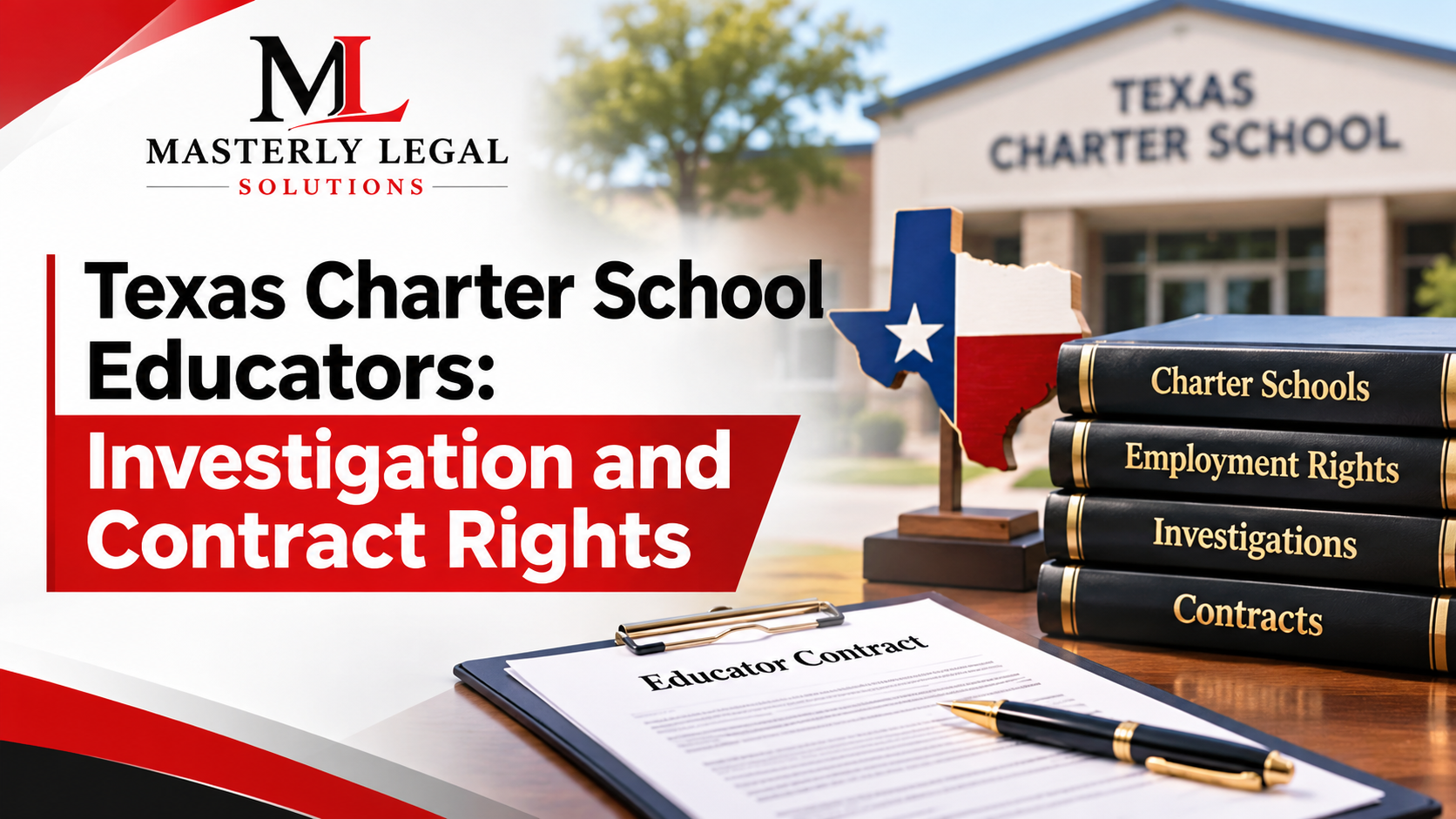
A complaint at a Texas charter school can quickly place an educator's employment, professional reputation, and future career opportunities at risk. A written allegation, unexpected leave notice, or contract dispute may leave teachers and staff unsure about their rights or what the school can legally require. Unlike traditional public school districts, Texas charter schools operate under different governance and employment rules. These differences can affect how investigations proceed, whether an employee has certain contract protections, and which grievance procedures apply. Understanding texas charter school educator investigation rights is important for certified teachers, administrators, and noncertified employees facing workplace allegations. A charter school investigation may involve internal policies, employment agreements, state education regulations, or professional certification concerns. The applicable rules depend on the school's structure and the employee's position. Masterly Legal Solutions provides legal guidance for Texas educators facing investigations, employment disputes, and professional disciplinary concerns. Early consultation allows an attorney to examine the relevant documents, identify possible deadlines, and assess the educator's legal options before important decisions are made. How Charter School Governance and Employment Documents Differ From Traditional Districts Texas open-enrollment charter schools are public schools, but their employment relationships do not automatically follow the same rules as independent school districts (ISDs). Traditional school districts generally employ certain educators under probationary, term, or continuing contracts governed by the Texas Education Code. These arrangements provide statutory rights and procedures that may apply to contract renewal, termination, or other employment decisions. Charter schools often operate differently. Some charter schools use written employment agreements with specific terms. Others employ staff under at-will arrangements, subject to applicable laws and contractual limits. As a result, an educator should not assume that the protections available to an ISD teacher automatically apply to a charter school position. Why Charter School Employment Agreements Matter A charter school's governing documents, employment agreement, and adopted policies may help determine: Whether employment is at-will or governed by a fixed-term agreement. Who has authority to investigate or make employment decisions. What procedures apply to employee complaints or discipline. Whether an employee has internal appeal or grievance rights. How contract renewal, nonrenewal, or termination decisions are handled. Whether specific notice requirements or deadlines apply. The school's legal structure also matters. An open-enrollment charter school, a district-authorized charter campus, and a campus operated through a district partnership may involve different legal arrangements. Charter schools are not simply private schools. They operate within Texas public education and remain subject to applicable state and federal requirements. However, public school s tatus does not automatically provide every employment protection available in a traditional district. Masterly Legal Solutions c an review the educator's employment relationship and applicable school policies to determine which legal protections may apply to the dispute. Early Steps After an Educator Misconduct Complaint, Temporary Removal, or Written Allegation An educator may first learn about an investigation through an email from human resources, a meeting request, a written complaint, or a notice of temporary administrative leave tied to alleged educator misconduct. Sometimes, the notice provides little information about the allegations, including claims involving abuse, and being placed on leave is not a final determination. The school may ask for a written statement, request an interview, restrict campus access, or place the employee on leave while reviewing the complaint. These actions can create serious uncertainty, which is why immediate legal review is often critical. Why an Investigation Notice Deserves Legal Attention Temporary removal does not automatically mean an employee has committed misconduct. Schools may use administrative leave while collecting information or reviewing complaints involving alleged educator misconduct or suspected abuse. However, the terms of that leave may affect compensation, benefits, access to records, and employment status, and leave is not a final determination. An attorney may need to determine whether the notice is consistent with the employee's agreement, applicable policies, and due process protections. Legal review is especially important when the allegations involve: Student safety or inappropriate conduct. Professional boundary concerns. Workplace harassment, discrimination, or civil rights complaints. Failure to follow school policies. Alleged contract violations or performance concerns. Misuse of school resources or confidential information. Conduct that could trigger a report to the Texas Education Agency. Certified educators may face concerns beyond their current employment. Certain misconduct allegations can lead to review by the Texas Education Agency (TEA), and the available evidence may affect possible action involving the State Board for Educator Certification (SBEC) and an educator's certificate. Noncertified employees may also face state-level employment eligibility concerns in certain misconduct cases. An internal school investigation and a state regulatory investigation are separate matters. Their legal standards, procedures, and possible consequences may differ, especially where Texas law, state law, or school district reporting requirements may require a principal or superintendent to provide notice, ensure a report is filed within seven business days, or address related reports while administrators comply with agency rules. Obtaining legal advice before providing a detailed written response can help an educator understand which process is involved, protect process rights, prepare for possible disciplinary actions or administrative hearings, and assess whether allegations tied to children, special education services, procedural errors, or other issues could expand beyond an internal employment matter. What to Preserve: Contract, Handbook, Assignment, Communications, and Notices Texas charter school educator investigation rights often depend on documents that explain the employee's responsibilities, the school's policies, and the decisions made during an investigation. A legal consultation becomes more useful when counsel can examine reliable records rather than relying only on verbal descriptions. Several categories of documents may be especially important. Employment Contracts and Appointment Documents Signed contracts, offer letters, renewal agreements, and employment amendments can establish the terms of the working relationship. These records may show whether employment is at-will, whether notice provisions apply, and what contractual obligations exist. They can also help counsel evaluate allegations involving contract violations or termination. Employee Handbooks and Governance Policies Employee handbooks may explain workplace conduct rules, investigation procedures, grievance processes, and disciplinary standards. The version in effect when the relevant events occurred may be particularly important. An attorney can examine whether the school's actions are consistent with applicable policies and whether those policies create enforceable obligations. Job Assignments and Performance Records Job descriptions, assignment letters, duty schedules, evaluation records, and previous performance notices may help explain an educator's responsibilities. These materials can provide context when an allegation concerns supervision, workplace expectations, professional duties, or performance. Emails, Messages, and Written Communications Relevant communications may include messages from administrators, human resources personnel, supervisors, and other individuals involved in the matter. Dates, wording, and context may help establish a timeline. Educators should preserve records they are legally permitted to retain. They should not access restricted systems, remove confidential student information, or forward protected records to personal accounts without proper authorization. Investigation Notices, Disciplinary Actions, and Contract Actions Written allegations, leave notices, meeting invitations, disciplinary letters, proposed separation agreements, and termination notices may establish important facts and deadlines. These documents can help counsel determine whether immediate legal action or a timely response may be necessary. Related reports or other evidence tied to the communication chain may also matter when evaluating the investigation timeline, response, and any resulting disciplinary actions, including situations where school action may continue after a resignation. Preserving records does not mean collecting every school document . It means identifying relevant, lawfully accessible information while respecting student privacy and confidentiality requirements. Masterly Legal Solutions can help educators determine which materials are relevant to their legal circumstances and whether additional records should be requested through appropriate procedures. Questions for Counsel Before a Written Statement or Grievance Decision An educator may feel pressure to respond immediately after receiving an allegation. However, statements made during an employment investigation can become part of the school's decision-making record. In some circumstances, information may also be reviewed by outside agencies. Before responding, legal counsel can examine the allegations, the employment relationship, and any deadlines. Does the Charter School Have Authority to Take the Proposed Action? A lawyer can review whether the relevant administrator or governing body has authority under the school's policies and employment arrangements. The review may also address whether required notices or procedures apply. Is a Written Statement Required? The answer depends on the applicable employment terms, policies, and legal circumstances. Counsel can assess the request, the scope of the allegations, and the potential consequences of providing a statement. The goal is to make an informed decision without overlooking an existing duty to cooperate or respond. Is a Formal Grievance the Appropriate Response? Not every employment dispute follows the same grievance route. Texas charter schools may maintain their own employee complaint procedures, with specific filing requirements and deadlines. TEA directs many local employment concerns to the school or charter operator's internal grievance process rather than handling the underlying workplace dispute itself. Missing an applicable deadline can limit available options. An attorney can review whether a grievance, contractual claim, agency complaint, or another legal process may be appropriate. Could the Investigation Affect Professional Certification or Texas Education Agency Reporting? Certified educators should consider whether the allegations may involve TEA or SBEC review. An employment decision and a certification matter can have different consequences. Counsel can evaluate the relationship between these proceedings and help determine what representation or response may be needed.  Why Legal Representation Matters Before a Decision An employment investigation can involve several connected issues, including contracts, workplace policies, regulatory duties, and professional reputation. Without a careful legal review, an educator may misunderstand which procedures apply or overlook a significant provision in an employment agreement. Masterly Legal Solutions provides individualized legal guidance based on the educator's documents, allegations, and professional circumstances. The firm can assess applicable rights, explain available legal options, and assist with appropriate responses or proceedings based on the scope of representation.
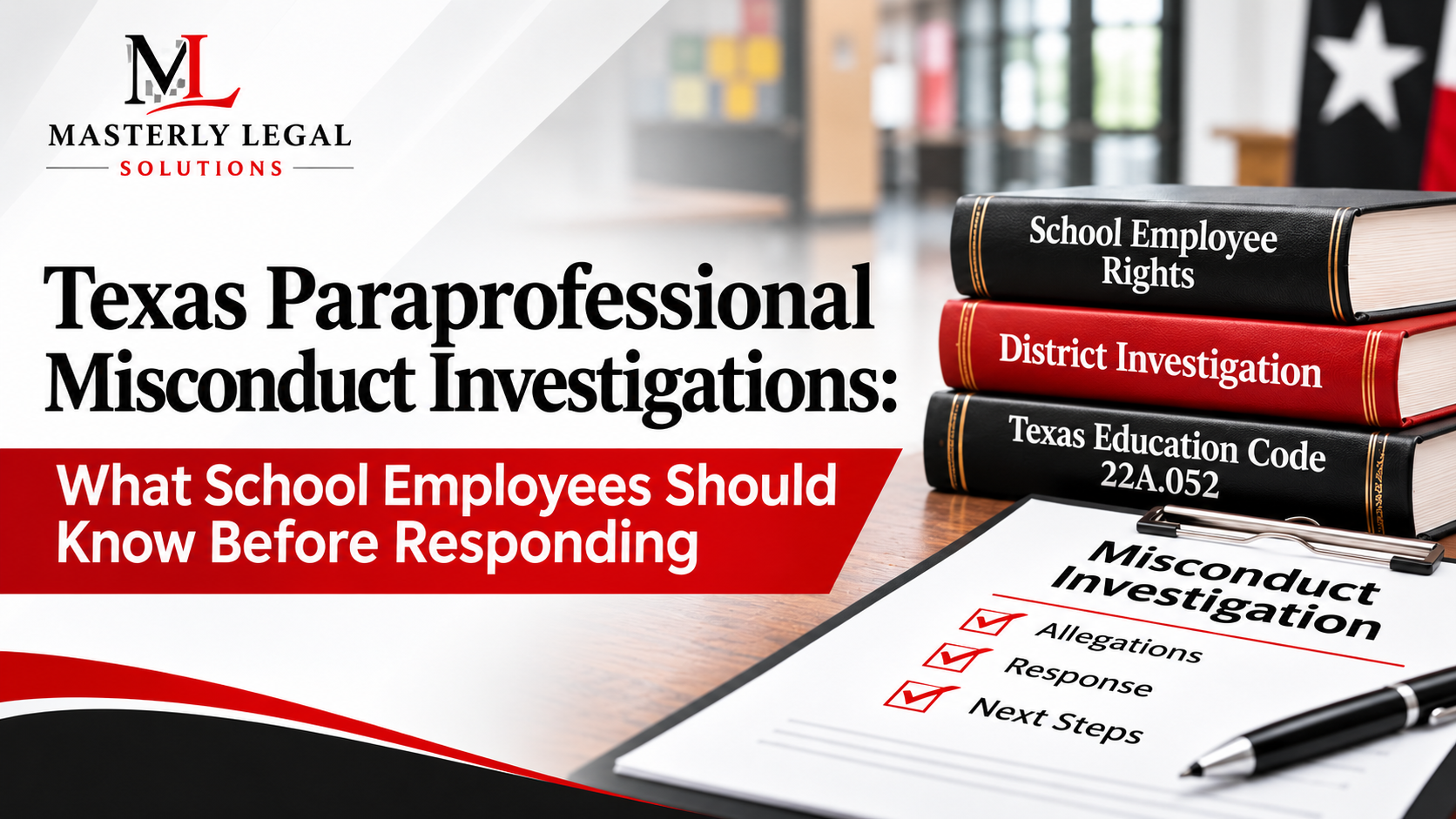
Texas paraprofessional misconduct investigation and legal defense.
November 4, 2026
Facing a Texas paraprofessional misconduct investigation? Understand allegations, reporting requirements, and how experienced legal counsel can protect your rights.
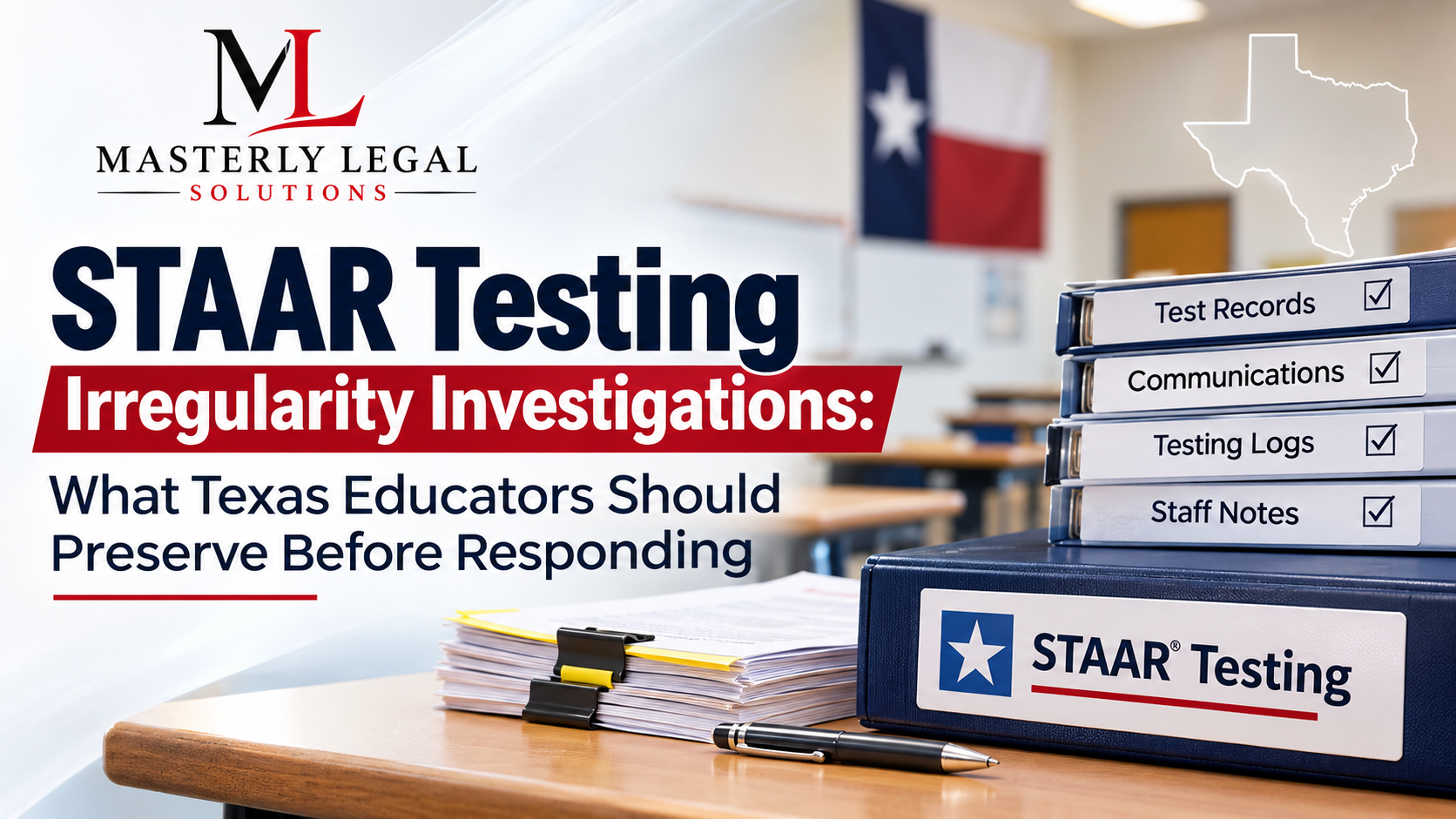
STAAR testing irregularity investigation involving Texas educators and test security allegations.
November 3, 2026
Facing a STAAR testing irregularity investigation? Masterly Legal Solutions defends Texas teachers, coordinators, and campus administrators facing allegations.
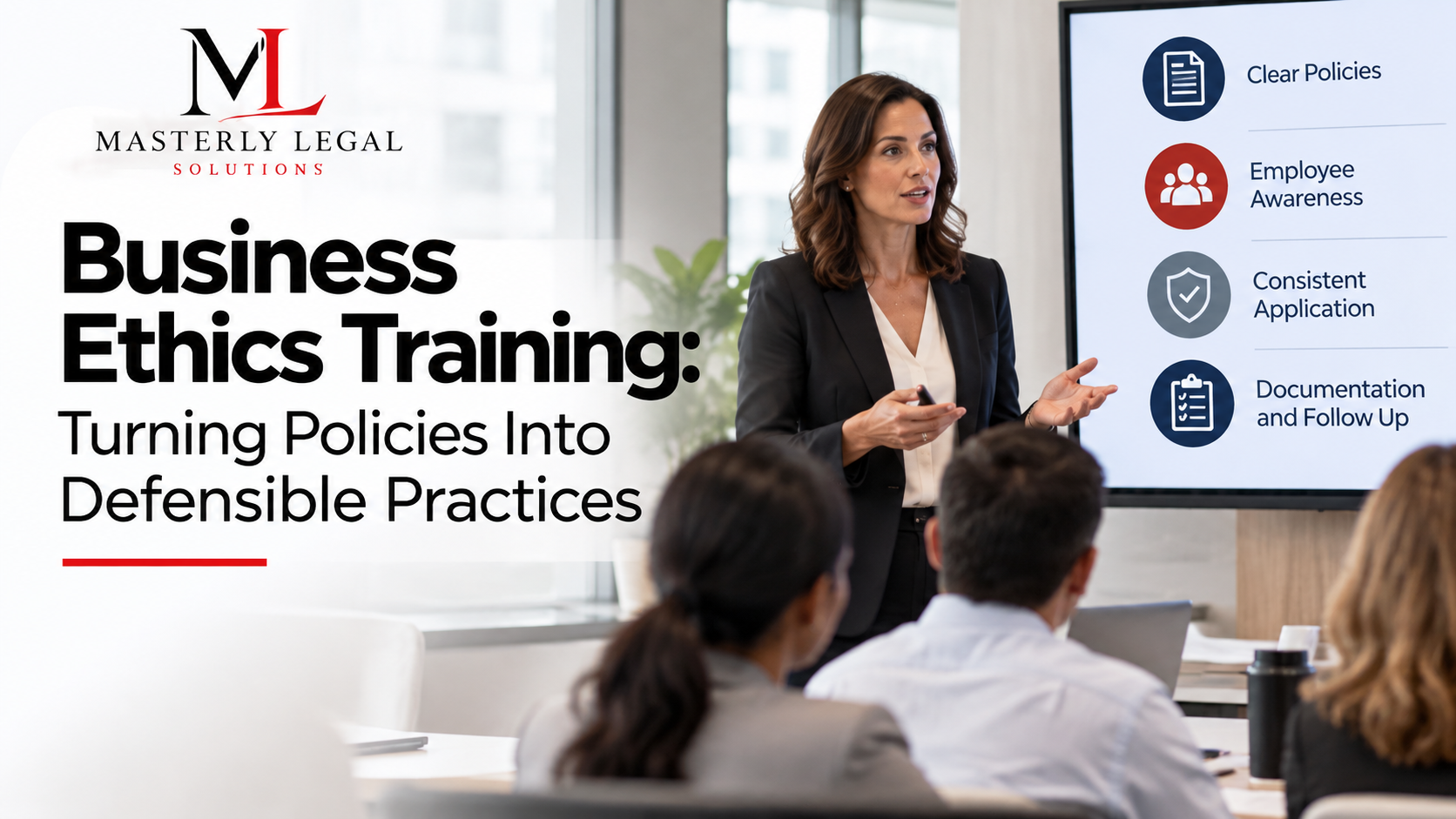
Business ethics training on workplace policies and compliance.
October 26, 2026
Business Ethics Training: Turn workplace policies into defensible practices. Explore compliance, employee conduct, and training needs with Masterly Legal Solutions.
Misappropriation of funds legal guidance and financial records review.
October 21, 2026
Understand what misappropriation of funds involves, how to preserve financial records, and when to seek experienced legal guidance before taking appropriate action.
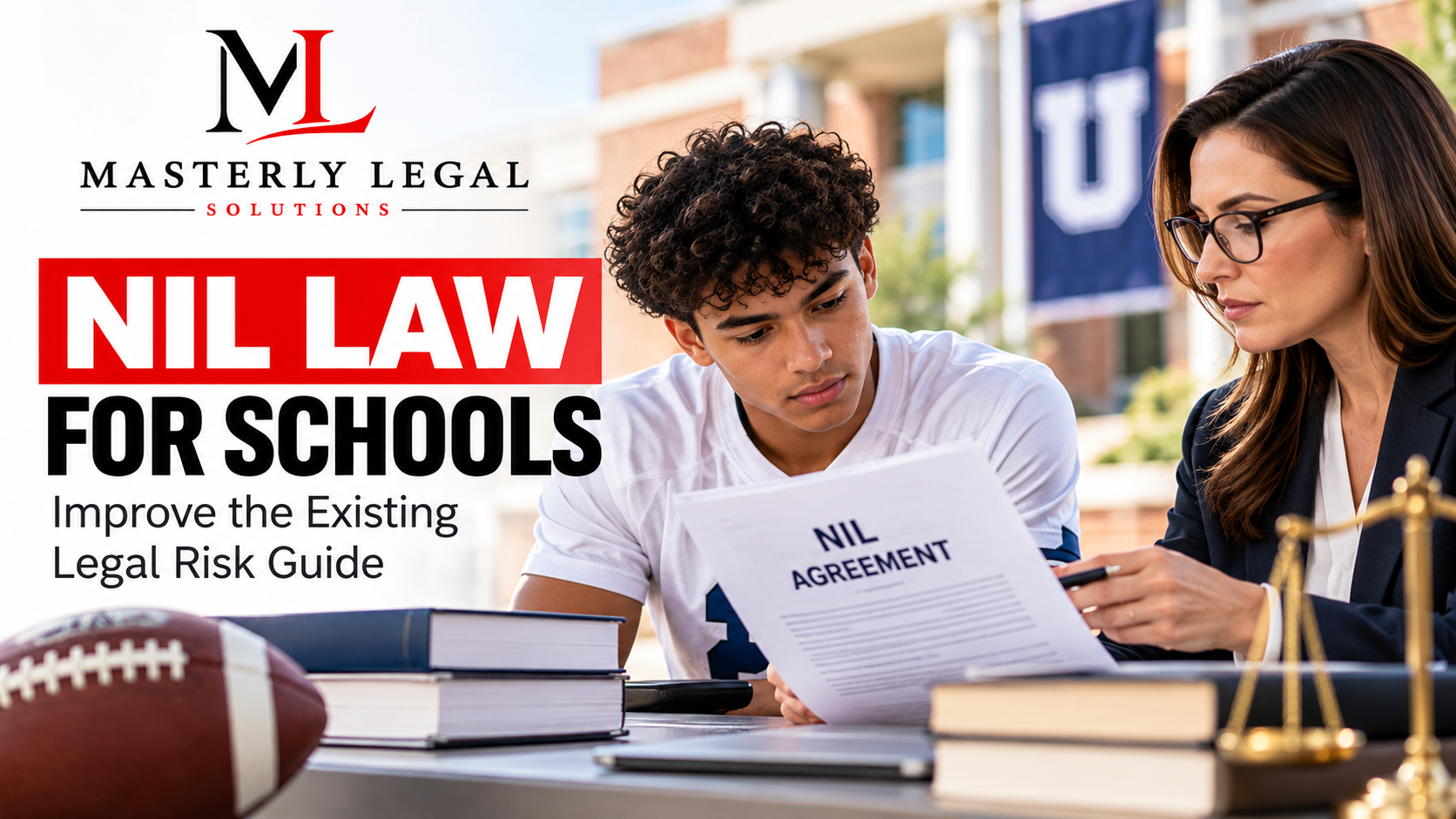
NIL law, athlete contracts, and school compliance guidance
October 20, 2026
Explore NIL law in school athletics, institutional compliance, contract concerns, and when schools may need experienced legal guidance to protect their interests.

Looking for Legal & Business Solutions? Contact Us Now

Fill in the form or call us to set up a meeting

(972) 236-5051
A black and white drawing of a straight line on a white background.