
How a Civility Policy Violation Notice Can Follow You Beyond Your Current School District
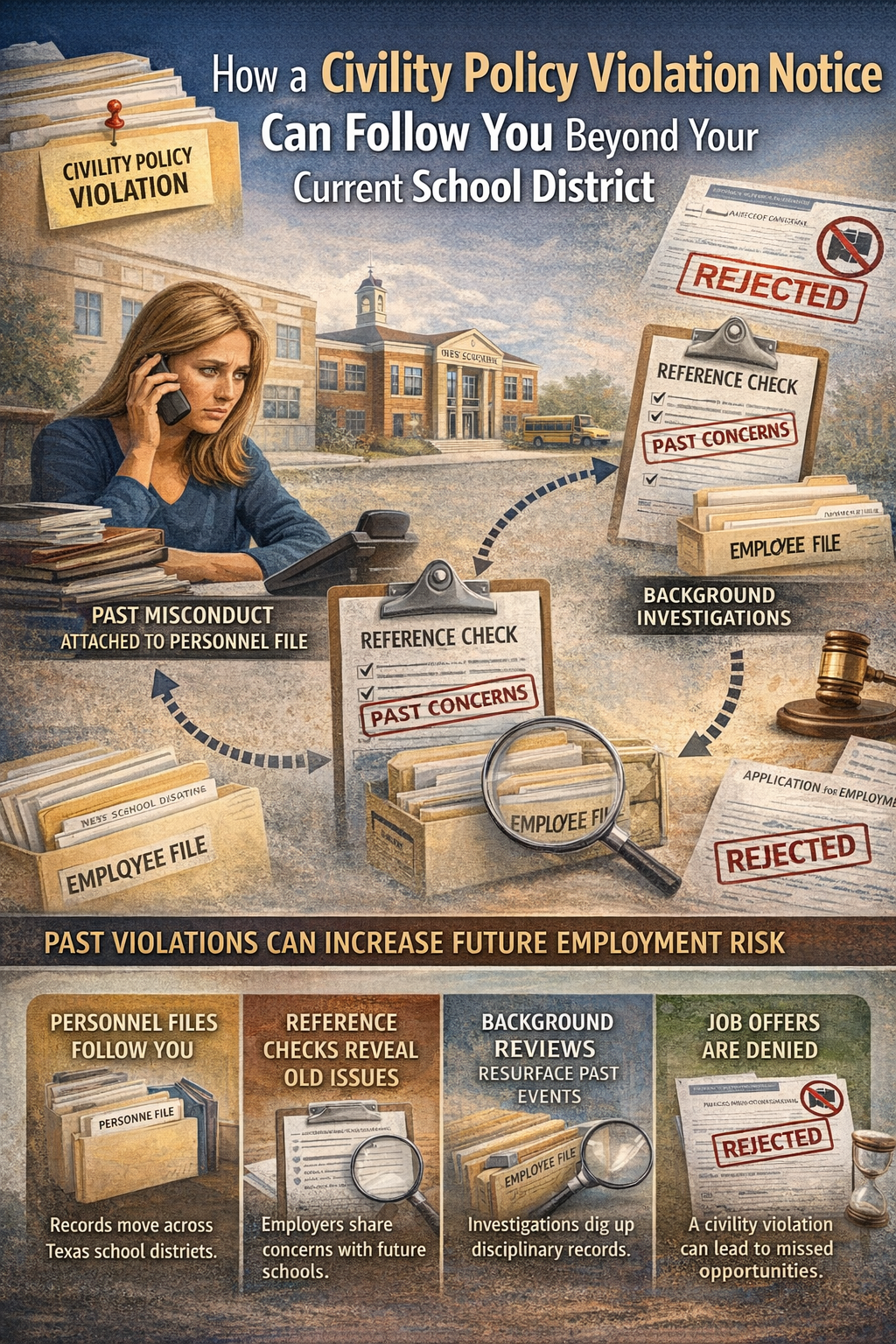
Receiving a civility policy violation notice can feel like a momentary workplace issue, but for many employees, especially educators, it can quietly become a long-term career risk. What may appear to be a minor disciplinary action often lives on in personnel files, reference checks, and internal reviews that follow an employee well beyond their employee's current position. Teachers are often shocked to learn how a single notice can influence future employment decisions years later.
At Masterly Legal Solutions, we regularly speak with clients who believed an issue was resolved, only to discover it resurfaced when applying for a new job. Administrative leave, internal investigations, and civility violations do not always stay where they started. Understanding how these records travel—and how they can lead to wrongful termination or constructive discharge—is essential for protecting your career.
This article explains how civility policy violations can follow employees across school districts, how administrative leave is often used in these situations, and why future employment risk is far more real than most people realize.
What a Civility Policy Violation Really Means
A civility policy violation typically involves allegations of unprofessional behavior, tone, or conduct toward a co worker, supervisor, or other employees. While these policies are meant to support workplace safety and respectful working conditions, they are sometimes applied subjectively. What one agency head considers inappropriate, another may see as ordinary workplace disagreement.
The problem arises when the violation is formally documented and placed into an employee’s personnel file. Even if the employee was placed on paid administrative leave for brief or short periods, the notice itself may remain indefinitely. Over time, this documentation can influence agency judgments about the employee’s character or reliability.
Why Administrative Leave Is Often the First Step
Administrative leave is frequently used after an alleged misconduct report or civility violation. Employers may grant administrative leave while they conduct internal reviews or investigations. Although paid leave is often described as neutral, it can signal serious concern within the organization.
Administrative leave may be issued for safety leave, investigative leave, or notice leave depending on the circumstances. While some leaves are excused absence or officially sponsored time away, others feel punitive. The repeated use of administrative leave can create a record suggesting performance or behavior concerns, even without strong evidence.
Paid Administrative Leave and Its Hidden Consequences
Paid administrative leave is often framed as a benefit to the employee, but its long-term effects can be damaging. Personnel management systems often log paid leave tied to alleged misconduct, even when no formal disciplinary action follows. This information may later be reviewed by authorized agency officials or other authorized agency officials during reference checks.
Even brief periods of paid administrative leave can raise questions for a future employer. When combined with a civility violation, these records may suggest unresolved issues. Over time, this can contribute to wrongful discharge decisions elsewhere.
Personnel Files Are Not as Private as You Think
Many employees assume personnel files stay with their former employer. In reality, school districts often share information through reference checks, background reviews, or agency communications. While some disclosures are limited by law, others fall under public policy exceptions or internal agency policies.
When an agency determines that information is directly related to workplace conduct, it may be disclosed. This means a civility policy violation tied to administrative leave may be discussed long after the employee resigns or moves on.
How Reference Checks Can Reopen Old Issues
Reference checks are a common point where past violations resurface. Hiring administrators may ask about prior administrative leave, alleged misconduct, or internal investigations. Even neutral responses can raise concerns for a reasonable person evaluating a candidate.
For employees seeking positions in san antonio texas school districts, this can be especially concerning due to shared standards and communication networks. A former employer’s comments may influence whether an offer is extended or withdrawn, particularly in cases involving workplace retaliation.
When Administrative Leave Turns Into Constructive Discharge
Constructive discharge means an employee feels forced to resign due to intolerable working conditions. In education settings, repeated administrative leave, public scrutiny, or unresolved civility allegations can create a hostile environment.
Constructive discharge means the employee did not leave voluntarily but was effectively pushed out. Constructive termination and constructive dismissal are closely related concepts that focus on employer actions rather than the employee’s choice. These situations often involve forced resignation after prolonged pressure.
Constructive Discharge Means More Than Just Resigning
Constructive discharge means that a reasonable person would feel they had no option but to resign. This can occur when administrative leave is extended without explanation, pay is threatened, or reputational harm continues unchecked.
Courts examine circumstances such as working conditions, emotional distress, and whether the employer followed agency policies. When an employee quits under these conditions, it may still qualify as wrongful termination under public policy.
Forced Resignation Is Not Always Voluntary
Employers may frame a worker's resignation as voluntary, but the facts often tell a different story. Forced resignation can occur when employees are repeatedly placed on administrative leave, isolated from other employees, or told termination is inevitable.
In these cases, employee quits language does not erase employer responsibility. Forced resignation may support claims of wrongful discharge, constructive termination, or punitive damages.
Wrongful Termination and Civility Violations
Wrongful termination claims often arise when civility policies are applied inconsistently. If one employee is disciplined while others engaging in similar conduct are not, this may indicate employment discrimination.
Wrongful termination may also occur when an employee is terminated based on unproven alleged misconduct. When administrative leave becomes a stepping stone to termination without due process, legal claims become stronger.
Wrongful Discharge and Public Policy Concerns
Public policy plays a major role in wrongful discharge cases. Employers cannot terminate employees for reasons that violate established law, executive order, or united states code provisions.
If a civility violation is used as a pretext for retaliation, whistleblowing, or reporting workplace safety concerns, termination may violate public policy. Courts look closely at whether agency officials acted fairly and consistently.
The Role of Agency Officials in These Decisions
Agency officials, including supervisors and the agency head, have significant discretion in handling civility violations. However, discretion is not unlimited. Decisions must align with internal policies and applicable law.
When agency judgments appear arbitrary or ad hoc, they may be challenged. Employers must issue internal policies consistent with public policy and legal standards.
Investigative Leave and Internal Reviews
Investigative leave is commonly used while employers gather facts. These internal reviews may involve human resources, outside investigators, or other authorized agency officials.
Problems arise when investigative leave drags on for long periods without resolution. Extended investigative leave can damage reputations and support constructive discharge claims.
The Importance of Strong Evidence
Employers should rely on strong evidence before taking adverse actions. Civility violations are often subjective, making strong evidence especially important.
When agency determines discipline without clear proof, employees may challenge the action. Lack of evidence weakens employer defenses in wrongful termination claims.
Notice, Documentation, and Due Process
Proper notice is essential when placing an employee on administrative leave. Employees should receive clear explanation, written notice, and an opportunity to respond.
Failure to provide notice may violate internal policies or public policy principles. Documentation gaps often become critical evidence in later claims.
Administrative Leave and Pay Issues
Pay issues frequently arise during administrative leave. While many employees remain on paid leave, others experience reductions or threats to benefits.
Changes to pay or benefits during leave may strengthen claims of constructive discharge. Financial pressure is a common factor in forced resignation cases.
Periods of Leave and Time Limits
Administrative leave is generally intended for short periods or brief periods. When leave extends beyond a reasonable period, it may become punitive.
Some policies limit leave to a specific calendar year or time limited basis. Violations of these limits may support legal claims.
Civility Violations and Employment Discrimination
Employment discrimination may occur when civility policies are applied unevenly based on protected characteristics. Selective enforcement raises red flags.
Discrimination claims often overlap with wrongful termination and constructive dismissal theories. These cases require careful legal analysis.
Undocumented Workers and Policy Enforcement
Some employers raise concerns unrelated to civility, such as employing undocumented workers, to justify adverse actions. These claims must be handled carefully and lawfully.
Improper reliance on undocumented workers issues may violate public policy or other provision of law.
Emotional Distress and Workplace Impact
Civility violations and prolonged administrative leave can cause significant emotional distress. Teachers may experience anxiety, reputational harm, and professional isolation.
Emotional distress damages may be available in certain claims, especially when employer conduct is extreme.
How Future Employers View Civility Records
Future employers often interpret civility violations conservatively. Even minor issues may be seen as risk factors.
This is why addressing these notices early is critical. Allowing inaccurate records to stand can harm long-term career prospects.
Why Employees Should Act Early
Employees often wait, hoping issues will resolve on their own. Unfortunately, silence allows records to solidify.
Early legal guidance helps protect the employee’s narrative and prevent escalation.
The Legal Meaning Behind Administrative Labels
Terms like safety leave, investigative leave, or excused absence may sound neutral. Legally, however, their impact depends on how they are used.
Labels do not override reality. Courts examine facts, not titles.
Employer Responsibilities Under the Law
Employers must follow law, public policy, and internal policies when handling civility violations. Failure to do so exposes them to liability.
Employers cannot rely solely on discretion or convenience.
When Claims Become Necessary
Claims arise when informal resolution fails. Claims may involve wrongful termination, constructive discharge, or related violations.
Each claim depends on facts, timing, and documentation.
Examples That Appear Again and Again
An example often seen is an employee placed on administrative leave after a disagreement with a supervisor. Another example involves notice leave following a complaint that was never substantiated.
These patterns repeat across districts.
Understanding Your Options Moving Forward
Employees facing civility violations have options. These may include internal appeals, negotiations, or legal claims.
Understanding options early allows better decision-making.
Protecting Your Professional Reputation
Reputation is critical in education. Civility records can undermine trust even when allegations are unfounded.
Legal guidance helps protect long-term credibility.
Contact Masterly Legal Solutions for a Free Consultation
If you received a civility policy violation notice or were placed on administrative leave within san antonio texas school districts, it is important to understand how that record may affect your future employment. What feels temporary today can quietly shape reference checks, hiring decisions, and career opportunities tomorrow.
At Masterly Legal Solutions, we help employees understand their rights, evaluate risks, and address issues before they escalate into wrongful termination or forced resignation. A conversation now can help you protect your professional future and clarify your next steps.
Call (972) 236-5051 to schedule a free consultation and get clear answers tailored to your situation.
Legal Disclaimer:: This article is for informational purposes only and does not constitute legal guidance. Reading this content does not create an attorney-client relationship. Employment laws and public policy interpretations vary based on individual circumstances. You should consult a qualified attorney regarding your specific situation.
Teacher Rights When Assaulted by a Special Needs Student: Safety, Reporting and Investigation Issues






Looking for Legal & Business Solutions? Contact Us Now
Fill in the form or call us to set up a meeting