

Understanding CPS Investigations: What Triggers a Case in Texas?
A Knock on the Door No Parent Expects
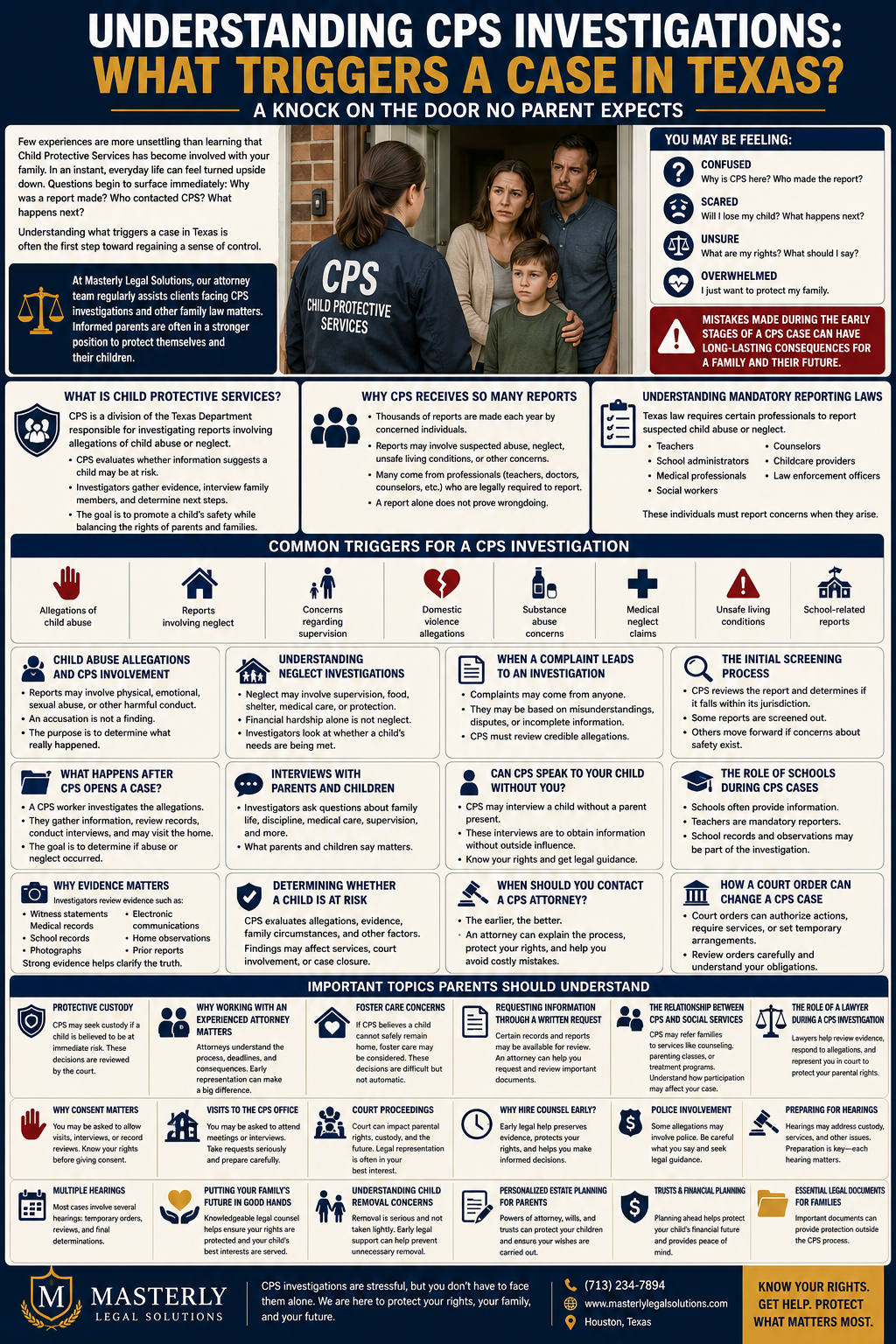
Few experiences are more unsettling than learning that Child Protective Services has become involved with your family. For many parents, the first sign of trouble comes when a CPS worker calls unexpectedly, arrives at the home, or requests an interview regarding their child. In an instant, everyday life can feel turned upside down. Questions begin to surface immediately: Why was a report made? Who contacted CPS? What happens next?
The uncertainty surrounding a CPS investigation can create enormous stress. Parents often worry about their parental rights, their relationship with their child, and whether the allegations could lead to court involvement. Even when families believe they have done nothing wrong, the mere presence of CPS can be intimidating. Understanding what triggers a case in Texas is often the first step toward regaining a sense of control.
At Masterly Legal Solutions, our attorney team regularly assists clients facing CPS investigations and other family law matters. We know how frightening these situations can be, and we believe that informed parents are often in a stronger position to protect themselves and their children.
What Is Child Protective Services?
Child Protective Services is a division of the Texas Department responsible for investigating reports involving allegations of child abuse or neglect. The agency operates within a larger system designed to protect children while balancing the rights of parents and families.
When Child Protective Services CPS receives a report, the agency must evaluate whether the information suggests a child may be at risk. Depending on the nature of the allegations, CPS may open an investigation, gather evidence, interview family members, and determine whether further action is necessary.
The goal of protective services is to promote a child's safety. However, the process can become complicated when accusations are inaccurate, incomplete, or based on misunderstandings.
Why CPS Receives So Many Reports
Every year, CPS receives thousands of reports from concerned individuals throughout Texas. These reports may involve suspected child abuse, neglect, unsafe living conditions, or concerns regarding a child's well-being.
Many reports come from professionals who are legally required to notify authorities when they suspect abuse or neglect. Others come from neighbors, relatives, friends, or other individuals who believe a child may be in danger.
Importantly, a report alone does not prove wrongdoing occurred. CPS receives information from many different sources, and one of the agency's primary responsibilities is to determine whether the allegations are supported by evidence.
Understanding Mandatory Reporting Laws
Texas law requires certain professionals to report suspected child abuse or neglect. These individuals are commonly referred to as mandatory reporters.
Mandatory reporters frequently include:
- Teachers
- School administrators
- Medical professionals
- Social workers
- Counselors
- Childcare providers
- Law enforcement officers
Because these individuals often work closely with children, the law places a responsibility on them to report concerns when they arise. As a result, many CPS investigations begin with a report submitted by a school, hospital, or other professional setting.
Common Triggers for a CPS Investigation
There are many reasons why a CPS investigation may begin. Some reports involve legitimate concerns regarding a child's safety, while others stem from misunderstandings or disputes.
Common triggers include:
- Allegations of child abuse.
- Reports involving neglect.
- Concerns regarding supervision.
- Domestic violence allegations.
- Substance abuse concerns.
- Medical neglect claims.
- Unsafe living conditions.
- School-related reports.
When CPS receives information suggesting a child may face risk, the agency will often begin reviewing the circumstances to determine whether further action is necessary.
Child Abuse Allegations and CPS Involvement
One of the most common reasons CPS becomes involved is an allegation involving child abuse. Reports may involve claims of physical abuse, emotional abuse, sexual abuse, or other conduct that allegedly harms a child.
An accusation of child abuse can be extremely serious, even before any evidence has been reviewed. Parents often feel shocked, confused, and frightened when they learn that allegations have been made against them.
It is important to remember that allegations are not findings. The purpose of the investigation is to determine whether abuse occurred, not to assume guilt from the beginning.
What Constitutes Suspected Child Abuse?
Not every concern automatically qualifies as suspected child abuse under Texas law. However, CPS may investigate whenever a report suggests that a child has suffered harm or faces a substantial risk of harm.
Examples may include physical injuries, excessive discipline, exposure to dangerous situations, or other circumstances that raise concerns about a child's safety. The agency must evaluate each report based on the available information.
Because these cases often involve complex facts, parents should avoid making assumptions about how the agency will interpret a particular situation.
Understanding Neglect Investigations
Neglect allegations account for a significant number of CPS cases throughout Texas. While many people associate neglect with intentional misconduct, the reality is often more complicated.
Neglect investigations may focus on whether a child has adequate supervision, food, shelter, medical care, or protection from harm. The agency may examine whether the circumstances create a risk to the child's health or well-being.
Financial hardship alone does not automatically establish neglect. However, investigators may review whether the child's basic needs are being met based on the family's circumstances.
When a Complaint Leads to an Investigation
Many CPS investigations begin with a complaint filed by an individual who believes a child may be at risk. The person making the complaint does not necessarily have firsthand knowledge of the situation, which can be especially concerning for teachers and school staff who may need education lawyer support during investigations.
In some cases, complaints arise from misunderstandings, family disputes, custody disagreements, or incomplete information. Nevertheless, CPS generally has an obligation to review allegations that appear credible.
Once the complaint is received, the agency must determine whether the information justifies opening an investigation.
The Initial Screening Process
Before a full CPS investigation begins, the agency conducts an initial screening. During this stage, CPS reviews the report and evaluates whether the allegations fall within its jurisdiction.
The agency will determine whether the information involves possible abuse or neglect and whether immediate intervention may be required. Some reports are screened out if they do not meet the legal criteria for investigation.
Others move forward because the allegations raise sufficient concerns regarding the child's safety.
What Happens After CPS Opens a Case?
When CPS decides to investigate, a CPS worker is assigned to the matter. The investigator's role is to gather information and determine whether the allegations have merit.
The CPS worker may contact parents, interview the child, review records, and communicate with other individuals who may have relevant information. The investigator may also conduct home visits and evaluate living conditions.
The purpose of the investigation is to determine whether abuse or neglect occurred and whether additional services or intervention may be necessary.
Interviews With Parents and Children
One of the first steps in many CPS investigations involves interviews with parents and children. These conversations allow investigators to gather information directly from those involved.
Parents are often surprised by the types of questions asked during these interviews. Investigators may ask about family relationships, discipline practices, medical care, supervision, and other aspects of daily life.
The information gathered during these interviews can significantly influence the direction of the investigation.
Can CPS Speak to Your Child Without You?
Many parents are concerned about whether CPS can speak with their child without their presence. Depending on the circumstances, investigators may interview a child at school or another location.
These interviews are often conducted to obtain information without outside influence. However, parents frequently feel uncomfortable when they are not present during conversations involving their child.
Understanding your rights and seeking legal guidance can help you better navigate these situations.
The Role of Schools During CPS Cases
Schools frequently play a role in CPS investigations. Teachers, counselors, and administrators may be asked to provide information regarding the child, and special education teachers in particular should understand how special education law affects their responsibilities.
Because teachers are often mandatory reporters, schools are commonly the source of initial reports involving suspected child abuse or neglect. School personnel may also provide observations regarding attendance, behavior, academic performance, and other relevant issues.
Information obtained from schools may become part of the overall investigation.
Medical Records and CPS Investigations
Medical information can become important in certain CPS cases. Investigators may review records when allegations involve physical injuries, medical neglect, or concerns regarding a child's health.
Healthcare providers may also provide information regarding treatment history, injuries, or other observations relevant to the allegations. Medical evidence often plays a significant role when CPS attempts to determine whether abuse or neglect occurred.
Because these records can influence the outcome of a case, parents should understand how medical information may be used during the investigation.
Why Evidence Matters
Evidence is one of the most important factors in any CPS investigation. Investigators are responsible for evaluating available information before reaching conclusions.
Evidence may include:
- Witness statements.
- Medical records.
- School records.
- Photographs.
- Electronic communications.
- Home observations.
- Prior reports.
Strong evidence can help clarify misunderstandings and provide a more complete picture of the circumstances surrounding the allegations.
Determining Whether a Child Is at Risk
Throughout the investigation, CPS attempts to determine whether the child faces a current risk of harm. This assessment influences many decisions made by the agency.
Investigators evaluate the allegations, available evidence, family circumstances, and other factors affecting the child's safety. Their findings may affect whether services are offered, whether court involvement is requested, or whether the case is closed.
This risk assessment often becomes one of the most important aspects of the investigation process.
When Should You Contact a CPS Attorney?
Many parents are unsure when they should seek legal help during a CPS investigation. In reality, the earlier a CPS attorney becomes involved, the more opportunities there may be to protect important rights and address concerns before the situation escalates. An attorney can explain the investigation process, review the allegations, and help families avoid mistakes that could negatively affect the outcome of the case. Early legal guidance often provides peace of mind during an otherwise stressful experience.
How a Court Order Can Change a CPS Case
A court order may significantly affect the direction of a CPS investigation. Depending on the circumstances, a court order can authorize certain actions involving a child, require participation in services, or establish temporary arrangements while the case is pending. Parents should carefully review any court documents they receive and understand their obligations under the order. Because court orders carry legal consequences, obtaining legal advice is often beneficial.
Understanding Protective Custody in Texas CPS Cases
In certain situations, CPS may seek protective custody of a child when investigators believe immediate intervention is necessary to ensure the child's safety. Protective custody is generally reserved for serious situations where CPS believes a child may be at risk of harm if left in the current environment. These decisions are often reviewed by the court shortly after they occur. Families facing protective custody issues should seek legal assistance as quickly as possible.
Why Working With an Experienced Attorney Matters
CPS investigations can involve complicated legal issues, strict deadlines, and significant consequences for families. An experienced attorney understands how these cases are handled and can help parents navigate each stage of the investigation. Legal representation may help families better understand their rights, evaluate evidence, and prepare for court proceedings. Having an experienced attorney involved early can often improve a family's ability to respond effectively.
How Law Offices Assist Families During CPS Investigations
Many parents are unfamiliar with the resources available through law offices that handle CPS and family law matters. Legal professionals can assist with reviewing records, communicating with investigators, preparing responses, and protecting parental rights throughout the case. Firms that also handle internal investigations and employment-related matters may offer additional insight when CPS concerns intersect with workplace or institutional issues. Because CPS investigations often move quickly, timely legal support can be extremely valuable. Families should not hesitate to explore available legal options when their child and future are at stake.
When Foster Care Becomes Part of the Discussion
One of the most difficult aspects of some CPS cases is the possibility of foster care placement. If CPS believes a child cannot safely remain in the home and suitable relatives are unavailable, foster care may become an option considered by the agency. These situations can be emotionally overwhelming for parents and children alike. Understanding the legal process and working with an attorney can help families address concerns before more restrictive measures are pursued.
Requesting Information Through a Written Request
Parents may sometimes seek information regarding their CPS case through a written request. Depending on the circumstances, certain records, reports, or documents may be available for review. Understanding what information can be obtained and how it may affect the case can be important when preparing a response. Legal counsel can often help families determine what records should be requested and reviewed and may also recommend essential legal documents for families that can provide additional protection outside the CPS process.
The Relationship Between CPS and Social Services
Many CPS investigations involve referrals to social services designed to assist families and address concerns identified during the investigation. These programs may include counseling, parenting education, substance abuse treatment, or other supportive services. Families may also benefit from proactive planning tools, such as powers of attorney for their children, to clarify who can make medical or educational decisions if an emergency arises. While social services can benefit some families, parents should understand how participation may affect their case. Reviewing recommendations carefully can help families make informed decisions.
The Role of a Lawyer During a CPS Investigation
A lawyer can provide valuable support throughout a CPS case by helping families understand their rights and responsibilities. Legal counsel may assist with reviewing evidence, preparing for interviews, responding to allegations, and representing parents during court proceedings. Because CPS investigations often involve complex legal questions, having a lawyer involved can help reduce uncertainty and improve communication with the agency.
Why Consent Matters During CPS Investigations
Questions regarding consent frequently arise during CPS investigations. Parents may be asked to allow home visits, interviews, record reviews, or other investigative activities. Understanding when consent is required and what rights exist under Texas law can help families make informed decisions. Because every case is different, legal guidance may be beneficial before agreeing to significant requests.
What Happens During a Visit to the CPS Office?
In some cases, families may be asked to attend meetings at a CPS office to discuss allegations, review concerns, or participate in interviews. These meetings can play an important role in the overall investigation. Parents should take such requests seriously and prepare carefully before attending. Understanding the purpose of the meeting can help reduce anxiety and improve communication.
Court Proceedings and Their Impact on Families
When a CPS case enters the court system, formal proceedings may begin that can affect parental rights, custody arrangements, and future decisions involving the child. These proceedings often involve evidence, witness testimony, and legal arguments presented before the court. Because the outcome can have lasting consequences, families should approach court matters carefully and seek legal representation when appropriate, particularly from firms experienced in education law and related investigations when allegations involve schools or teachers.
Why Some Families Decide to Hire Legal Counsel Early
Many parents choose to hire legal counsel soon after learning that CPS has opened an investigation. Early legal involvement can help identify potential issues, preserve evidence, and ensure that important rights are protected from the beginning. Working with a firm that offers comprehensive legal services for families and businesses can also be helpful when CPS matters intersect with other legal concerns. While every case is different, proactive legal representation often provides families with greater confidence during uncertain situations.
Police Involvement in Certain CPS Cases
Although CPS investigations are civil matters, some allegations may also involve police investigations. Reports involving serious claims of abuse, physical injuries, or criminal conduct may lead to involvement by law enforcement. When both CPS and police are investigating the same situation, families should be particularly cautious about statements they make. Legal guidance can help parents understand how these parallel investigations may affect one another.
Preparing for CPS Hearings
Certain CPS cases require formal hearings before a judge. These hearings may address temporary custody arrangements, protective orders, service plans, or other matters affecting the child and family. Preparation is important because decisions made during hearings can significantly influence the direction of the case. Parents should understand what issues will be discussed and what evidence may be presented, and may also want to evaluate trusts and other estate planning tools to protect their child's long-term financial security.
Why Multiple Hearings May Occur During a Case
Some families are surprised to learn that CPS matters often involve several hearings rather than a single court appearance. Different hearings may focus on different stages of the case, including temporary orders, progress reviews, and final determinations. Understanding the purpose of each hearing can help families remain informed and prepared throughout the legal process.
Putting Your Family's Future in Good Hands
Facing a CPS investigation can feel overwhelming, but families do not have to navigate the process alone. Working with knowledgeable legal counsel can help ensure that important decisions are made with a full understanding of the facts and applicable law. When families place their case in good hands, they often feel more confident about addressing challenges and protecting their rights moving forward.
Understanding Child Removal Concerns
One of the greatest fears parents face during a CPS investigation is the possibility of removal. While removal is not appropriate in every case, CPS may pursue it when investigators believe a child faces significant risk. These situations require immediate attention because the consequences can be substantial. In addition to responding to CPS, families may benefit from personalized estate planning for parents to ensure their wishes for their children are legally documented. Early legal intervention may help families respond effectively and protect their relationship with their child.
Why You Should Consult an Attorney Quickly
When allegations of abuse or neglect arise, it is often wise to consult an attorney as soon as possible. Early legal advice can help families understand their options, evaluate potential risks, and prepare for interactions with CPS. The sooner an attorney becomes involved, the more opportunities there may be to address concerns before they escalate, and parents can use the firm's office locations and contact information to schedule a consultation that works for their schedule.
The Role of a Judge in CPS Cases
A judge ultimately plays an important role in many CPS proceedings. The judge reviews evidence, considers testimony, and determines what actions are appropriate under Texas law. Decisions made by the judge may affect custody, services, visitation, and other significant issues involving the child. Understanding the judge's role can help families better prepare for court involvement.
Legal Assistance Can Make a Difference
The CPS process can be intimidating for parents who have never been involved in a government investigation. Legal assistance provides families with information, advocacy, and support during a challenging time. Whether the case involves allegations of abuse, neglect, custody concerns, or court proceedings, having knowledgeable representation can help families protect their rights and make informed decisions.
Protecting Parental Rights During a CPS Investigation
One of the most important issues in any CPS case is the protection of parental rights. Parents have significant legal rights regarding the care, custody, and upbringing of their child, and those rights do not automatically disappear simply because an investigation has been opened. While Child Protective Services has a responsibility to investigate concerns involving a child's safety, the agency must also respect the legal protections afforded to parents under Texas law. Understanding and protecting parental rights from the beginning of a CPS investigation can help families make informed decisions and respond effectively to agency requests.
How CPS Evaluates Allegations of Abuse or Neglect
Most CPS investigations begin after a report alleging abuse or neglect is made to the agency. During the investigation, CPS will gather information from parents, children, teachers, medical providers, and other individuals who may have relevant knowledge about the situation. The goal is to determine whether the allegations of abuse or neglect are supported by the available evidence and whether the child faces any ongoing risk. Because findings involving abuse or neglect can have serious consequences for both the child and the family, parents should take every investigation seriously and consider seeking legal guidance to help protect their interests.
Speak With a CPS Attorney About Your Situation
When Child Protective Services becomes involved in your family's life, it can feel like every decision matters. Questions about your child, your parental rights, and your future can quickly become overwhelming. Whether you are facing a CPS investigation, responding to allegations of abuse or neglect, dealing with court proceedings, or simply trying to understand your options, obtaining accurate legal advice early can make a significant difference.
At Masterly Legal Solutions, we understand that no two CPS cases are exactly alike. Every family has its own story, its own challenges, and its own concerns. Our goal is to help parents understand the process, protect their rights, and make informed decisions during difficult circumstances. We work closely with clients to evaluate the facts, review available evidence, and develop strategies designed to protect both the child and the family.
If Child Protective Services has contacted you, opened an investigation, requested interviews, proposed a safety plan, or scheduled court hearings, now is the time to learn about your legal options. The actions taken during the early stages of a CPS case can have a lasting impact on your family's future.
Contact Masterly Legal Solutions at (972) 236-5051 for a free consultation. Our team is available to answer your questions, discuss your concerns, and help you better understand what steps may be available to protect your child, your parental rights, and your family's interests.
Disclaimer: This article is provided for educational and informational purposes only. It is not legal advice and should not be relied upon as a substitute for obtaining legal counsel regarding your specific situation. You do not establish an attorney-client relationship with Masterly Legal Solutions by reading this material. Every CPS investigation, court proceeding, and family matter involves unique facts and legal issues. If you need legal advice regarding Child Protective Services, allegations of abuse or neglect, parental rights, custody matters, or related legal concerns, contact a qualified attorney to discuss your circumstances.

Teacher Rights When Assaulted by a Special Needs Student: Safety, Reporting and Investigation Issues


Looking for Legal & Business Solutions? Contact Us Now
Fill in the form or call us to set up a meeting